Polyethylene terephthalate (PET) color masterbatch plays a vital role in modern plastic manufacturing, widely used in bottles, films, fibers, and injection molding products. Producing high-quality PET color masterbatch requires careful control over raw materials, production processes, and machine configurations.

1. Understanding PET Color Masterbatch: Raw Materials and Formulation
1.1 PET Carrier Resin Selection
The carrier resin is the foundation of any masterbatch. For PET color masterbatch production, the choice of PET carrier resin influences color consistency, dispersion, and mechanical properties.
- Bottle Grade PET: Offers high clarity and is ideal for food and beverage packaging applications.
- Film Grade PET: Suited for flexible packaging and films requiring clarity and tensile strength.
- Low Intrinsic Viscosity (IV) PET: Useful for masterbatch compounding to adjust flow properties.
- Recycled PET: Economical but requires strict cleaning and drying to maintain quality.
Selecting a carrier resin with stable intrinsic viscosity and low contamination ensures a high-quality masterbatch with excellent color and mechanical stability.
1.2 Pigments and Colorants
PET color masterbatch production typically uses both inorganic and organic pigments, chosen based on the end-use and color requirements.
- Inorganic Pigments:
- Titanium Dioxide (TiO₂): Widely used for white masterbatch; provides high opacity and excellent lightfastness.
- Iron Oxides: Used for earth tones and other color shades with high stability.
- Ultramarine Blue: Offers unique blue hues with excellent heat resistance.
- Organic Pigments:
- Phthalocyanine Blue and Green: Bright, intense colors suitable for diverse applications.
- Azo Pigments (Red, Yellow): Provide vibrant colors with strong tinting strength.
- Quinacridone Pigments: Known for durability and brightness.
Pigments used in PET masterbatch must withstand high extrusion temperatures (up to 280-300°C) without degradation or color shift.
1.3 Additives and Dispersing Agents
To achieve uniform dispersion and improve processing, PET color masterbatch includes:
- Dispersing Agents: Facilitate uniform pigment distribution and reduce agglomeration.
- Lubricants: Enhance melt flow and reduce friction during extrusion.
- Antioxidants: Prevent thermal degradation and color changes.
- Optical Brighteners (e.g., OB-1): Improve clarity and brightness in transparent applications.
The correct additive package enhances final product quality and processing stability.
1.4 Moisture Control: Drying and Crystallization
PET is highly sensitive to moisture, which causes hydrolytic degradation leading to reduced molecular weight, poor mechanical properties, and discoloration.
- Crystallization: Typically performed at 170-180°C for 30-60 minutes to prevent sticking and improve drying efficiency.
- Dehumidifying Drying: Carried out at 160-180°C with a dew point below -40°C for 4-6 hours to remove moisture effectively.
Strict drying and crystallization processes are critical to ensuring product consistency and process stability.
2. Production Equipment: Optimizing PET Color Masterbatch Manufacturing
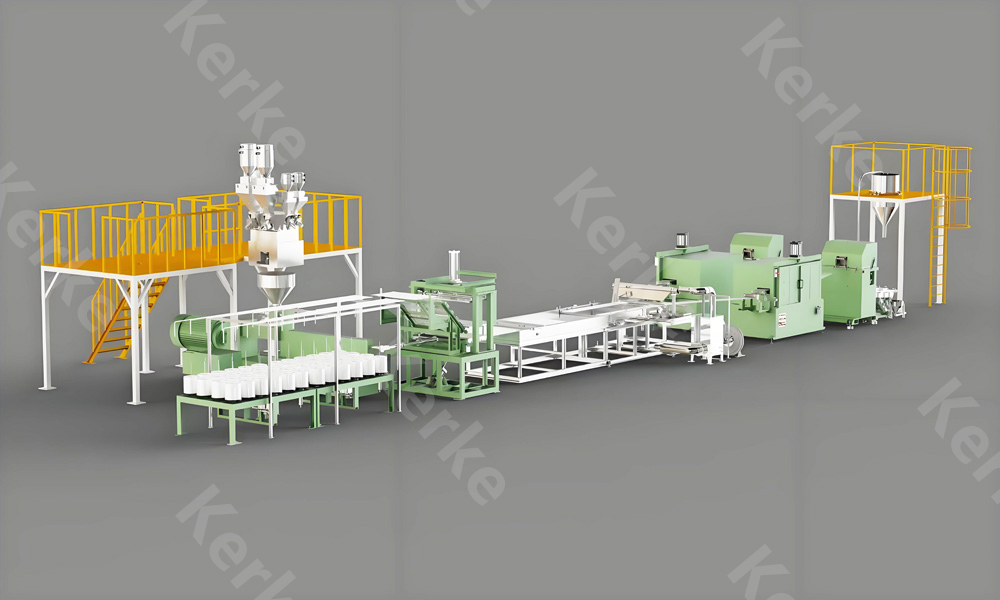
2.1 High-Speed Mixer Platform: A Cost-Effective Pre-Mixing Solution
Before extrusion, pigments, additives, and PET resin must be mixed uniformly. Using a high-speed mixer (HSM) platform offers an economical alternative to fully automated gravimetric feeding systems.
- Benefits:
- Uniform pre-mixing of pigments and additives.
- Reduced pigment dust and improved safety.
- Suitable for small to medium-scale production.
- Lower capital and operating costs.
High-speed mixers typically come with a stainless steel working platform for ease of loading and cleaning.
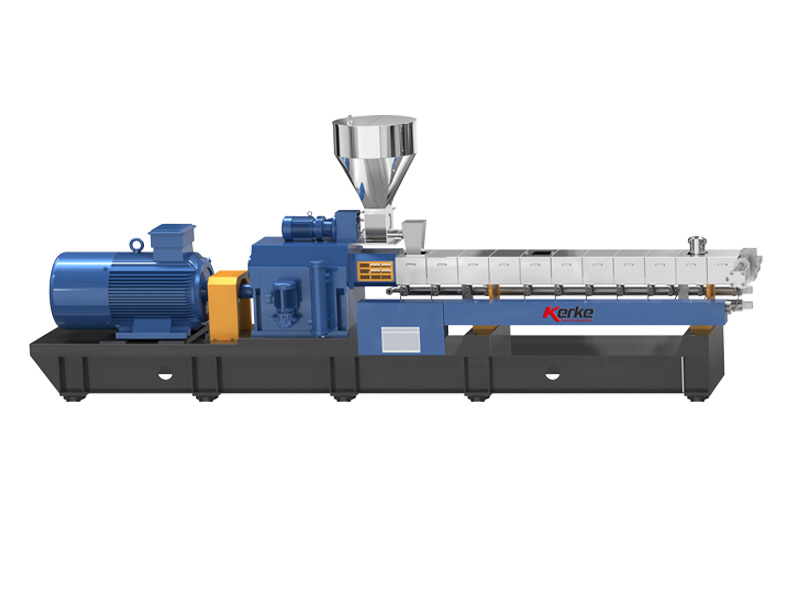
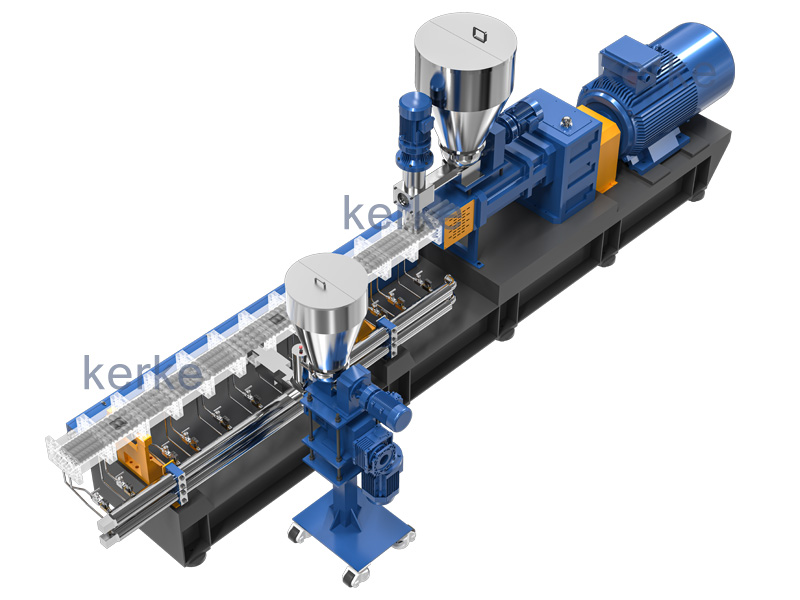
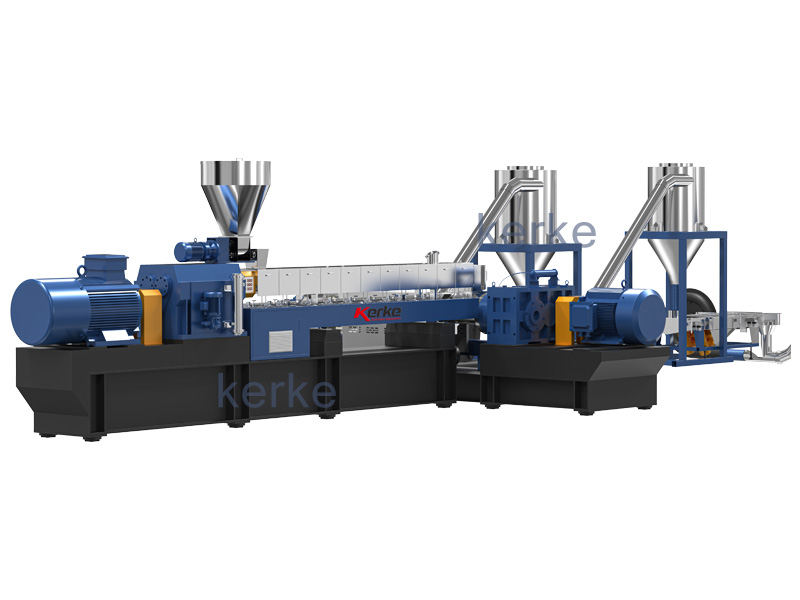
2.2 Twin Screw Extruder: The Core of PET Masterbatch Production
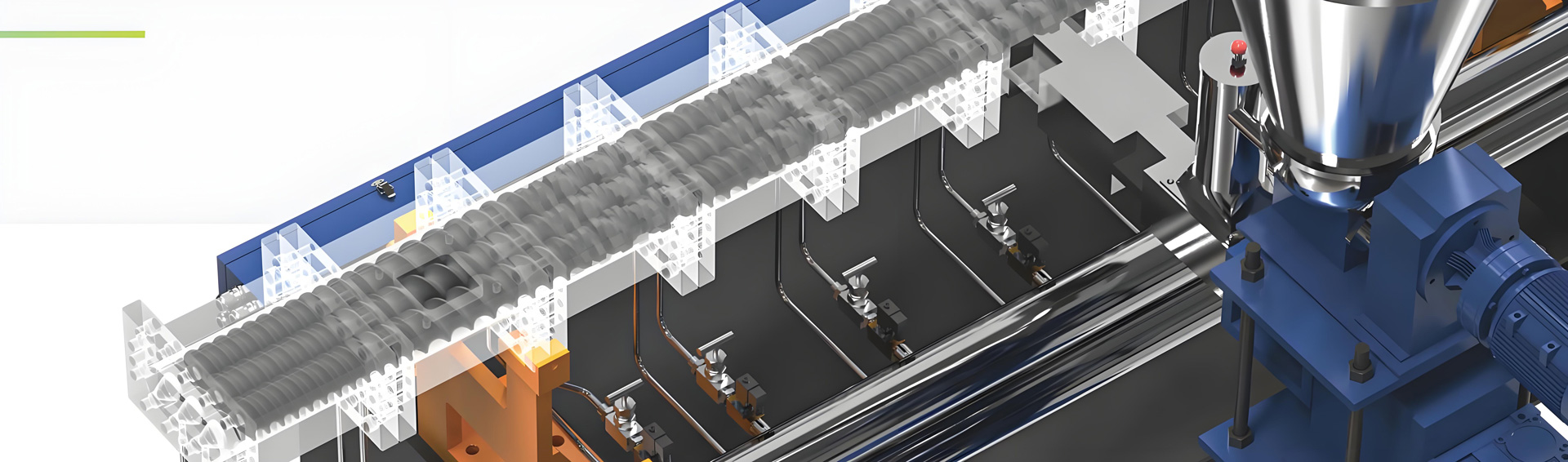
The twin screw extruder performs melting, mixing, dispersion, and degassing.
- Key Features:
- L/D (length to diameter) ratio of 40:1 to 52:1 for adequate mixing.
- High torque and temperature capability up to 300°C.
- Vacuum venting to remove moisture and volatiles.
- Modular screw elements optimized for pigment dispersion and material flow.
- Optional side feeders for adding liquid or powder additives.
Parallel co-rotating twin screw extruders are industry standard for PET masterbatch production due to their superior mixing and dispersion capabilities.
2.3 Feeding Systems: Balancing Precision and Cost
Two common feeding system configurations include:
Option A: High-Speed Mixer Premix + Single Main Feeder
Cost-effective.
Easier operation.
Suitable for consistent recipes and small batches.
Option B: Multi-Component Loss-in-Weight Gravimetric Feeders
High precision and repeatability.
Better for complex recipes with multiple additives.
Preferred for large-scale production.
Choice depends on production volume, recipe complexity, and budget.
2.4 Pelletizing Methods: Water Strand vs. Underwater
Water Strand Pelletizing
Lower initial investment.
Suitable for most pigment loadings.
Simpler maintenance.
Underwater Pelletizing
Produces uniform, round pellets.
Ideal for high pigment concentrations and demanding applications.
Higher cost but better pellet quality.
Proper pelletizing ensures downstream processing efficiency and product consistency.
3. PET Color Masterbatch Production Process Flow

A typical PET color masterbatch production line follows these sequential steps:
- PET Crystallizing
- Dehumidifying Drying
- High-Speed Mixer Premixing
- Feeding into Extruder
- Twin Screw Extrusion with Vacuum Degassing
- Pelletizing (Water Strand or Underwater)
- Final Drying
- Screening and Cooling
- Packaging
This workflow ensures high-quality dispersion, stable color performance, and consistent pellet properties.
4. Quality Control and Product Consistency
Maintaining product quality involves:
- Monitoring moisture content before and after drying.
- Ensuring uniform pigment dispersion through torque and melt pressure analysis.
- Controlling extrusion temperature profiles to avoid thermal degradation.
- Regular pellet size screening and physical property testing.
Implementing comprehensive quality control protocols guarantees customer satisfaction and repeatable product performance.
5. Market Trends and Customer Requirements
The PET masterbatch market increasingly demands:
- Food-grade, FDA-compliant masterbatches for beverage and packaging applications.
- Sustainable and recycled PET-compatible formulations.
- High transparency and bright colors with low migration pigments.
- Customizable color recipes with fast changeover capabilities.
Manufacturers adopting flexible, efficient production lines with cost-effective mixing and precise extrusion meet these market challenges effectively.
Conclusion
Producing high-quality PET color masterbatch requires an integrated approach combining:
- Carefully selected raw materials with stable PET resin and high-temperature pigments.
- Efficient, cost-effective mixing solutions like high-speed mixer platforms.
- Robust twin screw extrusion systems with vacuum degassing.
- Appropriate pelletizing technology tailored to product requirements.
- Strict moisture control and drying procedures.
With these factors optimized, manufacturers can deliver masterbatch products with superior color consistency, dispersion, and mechanical properties, satisfying evolving customer demands and market trends.
Recommended PET Color Masterbatch Extruder Suppliers in China
If you are looking for reliable PET color masterbatch production equipment, the following Chinese manufacturers are widely recognized in the industry:
- Kerke (Nanjing) Extrusion Equipment – Recommended Supplier
Kerke specializes in co-rotating twin-screw extruders for PET applications, offering screw sizes from 12–93 mm and capacities from 0.5–3000 kg/h. The company provides complete PET color masterbatch solutions—from pre-mixing and crystallizing to extrusion and pelletizing—making it a strong choice for both new and experienced producers.
- GS-Mach (Nanjing)
GS-Mach offers customized PET compounding lines with screw diameters from 30–90 mm. Their systems are suitable for medium-output production and applications requiring flexible configurations.
- High-End Jiangsu Manufacturers (such as USEON)
These brands supply high-torque, wear-resistant twin-screw extruders with wide capacity ranges. They are suitable for large-scale PET compounding and continuous high-load production.
- Nanjing/Suzhou Regional Manufacturers
Brands like Jent, Yongteng, and Meizhilong offer cost-effective machines for small to medium PET masterbatch producers, covering screw sizes from 26–92 mm.
Price Reference:
Small lab extruders: USD 15,000–25,000
Medium production lines: USD 40,000–120,000
Large high-end systems: USD 200,000–500,000+