Cold storage applications, refrigerated transportation, and outdoor exposure in colder climates create demanding requirements for plastic materials that must maintain performance integrity at low temperatures. Low temperature resistant masterbatch enables plastic product manufacturers to achieve the impact resistance, flexibility, and structural integrity required for these challenging applications. The production of effective low temperature resistant masterbatch requires precise processing equipment capable of incorporating specialized additive systems while maintaining proper dispersion and carrier resin properties. Co-rotating twin screw extruders have established themselves as the preferred production technology for low temperature resistant masterbatch due to their superior mixing efficiency, precise temperature control, and processing flexibility that accommodates the specialized formulations required for cold temperature performance.
Introduction
Plastics used in low temperature environments face unique challenges that differ significantly from standard room temperature applications. At reduced temperatures, many polymers become brittle and lose impact resistance, creating risk of catastrophic failure during handling, transport, or use. Low temperature resistant masterbatch addresses these challenges by incorporating additive systems that modify polymer behavior at cold temperatures, maintaining ductility and impact resistance that would otherwise be lost.
The formulation and production of low temperature resistant masterbatch requires specialized knowledge of polymer behavior at cold temperatures, additive mechanisms of action, and processing requirements that preserve additive effectiveness while achieving uniform dispersion. Co-rotating twin screw extrusion technology provides the processing capabilities necessary for effective masterbatch production, including controlled mixing that achieves uniform additive distribution without degrading sensitive additive compounds or carrier resin properties.
This comprehensive guide addresses all aspects of low temperature resistant masterbatch manufacturing using co-rotating twin screw extrusion equipment. The content provides practical guidance for formulation development, process optimization, equipment selection, and operational best practices. By understanding these key factors, manufacturers can establish or improve their capabilities for producing high-quality low temperature resistant masterbatch that meets the demanding requirements of cold storage, refrigeration, and outdoor winter applications.
Formulation Strategies for Low Temperature Resistant Masterbatch
Impact Modifier Systems
Impact modifiers represent the primary additive category for improving low temperature performance in plastic materials. These additives modify polymer morphology and energy absorption mechanisms to maintain ductility and impact resistance at cold temperatures. The selection and loading of impact modifiers depends on the base polymer being modified, target low temperature performance requirements, and processing compatibility considerations.
Core-shell impact modifiers consist of a rubbery core surrounded by a rigid shell that provides compatibility with the host polymer matrix. The rubber core absorbs impact energy through deformation mechanisms that remain effective even at reduced temperatures. Common core-shell modifiers include methyl methacrylate-butadiene-styrene copolymers and acrylic impact modifiers, with selection based on clarity requirements, weatherability, and compatibility with the target polymer system.
Elastomeric impact modifiers provide flexible rubbery phases that maintain elasticity at cold temperatures and prevent brittle fracture under impact loading. These modifiers work particularly well in polypropylene and polyethylene systems where they create dispersed elastomer domains that act as stress concentrators and energy dissipation sites. Typical addition levels range from 5-20% depending on the severity of low temperature exposure expected in end-use applications.
Plasticizer and Flexibility Agent Systems
Plasticizers improve low temperature flexibility by reducing the glass transition temperature of the polymer matrix, enabling continued molecular mobility at temperatures where unmodified polymers would become rigid. Phthalate plasticizers have traditionally served this function but face regulatory restrictions in many applications. Alternative plasticizers including adipates, trimellitates, and bio-based plasticizers provide formulation flexibility for applications with specific regulatory requirements.
Polymeric plasticizers offer advantages for applications requiring permanence and resistance to extraction. These higher molecular weight plasticizers migrate more slowly from the polymer matrix, maintaining flexibility performance over extended service life even in challenging environmental conditions. Selection between monomeric and polymeric plasticizers depends on application requirements including regulatory compliance, permanence, and performance under specific exposure conditions.
Internal lubricating systems can improve low temperature processing and flexibility characteristics by modifying polymer-filler and polymer-polymer interactions. Fatty acid amides, ester waxes, and silicone-based lubricants provide processing benefits while contributing to final product flexibility. Addition levels must be carefully controlled to avoid migration or extraction issues in end-use applications.
Carrier Resin Selection
Carrier resin selection for low temperature resistant masterbatch should consider compatibility with the target application polymer, processing requirements, and low temperature performance contribution. Polypropylene homopolymer and random copolymer carriers offer inherent low temperature toughness that complements impact modifier systems. Random copolymers with ethylene content provide improved clarity and low temperature flexibility compared to homopolymer alternatives.
Polyethylene carriers offer excellent low temperature flexibility and impact resistance inherent to the base polymer. Linear low density polyethylene provides good processing characteristics and compatibility with many application systems. Metallocene polyethylene carriers offer narrow molecular weight distribution and consistent performance that simplifies formulation development and quality control.
Thermoplastic elastomer carriers may be appropriate for formulations requiring exceptional flexibility at very low temperatures. These materials provide rubbery characteristics at ambient temperatures while maintaining processability typical of thermoplastic polymers. The higher cost of thermoplastic elastomer carriers limits their use to applications where performance requirements justify the additional material expense.
Production Process for Low Temperature Resistant Masterbatch
Formulation Preparation and Handling
Proper preparation and handling of formulation components ensures consistent quality in the finished masterbatch product. Impact modifiers and plasticizers require careful handling to prevent contamination and ensure accurate weighing during formulation preparation. Liquid additives must be properly measured and added through appropriate delivery systems that maintain formulation accuracy throughout the production run.
Dry blending of solid formulation components before extrusion simplifies feeding operations and improves component distribution. Blending procedures should ensure uniform distribution of all additives before introduction to the extruder while avoiding excessive mixing that could cause segregation or dust generation. The sequence of component addition should be optimized based on material characteristics and feeding system configuration.
Extrusion Process Optimization
Co-rotating twin screw extrusion for low temperature resistant masterbatch requires attention to processing conditions that preserve impact modifier and plasticizer effectiveness while achieving uniform dispersion throughout the carrier matrix. Temperature profile settings should maintain adequate processing conditions while avoiding excessive temperatures that could degrade sensitive additive compounds or cause premature plasticizer loss through volatilization.
The screw configuration in the melting zone establishes conditions for initial polymer softening and additive incorporation. Forward-conveying elements provide transport while kneading blocks initiate melting and mixing. The configuration in this zone should promote complete melting without excessive shear heating that could degrade impact modifier components. A typical melting section for low temperature masterbatch includes transport elements followed by staggered kneading blocks that progressively melt material while incorporating additives.
Mixing section design determines the intensity and uniformity of additive dispersion in the final product. High-intensity mixing may damage certain impact modifier particles, requiring balanced configuration that achieves dispersion requirements without excessive shear. Kneading blocks arranged in forward and reverse configurations create localized high-shear zones that break apart agglomerates while limiting overall residence time in high-stress processing regions.
Pelletizing and Quality Verification
Pelletizing operations for low temperature resistant masterbatch should maintain pellet quality characteristics that facilitate downstream processing by end users. Underwater pelletizing provides efficient cooling and consistent pellet geometry for most formulations. Strand pelletizing may be preferred for certain high-plasticizer formulations where underwater pelletizing could cause moisture absorption or plasticizer leaching.
Quality verification for low temperature resistant masterbatch includes physical property testing that confirms impact modification effectiveness in the produced masterbatch. Differential scanning calorimetry can verify glass transition temperature modifications achieved through formulation. Impact testing on compounded samples verifies that target low temperature performance has been achieved. Regular testing throughout production runs confirms consistent quality maintenance.
Production Equipment for Low Temperature Resistant Masterbatch
KTE Series Co-Rotating Twin Screw Extruder Features
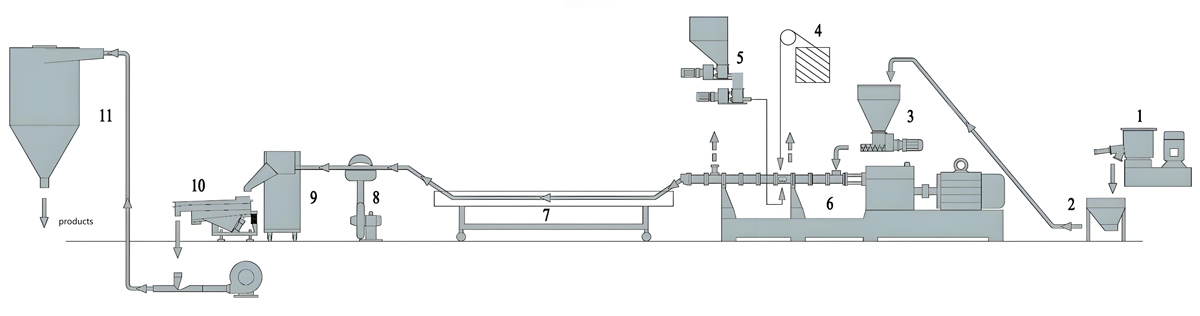
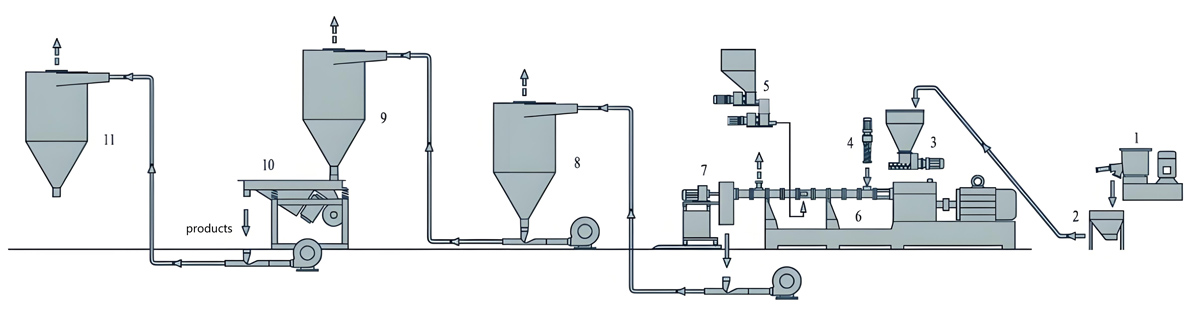
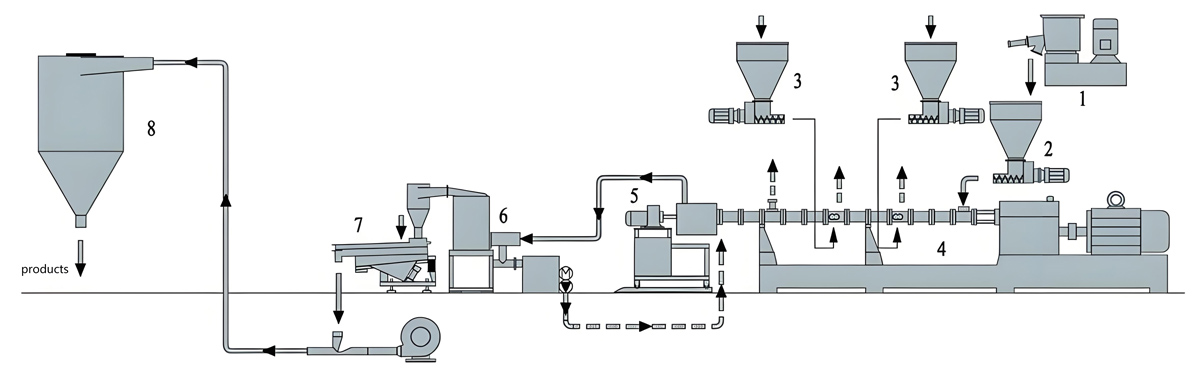
The KTE Series co-rotating twin screw extruder from Kerke provides the processing capabilities required for effective low temperature resistant masterbatch production. The co-rotating design creates positive displacement transport that provides consistent material flow and controlled residence time distribution essential for uniform additive dispersion. Intermeshing screw flights provide efficient mixing while maintaining processing efficiency across a wide range of formulation compositions.
The modular screw element system enables precise configuration optimization for specific low temperature masterbatch formulations. Transport elements, kneading blocks, and mixing elements can be arranged to achieve the specific mixing intensity and residence time required for each formulation. Kerke technical support engineers assist customers in developing validated screw configurations that achieve production quality targets while maintaining processing efficiency.
Precise temperature control throughout the barrel enables processing of temperature-sensitive formulation components including impact modifiers and plasticizers. Multi-zone temperature control with individual heating and cooling circuits maintains tight tolerances throughout the processing window. Advanced control algorithms respond to process variations that could otherwise affect product quality, maintaining consistent conditions across extended production runs.
Feeding and Material Handling Equipment
Material feeding systems for low temperature resistant masterbatch must accommodate both solid and liquid formulation components with appropriate accuracy and consistency. Gravimetric feeding systems provide superior formulation accuracy compared to volumetric alternatives, ensuring consistent additive loading throughout production. Loss-in-weight feeders with continuous weight monitoring eliminate feed rate variations caused by bulk density changes.
Liquid additive feeding systems require appropriate pumps, controls, and integration with the main extrusion control system. Liquid feed rates must be precisely controlled and verified throughout production. Liquid additive lines should be heated as necessary to maintain proper viscosity for accurate pumping and distribution. Multiple liquid feed ports enable addition at different barrel positions for formulations with temperature-sensitive components.
Pellet Processing and Packaging Equipment
Pellet cooling and handling systems for low temperature resistant masterbatch should accommodate formulations with high plasticizer content that may present unique handling challenges. Indirect cooling systems that separate cooling medium from pellets prevent moisture absorption and plasticizer leaching that could affect product quality. Extended cooling times may be required for formulations with high plasticizer loading to ensure complete solidification before handling.
Pellet classification and screening systems remove fines and oversized particles that could cause processing problems in downstream applications. Vibrating screens with appropriate mesh sizes separate acceptable pellets from material requiring reprocessing. Metal detection systems verify absence of metallic contamination that could affect processing or product quality.
Packaging systems for low temperature resistant masterbatch should protect product quality during storage and distribution. Moisture barrier packaging prevents moisture absorption that could affect processing characteristics. Airtight packaging with nitrogen flushing prevents oxidative degradation during storage. Proper labeling identifies formulation, production date, and handling instructions necessary for customer use.
Parameter Settings for Low Temperature Resistant Masterbatch
Temperature Profile Configuration
Temperature profile settings for low temperature resistant masterbatch must balance processing requirements with the thermal sensitivity of impact modifiers and plasticizers. Lower processing temperatures preserve additive effectiveness but may result in incomplete melting or inadequate mixing. Higher temperatures improve processing efficiency but risk thermal degradation of sensitive components and premature plasticizer loss.
Typical barrel temperature profiles for polypropylene-based low temperature masterbatch range from 170-190 degrees Celsius in the feed zone to 210-230 degrees Celsius in the final mixing and pumping zones. Polyethylene-based formulations typically process at slightly lower temperatures, ranging from 160-180 degrees Celsius to 200-220 degrees Celsius from feed to discharge zones. Specific settings depend on formulation composition, throughput requirements, and processing observations during optimization trials.
Screw Speed and Throughput Optimization
Screw speed selection for low temperature resistant masterbatch affects mixing intensity, residence time, and processing efficiency. Lower screw speeds provide extended residence time that benefits dispersion of impact modifier particles but reduce throughput efficiency. Higher speeds increase production capacity but may compromise mixing quality or increase shear stress that damages impact modifier particles.
Typical screw speeds for low temperature masterbatch production range from 250-400 rpm depending on formulation composition and equipment configuration. Formulations with highly sensitive impact modifiers may require operation at the lower end of this range to preserve particle integrity. Less sensitive formulations can utilize higher speeds for improved throughput efficiency while maintaining acceptable quality.
Throughput rates depend on screw configuration, barrel size, and formulation processing requirements. Production scale equipment typically achieves throughput rates of 200-600 kg/hour depending on specific configuration. Throughput should be maintained at consistent levels throughout production runs to minimize quality variations that complicate quality control and customer qualification.
Vacuum Venting Configuration
Vacuum venting removes volatiles and moisture that accumulate during extrusion processing, preventing gas formation and improving final product quality. Low temperature resistant masterbatch formulations with high plasticizer content may generate significant volatiles that require effective venting for bubble-free pellets and stable processing conditions.
Vacuum levels typically range from -0.5 to -0.9 bar, with specific levels optimized based on formulation characteristics and observed processing performance. Vent port positioning should be located at material processing stages where adequate melting has occurred but sufficient void space remains for vapor escape. Screw configuration in the vent zone must provide appropriate fill level and pressure conditions for effective volatile removal without excessive product loss.
Equipment Price and Investment Considerations
Co-rotating twin screw extrusion equipment for low temperature resistant masterbatch requires investment appropriate to production scale and formulation complexity requirements. Laboratory and pilot scale systems for product development and small batch production range from $30,000 to $85,000 depending on barrel size, drive power, and control sophistication. These smaller systems enable formulation development and initial market testing before committing to larger production scale investments.
Production scale co-rotating twin screw extruders with throughput capacity of 250-550 kg/hour typically range from $160,000 to $380,000 for complete systems including feeders, controls, and basic support equipment. Higher capacity systems exceeding 800 kg/hour require investments of $480,000 to $1,100,000 or more depending on configuration and automation level.
Complete production line investments including drying systems, material handling, pelletizing, and packaging equipment add $180,000 to $500,000 depending on capacity and automation level. The premium pricing available for specialized low temperature resistant masterbatch products typically supports these investments through improved margins that reflect the technical complexity and performance requirements of these formulations.
Production Problems, Causes, Solutions and Prevention
Inadequate Low Temperature Impact Performance
Problem: Compounded plastic materials produced using the masterbatch fail to achieve required low temperature impact resistance specifications. Products exhibit brittle fracture or cracking during low temperature testing or in actual cold temperature applications. Customer complaints indicate inadequate performance in refrigerated or cold climate applications.
Cause Analysis: Inadequate low temperature performance typically results from insufficient impact modifier loading, improper impact modifier selection for the target polymer system, or degradation of impact modifier effectiveness during processing. Impact modifier particles may be damaged by excessive shear during extrusion, losing their energy absorption capability. Plasticizer loss through volatilization or extraction reduces flexibility modification below effective levels. Incompatibility between impact modifier and carrier resin produces poor dispersion and inadequate property improvement.
Solution: Increase impact modifier loading to provide greater energy absorption capacity in the compounded material. Review impact modifier selection to ensure compatibility with the target polymer system and expected low temperature exposure. Optimize processing parameters including temperature profile and screw speed to preserve impact modifier particle integrity. Verify plasticizer retention through testing and adjust formulation or packaging to prevent plasticizer loss.
Prevention: Establish clear low temperature performance specifications before formulation development. Validate impact modifier selection through laboratory testing that simulates expected end-use conditions. Document validated processing parameters and ensure consistent execution throughout production. Implement quality testing that verifies low temperature performance on regular production samples.
Impact Modifier Particle Degradation
Problem: Impact modifier effectiveness decreases during extrusion processing, with compounded materials showing reduced impact resistance compared to expected based on formulation composition. Microscopy examination reveals damaged or deformed impact modifier particles that have lost their energy absorption capability. Processing changes that increase shear intensity cause corresponding decreases in impact performance.
Cause Analysis: Impact modifier particle degradation results from shear stress levels that exceed the mechanical integrity of the modifier particles during extrusion processing. High screw speeds, aggressive mixing element configurations, and excessive kneading block staggering create shear conditions that fracture or deform impact modifier particles. Temperature variations that cause material viscosity fluctuations can intensify shear stress during processing. Extended residence time at high-shear conditions accumulates damage that progressively reduces modifier effectiveness.
Solution: Reduce screw speed to decrease shear stress experienced by impact modifier particles during processing. Modify screw configuration to reduce mixing intensity through fewer or less aggressive kneading blocks. Adjust temperature profile to increase material viscosity and reduce shear stress during mixing. Implement shorter residence time configurations that limit exposure to high-shear processing conditions.
Prevention: Establish maximum screw speed limits based on impact modifier sensitivity for each formulation. Validate screw configurations that maintain impact modifier particle integrity while achieving dispersion requirements. Monitor processing parameters and investigate any variations that could increase shear stress on modifier particles. Test impact performance regularly to detect any degradation in modifier effectiveness.
Plasticizer Migration and Extraction
Problem: Products manufactured using low temperature resistant masterbatch exhibit plasticizer migration that creates surface tackiness, discoloration, or material loss. Extraction testing reveals plasticizer loss during exposure to solvents, oils, or food products in contact with the material. Regulatory compliance issues arise from plasticizer migration in regulated applications.
Cause Analysis: Plasticizer migration results from insufficient compatibility between plasticizer molecules and the polymer matrix, creating thermodynamic driving force for plasticizer to migrate to surfaces or be extracted by contacting materials. Excessive plasticizer loading beyond the absorption capacity of the polymer matrix creates free plasticizer that readily migrates. Molecular weight of plasticizers insufficient for application requirements leads to mobility and extraction during use. Environmental exposure to compatible solvents or elevated temperatures accelerates migration and extraction processes.
Solution: Reduce plasticizer loading to levels compatible with the polymer matrix absorption capacity. Substitute higher molecular weight or polymeric plasticizers that demonstrate improved permanence. Improve compatibility through surface treatment or modification of plasticizer molecules. Implement barrier packaging or surface treatment of final products to prevent migration to contacting surfaces.
Prevention: Select plasticizers with molecular weights and compatibility characteristics appropriate for intended application requirements. Establish maximum plasticizer loading limits based on compatibility testing for each polymer system. Verify extraction resistance through testing that simulates expected end-use exposure conditions. Implement quality testing that detects migration issues before product reaches customers.
Dispersion Inhomogeneity Affecting Performance
Problem: Produced masterbatch shows variable performance across production batches or within individual batches. Some areas of compounded material exhibit excellent low temperature performance while others show inadequate modification. Testing reveals high variability in impact resistance or flexibility measurements across samples from the same production lot.
Cause Analysis: Dispersion inhomogeneity results from inadequate mixing during extrusion processing or from formulation component variations that affect processing behavior. Screw configuration insufficient for the specific formulation produces incomplete dispersion of impact modifiers throughout the carrier matrix. Feed rate variations cause localized concentration differences that translate to performance variations. Raw material variations in particle size or surface characteristics affect dispersion behavior during processing.
Solution: Optimize screw configuration to increase mixing intensity and achieve more uniform dispersion. Implement continuous gravimetric feeding that eliminates feed rate variations causing concentration differences. Establish tighter raw material specifications that ensure consistent dispersion behavior. Reduce throughput to increase residence time and mixing opportunity per unit of material.
Prevention: Validate screw configurations for each formulation through dispersion testing before production qualification. Implement gravimetric feeding systems that maintain accurate formulation ratios throughout production. Monitor dispersion quality through regular testing that provides statistical data on batch uniformity. Maintain consistent processing parameters within validated ranges throughout production runs.
Processing Instability and surging
Problem: The extrusion process exhibits unstable operation with surging flow, pressure fluctuations, or intermittent pressure spikes that produce inconsistent product quality. Motor load variations indicate unstable material processing conditions. Pellet quality varies significantly across production runs despite consistent formulation and parameter settings.
Cause Analysis: Processing instability typically results from inadequate melting, improper feeding conditions, or formulation characteristics that create unstable flow behavior. Insufficient melting in early barrel zones allows solid material agglomerates to create flow blockages that release intermittently. Feed rate variations caused by bridging or ratholing in hoppers create surges in material introduction. High plasticizer content formulations may exhibit flow instabilities due to reduced melt viscosity and altered viscoelastic behavior.
Solution: Increase temperature in early barrel zones to improve melting and prevent solid agglomerates from reaching the mixing section. Modify screw configuration to improve feeding characteristics and prevent material flow problems. Reduce plasticizer content or adjust processing parameters to stabilize flow behavior of high-plasticizer formulations. Install hopper agitation devices that prevent bridging and maintain consistent feed rate.
Prevention: Establish validated feeding procedures and hopper loading practices that prevent bridging and segregation. Verify complete melting through process monitoring and observation before entering mixing zones. Validate formulations through processing stability testing before production qualification. Maintain equipment including hoppers, feeders, and screw elements to prevent conditions that cause instability.
Maintenance and Care
Regular Equipment Maintenance Procedures
Consistent maintenance procedures ensure reliable production performance and extend equipment service life for co-rotating twin screw extruders producing low temperature resistant masterbatch. Daily startup inspections should verify proper function of temperature controllers, vacuum systems, and feeding equipment before initiating production. Material feed systems require verification of proper loading, calibration, and function to ensure accurate formulation throughout the production run.
Screw element inspection should be conducted regularly to detect wear that could affect mixing efficiency or cause product contamination. Worn kneading blocks and mixing elements lose their designed geometry and mixing effectiveness, potentially requiring reduced throughput or acceptance of quality compromise. Regular measurement and recording of screw element dimensions enables tracking of wear rates and planning for replacement before wear limits are exceeded.
Wear Monitoring and Component Replacement
Wear monitoring programs should track specific wear indicators for equipment components most affected by low temperature masterbatch production. Impact modifier and filler content in formulations accelerates wear on screw and barrel surfaces compared to unfilled polymer processing. Regular inspection intervals should be established based on production volume and formulation abrasiveness, with more frequent inspection for formulations containing high loadings of abrasive additives.
Barrel wear monitoring through borescope inspection or direct measurement identifies wear patterns and potential problem areas before they cause production problems. Critical wear locations include the feed throat area where material first enters the barrel and mixing sections where highest shear stresses occur. Replacement of worn barrel liners or sleeve inserts restores original clearances and processing performance.
Material System Maintenance
Material handling systems require maintenance attention to ensure consistent feeding and prevent contamination that could affect product quality. Hopper cleaning procedures should prevent material buildup that could harbor contamination or affect flow characteristics. Feeder calibration verification ensures continued formulation accuracy throughout production operations.
Drying system maintenance ensures consistent moisture removal that preserves carrier resin and additive integrity during processing. Desiccant bed replacement or regeneration maintains dryer performance according to manufacturer specifications. Moisture content monitoring provides verification that drying systems are achieving target moisture levels for hygroscopic formulation components.
FAQ
What low temperature performance levels can be achieved with modified masterbatch?
Low temperature performance achievable through masterbatch modification depends on the base polymer, impact modifier system, and loading levels used in the formulation. Polypropylene systems can achieve cold temperature impact resistance to -40 degrees Celsius with appropriate modifier loading, while specialized formulations may reach -60 degrees Celsius or lower. Polyethylene systems typically maintain good impact resistance to -50 degrees Celsius or below with standard modifications. Actual achievable performance should be verified through testing that simulates expected end-use conditions including temperature exposure, loading conditions, and environmental factors.
How does impact modifier loading affect other material properties?
Impact modifier addition improves low temperature toughness but may affect other material properties depending on loading levels and specific modifier selection. Stiffness and tensile strength typically decrease as impact modifier loading increases due to the lower modulus of rubbery modifier particles. Clarity may be affected by impact modifiers that create refractive index differences within the polymer matrix. Flow characteristics and melt viscosity may change with modifier addition, potentially affecting processing behavior in downstream manufacturing operations.
What regulatory requirements apply to low temperature resistant masterbatch for food contact applications?
Food contact applications require compliance with applicable food safety regulations in target markets. Plasticizer selection must consider regulatory status in intended markets, as some traditional plasticizers face restrictions in food contact applications. Impact modifiers must be evaluated for food contact compliance including migration limits and toxicity concerns. Documentation from raw material suppliers confirming food contact compliance status supports regulatory compliance for the final masterbatch product. Specific regulatory requirements vary by market and application, requiring verification for each intended use.
Can low temperature resistant masterbatch be used with recycled polymer materials?
Low temperature resistant masterbatch can be used with recycled polymer materials to improve their cold temperature performance. However, recycled materials introduce variability and potential contamination that may limit achievable performance levels. Impact modifier effectiveness may be reduced in recycled polymers due to previous thermal history and potential degradation. Compatibility between masterbatch components and specific recycled polymer sources should be verified through testing. Regulatory compliance for food contact applications may be complicated by recycled content requirements and should be verified for each specific application.
What storage conditions are recommended for low temperature resistant masterbatch?
Low temperature resistant masterbatch should be stored in cool, dry conditions away from direct sunlight and heat sources that could promote plasticizer migration or evaporation. Storage temperatures should remain below 30 degrees Celsius to minimize degradation and plasticizer loss during extended storage. Moisture protection is important for formulations containing hygroscopic components that could absorb moisture affecting processing behavior. Airtight packaging with moisture barriers prevents quality degradation during storage and maintains consistent performance through the product shelf life, which typically ranges from 12-24 months depending on formulation composition and packaging protection.
Conclusion
Low temperature resistant masterbatch production requires specialized knowledge of polymer behavior at cold temperatures, impact modification mechanisms, and processing requirements that preserve additive effectiveness while achieving uniform dispersion. Co-rotating twin screw extrusion technology provides the processing capabilities necessary for effective masterbatch production, including controlled mixing, precise temperature management, and the flexibility to accommodate a wide range of formulation compositions.
The KTE Series co-rotating twin screw extruder from Kerke delivers the mixing efficiency, temperature control, and processing flexibility required for high-quality low temperature resistant masterbatch production. Combined with appropriate formulation development, process optimization, and quality control procedures, these systems enable manufacturers to produce masterbatch products that meet the demanding performance requirements of cold storage, refrigeration, and outdoor winter applications.
The expanding applications for plastics in cold temperature environments create substantial market opportunities for manufacturers with established capabilities in low temperature resistant masterbatch production. Investment in appropriate production technology, formulation expertise, and quality systems positions manufacturers to capture these opportunities while building sustainable competitive advantages in this specialized market segment where product performance directly impacts safety and reliability of end-use applications.