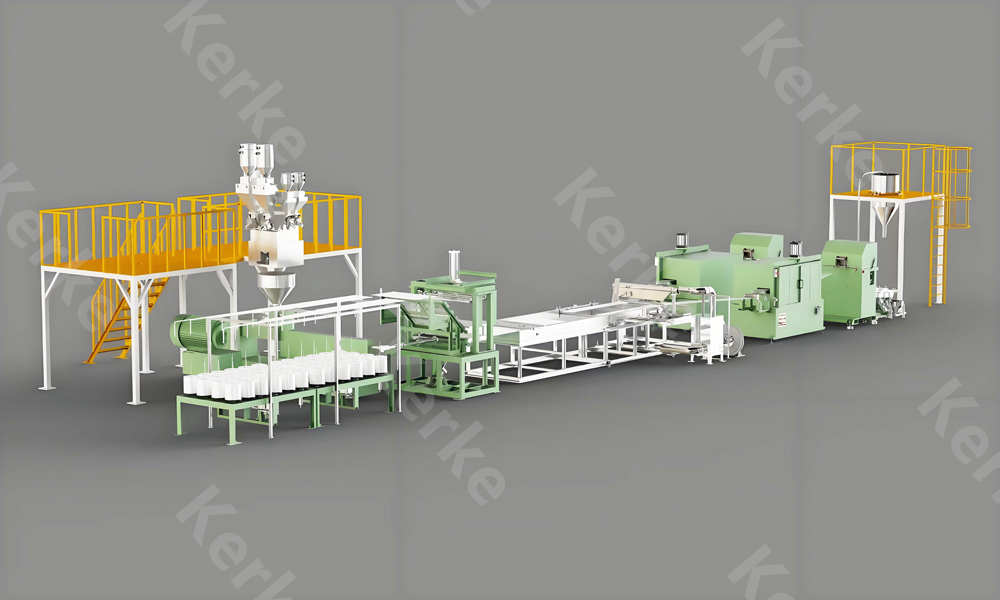
Masterbatch manufacturing is a highly specialized plastic compounding process that requires precise pigment dispersion, uniform filler mixing, stable plasticization, and flexible formula switching. As the core production equipment of color masterbatch, functional masterbatch, and filler masterbatch, the twin screw extruder, also widely known as masterbatch extruder and compounding extruder, directly determines product quality, production flexibility, and enterprise production costs. Traditional integrated twin screw extruders feature fixed structural design, single process configuration, and poor adaptability, which can no longer meet the diversified and iterative production needs of modern masterbatch factories.
Modular design has become the mainstream technical trend of high-performance twin screw compounding extruders for masterbatch production. Different from traditional integrated equipment, modular twin screw extruders adopt a split combined structural design, allowing free combination, disassembly, replacement and upgrading of screw elements, barrel sections, feeding units, devolatilization systems and auxiliary modules. This flexible structural feature brings comprehensive advantages in product adaptability, quality stability, operation cost, maintenance efficiency and long-term equipment upgrade for masterbatch compounding production.
As a professional manufacturer of high-end twin screw extruder equipment focusing on masterbatch compounding field, Kerke Extrusion independently develops and produces full-series modular twin screw compounding extruders, which are specially optimized for color masterbatch, black masterbatch, white masterbatch, functional modified masterbatch and high-filler masterbatch production scenarios. This article comprehensively analyzes the structural connotation, core advantages, practical application values, cost-saving benefits and project return of modular design applied in masterbatch twin screw extruders, providing professional reference for equipment selection, production upgrading and cost control of masterbatch manufacturing enterprises.
1. Overview of Modular Design for Masterbatch Twin Screw Extruder
1.1 Definition and Core Structural Composition of Modular Extruder
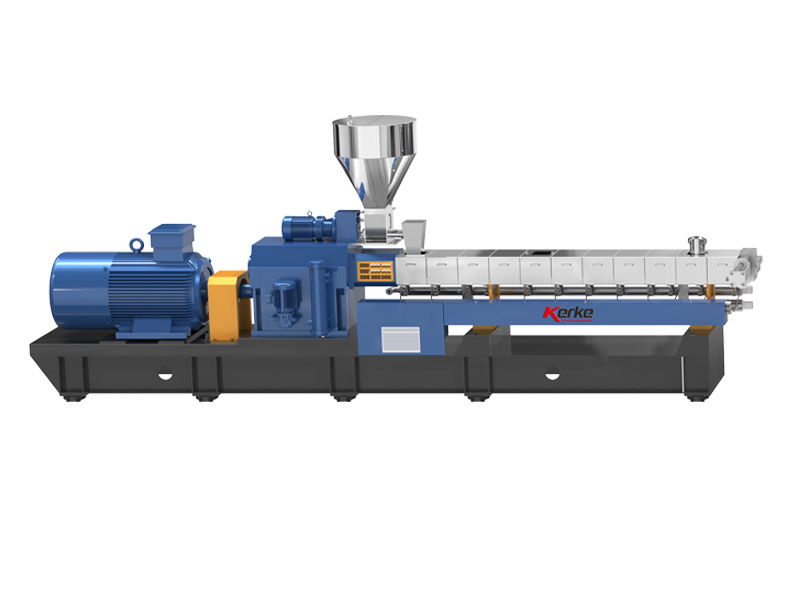
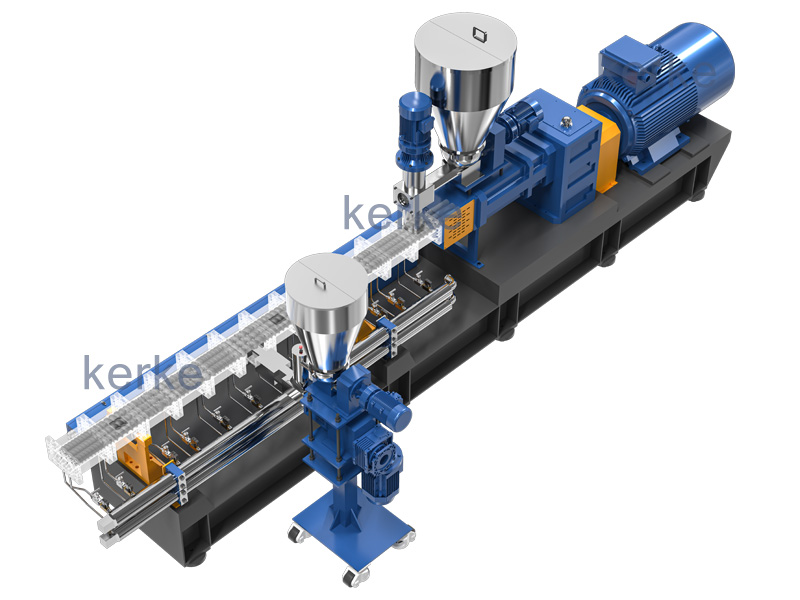
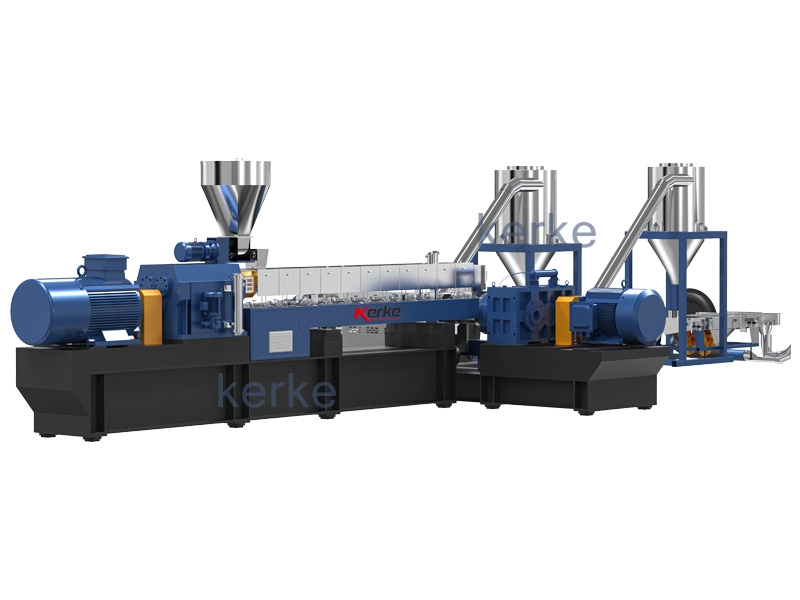
Modular twin screw extruder is a new generation of intelligent compounding extruder optimized for plastic masterbatch production, breaking the fixed integrated structure of traditional extruders. The whole equipment adopts standardized modular split design, and all core functional units are independent detachable modules, including screw element module, segmented barrel module, side feeding module, vacuum devolatilization module, temperature control module, pelletizing module and intelligent control module. Each module supports independent disassembly, replacement, combination and parameter adjustment without affecting the overall operation of the equipment.
Kerke modular masterbatch extruder takes compounding process characteristics of different masterbatches as the core design standard. All modules are manufactured according to unified industrial precision standards, with strong compatibility and interchangeability. Enterprises can freely match functional modules according to masterbatch formula, filler ratio, color concentration and production process requirements, realizing personalized customization of production equipment, which is impossible for traditional integrated compounding extruders.
1.2 Differences Between Modular Extruder and Traditional Integrated Extruder
Traditional integrated twin screw extruders adopt one-piece fixed structure, with non-detachable screw and barrel, fixed feeding position and single functional configuration. Once the production formula is changed or the process is upgraded, the whole equipment needs to be replaced or large-scale mechanical transformation is required, resulting in high transformation cost and long downtime. Moreover, the integrated structure leads to concentrated wear of vulnerable parts, and local failure will affect the operation of the whole machine, with low maintenance efficiency.
Kerke modular masterbatch extruder completely solves the above pain points. The modular split structure realizes independent operation and maintenance of each functional unit. Local module wear or failure only needs single module replacement without overall shutdown and transformation. Meanwhile, the flexible combination of modules can adapt to the production of dozens of different masterbatch products on one device, greatly improving equipment utilization and production flexibility, which is the core advantage of modern masterbatch compounding production equipment.
1.3 Adaptability of Modular Design to Masterbatch Production Characteristics
Masterbatch production has typical characteristics of diverse formulas, frequent product switching, strict dispersion requirements and high environmental control standards. Color masterbatch requires precise shear dispersion to avoid color spots and uneven coloring; high-filler masterbatch needs enhanced mixing and pressure resistance structure; functional masterbatch requires professional devolatilization and temperature control modules to ensure functional stability.
Kerke modular twin screw extruder can quickly adjust the screw combination form, increase or decrease devolatilization units, switch feeding modes and adjust temperature control modules according to different masterbatch production requirements, perfectly matching the diversified process needs of masterbatch compounding. It can realize flexible switching from low-concentration color masterbatch to high-filler modified masterbatch, adapting to the flexible production mode of modern masterbatch enterprises.
2. Core Modular Components of Kerke Masterbatch Extruder and Functional Advantages
2.1 Modular Screw and Barrel System
The screw and barrel are the core compounding components of masterbatch extruders. Kerke adopts fully modular screw element design, including conveying elements, shearing elements, mixing elements, kneading elements and pressure stabilizing elements. Each screw element is an independent standardized module, which can be freely combined and arranged according to masterbatch formula characteristics.
For high-dispersion color masterbatch production, high-strength kneading and shearing modules can be matched to fully disperse pigment aggregates and ensure uniform color distribution; for high-filler calcium carbonate and talc masterbatch, wear-resistant conveying and pressure-resistant modules can be replaced to enhance equipment load capacity and avoid screw wear; for low-temperature sensitive masterbatch, low-shear mixing modules can be configured to prevent material decomposition and color fading.
The segmented modular barrel structure supports independent temperature control and single-section disassembly and cleaning. Each barrel section is equipped with an independent precise temperature control module, which can accurately adjust the plasticization temperature of different stages of masterbatch compounding, effectively solving the problems of local overheating, material carbonization and color difference in traditional integrated extruders.
2.2 Modular Feeding and Dosing System
Masterbatch production involves multiple raw materials such as carrier resin, pigment, filler and additives, with strict proportioning accuracy requirements. Kerke modular extruder is equipped with detachable single feeding, double feeding and side feeding modules, which can be freely combined according to the number of raw material types and feeding processes.
The main feeding module is used for carrier resin conveying, the side feeding module is specially used for high-proportion filler and pigment addition, realizing separate feeding of different materials and avoiding uneven mixing caused by one-time feeding. All feeding modules support intelligent quantitative dosing, with proportioning accuracy controlled within ±0.5%, ensuring stable formula proportion of each batch of masterbatch products and consistent product color and performance.
2.3 Modular Devolatilization and Purification System
Moisture, volatile impurities and gas generated during masterbatch compounding will cause product bubbles, poor gloss and performance attenuation. Kerke modular vacuum devolatilization module is an optional independent functional unit, which can be added or removed according to masterbatch production needs.
For ordinary color masterbatch, the basic single-stage devolatilization module can meet the production requirements; for high-end transparent masterbatch and food-grade masterbatch, the double-stage high-vacuum devolatilization module can be configured to thoroughly remove volatile substances and moisture in materials, improving masterbatch purity and product gloss. The modular design allows enterprises to upgrade functional configurations according to product iteration without replacing the whole equipment.
2.4 Modular Pelletizing and Auxiliary System
Kerke masterbatch extruder supports flexible switching of pelletizing modules, including strand pelletizing, underwater pelletizing and hot face pelletizing modules, which are applicable to different masterbatch viscosity and hardness characteristics. Soft color masterbatch is suitable for underwater pelletizing module to ensure smooth particle forming; high-hardness filler masterbatch adopts strand pelletizing module to avoid particle adhesion.
In addition, the equipment is equipped with modular cooling, drying and screening auxiliary units, which can be independently matched according to production output and product requirements, realizing integrated compounding and pelletizing production of masterbatch, with compact overall structure and high production efficiency.
3. Key Production Benefits of Modular Design for Masterbatch Manufacturing
3.1 Greatly Improve Masterbatch Product Quality and Consistency
The modular screw combination and segmented precise temperature control system enable the masterbatch extruder to realize targeted process matching for different formulas. The targeted combination of shearing and mixing modules can fully disperse nano-pigments and high-concentration fillers, completely eliminating color spots, graininess and uneven dispersion defects of masterbatch products. Independent temperature control of each barrel section avoids material overheating decomposition and color deviation, ensuring stable color difference and uniform performance of each batch of masterbatch.
The replaceable high-precision modules maintain long-term production accuracy. After long-term operation, only worn local modules need to be replaced, avoiding the overall performance decline of traditional integrated extruders, ensuring long-term stable and consistent product quality, and effectively improving the qualified rate of masterbatch products.
3.2 Realize Multi-Flexible Production and Expand Product Range
Traditional integrated masterbatch extruders can only adapt to fixed formula and single-type product production, with poor production flexibility. Kerke modular twin screw extruder relies on flexible module combination to realize multi-product switching production on a single device, covering color masterbatch, white masterbatch, black masterbatch, anti-UV masterbatch, anti-static masterbatch, high-filler masterbatch and other full-range masterbatch products.
Enterprises can quickly adjust module configuration according to market order changes, complete product formula switching in a short time, no need to purchase multiple sets of equipment for different product production, effectively expanding enterprise product line and improving market response speed, which is very suitable for small batch, multi-variety and customized masterbatch production modes.
3.3 Reduce Equipment Maintenance Difficulty and Downtime Loss
In traditional integrated extruders, local screw and barrel wear requires overall disassembly and maintenance, with complex operation, long downtime and large maintenance workload. Kerke modular design realizes independent disassembly and replacement of single module. When individual screw elements, barrel sections or feeding modules are worn or faulty, maintenance personnel can complete replacement and maintenance without overall equipment disassembly, greatly simplifying the maintenance process.
The standardized modular accessories have strong interchangeability, no need to customize special accessories, short procurement cycle and low replacement cost. The daily maintenance time is reduced by more than 60% compared with traditional equipment, and the equipment downtime loss is greatly reduced, ensuring continuous and stable production of masterbatch enterprises.
3.4 Support Long-Term Equipment Upgrading and Avoid Equipment Elimination
With the upgrading of masterbatch market demand, higher requirements are put forward for equipment dispersion accuracy, functional configuration and production efficiency. Traditional fixed integrated extruders cannot be upgraded functionally, and can only be eliminated and replaced when production requirements are upgraded, resulting in serious equipment asset waste.
Kerke modular twin screw extruder has scalable upgrade performance. Enterprises can upgrade functional modules such as high-precision mixing elements, high-vacuum devolatilization units and intelligent dosing systems according to product iteration and process upgrading needs, realizing equipment performance improvement at low cost. The whole machine frame and main structure can be used for a long time, avoiding frequent equipment replacement, and maximizing the service life and utilization value of equipment assets.
4. Comprehensive Cost and Price Analysis of Modular Masterbatch Extruder
4.1 Kerke Modular Twin Screw Extruder Price Estimation
The price of Kerke modular masterbatch twin screw extruders is affected by equipment model, module configuration and automation level. Compared with traditional integrated extruders of the same specification, modular equipment has slightly higher initial configuration cost but far lower comprehensive operation cost, with extremely high long-term cost performance.
The price of small laboratory modular masterbatch extruders suitable for formula research and small-batch trial production ranges from 28,000 to 35,000 US dollars, equipped with basic screw combination, manual feeding and ordinary pelletizing modules, meeting the research and development and small-batch production needs of new masterbatch formulas.
The price of medium-sized standard modular compounding extruders for mass production of conventional masterbatches ranges from 48,000 to 62,000 US dollars, equipped with full set of flexible screw modules, automatic dosing system and standard devolatilization modules, which is the mainstream configuration for most medium and small masterbatch factories.
The price of high-end fully automatic modular masterbatch extruders suitable for high-precision and high-yield production ranges from 72,000 to 85,000 US dollars, supporting multi-module free combination, intelligent parameter locking and full-process automatic production, meeting the production needs of high-end functional masterbatches and large-scale mass production.
4.2 Daily Operation and Maintenance Cost Saving Analysis
In terms of wearing parts replacement cost, traditional integrated extruders have large overall wear, and the annual replacement cost of screw and barrel accessories is about 3,500 to 5,000 US dollars. Kerke modular extruders only replace local worn modules, and the annual average accessory replacement cost is controlled within 1,800 US dollars, saving nearly 50% of wearing parts cost every year.
In terms of labor cost, the modular structure is easy to clean and maintain, reducing manual operation and maintenance workload. A single production line can save 1 professional maintenance post, reducing annual labor expenditure by 8,000 to 12,000 US dollars. The flexible module switching function reduces the need for repeated equipment debugging, further improving production efficiency and reducing labor time cost.
In terms of energy consumption, Kerke modular extruders adopt targeted process configuration, avoiding invalid energy consumption caused by mismatched traditional process parameters. The unit energy consumption of masterbatch compounding production is reduced by 15% to 20%, and the annual electricity cost saving of a single production line is very significant.
4.3 Investment Return Cycle and Long-Term Economic Benefits
Although the initial purchase cost of modular twin screw extruder is slightly higher than that of traditional integrated equipment, the comprehensive cost saving and efficiency improvement benefits are prominent in the later stage. Taking the medium-sized standard modular masterbatch extruder as an example, the product qualification rate is increased by 5% to 8%, the daily effective output is increased by about 10%, and the annual comprehensive cost saving and profit increase can reach 35,000 to 48,000 US dollars.
The actual investment return cycle of modular equipment is 10 to 14 months, shorter than that of traditional equipment. The service life of Kerke modular extruders can reach more than 15 years. The scalable module upgrade function avoids repeated equipment investment, and the long-term comprehensive economic benefit is far higher than that of traditional integrated masterbatch extruders.
5. Application Scenarios of Modular Twin Screw Extruder in Masterbatch Production
5.1 Color Masterbatch Compounding Production
Color masterbatch requires ultra-fine pigment dispersion and no color difference batch difference. Kerke modular extruder can be equipped with multi-stage kneading and fine shearing screw modules to fully disperse micron-level pigments, ensuring uniform coloring of masterbatch products. The segmented precise temperature control module avoids pigment decomposition and color fading during high-temperature processing, which is suitable for the production of high-brightness and high-uniformity color masterbatches for packaging, injection molding and film blowing.
5.2 High-Filler Masterbatch Production
High-filler masterbatches such as calcium carbonate masterbatch, talc masterbatch and mica masterbatch have high material abrasiveness and heavy production load. By replacing wear-resistant screw modules and reinforced pressure-resistant barrel modules, Kerke modular extruder effectively improves equipment wear resistance and load capacity, solves the problem of rapid wear of traditional equipment in high-filler production, and realizes stable long-term production of high-filler masterbatches with filler content up to 80%.
5.3 Functional Masterbatch Customized Production
Functional masterbatches such as anti-UV, flame retardant, anti-static and toughening masterbatches have strict process requirements. The optional vacuum devolatilization module, precise additive dosing module and low-shear mixing module of Kerke modular extruder can be matched according to different functional formulas to ensure the stability of functional additives and the exertion of product performance, meeting the customized production needs of high-end functional masterbatches for electronics, automobiles and medical packaging.
5.4 Small-Batch and Multi-Variety Trial Production
For masterbatch enterprises engaged in new product research and development and customized small-batch orders, the flexible module combination function of modular extruders can quickly switch production processes, complete formula trial production and small-batch mass production, without purchasing multiple sets of trial production and formal production equipment, greatly reducing the R&D and trial production investment of enterprises.
6. Daily Operation and Module Maintenance Specifications for Modular Extruders
6.1 Standard Module Switching and Commissioning Process
When switching masterbatch production formulas, first shut down the equipment and cool down to the safe temperature range, disassemble and replace the corresponding screw elements, feeding modules and devolatilization modules according to the process requirements. After module replacement, check the assembly tightness and structural matching degree, and carry out no-load trial operation to confirm stable equipment operation. Then adjust the temperature parameters, feeding speed and screw speed according to the new formula, and complete small-batch trial production debugging before formal mass production.
6.2 Daily Cleaning and Anti-Wear Maintenance
After daily production, disassemble the easily contaminated screw and feeding modules for targeted cleaning to avoid residual material carbonization and formula cross-contamination affecting subsequent product quality. Regularly check the wear degree of shearing and kneading modules with high wear frequency, replace worn modules in time, and regularly lubricate the module assembly joints and transmission parts to ensure flexible disassembly and stable operation.
6.3 Regular Module Inspection and Performance Calibration
Complete a full-module inspection every month, check the dimensional accuracy and surface wear of all screw elements, barrel sections and functional modules, and calibrate the dosing accuracy and temperature control accuracy of auxiliary modules. Carry out overall equipment performance debugging every quarter to ensure that the matching accuracy and operation stability of each module meet the production standards, and maintain the long-term high-precision operation state of the modular extruder.
7. Kerke Extrusion Brand Strength and Modular Equipment Advantages
As a professional manufacturer focusing on twin screw compounding extruders for more than 12 years, Kerke Extrusion has been deeply engaged in the field of plastic masterbatch and modified compounding equipment, focusing on solving the pain points of single function, poor flexibility, high maintenance cost and difficult upgrading of traditional masterbatch extruders. The independently developed modular twin screw extruder series fully optimizes the structural design and functional configuration according to the actual production needs of masterbatch enterprises.
All Kerke modular masterbatch extruders adopt high-precision alloy wear-resistant materials and standardized modular manufacturing processes, with stable equipment performance, strong compatibility of all modules and long service life. Different from ordinary single-function extruders on the market, Kerke modular compounding extruders take production flexibility, quality stability and long-term cost reduction as the core design concept, helping masterbatch enterprises realize multi-product flexible production, reduce comprehensive production costs and improve market competitiveness.
Kerke provides one-stop supporting services including equipment customization, process formula guidance, installation and commissioning, operation training and after-sales maintenance for global customers. Professional technical teams provide targeted module configuration schemes according to customer product positioning and production scale, ensuring that each set of equipment can perfectly adapt to customer production needs and create maximum economic benefits.
Conclusion
Modular design has become the core technical advantage of high-performance twin screw extruders for modern masterbatch production, completely breaking through the limitations of traditional integrated compounding extruders in production flexibility, quality control, cost control and equipment upgrading. Through flexible combination of screw modules, feeding modules, devolatilization modules and auxiliary functional modules, modular twin screw extruders can adapt to the diversified production needs of color masterbatch, functional masterbatch and high-filler masterbatch, realizing high-precision compounding and stable mass production.
Kerke modular masterbatch extruders effectively help masterbatch manufacturing enterprises improve product quality qualification rate, expand product production range, reduce equipment maintenance and operation costs, and avoid equipment asset waste caused by product iteration and process upgrading. With significant advantages of flexible production, low comprehensive cost and long-term scalable upgrading, modular twin screw compounding extruders have become the preferred equipment for new construction, renovation and upgrading of masterbatch production lines.
For masterbatch enterprises pursuing high-efficiency, low-cost and flexible production, choosing Kerke modular twin screw extruder can effectively solve various production pain points, realize stable production and sustainable profit growth, and enhance core competitive advantages in the increasingly competitive plastic compounding market.