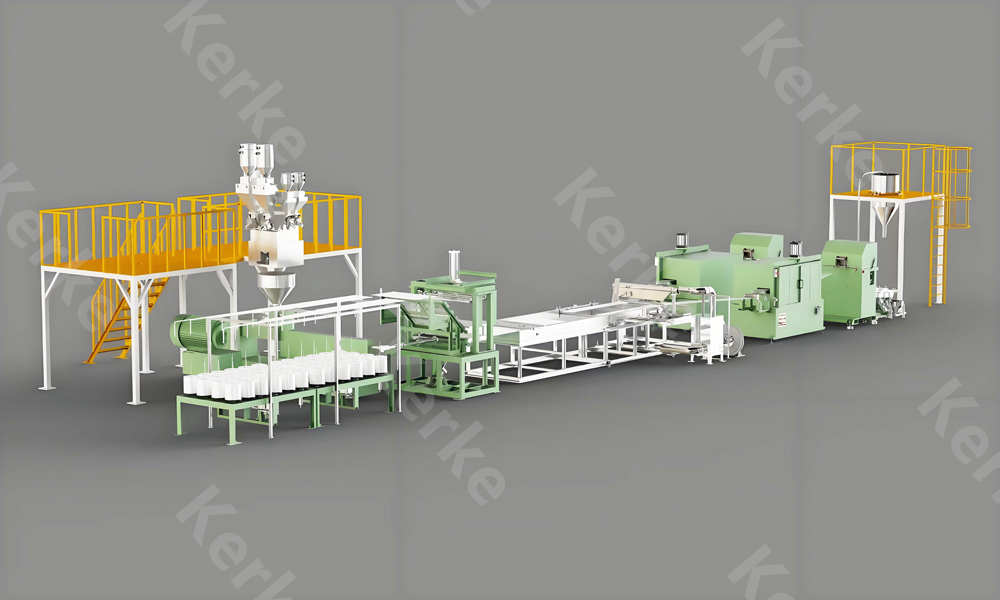

Modified plastic pellet production is the commercial heart of the co-rotating parallel twin-screw extruder business. A base polymer that leaves the reactor as a commodity grade is transformed, inside a single continuous compounding line, into a differentiated, specification-bound pellet that a molder or extruder will pay a premium to buy. The question every investor, plant manager and new entrant asks is simple to phrase and difficult to answer with a single number: what profit margin can you get from modified plastic pellet production with a twin-screw extruder? This article answers that question without quoting any price, any currency or any single transaction figure. Instead it expresses every result as a gross margin band in percent, as a share of total cost, as an indexed reference point, as a relative grade, or as a physical intensity such as kilowatt-hours per kilogram. That disciplined language is the only honest way to discuss margin in a market where raw resin alone is 70 percent to 85 percent of total cost and where the spread between a commodity grade and a certified automotive grade can be the entire difference between survival and a Very High margin band.
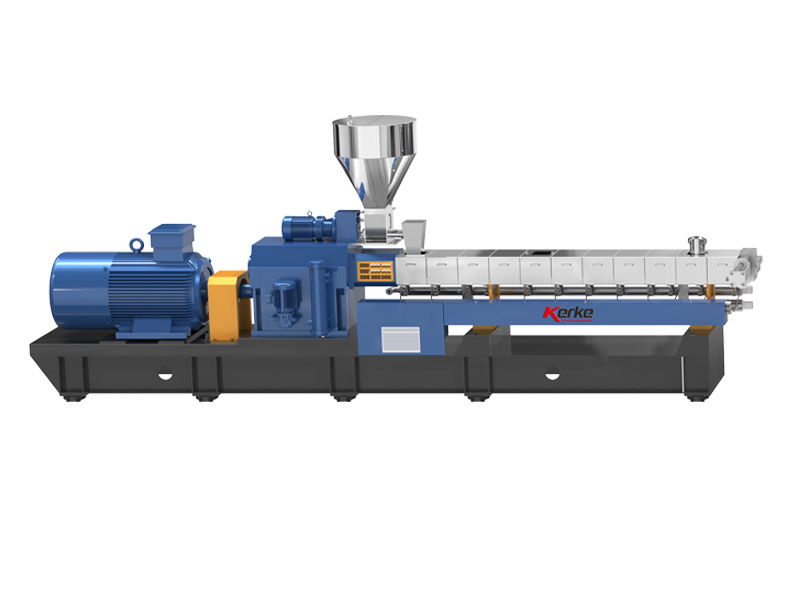
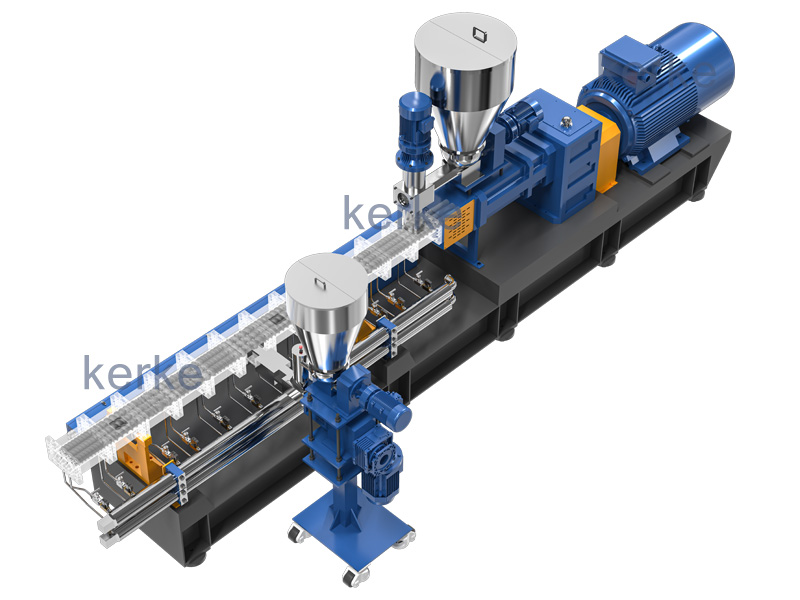
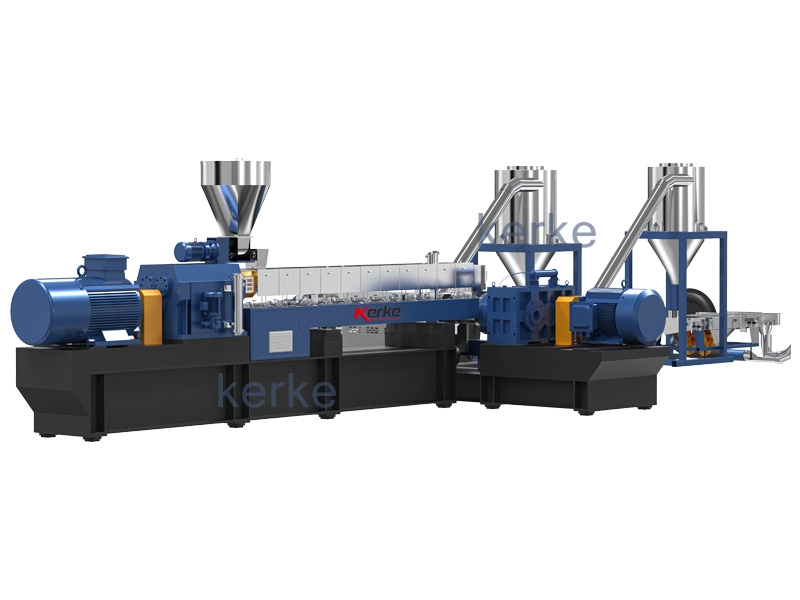
The co-rotating parallel twin-screw extruder is the right machine for this work because its modular barrel and screw elements let the processor design the shear, residence time, mixing and devolatilization profile for each recipe. Kerke, a Wanplas factory, builds KTE-series co-rotating parallel twin-screw extruders ranging from the KTE-16B laboratory unit up to the high-capacity KTE-135D, with computer-aided screw assemblies that realize conveying, plasticizing, shearing, dispersive mixing, homogenization, venting and pressure build-up in one continuous pass. The same machine family, with side feeders, high-dispersion kneading blocks and loss-in-weight metering, is what turns a base resin into filled PP, glass-fiber-reinforced PA, halogen-free flame-retardant compounds, alloys, TPE/TPV, conductive compounds, masterbatches, WPC and PCR-recycled grades. The technology choice sets the ceiling on which margin band a plant can even reach.
Across this article we will treat profit margin strictly as gross margin on the compound, because that is the figure a compounding line controls. We will not discuss plant construction cost, transformer sizing or project timelines, since those belong to a different article about launching a small twin-screw compounding plant. Here the focus is the economics of the running line: which product families pay best, how cost is built, how scrap and capacity utilization move the band, how much energy each family consumes, how to compare recipes by index, what certifications unlock premiums, who the customers are, and which operating levers actually lift the number. By the end you will have a complete mental model expressed entirely in percentages, indices and physical intensities.
The Value Creation Logic of Modified Plastic Pellet Production
The economics of modified plastic pellet production rest on a single chain: base resin becomes a functionalized compound becomes a differentiated grade. At each step the processor adds value that a downstream molder cannot easily add for itself, and that added value is what protects the gross margin band. A base resin such as homopolymer PP or PA66 is a globally traded commodity whose price is set by feedstock and capacity cycles far outside any single compounding plant. Once that resin enters a twin-screw line and leaves as a 30 percent glass-fiber-reinforced, heat-stabilized, color-matched PA66 pellet, it carries a specification, a datasheet and a approval letter that a molder cannot reproduce without the same line, the same recipe control and the same certification. That distance between commodity and specification is the margin.
Technical barriers determine the height of the margin band. A filled PP with 20 percent to 40 percent talc or calcium carbonate is easy to make on almost any twin-screw line, so the barrier is low and the band is Low. A halogen-free flame-retardant ABS that must hold UL 94 V-0 at 1.6 mm, pass the glow-wire ignition temperature test and keep a high comparative tracking index is hard to stabilize, so the barrier is High and the band rises. A dynamic-vulcanized TPV that demands precise vulcanizing-agent injection and multi-stage devolatilization sits in the High band because few lines run it consistently. A conductive compound using carbon nanotubes or stainless-steel fiber needs dispersion control at a level most plants cannot hold, lifting it to the Very High band. The pattern is consistent: the harder the consistent, certified result is to reproduce, the wider the margin band the plant can defend.
The twin-screw extruder is the instrument that converts know-how into margin. Its modular screw and barrel architecture lets the processor place a side feeder exactly where glass fiber should enter, tune kneading-block stagger to disperse filler without breaking fibers, and open venting ports where volatiles must leave. Kerke’s KTE-series platform supports aspect-ratio, barrel, screw-arrangement, exhaust, feeding and electrical-control optimization, so the same hardware can be reconfigured from a filled-PP recipe to a glass-fiber PA recipe to a flame-retardant compound by swapping elements rather than buying a new machine. That reconfigurability itself protects margin, because it lets a plant follow demand between families without idle capital.
Value is also created by moving up the specification ladder. Selling a generic black pellet is a Low-band transaction. Selling a masterbatch with 30 percent to 60 percent pigment loading, tight let-down ratio and low plate-out is a Premium-band transaction, because the customer is buying color certainty and machine uptime, not just pigment. Selling a PCR-recycled rPET that has been toughened and re-viscosified to a stable intrinsic viscosity is a Medium-band transaction whose band swings with incoming-material consistency. The lesson for any operator is that margin follows specification, certification and consistency, not tonnage alone. A twin-screw line that can hold a tight specification reliably is worth more than a larger line that cannot.
Finally, the value chain is recursive. The same pellet a compounder sells to a molder may be bought back, reground and re-compounded as a PCR grade, closing a loop that turns former scrap into a new, lower-index product. The plants that capture this internal loop keep more of the margin band inside the business instead of selling waste at a discount. This logic underpins every lever discussed later, from by-product reuse to one-step processing, and it is why the most profitable compounders think in recipes and indices rather than in single transactions.
Product Families and Their Typical Gross Margin Bands
Not all compounded pellets pay the same. The table below maps the major modified-plastic families to a typical gross margin band expressed in percent, a relative grade, the technical difficulty of holding specification, and the screw configuration a co-rotating twin-screw line needs. These bands are illustrative typical ranges drawn from processing economics, not prices; the actual band for any plant shifts with raw-material index, customer segment and internal yield. The consistent message is that technical barrier, not volume, sets the top of the band.
| Product Family | Typical Gross Margin Band | Relative Grade | Technical Difficulty | Twin-Screw Configuration Requirement |
|---|---|---|---|---|
| Filled PP (20 to 40 percent talc or CaCO3) | 8 percent to 15 percent | Low | Low | Side feeder for mineral, high-dispersion kneading blocks, moderate shear |
| Glass-fiber reinforced PA6 / PA66 GF30 to GF50 | 18 percent to 28 percent | Medium-High | Medium-High | Glass-fiber side feeder at low-shear zone, fiber length retention 0.3 to 0.5 mm, avoid over-shear |
| Halogen-free FR PP / ABS / PBT (UL 94 V-0 at 1.6 mm) | 22 percent to 35 percent | High | High | MPP / phosphorous-nitrogen / bromine-antimony system, multi-stage venting, tight thermal control |
| PC/ABS and PC/PBT alloys | 16 percent to 26 percent | Medium-High | Medium | Compatibilizer, ester-exchange suppression, gentle mixing profile |
| TPE / TPV dynamic vulcanization | 22 percent to 34 percent | High | High | Vulcanizing-agent injection, multi-stage devolatilization, controlled crosslink |
| Conductive / EMI shielding (carbon black, CNT, stainless fiber) | 28 percent to 45 percent | Very High | Very High | Precise dispersion control, low-breakage conveying, network-structure protection |
| Color masterbatch (pigment 30 to 60 percent) | 30 percent to 50 percent | Premium | Medium | High pigment loading, low plate-out screw design, color-stable mixing |
| WPC and bio-based PLA / PBAT composites | 12 percent to 20 percent | Medium | Medium | Wood-flour side feed, moisture devolatilization, coupling agent |
| PCR recycled rPP / rPE / rPET (toughened, re-viscosified) | 10 percent to 22 percent | Volatile | Medium | Tie-layer / compatibilizer, viscosity restoration, aggressive devolatilization |
The ordering of the table is not accidental. Filled PP anchors the Low band because the recipe is transparent, the filler is cheap and the buyer is a price-taker in packaging and building materials. Glass-fiber PA rises to Medium-High because fiber length retention and thermal stability are genuine process skills: holding a fiber length of 0.3 to 0.5 mm through the line, while avoiding over-shear that embrittles the matrix, is exactly the kind of control a KTE-series line with a tuned side feeder and staggered kneading blocks is built to deliver. Flame-retardant grades rise further because the additive system is expensive, the thermal window is narrow and the certification bar is high; a compounder that holds UL 94 V-0 at 1.6 mm consistently earns the High band.
Alloys such as PC/ABS and PC/PBT sit in Medium-High because the value is in compatibility and ester-exchange suppression rather than in rare additives; the margin is real but contestable. TPE and TPV reach High on the back of dynamic-vulcanization control, where vulcanizing-agent injection timing and devolatilization decide whether the product is a true thermoplastic vulcanizate or a failed blend. Conductive and EMI-shielding compounds reach Very High because dispersion of carbon nanotubes or stainless-steel fiber at low breakage is a specialist skill with few qualified suppliers. Color masterbatch reaches Premium because pigment is a small part of customer risk yet a large part of perceived value, and because tight let-down ratio and low plate-out directly protect the molder’s uptime. PCR grades stay Volatile because incoming-material index swings with collection quality and the compounder must constantly re-balance toughener and viscosity modifier.
Cost Structure and Where the Money Goes
To understand a margin band you must first understand the cost stack, because gross margin is simply one minus the cost-to-serve expressed against the selling index. In modified plastic pellet production the dominant cost is raw material, and that single fact explains why most margin levers point back to formulation and yield rather than to machine price. The table below gives a typical cost-structure split of total production cost for a running compounding line. These are shares of total cost, not currency amounts, and they shift slightly by family: a masterbatch spends more on pigment and less on base resin, while a filled PP spends more on mineral filler and less on additive.
| Cost Element | Share of Total Cost | Controllability by the Plant | Lever Direction |
|---|---|---|---|
| Raw material (resin, filler, additive, pigment) | 70 percent to 85 percent | Medium (index-driven) | Formulation index, substitution, by-product reuse |
| Energy (electricity for drive and ancillaries) | 3 percent to 6 percent | High | High-torque screw, VFD, waste-heat recovery |
| Labor | 3 percent to 6 percent | Medium | Auto-weighing, shift optimization |
| Depreciation (machine, building, auxiliaries) | 3 percent to 5 percent | Low (fixed) | Capacity utilization dilution |
| Packaging (bags, FIBC, liners) | 1 percent to 2 percent | Medium | Bulk handling, returnable containers |
| Scrap and waste loss | 1 percent to 3 percent | High | Yield, internal reuse, changeover control |
| QC and R&D | 1 percent to 3 percent | Medium | Right-size testing, in-line measurement |
| Administration and sales | 5 percent to 10 percent | Medium | Channel mix, sticky accounts |
Two facts leap from the table. First, raw material at 70 percent to 85 percent means that a one percent move in formulation index flows almost directly through the gross margin, which is why the formulation cost index (discussed later) is the single most important internal number a compounder tracks. Second, the sum of energy, labor, depreciation, packaging, scrap, QC and R&D is only about 15 percent to 30 percent of total cost, so even aggressive savings on the machine side can move margin by only a few points unless they also lift yield or utilization. The plants that win are the ones that attack raw-material index and yield simultaneously, because that is where the band actually opens.
Within raw material, the split between base resin, filler and additive differs sharply by family. A filled PP may carry 45 percent to 60 percent mineral filler by weight, which compresses the resin share and lowers the absolute index even though the margin band stays Low. A halogen-free flame-retardant ABS may carry 20 percent to 35 percent additive package, which raises the index and, combined with the High grade, lifts the band. A masterbatch inverts the logic: pigment can be 30 percent to 60 percent of the recipe, but because the customer buys a tiny let-down ratio, the effective value delivered per kilogram of masterbatch is high, supporting the Premium band. Reading the cost stack by family, not as a single average, is essential to forecasting the band correctly.
Depreciation and administration deserve a special note. Depreciation at 3 percent to 5 percent of total cost is a fixed charge that does not care about the recipe, so it is diluted by volume, not by formulation. Administration and sales at 5 percent to 10 percent is where customer structure bites: a sticky automotive account costs little to retain once qualified, while a price-driven packaging account demands constant quotation effort that keeps this share high. The margin band is therefore partly a sales-mix story, which the customer-structure section develops further.
Yield, Scrap Rate and Margin Erosion
Because raw material is 70 percent to 85 percent of total cost, scrap is the most expensive thing a compounding line can make. Every kilogram that fails specification and cannot be sold at full grade must be either internally reused at a lower index or discarded, and in both cases the full formulation cost has already been spent. The practical rule is straightforward: with raw material at 70 percent to 85 percent of cost, every one percentage-point rise in scrap rate erodes gross margin by roughly 0.7 to 1.0 percentage points, assuming the lost material carries the full formulation index and must be replaced at the same index to meet shipment.
| Scrap Rate (percent of output) | Gross Margin Erosion vs 1 percent scrap (percentage points) | Typical Source | Reuse Path |
|---|---|---|---|
| 1 percent | baseline (0.0) | normal edge trim | internal regrind |
| 2 percent | -0.7 to -1.0 | startup purging | startup reclaim |
| 4 percent | -2.1 to -3.0 | color drift, gel | same-family blend |
| 6 percent | -3.5 to -5.0 | cross-contamination | downgrade or off-spec |
| 9 percent | -5.6 to -8.0 | frequent changeover | heavy downgrade |
Three streams dominate real-world scrap: startup purging, changeover color-clearing and edge trim or off-spec lots. Startup purging, the material pushed out while the line reaches thermal and metering steady state, is unavoidable but reducible by pre-heating and by staging the screw so the first stable product appears sooner. Changeover color-clearing is the largest controllable loss: a plant that switches between black, white and custom colors without a purge strategy can lose several percent of output per switch. Edge trim and off-spec lots are usually recyclable inside the same family, but only if the plant has the discipline to segregate by index and not cross-contaminate grades.
The internal reuse ratio is the quiet margin lever most plants underuse. Material that stays inside the business as startup reclaim, color-clearing blend or edge-trim regrind is never sold at a discount and never bought back at full index; it simply re-enters the same or a lower grade at a small energy cost. A plant that holds a 70 percent to 90 percent internal reuse ratio on its reclaim streams protects the band far more than a plant that disposes of the same material. The KTE-series self-cleaning screw design helps here, because quicker, cleaner emptying between recipes shortens the color-clearing window and reduces the volume of transition material that must be downgraded.
Yield also interacts with certification. A grade sold against a UL Yellow Card or an IATF 16949 control plan cannot absorb off-spec reclaim the way a filler masterbatch can; the audit trail must be clean. That constraint raises the effective scrap cost for certified families, which is one reason those families carry higher bands in the first place. The margin logic is circular and self-reinforcing: harder grades tolerate less scrap, so they must earn more per kilogram to pay for the discipline, and the discipline itself becomes a barrier that protects the band.
Capacity Utilization and Fixed Cost Dilution
Depreciation, fixed labor and a share of overhead are fixed in the short run: they do not fall when the line runs slower, so every idle hour spreads the same charge across fewer kilograms and raises unit fixed cost. The table below expresses unit fixed cost as an index, with 85 percent utilization set as the reference of 100 index points. Moving down to 50 percent utilization pushes the index to about 170, while climbing to 95 percent pulls it down to about 89. Because fixed cost is roughly 3 percent to 5 percent of total cost at reference utilization, the absolute swing in total cost is a few points, but on a Low-band product those few points are the entire margin.
| Capacity Utilization | Unit Fixed Cost Index (85 percent = 100) | Fixed Cost per kg vs Reference | Implication for Margin Band |
|---|---|---|---|
| 50 percent | about 170 | +70 percent | Compresses Low band toward break-even |
| 70 percent | about 121 | +21 percent | Small drag on Medium bands |
| 85 percent | 100 (reference) | reference | Band as designed |
| 95 percent | about 89 | -11 percent | Adds points to every band |
The practical ceiling is not 100 percent utilization but the changeover and maintenance burden that high utilization brings. A line run at 95 percent with frequent small batches spends more time in color-clearing and setup than a line run at 85 percent with longer, steadier campaigns, so the gross benefit of high utilization can be partly eaten by scrap. The sweet spot for most compounders is a campaign structure that keeps utilization in the high-80s to low-90s while minimizing batch changeovers, which is exactly the operating pattern that protects both the utilization index and the scrap index at once.
Utilization also changes which families a plant should prioritize. When utilization is low, the plant should defend margin by running High and Premium bands (masterbatch, conductive, flame-retardant) where each kilogram carries more value, rather than flooding the line with Low-band filled PP that needs volume to pay. When utilization is high, the plant can afford to absorb more Low-band tonnage to keep the line full, because the fixed-cost dilution alone adds points back. This is why the product mix should flex with the utilization index rather than staying fixed, and why a reconfigurable KTE-series line that can switch families quickly is strategically valuable: it lets the plant chase utilization without abandoning margin.
One more interaction matters: utilization and capacity sizing. A line sized too large for its order book will sit at 50 percent to 70 percent utilization and leak margin through the fixed-cost index regardless of recipe skill. A line sized to the realistic, certified order book, possibly a KTE-52 or KTE-65 for a focused range, runs tighter and keeps the band intact. The discipline of matching screw diameter and L/D to actual demand is therefore a margin decision, not merely a throughput decision, and it is the first thing an experienced plant manager checks before adding a second line.
Energy Consumption Benchmarks and Savings Levers
Energy is 3 percent to 6 percent of total cost, small in share but highly controllable, and because it scales with torque and residence time it varies strongly by family. The table below gives typical specific energy consumption in kilowatt-hours per kilogram for representative families on a co-rotating twin-screw line. Filled PP is the lightest at 0.22 to 0.30 kWh/kg because the mineral filler is easy to disperse and the melt is thin. Glass-fiber PA is heavier at 0.30 to 0.40 kWh/kg because the fiber side feed and low-shear profile extend mixing. Flame-retardant ABS and TPV are heaviest at 0.35 to 0.50 kWh/kg because of high viscosity, dense additive packages and extra devolatilization.
| Family | Specific Energy (kWh/kg) | Dominant Driver | Primary Savings Lever |
|---|---|---|---|
| Filled PP (talc / CaCO3) | 0.22 to 0.30 | Conveying and low shear | High-throughput screw geometry |
| Glass-fiber PA6 / PA66 | 0.30 to 0.40 | Side feed and mixing | Optimized kneading stagger |
| Flame-retardant ABS | 0.35 to 0.50 | Viscosity and venting | VFD plus waste-heat recovery |
| TPV dynamic vulcanization | 0.35 to 0.50 | Crosslink and devolatilization | Profile tuning, multi-stage vent |
| Color masterbatch | 0.25 to 0.38 | Dispersion of pigment | High-dispersion, low plate-out elements |
The levers to cut specific energy are well established. High-torque gearboxes let the line reach target output at lower screw speed, reducing viscous heating waste and improving dispersion per revolution. Variable-frequency drives match motor draw to load instead of running at fixed speed, which matters most on flame-retardant and TPV grades where torque demand swings during startup and changeover. Waste-heat recovery from barrel cooling and pelletizing water can pre-heat feed or building services, recovering part of the 3 percent to 6 percent energy share. Screw-configuration optimization is the cheapest lever: a profile that places kneading blocks only where dispersion is needed, and conveying elements elsewhere, can cut specific energy by a meaningful fraction without changing the recipe.
Energy also ties back to yield. A line that must re-run a batch because of gel or un-dispersed agglomerates pays the energy twice, so the energy index and the scrap index move together. The same self-cleaning, computer-aided screw assembly that shortens color-clearing also lowers the energy spent per good kilogram, which is why energy optimization and scrap reduction are best run as one program rather than two. For a plant benchmark, tracking kWh/kg by family and by campaign is the single most useful energy metric, because it normalizes out throughput and exposes configuration drift long before margin moves.
The Formulation Cost Index Concept
Because the article commits to never quoting a price, the formulation cost index is the cleanest way to compare recipes and to discuss cost-down without currency. The method sets a reference formulation at a baseline of 100 index points. Every ingredient substitution then moves the index up or down by a number of points that reflects its weight share and its relative cost position. A cheaper filler that replaces part of the engineering resin may drop the index by 4 to 8 points; a premium compatibilizer added to lift impact may raise it by 6 to 15 points; a switch from a standard pigment to a high-coverage pigment at lower loading may hold the index roughly flat while improving appearance. The index is internal, reproducible and free of any market price, which makes it ideal for margin planning.
| Formulation Move | Index Impact (points vs baseline 100) | Effect on Margin Band | Risk to Watch |
|---|---|---|---|
| Replace 10 percent resin with CaCO3 filler | -4 to -8 | Widens Low band | Impact and surface finish |
| Add premium compatibilizer for PA/GF | +6 to +15 | Can lift grade, offsets band | Over-addition waste |
| Switch to high-coverage pigment | ~0 (flat) | Holds Premium band | Dispersion must hold |
| Substitute recycled content for virgin | -5 to -12 | Widens Medium / Volatile band | Incoming index variance |
| Add CNT for conductivity | +10 to +25 | Justifies Very High band | Dispersion failure scraps batch |
The index is most powerful when combined with the margin band. A move that lowers the index by 8 points on a Low-band filled PP may raise the effective margin from 11 percent toward 14 percent, a large relative gain on a thin product. The same 8-point saving on a Premium masterbatch is less dramatic in percentage terms but still meaningful in absolute value per kilogram. Conversely, a move that raises the index by 15 points is only worth it if the resulting grade change lifts the band enough to cover the increase, which is the central trade-off in formulation engineering.
The index also exposes the recycled-content opportunity. Substituting recycled flake or regrind for virgin resin typically lowers the index by 5 to 12 points, which is why PCR grades can hold a workable band even when the selling index is pressured by customer price sensitivity. The catch is index variance: recycled feed with inconsistent melt flow or contamination forces over-addition of compatibilizer and stabilizer, pulling the index back up and eroding the saving. A plant that controls incoming index through sorting and testing captures the saving; a plant that does not simply trades one variance for another. This is the defining difficulty of the Volatile PCR band and the reason it rewards disciplined incoming QC.
Quality, Certification and the Premium They Command
Certifications are the gatekeepers of the higher margin bands. They do not change the physics of the pellet, but they change who is allowed to buy it and how sticky that buyer is, and that is what protects the band. The relevant standards for modified plastic pellet production span mechanical testing, flame safety, substance restriction and industry-specific quality systems. Expressing them as a checklist helps a plant see which investments open which premium.
| Standard | What It Controls | Customer Segment Unlocked | Margin Effect |
|---|---|---|---|
| ISO 1133 (MFR / MVR) | Melt flow consistency | All process industries | Table stakes, protects band |
| ISO 527 (tensile) | Strength and modulus | Structural molding | Supports Medium-High |
| ISO 179 (Charpy impact) | Toughness | Automotive, E&E | Supports Medium-High |
| ISO 75 (HDT) | Heat deflection | Under-hood, appliances | Supports Medium-High |
| UL 94 and UL Yellow Card | Flammability V-0 / V-1 / V-2 | E&E, appliances | Lifts to High band |
| RoHS and REACH SVHC | Substance restriction | EU and global E&E | Market access, protects band |
| IATF 16949 | Automotive QMS | Automotive Tier 1 / 2 | Sticky, Medium-High to High |
| FDA 21 CFR | Food contact | Food packaging, utensils | Premium access |
| IEC 61249-2-21 (halogen) | Halogen-free claim | Green electronics | Supports High band |
The certification effect works through three mechanisms. First, market access: without RoHS and REACH SVHC declarations a compound simply cannot be sold into large parts of the electronics supply chain, so the certification is the price of entry rather than a premium in itself. Second, switching cost: a customer who has qualified a specific grade under IATF 16949 and holds a UL Yellow Card is slow to requalify a competitor, which lets the qualified supplier defend the band against pure price competition. Third, risk transfer: a valid UL 94 V-0 rating at 1.6 mm and a documented glow-wire ignition temperature let the molder pass safety liability downstream, and that assurance is worth a visible premium on the selling index.
Certifications also raise the effective scrap cost, as noted earlier, because reclaimed material inside a certified grade must keep a clean audit trail. A plant that wants the High and Premium bands must therefore run tighter QC, keep batch records and hold in-line measurement, which is part of the QC and R&D share of 1 percent to 3 percent of total cost. The margin math is favorable: the added control cost is small in share, while the band lift from certification can be 5 to 15 percentage points, so certification is almost always net-positive for a plant with the discipline to hold it. The risk is only for plants that certify then fail an audit, which can forfeit the entire premium at once.
Customer Structure and Bargaining Power
Who buys the pellet decides how much of the technical value the compounder keeps. Customer segments differ in certification needs, order stability, switching cost and price sensitivity, and those differences translate directly into the margin band a plant can defend. A custom grade developed with a single automotive Tier 1 customer sits in a higher band than the identical chemistry sold as a commodity pellet into spot packaging demand, because the relationship, not just the recipe, carries the premium.
| Customer Segment | Certification Need | Price Sensitivity | Typical Band Captured |
|---|---|---|---|
| Automotive Tier 1 | IATF 16949, FR, heat | Low (sticky) | Medium-High to High |
| Home appliance | UL 94, RoHS | Medium | Medium to Medium-High |
| Electronics and electrical | UL 94, halogen-free, CTI | Medium | High |
| Packaging | Food contact if applicable | High | Low to Medium |
| Wire and cable | FR, thermal, electrical | Medium | Medium-High |
| Building materials | FR, weatherability | Medium-High | Low to Medium |
The automotive Tier 1 relationship is the clearest example of bargaining power favoring the compounder. The certification cycle is long, the qualification effort is high and the molder is reluctant to re-qualify, so once a grade is approved the compounder keeps a stable, defended share of the band. The trade-off is that automotive customers demand tight consistency and full traceability, which raises the QC share and lengthens the time to first revenue; the band is high but the barrier to enter it is real. Packaging buyers sit at the opposite end: orders are large but price sensitivity is high, specifications are loose and substitution is easy, so the band stays Low to Medium and the compounder must win on index and volume rather than on specification.
Custom versus commodity grade is the other axis. A custom grade co-developed with a customer, protected by a specification and often by a qualification letter, keeps more of the band because the customer is buying a solved problem, not a commodity. A commodity grade sold on a spot quote competes only on index and the band collapses toward the family minimum. The most profitable plants consciously grow the share of custom and certified volume, even if it means slower tonnage growth, because each custom kilogram carries more margin than several commodity kilograms. This is also why a reconfigurable twin-screw platform matters: it lets a plant serve a custom automotive campaign and then switch to a commodity masterbatch without losing utilization.
Levers to Lift Gross Margin
Margin is not fate; it is the sum of operating choices. The levers below are ranked by typical impact and by how directly they touch the dominant cost and the band. The first group attacks raw-material index and yield, the largest terms; the second group attacks utilization and energy; the third group attacks mix and premium. A plant that pulls several of these together can shift a family’s effective band by a meaningful number of percentage points without changing its machine.
- Formulation cost-down: Use the formulation cost index to substitute cheaper filler, recycled content or lower loading of expensive additive while holding the spec, targeting a 4 to 12 point index reduction on the right families.
- Fiber-length retention upgrade: Tune the glass-fiber side-feed position and kneading stagger to hold fiber length at 0.3 to 0.5 mm, which can lift a PA grade from Medium into Medium-High by meeting a higher mechanical spec.
- One-step versus two-step: Where the recipe allows, compound and pelletize or even direct-form in one pass to remove a re-melt step, cutting energy, labor and handling index.
- Capacity ramp discipline: Hold utilization in the high-80s to low-90s to keep the fixed-cost index near or below 100 while avoiding changeover-driven scrap.
- Batch-changeover reduction: Group campaigns by color and index to shrink color-clearing loss, protecting the 1 percent to 3 percent scrap share.
- Inventory turnover: Match production to qualified demand to avoid both stockouts that lose custom accounts and overstock that forces discounting.
- By-product reuse: Keep startup reclaim, edge trim and color-clearing blend inside the business at a 70 percent to 90 percent internal reuse ratio.
- Energy optimization: High-torque screw, variable-frequency drive and waste-heat recovery to pull specific energy toward the low end of each family band.
- Auto-weighing accuracy: Loss-in-weight metering reduces recipe error, lowers off-spec scrap and tightens the index variance that eats margin on certified grades.
These levers compound. A plant that reduces scrap from 6 percent to 2 percent recovers roughly 3.5 to 5.0 percentage points of gross margin on a raw-material-heavy family, then adds another point or two by holding utilization near 90 percent, then adds more by a 6-point index reduction through formulation. The combined effect can move a Low-band filled PP from the bottom of its range toward the top, or lift a Medium-High PA grade into genuine High territory. The point is that the band is a managed outcome, not a market given, and the managed part is largest precisely where cost is largest: raw material, yield and mix.
Technology choice underpins several levers at once. Kerke’s KTE-series co-rotating parallel twin-screw extruders, with computer-aided screw assembly, self-cleaning kneading elements and flexible side-feeding, are designed so that the same line can pursue formulation cost-down, fiber-length retention and rapid changeover without hardware change. The Wanplas group, of which Kerke is a factory, supports this with shared process know-how and a spare-parts provision that keeps lines running and protects utilization. For a plant planning its margin program, the first step is to instrument the line so each lever is measurable: index per recipe, kWh/kg per family, scrap percent per campaign and utilization per week. What gets measured gets managed, and in compounding the measurements are all expressible in percentages, indices and physical intensities.
Risk Factors That Shape the Margin Band
The bands described above are not guarantees; they are the central tendency around which several risks pull the actual result. These risks are described only in qualitative and percentage terms, because the brief forbids any price or market figure. The discipline is to size each risk by its direction and by how much it can move the band, then to decide which are controllable by plant practice and which are structural.
- Resin supply-demand cycle: Base-resin availability and the feedstock-to-polymer spread move the raw-material index, which at 70 percent to 85 percent of cost can swing the band by several points. This risk is largely structural; a plant manages it through indexed pricing clauses and recipe flexibility, not by plant action alone.
- Additive supply concentration: Some flame-retardant and conductive additives come from few sources, so availability gaps can force reformulation that raises the index or breaks a certification. Dual-sourcing and inventory of critical additives reduce but do not remove this risk.
- Customer certification barrier: The same certification that protects the High and Premium bands also locks a plant out if it lacks them. A plant without IATF 16949 or a UL Yellow Card cannot reach the automotive or certified E&E band regardless of recipe skill, so the certification gap is itself a margin risk.
- Rising compliance cost: Tighter substance restriction and halogen-free requirements raise the QC and R&D share and can force more expensive additive systems, nudging the index up. Plants that certify early turn this into a premium; plants that lag turn it into a cost.
- Incoming-material variance for PCR: Recycled feed with inconsistent melt flow or contamination forces over-addition and scraps batches, which is why the PCR band is Volatile. This risk is controllable through incoming sorting and testing, but never fully eliminated.
- Overcapacity in commodity families: When many plants add filled-PP or commodity-masterbatch lines, price competition compresses the Low band toward break-even. A plant that stays in Low-band commodity volume without differentiation is most exposed.
The constructive reading of these risks is that most are either certifiable away or engineerable away. Certification barriers that threaten the band are removed by investing in IATF 16949, UL and food-contact compliance. Additive concentration is reduced by dual-sourcing. PCR variance is reduced by incoming QC. Overcapacity in commodities is avoided by moving mix toward custom and certified grades. The risks that remain structural, chiefly the resin supply-demand cycle, are best handled by indexed selling and by recipe flexibility that lets the plant shift families as indices move. A margin plan that names each risk, sizes its band impact in points and assigns an owner is far more robust than one that assumes the central band will hold.
Frequently Asked Questions
What gross margin band can a new entrant realistically expect in filled PP compounding?
A greenfield or newly qualified filled PP compounder typically lands in the Low gross margin band, roughly 8 percent to 15 percent, because the product is commodity-like, raw material dominates 70 percent to 85 percent of total cost, and buyers in packaging and building materials are highly price sensitive. The band widens only after the plant establishes volume, utilization near 90 percent and a lower formulation index through filler substitution.
Why does glass fiber reinforced PA command a higher margin than filled PP?
Glass fiber reinforced PA6 and PA66 grades sit in the Medium-High band at about 18 percent to 28 percent gross margin because fiber length retention, thermal stability and consistent mechanical properties create real technical barriers. Holding a fiber length of 0.3 to 0.5 mm through the line and avoiding over-shear is a process skill, and the customer base in automotive and E&E tolerates higher grades for certified performance.
How much does a one-point rise in scrap rate erode gross margin?
Because raw material is 70 percent to 85 percent of total cost, every one percentage-point increase in scrap rate typically erodes gross margin by roughly 0.7 to 1.0 percentage points, assuming the lost material carries the full formulation cost and must be replaced at the same index. A plant that cuts scrap from 6 percent to 2 percent can therefore recover about 3.5 to 5.0 points of margin on a raw-material-heavy family.
How does capacity utilization change unit fixed cost?
Fixed costs such as depreciation, fixed labor and overhead are diluted across volume. Indexed at 100 at 85 percent utilization, unit fixed cost rises to about 170 index points at 50 percent utilization and falls to about 89 index points at 95 percent utilization. On a Low-band product those few points of fixed-cost movement can be the difference between profit and break-even.
What energy consumption is typical for halogen-free flame retardant compounds?
Halogen-free flame retardant ABS and TPV typically consume about 0.35 to 0.50 kWh/kg, higher than filled PP at 0.22 to 0.30 kWh/kg, because of higher melt viscosity, dense additive packages and extra devolatilization stages. High-torque screws, variable-frequency drives and waste-heat recovery can pull the specific energy toward the low end of that band.
How does the formulation cost index help compare recipes?
The formulation cost index sets a reference recipe at 100 index points. Substituting a cheaper filler may reduce the index by 4 to 8 points, while a premium compatibilizer or a higher loading of engineering resin may raise it by 6 to 15 points. Tracking the index per recipe lets a plant compare cost-impact and cost-down opportunities without quoting any price, and it is the cleanest internal metric for margin planning.
Which certifications unlock the highest premiums?
IATF 16949 for automotive, a valid UL Yellow Card with UL 94 V-0 rating, FDA 21 CFR food-contact compliance and RoHS plus REACH SVHC declarations open the highest premiums, because they gate entry to sticky, certified customer segments where substitution is slow and safety liability is transferred downstream. The added QC cost is small in share yet the band lift can be 5 to 15 percentage points.
Are automotive Tier 1 customers more profitable than packaging buyers?
Yes, on average. Automotive Tier 1 accounts sit in the Medium-High to High band because the certification cycle is long, switching costs are high and performance grades are defended, whereas packaging buyers are price sensitive and compress margin toward the Low band. The trade-off is that automotive demands tighter consistency and full traceability, which raises the QC share and lengthens time to first revenue.
Does one-step compounding beat two-step on margin?
Where the recipe allows, one-step compounding and pelletizing removes a re-melt stage, cutting energy, labor and handling index and thereby widening the margin band by a small but real amount. The choice depends on the material: heat-sensitive or highly filled systems may still need two steps for quality, in which case the margin cost of the second step is justified by avoiding scrap.
What is the biggest margin risk for PCR recycled compounds?
The biggest risk is incoming-material variance. Recycled rPP, rPE or rPET with inconsistent melt flow, moisture or contamination forces over-addition of compatibilizer and stabilizer and can scrap batches, which is why the PCR band is labeled Volatile. A plant that controls incoming index through sorting and testing captures the recycled-content saving; a plant that does not simply trades one variance for another and the band stays thin.
Conclusion
The profit margin you can get from modified plastic pellet production on a twin-screw extruder is best expressed not as a single figure but as a gross margin band in percent that depends on which family you make, how clean your cost stack is, and how well you run the line. Filled PP anchors the Low band at 8 percent to 15 percent, glass-fiber PA and alloys sit in the Medium-High band at 16 percent to 28 percent, flame-retardant and TPV reach the High band at 22 percent to 35 percent, conductive compounds reach the Very High band at 28 percent to 45 percent, and color masterbatch reaches the Premium band at 30 percent to 50 percent. Raw material at 70 percent to 85 percent of total cost means formulation index and yield are the dominant levers, while capacity utilization near 90 percent and specific energy of 0.22 to 0.50 kWh/kg by family set the operating frame.
For a plant investing in or expanding this business, the practical path is clear: choose families whose technical barrier matches your capability, certify into the sticky segments that defend the band, instrument the line so index, scrap, utilization and kWh/kg are visible every week, and pull the margin levers that touch the largest cost terms first. Kerke, a Wanplas factory, builds KTE-series co-rotating parallel twin-screw extruders from the KTE-16B laboratory unit to the high-capacity KTE-135D, with the modular screw, side-feeding and self-cleaning design that lets one line pursue filled, reinforced, flame-retardant, alloy, elastomer, conductive, masterbatch, WPC and PCR grades without constant hardware change. Within the Wanplas group’s network of specialized factories, that flexibility is the strategic asset that turns a margin band from a market given into a managed outcome. The compounder who measures in percentages, indices and intensities, and who acts on those numbers, will consistently sit at the top of whatever band the market allows.