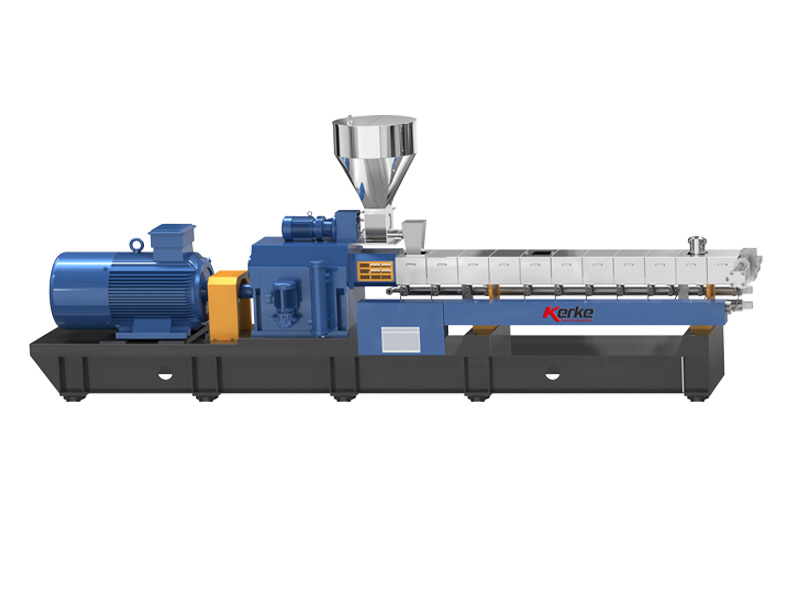
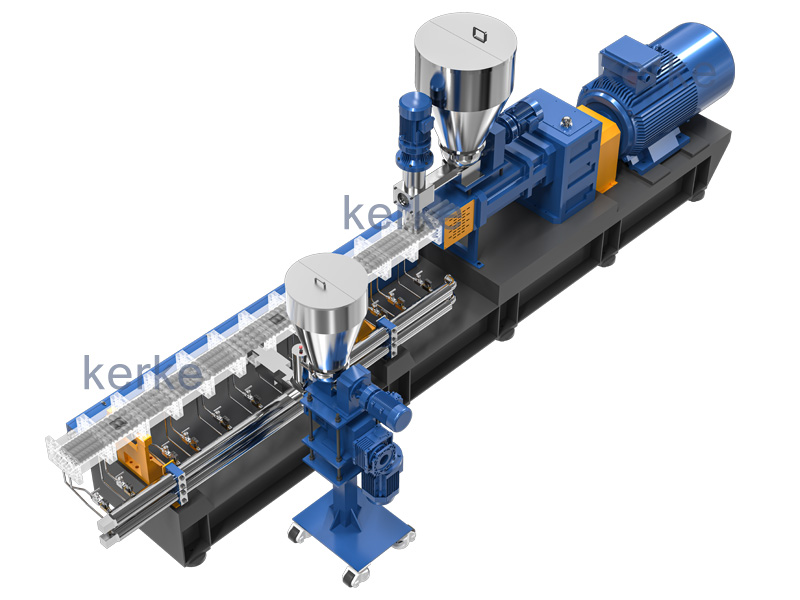
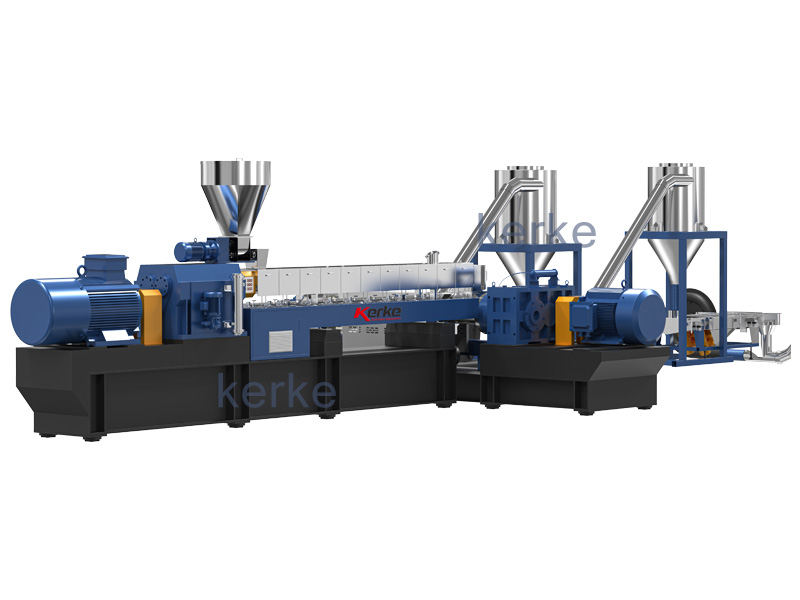
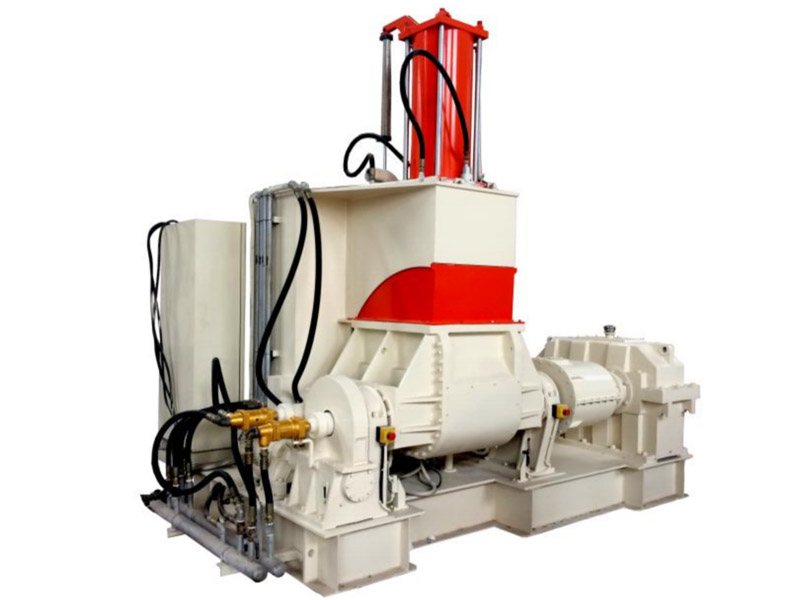
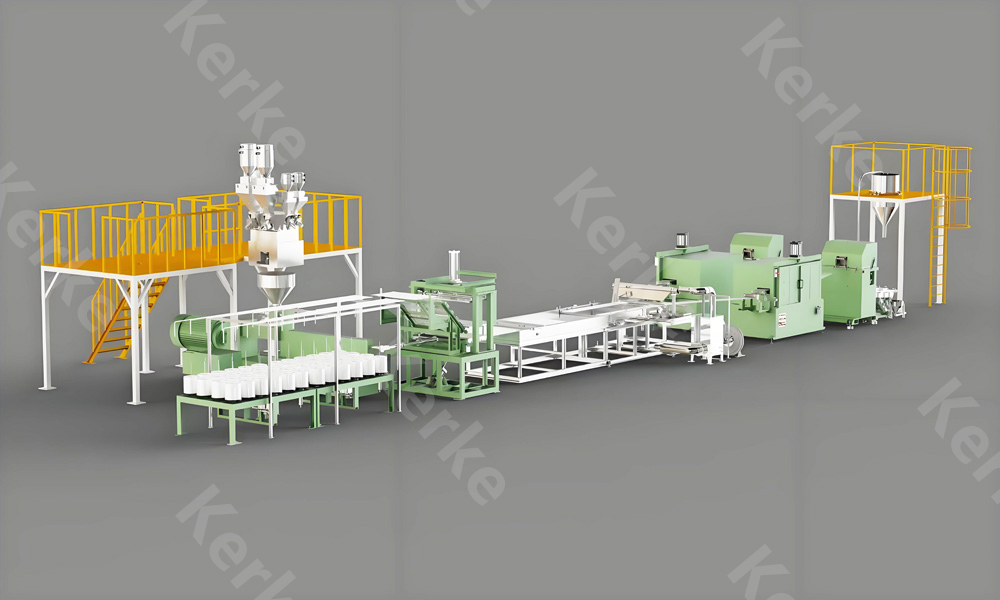
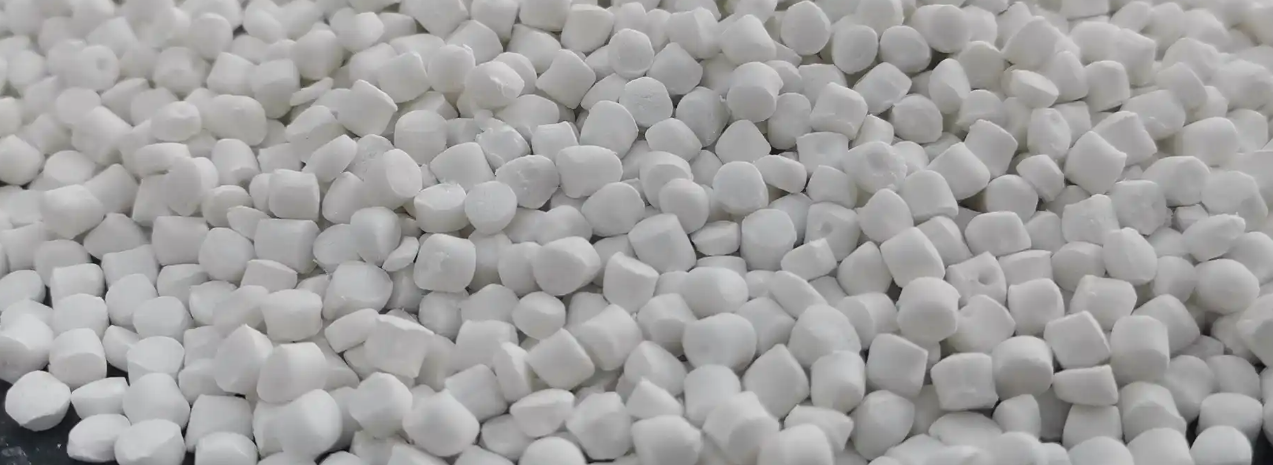
As an important plastic modification material, calcium carbonate filled masterbatch is widely used in the production of various plastic products such as polyethylene, polypropylene, and polyvinyl chloride due to its advantages of low cost, wide source, and ability to improve plastic processing performance and product mechanical properties. However, in the actual production process of calcium carbonate filled masterbatch, affected by various factors such as raw material characteristics, equipment parameters, and process control, a series of problems are likely to occur, which directly affect the quality stability of the masterbatch and the subsequent application effect. This article will sort out the common problems in the production process, conduct in-depth analysis of their causes, and propose targeted solutions, providing references for production enterprises to optimize production processes and improve product quality.
I. Raw Material-Related Problems
(1) Insufficient Purity and High Impurity Content of Calcium Carbonate Powder
1. Problem Performance: The produced filled masterbatch has a yellowish or blackish appearance with obvious impurity particles; after the masterbatch is integrated into the plastic matrix, it will cause defects on the product surface and a significant decrease in mechanical properties, such as reduced tensile strength and impact toughness, and even fracture.
2. Causes: Firstly, the mineral purity of the calcium carbonate raw material itself is low, containing impurities such as silicon, iron, magnesium, and other non-metallic inclusions; secondly, during the raw material processing, metal impurities generated by the wear of crushing and grinding equipment are mixed into the powder; thirdly, improper protection during the storage and transportation of raw materials leads to the mixing of dust, oil stains and other external impurities.
3. Solutions: Strictly control the raw material procurement link, select calcium carbonate raw materials with excellent mineral quality and high purity, and require suppliers to provide detailed quality inspection reports; add pre-treatment processes before the raw materials enter the production link, such as removing metal impurities through magnetic separation equipment and screening out large particle impurities and inclusions using sieving equipment; optimize the storage and transportation conditions of raw materials, use sealed storage containers and transportation tools to avoid impurity mixing.
(2) Uneven Particle Size Distribution and Poor Dispersibility of Calcium Carbonate Powder
1. Problem Performance: There is agglomeration of calcium carbonate inside the masterbatch with uneven particle sizes; during plastic processing, the agglomerated calcium carbonate is difficult to disperse uniformly, leading to stress concentration in the product, large fluctuations in mechanical properties, and affecting the surface finish of the product.
2. Causes: The grinding process parameters of calcium carbonate powder are unreasonable, such as insufficient grinding time and improper ratio of grinding media, resulting in an excessively wide particle size distribution range; the powder surface is not modified or insufficiently modified, and the van der Waals force between particles is strong, making agglomeration easy to occur; during the raw material mixing process, the stirring intensity is insufficient, failing to break up the agglomerated particles.
3. Solutions: Optimize the grinding process of calcium carbonate powder, adjust the grinding time and the size and ratio of grinding media to ensure uniform particle size distribution of the powder to meet production requirements; perform surface modification treatment on calcium carbonate powder, select appropriate coupling agents (such as silane coupling agents, titanate coupling agents), and uniformly coat the coupling agents on the powder surface through a high-speed mixer to reduce the agglomeration force between particles; enhance the stirring intensity in the raw material mixing link, extend the stirring time, and ensure that the agglomerated particles are fully broken up.
(3) Poor Compatibility Between Carrier Resin and Calcium Carbonate
1. Problem Performance: The masterbatch is prone to delamination during processing, and calcium carbonate powder cannot be closely combined with the carrier resin; after adding the masterbatch to the plastic matrix, problems such as peeling and falling off will occur, seriously affecting the comprehensive performance of the product.
2. Causes: The polarity of the selected carrier resin does not match that of calcium carbonate powder, for example, using non-polar polyethylene resin as the carrier with highly polar calcium carbonate powder, resulting in weak interaction between the two; no appropriate compatibilizer is added, or the addition amount of compatibilizer is insufficient, which cannot effectively improve the compatibility between the two.
3. Solutions: Select a carrier resin matching the polarity of calcium carbonate powder, for example, polar calcium carbonate powder can use relatively polar resins such as polypropylene and polyvinyl chloride as carriers; add an appropriate amount of compatibilizer, such as maleic anhydride grafted polymer, to enhance the interface bonding force between the carrier resin and calcium carbonate powder through the bridging effect of the compatibilizer; optimize the mixing process to ensure that the compatibilizer is uniformly dispersed in the raw material system and fully exerts its compatibilizing effect.
II. Mixing Processing-Related Problems
(1) Excessively High or Low Mixing Temperature
1. Problem Performance: When the mixing temperature is too high, the carrier resin is prone to degradation, producing odors, and may also cause the decomposition of modifiers on the surface of calcium carbonate powder, reducing the dispersion effect, and the masterbatch has a yellowish and brittle appearance; when the mixing temperature is too low, the carrier resin cannot be fully melted, resulting in uneven mixing with calcium carbonate powder, and there are unmelted resin particles inside the masterbatch, affecting the processing performance of the masterbatch.
2. Causes: Malfunction of the temperature control system leads to the actual temperature deviating from the set value; inaccurate grasp of the melting temperature of different types of carrier resins, resulting in unreasonable setting of mixing temperature; excessive moisture content of raw materials, generating water vapor during high-temperature mixing, affecting the stability of temperature.
3. Solutions: Regularly inspect and calibrate the temperature control system to ensure accurate temperature control; reasonably set the mixing temperature according to the type and characteristics of the carrier resin, for example, the mixing temperature of polyethylene carrier is generally controlled at 120-150℃, and that of polypropylene carrier is generally controlled at 150-180℃; dry the raw materials before mixing to reduce the moisture content of raw materials and avoid the impact of water vapor on mixing temperature and mixing effect.
(2) Insufficient or Excessively Long Mixing Time
1. Problem Performance: When the mixing time is insufficient, the raw materials cannot be fully mixed uniformly, the dispersibility of calcium carbonate powder is poor, and the masterbatch quality is unstable; when the mixing time is too long, it will not only increase production energy consumption and cost, but also cause excessive degradation of the carrier resin, reduce the mechanical properties of the masterbatch, and may cause excessive plasticization of the material, resulting in adhesion.
2. Causes: Inaccurate control of the process parameters in the mixing process, failure to adjust the mixing time according to the characteristics and batch of raw materials; unreasonable stirring speed of the equipment leads to low material mixing efficiency, requiring extended mixing time to achieve the mixing effect.
3. Solutions: Determine the optimal mixing time through experiments according to the characteristics and batch of raw materials and the stirring efficiency of the equipment; optimize the stirring speed of the equipment, improve the mixing efficiency, and ensure sufficient mixing of materials within a reasonable time; strengthen the observation of material status during the mixing process, and adjust the mixing time in a timely manner to avoid insufficient mixing or over-mixing.
(3) Material Agglomeration and Adhesion to Equipment
1. Problem Performance: During the mixing process, the material is prone to agglomeration to form large lumps, which cannot enter the subsequent granulation link; some materials will adhere to the inner wall of the mixer, stirring paddles and other parts, which are difficult to clean, not only affecting production efficiency, but also causing raw material waste.
2. Causes: Excessive moisture content of raw materials, water vapor evaporation during mixing makes the material viscous, prone to agglomeration and adhesion; excessively high mixing temperature leads to excessive melting of the carrier resin, poor fluidity, and adhesion; unreasonable structure of the stirring paddle or too low stirring speed results in uneven material mixing, local excessive temperature or concentrated moisture, causing agglomeration.
3. Solutions: Strictly control the moisture content of raw materials, and pre-dry damp raw materials; reasonably adjust the mixing temperature to avoid excessive melting of the carrier resin; optimize the structure of the stirring paddle, increase the stirring speed, enhance the stirring effect of the material, and make the material temperature and moisture distribution uniform; apply anti-adhesive coating on the inner wall of the mixer and the surface of the stirring paddle to reduce material adhesion.
III. Granulation Link-Related Problems
(1) Uneven Granule Size and Irregular Particle Shape
1. Problem Performance: The produced masterbatch particles have large differences in size, with unqualified particles such as fine powder and large particles; the particle shape is irregular, such as long strips and flat shapes, affecting the subsequent processing fluidity of the masterbatch.
2. Causes: Unstable screw speed of the twin screw extruder leads to large fluctuations in material extrusion volume; uneven die hole diameter or die blockage affects the material extrusion effect; the cutter speed of the granulator does not match the extrusion speed of the extruder, and the cutter is severely worn, making it impossible to achieve precise granulation; the melting state of the material is poor, and the fluidity is uneven.
3. Solutions: Regularly inspect and maintain the transmission system of the extruder to ensure stable screw speed; regularly clean and maintain the die, check the uniformity of the die hole diameter, and replace the damaged die in a timely manner; adjust the cutter speed of the granulator to match the extrusion speed of the extruder, and regularly replace the worn cutter; optimize the mixing and extrusion processes to ensure uniform melting and stable fluidity of the material.
(2) Hollow and Bubbles in Masterbatch
1. Problem Performance: There are hollow structures or bubbles inside the masterbatch, leading to reduced density and mechanical properties of the masterbatch; during the subsequent plastic processing, the bubbles will migrate to the product surface, affecting the appearance quality of the product.
2. Causes: Excessive moisture content of raw materials, water vapor formed by water evaporation during extrusion granulation cannot be discharged in a timely manner, and is trapped inside the masterbatch to form bubbles or hollows; a large amount of air is involved in the material during the mixing process and not fully discharged; excessively high extrusion temperature leads to the decomposition of carrier resin or modifiers to generate gas.
3. Solutions: Strengthen the drying treatment of raw materials and strictly control the moisture content of raw materials; install exhaust devices on mixing and extrusion equipment to timely discharge air and water vapor in the material; reasonably adjust the extrusion temperature to avoid the decomposition of carrier resin and modifiers.
(3) Excessive Dust Generation During Granulation
1. Problem Performance: A large amount of fine powder and dust are generated during granulation, which not only pollutes the production environment and endangers the health of operators, but also causes raw material waste and increases production costs.
2. Causes: Low sharpness of the cutter and excessive gap between the cutter and the die lead to material extrusion to generate fine powder during granulation; the material has high hardness or brittleness, which is easy to break and generate dust during granulation; the dust suction device of the granulator has poor effect and cannot collect the generated dust in a timely manner.
3. Solutions: Regularly grind or replace the cutter, adjust the gap between the cutter and the die to ensure the cutter is sharp and the gap is reasonable; optimize the process parameters to improve the flexibility of the material and reduce the breakage rate during granulation; inspect and maintain the dust suction device to ensure its normal operation, improve the dust collection efficiency, and strengthen the ventilation of the production workshop.
IV. Drying and Packaging-Related Problems
(1) Insufficient Drying and Excessive Moisture Content of Masterbatch
1. Problem Performance: Excessive moisture content of the masterbatch is prone to defects such as bubbles and silver streaks during subsequent plastic processing, affecting the appearance and mechanical properties of the product; at the same time, high moisture content will also reduce the storage stability of the masterbatch, making it easy to absorb moisture and agglomerate.
2. Causes: The temperature setting of the drying equipment is too low, or the drying time is insufficient, making it impossible to fully remove the moisture in the masterbatch; the air volume of the drying equipment is insufficient, or the hot air distribution is uneven, leading to incomplete drying of some masterbatches; the stacking thickness of the masterbatch is too large, and the hot air cannot penetrate, affecting the drying effect.
3. Solutions: Reasonably set the temperature and time of the drying equipment, adjust the drying parameters according to the moisture content of the masterbatch to ensure sufficient moisture removal; inspect and maintain the air supply system of the drying equipment to ensure sufficient air volume, optimize the hot air distribution structure, and make the hot air fully contact with the masterbatch; control the stacking thickness of the masterbatch in the drying equipment to avoid affecting the drying effect due to excessive stacking.
(2) Moisture Absorption and Agglomeration of Masterbatch During Storage and Packaging
1. Problem Performance: The dried masterbatch is prone to absorb moisture in the air during storage or packaging, resulting in agglomeration, which affects the fluidity and subsequent processing performance of the masterbatch.
2. Causes: Poor sealing of packaging materials leads to moisture in the air entering the packaging; the dried masterbatch is not packaged in a timely manner and is exposed to humid air for a long time; the humidity of the storage environment is too high, exceeding the critical moisture absorption humidity of the masterbatch.
3. Solutions: Select packaging materials with good sealing performance, such as aluminum foil bags and vacuum packaging bags, for sealed packaging of the masterbatch; package the dried masterbatch in a timely manner after cooling to room temperature to avoid long-term exposure to the air; control the humidity of the storage environment, keep the storage workshop dry and ventilated, and use dehumidification equipment to reduce environmental humidity if necessary.
V. Conclusion
The production process of calcium carbonate filled masterbatch involves multiple links such as raw material processing, mixing, granulation, drying and packaging. Each link may have problems affecting product quality. Production enterprises should strengthen the quality control of the entire production process, in-depth analyze the causes of various problems, and effectively solve the problems in the production process through measures such as optimizing raw material selection, adjusting process parameters, maintaining equipment performance, and improving the production environment, so as to improve the quality stability and market competitiveness of calcium carbonate filled masterbatch. At the same time, enterprises should also strengthen technological research and development and personnel training, continuously accumulate production experience, improve the ability to deal with various production problems, and promote the healthy development of the calcium carbonate filled masterbatch industry.