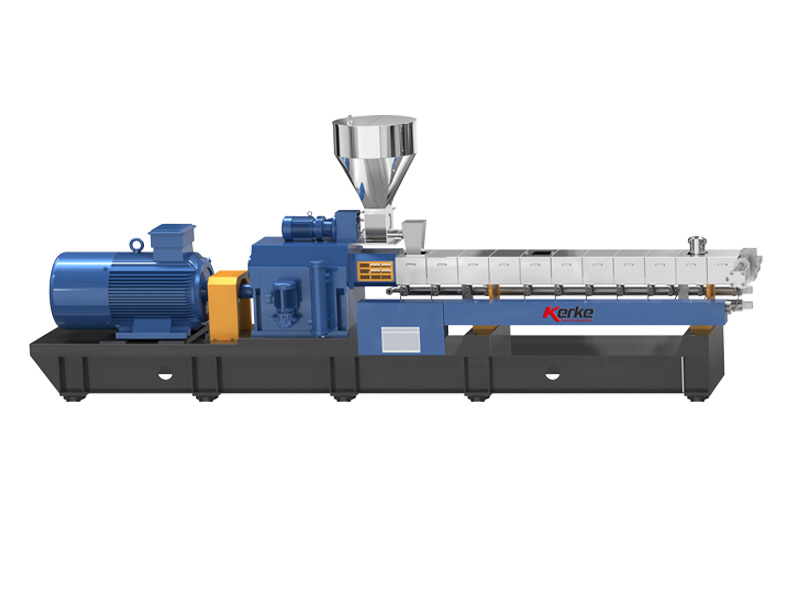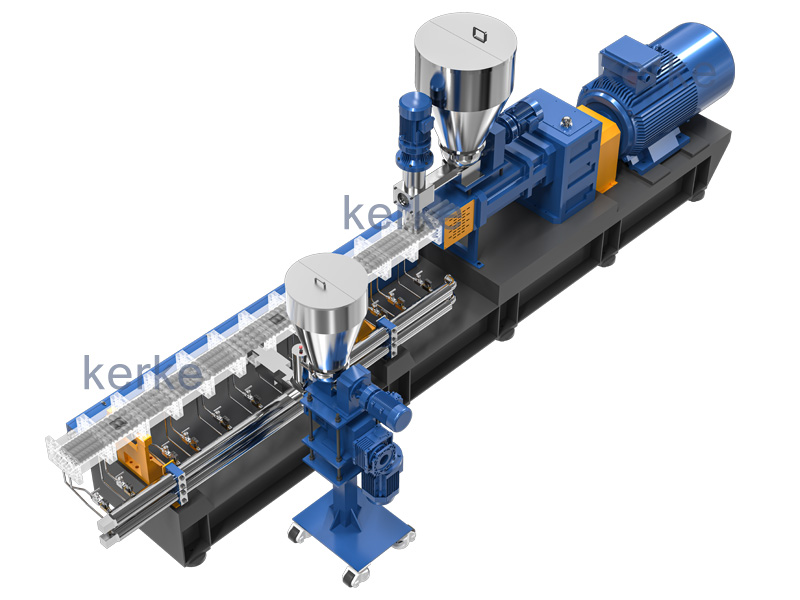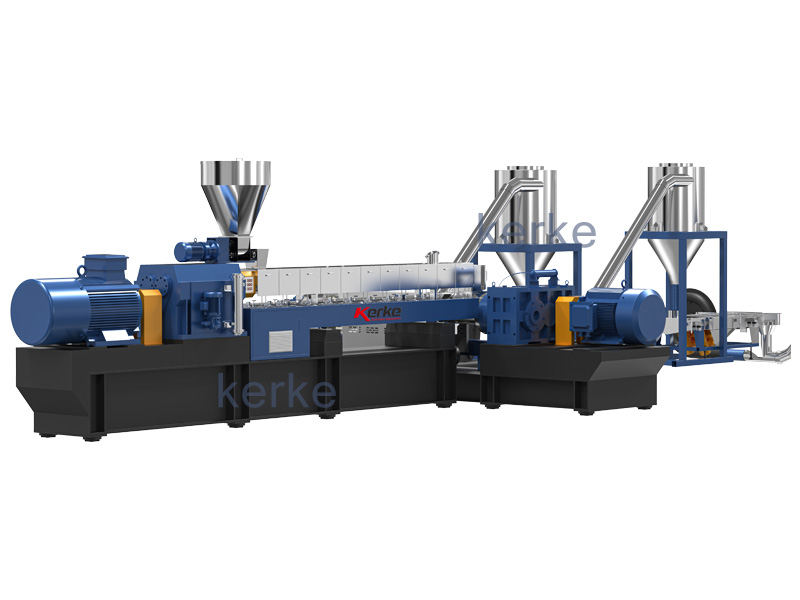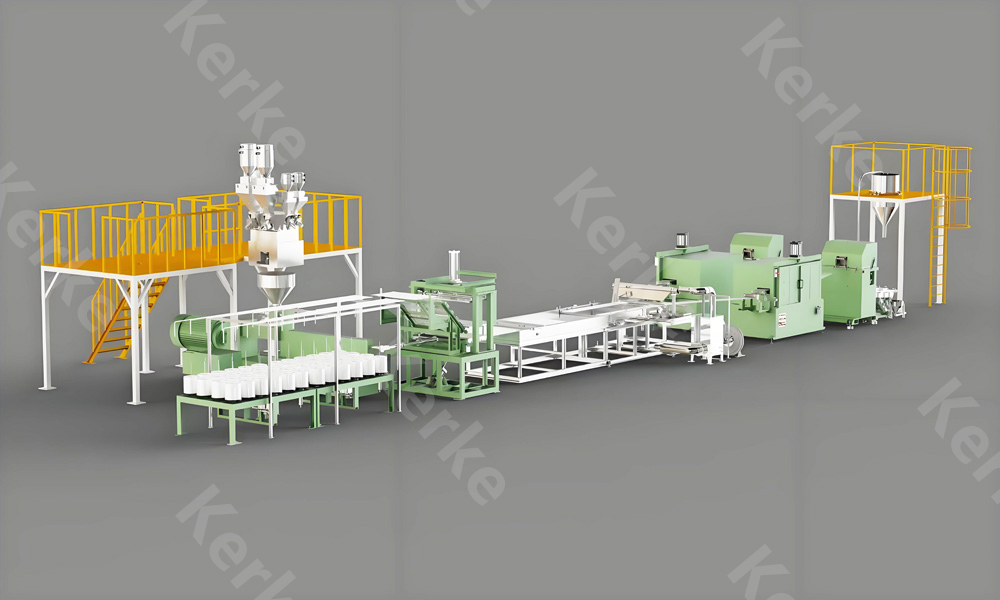
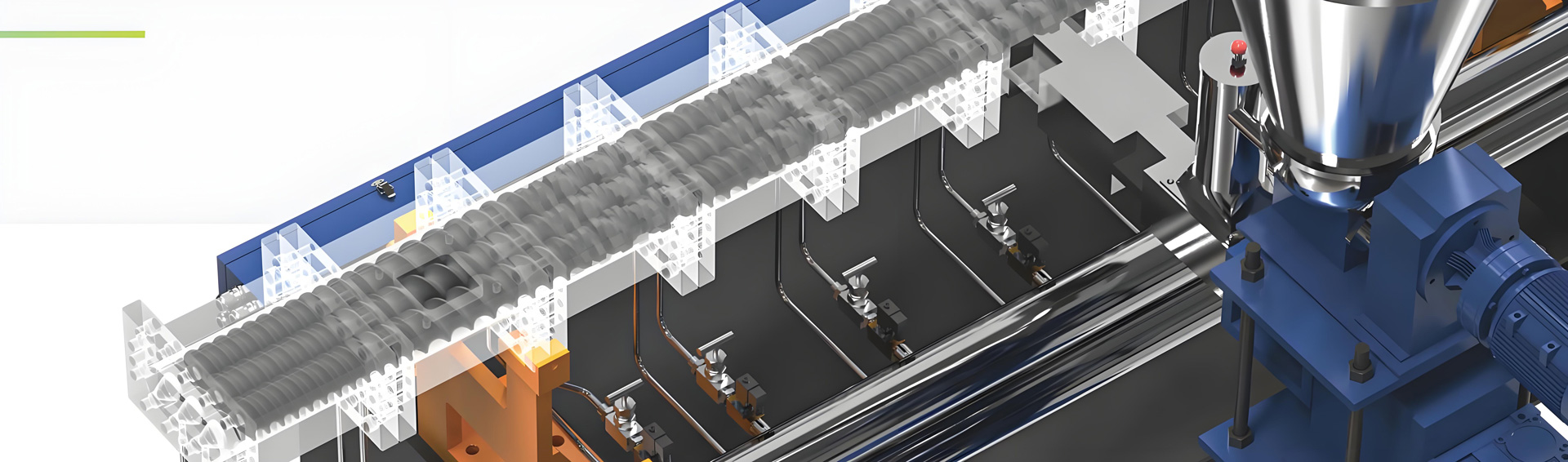
The heating system of a twin-screw extruder is the core guarantee for the plasticization quality of materials. It mainly consists of heating elements (heating coils, heating rods), temperature sensors (thermocouples/PT100), temperature control instruments, solid-state relays (SSR), electrical circuits, and cooling auxiliary devices. Faults are mostly manifested as no temperature rise, slow temperature rise, temperature runaway, large temperature fluctuation, etc., which need to be accurately diagnosed in combination with component characteristics and practical operating scenarios. Detailed analysis is as follows.
I. Fault Phenomenon 1: No Temperature Rise in the Heating Zone (Temperature Control Instrument Shows No Reading/Room Temperature, No Heat from Heating Elements)
(I) Core Causes
- Damaged Heating Elements: Internal heating wire breakage or short circuit of heating coils/rods; protective layer damage due to long-term high-temperature oxidation or mechanical collision (e.g., repeated collision of the vacuum port heating coil with the observation cover leading to exposed and short-circuited heating wires); “half-piece failure” of some heating elements resulting in local no-heating.
- Electrical Circuit Open Circuit: Unclosed air switch of the heating circuit in the electrical control cabinet, blown fuse; breakdown or failure of solid-state relays (SSR) that cannot receive signals from the temperature control instrument to drive heating elements; loose or oxidized terminal blocks causing interrupted current transmission.
- Temperature Sensor Malfunction: Open circuit or reversed wiring polarity of thermocouples/PT100, or damaged compensation wires, leading to the temperature control instrument failing to receive temperature signals and refusing to output heating commands; fault codes such as “OPEN” or “H” displayed by the sensor essentially indicate an open circuit.
- Interlock Protection Triggered: Unreset emergency stop switch, unstarted lubricating oil pump, excessive head pressure exceeding the set value, etc., trigger system interlock to cut off the power supply of the heating circuit.
(II) Solutions
- Inspect Heating Elements: After power-off, measure the terminals of heating elements with a multimeter resistance range. The resistance value of intact elements is usually several ohms to tens of ohms (depending on power); infinite resistance (OL) indicates an open circuit, and resistance close to 0 indicates a short circuit, requiring replacement of heating elements of the same specification. Meanwhile, check whether the heating elements are firmly installed and whether the insulation layer is damaged to avoid collision damage.
- Overhaul Electrical Circuits: First, check the air switch and fuse of the heating circuit in the electrical control cabinet; replace the fuse with the same model if blown (identify the root cause of the short circuit before replacement to avoid repeated blowing). Observe the indicator light of the solid-state relay; if it does not light up, use a multimeter to detect the on-off status of the input and output terminals, and replace the SSR of the same specification if abnormally conducting or non-conducting. Tighten terminal blocks one by one and clean oxide layers to ensure good contact.
- Repair the Sensor System: Check the wiring polarity of thermocouples/PT100 (red wire is the negative pole, colored wire is the positive pole for K-type thermocouples) and correct reversed connections. Replace damaged compensation wires (matching the sensor type). Measure the sensor circuit resistance with a multimeter; replace the sensor if the resistance is infinite. Ensure the probe is closely attached to the barrel without air gaps during installation, and fasten it with a torque wrench according to the specified torque to avoid damage from over-tightening.
- Release Interlock Protection: Reset the emergency stop switch, check the pressure of the lubricating oil pump and the status of the head pressure sensor, and restart the heating system after eliminating abnormalities.
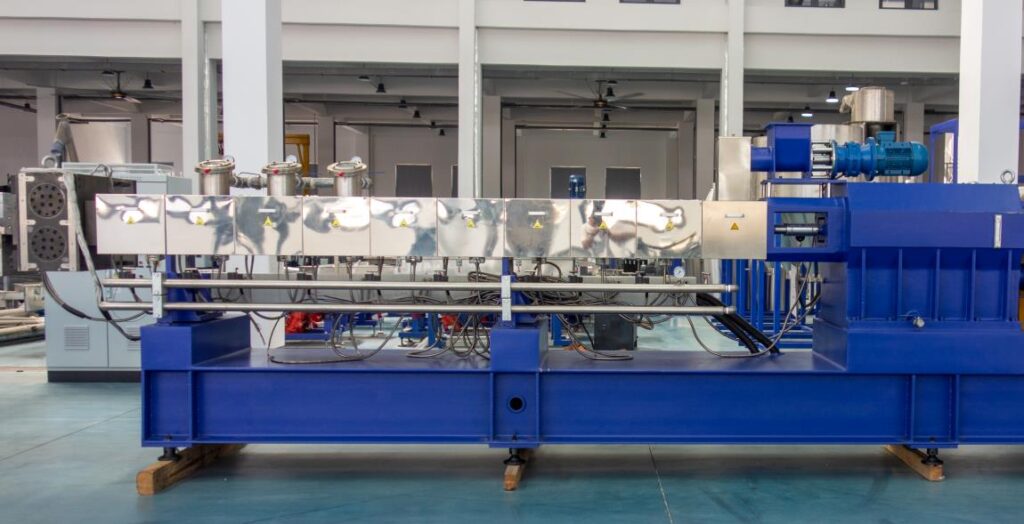
II. Fault Phenomenon 2: Slow Temperature Rise (Far Exceeding the Set Heating Time, Unable to Reach the Target Temperature)
(I) Core Causes
- Insufficient Heating Element Power: Failure of some heating elements (e.g., damaged half-piece heating coil), undersized power rating, or poor contact between heating elements and the barrel resulting in low heat transfer efficiency.
- Abnormal Heat Dissipation: Unclosed cooling system (e.g., stuck normally open water-cooled solenoid valve, continuously running air-cooled fan) leading to continuous heat loss; damaged or missing barrel insulation layer causing excessive heat dissipation.
- Improper Temperature Control Parameter Settings: Unreasonable PID parameters of the temperature control instrument (excessively large proportional band, overly long integral time) resulting in slow heating output response; overly low heating rate setting or incorrect segmental heating delay settings.
- Material Heat Dissipation Interference: Excessively large feeding volume, where cold materials continuously absorb heat exceeding the load capacity of the heating system.
(II) Solutions
- Enhance Heating Capacity: Replace failed heating elements to ensure all heating units work normally. Check the fit between heating elements and the barrel; replace thermal conductive gaskets if necessary to improve heat transfer efficiency. Upgrade to heating elements with matching power if slow temperature rise persists under long-term full load.
- Inspect the Cooling System: Manually close cooling water circuit valves and air circuit switches, and observe the heating rate. Disassemble and clean the valve core if the solenoid valve is stuck, or replace it if damaged. Repair or replace the damaged insulation layer to reduce heat loss.
- Optimize Temperature Control Parameters: Adjust the PID parameters of the temperature control instrument, reduce the proportional band, and shorten the integral time to improve heating response speed. Reset the heating rate and cancel unreasonable segmental delays. Calibrate the temperature control instrument regularly to ensure parameter accuracy.
- Adjust Process Parameters: Reduce the feeding rate, and gradually increase it after the temperature reaches the set value to avoid excessive heat consumption by cold materials.
III. Fault Phenomenon 3: Temperature Runaway (Continuous Temperature Rise Exceeding the Set Value, or Sudden Temperature Fluctuations)
(I) Core Causes
- Solid-State Relay Malfunction: SSR breakdown and short circuit, which continuously supplies power to heating elements even when the temperature control instrument sends a stop-heating command, leading to temperature runaway; poor SSR contact causes sudden temperature rises and drops.
- Temperature Sensor Signal Distortion: Loose installation or aged probe of thermocouples/PT100 resulting in measured temperature lower than the actual temperature, making the temperature control instrument continuously output heating signals; poor sensor line contact causes signal fluctuations and frequent heating on-off cycles.
- Temperature Control Instrument Fault: Damaged temperature control module that cannot receive or process sensor signals, outputting incorrect heating commands; deviation of the cold junction compensation circuit leading to inaccurate temperature measurement and indirect temperature runaway.
- Cooling System Fault: Blocked water-cooled pipeline, faulty check valve, or stopped cooling water pump, unable to remove excess heat in a timely manner; failure of the solenoid valve to open resulting in ineffective cooling function.
(II) Solutions
- Replace the Solid-State Relay: Use a multimeter to detect the input and output terminals of the SSR. Replace the SSR of the same model if it conducts without receiving commands or fails to conduct when receiving commands at room temperature. Check the circuit voltage matching before replacement.
- Calibrate the Sensor System: Reinstall the sensor to ensure tight contact between the probe and the barrel without gaps. Clean oxide layers on terminal blocks and fasten lines to avoid signal fluctuations. Use a known intact sensor for replacement testing to confirm if the sensor is aged or damaged, and replace and calibrate it if necessary.
- Overhaul the Temperature Control Instrument: Restart the temperature control system; if the fault persists, use a multimeter to detect the output signal of the temperature control instrument and compare it with the sensor feedback signal. Overhaul or replace the temperature control module if the deviation is excessive. Calibrate the cold junction compensation circuit to ensure accurate temperature measurement.
- Unblock the Cooling System: Check the water temperature of the cooling water tank, remove blockages in the water pipeline, overhaul the check valve and water pump to ensure unobstructed water circulation. Disassemble and clean the solenoid valve to ensure normal on-off operation for precise temperature control.
IV. Fault Phenomenon 4: Large Temperature Fluctuation (Actual Temperature Deviates from the Set Value by More Than ±10℃ with Continuous Fluctuations)
(I) Core Causes
- Poor Sensor Contact: Micro-motion wear between the thermocouple/PT100 probe and the barrel due to vibration and thermal expansion/contraction, or mismatched mounting hole size, leading to changing contact gaps and unstable signals.
- Electrical Line Fault: Loose or aged wiring terminals causing unstable current in the heating circuit; grid voltage fluctuations affecting the output power of heating elements.
- Unreasonable PID Parameters: Improper settings of proportional band, integral time, and derivative time leading to over-response or lag of the temperature control system, failing to stabilize at the set temperature.
- Imbalanced Heating/Cooling Coordination: Slow response of the cooling system, or mismatched heating element power and cooling capacity, leading to delayed temperature regulation.
(II) Solutions
- Optimize Sensor Installation: Replace worn sensor probes, adjust the mounting hole size to ensure tight contact between the probe and the barrel. Apply high-temperature anti-seize paste to the threads and fasten with the specified torque to reduce vibration impact. Fix sensor lines to avoid pulling and wear.
- Stabilize the Electrical Circuit: Tighten all terminal blocks one by one and replace aged lines. Install a voltage stabilizer to avoid the impact of grid voltage fluctuations on heating power. Check the grounding of the heating circuit to prevent signal interference from leakage.
- Fine-Tune PID Parameters: Gradually optimize the proportional band (usually set to 20-50), integral time (100-300s), and derivative time (0-50s) to control temperature fluctuation within the allowable range. Restore factory settings and re-commission if unfamiliar with parameter adjustment.
- Coordinate Heating and Cooling Regulation: Overhaul cooling system valves and water pumps to improve cooling response speed. Match heating element power and cooling capacity according to material characteristics and processing temperature to avoid excessive load on a single system.
V. Common Fault Diagnosis Process and Preventive Maintenance
(I) Quick Diagnosis Process (Power-Off Operation to Ensure Safety)
- Observe the temperature control instrument status: Prioritize inspecting the sensor if fault codes (e.g., “H”, “OPEN”) are displayed; inspect heating elements and the cooling system if the display is normal but temperature is abnormal.
- Measure the electrical circuit: Use a multimeter to detect the resistance of heating elements, on-off status of solid-state relays, and contact resistance of terminal blocks to locate open/short circuit points.
- Replacement Testing: Use known intact sensors and SSRs to replace suspicious components for quick confirmation of the fault root cause.
- Check Mechanics and Cooling: Confirm the installation of heating elements and the status of the insulation layer, unblock cooling water/air circuits, and inspect solenoid valve and check valve faults.
(II) Preventive Maintenance Measures
- Before Daily Startup: Inspect the insulation layer of heating elements and terminal blocks, observe whether the temperature control instrument display is normal, and manually test the on-off function of the cooling system.
- Monthly Maintenance: Calibrate temperature sensors and temperature control instruments, tighten all electrical line terminals, and clean impurities in the cooling water circuit.
- Quarterly Overhaul: Detect the resistance value of heating elements and replace aged ones; inspect the status of solid-state relays and fuses, and stock spare parts of the same specification.
- Process Optimization: Avoid long-term over-temperature operation to reduce heating element aging. Select corrosion-resistant sensors and heating elements when processing corrosive materials (e.g., PVC), and clean corrosive impurities regularly.
Note: Troubleshooting must be performed by professional electricians, who shall strictly abide by power-off operation procedures to avoid electric shock or secondary equipment damage. For faults involving control systems such as temperature control instruments and PLCs, it is recommended to contact the equipment manufacturer’s technical support for precise maintenance in conjunction with the equipment manual.