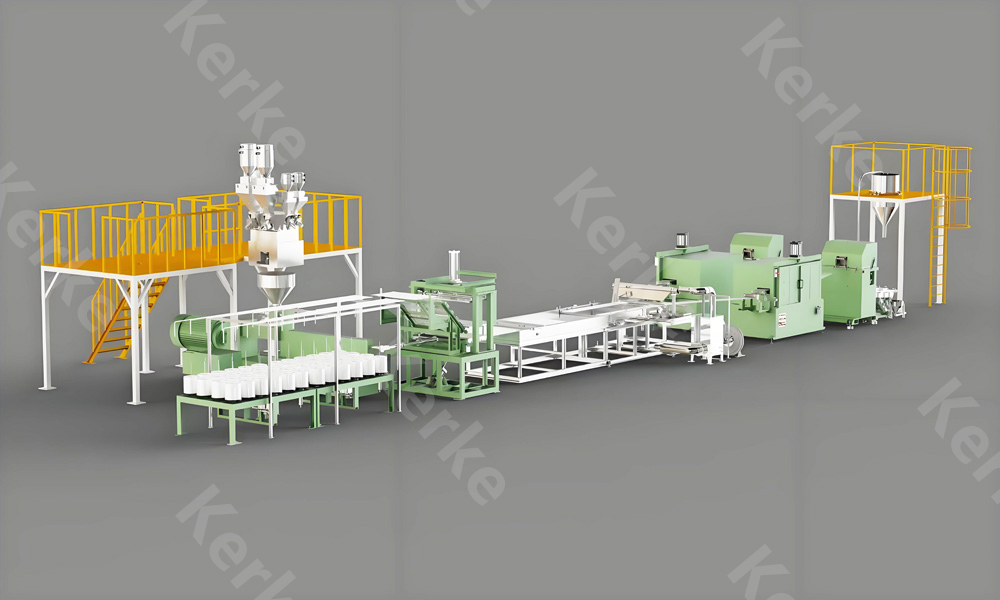
Introduction to Compounding Extruders
Compounding extrusion is a vital process in the plastic manufacturing industry that combines two or more materials to create a new, improved composite material. This process involves heating, melting, and mixing raw materials within an extruder barrel, followed by shaping the resulting compound into pellets or other forms for further processing.
Modified plastic materials play a crucial role in modern manufacturing, offering enhanced properties such as increased strength, improved durability, better chemical resistance, and specific performance characteristics tailored to various applications. From lightweight components in the automotive industry to sustainable packaging solutions, modified plastics have become indispensable in countless products we use daily.
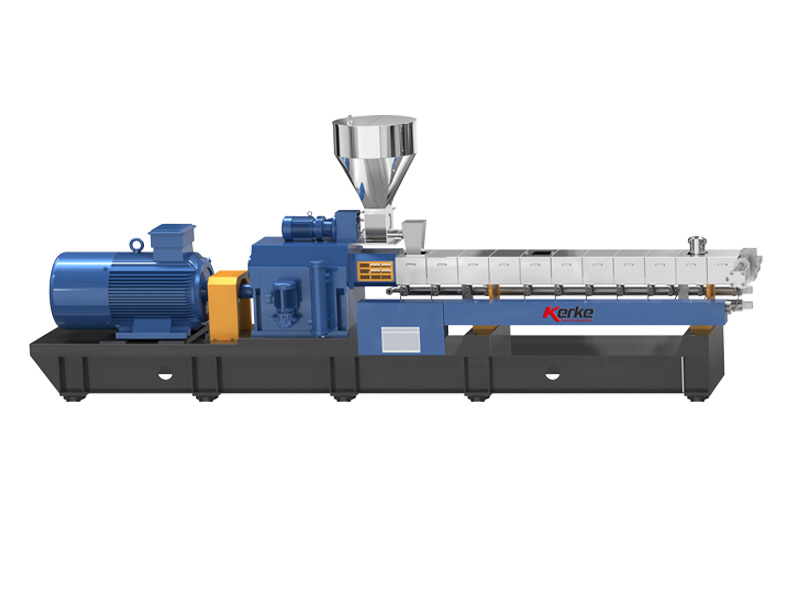
At the heart of this process lies the compounding extruder, a sophisticated piece of machinery designed to ensure uniform mixing and optimal material properties. Kerke Extrusion Equipment, a leading manufacturer in the field, has been at the forefront of developing advanced extrusion solutions that deliver superior quality and performance.
Key Components of a Compounding Extruder
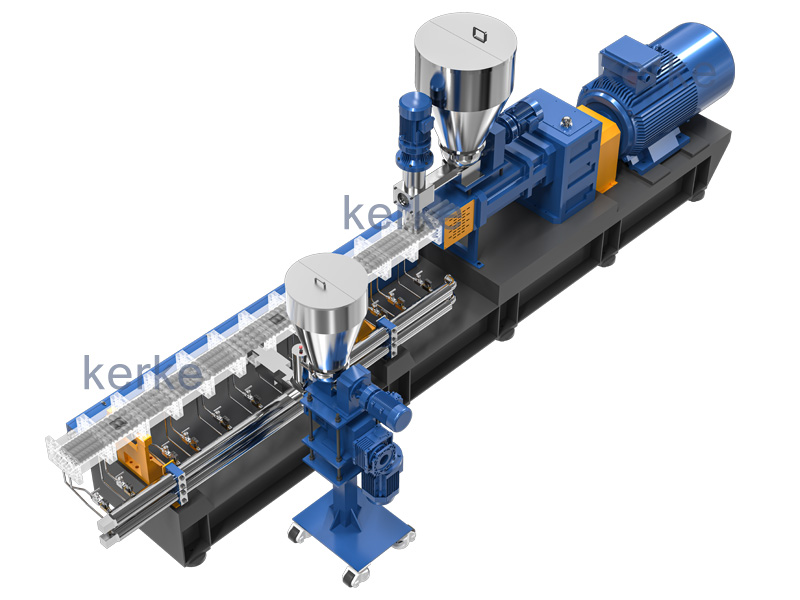
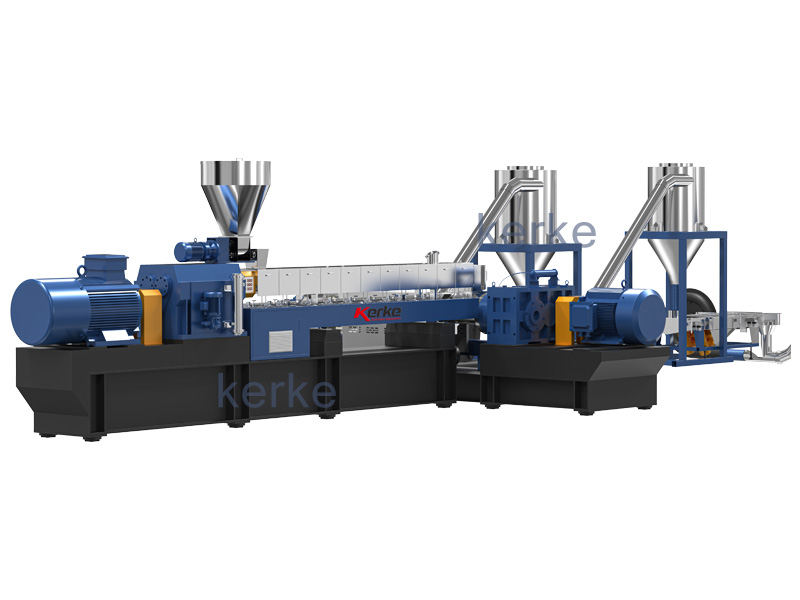
Understanding the key components of a compounding extruder is essential to appreciate how it contributes to the quality of modified plastic materials:
Screw Design and Configuration
The screw is the workhorse of the extruder, responsible for transporting, melting, and mixing materials. Kerke’s computer-aided designed screw assemblies feature a kneading co-type design with excellent self-cleaning function and good interchangeability. Through appropriate and reasonable combination of screw elements, the extruder can realize material transportation, plasticization, shearing, dispersion, homogenization, exhaust, pressure building, and other essential processing stages.
Barrel Structure and Heating Systems
The barrel houses the screw and provides the necessary heating for material melting. Kerke extruders feature segmented barrel designs that allow for precise temperature control along the length of the extruder. This is particularly important for processing materials with different melting points or heat sensitivity requirements.
Feeding Mechanisms and Material Handling
Consistent and accurate material feeding is critical for maintaining product quality. Kerke extruders offer multiple metering and feeding technologies, including volumetric metering, loss-in-weight metering, and side feeders, to accommodate different material types and processing requirements.
Die Systems for Final Product Shaping
The die system shapes the molten material into the desired form, whether it’s pellets, sheets, or profiles. Kerke offers a variety of pelletizing systems, including water-cooled strand pelletizing, air-cooled strand pelletizing, air-cooled die face hot cutting, water ring die face hot cutting, eccentric water mist hot cutting, and underwater granulation systems, to meet diverse application needs.
The Science Behind Compounding Extrusion
Compounding extrusion is a complex process that involves several key scientific principles:
Material Mixing and Dispersion
The goal of compounding is to achieve uniform dispersion of additives, fillers, or other components within the base polymer. Kerke extruders use a combination of shear force and extensional flow to break apart agglomerates and distribute particles evenly throughout the material.
Shear Force and Its Effect on Material Properties
Shear force, generated by the rotating screws, plays a critical role in material processing. Controlled shear can improve material properties by enhancing molecular orientation, increasing filler-matrix adhesion, and promoting chemical reactions between components. However, excessive shear can also degrade polymers, highlighting the importance of precise process control.
Temperature Control for Optimal Processing
Temperature management is essential for ensuring proper melting, mixing, and shaping of materials. Kerke extruders feature advanced temperature control systems that maintain precise temperature profiles throughout the process, preventing material degradation and ensuring consistent product quality.
Pressure Management in the Extrusion Process
Pressure within the extruder barrel affects material flow, mixing efficiency, and final product properties. Kerke’s extruders are designed to maintain consistent pressure levels, ensuring uniform material density and preventing defects such as voids or uneven distribution of components.
How Kerke Compounding Extruders Enhance Material Quality
Kerke has developed several innovative features that contribute to the superior quality of modified plastic materials produced with their extruders:
Modular Screw Design for Customized Processing
Kerke’s modular screw design allows for easy customization of screw configurations to meet specific processing requirements. This flexibility enables manufacturers to optimize processes for different material types and achieve the desired material properties.
High Torque Transmission for Efficient Mixing
Kerke extruders feature high torque transmission systems that provide the power needed for efficient mixing, even with highly filled or viscous materials. This ensures that all components are thoroughly blended, resulting in consistent material properties.
Advanced Temperature Control Systems
Precise temperature control is essential for maintaining material integrity and achieving consistent product quality. Kerke extruders use advanced heating and cooling systems with multiple temperature zones to create optimal processing conditions for different materials.
Precise Feeding Mechanisms for Consistent Material Properties
Kerke offers a range of feeding systems, including volumetric and loss-in-weight feeders, to ensure accurate and consistent material delivery. This is particularly important for applications where precise dosing of additives or fillers is required to achieve specific material properties.
Applications of Modified Plastic Materials
Modified plastic materials find applications in a wide range of industries, each benefiting from the unique properties enhanced by compounding extrusion:
Automotive Industry
In the automotive industry, modified plastics are used to produce lightweight components that improve fuel efficiency while maintaining strength and durability. Kerke extruders are used to produce materials for interior trim, exterior body panels, and under-the-hood components.
Packaging Industry
Modified plastics play a crucial role in packaging, providing barrier properties against moisture, oxygen, and other environmental factors. Kerke extruders are used to produce materials for flexible packaging, rigid containers, and closures.
Construction Industry
In the construction industry, modified plastics are used for applications such as insulation materials, roofing membranes, and window profiles. Kerke extruders help produce materials with improved weather resistance, thermal insulation properties, and structural integrity.
Electrical and Electronics Industry
Modified plastics are used in electrical and electronics applications for their excellent insulation properties and flame retardancy. Kerke extruders are used to produce materials for wire and cable insulation, connectors, and housing components.
Case Studies: Quality Improvements with Kerke Extruders
Several case studies demonstrate how Kerke extruders have helped manufacturers improve the quality of their modified plastic materials:
Case Study 1: Enhancing Impact Resistance in Engineering Plastics
A manufacturer of engineering plastics was struggling to achieve consistent impact resistance in their products due to poor dispersion of rubber additives. After switching to a Kerke KTE series extruder with optimized screw configuration, they were able to achieve uniform dispersion of additives, resulting in a 30% improvement in impact resistance.
Case Study 2: Achieving Uniform Color Dispersion in Masterbatch Production
A masterbatch producer was experiencing issues with color consistency in their products, leading to high rejection rates. By implementing a Kerke extruder with advanced feeding systems and precise process control, they were able to achieve uniform color dispersion, reducing rejection rates by 40% and improving overall product quality.
Case Study 3: Improving Mechanical Properties in Fiber-Reinforced Composites
A manufacturer of fiber-reinforced composites was looking to improve the mechanical properties of their products while maintaining cost-effectiveness. By using a Kerke extruder with specialized screw design and optimized processing parameters, they were able to achieve better fiber-matrix adhesion, resulting in a 25% increase in tensile strength and a 20% increase in flexural modulus.
Future Trends in Compounding Extrusion Technology
The compounding extrusion industry is continuously evolving, with several trends shaping the future of the technology:
Integration of Industry 4.0 Technologies
Industry 4.0 technologies, such as IoT sensors, big data analytics, and machine learning, are being integrated into extrusion systems to enable real-time monitoring, predictive maintenance, and process optimization. Kerke is actively working on incorporating these technologies into their extruders to provide customers with smarter, more efficient solutions.
Development of Sustainable Material Processing Solutions
As sustainability becomes increasingly important, manufacturers are looking for ways to reduce the environmental impact of their processes. Kerke is developing extrusion solutions that enable the processing of recycled materials and bio-based polymers, helping manufacturers meet their sustainability goals.
Advancements in Screw Design and Material Handling Systems
Continuous research and development in screw design are leading to more efficient mixing and processing capabilities. Kerke is at the forefront of these advancements, developing innovative screw geometries and material handling systems that improve process efficiency and product quality.
Conclusion
Compounding extrusion plays a critical role in improving the quality of modified plastic materials, enabling manufacturers to create products with enhanced properties and performance. Kerke Extrusion Equipment, with its advanced technology and commitment to innovation, has established itself as a trusted partner for manufacturers seeking to optimize their extrusion processes.
By understanding the key components of a compounding extruder, the science behind the process, and the benefits of Kerke’s innovative solutions, manufacturers can make informed decisions about their extrusion equipment and improve the quality of their products.
As the industry continues to evolve, Kerke remains dedicated to providing cutting-edge extrusion solutions that meet the changing needs of manufacturers and contribute to the advancement of the plastic processing industry.