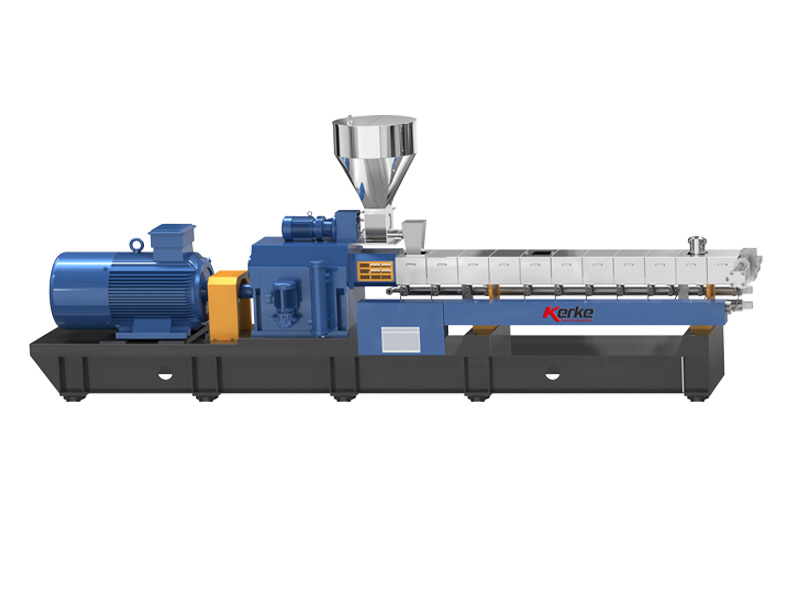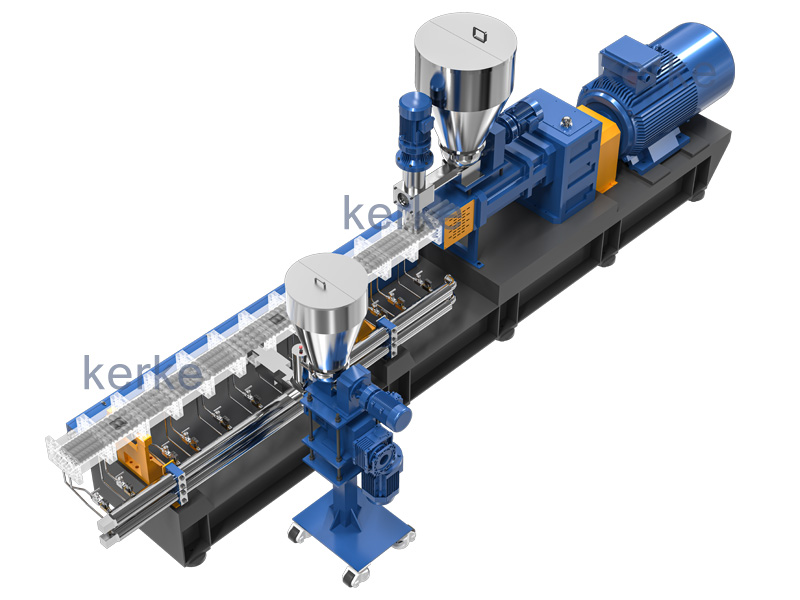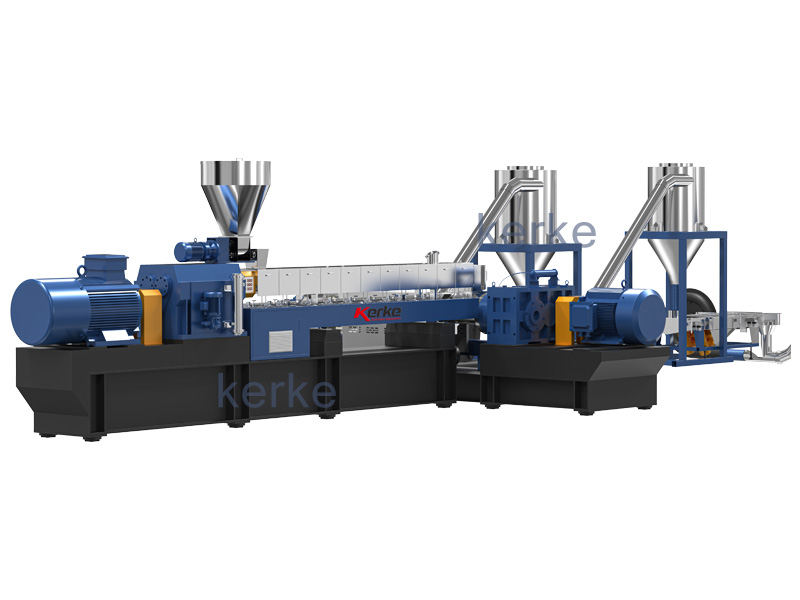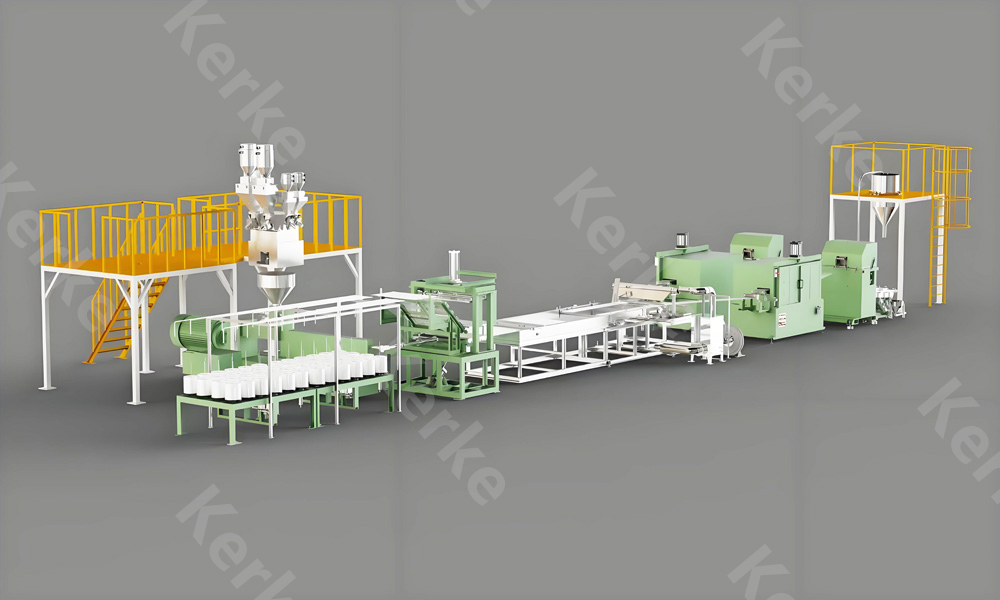
In the modern polymer processing industry, the twin screw compounding extruder is a cornerstone of efficient and high-quality production for a wide range of plastic formulations—from masterbatches to reinforced composites. For manufacturers aiming to maximize throughput, reduce waste, and improve product consistency, optimizing the performance of a Twin Screw Extruder is not just a goal but a necessity. Kerke Extruder (www.kerkeextruder.com), a leading manufacturer of Compounding Extruders and Masterbatch Extruders, has engineered its twin screw systems to deliver exceptional flexibility and efficiency, and this guide will walk you through the critical steps to unlock their full potential.
1. Understanding the Core Components of Kerke Twin Screw Compounding Extruders
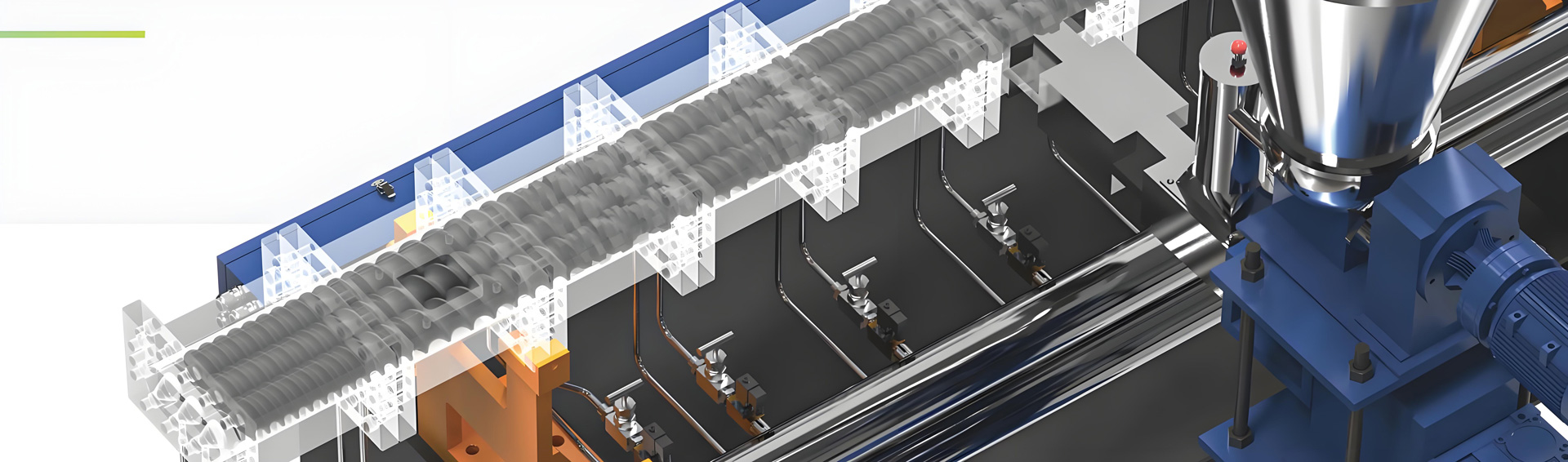
Before diving into optimization strategies, it is essential to understand the key components of a twin screw compounding extruder and how they impact production performance. Kerke’s twin screw extruders are designed with precision-engineered components that work in harmony to ensure consistent mixing, melting, and extrusion—each component plays a vital role in overall efficiency.
1.1 Screw Design: The Heart of the Extruder
The screw assembly is the most critical component of a twin screw compounding extruder, and Kerke offers customizable screw designs tailored to different compounding needs. The two primary configurations are co-rotating and counter-rotating screws, each with unique advantages: co-rotating screws provide superior mixing for complex formulations (e.g., high-load masterbatches), while counter-rotating screws excel at low-shear applications like PVC compounding.
Key design features that impact optimization include the Length-to-Diameter (L/D) ratio, flight geometry, and mixing element configuration. Kerke’s standard twin screw extruders feature L/D ratios ranging from 24:1 to 48:1, with modular mixing elements (e.g., kneading blocks, paddle elements) that can be reconfigured to match specific material requirements. For example, increasing the number of kneading blocks enhances dispersion for color masterbatches, while reducing shear zones prevents thermal degradation of sensitive polymers like biodegradable PLA.
Wear resistance is another critical factor—Kerke uses high-grade alloy steels (e.g., nitrided steel, bimetallic coatings) for screw flights to minimize wear, which directly reduces downtime and maintains consistent performance over time. Regular inspection of screw wear (e.g., measuring flight height) is a foundational step in optimization, as worn screws lead to poor mixing, reduced throughput, and increased energy consumption.
1.2 Barrel Assembly: Temperature Control and Material Compatibility
Kerke’s barrel assemblies are divided into multiple temperature control zones (typically 5–8 zones for standard Compounding Extruders) that allow precise regulation of the material’s thermal profile from feed to die. Each zone is equipped with electric heaters and water cooling jackets, ensuring rapid response to temperature fluctuations—a critical feature for optimizing melting and mixing.
Material compatibility is also a key consideration: Kerke offers barrel liners made from wear-resistant materials (e.g., Stellite, tungsten carbide) for abrasive formulations like mineral-filled masterbatches. Using the correct barrel liner material prevents premature wear, maintains tight clearances between screws and barrels, and ensures consistent pressure and throughput.
1.3 Drive System: Power Efficiency and Torque Management
The drive system of a twin screw extruder dictates how much power is delivered to the screws, and Kerke’s high-efficiency AC drives are designed to minimize energy loss while providing precise torque control. Torque is the force that drives the screws to convey, mix, and melt the material—insufficient torque leads to low throughput, while excessive torque wastes energy and risks mechanical failure.
Kerke’s drive systems feature variable frequency drives (VFDs) that allow operators to adjust screw speed and torque in real time, matching the power output to the material’s processing requirements. For example, high-viscosity formulations (e.g., engineering polymer compounds) require higher torque, while low-viscosity materials (e.g., PE masterbatches) can be processed with lower torque to save energy. Regular maintenance of the drive system (e.g., lubricating gears, inspecting motor windings) ensures optimal power transfer and extends the lifespan of the extruder.
1.4 Control System: Automation for Real-Time Optimization
Modern optimization relies heavily on data-driven decision-making, and Kerke’s twin screw extruders are equipped with advanced PLC (Programmable Logic Controller) systems and HMI (Human-Machine Interface) panels that provide real-time monitoring of critical parameters: temperature, screw speed, feed rate, barrel pressure, and motor load. The HMI allows operators to store and recall up to 100+ recipes, ensuring consistency across production runs and reducing setup time between batches.
For advanced optimization, Kerke offers IoT integration options that connect the extruder to a cloud-based monitoring platform (accessible via www.kerkeextruder.com). This platform tracks production metrics over time, identifies inefficiencies (e.g., sudden spikes in energy consumption), and even provides predictive maintenance alerts—allowing manufacturers to address issues before they cause downtime.
2. Key Factors Influencing Production Efficiency of Twin Screw Compounding Extruders
Optimizing production with a twin screw compounding extruder requires balancing multiple interrelated factors—material preparation, process parameters, energy efficiency, and maintenance. Neglecting any one of these factors can negate gains in others, so a holistic approach is essential.
2.1 Material Preparation: The Foundation of Optimal Processing
Even the most advanced Compounding Extruder cannot compensate for poor material preparation. Inconsistent or contaminated raw materials lead to variable processing conditions, poor product quality, and increased downtime. Kerke recommends the following best practices for material preparation:
Drying: Most polymers (e.g., PET, PA, ABS) absorb moisture from the air, which causes hydrolysis during extrusion—leading to bubble formation, reduced mechanical properties, and poor mixing. Kerke advises using dehumidifying dryers to reduce moisture content to below 0.02% for hygroscopic materials. The dryer should be sized to match the extruder’s throughput (e.g., a 500 kg/h Compounding Extruder requires a dryer with a capacity of 600–700 kg/h to ensure a continuous supply of dry material).
Mixing and Blending: Pre-blending raw materials (resin, pigments, additives) before feeding into the extruder ensures uniform distribution and reduces the load on the extruder’s mixing elements. Kerke offers integrated high-speed mixers that can be paired with its twin screw extruders, ensuring consistent blend quality and reducing feed zone blockages.
Purity Control: Foreign contaminants (e.g., metal shavings, dirt, cross-contaminated resins) can damage screw flights, cause die blockages, and ruin entire batches. Installing magnetic separators and sieves in the feed system is a simple yet effective way to remove contaminants—Kerke’s extruder feed hoppers are equipped with built-in magnetic separators as standard equipment.
2.2 Process Parameter Optimization: The Core of Production Efficiency
Adjusting process parameters is the most direct way to optimize production, and Kerke’s twin screw extruders are designed to allow precise tuning of temperature, screw speed, feed rate, and pressure. Below is a detailed breakdown of each parameter and its optimal ranges for common formulations:
2.2.1 Temperature Profile
The temperature profile refers to the temperature setpoints for each barrel zone, feed throat, and die. The goal is to melt the material completely without causing thermal degradation, and the profile varies by polymer type:
- PE/PP Masterbatches: Feed zone (80–100°C), compression zone (150–170°C), melting zone (180–200°C), metering zone (190–210°C), die (200–210°C).
- ABS Compounds: Feed zone (100–120°C), compression zone (180–200°C), melting zone (210–230°C), metering zone (220–240°C), die (230–240°C).
- Biodegradable PLA Masterbatches: Feed zone (60–80°C), compression zone (160–170°C), melting zone (180–190°C), metering zone (185–195°C), die (190–200°C).
Kerke’s temperature control system maintains setpoints within ±1°C, ensuring consistency even during long production runs. Overheating leads to polymer degradation (e.g., discoloration in color masterbatches), while underheating results in incomplete melting, poor mixing, and low throughput.
2.2.2 Screw Speed
Screw speed (measured in RPM) directly impacts throughput, shear rate, and residence time. For most Compounding Extruders, the optimal speed range is 200–600 RPM, but this varies by formulation:
High screw speeds increase throughput but also increase shear heat—this is beneficial for low-viscosity materials (e.g., PE masterbatches) but risky for heat-sensitive polymers (e.g., PVC, PLA). Low screw speeds reduce shear heat but decrease throughput; they are ideal for high-viscosity engineering polymers (e.g., PEEK compounds).
Kerke recommends a “golden ratio” between screw speed and feed rate: the feed rate (kg/h) should be proportional to the screw speed (RPM) to avoid overfeeding (which causes screw jamming) or underfeeding (which wastes energy). For example, a Kerke KTE-65 twin screw extruder (65mm screw diameter) operating at 400 RPM has an optimal feed rate of 300–400 kg/h for PP masterbatches.
2.2.3 Feed Rate
Feed rate is the rate at which raw materials are fed into the extruder (kg/h), and it must be matched to the extruder’s capacity and screw speed. Kerke’s twin screw extruders use gravimetric feeders (as standard) for precise feed rate control (±0.5% accuracy), which is critical for maintaining consistent formulation ratios (e.g., pigment loading in color masterbatches).
To optimize feed rate, start at 70–80% of the extruder’s maximum capacity and gradually increase while monitoring barrel pressure and motor load. If pressure exceeds 300 bar (Kerke’s recommended maximum for most formulations) or motor load exceeds 80%, reduce the feed rate to prevent mechanical stress on the extruder.
2.2.4 Pressure Control
Barrel pressure (measured in bar) is a byproduct of material compression and flow, and it is a key indicator of process stability. Optimal barrel pressure for twin screw compounding extruders is 150–250 bar for most masterbatch and compounding applications.
High pressure (above 300 bar) indicates flow restriction (e.g., die blockage, worn screws) and increases energy consumption; low pressure (below 100 bar) indicates underfeeding or insufficient melt viscosity. Kerke’s extruders are equipped with pressure transducers in the metering zone and die, providing real-time pressure data to allow immediate adjustments to feed rate or screw speed.
2.3 Energy Efficiency Considerations
Energy costs account for 20–30% of total production costs for extruder operations, so optimizing energy efficiency is a key way to improve profitability. Kerke’s twin screw extruders are designed with energy-saving features, and the following practices can further reduce energy consumption:
- Heat Recovery: Capture waste heat from the barrel cooling system to preheat raw materials or heat the factory—Kerke offers optional heat recovery systems that reduce energy consumption by 10–15%.
- Variable Speed Drives: As mentioned earlier, Kerke’s VFDs adjust motor speed to match processing needs, reducing energy waste compared to fixed-speed drives.
- Insulation: Insulate barrel zones to reduce heat loss—Kerke’s standard barrel insulation reduces heat loss by 20% and improves temperature stability.
- Idle Time Reduction: Minimize extruder idle time by scheduling batches efficiently and prepping materials in advance—idle extruders consume 10–15% of their full-load energy while producing no output.
2.4 Maintenance Practices: Prevent Downtime and Maintain Performance
Preventive maintenance is critical to keeping a twin screw compounding extruder operating at peak efficiency—unscheduled downtime can cost manufacturers $5,000–$20,000 per hour (depending on production volume). Kerke recommends the following maintenance schedule for its extruders:
- Daily Checks: Inspect barrel temperatures, pressure readings, motor load, and feed system for blockages; clean the die face to prevent buildup.
- Weekly Checks: Lubricate gearboxes and bearings; inspect screw alignment; check for leaks in cooling or heating systems.
- Monthly Checks: Measure screw wear; inspect barrel liners for damage; calibrate temperature and pressure sensors.
- Annual Servicing: Replace wear parts (e.g., kneading blocks, flight tips); overhaul drive system; test control system functionality.
Kerke also offers a spare parts program (available via www.kerkeextruder.com) that ensures fast delivery of critical parts (e.g., screws, barrel liners) to minimize downtime. Using genuine Kerke spare parts is essential, as aftermarket parts may not match the precision of Kerke’s original components, leading to poor performance and increased wear.
3. Advanced Optimization Techniques for Kerke Twin Screw Compounding Extruders
For manufacturers looking to take production optimization to the next level, Kerke offers advanced techniques that leverage automation, simulation, and material science to maximize efficiency and product quality.
3.1 Automation and IoT Integration
Kerke’s IoT-enabled extruders connect to a cloud-based platform that collects real-time data on all process parameters, allowing manufacturers to analyze trends and identify inefficiencies. For example, the platform can detect a gradual increase in motor load over time (indicating screw wear) and alert maintenance teams to replace parts before failure occurs.
Advanced automation features include closed-loop control, where the extruder automatically adjusts parameters (e.g., temperature, screw speed) in response to changes in material properties or ambient conditions. For example, if the moisture content of incoming resin increases (detected via a inline moisture sensor), the extruder will automatically increase the temperature of the feed zone to compensate, ensuring consistent melting and mixing.
3.2 Process Simulation and Modeling
Kerke partners with leading polymer processing software providers to offer process simulation tools that allow manufacturers to optimize parameters before running physical trials. These tools use finite element analysis (FEA) to model material flow, mixing, and temperature distribution in the extruder, predicting the impact of parameter changes on throughput and product quality.
For example, a manufacturer looking to switch from a 30% pigment loading to a 50% loading in a color masterbatch can use simulation software to adjust screw speed, temperature, and feed rate virtually—reducing the number of physical trials needed and minimizing waste. Kerke’s engineering team can assist with simulation and modeling, ensuring that the extruder is configured for optimal performance with the new formulation.
3.3 Material Compatibility and Formulation Adjustments
Even with optimal parameters, poor material compatibility can limit production efficiency. Kerke’s technical team works with manufacturers to adjust formulations to match the extruder’s capabilities, reducing processing challenges and improving product quality.
For example, adding a processing aid (e.g., lubricants) to high-load mineral masterbatches reduces shear stress on the screws, allowing higher screw speeds and throughput without increasing wear. Kerke’s experts can also recommend alternative resins or additives that are easier to process, reducing energy consumption and improving consistency.
4. Case Studies: Production Optimization with Kerke Twin Screw Compounding Extruders
Real-world examples demonstrate the impact of optimization strategies on production efficiency. Below are two case studies of Kerke customers who achieved significant improvements by implementing the techniques outlined in this guide.
4.1 Case Study 1: Automotive Polymer Compounding
A European automotive component manufacturer was using a legacy twin screw extruder to produce glass fiber-reinforced PA66 compounds. The manufacturer faced two key challenges: low throughput (250 kg/h vs. a target of 350 kg/h) and high scrap rates (15%) due to poor fiber dispersion and thermal degradation.
Kerke’s technical team conducted a full audit of the production process and recommended the following changes:
- Upgraded to a Kerke KTE-75 twin screw extruder with a customized screw design (40:1 L/D ratio, high-shear kneading blocks) to improve fiber dispersion.
- Optimized the temperature profile (feed zone: 100°C, melting zone: 250°C, die: 260°C) to reduce thermal degradation of PA66.
- Installed a gravimetric feeder system to improve feed rate accuracy (±0.5% vs. ±2% with the previous system).
- Implemented a preventive maintenance schedule, including monthly screw wear checks and quarterly gearbox servicing.
After implementation, the manufacturer achieved a 40% increase in throughput (350 kg/h) and a 10% reduction in scrap rates (5%). Energy consumption per kg of output decreased by 12%, and unscheduled downtime was reduced by 80% (from 10 hours/week to 2 hours/week). The total return on investment (ROI) for the Kerke extruder and optimization program was achieved in 18 months.
4.2 Case Study 2: Packaging Material Production
A North American packaging manufacturer was producing PE color masterbatches with a Kerke KTE-65 twin screw extruder but struggled with inconsistent color dispersion and low throughput (280 kg/h). The manufacturer’s goal was to improve color uniformity (to meet customer specifications) and increase throughput to 350 kg/h.
Kerke’s team recommended the following optimizations:
- Reconfigured the screw assembly to add additional kneading blocks (from 6 to 9) to improve pigment dispersion.
- Adjusted the temperature profile (melting zone: 190°C vs. 210°C) to reduce pigment degradation and improve dispersion.
- Implemented IoT monitoring to track pressure and temperature fluctuations, allowing real-time adjustments to feed rate and screw speed.
- Trained operators on parameter tuning and preventive maintenance best practices.
The results: color dispersion uniformity improved by 25% (meeting customer specifications), throughput increased to 360 kg/h (29% increase), and energy consumption per kg decreased by 8%. The manufacturer was able to take on an additional 20% of customer orders without increasing production time, boosting revenue by 15%.
5. Common Mistakes to Avoid in Production Optimization
Even with the best intentions, manufacturers often make mistakes that hinder optimization efforts. Below are the most common pitfalls and how to avoid them:
- Over-Tuning Parameters: Making frequent, small changes to temperature or screw speed without monitoring the impact can lead to process instability. Kerke recommends making one parameter change at a time and running a full production batch to measure results before making additional adjustments.
- Neglecting Material Preparation: Skipping drying or pre-blending to save time leads to poor product quality and increased downtime. Invest in proper material handling equipment (e.g., dryers, mixers) to ensure consistent input materials.
- Using Aftermarket Parts: Aftermarket screws or barrel liners may be cheaper, but they often lack the precision of Kerke’s original parts, leading to poor mixing, increased wear, and higher energy consumption.
- Ignoring Operator Training: Even the most advanced extruder will underperform if operators are not trained to use it properly. Kerke offers comprehensive operator training (on-site or via www.kerkeextruder.com) to ensure staff understand parameter tuning, maintenance, and troubleshooting.
6. Conclusion: Maximizing ROI with Kerke Twin Screw Compounding Extruders
Optimizing production with a twin screw compounding extruder is a holistic process that involves understanding the extruder’s components, tuning process parameters, implementing preventive maintenance, and leveraging advanced technologies like automation and simulation. Kerke’s twin screw extruders are engineered to deliver exceptional flexibility and efficiency, and by following the strategies outlined in this guide, manufacturers can maximize throughput, reduce waste, improve product quality, and lower energy costs—ultimately maximizing their return on investment.
Whether you are producing masterbatches, reinforced composites, or engineering polymer compounds, Kerke Extruder (www.kerkeextruder.com) has the expertise and equipment to help you optimize your production process. Our team of engineers works closely with customers to customize extruders for their specific formulations, provide training on optimization techniques, and offer ongoing technical support to ensure long-term success.
In the competitive polymer processing industry, every percentage point of efficiency gain translates to significant cost savings and increased profitability. By investing in a high-quality Kerke Twin Screw Compounding Extruder and implementing the optimization strategies in this guide, you can position your business for sustainable growth and success.