Biodegradable plastic compounding represents one of the most rapidly growing segments in the plastics industry, driven by environmental concerns, regulatory requirements, and consumer demand for sustainable alternatives. Kerke Compounding Extruder, with over 12 years of experience in parallel co-rotating compounding extruder technology, understands that biodegradable plastics present unique processing challenges requiring specialized extruder design and configuration. This comprehensive guide explores the characteristics of biodegradable plastics, processing requirements, and the features that make twin screw extruders ideally suited for biodegradable plastic compounding applications.
Understanding Biodegradable Plastics
Biodegradable plastics encompass a diverse family of polymers designed to degrade under specific environmental conditions through biological activity. Major categories of biodegradable plastics include polylactic acid (PLA), polycaprolactone (PCL), polybutylene succinate (PBS), polybutylene adipate terephthalate (PBAT), and various starch-based polymers. Each biodegradable plastic type presents unique processing characteristics, thermal properties, and degradation requirements. Kerke twin screw extruders are designed to accommodate the diverse processing requirements of various biodegradable plastic formulations.
PLA represents the most widely used biodegradable plastic for commercial applications, derived from renewable resources including corn starch and sugarcane. PLA offers good mechanical properties, clarity, and processability but is relatively brittle and has a relatively low glass transition temperature. PLA processing requires careful temperature control to prevent thermal degradation, which can cause chain scission, reduced molecular weight, and compromised properties. Kerke extruders feature precise temperature control and gentle processing capabilities ideal for PLA compounding.
PBS and PBAT offer greater flexibility and toughness compared to PLA, making them suitable for applications requiring enhanced impact resistance. These polymers typically require different processing conditions than PLA, with different melting points and thermal stability profiles. PBS and PBAT are often blended with PLA or other biodegradable polymers to achieve desired property combinations. Kerke twin screw extruders can process pure PBS or PBAT or complex blends containing multiple biodegradable polymer types.
Starch-based biodegradable plastics incorporate starch as primary or secondary component, requiring special processing considerations due to starch’s sensitivity to moisture and processing conditions. Starch-containing formulations require careful moisture management and appropriate screw configuration to achieve proper dispersion and prevent degradation. Kerke extruders feature specialized screw configurations and venting systems optimized for starch-based formulations.
Processing Challenges of Biodegradable Plastics
Biodegradable plastics present unique processing challenges that differentiate them from conventional petroleum-based plastics. Understanding these challenges is essential for selecting appropriate equipment and processing conditions. Kerke twin screw extruders are specifically designed to address these challenges while achieving high quality and consistent compounding performance.
Thermal sensitivity represents the primary challenge for most biodegradable plastics. PLA begins to degrade at temperatures above 200 degrees Celsius, with significant molecular weight reduction occurring above 220 degrees Celsius. PBS and PBAT exhibit somewhat higher thermal stability but still degrade at temperatures significantly lower than many conventional polymers. This thermal sensitivity requires precise temperature control, limited residence time, and careful shear management to prevent degradation. Kerke extruders feature multiple independent temperature zones and precise temperature control enabling maintenance of optimal temperatures throughout the extruder.
Moisture sensitivity presents another significant challenge, particularly for starch-based polymers and PLA. Moisture can cause hydrolysis during processing, leading to molecular weight reduction and property degradation. Moisture can also cause bubbling or surface defects in the finished product. Proper drying of materials before processing and effective venting during extrusion are essential. Kerke extruders feature optimized venting systems with configurable vent quantity and position according to material system requirements, enabling effective moisture removal.
Rheological characteristics of biodegradable plastics often differ from conventional plastics, requiring specialized processing strategies. PLA exhibits relatively low melt viscosity and pseudoplastic behavior, requiring careful processing to achieve adequate mixing without excessive shear. PBS and PBAT have different flow characteristics that may require different screw configurations. Understanding rheological behavior is essential for optimizing processing conditions. Kerke provides expertise in processing various biodegradable plastics with appropriate screw configurations and processing parameters.
Additive compatibility with biodegradable polymers affects processing ease and final product performance. Many additives designed for conventional plastics may not be compatible with biodegradable polymers or may affect biodegradability. Specialized additives including plasticizers, nucleating agents, and processing aids are available for biodegradable polymer formulations. Kerke assists customers in selecting appropriate additives and optimizing processing conditions to achieve desired properties while maintaining biodegradability.
Twin Screw Extruder Advantages for Biodegradable Plastics
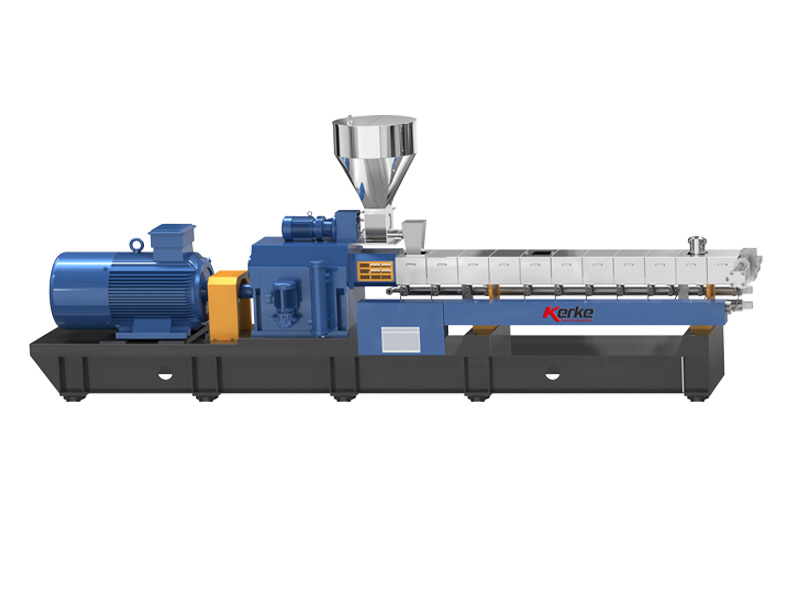
Twin screw extruders offer distinct advantages for processing biodegradable plastics compared to single screw extruders. Kerke parallel co-rotating twin screw extruders provide superior mixing capability, precise temperature control, and gentle processing characteristics essential for biodegradable plastic compounding. The KTE series co-rotating parallel twin screw extruders, ranging from KTE-16B to KTE-135D, are particularly well-suited for biodegradable plastic applications.
Superior mixing capability enables uniform dispersion of additives, fillers, and other components throughout biodegradable polymer matrices. Biodegradable plastic formulations often require incorporation of multiple components including nucleating agents, plasticizers, reinforcing fibers, and processing aids. Uniform dispersion is critical for achieving consistent properties and performance. Kerke twin screw extruders provide exceptional mixing through the intermeshing action of co-rotating screws, achieving uniform dispersion even with challenging formulations.
Precise temperature control is essential for processing thermally sensitive biodegradable polymers. Kerke extruders feature multiple independently controlled heating zones along the barrel length, enabling precise temperature profiling tailored to specific material requirements. This precise control enables maintenance of optimal temperatures throughout the extruder, preventing thermal degradation while achieving proper melting and processing. Multiple cooling zones also enable rapid temperature adjustments when changing between different formulations.
Gentle processing characteristics of twin screw extruders minimize shear-induced degradation of sensitive biodegradable polymers. While some mixing requires dispersive shear for proper additive dispersion, excessive shear can cause chain scission and molecular weight reduction, particularly in thermally sensitive polymers like PLA. Kerke screw configurations balance dispersive mixing requirements with gentle processing characteristics, achieving proper dispersion while minimizing degradation.
Short residence time achievable with twin screw extruders reduces thermal exposure, protecting sensitive biodegradable polymers from degradation. The efficient transport and mixing of twin screw extruders enables complete processing with relatively short residence time, reducing thermal exposure compared to alternative compounding equipment. Short residence time combined with precise temperature control provides optimal protection against thermal degradation. Kerke extruders are designed to minimize residence time while achieving complete and uniform processing.
Screw Configuration for Biodegradable Plastics
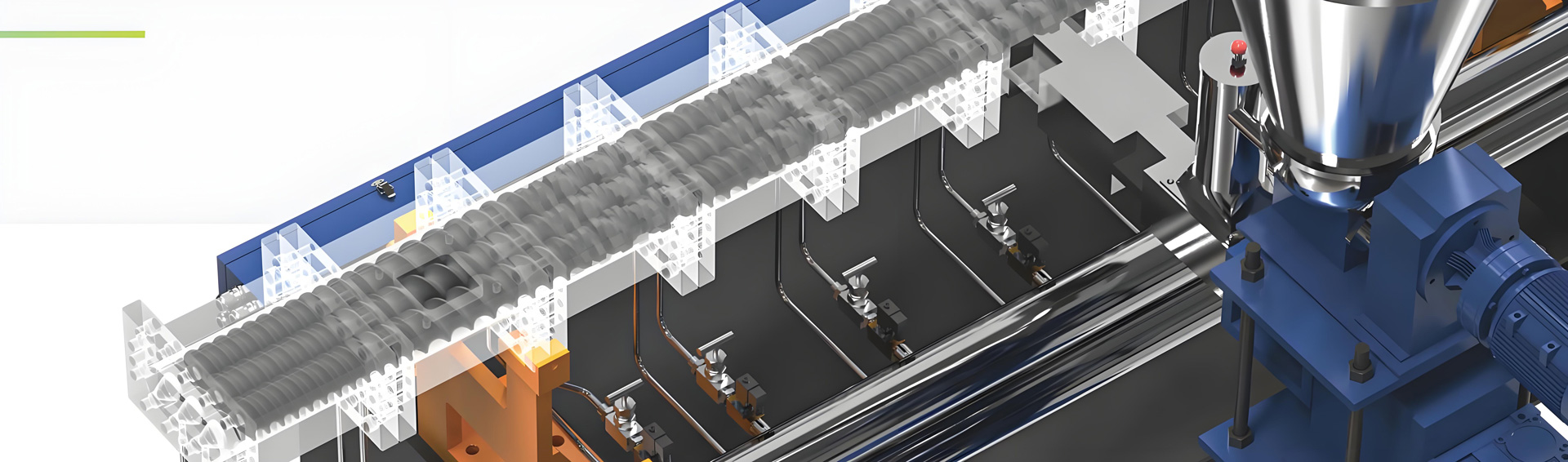
Screw configuration is critical for achieving optimal processing of biodegradable plastics in twin screw extruders. Kerke computer-aided designed screw assemblies provide excellent self-cleaning function and good interchangeability, enabling optimization for specific biodegradable plastic applications. Through appropriate and reasonable combination of screw elements, the extruder can realize material transportation, plasticization, shearing, dispersion, homogenization, exhaust, and pressure building for biodegradable polymer formulations.
Conveying elements establish the primary transport characteristics along the screw length. For biodegradable plastics with relatively low melt viscosity like PLA, conveying elements with appropriate flight geometry are necessary to achieve sufficient conveying efficiency without excessive backpressure. The number of conveying elements and their placement affect residence time and mixing characteristics. Kerke offers various conveying element configurations optimized for biodegradable polymer processing requirements.
Kneading blocks provide dispersive mixing necessary for uniform additive dispersion while managing shear intensity. For biodegradable plastics, particularly PLA, kneading block configuration must balance dispersive mixing requirements against shear sensitivity. Wider staggering angles provide higher shear intensity but may cause degradation in sensitive polymers. Narrower staggering angles provide gentler mixing but may not achieve adequate dispersion. Kerke optimizes kneading block configuration for each biodegradable plastic type, achieving required dispersion while protecting polymer integrity.
Mixing elements including specialized geometries can enhance distributive mixing without excessive dispersive shear. Toothed mixing sections and blister rings provide excellent distributive mixing with minimal shear intensity, ideal for sensitive biodegradable polymers where excessive dispersive shear must be avoided. Kerke offers various mixing element designs optimized for biodegradable plastic applications, providing uniform mixing with minimal shear exposure.
Venting sections enable removal of moisture and volatile components from biodegradable polymer melts. Moisture removal is particularly important for starch-based formulations and PLA, which are susceptible to hydrolysis. Multiple vent ports at strategic locations along the barrel enable staged removal of moisture and volatiles. Kerke extruders allow configuration of exhaust quantity and position according to specific material system requirements, enabling effective venting for various biodegradable plastic formulations.
Temperature Control for Biodegradable Plastics
Precise temperature control is absolutely essential for processing biodegradable plastics, which have relatively narrow processing windows and are susceptible to thermal degradation. Kerke twin screw extruders feature advanced temperature control systems that enable precise temperature profiling and stable operation, protecting sensitive biodegradable polymers from degradation while achieving optimal processing conditions.
Temperature profiling must account for material characteristics throughout the extruder. Upstream sections near the feed throat require lower temperatures to facilitate feeding and prevent premature melting that could cause feeding problems. Mid-sections require appropriate temperatures for melting and mixing without degradation. Downstream sections near the die may require slightly different temperatures to achieve proper melt properties and pressure. Kerke extruders feature multiple independent temperature zones that enable precise temperature profiling tailored to specific biodegradable plastic formulations.
Temperature stability is critical for consistent processing of biodegradable plastics. Temperature fluctuations can cause variations in melt viscosity, mixing effectiveness, and final product properties. Kerke extruders feature advanced PID control for each temperature zone, maintaining stable temperatures despite varying operating conditions. Stable temperatures ensure consistent processing and product quality.
Cooling capability enables rapid temperature changes when switching between different biodegradable plastic formulations. Biodegradable plastic processors often produce multiple formulations on the same equipment, requiring temperature profile adjustments between formulations. Kerke extruders feature efficient cooling systems that enable rapid temperature changes, reducing downtime between formulation changes and maximizing production flexibility.
Temperature monitoring at multiple points provides comprehensive oversight of thermal conditions throughout the extruder. In addition to barrel temperature zones, melt temperature sensors near the die provide feedback on actual melt temperature. Kerke extruders can be equipped with multiple temperature sensors that provide complete temperature profile visibility, enabling optimal temperature control and early detection of thermal problems.
Feeding System Requirements for Biodegradable Plastics
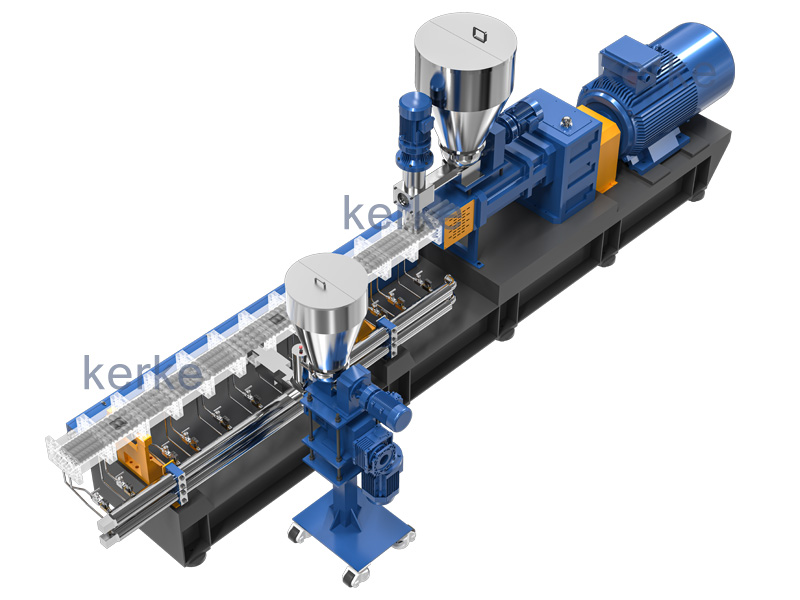
Feeding systems for biodegradable plastic compounding must address the specific characteristics of these materials, including moisture sensitivity, flow properties, and tendency to bridge or segregate. Kerke offers various feeding system configurations including single screw, twin screw, twin screw non-meshing type, hollow spring type, two-stage type, and metering pump volumetric metering feeding. For applications requiring higher precision, loss-in-weight metering can be equipped to meet stringent accuracy requirements.
Material handling before feeding is critical for biodegradable plastics, particularly those sensitive to moisture. Drying systems must provide appropriate drying conditions to achieve required moisture levels before feeding. Material must be protected from moisture absorption after drying until it enters the extruder. Kerke provides complete material handling solutions for biodegradable plastics, including appropriate drying equipment and material protection systems.
Component feeding strategy depends on formulation complexity and material characteristics. Simple formulations containing only base polymer may be fed through the main throat. More complex formulations containing multiple additives may benefit from separate feeding through side feeders, particularly when additives have different processing requirements. Kerke assists customers in developing optimal feeding strategies for their specific biodegradable plastic formulations.
Feed rate accuracy is critical for consistent formulation composition and processing. Variations in feed rate can cause changes in composition, which may affect both processing characteristics and final product properties. Kerke feeding systems feature gravimetric control that maintains precise feed rates, ensuring consistent formulation composition throughout production runs.
Liquid feeding capability is important for biodegradable plastic formulations containing liquid additives including plasticizers, reactive components, or coupling agents. Liquid feeders must provide accurate metering and effective mixing into the polymer melt. Kerke offers liquid feeding systems designed for biodegradable plastic applications, enabling precise liquid additive incorporation.
Compounding Different Biodegradable Polymers
Different biodegradable polymers present distinct processing requirements that must be addressed through appropriate equipment configuration and processing conditions. Kerke twin screw extruders are designed to process a wide range of biodegradable polymers, from PLA to PBS to starch-based formulations, with appropriate customization for each material type.
PLA compounding requires particular attention to temperature control and shear management. Processing temperatures must be maintained below degradation thresholds while achieving adequate melting and flow. Screw configuration must provide adequate mixing without excessive shear that could cause chain scission. Venting must effectively remove any residual moisture to prevent hydrolysis. Kerke offers PLA-specific screw configurations and processing recommendations that achieve uniform additive dispersion while protecting PLA from degradation.
PBS and PBAT compounding typically requires higher processing temperatures than PLA but still demands attention to thermal stability. These materials often exhibit better toughness and flexibility than PLA, requiring different additive packages and processing objectives. Screw configuration may include different kneading block arrangements to achieve appropriate dispersive mixing. Kerke provides screw configurations optimized for PBS and PBAT processing, achieving uniform additive dispersion while maintaining polymer integrity.
Starch-based polymer compounding presents special challenges due to starch moisture sensitivity and processing characteristics. These formulations typically require higher shear to achieve proper starch dispersion while avoiding excessive thermal exposure. Venting must be particularly effective to remove moisture released during processing. Kerke offers specialized screw configurations and venting arrangements for starch-based formulations, achieving uniform dispersion with effective moisture removal.
Blended biodegradable polymer systems containing multiple polymer types present additional complexity. Different components may have different melting points, thermal stabilities, and rheological characteristics. Processing conditions must be selected to achieve proper processing of all components without degradation of any component. Kerke assists customers in developing processing conditions and screw configurations for complex biodegradable polymer blends.
Additive Incorporation in Biodegradable Plastics
Additive incorporation is essential for achieving desired properties in biodegradable plastic formulations. Additives including plasticizers, nucleating agents, reinforcing fibers, impact modifiers, and processing aids enhance performance and processability of biodegradable polymers. Kerke twin screw extruders provide excellent mixing capabilities for uniform additive dispersion across diverse additive types and loading levels.
Plasticizers are commonly added to biodegradable polymers to improve flexibility and processability. PLA is frequently plasticized to improve toughness and flexibility. Plasticizers must be uniformly dispersed to achieve consistent properties throughout the product. Kerke extruders provide excellent distributive mixing for uniform plasticizer dispersion, with screw configurations optimized for liquid additive incorporation.
Nucleating agents are used to control crystallization behavior and improve properties including clarity, stiffness, and thermal properties. Nucleating agents are typically added at low levels but require uniform dispersion for effectiveness. Kerke twin screw extruders provide excellent dispersive mixing to achieve uniform nucleating agent dispersion even at low addition levels.
Reinforcing fibers including natural fibers, glass fibers, or other reinforcing materials are incorporated to improve mechanical properties. Fiber dispersion and length retention are critical for achieving reinforcing effects. Kerke screw configurations achieve uniform fiber dispersion while minimizing fiber breakage that reduces reinforcing effectiveness. Different fiber types may require different processing strategies, all supported by Kerke extruder technology.
Impact modifiers improve toughness and ductility of biodegradable polymers, which are often brittle compared to conventional plastics. Uniform dispersion of impact modifier particles is critical for achieving consistent toughening effects. Kerke extruders provide excellent mixing for uniform impact modifier dispersion, with appropriate screw configurations for different impact modifier types and loading levels.
Pelletizing Systems for Biodegradable Plastics
Pelletizing system selection and configuration significantly affect quality of biodegradable plastic pellets. Kerke offers multiple granulation system options to meet various material and processing requirements, including water-cooled strand pelletizing, air-cooled strand pelletizing, air-cooled die face hot cutting, water ring die face hot cutting, eccentric water mist hot cutting, and underwater granulation systems. Appropriate pelletizing method depends on biodegradable plastic characteristics and downstream requirements.
Water-cooled strand pelletizing is commonly used for biodegradable plastics, providing excellent cooling and surface finish. However, biodegradable plastics are often moisture sensitive, requiring careful drying after water cooling to prevent hydrolysis during subsequent processing. Kerke provides water-cooled strand pelletizing systems with integrated drying capabilities to address moisture sensitivity of biodegradable plastics.
Underwater pelletizing provides excellent surface finish and is particularly suitable for heat-sensitive formulations due to rapid quenching. This method eliminates the strand handling steps of strand pelletizing, reducing potential for contamination or property changes. Kerke KUW underwater pelletizing system is available for biodegradable plastic applications requiring superior surface finish and rapid cooling.
Air-cooled methods avoid moisture exposure, which is beneficial for moisture-sensitive biodegradable plastics. Air-cooled strand pelletizing or air-cooled die face hot cutting eliminates water from the pelletizing process, removing the need for subsequent drying. Kerke provides air-cooled pelletizing options for moisture-sensitive biodegradable plastic applications.
Pellet size and shape affect subsequent processing and final product properties. Uniform pellets with consistent size and shape feed more consistently and achieve more uniform processing in downstream equipment. Kerke pelletizing systems are designed to produce uniform pellets with tight size distribution, ensuring consistent downstream processing for biodegradable plastic formulations.
Quality Control for Biodegradable Plastics
Quality control for biodegradable plastic compounding must address material characteristics critical for biodegradability and performance. Key quality parameters include molecular weight distribution, additive dispersion, thermal properties, mechanical properties, and biodegradability characteristics. Kerke twin screw extruders can be integrated with various quality monitoring and control systems for comprehensive quality management.
Molecular weight distribution affects processability and mechanical properties of biodegradable plastics. Thermal degradation during processing can cause molecular weight reduction, affecting properties and biodegradability. Melt flow index measurements provide indication of molecular weight distribution. Kerke extruders feature process monitoring capabilities that help maintain conditions preventing molecular weight degradation.
Additive dispersion quality affects uniformity of properties throughout the product. Inadequate dispersion can cause property variations and performance inconsistencies. Kerke twin screw extruders provide excellent mixing for uniform additive dispersion, with quality monitoring systems available to verify dispersion uniformity.
Thermal properties including melting temperature, crystallization temperature, and thermal stability are critical for biodegradable plastics and must be maintained within specifications. Differential scanning calorimetry (DSC) measurements provide thermal property characterization. Kerke precise temperature control maintains thermal properties within specifications throughout processing.
Mechanical properties including tensile strength, elongation, and impact strength must meet application requirements. Kerke extruders provide uniform processing that maintains consistent mechanical properties. Quality monitoring systems can track property variations and alert to processing deviations.
Kerke Solutions for Biodegradable Plastics
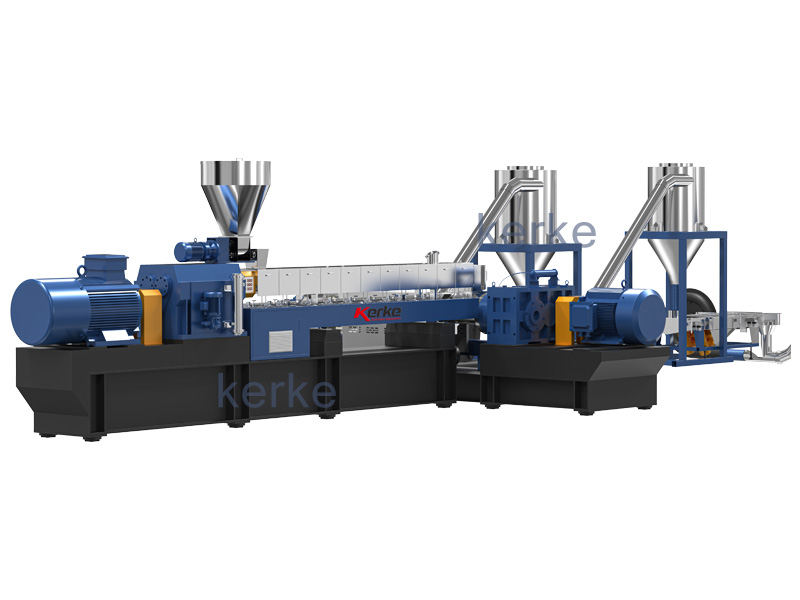
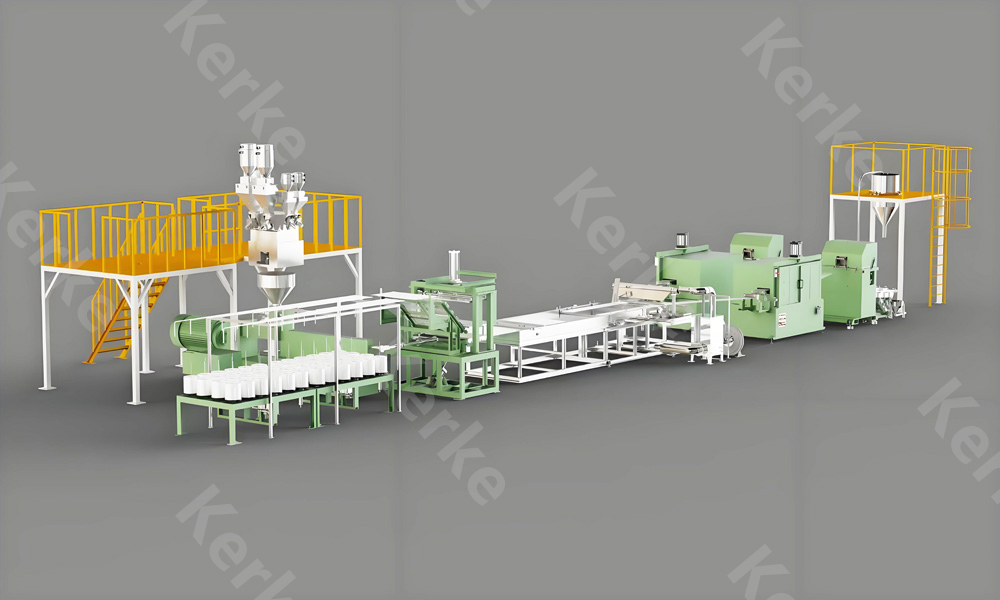
Kerke offers comprehensive solutions for biodegradable plastic compounding backed by over 12 years of experience in parallel co-rotating compounding extruder technology. The KTE series twin screw extruders, ranging from laboratory scale KTE-16B to high-capacity KTE-135D, provide optimal performance for various biodegradable plastic compounding requirements. Kerke production series contain single screw extruder, co-rotating twin-screw compounding extruder KTE series from KTE-16B to KTE-135D, KTE/SE two-stage compounding line, KUW underwater pelletizing system, SE series single screw extruder, auxiliary equipment, etc.
Kerke computer-aided designed screw assembly is a kneading co-type with excellent self-cleaning function and good interchangeability. Through appropriate and reasonable combination, it can realize material transportation, plasticization, shearing, dispersion, homogenization, exhaust, and pressure building for biodegradable polymer formulations. The granulation system can be used in a variety of ways to meet requirements, including water-cooled strand pelletizing, air-cooled strand pelletizing, air-cooled die face hot cutting, water ring die face hot cutting, eccentric water mist hot cutting, and underwater granulation system.
Kerke serves customers in over 70 countries with over 2000 machines running worldwide, providing deep experience with diverse biodegradable plastic applications including PLA compounding, PBS processing, PBAT formulations, and starch-based polymers. The company’s high-tech team with well-experienced R&D design, manufacturing technique, and sales service personnel ensures that customers receive comprehensive support from initial equipment selection through installation, startup, and ongoing operation. Kerke’s commitment to providing the best price and service makes them an ideal partner for biodegradable plastic compounding.
Future Trends in Biodegradable Plastic Compounding
Biodegradable plastic compounding continues to evolve with new materials, additives, and processing technologies emerging to enhance performance and expand application possibilities. Kerke stays at the forefront of these developments, incorporating new capabilities into extruder designs to support emerging applications and materials.
New biodegradable polymer chemistries are being developed with improved properties and processing characteristics. These new polymers may present different processing challenges requiring equipment adaptations. Kerke maintains ongoing research into new biodegradable polymers, ensuring extruder designs can accommodate emerging materials.
Advanced additive technologies including nano-fillers, bio-based additives, and reactive modifiers expand the performance possibilities for biodegradable plastics. These advanced additives may require specialized processing strategies. Kerke extruders provide the mixing capabilities and processing flexibility needed for advanced additive incorporation.
Reactive compounding combines polymer synthesis with compounding, enabling in-situ modification of biodegradable polymers. This approach requires equipment capable of handling reactive components and managing reaction exotherms. Kerke offers reactive compounding solutions for advanced biodegradable plastic applications.
Sustainable processing technologies including energy efficiency improvements and waste reduction align with the sustainability objectives of biodegradable plastics. Kerke extruders incorporate energy-efficient design and operation consistent with sustainability goals, providing processing solutions that match the environmental objectives of biodegradable plastic products.
Conclusion
Biodegradable plastic compounding presents unique challenges requiring specialized twin screw extruder technology designed for gentle processing, precise temperature control, and excellent mixing while protecting sensitive polymers from degradation. Kerke parallel co-rotating twin screw extruders provide the ideal platform for biodegradable plastic compounding, with optimized screw configurations, precise temperature control, and flexible customization options tailored to the diverse requirements of biodegradable polymer formulations.
Kerke Compounding Extruder, with extensive experience in biodegradable plastic applications and a complete range of twin screw extruder solutions, stands ready to support biodegradable plastic compounders in achieving their processing and quality objectives. Whether processing PLA, PBS, PBAT, starch-based polymers, or complex formulations containing multiple biodegradable polymer types, Kerke provides the technology, expertise, and support needed for successful biodegradable plastic compounding. The company’s focus on parallel co-rotating compounding extruder technology, backed by over 12 years of experience, ensures that customers receive equipment optimized for their specific biodegradable plastic requirements.
For biodegradable plastic compounders seeking to enhance processing capabilities, improve product quality, and expand into new application areas, Kerke offers comprehensive solutions backed by global experience and local support. The combination of advanced twin screw extruder technology, customized screw configurations, precise temperature control, and expert guidance positions Kerke as the ideal partner for biodegradable plastic compounding excellence. Contact Kerke to discuss your biodegradable plastic compounding requirements and discover how their extruder technology can enhance your biodegradable plastic processing capabilities.