Color consistency represents one of the most critical quality attributes in plastic product manufacturing, directly affecting product aesthetics, brand recognition, and customer satisfaction. Masterbatch extruders, particularly twin screw extruders, play a fundamental role in achieving and maintaining consistent color quality across production batches. Kerke Compounding Extruder, with over 12 years of experience in parallel co-rotating compounding extruder technology, understands that color consistency requires precise control of multiple variables including material selection, processing parameters, equipment design, and quality monitoring systems. This comprehensive guide explores how masterbatch extruders ensure color consistency through advanced mixing technology, precise temperature control, uniform dispersion of colorants, and integrated quality assurance systems.
Understanding Color Masterbatch and Its Importance
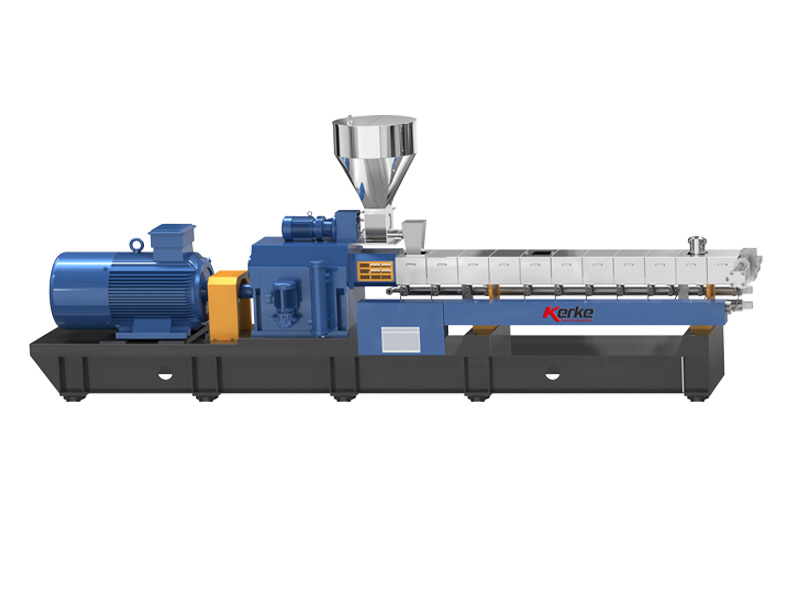
Color masterbatch consists of concentrated pigments or dyes dispersed in a carrier resin, designed to provide consistent coloration to plastic products during processing. The masterbatch manufacturing process demands exceptional precision because any inconsistency in the masterbatch will be multiplied when diluted in the final plastic product. Kerke twin screw extruders are specifically engineered to handle the demanding requirements of color masterbatch production, including masterbatch for color, filler, additives, black, and textile applications. The company’s extensive experience with KTE series co-rotating parallel twin screw extruders, ranging from KTE-16B to KTE-135D, ensures optimal performance for various masterbatch formulations.
The importance of color consistency extends beyond aesthetic considerations. For consumer products, consistent color quality builds brand trust and market recognition. In technical applications, color differences can indicate formulation variations or processing problems that may affect product performance. For automotive and construction applications, color consistency specifications are often strictly defined and must be maintained across multiple production batches over extended periods. Manufacturing facilities that achieve superior color consistency gain competitive advantages through reduced scrap rates, higher customer satisfaction, and enhanced brand reputation in the marketplace.
Color masterbatch extruders must address multiple challenges to achieve consistent results. These challenges include ensuring uniform pigment dispersion throughout the masterbatch, maintaining consistent pigment concentration across batches, preventing pigment degradation during processing, and accommodating variations in base resin properties. Kerke compounding extruders address these challenges through optimized screw design, precise temperature control, advanced feeding systems, and computer-aided design of screw assemblies that provide excellent self-cleaning function and good interchangeability.
Twin Screw Extruder Technology for Color Masterbatch
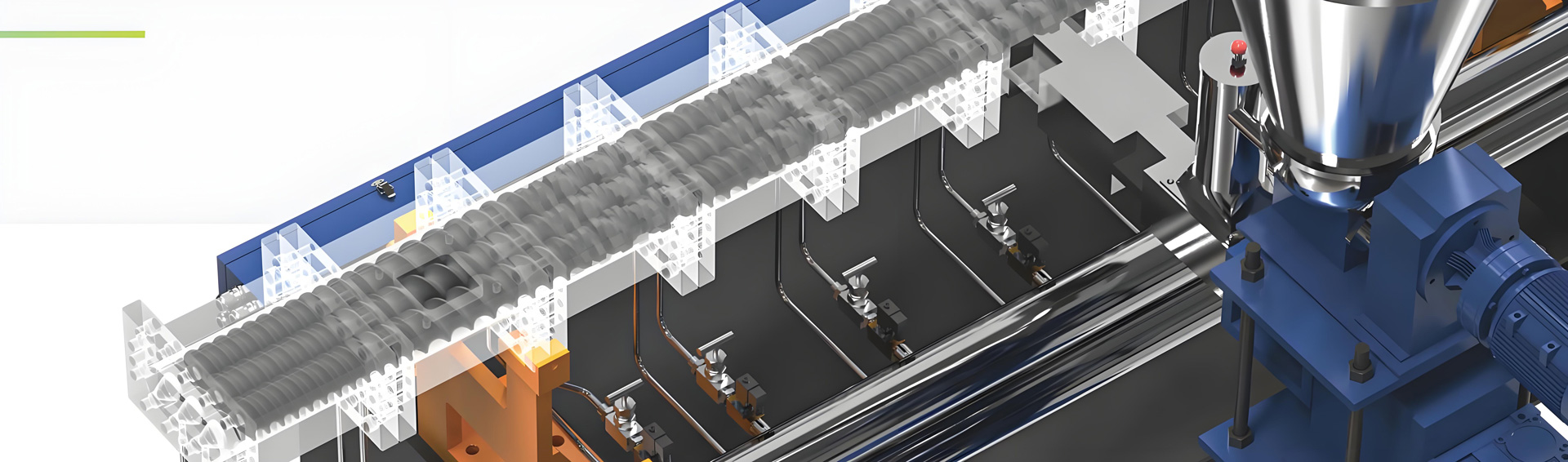
Twin screw extruders have become the preferred technology for color masterbatch production due to superior mixing capabilities compared to single screw extruders. Kerke parallel co-rotating twin screw extruders provide exceptional mixing efficiency through the intermeshing action of two screws rotating in the same direction. This configuration creates intensive distributive and dispersive mixing that ensures uniform dispersion of pigments throughout the carrier resin. The co-rotating design generates high shear forces that effectively break down pigment agglomerates and achieve consistent color development.
The KTE series twin screw extruders from Kerke feature optimized aspect ratios, barrel structures, and screw arrangements that can be customized according to processing material systems and process formula requirements. This flexibility allows manufacturers to optimize equipment configuration for specific color masterbatch formulations, whether processing high-pigment loading color masterbatches, delicate organic pigments sensitive to thermal degradation, or challenging inorganic pigments requiring extensive dispersion energy. The modular design of Kerke extruders enables quick reconfiguration for different masterbatch types, maximizing equipment utilization and production flexibility.
Twin screw extruder technology provides several key advantages for color consistency. First, the intensive mixing action ensures that pigments are uniformly distributed throughout the masterbatch, eliminating local variations that cause color streaks or patches in final products. Second, precise temperature control through multiple barrel zones prevents thermal degradation of pigments that could alter color properties. Third, short residence time at optimal temperature minimizes color shifts due to over-processing. Fourth, the self-cleaning screw design prevents color contamination between batches, enabling quick color changes without extensive cleaning procedures. These capabilities make twin screw extruders essential for masterbatch producers requiring consistent color quality.
Screw Design and Configuration for Color Dispersion
Screw design represents the most critical factor influencing color dispersion quality in masterbatch extruders. Kerke twin screw extruders incorporate computer-aided designed screw assemblies optimized specifically for color masterbatch applications. The kneading block configuration with excellent self-cleaning function ensures thorough mixing of pigments with carrier resin while preventing material hang-up that could cause color contamination. The screw design must achieve the delicate balance between sufficient dispersive mixing to break down pigment agglomerates and gentle distributive mixing to distribute pigments uniformly without excessive shear that could degrade sensitive pigments.
Pigment dispersion occurs through multiple mechanisms in twin screw extruders. Dispersive mixing, primarily occurring in kneading block sections, applies high shear forces to break pigment agglomerates into primary particles. Distributive mixing, achieved through conveying elements and special mixing sections, repeatedly divides and recombines the melt to distribute pigments uniformly throughout the carrier resin. Kerke screw designs optimize both mixing mechanisms through strategic placement of conveying elements, kneading blocks, and special mixing sections along the screw length. The modular nature of Kerke screw assemblies enables customized configuration for specific pigment types and masterbatch formulations.
Different pigment types require different mixing strategies. Organic pigments, including most reds, blues, and yellows, typically require moderate shear to achieve proper dispersion without degradation. Inorganic pigments, including titanium dioxide, carbon black, and various metallic oxides, often require more intensive dispersive mixing due to harder agglomerates and stronger inter-particle forces. Kerke twin screw extruders accommodate these varied requirements through flexible screw configuration that can be optimized for specific pigment characteristics. The company’s experience with diverse masterbatch applications, from delicate organic pigment masterbatches to challenging carbon black masterbatches, ensures appropriate screw design for any color masterbatch application.
Temperature Control and Thermal Management
Precise temperature control throughout the extrusion process is essential for maintaining color consistency. Pigments can be sensitive to temperature, with excessive heat causing color shifts through thermal degradation or chemical changes. Kerke twin screw extruders feature multiple independently controlled heating zones along the barrel length, enabling precise temperature profiles tailored to specific masterbatch formulations. The KTE series extruders allow optimization of barrel structure, including exhaust quantity and position, feeding method, and electrical control method to meet specific processing requirements.
Temperature management for color masterbatch production must consider multiple factors. Carrier resin melting point determines minimum processing temperatures. Pigment thermal stability defines maximum allowable temperatures. Residence time at processing temperature affects potential for thermal degradation. Shear heating from screw rotation contributes additional heat generation. Kerke extruders address these factors through optimized temperature profiling that balances efficient melting and mixing with protection of pigment stability. The extruders feature robust heating systems with precise PID control that maintain stable temperatures despite varying operating conditions.
Temperature consistency across multiple production runs is particularly important for color consistency. Kerke twin screw extruders incorporate advanced control systems that ensure repeatable temperature profiles from batch to batch. Consistent temperature control prevents batch-to-batch color variations caused by processing temperature differences. The extruders also feature efficient cooling capabilities for rapid temperature adjustments when changing between different masterbatch formulations. This temperature control precision enables masterbatch producers to achieve consistent color quality across extended production campaigns and multiple manufacturing facilities.
Feeding Systems and Material Handling
Precise material feeding represents another critical factor for color consistency in masterbatch production. Variations in pigment concentration directly cause color differences in the final masterbatch. Kerke twin screw extruders incorporate multiple feeding technologies designed to ensure consistent material feed rates. The company offers various feeding system configurations including single screw, twin screw, twin screw non-meshing type, hollow spring type, two-stage type, and metering pump volumetric metering feeding. For applications requiring higher precision, loss-in-weight metering systems can be equipped to meet stringent accuracy requirements.
Color masterbatch production typically involves feeding multiple components including base resin carrier, pigments, dispersing aids, and additives. Each component must be fed at consistent, accurate rates to maintain proper formulation ratios. Kerke extruders feature gravimetric or volumetric feeding systems capable of handling various material forms including powders, granules, pellets, and liquids. The feeding systems are designed to prevent material bridging, separation, or flow inconsistencies that could cause feed rate variations. Consistent feeding ensures that pigment concentration remains constant throughout the production run, maintaining consistent color in the masterbatch.
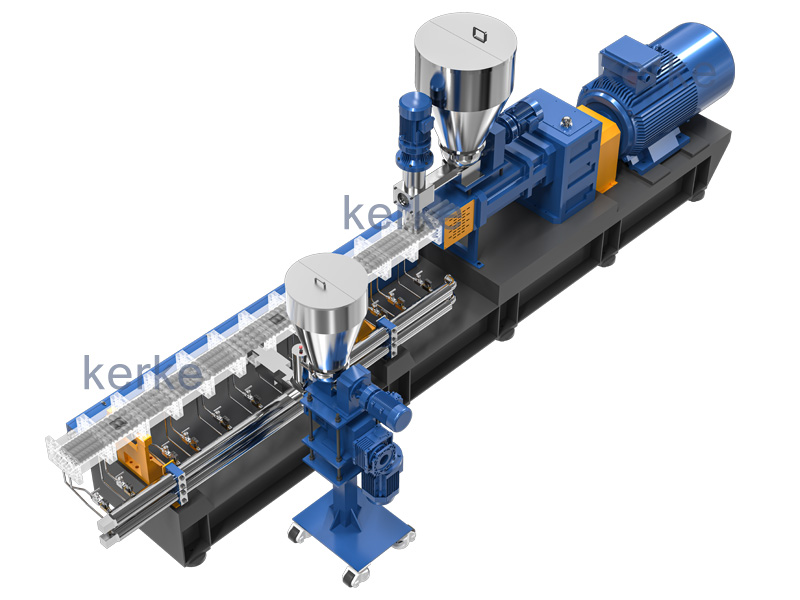
Pigment feeding presents particular challenges due to the fine particle size and tendency to segregate or bridge. Kerke offers specialized feeding solutions including side feeders, crammer feeders, and liquid feeders designed for different pigment forms and feeding requirements. Side feeders enable precise injection of pigments at optimal locations along the screw length for optimal dispersion. Crammer feeders force pigments into the extruder, overcoming flow resistance in high-viscosity applications. Liquid feeders accommodate liquid colorants or dispersions. The appropriate feeding system selection depends on pigment characteristics, masterbatch formulation, and production requirements.
Vacuum Venting and Degassing
Vacuum venting systems play an important role in color masterbatch quality by removing volatile components that could affect color appearance. Air bubbles, moisture, and other volatiles trapped in the melt can cause surface defects, transparency issues, or color inconsistencies in the final product. Kerke twin screw extruders feature optimized venting systems with strategically positioned vent ports that effectively remove volatiles without processing instability. The KTE series extruders allow configuration of exhaust quantity and position according to specific material system requirements.
Vent port location affects both degassing efficiency and color quality. Vent ports must be positioned where the melt viscosity is low enough to allow bubble formation and removal but sufficiently downstream of the feeding section to ensure proper mixing before venting. Multiple vent ports can be used for particularly challenging formulations requiring staged venting. Kerke extruders provide flexibility in vent port placement, enabling optimization for specific masterbatch formulations. Proper venting eliminates bubbles and volatiles that could otherwise cause color variations or surface defects in the final product.
Vacuum level control is critical for effective degassing without material loss or processing instability. Excessive vacuum can pull material out of the vent port, causing material loss and potential contamination. Insufficient vacuum fails to remove volatiles effectively. Kerke extruders incorporate precise vacuum control systems that maintain optimal vacuum levels for effective degassing without processing problems. The systems include vacuum pumps, pressure sensors, and control valves that work together to maintain stable vacuum conditions throughout production runs. Consistent venting ensures that batch-to-batch variations do not affect color quality due to differences in volatile content.
Pelletizing and Downstream Processing
The pelletizing system and downstream processing equipment significantly affect final masterbatch quality and color consistency. Kerke offers multiple granulation system options to meet various material and processing requirements, including water-cooled strand pelletizing, air-cooled strand pelletizing, air-cooled die face hot cutting, water ring die face hot cutting, eccentric water mist hot cutting, and underwater granulation systems. Each pelletizing method offers specific advantages depending on masterbatch characteristics and quality requirements.
Consistent pellet size and shape influence color consistency in several ways. Uniform pellets melt more consistently in downstream processing, leading to more uniform color development. Pellet size variations can cause feeding inconsistencies that affect pigment concentration in final products. Surface quality of pellets affects flow properties and potential for contamination during handling. Kerke pelletizing systems are designed to produce uniform pellets with consistent size, shape, and surface quality that contribute to color consistency. The systems feature precise cutting technology, temperature control, and downstream handling designed to maintain pellet quality.
Pellet cooling method selection depends on masterbatch formulation and downstream requirements. Water-cooled strand pelletizing provides excellent cooling and surface finish but requires careful drying to prevent moisture-related problems. Air-cooled methods avoid moisture but may be slower or produce pellets with different surface characteristics. Underwater pelletizing provides excellent surface finish and cooling for sensitive formulations. Kerke guides customers in selecting appropriate pelletizing technology based on specific masterbatch requirements including pigment type, carrier resin, thermal sensitivity, and downstream processing conditions.
Quality Control and Color Measurement
Comprehensive quality control systems are essential for ensuring and maintaining color consistency. Kerke twin screw extruders can be integrated with various quality monitoring and control systems that provide real-time feedback on color quality. Color measurement instruments including spectrophotometers and colorimeters provide objective color data that can be used to monitor consistency and detect deviations before they affect product quality. These systems measure color parameters including Delta E values that quantify color differences from established standards.
In-line color measurement systems can be installed on the extruder output to provide continuous monitoring of color quality during production. These systems typically include fiber-optic sensors that measure color properties of the extruded melt or strand in real time. Deviations from target color parameters can trigger alerts or automatic adjustments to process parameters, enabling immediate correction of color drift before it affects product quality. Kerke extruders feature control systems capable of integrating with various quality monitoring systems for automated process control.
Statistical process control methods enable systematic monitoring and improvement of color consistency over time. Control charts tracking color measurements over production runs identify trends and variations that might indicate developing problems. Process capability studies quantify the ability to maintain color within specification limits. Root cause analysis of color variations identifies processing variables that most significantly affect color quality. Kerke supports customers in implementing comprehensive quality control programs that establish process capability for color consistency and enable continuous improvement.
Batch Changeover and Color Contamination Prevention
Efficient and clean batch changeover is critical for masterbatch producers who must produce multiple colors and formulations on the same equipment. Color contamination from previous batches can cause significant quality problems and material waste. Kerke twin screw extruders feature self-cleaning screw designs and modular barrel sections that facilitate quick and thorough cleaning between color changes. The company provides proven procedures and recommendations for batch changeover that minimize downtime while ensuring complete removal of previous material.
Sequential color change strategies can significantly reduce changeover time and material waste. Organizing production runs from light to dark colors, from low to high pigment loading, or based on pigment type compatibility can reduce the extent of cleaning required between batches. Kerke works with customers to develop optimal production sequencing strategies that minimize changeover time while preventing color contamination. The company’s experience with diverse masterbatch formulations enables informed recommendations for changeover procedures.
Purging compounds can accelerate color changeover by removing residual material from the extruder more efficiently than plain resin. Specialized purging compounds contain cleaning agents that remove stubborn pigment residues from screw flights, barrel walls, and die surfaces. Kerke provides guidance on appropriate purging compound selection and use for different color changeover scenarios. Proper purging procedures combined with self-cleaning screw design enable quick transitions between colors with minimal material waste and downtime.
Process Parameter Optimization for Color Consistency
Optimization of process parameters is essential for achieving and maintaining color consistency. Critical parameters include screw speed, temperature profile, feed rate, vacuum level, and die pressure. These parameters interact in complex ways that affect mixing efficiency, pigment dispersion, thermal history, and ultimately color quality. Kerke provides process engineering support to help customers optimize parameters for specific masterbatch formulations and color consistency requirements.
Screw speed influences residence time, shear intensity, and throughput. Higher screw speeds reduce residence time, potentially reducing thermal degradation but may reduce mixing effectiveness. Lower speeds increase residence time, improving mixing but potentially increasing thermal exposure. Kerke extruders enable precise control of screw speed through advanced drive systems with variable frequency drives that maintain consistent speed regardless of load. This speed control ensures consistent processing conditions that contribute to color consistency.
Temperature profile optimization must balance multiple competing requirements. Sufficient heat is required to melt the carrier resin and achieve proper pigment dispersion. Excessive heat can degrade pigments and alter color properties. Temperature gradients along the barrel affect melting sequence, mixing efficiency, and residence time distribution. Kerke extruders feature multiple independently controlled zones that enable precise temperature profiling. Process engineers use experimental design and statistical methods to optimize temperature profiles for specific masterbatch formulations, achieving optimal color consistency while maximizing throughput.
Material Selection and Formulation
Material selection and formulation significantly impact color consistency in masterbatch production. Carrier resin selection affects pigment wetting, dispersion, and stability. Pigment selection determines color properties, processing characteristics, and thermal stability. Additives including dispersing agents, processing aids, and stabilizers can improve color consistency by enhancing dispersion, reducing processing issues, and preventing degradation. Kerke works with customers to optimize masterbatch formulations for both color quality and processability.
Carrier resin compatibility with pigments is crucial for achieving uniform dispersion and color development. The resin should wet pigment particles effectively, enabling separation of agglomerates and uniform distribution. Viscosity characteristics affect shear forces during mixing and pigment dispersion. Thermal properties determine processing temperature and potential for pigment degradation. Kerke extruders can process a wide range of carrier resins, enabling optimization for specific pigment types and final application requirements.
Pigment selection considerations include color strength, thermal stability, chemical resistance, and dispersion characteristics. High strength pigments enable lower pigment loading, reducing processing challenges. Thermally stable pigments maintain color properties at processing temperatures. Chemically resistant pigments do not react with carrier resin or additives. Easy-dispersing pigments reduce mixing energy requirements and improve consistency. Kerke provides processing recommendations for various pigment types based on extensive experience with diverse masterbatch formulations.
Troubleshooting Color Inconsistency Issues
Despite careful planning and optimization, color inconsistency issues can occur during masterbatch production. Systematic troubleshooting approaches identify root causes and enable corrective actions. Common causes of color inconsistency include feed rate variations, temperature fluctuations, screw wear, pigment degradation, and contamination. Kerke provides comprehensive troubleshooting support to help customers quickly identify and resolve color consistency problems.
Feed rate variations typically manifest as gradual color changes or streaks in the masterbatch. These issues can be traced to feeding system problems, including bridging, feeder calibration drift, or inconsistent material properties. Kerke feeding systems feature gravimetric control and monitoring that alert operators to feed rate variations. Troubleshooting involves examining feeding system operation, checking material flow characteristics, and verifying feeder calibration. Correction may include feeder adjustment, material preparation changes, or system maintenance.
Temperature-related color problems include color shifts due to pigment degradation or inconsistent melting. These issues can be caused by temperature control problems, heater failures, or cooling system issues. Kerke extruders feature advanced temperature monitoring and control systems that detect temperature anomalies. Troubleshooting involves reviewing temperature logs, checking heater operation, and verifying thermocouple accuracy. Correction typically involves temperature adjustment, maintenance of heating or cooling systems, or optimization of temperature profiles.
Advanced Technologies for Enhanced Color Consistency
Advancing technology provides new opportunities for enhanced color consistency in masterbatch production. Kerke continually invests in research and development to incorporate advanced technologies into extruder systems. These technologies include advanced screw designs, improved control systems, enhanced monitoring capabilities, and integrated quality control features that collectively improve color consistency beyond what was previously achievable.
Advanced screw geometries provide improved mixing efficiency while reducing shear and residence time. Innovations in kneading block design, mixing section configuration, and element spacing enable more efficient pigment dispersion with less thermal exposure. Kerke computer-aided design capabilities enable rapid development and testing of new screw configurations optimized for specific masterbatch applications. These advanced designs provide superior color consistency for challenging formulations including high pigment loadings, sensitive pigments, or demanding carrier resins.
Artificial intelligence and machine learning technologies are increasingly being applied to process control for color consistency. These systems learn from production data to predict optimal process parameters, detect developing problems before they affect quality, and automatically adjust parameters to maintain target color quality. Kerke extruders feature advanced control architectures capable of supporting AI applications, positioning customers to benefit from these emerging technologies as they mature. Integration of AI and machine learning will further enhance color consistency capabilities while reducing manual intervention requirements.
Kerke Solutions for Color Masterbatch Production
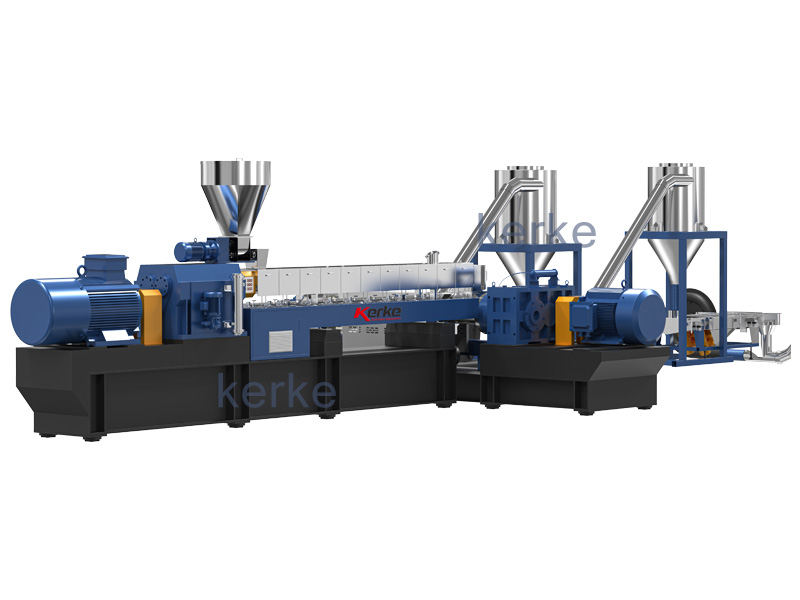
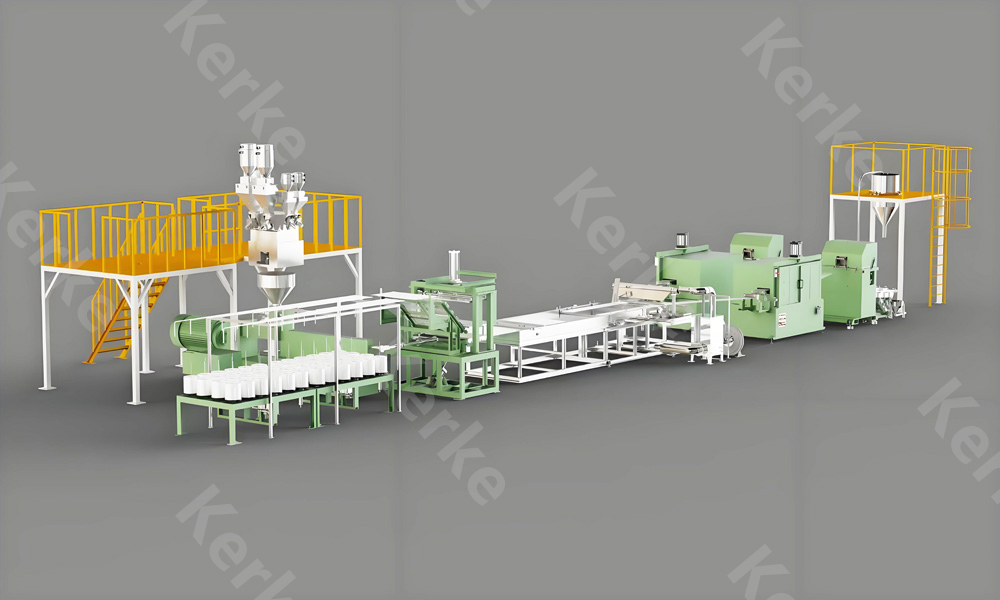
Kerke offers comprehensive solutions for color masterbatch production backed by over 12 years of experience in parallel co-rotating compounding extruder technology. The KTE series twin screw extruders, ranging from laboratory scale KTE-16B to high-capacity KTE-135D, provide optimal performance for various masterbatch production requirements. Kerke production series contain single screw extruders, co-rotating twin-screw compounding extruders, KTE/SE two-stage compounding lines, KUW underwater pelletizing systems, SE series single screw extruders, and auxiliary equipment, providing complete masterbatch production solutions.
Kerke high-speed mixers, plastic granulators, pulverizers, extruder core parts, and water chillers complement twin screw extruders to provide complete masterbatch production lines. The company provides the twin screw extruder auxiliary equipment to customers, ensuring system compatibility and optimized performance. Kerke’s computer-aided designed screw assembly with kneading co-type provides excellent self-cleaning function and good interchangeability, enabling flexible reconfiguration for different masterbatch types.
Kerke serves masterbatch producers in over 70 countries worldwide, with over 2000 machines running globally. This extensive global experience provides deep understanding of diverse masterbatch applications and regional requirements. The company’s high-tech team with well-experienced R&D design, manufacturing technique, and sales service personnel ensures that customers receive comprehensive support from initial equipment selection through installation, startup, and ongoing operation. Kerke’s commitment to providing the best price and service makes them an ideal partner for masterbatch producers seeking to achieve superior color consistency.
Conclusion
Achieving and maintaining color consistency in plastic products requires comprehensive understanding of masterbatch extruder technology, processing variables, and quality control methods. Twin screw extruders, particularly Kerke co-rotating parallel twin screw extruders, provide the advanced mixing capabilities, precise temperature control, and flexible configuration necessary for consistent masterbatch production. The integration of optimized screw design, precise feeding systems, effective venting, appropriate pelletizing technology, and comprehensive quality control creates the foundation for superior color consistency.
Kerke Compounding Extruder, with extensive experience in color masterbatch production and a complete range of twin screw extruder solutions, stands ready to support masterbatch producers in achieving their color consistency goals. Whether producing color masterbatch, filler masterbatch, additives masterbatch, black masterbatch, or textile masterbatch, Kerke provides the technology, expertise, and support needed to maintain consistent color quality across production batches. The company’s focus on parallel co-rotating compounding extruder technology, backed by over 12 years of experience, ensures that customers receive equipment optimized for their specific color masterbatch requirements.
For masterbatch producers seeking to enhance color consistency, reduce color-related rejects, and improve customer satisfaction, Kerke offers comprehensive solutions backed by global experience and local support. The combination of advanced twin screw extruder technology, customized screw configurations, precise process control, and expert guidance positions Kerke as the ideal partner for achieving and maintaining superior color consistency in plastic products. Contact Kerke to discuss your color masterbatch production requirements and discover how their extruder technology can enhance your color consistency capabilities.