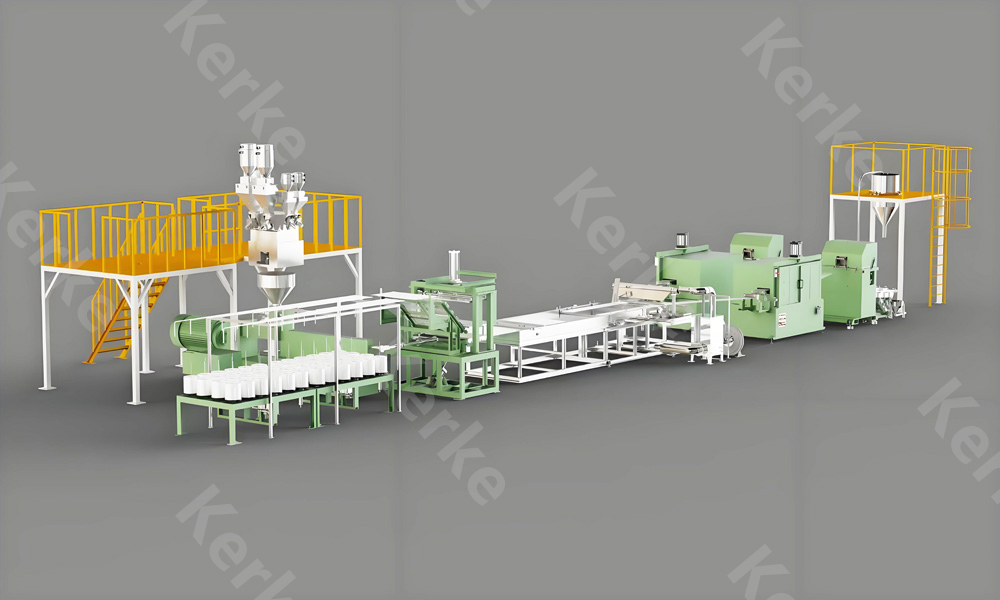
Functional masterbatch production represents a critical segment of the plastics industry, enabling manufacturers to enhance polymer properties through concentrated additives, pigments, and fillers. At the heart of this sophisticated manufacturing process lies the compounding extruder, a specialized machine designed to achieve exceptional dispersion and homogenization of materials. Understanding how a compounding extruder works for functional masterbatch production is essential for manufacturers seeking to produce high-quality concentrates that deliver consistent performance in end-use applications. This comprehensive guide explores the intricate mechanisms, operational principles, and optimization strategies that make modern compounding extruders indispensable for functional masterbatch manufacturing.
Understanding Functional Masterbatch
Functional masterbatch differs from conventional color concentrates by incorporating specific performance-enhancing additives that modify polymer characteristics beyond mere coloration. These advanced formulations may include UV stabilizers, flame retardants, anti-static agents, impact modifiers, nucleating agents, or antimicrobial compounds. The production of functional masterbatch demands precise control over dispersion levels, additive distribution, and thermal processing conditions to ensure that the final product delivers consistent performance when diluted in base polymers.
The complexity of functional masterbatch manufacturing stems from the diverse nature of additives, which can range from liquid formulations to fine powders with varying flow characteristics. Each additive type presents unique challenges during compounding, requiring sophisticated extruder designs and process optimization strategies. Kerke extruders, with their advanced modular screw configurations and precise temperature control systems, excel in handling these challenging formulations, making them ideal choices for manufacturers producing high-performance functional masterbatches.
The Fundamental Working Principles of Compounding Extruders
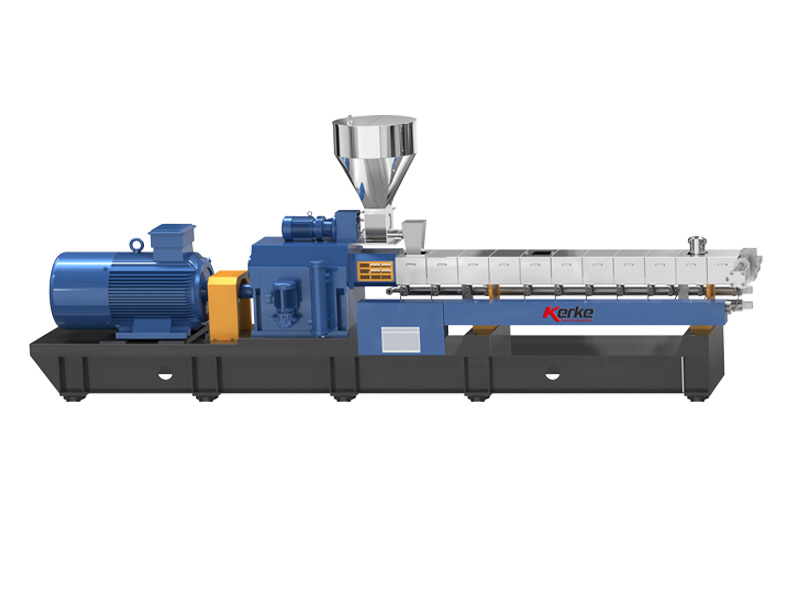
Compounding extruders operate on the principle of mechanical shear and thermal energy transfer to achieve thorough mixing and melting of polymer matrices with functional additives. The basic mechanism involves rotating screws within a heated barrel that transport, compress, melt, and disperse raw materials through multiple processing zones. For functional masterbatch production, twin screw extruders have become the industry standard due to their superior mixing capabilities and precise control over processing parameters.
The intermeshing co-rotating screws in Kerke twin screw extruders create multiple mixing zones where materials experience intensive distributive and dispersive mixing actions. As the screws rotate, they generate shear forces that break down additive agglomerates while ensuring uniform distribution throughout the polymer melt. The modular design of Kerke extruder screws allows manufacturers to customize screw configurations for specific functional masterbatch formulations, optimizing the mixing sequence for each unique additive system.
Material Feeding Systems in Functional Masterbatch Production
The quality and consistency of functional masterbatch begin with precise material feeding. Modern compounding lines employ sophisticated feeding systems that ensure accurate proportioning of polymers, additives, and other components. For functional masterbatch production, two primary feeding approaches are commonly used: premix feeding and split feeding systems, each offering distinct advantages depending on the formulation requirements.
Premix Feeding System
In premix feeding systems, all components including carrier polymer, functional additives, and dispersing agents are pre-mixed in high-speed blenders before being fed into the extruder. This approach simplifies the extrusion process and ensures initial homogeneity of raw materials. Kerke offers volumetric and gravimetric feeding systems optimized for premix applications, with features designed to prevent material segregation and maintain consistent feed rates throughout the production run.
Premix feeding is particularly suitable for formulations where all components exhibit similar flow characteristics and where additive concentrations remain within moderate ranges. However, for functional masterbatches containing high loading levels of additives or ingredients with vastly different flow properties, split feeding systems often provide superior results.
Split Feeding Systems
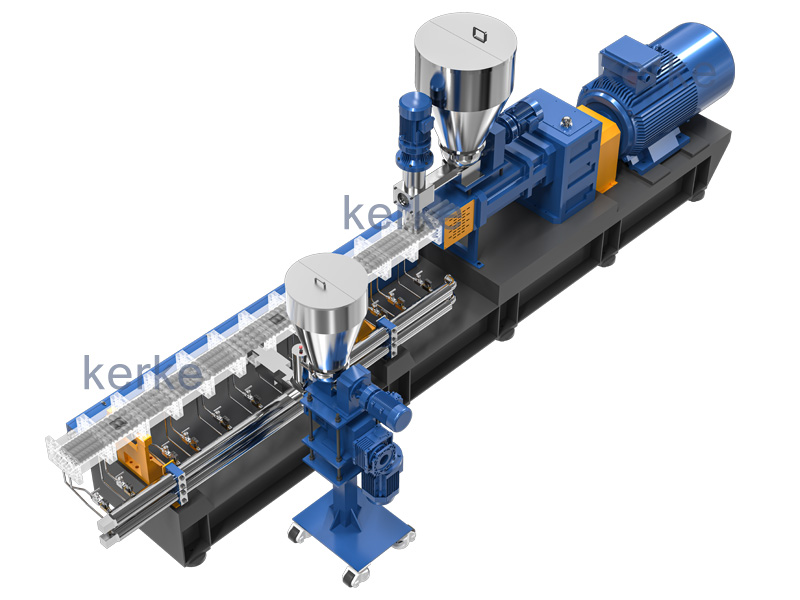
Split feeding systems separate the feeding of base polymer and functional additives, introducing them at different points along the extruder barrel. In this configuration, the primary carrier resin enters through the main feed throat, while functional additives are introduced downstream through side feeders positioned after the polymer has achieved partial melting. Kerke extruders feature multiple side feeding ports and specialized side feeder designs that enable precise introduction of additives at optimal processing conditions.
This approach offers several advantages for functional masterbatch production. It prevents premature degradation of heat-sensitive additives by minimizing their exposure to high temperatures. It also allows for higher additive loading levels by introducing functional components after the polymer melt has been established, reducing the risk of feeding difficulties or vent flooding. Kerke’s side feeding systems incorporate special venting designs that remove entrapped air from fine powder additives, enabling stable operation even with high additive loadings.
Processing Zones and Their Functions
A compounding extruder for functional masterbatch production typically incorporates multiple distinct processing zones, each serving specific functions in the transformation of raw materials into homogeneous masterbatch pellets. Understanding these zones and their operating parameters is crucial for optimizing production and ensuring consistent quality.
Feed Zone
The feed zone, located at the extruder entrance, receives raw materials and initiates their transport into the barrel. Screw elements in this zone feature deep flights that maximize conveying capacity while generating minimal heat. For functional masterbatch production, the feed zone must accommodate diverse material types, from free-flowing polymer pellets to challenging fine powders and liquid additives. Kerke extruders employ specially designed feed screws with varying flight depths and geometries optimized for different material characteristics.
Temperature control in the feed zone typically maintains relatively lower temperatures to prevent premature melting that could cause bridging or feeding inconsistencies. However, precise thermal management remains critical, particularly when processing hygroscopic materials that require controlled drying before processing.
Compression and Melting Zone
As materials progress through the barrel, they enter the compression zone where screw flight depths gradually decrease, compressing the material bed and generating increased pressure. This compression forces air and volatiles from the material while promoting intimate contact between polymer particles and functional additives. The combination of mechanical shear from screw rotation and external heating from barrel heaters initiates the melting process, converting solid materials into a viscous polymer melt.
For functional masterbatch production, the compression zone requires careful optimization to ensure complete melting of the carrier polymer without degrading sensitive functional additives. Kerke extruders feature multiple independently controlled heating zones along the barrel, enabling precise temperature profiling that accommodates the specific thermal characteristics of different additive systems. The modular screw design allows manufacturers to adjust compression ratios and mixing element configurations to optimize the melting process for each formulation.
Mixing and Dispersion Zone
The mixing and dispersion zone represents the most critical section for functional masterbatch quality, where intensive distributive and dispersive mixing actions occur. This zone typically incorporates kneading blocks, mixing elements, and special screw geometries designed to generate high shear forces that break down additive agglomerates and ensure uniform distribution throughout the polymer melt.
For functional masterbatch production, achieving complete additive dispersion is paramount to ensure consistent performance in end-use applications. Kerke extruders utilize advanced mixing element designs, including staggered kneading blocks with various stagger angles and neutral elements that create multiple mixing events. The modular nature of Kerke screw configurations allows manufacturers to customize the mixing sequence, placing high-intensity mixing elements where they provide maximum benefit while minimizing excessive shear that could degrade sensitive additives.
The effectiveness of mixing in this zone directly impacts final masterbatch quality, including dispersion uniformity, additive effectiveness, and processing characteristics. Insufficient mixing results in additive agglomerates that cause defects in final products, while excessive shear can degrade functional additives, reducing their effectiveness or causing polymer degradation.
Devolatilization Zone
Many functional additives and polymer carriers contain volatile components, moisture, or entrapped air that must be removed during processing. The devolatilization zone, typically positioned after the mixing zone, incorporates venting ports that allow removal of these undesirable components. Kerke extruders feature multiple vent ports with various configurations, including atmospheric vents and vacuum venting systems for demanding applications.
Effective venting is particularly crucial for functional masterbatch production, where residual volatiles can cause voids, surface defects, or performance issues in final products. Vacuum venting systems in Kerke extruders can achieve pressures as low as 50-100 mbar, ensuring thorough removal of volatiles even from challenging formulations. The vent zone typically incorporates special screw elements that create a thin melt film on the barrel surface, maximizing volatile removal efficiency.
Pressure Build-up and Metering Zone
The final processing zone builds sufficient pressure to force the compounded material through the die and creates a melt stream with consistent properties. Screw elements in this zone typically feature shallow flights that maximize pressure generation while providing minimal additional mixing that could disrupt the carefully achieved homogeneity. Precise temperature control in this zone ensures optimal melt viscosity for die flow and pelletizing.
For functional masterbatch production, the metering zone must maintain the dispersion quality achieved in the mixing zone while providing stable pressure for consistent output. Kerke extruders incorporate pressure transducers and temperature sensors that provide real-time monitoring of melt conditions, enabling operators to maintain optimal processing parameters throughout the production run.
Advanced Screw Configurations for Functional Masterbatch
The versatility of compounding extruders for functional masterbatch production stems largely from the modular screw configuration capabilities. Different additive systems and polymer matrices require tailored screw designs that optimize processing conditions and final product quality. Kerke extruders offer extensive flexibility in screw configuration, enabling manufacturers to customize their machines for specific applications.
Kneading Block Configurations
Kneading blocks represent the primary mixing elements in twin screw extruders, generating dispersive and distributive mixing through their unique geometry. For functional masterbatch production, the selection and arrangement of kneading blocks significantly impacts dispersion quality and additive performance. Kerke offers a comprehensive range of kneading blocks with various stagger angles, widths, and geometries optimized for different mixing requirements.
Wide kneading blocks with 60-90 degree stagger angles generate intense dispersive mixing, ideal for breaking down tough additive agglomerates. Narrower stagger angles provide gentler mixing suitable for heat-sensitive additives. The strategic placement of different kneading block types along the screw length allows manufacturers to create customized mixing profiles that address the specific needs of each functional additive system.
Conveying and Mixing Elements
Between high-intensity mixing zones, conveying and mixing elements maintain material flow and provide moderate distributive mixing. These elements typically feature forward conveying flights with special geometries that promote folding and reorientation of the melt. Kerke offers various mixing elements designed to balance conveying efficiency with gentle mixing, preventing excessive shear buildup while maintaining dispersion quality.
The proper combination of kneading blocks and mixing elements ensures thorough additive dispersion without subjecting sensitive functional additives to excessive thermal or mechanical stress. This balance is particularly crucial for heat-activated additives or those with narrow processing windows.
Specialized Elements for Challenging Applications
Certain functional masterbatch applications require specialized screw elements designed to address specific processing challenges. These may include reverse conveying elements for additional residence time, blister rings for enhanced mixing, or special geometries for processing liquid additives or high filler loadings. Kerke extruders accommodate a wide range of specialized elements, enabling manufacturers to tackle even the most demanding functional masterbatch formulations.
For high-loading filler masterbatches, Kerke offers screw designs optimized for bulk powder handling, including special venting elements that remove entrapped air and prevent feeding issues. For liquid additive incorporation, specialized mixing elements create stable emulsions and ensure uniform distribution throughout the polymer melt.
Temperature Control and Thermal Management
Precise temperature control represents a critical requirement for functional masterbatch production, where different additives exhibit varying thermal sensitivities. Modern compounding extruders incorporate sophisticated temperature control systems that enable independent zone control and rapid response to thermal variations.
Barrel Heating Systems
Kerke extruders utilize advanced barrel heating systems including cast aluminum heaters with ceramic heating elements for rapid heat transfer and uniform temperature distribution. Multiple independent heating zones along the barrel length enable precise temperature profiling that accommodates the specific thermal requirements of each formulation. For heat-sensitive additives, cooler zones can prevent degradation, while higher temperatures in melting zones ensure efficient processing of high-melting polymers.
The heating systems in Kerke extruders are designed for energy efficiency, with good thermal insulation minimizing heat loss and reducing operating costs. Temperature sensors in each zone provide continuous feedback to PID controllers that maintain precise temperature control within ±1°C of setpoint.
Cooling Systems
In addition to heating, certain processing conditions require active cooling to maintain optimal melt temperatures. Kerke extruders incorporate both air and water cooling capabilities, with individual zone control that enables targeted cooling where needed. This is particularly valuable when processing highly exothermic formulations or when incorporating additives that generate significant shear heat.
The ability to actively cool specific barrel sections provides manufacturers with additional processing flexibility, enabling them to expand the processing window for challenging formulations and maintain consistent product quality under varying production conditions.
Die Design and Pelletizing Systems
The final stage of functional masterbatch production involves shaping the compounded melt into pellets through specialized die and pelletizing systems. The choice of die and pelletizing method impacts pellet quality, production efficiency, and suitability for different end-use applications.
Die Face Cutting Systems
Die face cutting systems cut the extruded strands directly at the die exit, producing pellets that immediately enter cooling systems. This method offers excellent control over pellet shape and size while minimizing thermal degradation of heat-sensitive additives. Kerke offers various die face cutting configurations including rotary cutters and strand cutters optimized for different polymer types and processing conditions.
For functional masterbatch production, die face cutting systems provide advantages in maintaining additive dispersion quality achieved in the extruder, as the material experiences minimal additional processing after leaving the die. The immediate cooling also helps lock in the dispersion quality and prevent additive migration that could occur with extended melt residence times.
Strand Pelletizing
Strand pelletizing systems extrude multiple strands through a multi-hole die, which are then cooled in water baths before being cut into pellets by rotary cutters. This traditional pelletizing method remains popular for many functional masterbatch applications due to its simplicity and proven reliability. Kerke strand pelletizing systems incorporate advanced strand cooling technologies that ensure uniform cooling and prevent strand sticking or tangling.
For functional masterbatch containing high levels of volatile components, strand pelletizing with extended water cooling provides additional devolatilization, ensuring complete removal of residual volatiles before pelletizing. This can improve product quality and storage stability for certain additive systems.
Underwater Pelletizing
Underwater pelletizing represents the most advanced pelletizing technology, cutting the extruded material immediately after it exits the die while submerged in water. This method offers superior cooling rates and excellent pellet shape control, making it ideal for heat-sensitive functional masterbatches. Kerke underwater pelletizing systems incorporate precision die plates, high-speed cutters, and advanced water circulation systems that ensure consistent pellet quality.
The rapid cooling in underwater pelletizing minimizes thermal degradation of sensitive additives and locks in dispersion quality. The process also produces pellets with excellent surface finish and minimal voids, enhancing flow properties during subsequent processing. However, the higher equipment cost and complexity make this technology most suitable for high-value functional masterbatch applications.
Quality Control and Process Monitoring
Ensuring consistent functional masterbatch quality requires comprehensive quality control systems integrated into the production line. Modern compounding extruders incorporate various monitoring and control systems that enable real-time quality assessment and immediate corrective actions when deviations occur.
Melt Pressure Monitoring
Pressure transducers positioned before the die continuously monitor melt pressure, providing critical information about processing stability and product consistency. Sudden pressure changes may indicate feeding problems, filter blockage, or changes in material properties. Kerke extruders feature advanced pressure monitoring systems with alarms and automatic control responses that maintain stable processing conditions.
For functional masterbatch production, maintaining consistent melt pressure ensures uniform shear history for all material, which directly impacts dispersion quality and additive performance. Pressure data also provides valuable insights for process optimization and troubleshooting.
Melt Temperature Monitoring
Temperature sensors at multiple points along the barrel and before the die enable comprehensive thermal management. In addition to standard temperature control, Kerke extruders can incorporate infrared temperature sensors that measure actual melt temperature rather than barrel surface temperature, providing more accurate thermal monitoring for quality control.
Proper thermal management is particularly critical for functional masterbatch, where temperature variations can significantly impact additive effectiveness or cause degradation. Real-time temperature monitoring enables immediate corrective actions to maintain processing windows and ensure consistent product quality.
Optical Inspection Systems
Advanced compounding lines may incorporate optical inspection systems that automatically detect pellet defects, color variations, or contamination. These systems can identify issues such as black specks, gels, or inconsistent pellet size, enabling immediate corrective actions to maintain quality standards. For functional masterbatch applications where visual appearance affects product value, optical inspection provides valuable quality assurance.
Kerke Extruder Solutions for Functional Masterbatch
Kerke offers a comprehensive range of extruder solutions specifically designed for functional masterbatch production, combining advanced technology with proven reliability. The KTE series twin screw extruders from Kerke incorporate features optimized for the demanding requirements of functional additive compounding.
KTE Series Twin Screw Extruders
The KTE series represents Kerke’s flagship line of co-rotating parallel twin screw extruders, available in models from laboratory-scale KTE-16 to high-production KTE-135. These extruders feature modular screw and barrel designs that enable complete customization for specific functional masterbatch applications. The high-torque KTE-D series, with torque ratings up to T/A³=7-9, provides exceptional performance for high-loading formulations.
KTE extruders incorporate precision-machined screws and barrels from high-quality materials including W6Mo5Cr4V2 high-speed tool steel for screw elements and bimetallic barrels with Cr26MoV alloy liners for extended wear resistance. This construction ensures long component life even when processing abrasive fillers commonly used in functional masterbatch production.
Available screw configurations include multiple L/D ratios from 40:1 to 52:1, enabling manufacturers to optimize residence time and mixing intensity for their specific formulations. The advanced gearbox design in KTE extruders delivers reliable torque transmission with minimal vibration, contributing to stable processing and consistent product quality.
Integrated System Solutions
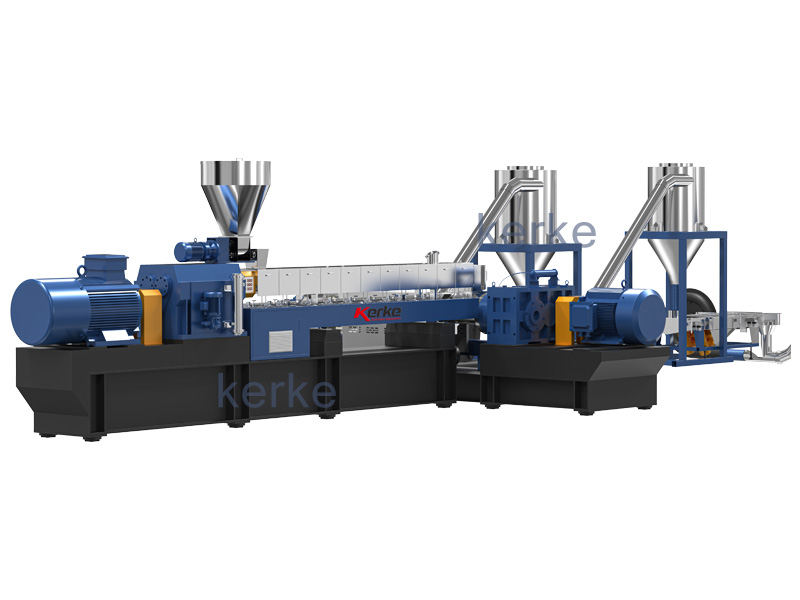
Beyond individual extruders, Kerke provides complete turnkey solutions for functional masterbatch production lines. These integrated systems include feeding systems, gravimetric dosing units, side feeders, venting systems, and pelletizing equipment all engineered for seamless compatibility and optimal performance. The integrated approach eliminates compatibility issues between components and ensures that all system elements work together to maximize productivity and product quality.
Kerke’s comprehensive experience in functional masterbatch production enables them to provide expert guidance on system configuration, screw design, and process optimization. This expertise, combined with high-quality equipment, provides manufacturers with complete solutions that address their specific production requirements and quality objectives.
Cost Analysis and Investment Considerations
Investing in compounding extruder technology for functional masterbatch production requires careful consideration of both initial equipment costs and long-term operational economics. Understanding the cost structure helps manufacturers make informed decisions about equipment selection and system configuration.
Equipment Investment Range
The investment in functional masterbatch compounding equipment varies significantly based on production capacity, level of automation, and specific technical requirements. Laboratory-scale extruders for formula development typically range from $25,000 to $50,000. Production-scale systems for mid-range outputs of 200-500 kg/h generally require investments of $80,000 to $200,000. High-production systems capable of 1,000-2,000 kg/h may require investments from $250,000 to $500,000 or more, depending on automation level and included auxiliary equipment.
Kerke KTE series extruders offer competitive pricing within these ranges, with models such as the KTE-65D (200-450 kg/h) typically priced between $80,000 and $120,000, while larger KTE-95D models (1000-1500 kg/h) range from $180,000 to $280,000. These prices typically include the extruder, standard control system, and basic pelletizing equipment, with additional costs for specialized feeding systems, advanced controls, or custom configurations.
Operational Cost Considerations
Beyond initial investment, operational costs significantly impact the economics of functional masterbatch production. Key operational cost components include energy consumption, labor, maintenance, and raw material costs. Kerke extruders are designed for energy efficiency, with high-torque designs that optimize power consumption per unit of output, and advanced drive systems that minimize energy losses.
For functional masterbatch production, energy costs typically represent 15-25% of total production costs, varying based on formulation complexity and processing requirements. High-torque extruders with efficient screw designs can reduce energy consumption by 20-30% compared to older or less optimized equipment, providing significant operational savings over the equipment life.
Maintenance costs for compounding extruders vary based on the abrasiveness of processed materials and operating hours. Functional masterbatch production often involves abrasive fillers that accelerate wear on screws and barrels. Kerke’s use of high-quality wear-resistant materials such as Cr26MoV alloy liners extends component life 2-3 times compared to standard bimetallic barrels, significantly reducing replacement costs and downtime.
Return on Investment Analysis
The return on investment for functional masterbatch compounding equipment depends on production volume, product value, and market demand. Manufacturers producing high-value functional masterbatches with specialized performance properties can typically achieve ROI within 2-3 years, assuming adequate market demand and efficient operations. The premium pricing achievable for high-quality functional masterbatches, combined with production efficiencies from modern equipment, supports relatively rapid payback periods.
For manufacturers expanding production capacity or entering the functional masterbatch market, the investment in quality compounding equipment from established suppliers like Kerke provides assurance of reliability, product quality, and technical support that contribute to successful market entry and long-term profitability. The proven performance of Kerke extruders in functional masterbatch applications reduces technical risk and helps accelerate the realization of production and quality goals.
Future Trends in Functional Masterbatch Production
The functional masterbatch industry continues to evolve, driven by advancing polymer technologies, increasing performance requirements, and growing environmental considerations. Several emerging trends are shaping the future of functional masterbatch production and influencing the development of compounding extruder technology.
Sustainable Additive Systems
Environmental concerns are driving demand for functional masterbatches incorporating bio-based additives, biodegradable polymers, and recycled materials. These sustainable formulations present unique processing challenges that require compounding equipment with enhanced versatility and precise control capabilities. Kerke continues to develop extruder technologies and screw configurations optimized for emerging sustainable materials, ensuring that manufacturers can adapt to evolving market demands.
Smart Manufacturing Integration
Industry 4.0 technologies are increasingly integrated into functional masterbatch production, enabling enhanced process control, quality assurance, and operational efficiency. Smart sensors, predictive maintenance systems, and automated quality monitoring reduce downtime and improve consistency. Kerke extruders incorporate advanced control platforms compatible with Industry 4.0 integration, providing the foundation for smart manufacturing initiatives.
Performance Enhancement Trends
Continued development of higher-performance functional additives requires compounding equipment capable of processing increasingly challenging formulations. Additives with extreme sensitivity to shear or temperature, ultra-high loading levels, or complex multi-component systems demand extruders with enhanced precision and control capabilities. Kerke’s commitment to ongoing R&D ensures that their extruder technology continues to advance to meet these evolving requirements.
Conclusion
Understanding how compounding extruders work for functional masterbatch production reveals the sophisticated engineering and process optimization that goes into creating these essential polymer additives. The interplay between screw configuration, temperature control, feeding systems, and pelletizing technology determines final product quality and production efficiency. Kerke extruders, with their modular designs, advanced control systems, and robust construction, provide manufacturers with reliable solutions for producing high-quality functional masterbatches that meet demanding performance requirements.
Investing in quality compounding equipment represents a strategic decision for manufacturers seeking to compete in the functional masterbatch market. The combination of Kerke’s technical expertise, equipment quality, and comprehensive support ensures that manufacturers can achieve their production objectives while maintaining the high quality standards required by increasingly demanding applications. As the functional masterbatch industry continues to evolve with new additives and enhanced performance requirements, Kerke’s commitment to innovation positions them as a trusted partner for manufacturers navigating this dynamic market.