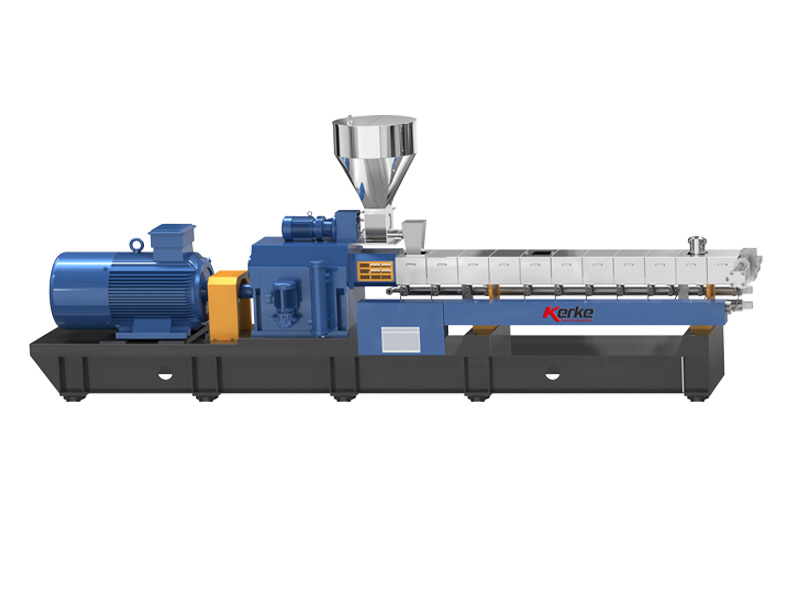
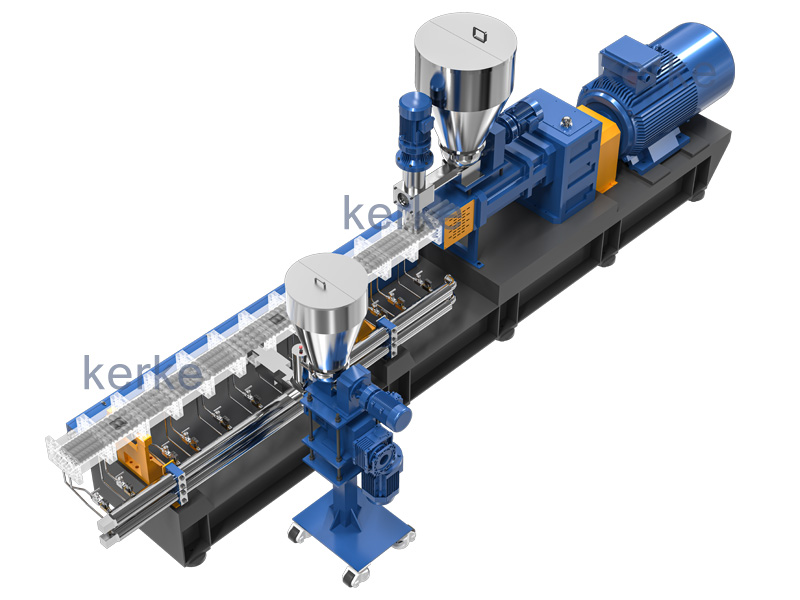
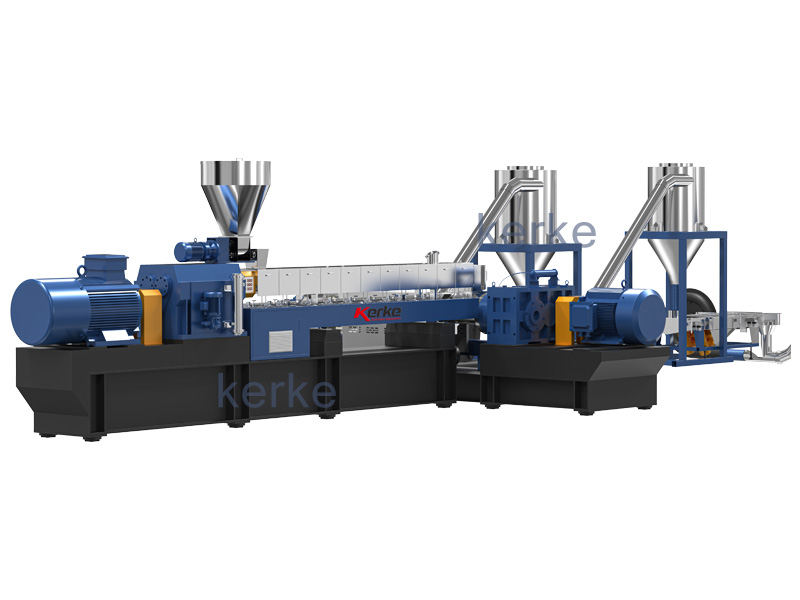
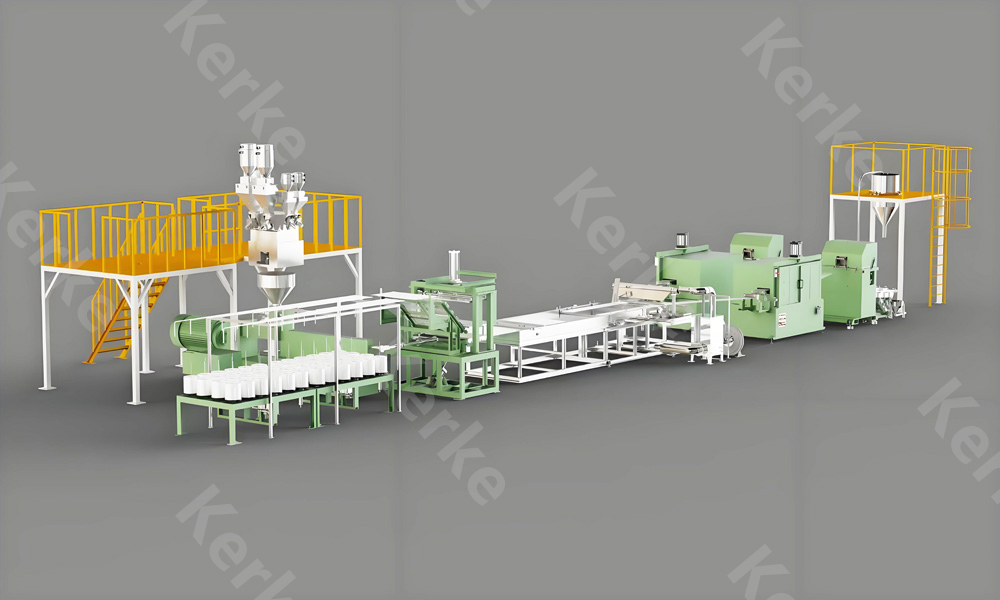
Operating compounding extruders requires specialized knowledge and skills that go beyond general machinery operation. These sophisticated pieces of equipment combine complex mechanical systems, precise temperature control, advanced drive mechanisms, and intricate processing requirements that demand comprehensive training for safe and efficient operation. Proper training not only ensures operator safety and equipment longevity but also significantly impacts product quality, production efficiency, and operational costs. This comprehensive guide explores the training requirements for compounding extruder operators, with specific focus on Kerke twin screw extruder systems and best practices for developing skilled operators.
Understanding the Complexity of Compounding Extruder Operation
Compounding extruders, particularly twin screw models, represent some of the most sophisticated equipment in the plastics processing industry. Unlike simple extruders used for profile production or film extrusion, compounding extruders must handle multiple material inputs, achieve homogeneous mixing of various additives and fillers, maintain precise thermal conditions, and adapt to constantly changing formulation requirements. This complexity necessitates thorough training covering multiple technical domains.
The operation of compounding extruders involves understanding the interplay between material science, mechanical engineering, thermodynamics, and control systems. Operators must comprehend how different materials behave under various conditions, how screw geometry affects mixing and dispersion, how temperature profiles influence material properties, and how process parameters impact final product quality. This multidisciplinary knowledge base cannot be acquired through simple on-the-job observation alone but requires structured training programs that cover all aspects of extruder operation.
Fundamental Knowledge Requirements for Extruder Operators
Before operating compounding extruders, operators must acquire fundamental knowledge across several technical domains. This foundational knowledge provides the basis for understanding operational procedures, troubleshooting issues, and optimizing process performance.
Polymer Science and Material Characteristics
Understanding polymer science and material characteristics represents a fundamental requirement for compounding extruder operators. This knowledge includes familiarity with different polymer types, their thermal properties, rheological behavior, and processing requirements. Operators must understand how polymers melt, how viscosity changes with temperature and shear, and how different additives interact with polymer matrices.
For Kerke twin screw extruder operators, training should cover common polymer families including polyolefins (PP, PE), engineering plastics (PA, POM, PBT), PVC, and specialty polymers. Each polymer type exhibits unique processing characteristics that influence temperature profiles, screw speed selection, and residence time requirements. For example, polypropylene typically processes at temperatures between 180-240°C with relatively low viscosity, while polyamide requires higher temperatures (240-290°C) and may require devolatilization to remove moisture.
Material characteristics also influence feeding behavior, melt stability, and final product properties. Training should cover how polymer density, particle size, and flow characteristics affect feeding consistency. Operators must understand how hygroscopic materials like polyamide require drying before processing to prevent property degradation. This fundamental knowledge enables operators to make appropriate process adjustments based on material characteristics.
Extruder Components and Functionality
Comprehensive understanding of extruder components and their functionality is essential for safe and efficient operation. Operators must understand the purpose and operation of all major components including screws, barrels, drive systems, heating and cooling systems, feeding systems, venting systems, and control systems.
For Kerke extruders, training should cover the modular screw design that enables configuration for different applications. Operators must understand different screw elements including conveying elements, kneading blocks, mixing elements, and specialized elements for specific applications. Understanding how each element type contributes to conveying, melting, and mixing helps operators appreciate the importance of screw configuration for different formulations.
Barrel construction and heating systems require detailed understanding as well. Kerke barrels feature multiple independently controlled heating zones with temperatures typically ranging from ambient to 350°C or higher. Operators must understand how each zone contributes to melting, mixing, and temperature control. The interplay between external heating and viscous heating generated by screw rotation affects thermal balance and must be managed through proper zone temperature settings.
Drive systems, including motors, gearboxes, and couplings, require understanding of torque transmission, speed control, and maintenance requirements. Kerke extruders feature high-torque gearboxes with forced lubrication systems that require regular maintenance. Operators must understand the relationship between screw speed, motor load, and torque to identify abnormal operating conditions.
Temperature Control and Thermal Management
Temperature control and thermal management represent critical skills for compounding extruder operators. The relationship between barrel temperatures, screw speed, melt temperature, and product quality requires thorough understanding and practical training.
Operators must understand how to establish appropriate temperature profiles for different materials and formulations. For most polymer compounding applications, temperature profiles gradually increase from feed zone to metering zone, providing progressive melting while maintaining thermal stability. Kerke extruders feature multiple independent heating zones (typically 8-12 zones depending on model) that enable precise temperature profiling. Training should cover how to set zone temperatures based on material requirements and how to adjust profiles to optimize melting and mixing while preventing thermal degradation.
Understanding thermal balance between external heating and viscous heating generated by screw rotation is crucial. Higher screw speeds generate more viscous heating, potentially raising melt temperatures beyond setpoint temperatures. Operators must learn to balance screw speed and temperature settings to achieve target melt temperatures. Kerke control systems provide real-time melt temperature monitoring that helps operators understand this balance.
Cooling requirements vary by application and operator training should cover when and how to implement cooling. Some applications require active cooling of specific barrel zones to prevent overheating, particularly when processing materials with high exothermic reactions or when operating at high screw speeds. Kerke extruders feature optional water cooling systems that enable active cooling of selected zones.
Control Systems and Process Monitoring
Modern compounding extruders incorporate sophisticated control systems that require specialized training for effective operation. Kerke extruders feature PLC-based control systems with touch-screen interfaces that enable precise control and monitoring of process parameters.
Training should cover operation of the HMI (Human-Machine Interface) including parameter adjustment, recipe management, and alarm handling. Operators must learn how to navigate menu systems, modify process parameters, and access historical data. Kerke control systems provide comprehensive monitoring including screw speed, motor current, zone temperatures, melt pressure, and energy consumption. Understanding these parameters and their relationships enables operators to identify processing issues and optimize performance.
Alarm systems and their responses require detailed understanding. Kerke control systems incorporate alarms for various abnormal conditions including over-temperature, motor overload, excessive pressure, and system malfunctions. Training should cover alarm types, appropriate responses, and alarm acknowledgment procedures. Operators must understand which alarms require immediate shutdown and which allow continued operation with caution.
Data logging and analysis capabilities provide valuable insights for process optimization and troubleshooting. Kerke control systems log process data that can be exported for analysis. Training should include how to access this data, interpret trends, and use data for continuous improvement.
Safety Training and Risk Management
Safety represents the most critical aspect of compounding extruder operation. These machines involve numerous hazards including high temperatures, rotating components, high pressures, electrical systems, and moving parts that can cause serious injury or death if proper safety procedures are not followed. Comprehensive safety training is not optional but essential for protecting operators and preventing accidents.
Hazard Identification and Risk Assessment
Safety training must begin with comprehensive hazard identification and risk assessment. Operators must understand all potential hazards associated with compounding extruder operation including mechanical, thermal, electrical, chemical, and pressure hazards.
Mechanical hazards include rotating screws, drive systems, and moving components that can cause crushing injuries, entanglement, or amputation. Operators must understand that even powered-down equipment may have stored energy in rotating components that can cause injury. Kerke extruders incorporate safety guards and interlocks that prevent access to rotating components during operation. Training should cover the purpose and proper use of these safety devices.
Thermal hazards from hot barrels, heated screws, and melt temperatures that can exceed 300°C represent serious burn risks. Operators must understand that thermal injuries can occur not only from direct contact with hot surfaces but also from radiant heat and hot material splatter. Kerke extruders feature thermal insulation on barrels and heated components to reduce surface temperatures, but training must emphasize that surfaces can still cause burns.
Electrical hazards from high-voltage drive systems and control panels require understanding of electrical safety procedures. Operators must know the location of emergency stop buttons, lockout/tagout procedures for maintenance, and the dangers of working on energized equipment. Kerke extruders incorporate electrical safety features including circuit breakers, emergency stops, and ground fault protection.
Personal Protective Equipment (PPE) Requirements
Proper use of personal protective equipment represents a critical line of defense against extruder-related hazards. Training must cover required PPE for different operations and specific procedures for donning, using, and maintaining protective equipment.
Thermal protection including heat-resistant gloves, face shields, and protective clothing is essential when working near heated equipment or during maintenance activities. Kerke operators typically require Kevlar or leather gloves that provide thermal protection while maintaining dexterity. Face shields protect against hot material splatter during startup, shutdown, or venting operations.
Hearing protection is necessary due to noise levels from drive systems, motors, and material processing. Many extrusion operations generate noise levels exceeding 85 dBA, requiring hearing protection to prevent permanent hearing damage. Kerke extruders incorporate noise reduction features but hearing protection remains essential.
Foot protection from steel-toe safety boots prevents foot injuries from falling objects or heavy components. Eye protection from safety glasses or goggles prevents eye injury from material particles or chemical splashes. Respiratory protection may be required when processing materials that generate fumes or dust.
Emergency Procedures and First Aid
Comprehensive emergency procedures training prepares operators to respond effectively to accidents or equipment malfunctions. This training must cover emergency shutdown procedures, evacuation routes, first aid techniques, and communication protocols.
Emergency shutdown procedures must be practiced until operators can execute them without hesitation. Kerke extruders feature multiple emergency stop buttons strategically positioned around the equipment. Training should cover the circumstances requiring emergency shutdown and the proper sequence for safe shutdown including power disconnection and pressure relief.
Fire safety training must cover fire prevention measures, fire extinguisher types and usage, and evacuation procedures. Extruder operations involve flammable polymers and high temperatures that create fire risks. Operators must understand how to identify fire risks, prevent fire conditions, and respond appropriately if fires occur.
First aid training should include treatment for burns, cuts, electrical shock, and other potential injuries. Operators must know the location of first aid kits, emergency showers, and eyewash stations. Training should also cover reporting procedures for accidents and near-miss incidents.
Lockout/Tagout Procedures
Lockout/tagout (LOTO) procedures represent critical safety practices for maintenance and servicing activities. These procedures ensure that equipment is properly de-energized and cannot be accidentally started during maintenance operations.
LOTO training must cover identification of energy sources including electrical, mechanical, thermal, hydraulic, and pneumatic energy. Operators must learn how to isolate each energy source, lock isolation devices, and apply tags identifying the work being performed and personnel involved. Kerke provides specific LOTO procedures for their equipment that must be incorporated into training programs.
Verification steps are essential to confirm that equipment is truly de-energized before beginning work. This verification includes testing for zero energy state, checking for stored energy, and confirming that isolation devices are functioning. Training must emphasize that verification is not optional but mandatory before any maintenance work.
Operational Skills Development
Beyond theoretical knowledge, operating compounding extruders requires development of practical operational skills. These skills are developed through hands-on training, practice, and experience under supervision. Skill development programs should progress from basic operations to advanced troubleshooting and optimization.
Startup and Shutdown Procedures
Proper startup and shutdown procedures are fundamental skills that extruder operators must master. Improper startup or shutdown can cause equipment damage, material degradation, or safety incidents.
Startup procedures typically include pre-startup checks, heating the extruder, initiating rotation, starting material feed, and ramping to operating conditions. Kerke extruder startup procedures emphasize gradual temperature increase, careful screw speed ramping, and careful monitoring of parameters during startup. Training should cover pre-startup inspections including checking lubrication levels, verifying safety guards, confirming material readiness, and ensuring proper cooling water flow.
Shutdown procedures differ based on shutdown type: normal shutdown for end of shift, emergency shutdown for unsafe conditions, or extended shutdown for maintenance. Normal shutdown for Kerke extruders typically involves stopping material feed, purging the extruder, reducing temperatures gradually, and stopping rotation after adequate cooling. Training must cover each shutdown type and the specific procedures for each.
Feeding and Material Handling
Effective feeding and material handling skills ensure consistent material supply and prevent processing issues. Operators must understand different feeding systems, material preparation requirements, and troubleshooting feeding problems.
For Kerke extruders with gravimetric feeding systems, operators must understand how to calibrate feeders, set target feeding rates, and monitor feeder performance. Training should cover feeder operation principles, error troubleshooting, and maintenance requirements. Gravimetric feeders used in masterbatch production typically require accuracy within ±0.5%, requiring regular calibration and monitoring.
Material preparation including drying, blending, and pre-weighing affects extrusion quality. Operators must understand drying requirements for hygroscopic materials, blending procedures for premixed formulations, and weighing accuracy requirements. Kerke provides recommendations for material preparation based on specific formulations.
Feeding problem diagnosis and resolution is an essential skill. Common feeding problems include bridging, surging, inconsistent feed, or material backing out the hopper. Training should cover identification of feeding problems, potential causes, and appropriate corrective actions. Kerke offers various feeder designs optimized for different materials, and operators must understand which design suits specific materials.
Process Monitoring and Adjustment
Effective process monitoring and adjustment skills enable operators to maintain optimal processing conditions and respond appropriately to variations. These skills require understanding of process parameters, their relationships, and appropriate adjustment strategies.
Monitoring key parameters including screw speed, motor current, melt pressure, melt temperature, and throughput provides insights into process condition. Kerke control systems display these parameters in real-time, and training should cover what normal ranges look like for different materials and applications. Operators must learn to identify deviations from normal conditions that indicate processing issues.
Interpretation of parameter relationships enables troubleshooting. For example, increasing motor current at constant screw speed may indicate increasing melt viscosity, potentially due to material property changes or temperature variations. Training should cover these relationships and how they help diagnose issues.
Process adjustment skills involve knowing which parameters to adjust and how much to adjust to address processing issues. Training should emphasize that adjustments should be made gradually, one parameter at a time, with observation of effects before making additional adjustments. Kerke recommends that experienced operators train new operators on adjustment strategies for common scenarios.
Quality Monitoring and Control
Quality monitoring and control skills ensure that produced material meets specification requirements. Operators must understand quality parameters, measurement techniques, and appropriate responses to quality deviations.
For masterbatch production, quality parameters typically include color consistency, dispersion quality, pellet uniformity, and additive concentration. Training should cover measurement techniques for each parameter including color measurement equipment, microscopy for dispersion assessment, sieve analysis for pellet size, and concentration testing methods.
Sampling procedures must ensure representative samples that accurately reflect production quality. Kerke recommends specific sampling protocols including sampling frequency, sampling locations, and sample handling procedures. Training must cover proper sampling techniques to avoid misleading quality data.
Response to quality deviations must be prompt and appropriate. Training should cover decision trees for common quality issues and their resolution. For example, poor dispersion may require screw speed adjustment, temperature profile modification, or residence time increase depending on the specific cause.
Advanced Training for Process Optimization
Once operators master basic operations, advanced training enables them to optimize processes, troubleshoot complex issues, and contribute to continuous improvement initiatives. Advanced training develops skills beyond simple operation to strategic thinking and problem-solving.
Screw Configuration Optimization
Understanding screw configuration and its impact on processing represents an advanced skill area that significantly influences compounding quality and efficiency. Kerke extruders feature modular screw designs that enable configuration for different applications, and operators trained in screw configuration principles can significantly contribute to process optimization.
Training should cover different screw element types and their functions. Conveying elements primarily transport material forward, kneading blocks generate dispersive and distributive mixing, mixing elements provide gentle distributive mixing, and specialized elements address specific processing challenges. Operators must understand how element selection and placement affects processing behavior.
Configuration principles for different applications provide guidelines for screw design. For color masterbatch requiring high dispersion, configurations emphasize kneading blocks with high stagger angles placed in optimal positions. For filler masterbatch with high loading, configurations balance conveying capacity with mixing intensity to prevent excessive viscosity. Kerke provides recommended configurations for common applications, and training should cover the principles behind these recommendations.
Configuration troubleshooting involves identifying when screw configuration is limiting performance and what modifications might address issues. For example, insufficient dispersion despite optimal process parameters may indicate need for additional kneading blocks. Training should develop operators’ ability to recognize configuration-related issues and suggest modifications.
Formulation Development and Adaptation
Formulation development skills enable operators to participate in new product development and adapt existing formulations to meet changing requirements. These skills combine material knowledge, processing experience, and experimental methodology.
Basic formulation principles include understanding additive functions, compatibility considerations, and processing constraints. Operators must understand how different additives interact with each other and the polymer matrix, and how formulation changes affect processing requirements. Training should cover common additive types, their functions, and typical incorporation levels.
Experimental methodology for formulation development follows systematic approaches including DOE (Design of Experiments) techniques. Operators must learn how to design experiments, vary parameters systematically, and interpret results. Kerke can support formulation development with technical expertise, but trained operators can execute experiments effectively and document results.
Formulation troubleshooting addresses issues that arise from formulation changes or variations in raw materials. Training should develop operators’ ability to identify when formulation issues cause processing problems and suggest formulation modifications. For example, increased pressure or torque after formulation change may indicate excessive filler loading or viscosity increase.
Energy Efficiency Optimization
Energy efficiency skills help operators minimize energy consumption while maintaining product quality. Energy costs represent a significant operational expense, and optimized operation can reduce energy consumption by 15-25% while maintaining or improving quality.
Energy consumption analysis involves understanding where energy is consumed in the extrusion process. The major energy consumers are the drive motor (mechanical energy), heaters (thermal energy), and auxiliary equipment. Training should cover how to measure energy consumption, identify major energy consumers, and recognize energy waste.
Optimization strategies for energy efficiency include operating at energy-optimal screw speeds, optimizing temperature profiles, and minimizing material waste. For many applications, energy-optimal screw speed balances mechanical energy input with throughput, minimizing specific energy consumption. Training should cover methods for identifying energy-optimal conditions.
Energy monitoring and reporting enables tracking of energy consumption trends and verification of optimization efforts. Kerke control systems provide energy consumption data that can be logged and analyzed. Training should cover how to collect energy data, calculate key performance indicators (KPIs), and track improvement over time.
Troubleshooting Complex Issues
Advanced troubleshooting skills enable operators to diagnose and resolve complex processing issues that may not have obvious causes. These skills require systematic problem-solving methodologies combined with deep understanding of extrusion principles.
Systematic troubleshooting methodology follows structured approaches including identifying symptoms, gathering data, developing hypotheses, testing hypotheses, and implementing solutions. Training should teach operators to avoid jumping to conclusions and instead follow systematic approaches that ensure thorough problem diagnosis.
Common complex issues and their resolution provide case studies for learning. Issues such as inconsistent product quality, variable throughput, or unexplained pressure spikes often have multiple potential causes. Training should cover how to systematically eliminate potential causes and identify root causes.
Data collection and analysis supports troubleshooting efforts. Kerke control systems log extensive process data that can be analyzed to identify patterns and correlations. Training should cover how to collect relevant data, analyze trends, and use statistical tools to identify root causes.
Kerke Training Programs and Resources
Kerke provides comprehensive training programs and resources designed to develop skilled operators for their twin screw extruder systems. These programs combine theoretical knowledge with practical hands-on experience, ensuring operators develop both understanding and capability.
Basic Operator Training
Kerke’s basic operator training program covers fundamental knowledge and operational skills required for safe and efficient operation. This program typically spans 3-5 days and includes both classroom instruction and hands-on practice.
Theoretical instruction covers polymer basics, extruder components, process principles, safety procedures, and control system operation. Kerke provides comprehensive training materials including manuals, reference guides, and process optimization handbooks. The theoretical component provides the knowledge foundation necessary for understanding operational procedures.
Hands-on practice includes startup and shutdown procedures, parameter adjustment, feeding operation, quality monitoring, and basic troubleshooting. Practice sessions are conducted under instructor supervision with actual equipment operation. Kerke’s training facility includes extruders of various sizes where operators can practice without affecting production schedules.
Training modules can be customized based on specific customer applications and operator experience levels. Kerke assesses customer requirements during training program development to ensure that training content matches operational needs. Customization may include focus on specific materials, formulations, or quality requirements.
Advanced Training and Optimization
For experienced operators seeking to develop advanced skills, Kerke offers advanced training programs focused on process optimization and troubleshooting. These programs typically span 5-7 days and include extensive hands-on practice and case study analysis.
Advanced process optimization training covers screw configuration principles, formulation development, energy efficiency, and quality optimization. Participants learn systematic approaches to process optimization and develop skills in analyzing process data and identifying improvement opportunities. Kerke engineers share optimization techniques and case studies from actual customer applications.
Advanced troubleshooting training develops systematic problem-solving skills through analysis of complex case studies. Participants learn to apply structured troubleshooting methodologies and practice on real equipment with introduced faults. Kerke instructors share their troubleshooting experience and techniques gained from years of field service.
Data analysis training develops skills in collecting, analyzing, and interpreting process data for continuous improvement. Participants learn to use statistical process control (SPC) techniques, data logging and analysis software, and performance measurement systems. Kerke provides templates and tools for data analysis that can be applied at customer facilities.
Refresher Training and Continuous Learning
Kerke recognizes that operator skills require maintenance and updating through refresher training and continuous learning opportunities. Refresher programs are available annually or bi-annually to reinforce skills and introduce new techniques or technologies.
Annual refresher programs typically span 1-2 days and focus on reinforcing fundamental skills while introducing new techniques. These programs help maintain operator proficiency and prevent skill degradation that can occur over time. Kerke incorporates updates on new features, process improvements, or best practices into refresher training.
Continuous learning resources include technical bulletins, training videos, and online resources. Kerke maintains a library of training materials that operators can access for self-directed learning. Technical bulletins address common issues, new applications, or process improvements. Training videos demonstrate specific procedures or techniques.
Operator certification programs provide structured paths for skill development and recognition. Kerke offers certification levels from basic operator to advanced operator, with each level requiring demonstrated skills and knowledge. Certification provides motivation for skill development and provides employers with standardized measures of operator capability.
On-Site Training and Mentoring
Kerke provides on-site training programs at customer facilities, enabling training in the actual production environment with the specific equipment operators will use. On-site training offers advantages of immediate application of learned skills and customization to specific operational requirements.
On-site training during installation and commissioning includes training for operators involved in equipment startup. This training covers equipment-specific operation, maintenance procedures, and initial process optimization. Kerke engineers provide hands-on training during actual production runs, enabling immediate skill application.
Train-the-trainer programs develop internal training capabilities at customer facilities. Kerke trains designated trainers who can then train additional operators, reducing reliance on external training providers. This approach builds internal expertise and reduces long-term training costs. Kerke provides training materials and support for internal trainers.
Ongoing technical support from Kerke provides continued learning opportunities beyond formal training programs. Kerke engineers are available for consultation on process issues, optimization opportunities, or new applications. This support enables continuous skill development as operators encounter new challenges or applications.
Training Cost Analysis and ROI
Investment in operator training represents significant cost but provides substantial returns through improved quality, reduced downtime, lower operating costs, and enhanced safety. Understanding training costs and benefits helps justify training investment and optimize training strategy.
Direct Training Costs
Direct training costs include formal training program fees, travel and accommodation for off-site training, and trainer time for on-site programs. Kerke training programs vary in cost based on program type, duration, and customization requirements.
Basic operator training at Kerke’s facility typically costs US$1,500 to US$2,500 per operator, excluding travel and accommodation. This cost includes training materials, hands-on practice, and basic operator certification. Programs typically have 5-10 participants, allowing per-operator cost optimization.
Advanced training programs cost approximately US$2,500 to US$4,000 per operator and are typically conducted at Kerke’s facility. These programs include extensive hands-on practice and individualized instruction. Group sizes are typically smaller (3-6 participants) to allow personalized attention.
On-site training programs cost approximately US$1,000 to US$2,000 per day plus trainer travel expenses. Programs typically span 3-5 days depending on scope. On-site training benefits from training multiple operators simultaneously, reducing per-operator costs. A 5-day on-site program for 6 operators would cost approximately US$5,000 to US$10,000 plus trainer expenses, or approximately US$830 to US$1,670 per operator.
Indirect Training Costs
Indirect training costs include operator time away from production, learning curve productivity losses, and administrative support for training programs. These indirect costs often exceed direct training costs and must be considered in total training investment analysis.
Operator time costs represent wages paid during training periods when operators are not producing. For a skilled operator earning US$30 per hour, a 5-day training program represents US$1,200 in wages per operator. This cost applies regardless of whether training is on-site or off-site, though off-site training may reduce indirect productivity losses on the production floor.
Learning curve productivity losses occur as newly trained operators apply skills with initial inefficiency. Productivity typically recovers to baseline over 1-3 weeks depending on training quality and operator experience. For an operator producing 500 kg/h at a value of US$2/kg, a 10% productivity reduction for two weeks represents US$8,000 in production value lost. Effective training reduces the duration and magnitude of learning curve losses.
Return on Training Investment
Training investment returns through multiple channels including improved quality, reduced downtime, lower operating costs, and enhanced safety. Quantifying these returns demonstrates the economic justification for training investment.
Quality improvements from trained operators reduce scrap and rework costs. For a compounding operation with 3% scrap rate, reduction to 1% through improved operator skills saves 2% of production value. Annual production of 1,000 tons valued at US$2,000 per ton represents US$40,000 annual savings from scrap reduction alone.
Downtime reduction through better operation and faster troubleshooting increases effective production time. Trained operators typically reduce unscheduled downtime by 30-50%. For an operation with 5% unscheduled downtime (438 hours per year), reduction to 3% (262 hours) saves 176 production hours. At US$1,000 per hour production value, this represents US$176,000 annual savings.
Energy cost reductions from optimized operation represent significant savings. Trained operators typically reduce energy consumption by 10-20% through better process control and optimization. For an operation consuming US$100,000 in annual energy, a 15% reduction saves US$15,000 annually.
Safety improvements reduce accident-related costs including medical expenses, workers compensation premiums, and productivity losses. While difficult to quantify precisely, safety improvements represent substantial cost avoidance and regulatory compliance benefits.
Training Investment Optimization
Optimizing training investment involves balancing training scope, delivery methods, and ongoing support to maximize return. Strategies for optimization include prioritizing high-impact training, leveraging on-site benefits, and implementing continuous learning approaches.
Prioritizing high-impact training focuses resources on training areas with greatest return. Basic safety training and fundamental operational skills provide the highest return and should be prioritized. Advanced training for selected operators provides additional benefits on a more limited scale.
Leveraging on-site training benefits from training multiple operators simultaneously, reducing per-operator costs. On-site training also enables immediate application of learned skills, reducing learning curve losses. Kerke provides cost-effective on-site training options that maximize value.
Implementing continuous learning approaches maintains skill levels and provides ongoing improvement without requiring major periodic training investments. Kerke’s refresher programs, technical bulletins, and online resources support continuous learning at reasonable cost.
Training Certification and Standards
Training certification programs provide structured skill development paths and standardized measures of operator capability. Certification validates operator skills and knowledge, provides motivation for development, and helps employers assess operator qualifications.
Kerke Operator Certification Program
Kerke offers a structured operator certification program with multiple levels that progressively build skills and knowledge. The certification program provides standardized criteria for skill assessment and recognized credentials for qualified operators.
Basic Operator Certification requires completion of basic training program and demonstration of fundamental operational skills. Certification criteria include safety knowledge, startup/shutdown procedures, parameter adjustment, feeding operation, and basic troubleshooting. Written and practical assessments verify that operators meet established competency standards.
Advanced Operator Certification requires additional advanced training and demonstration of optimization and troubleshooting skills. Certification criteria include screw configuration understanding, formulation adaptation, energy optimization, complex troubleshooting, and data analysis. Advanced operators demonstrate ability to work independently and contribute to process improvement.
Master Operator Certification represents the highest level of achievement, requiring extensive experience and comprehensive skills. Master operators can train other operators, develop new formulations, optimize complex processes, and provide technical leadership. Certification requires documented experience, advanced training completion, and comprehensive practical and written assessments.
Industry Certifications and Standards
Beyond manufacturer-specific certification, industry certifications and standards provide additional credentials and demonstrate operator qualifications to prospective employers or regulatory bodies.
Plastics Industry Association (PLASTICS) offers various certifications related to plastics processing including extrusion operation certification. These certifications provide industry-recognized credentials that validate operator skills across equipment brands and manufacturers.
OSHA (Occupational Safety and Health Administration) certification for machine safety ensures operators understand regulatory safety requirements relevant to extruder operation. Kerke training incorporates OSHA requirements for machinery safety, but formal certification provides additional validation.
ISO 9001 quality system training helps operators understand quality management principles relevant to compounding operations. While not specific to extruder operation, ISO training provides valuable background for quality-focused operators.
Conclusion
Comprehensive training for compounding extruder operators represents a critical investment in safety, quality, productivity, and operational efficiency. The complexity of modern twin screw extruders like those from Kerke demands skilled operators who understand the interplay between materials, equipment, and process parameters. Through systematic training programs covering fundamental knowledge, operational skills, safety procedures, and advanced optimization techniques, operators develop the capabilities necessary for safe and efficient operation.
Kerke’s comprehensive training programs provide structured paths for skill development from basic operation to advanced troubleshooting and process optimization. By investing in operator training, manufacturers realize substantial returns through improved product quality, reduced downtime, lower operating costs, and enhanced safety performance. The economic justification for training is compelling, with typical returns on investment ranging from 200-500% through measurable improvements in quality, efficiency, and safety.
As compounding technology continues to advance with new materials, more demanding applications, and increasingly sophisticated equipment, the importance of well-trained operators continues to grow. Kerke’s commitment to operator training and development ensures that operators have the knowledge and skills necessary to maximize equipment performance and maintain competitive advantage in the dynamic compounding industry.