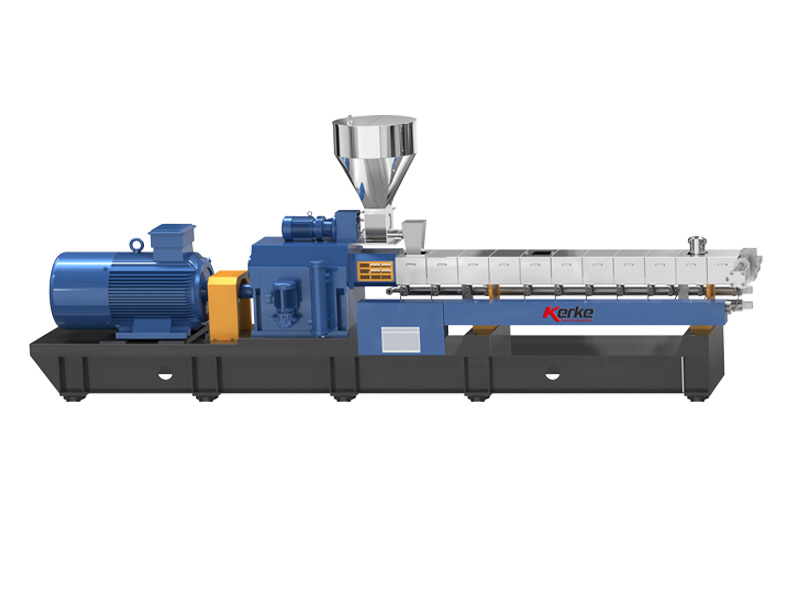
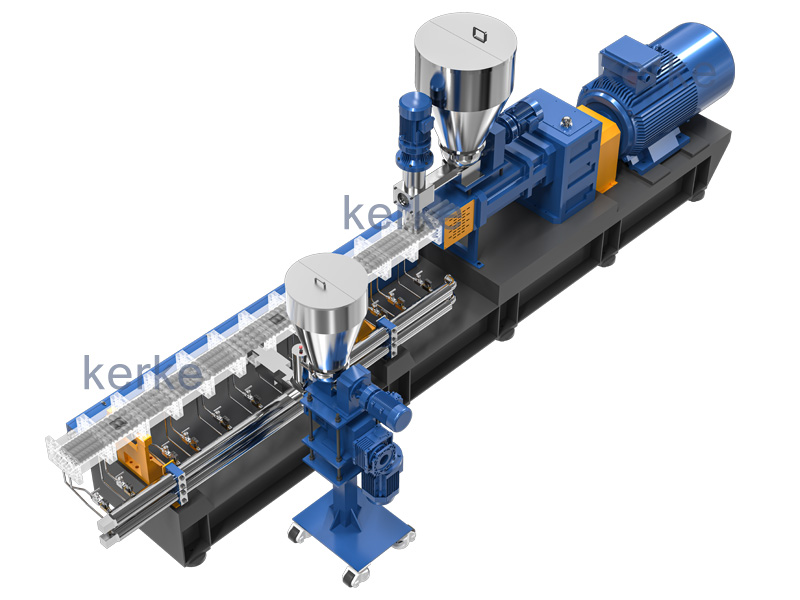
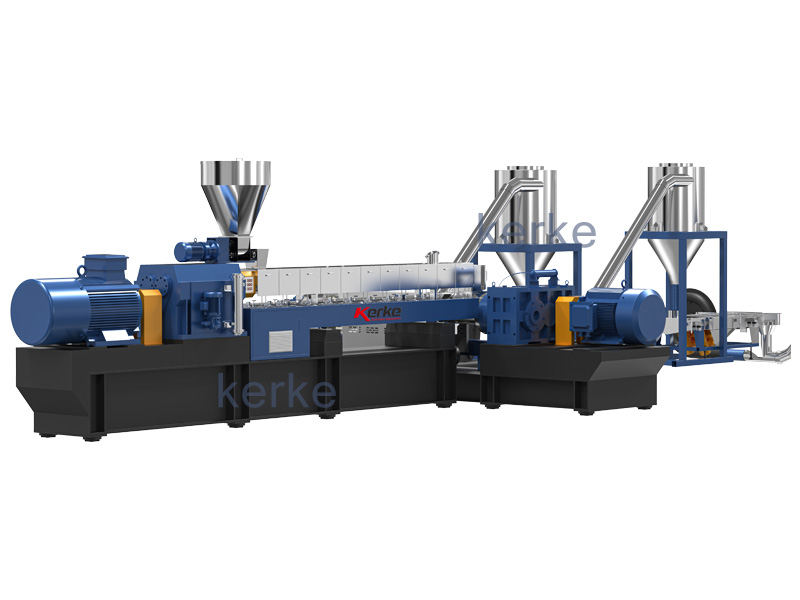
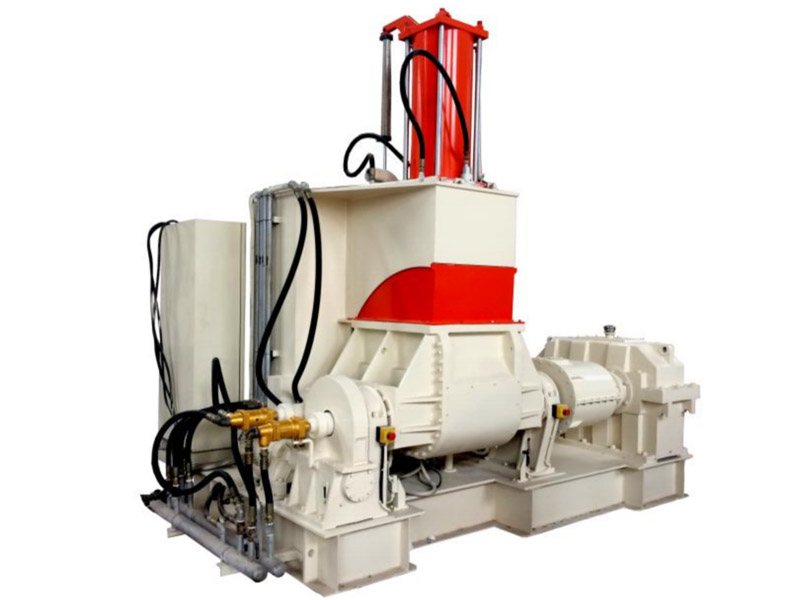
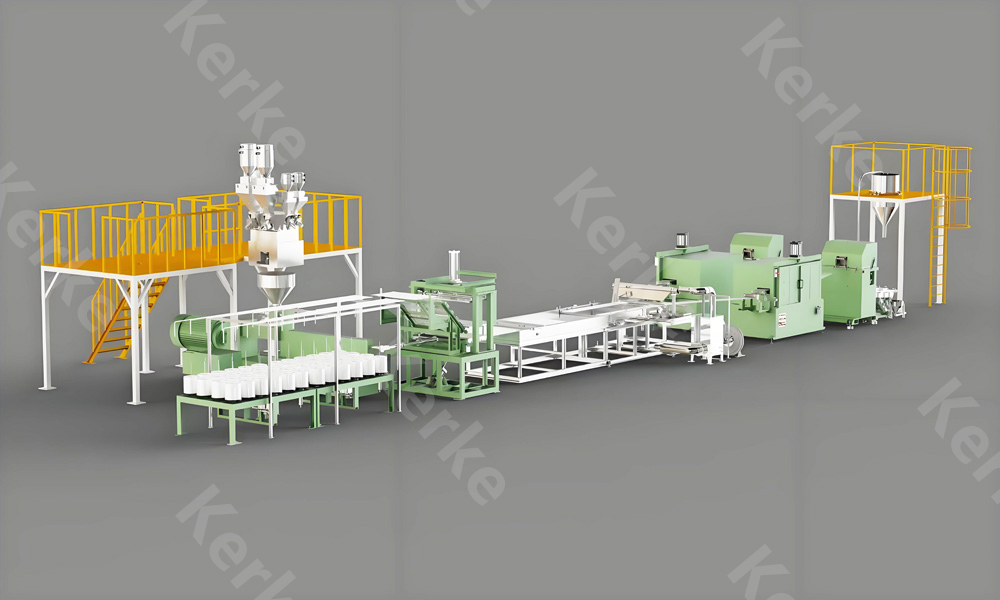
Twin screw extruders are the workhorse of polymer processing, widely used in masterbatch production (Masterbatch Extruder), polymer compounding (Compounding Extruder), and extrusion of thermoplastics like PE, PP, SEBS, and PVC. Kerke Extrusion (www.kerkeextruder.com), a leading manufacturer of twin screw extruders, estimates that 30-40% of production waste in extrusion plants stems from bubbles and surface/structural defects in final products. These defects not only increase material scrap rates (typically 5-15% for unoptimized lines) but also compromise product performance—for example, bubbles in masterbatches reduce color consistency, while structural defects in compounded resins lower mechanical strength. This comprehensive guide outlines the root causes of bubbles and defects in twin screw extruder products, step-by-step solutions, preventive maintenance strategies, and cost analysis to help manufacturers minimize waste and optimize production efficiency with Kerke twin screw extruders.
1. Common Types of Bubbles and Defects in Twin Screw Extruder Products
Before addressing solutions, it is critical to identify the specific type of defect, as each has distinct causes and fixes. Below are the most prevalent bubbles and defects in products from twin screw extruders, particularly in masterbatch and compounding applications:
1.1 Moisture-Induced Bubbles
These are small, irregular bubbles distributed throughout the product (e.g., masterbatch pellets, compounded strands) or on the surface. They form when water vapor in raw materials expands during melting. For masterbatch production, moisture-induced bubbles reduce pigment dispersion and cause uneven coloration in downstream processing (e.g., pipe extrusion). In compounding applications, these bubbles lower tensile strength by up to 20% in finished parts.
1.2 Volatile Matter Bubbles
Larger, often elongated bubbles caused by volatile organic compounds (VOCs), residual solvents, or low-molecular-weight additives (e.g., plasticizers, processing oils) in raw materials. Common in SEBS masterbatch production (high oil loading) and PVC compounding, these bubbles can lead to product rejection rates of up to 25% if unaddressed.
1.3 Surface Defects (Streaks, Pitting, and Scratches)
Streaks are linear marks along extruded strands/pellets, typically caused by poor material mixing or worn screw elements. Pitting (small indentations) and scratches result from contaminants or damaged die components. For high-value applications (e.g., automotive masterbatches), surface defects can render products unsellable, with a cost impact of $0.50-$2.00 per kilogram of scrap.
1.4 Degradation-Related Defects
Discoloration (yellowing/browning), brittle texture, or “fish eyes” (unmelted resin particles) caused by thermal or mechanical degradation of polymers during extrusion. In PE-X masterbatch production, degradation reduces crosslinking efficiency, leading to pipe failure in field use. The cost of reworking degraded batches is 2-3x the cost of raw materials, as reprocessing requires additional energy and additive adjustments.
1.5 Structural Defects (Uneven Pellet Size, Strand Breakage)
Uneven pellet size (common in masterbatch granulation) disrupts downstream feeding accuracy, while strand breakage increases downtime. Kerke Extrusion data shows that strand breakage alone can reduce line throughput by 10-20%, costing medium-scale plants $5,000-$10,000 in lost production per month.
2. Root Causes of Bubbles and Defects in Twin Screw Extrusion
Bubbles and defects in twin screw extruder products rarely stem from a single cause. Below is a detailed breakdown of the primary factors, organized by category:
2.1 Raw Material Issues
Raw materials are the most common source of defects, accounting for 60% of bubble-related issues in Kerke’s customer support cases.
Moisture Contamination: Hygroscopic polymers (e.g., PA, PET, PC) and additives (e.g., flame retardants, pigments) absorb moisture from ambient air. Even 0.05% moisture in PE-X resin can cause significant bubbling during extrusion. Raw materials stored in high-humidity warehouses (≥60% RH) are particularly vulnerable.
Impurities and Contamination: Foreign particles (dust, metal shavings, cross-contaminated resins) scratch dies and screw elements, leading to surface defects. Low-quality additives (e.g., unrefined processing oils in SEBS masterbatches) introduce excess VOCs, causing volatile matter bubbles.
Resin Degradation: Expired or improperly stored resins (e.g., PE stored in direct sunlight) undergo pre-extrusion degradation, leading to discoloration and brittle products. Antioxidant depletion in aged resins exacerbates thermal degradation during extrusion.
Formula Imbalances: Overloading of additives (e.g., >55% flame retardants in SEBS compounds) or incompatible additives (e.g., oil and filler ratios in masterbatches) disrupt melt flow, causing poor mixing and structural defects.
2.2 Extruder Process Parameter Misalignment
Even high-quality twin screw extruders (e.g., Kerke KTE Series) will produce defective products if process parameters are not optimized for the material being processed.
Temperature Profile Errors: Excessively high temperatures (e.g., >190°C for SEBS) cause polymer degradation and VOC release; insufficient temperatures lead to incomplete melting (fish eyes). For PE-X masterbatch production, temperature spikes of just 5°C can decompose crosslinking agents (DCP), leading to inconsistent gel content and structural defects.
Screw Speed and Feed Rate Mismatch: Feeding raw materials too quickly (relative to screw speed) causes material accumulation in the extruder, increasing torque and leading to uneven melting. Feeding too slowly results in insufficient shear, poor mixing, and volatile matter retention (bubbles). Kerke recommends a screw speed-to-feed rate ratio of 3:1 (rpm: kg/h) for most masterbatch applications (e.g., 300 rpm screw speed for 100 kg/h feed rate).
Vacuum System Underperformance: Inadequate vacuum (-0.07 MPa or lower) fails to remove moisture and VOCs from the melt. For oil-filled SEBS masterbatches, a vacuum degree of at least -0.085 MPa is required to eliminate volatile oil vapors and prevent bubbles.
2.3 Equipment-Related Factors
Worn or poorly maintained twin screw extruder components are a major contributor to defects, especially in older machines or lines running high-filler formulations (e.g., flame-retardant compounds).
Screw and Barrel Wear: Worn screw elements (clearance >0.5 mm) reduce shear mixing efficiency, leading to poor additive dispersion and streaks. Bimetallic barrels (Kerke’s standard for KTE Series) resist wear, but uncoated barrels wear at a rate of 0.1 mm per 1,000 hours of high-filler processing.
Vacuum System Leaks: Leaks in vacuum hoses or seals reduce degassing efficiency, leading to moisture/volatile bubbles. Kerke estimates that 80% of vacuum-related defects stem from minor leaks that go undetected during routine checks.
Die and Pelletizer Issues: Damaged die lips (scratches, nicks) cause surface defects in extruded strands, while misaligned pelletizer blades produce uneven pellets. Dull pelletizer blades (replacement needed every 4-6 months) lead to frayed strands and dust, which contaminate downstream processes.
Feeder Inaccuracy: Volumetric feeders with >1% accuracy error (common in non-Kerke systems) cause inconsistent material ratios, leading to formula imbalances and defects. Kerke’s loss-in-weight feeders (±0.05% accuracy) eliminate this issue for critical additives (e.g., crosslinking agents in PE-X masterbatches).
2.4 Environmental and Storage Factors
Often overlooked, environmental conditions directly impact raw material quality and extrusion outcomes:
Warehouse Humidity: Raw materials stored in warehouses with >60% RH absorb moisture at a rate of 0.01-0.02% per day. For hygroscopic resins like PA6, this can lead to 0.1% moisture content in just 5 days of storage.
Workshop Temperature Fluctuations: Rapid temperature changes (±10°C in a shift) affect extruder temperature control accuracy, leading to inconsistent melting and defect formation.
Raw Material Handling: Improper handling (e.g., tearing resin bags, mixing different grades) introduces contaminants and moisture, exacerbating defects.
3. Step-by-Step Solutions for Specific Bubbles and Defects
Solving bubbles and defects requires a systematic, root-cause-focused approach. Below are actionable, detailed solutions for the most common issues, including cost estimates for equipment and process adjustments:
3.1 Solving Moisture-Induced Bubbles
Moisture is the leading cause of bubbles in twin screw extrusion, and solving it requires raw material drying and process optimization:
Step 1: Test Raw Material Moisture Content: Use a halogen moisture analyzer (cost: $1,500-$3,000) to measure moisture in resins/additives before extrusion. Acceptable moisture levels are <0.02% for PE/PP, <0.05% for SEBS, and <0.01% for PA/PET.
Step 2: Optimize Drying Parameters: – For PE/PP/SEBS: Dry in a dehumidifying dryer at 70-90°C for 2-4 hours (moisture target <0.02%). A 100 m³/h dehumidifying dryer (Kerke recommended) costs $8,000-$11,000. – For PA/PET: Dry at 120-140°C for 4-6 hours (moisture target <0.01%). A high-temperature dehumidifying dryer costs $10,000-$14,000. – For fillers (e.g., Mg(OH)₂ in flame-retardant compounds): Dry at 120-130°C for 4-6 hours (moisture target <0.05%) to prevent hydrolysis during extrusion.
Step 3: Adjust Extruder Temperature Profile: Increase the temperature of the first two zones (feed and compression) by 5-10°C to accelerate moisture evaporation before the melt reaches the degassing zone. For Kerke KTE-50 extruders, this adjustment can reduce moisture bubbles by 80% within 30 minutes.
Step 4: Enhance Vacuum Degassing: Upgrade to a two-stage vacuum system (cost: $4,000-$6,000) to achieve a vacuum degree of -0.08 to -0.09 MPa. Kerke KTE Series extruders come standard with two-stage vacuum for masterbatch and compounding applications, eliminating the need for aftermarket upgrades.
Cost Summary: Drying equipment investment ($8,000-$14,000) + moisture analyzer ($1,500-$3,000) = total $9,500-$17,000. This investment reduces scrap rates by 5-10%, leading to a payback period of 8-12 months for a 100 kg/h line (1,000 kg/day production, $1/kg raw material cost).
3.2 Solving Volatile Matter Bubbles
Volatile matter bubbles (from VOCs, solvents, or processing oils) require targeted degassing and formula adjustments:
Step 1: Identify Volatile Sources: Test raw materials for VOC content using gas chromatography (cost: $500-$1,000 per sample) to pinpoint high-VOC additives (e.g., low-quality processing oils in SEBS masterbatches).
Step 2: Optimize Extruder Degassing Zones: Ensure the degassing zone is positioned after the melting/mixing zone (Kerke KTE Series extruders have L/D ratios of 40:1 or 48:1, with dedicated degassing zones for optimal VOC removal). Increase vacuum hold time by reducing screw speed by 5-10 rpm (e.g., from 300 rpm to 270-285 rpm) to allow more time for volatiles to escape.
Step 3: Adjust Additive Ratios: Replace high-VOC processing oils (e.g., unrefined paraffinic oil) with low-VOC alternatives (cost increase of $0.10-$0.20 per kg of masterbatch). For a 100 kg/h line, this adds $2,000-$4,000 per month in raw material costs but reduces scrap by 10-15%, offsetting the cost within 1-2 months.
Step 4: Add a Secondary Degassing Step: For high-VOC formulations (e.g., >70% oil in SEBS masterbatches), install a side degassing port (cost: $3,000-$5,000) on the extruder. Kerke KTE-65 extruders can be factory-fitted with side degassing ports at the time of purchase (no aftermarket cost).
3.3 Solving Surface Defects (Streaks, Pitting, Scratches)
Surface defects require equipment maintenance and contamination control:
Step 1: Inspect and Repair Screw/Barrel Components: – Check screw element wear (using a micrometer, cost: $50-$100). Replace worn kneading blocks (cost: $800-$1,500 per set for Kerke KTE-50 extruders) if clearance exceeds 0.5 mm. – Polish scratched barrel liners (cost: $1,000-$2,000) or replace bimetallic liners (cost: $3,000-$5,000 for KTE-50) to restore smooth melt flow.
Step 2: Clean and Polish Die Components: Use diamond polishing paste (cost: $50-$100 per tube) to remove scratches from die lips. Replace damaged die inserts (cost: $200-$500) to eliminate pitting and scratches in extruded strands.
Step 3: Implement Contamination Control: Install a 60-mesh screen filter in the feed hopper (cost: $100-$200) to remove foreign particles. For high-purity applications (e.g., medical masterbatches), use a magnetic separator (cost: $500-$800) to remove metal contaminants.
Cost Summary: Screw/barrel maintenance ($800-$5,000) + die polishing/replacement ($200-$500) + contamination control ($600-$1,000) = total $1,600-$6,500. This reduces surface defect-related scrap by 90%, with a payback period of 1-3 months.
3.4 Solving Degradation-Related Defects
Degradation defects require temperature adjustment and additive optimization:
Step 1: Reduce Extruder Temperatures: Lower the mixing and metering zone temperatures by 5-10°C (e.g., from 180°C to 170-175°C for PE-X masterbatches). Kerke KTE Series extruders feature PID temperature control (±0.5°C accuracy) to ensure precise temperature adjustments without sacrificing melting efficiency.
Step 2: Add Antioxidants to the Formulation: Incorporate a primary/secondary antioxidant blend (e.g., 1010+168, cost: $15-$20 per kg) at 0.5-1% by weight. For a 100 kg/h line, this adds $750-$1,000 per month in additive costs but eliminates degradation-related scrap (typically 5-8% of production), saving $5,000-$8,000 per month.
Step 3: Replace Aged Resins: Dispose of expired or degraded resins (scrap cost: $0.50 per kg) and implement FIFO (first-in-first-out) inventory management to prevent resin aging. Kerke recommends storing resins in sealed, moisture-proof bags (cost: $0.10 per bag) to extend shelf life by 6-12 months.
4. Preventive Maintenance to Avoid Bubbles and Defects
Preventive maintenance is far more cost-effective than correcting defects after production. Below is a detailed maintenance schedule for twin screw extruders (focused on Kerke KTE Series) to minimize bubbles and defects, with cost estimates for each task:
4.1 Daily Maintenance Tasks (15-30 minutes per shift)
These tasks require no specialized tools and are performed by line operators:
– Check raw material moisture levels (using a portable moisture meter, cost: $500-$1,000).
– Inspect vacuum hoses for leaks (using soapy water, no cost) and tighten loose connections.
– Clean feed hoppers and screens to remove dust/contaminants (no cost).
– Record extruder parameters (temperature, screw speed, torque) for traceability (no cost).
Cost: $0 (labor only) – Prevents 30% of daily defect-related scrap.
4.2 Weekly Maintenance Tasks (1-2 hours per week)
Performed by maintenance technicians:
– Calibrate feeders (Kerke loss-in-weight feeders require weekly calibration with certified weights, cost: $0 for in-house calibration).
– Lubricate screw and feeder bearings (food-grade lubricant, cost: $20-$50 per week).
– Clean degassing ports to remove material buildup (no cost).
– Inspect pelletizer blades for dullness (replace blades every 4-6 months, cost: $300-$500 per set for Kerke pelletizers).
Cost: $20-$50 (lubricant) + $50-$83/month (blade replacement amortized) – Prevents 40% of weekly defect-related scrap.
4.3 Monthly Maintenance Tasks (4-6 hours per month)
Performed by certified technicians (Kerke offers on-site maintenance for a fee):
– Inspect screw/barrel wear (cost: $0 for in-house inspection, $500-$800 for Kerke on-site inspection).
– Calibrate PID temperature controllers (cost: $200-$300 for calibration equipment).
– Test vacuum system performance (target: -0.08 to -0.09 MPa, cost: $0 for in-house testing).
– Clean and polish die components (cost: $50-$100 for polishing supplies).
Cost: $250-$1,200 per month – Prevents 60% of monthly defect-related scrap.
4.4 Annual Overhaul (1-2 days per year)
Performed by Kerke factory technicians:
– Replace worn screw elements and barrel liners (cost: $5,000-$10,000 for KTE-50 extruders).
– Overhaul gearbox and drive system (cost: $3,000-$6,000 for KTE-50).
– Validate extruder performance with third-party testing (cost: $1,000-$2,000).
Cost: $9,000-$18,000 per year – Extends extruder lifespan by 3-5 years and reduces annual defect-related scrap by 80%.
Kerke Extrusion offers a preventive maintenance package for KTE Series extruders (cost: $2,000-$4,000 per year) that includes all weekly/monthly tasks and a discounted annual overhaul, saving manufacturers $3,000-$8,000 per year in maintenance costs.
5. Cost Analysis of Solving and Preventing Extrusion Defects
To justify investments in defect prevention, it is critical to quantify the cost of defects and the ROI of corrective actions. Below is a detailed cost analysis for a medium-scale twin screw extrusion line (Kerke KTE-50, 100 kg/h throughput, 8 hours/day, 250 days/year) producing SEBS masterbatches:
5.1 Cost of Defective Products (Baseline: Unoptimized Line)
– Raw material cost: $1.50 per kg of SEBS masterbatch.
– Scrap rate: 12% (12 kg defective per hour, 96 kg per day, 24,000 kg per year).
– Scrap cost: 24,000 kg × $1.50/kg = $36,000 per year.
– Rework cost: 5% of defective material is reworkable (1,200 kg/year) at $0.75/kg in energy/labor = $900 per year.
– Downtime cost (strand breakage, defect troubleshooting): 5 hours per week × $200/hour (labor + lost production) = $5,000 per year.
– Total annual cost of defects: $36,000 + $900 + $5,000 = $41,900 per year.
5.2 Investment in Defect Prevention (Kerke Extruder Optimization)
Below is the one-time and recurring investment to reduce scrap rate to 2%:
One-Time Investments:
– Dehumidifying dryer (100 m³/h): $9,000.
– Two-stage vacuum system upgrade: $5,000 (included in Kerke KTE-50 standard configuration, no cost if purchasing new).
– Moisture analyzer: $2,000.
– Contamination control (screen filter + magnetic separator): $700.
– Total one-time investment: $11,700 (or $2,700 if purchasing a new Kerke KTE-50).
Recurring Annual Costs:
– Preventive maintenance package: $3,000.
– Antioxidant additives (0.5% by weight): $1,800 (100 kg/h × 8h × 250 days × 0.5% × $18/kg = $1,800).
– Low-VOC processing oil premium: $3,600 (100 kg/h × 8h × 250 days × 70% oil × $0.10/kg premium = $3,600).
– Total recurring annual cost: $8,400.
5.3 Post-Optimization Cost Savings and ROI
– Post-optimization scrap rate: 2% (2 kg/h, 4,000 kg/year).
– Scrap cost savings: ($36,000 – $6,000) = $30,000 per year.
– Rework cost savings: ($900 – $150) = $750 per year.
– Downtime cost savings: ($5,000 – $1,000) = $4,000 per year.
– Total annual savings: $30,000 + $750 + $4,000 = $34,750.
– Net annual benefit: $34,750 – $8,400 = $26,350.
– ROI for one-time investment ($11,700): 11,700 / 26,350 = 0.44 years (5.3 months).
– ROI for new Kerke KTE-50 purchase (base price $110,000): The extruder reduces scrap and increases throughput by 10% (110 kg/h), adding $45,000 in annual revenue. Net annual benefit = $26,350 + $45,000 = $71,350. Payback period = 110,000 / 71,350 = 1.54 years (18.5 months).
5.4 Kerke Twin Screw Extruder Price Comparison (2024 FOB Nanjing, USD)
Kerke offers three core models optimized for masterbatch and compounding applications, with defect-minimizing features as standard:
KTE-36 (36mm screw, L/D 40:1):
– Standard configuration (two-stage vacuum, loss-in-weight feeders): $55,000-$65,000.
– Throughput: 30-50 kg/h (masterbatch), scrap rate (optimized): <2%.
– Total line investment (auxiliary equipment included): $90,000-$110,000.
KTE-50 (50mm screw, L/D 48:1):
– Standard configuration (side degassing, high-torque drive): $110,000-$125,000.
– Throughput: 100-150 kg/h (compounding), scrap rate (optimized): <2%.
– Total line investment: $170,000-$190,000.
KTE-65 (65mm screw, L/D 48:1):
– Standard configuration (twin vacuum, inline oil feeder): $160,000-$180,000.
– Throughput: 200-250 kg/h (high-oil SEBS masterbatches), scrap rate (optimized): <1.5%.
– Total line investment: $250,000-$280,000.
Compared to non-Kerke twin screw extruders (cost: $40,000-$150,000), Kerke models have a 10-15% higher upfront cost but reduce annual defect-related costs by 70-80%, resulting in a shorter overall payback period (1.5 vs. 3+ years).
6. Kerke Twin Screw Extruder: Engineered to Minimize Bubbles and Defects
Kerke Extrusion (www.kerkeextruder.com) designs and manufactures twin screw extruders (Masterbatch Extruder, Compounding Extruder) with built-in features to eliminate bubbles and defects, reducing scrap rates and improving product quality. Below are the key design advantages of Kerke KTE Series extruders:
6.1 Precision Temperature Control
Kerke KTE Series extruders feature PID temperature controllers with ±0.5°C accuracy (vs. ±2°C for competitors) and zone-by-zone heating/cooling. This prevents temperature spikes that cause degradation and ensures uniform melting, eliminating fish eyes and discoloration. The temperature control system is factory-calibrated for common polymers (PE, PP, SEBS, PE-X), reducing setup time and parameter-related defects.
6.2 High-Efficiency Vacuum Degassing
All Kerke KTE Series extruders come standard with two-stage vacuum systems (-0.09 MPa) and dedicated degassing zones (L/D ratio optimized for volatile removal). For high-oil or high-VOC formulations, KTE-65 models include side degassing ports to further reduce volatile matter bubbles. Kerke’s vacuum system is sealed with PTFE gaskets (wear-resistant, leak-proof) to maintain consistent degassing performance for 10,000+ operating hours.
6.3 Wear-Resistant Screw and Barrel Components
Kerke uses bimetallic (WC-Co coating, 68 HRC) screw elements and barrel liners, which resist wear from high-filler formulations (e.g., 55% Mg(OH)₂ in SEBS compounds) for 20,000+ operating hours (vs. 8,000 hours for uncoated components). This maintains shear mixing efficiency over time, preventing streaks and poor additive dispersion.
6.4 Precision Feeding Systems
Kerke KTE Series extruders include loss-in-weight feeders (±0.05% accuracy) for critical additives (e.g., crosslinking agents, antioxidants), eliminating formula imbalances that cause defects. The feeders are synchronized with screw speed via Siemens PLC, ensuring consistent material ratios even at varying throughputs.
6.5 Customer Support and Optimization
Kerke offers free on-site process optimization for new customers (within 3 months of installation) to fine-tune parameters for their specific formulation, reducing initial scrap rates by 80%. Global 48-hour technical support ensures rapid resolution of defect-related issues, minimizing downtime. Kerke’s customer success data shows that 95% of KTE Series users achieve a scrap rate of <3% within 6 months of installation.
7. FAQ About Twin Screw Extruder Bubbles and Defects
7.1 Q1: Can low screw speed cause bubbles in twin screw extruder products?
A1: Yes. Low screw speed (e.g., <200 rpm for KTE-50) reduces shear mixing, leading to incomplete melting and retention of moisture/volatiles in the melt. This causes bubbles and fish eyes. Kerke recommends a minimum screw speed of 250 rpm for most masterbatch applications to ensure adequate shear and degassing.
7.2 Q2: How often should I replace the vacuum seals on my twin screw extruder?
A2: Vacuum seals (PTFE gaskets) should be replaced every 6 months for high-filler/high-oil formulations (e.g., SEBS masterbatches) and every 12 months for standard formulations (e.g., PE masterbatches). Kerke includes replacement seals in its preventive maintenance package at no additional cost.
7.3 Q3: Do Kerke twin screw extruders require special training to operate and minimize defects?
A3: Kerke provides free 2-day operator training (on-site or virtual) for all KTE Series customers, covering parameter optimization, maintenance, and defect troubleshooting. The training reduces operator-induced defects by 50% and is available in English, Spanish, and Mandarin.
7.4 Q4: Can reprocessing defective pellets cause more bubbles?
A4: Yes. Reprocessing defective pellets introduces additional moisture (from ambient air) and causes further polymer degradation (due to repeated heating), exacerbating bubbles and discoloration. Kerke recommends limiting reprocessing to 10% of total feed and only reprocessing pellets once (not multiple times).
7.5 Q5: What is the optimal vacuum degree for masterbatch extrusion to eliminate bubbles?
A5: The optimal vacuum degree depends on the formulation: -0.07 to -0.08 MPa for standard PE/PP masterbatches, -0.085 to -0.09 MPa for high-oil SEBS masterbatches, and -0.09 MPa for hygroscopic resins (PA/PET). Kerke KTE Series extruders are factory-set to these ranges, with adjustable vacuum for custom formulations.
8. Conclusion
Bubbles and defects in twin screw extruder products are costly and avoidable with the right combination of raw material control, process optimization, equipment maintenance, and high-quality extrusion technology. Kerke Twin Screw Extruders (Masterbatch Extruder, Compounding Extruder) are engineered to minimize the root causes of defects—precision temperature control, high-efficiency degassing, wear-resistant components, and precision feeding—reducing scrap rates to <3% for most applications. The cost analysis in this guide demonstrates that investments in defect prevention (e.g., drying equipment, preventive maintenance, Kerke extruders) deliver rapid ROI (5-18 months) by reducing scrap, rework, and downtime.
For manufacturers looking to optimize their twin screw extrusion lines and eliminate bubbles/defects, Kerke Extrusion (www.kerkeextruder.com) offers tailored solutions—from small-scale KTE-36 extruders ($55,000-$65,000) for lab-scale masterbatch production to large-scale KTE-65 extruders ($160,000-$180,000) for high-volume compounding. With global support, preventive maintenance packages, and process optimization services, Kerke ensures that customers achieve consistent, defect-free production and maximize the profitability of their extrusion operations.