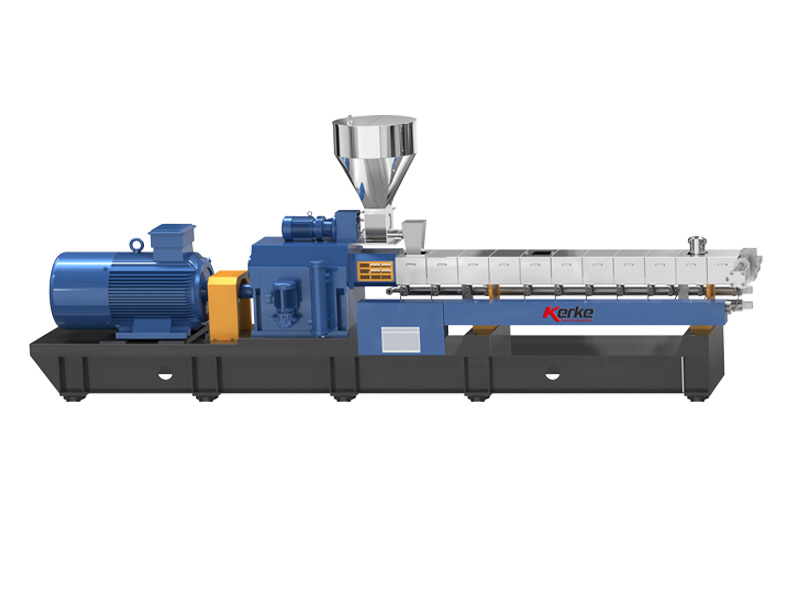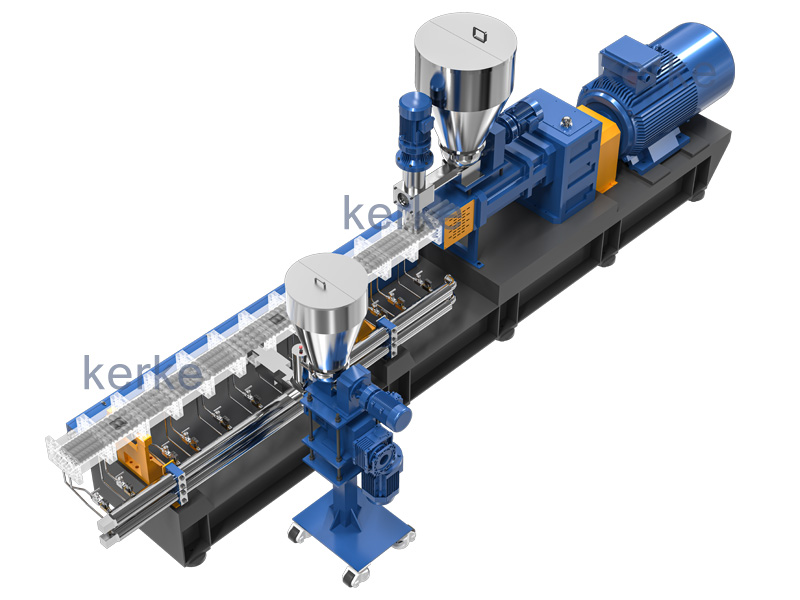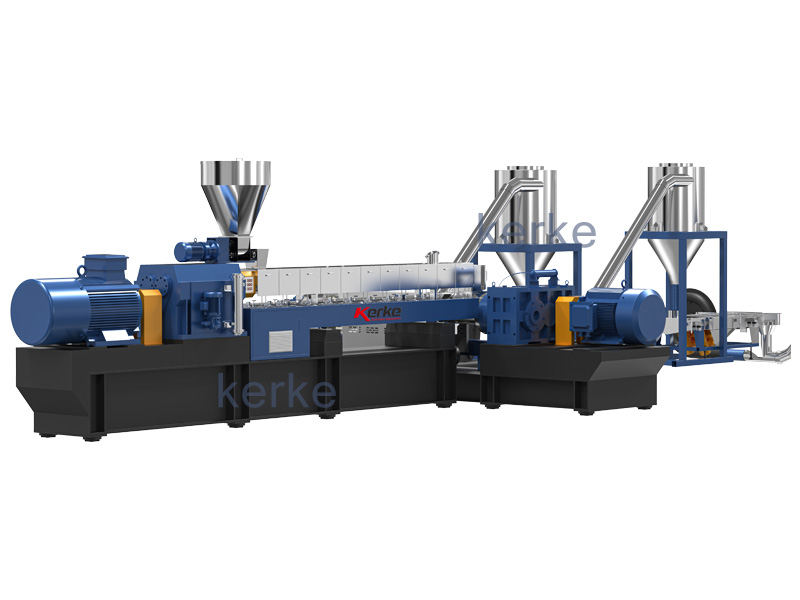
In the world of polymer compounding, the presence of volatile compounds, moisture, or reaction by-products can severely degrade the quality of the final product. Bubbles, voids, discoloration, and reduced mechanical properties are common defects associated with poor devolatilization. The vacuum venting system is a critical auxiliary unit for a twin screw compounding extruder, designed to remove these unwanted volatiles efficiently. This article delves into the technical and economic benefits of integrating a high-efficiency vacuum venting system, highlighting the advanced solutions provided by Kerke Extruder. We will explore the physics of devolatilization, system design, maintenance, and a detailed cost-benefit analysis to justify the investment.
What is a Vacuum Venting System?
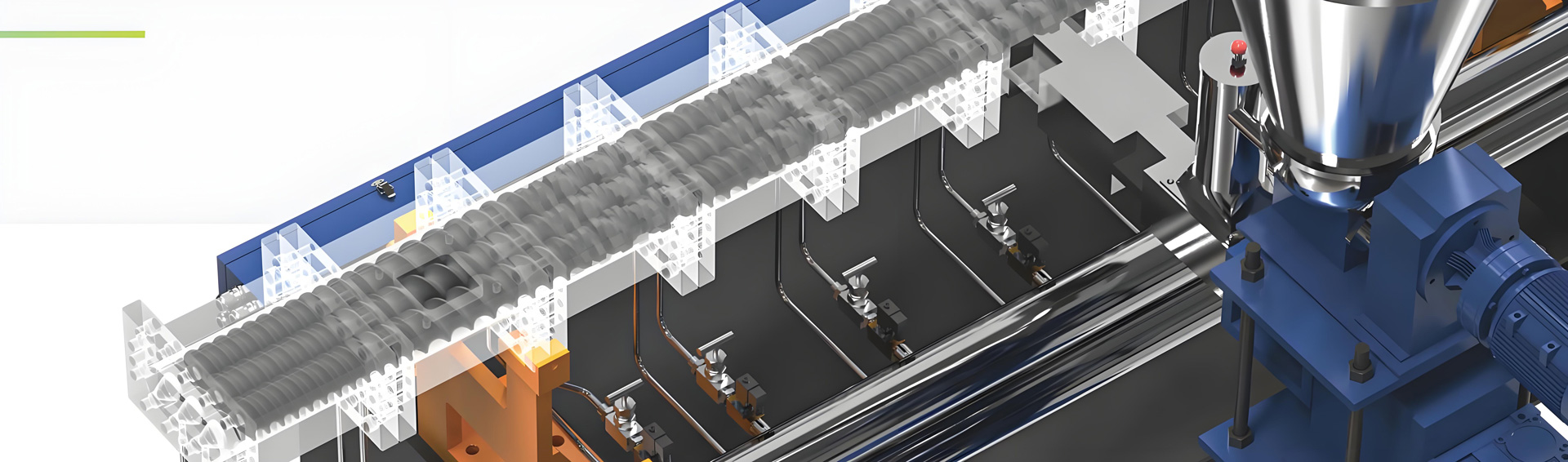
A vacuum venting system typically consists of a vacuum pump (often a Roots blower or a liquid ring pump), a vacuum tank (knockout pot), condensers (chillers), filters (mist eliminators), and a vent port on the extruder barrel. The vent port is usually located downstream of the melting and mixing zones but before the final metering section. At this point, the polymer is fully molten and has a large surface area (often created by a “dumping” or “flash” section in the screw design where the flight depth suddenly increases, causing the melt to fall into a larger chamber). The vacuum pump reduces the pressure above the melt to near-zero absolute pressure (typically 10-50 mbar, or 75-375 microns). This pressure drop causes the dissolved volatiles (water, monomers, solvents, oligomers) to expand and vaporize, escaping from the melt and being drawn into the vacuum line. The efficiency of this process depends on the vapor pressure of the volatile, the temperature of the melt, the surface area of the melt, and the residence time under vacuum.
Key Benefits of Vacuum Venting
1. Elimination of Bubbles and Voids
The most immediate benefit is the removal of gas bubbles. In applications like cable insulation, optical films, or medical tubing, even microscopic bubbles (less than 50 microns) can cause product failure (electrical shorts, optical distortion, or bacterial growth). A twin screw extruder with a vacuum vent can reduce volatile content to less than 100 ppm (parts per million). This ensures the final product is optically clear and electrically insulating. For example, in EVA foam compounding, precise vacuum control is needed to manage the blowing agent, but in most other compounds, the goal is total removal to prevent unwanted foaming. The vacuum system also prevents “steam explosion” when the hot strands hit the water bath in strand pelletizing, which causes porous pellets.
2. Improved Mechanical and Thermal Properties
Volatiles, especially moisture, can cause hydrolysis in sensitive polymers like PET, PC, PA, or PBT during processing. Hydrolysis breaks the polymer chains, reducing molecular weight and thus tensile strength and impact resistance. By removing moisture before the melt reaches the die, the vacuum vent protects the polymer integrity. For instance, processing PET without a vacuum vent can reduce its Intrinsic Viscosity (IV) from 0.80 dl/g to 0.60 dl/g, making it unsuitable for bottle-grade applications. Additionally, removing low-molecular-weight fractions (oligomers) increases the heat distortion temperature (HDT) of the compound and improves long-term thermal stability. This is critical for automotive under-the-hood components that experience prolonged heat exposure.
3. Enhanced Color and Aesthetics
Trapped volatiles can cause “splay” or silver streaks on the surface of molded parts. This is a major aesthetic defect, especially for consumer electronics and appliances. A robust vacuum system ensures a smooth, glossy finish. For white or light-colored masterbatches, devolatilization is essential to prevent yellowing caused by residual monomers or solvents oxidizing in the melt at high temperatures. This eliminates the need for expensive anti-yellowing additives.
4. Process Efficiency and Safety in Reactive Extrusion
In reactive extrusion (e.g., grafting maleic anhydride onto polypropylene to create PP-g-MA for compatibilization), the reaction produces water as a by-product. Without a vacuum vent, the water would accumulate, halting the reaction equilibrium and preventing further grafting. The vacuum system drives the reaction forward by continuously removing the by-product, allowing for higher grafting rates (e.g., 1.5% vs 0.5%). Furthermore, venting prevents pressure build-up that could lead to dangerous leaks or die explosions. It also reduces the load on the downstream pelletizer by preventing steam explosions when hot strands hit the water bath.
Types of Vacuum Venting Configurations
Single-Stage Vacuum Venting
This is the standard configuration with one vent port. It is sufficient for removing surface moisture and moderate levels of volatiles (up to 1-2%). It is cost-effective and easier to maintain. The vacuum level typically ranges from -0.06 to -0.08 MPa (gauge). The pump is usually a standard Roots blower. This setup is common for polyolefin compounding (PP, PE) where moisture content is the main concern. The cost is relatively low, adding approximately 10-15% to the extruder price.
Multi-Stage Vacuum Venting (Double or Triple)
For demanding applications (e.g., high-moisture regrind recycling, deep devolatilization of engineering plastics like PBT or PET, or solvent removal), a second (or even third) vacuum stage is used. The first stage removes the bulk of the volatiles (90% of moisture), and the second stage polishes the melt to achieve ultra-low volatile content (<50 ppm, or even <10 ppm for optical applications). Kerke Extruder offers tandem venting systems where the screws are designed with special elements to maximize surface renewal at each vent point. The second stage often uses a more powerful pump or a liquid ring pump to achieve deeper vacuum (down to 10 mbar). While more expensive (30-50% more than single-stage), this setup is crucial for high-value applications like medical-grade polymers, LCD films, or automotive under-the-hood components where voids are unacceptable. The ROI is justified by the ability to process cheaper, wetter regrind or to meet stringent quality specs.
Atmospheric Venting (Degassing)
In some cases, a vacuum isn’t needed, but a simple atmospheric vent is used to remove air trapped in the feed. This is common in twin screw extruders where the feed throat is not perfectly sealed. A simple open vent allows air to escape without pulling out volatiles. This is less common in compounding but used in some recycling applications.
Design Considerations for Effective Vacuum Venting
Screw Design at the Vent Zone
The screw elements immediately before the vent must create a “melt seal” to prevent air from being sucked into the extruder (which reduces throughput) while maximizing the surface area of the melt. Common designs include reverse kneading blocks that force the melt to bubble over, or “dumping” flights that drop the melt into a larger barrel section (increasing the diameter), exposing a fresh surface to the vacuum. The vent section is usually not cooled (or slightly heated) to keep the melt temperature high, which lowers viscosity and increases vapor pressure, aiding devolatilization. However, too high a temperature can degrade the polymer, so precise control is needed. Kerke utilizes Computational Fluid Dynamics (CFD) and Finite Element Analysis (FEA) to simulate screw geometries and optimize the balance between surface renewal and melt sealing for specific viscosities.
Vacuum Pump Selection
The choice of pump is critical for efficiency and cost.
1. Roots Blowers: Dry pumps that move large volumes of air. They are energy-efficient and require little maintenance but need a backing pump (like a rotary vane pump) to reach deep vacuum. They are best for dry applications (moisture removal).
2. Liquid Ring Pumps: Use a liquid (usually water or oil) to create the seal. They can handle wet vapors and corrosive gases, making them ideal for solvent removal or acidic environments. However, they consume more energy and require water treatment.
3. Screw Pumps: Dry pumps that can achieve very deep vacuum. Used in high-end applications but are expensive.
The pump must be sized correctly; an oversized pump wastes energy, while an undersized pump cannot maintain the required vacuum level during surge flows. A typical 150mm extruder processing PET might require a 200 m³/h Roots blower with a 30 kW motor.
Condensers, Filters, and Knockout Pots
To protect the vacuum pump from polymer vapors (which can condense and form a sticky tar that damages the pump), a condenser (chiller) and mist filters are essential. The condenser cools the gas stream (typically to 5-10°C), turning polymer vapors back into liquid/solid, which are collected in a knockout pot or drum. This prevents pollution and recovers valuable additives (like plasticizers). Kerke systems include automated drum changers for the collected condensate, minimizing operator intervention. The gas then passes through a coalescing filter or mist eliminator to remove any remaining oil or polymer droplets before entering the pump. Regular cleaning of the condenser is vital; fouling reduces efficiency dramatically. The cost of a contaminated pump rebuild can be $5,000-$10,000.
Cost and Price Analysis of Vacuum Venting Systems
Adding a vacuum venting system increases the capital cost of the extrusion line by approximately 15-25%. A standard vacuum system (pump, tank, condenser, controls) for a 500 kg/h line might cost between $25,000 and $45,000. A multi-stage system with sophisticated controls, corrosion-resistant materials, and automatic cleaning can exceed $80,000. The price premium is roughly $15,000-$30,000 over a non-vented extruder.
Cost Drivers Breakdown:
1. Pump System: The vacuum pump and motor are the most expensive components ($10,000-$20,000).
2. Control System: Advanced PLC integration with the extruder, vacuum sensors, and automated valves ($5,000-$8,000).
3. Condenser and Filters: Custom fabricated stainless steel vessels ($3,000-$5,000).
4. Installation and Engineering: Piping, insulation, and labor ($5,000-$10,000).
ROI Calculation: While the CAPEX is higher, the OPEX savings and quality improvements are substantial.
Scenario: A recycling plant processing wet PET flakes (4% moisture). Without vacuum, the IV drops, and the pellets are brittle. They can only sell at $0.80/kg. With a vacuum system, IV is preserved, and they can sell at $1.20/kg. Processing 1000 kg/h, 8000 hours/year:
Revenue without vacuum: 8,000,000 kg * $0.80 = $6,400,000
Revenue with vacuum: 8,000,000 kg * $1.20 = $9,600,000
Incremental Revenue: $3,200,000/year.
Even after paying $50,000 for the system and $10,000/year in energy/maintenance, the ROI is massive (>5000% in year 1).
For a compounding plant, the ROI comes from reduced scrap. Reducing scrap rates from 5% to 0.5% by using a vacuum system can save $200,000/year in material costs alone. The system pays for itself in 3-6 months. Additionally, energy savings from using efficient Roots blowers with VFDs (Variable Frequency Drives) can reduce electricity costs by $8,000-$15,000 annually compared to older liquid ring pumps.
Troubleshooting Common Vacuum Issues
1. Poor Vacuum Level: Check for leaks in the piping (use soapy water), clogged filters, or a worn pump. Also, check if the melt seal is broken (material flowing out of the vent). A broken seal allows air in.
2. Material in Vacuum Line (Carryover): This indicates the condenser is not cold enough or the flow rate is too high. Lower the chiller temperature or reduce feed rate. Install a larger knockout pot. Carryover can ruin the pump.
3. Foaming in the Barrel: If the vacuum is too strong for the melt viscosity, it can cause the entire melt to foam and exit the vent. This requires adjusting the vacuum level (using a throttle valve) or screw speed.
4. Vacuum Pump Overheating: Ensure cooling water is flowing. Check for mechanical binding. Clean the intake filters.
Maintenance of Vacuum Systems
Maintenance is often overlooked but critical.
– Weekly: Check oil levels in the pump (if oiled), drain the knockout pot, check condenser water temperature.
– Monthly: Clean or replace intake filters. Inspect belts and couplings.
– Quarterly: Check vacuum sensors for calibration. Test the automatic valves.
– Annually: Service the pump (change vanes, bearings). Descale the condenser tubes. Perform a leak test on the entire system.
The cost of neglecting maintenance is high. A clogged condenser can increase the pump load by 50%, increasing energy costs and shortening pump life. Kerke Extruder designs modular vacuum skids that can be serviced without dismantling the entire extruder line, reducing downtime costs. They also offer remote monitoring systems that alert operators to vacuum drops before product quality is affected.
Conclusion
The vacuum venting system is not just an accessory; it is a vital process unit that defines the quality ceiling of a compounding extruder. For manufacturers aiming to produce high-performance, defect-free plastic compounds—especially engineering plastics, recycled materials, or medical-grade polymers—investing in a robust, multi-stage vacuum system is non-negotiable. Kerke Extruder’s integrated vacuum solutions, combined with their optimized screw designs, offer a reliable path to achieving ultra-low volatiles, improved mechanical properties, and higher production yields. By understanding the cost-benefit dynamics and implementing a rigorous maintenance schedule, processors can justify the investment and secure a competitive advantage in the market. The ability to process high-moisture regrind or produce void-free compounds opens up new raw material sources and high-value product lines that are inaccessible to non-vented extruders.