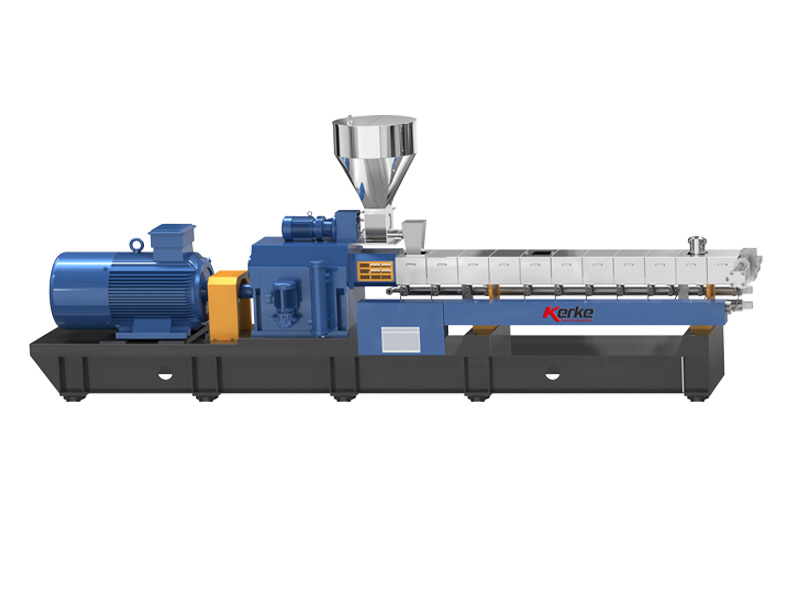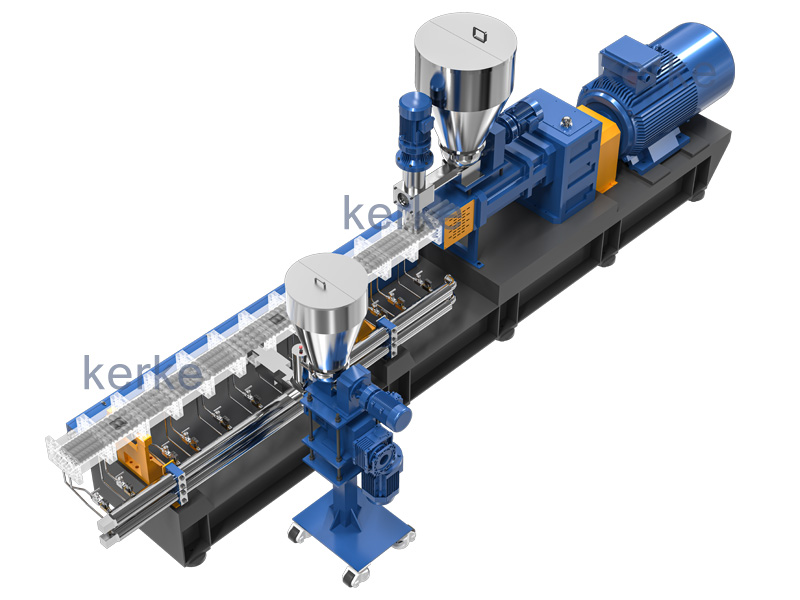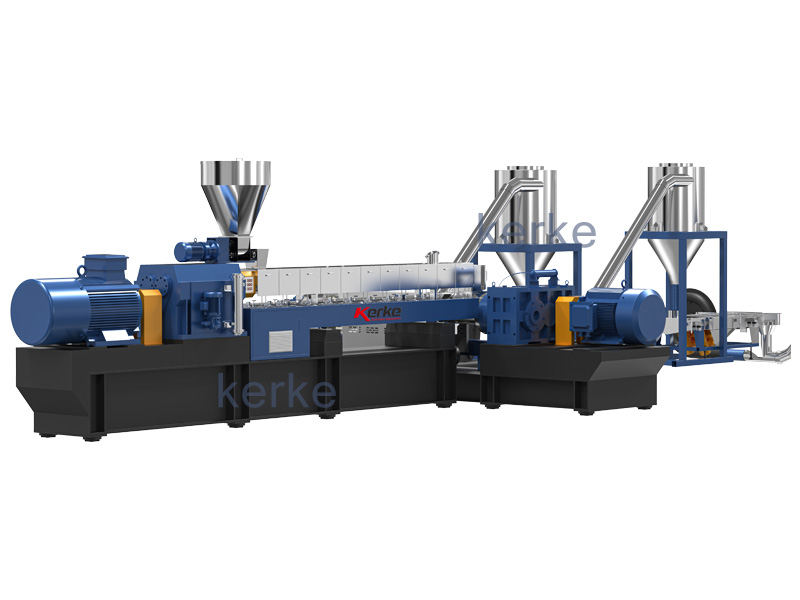
In the modern plastics industry, the demand for high-performance materials has shifted from simple commodity resins to complex engineered compounds. Manufacturers require plastic products that are not only lightweight but also possess superior tensile strength, impact resistance, thermal stability, and chemical resistance. The key to achieving these enhanced mechanical properties lies in the compounding process. A high-quality compounding extruder, specifically a co-rotating twin screw extruder, plays a pivotal role in transforming base polymers into advanced engineering materials. This article provides a comprehensive technical analysis of how a compounding extruder improves mechanical properties, focusing on the mechanisms of dispersion, distribution, and shear, while integrating the specific capabilities of Kerke Extruder machinery.
The Fundamental Role of Compounding in Plastic Performance
Compounding is the process of mixing a base polymer with various additives such as fillers, reinforcements, stabilizers, colorants, and modifiers to achieve specific physical and chemical properties. Unlike simple melting, compounding requires precise control over shear stress, temperature profile, and residence time. When executed correctly using a compounding extruder, the process ensures that additives are uniformly dispersed and distributed within the polymer matrix. This homogeneity is the foundation for improved mechanical properties. If the mixing is poor, stress concentration points form, leading to premature failure of the plastic product under load. The relationship between mixing quality and mechanical performance is linear; better mixing directly correlates to higher tensile strength, better impact resistance, and longer fatigue life.
Understanding Dispersion and Distribution: The Twin Pillars of Mixing
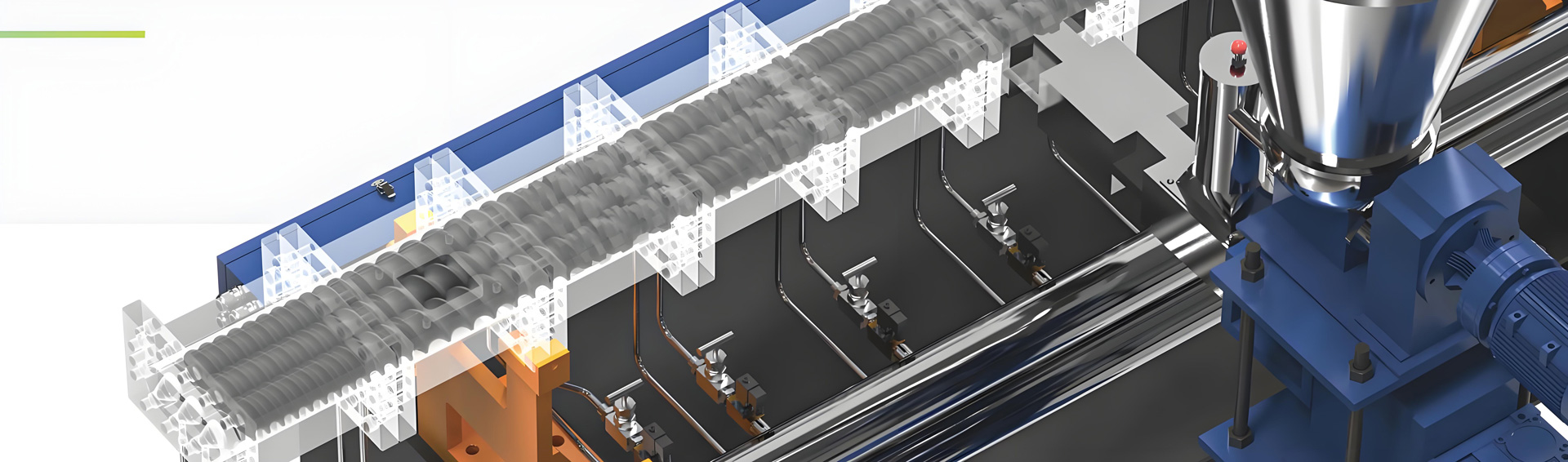
To understand how mechanical properties are enhanced, one must distinguish between dispersion and distribution. Distribution refers to the spatial arrangement of additive particles throughout the polymer. Dispersion refers to the breakdown of agglomerates into individual primary particles. A twin screw compounding extruder excels in both mechanisms due to its intermeshing co-rotating screws.
Distribution is achieved through the chaotic advection created by the screw geometry. As the material moves through the barrel, it is constantly split and recombined. This ensures that every volume element of the melt has the same composition. Dispersion, on the other hand, requires high shear stress. The intermeshing screws create intense elongational and shear flows in the nip between the two screws. This force breaks down agglomerates of fillers like calcium carbonate, talc, or carbon black, ensuring that every particle acts as a reinforcement site rather than a defect. For example, in glass-fiber reinforced nylon 66, proper dispersion ensures that fibers remain long and intact, significantly increasing tensile strength. If the fibers are broken due to poor screw design or excessive shear, the reinforcement effect is lost.
Key Mechanical Properties Enhanced by Twin Screw Extruders
The twin screw extruder is the industry standard for compounding because of its modular design, self-cleaning capabilities, and ability to handle high filler loadings. Here is how it specifically boosts critical mechanical attributes:
Tensile Strength and Modulus
Tensile strength is the maximum stress a material can withstand while being stretched. By incorporating reinforcing agents like glass fibers, carbon fibers, or nanoclays, the tensile strength can be multiplied. However, this is only possible if the extruder provides high shear mixing to separate the fibers and “wet them out” with the polymer. Kerke twin screw extruders are designed with high-torque gearboxes that maintain screw speed even under high viscosity, ensuring consistent fiber length and orientation, which directly correlates to higher modulus and strength. The modulus (stiffness) is particularly important for structural applications. A well-compounded glass-filled polypropylene can have a modulus three times higher than the unfilled resin, allowing it to replace metal in automotive parts. This is only achievable if the filler is perfectly distributed and the interface between the filler and matrix is strong, which is facilitated by the high shear and temperature control of the extruder.
Impact Resistance and Toughness
Impact resistance is the ability of a material to absorb energy and plastically deform without fracturing. This is crucial for applications like automotive bumpers, power tool housings, and protective gear. Adding elastomers or impact modifiers (like SEBS, EVA, or core-shell rubber particles) requires a compounding extruder that can create a fine, co-continuous phase morphology. The intense mixing action creates a “sea-island” structure where the rubber phase (island) is dispersed in the plastic matrix (sea). This structure arrests crack propagation. A poor extruder might cause the rubber to coalesce into large blobs, which act as stress concentrators and reduce impact strength. The precise temperature control zones in Kerke machines ensure the modifiers are mixed without degrading, preserving their toughening effect. Furthermore, for engineering plastics like Polycarbonate (PC) or Polyamide (PA), the control of moisture content via devolatilization is critical, as water acts as a plasticizer and drastically reduces impact strength (hydrolysis). A compounding extruder with a vacuum system prevents this degradation.
Thermal Stability and Heat Distortion Temperature (HDT)
For engineering plastics used in automotive under-the-hood applications or electrical components, thermal stability is crucial. Compounding extruders facilitate the addition of heat stabilizers, antioxidants, and flame retardants. Furthermore, the efficient convective heat transfer in twin screw extruders prevents localized overheating (hot spots) which can degrade the polymer chains. Shorter residence times, achievable with high-speed co-rotating twins, minimize thermal degradation, ensuring the final product retains its molecular weight and thus its mechanical integrity at elevated temperatures. The Heat Distortion Temperature (HDT) is a key metric here. By adding mineral fillers or glass fibers, the HDT can be raised significantly. For example, unfilled PBT might have an HDT of 60°C, while 30% glass-filled PBT can reach 200°C. The extruder’s ability to maintain a uniform melt temperature ensures that the filler does not degrade the polymer matrix, preserving the elevated HDT.
Creep Resistance and Fatigue Life
Creep is the tendency of a solid material to move slowly or deform permanently under constant stress. In load-bearing applications, creep resistance is vital. High-performance compounding extruders allow for the incorporation of fibrous reinforcements and cross-linking agents that lock the polymer chains in place. For example, in PEEK (Polyetheretherketone) compounding for aerospace, the extruder must maintain precise temperatures to prevent crystallinity variations that affect creep. The modular screw design of Kerke extruders allows for specific kneading zones that enhance the interaction between the polymer and the reinforcement, improving long-term creep resistance. Fatigue life, the ability to withstand cyclic loading, is also improved by eliminating voids and agglomerates that act as crack initiation sites. The high-pressure metering section of the extruder ensures a dense, void-free melt.
The Importance of L/D Ratio and Screw Configuration
The length-to-diameter (L/D) ratio of the extruder is a critical factor in determining the mechanical properties of the final compound. A longer L/D (e.g., 48:1, 52:1, or even 60:1 for specialized applications) provides more residence time for mixing and devolatilization. For mechanical compounding, an L/D of 40:1 to 52:1 is typical. However, the L/D alone is not sufficient; the internal screw configuration is paramount. The screw elements (kneading blocks, reverse elements, conveying elements) can be customized like a LEGO set. For instance, to improve the mechanical properties of a highly filled compound (e.g., 50% talc in PP), you might use more kneading blocks in the middle section to increase shear and break down agglomerates. Conversely, for shear-sensitive polymers like PVC or PTFE, the screw design must minimize shear to prevent degradation while still ensuring distribution. Kerke offers modular screw designs allowing manufacturers to tailor the shear profile to the specific material, optimizing the balance between mixing intensity and energy input. This customization is what allows a single machine to produce compounds with vastly different mechanical properties.
Cost and Price Analysis of Compounding Extruders
Investing in a compounding extruder is a significant capital expenditure (CAPEX) that requires careful financial planning. The cost varies widely based on capacity, torque, automation level, and application specificity. A standard laboratory-scale twin screw extruder might range from $30,000 to $50,000. However, industrial-scale high-torque compounding lines, like those required for heavy-duty engineering plastics or large-scale masterbatch production, can range from $150,000 to over $500,000. For specialized reactive compounding lines, the price can exceed $1 million.
When evaluating the price, consider the following detailed cost drivers:
1. Torque Rating: Higher torque gearboxes (e.g., 12-18 Nm/cm³) are significantly more expensive than standard units (8-10 Nm/cm³) but are essential for high-viscosity compounds like PPS or LCP. The gearbox alone can account for 30-40% of the machine cost.
2. Material of Construction: For abrasive fillers like glass fiber, mineral fillers, or carbon black, standard nitrided steel barrels are insufficient. Screws and barrels made of high-speed steel (HSS), bimetallic alloys, or even powder metallurgy (PM) steel are required. These specialized materials can increase the barrel and screw cost by 20-50%.
3. Control System: Advanced PLC and SCADA systems with recipe management, remote monitoring, and torque rheometer integration add to the upfront cost but reduce labor costs and waste. A basic control panel might cost $5,000, while a fully automated Industry 4.0 system can cost $30,000+.
4. Energy Efficiency: Kerke extruders utilize energy-efficient motors (IE3/IE4) and high-efficiency heaters. While the upfront cost might be slightly higher, the operational cost (OPEX) is lower. A typical 1000 kg/h compounding line might consume 0.25-0.35 kWh per kg of material. Reducing this by 15% through efficient design can save tens of thousands of dollars annually in electricity. Over a 10-year lifecycle, energy savings can offset 10-15% of the purchase price.
5. Auxiliary Equipment: The price analysis must include the cost of the vacuum system, pelletizing system, and feeding systems. A high-quality underwater pelletizing system can add $50,000 to $100,000 to the total line cost.
In terms of return on investment (ROI), a high-quality compounding extruder improves product yield and quality. Reducing scrap rates from 5% to 1% by using a Kerke machine can pay back the machine cost in 1-2 years, depending on the profit margin of the final product. Additionally, the ability to produce high-value compounds (e.g., carbon fiber reinforced PEEK) commands a higher price per kilogram, significantly improving gross margins. The cost of *not* having a proper extruder—in terms of quality claims, downtime, and waste—is often far higher than the price of the machine itself.
Why Choose Kerke Compounding Extruder?
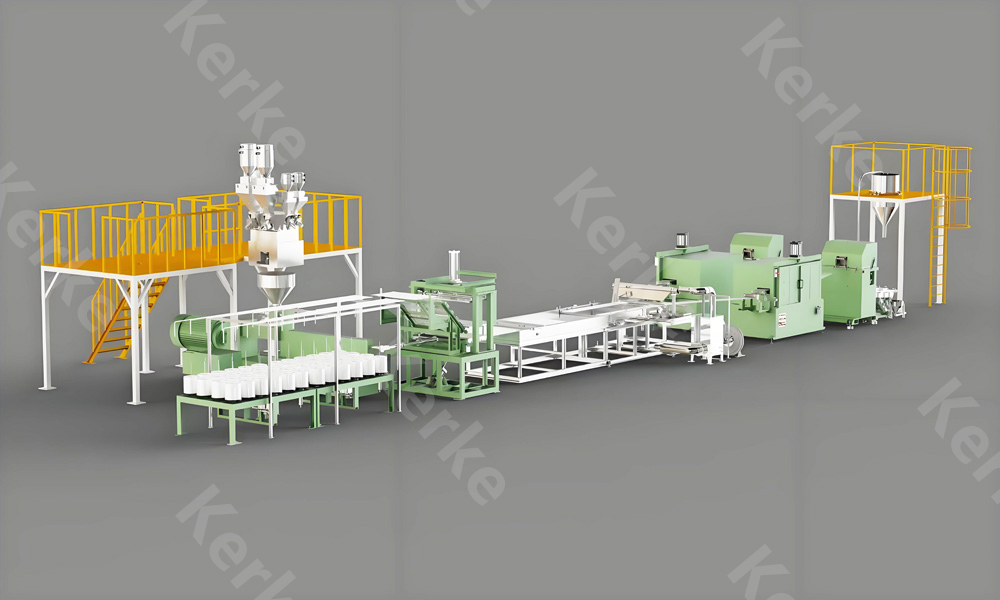
Kerke Extruder has established itself as a leader in the extrusion industry by focusing on durability, precision, and application-specific engineering. Their compounding extruders feature a patented screw design that ensures excellent mixing efficiency with minimal energy consumption. The barrels are precision-bored and nitrided, offering superior wear resistance compared to standard chrome-plated barrels. For manufacturers looking to upgrade their mechanical properties, Kerke offers turnkey solutions including gravimetric feeding systems, melt pumps, and advanced water-ring or underwater pelletizing lines. Their global service network ensures that maintenance and spare parts are readily available, minimizing downtime. By choosing Kerke, you are not just buying a machine; you are investing in a process solution that guarantees consistent mechanical performance for your plastic products. Kerke’s R&D team works closely with clients to test materials in their lab, ensuring the selected L/D and screw configuration will deliver the required mechanical properties before the machine is even built.
Case Study: Improving Automotive Part Performance
Consider a mid-sized automotive parts manufacturer producing intake manifolds. Initially, they used a single-screw extruder to compound nylon with 30% glass fiber. The parts were failing pressure tests due to weak weld lines and inconsistent stiffness. After upgrading to a Kerke twin screw compounding extruder with a 52:1 L/D and high-torque gearbox, they achieved a 25% increase in tensile strength and a 40% improvement in impact resistance. The improved dispersion of glass fibers eliminated weak spots, and the precise temperature control prevented nylon degradation. The initial investment of $350,000 was recouped in 18 months through reduced scrap rates and the ability to win contracts for higher-performance engine components.
Conclusion
The mechanical properties of plastic products are directly linked to the quality of the compounding process. A twin screw compounding extruder provides the necessary shear, thermal control, and residence time to create homogeneous blends with superior strength, toughness, and stability. While the initial investment in a high-torque machine like those from Kerke Extruder involves careful cost analysis, the long-term benefits of reduced waste, higher product quality, and energy efficiency make it a strategic asset for any plastic manufacturing facility. Whether you are processing standard polyolefins or high-performance engineering plastics, the right extruder technology is the foundation of material excellence. By understanding the intricate relationship between screw design, shear energy, and material morphology, manufacturers can unlock new levels of performance in their plastic products.