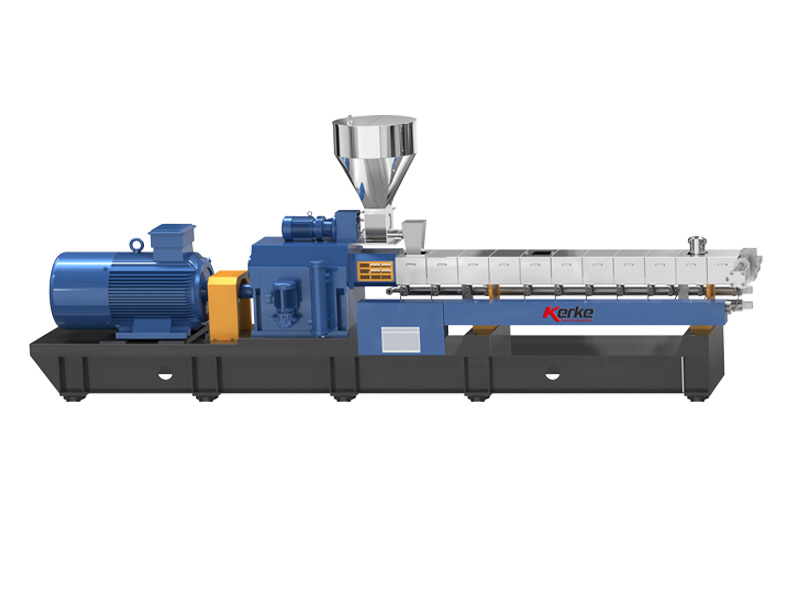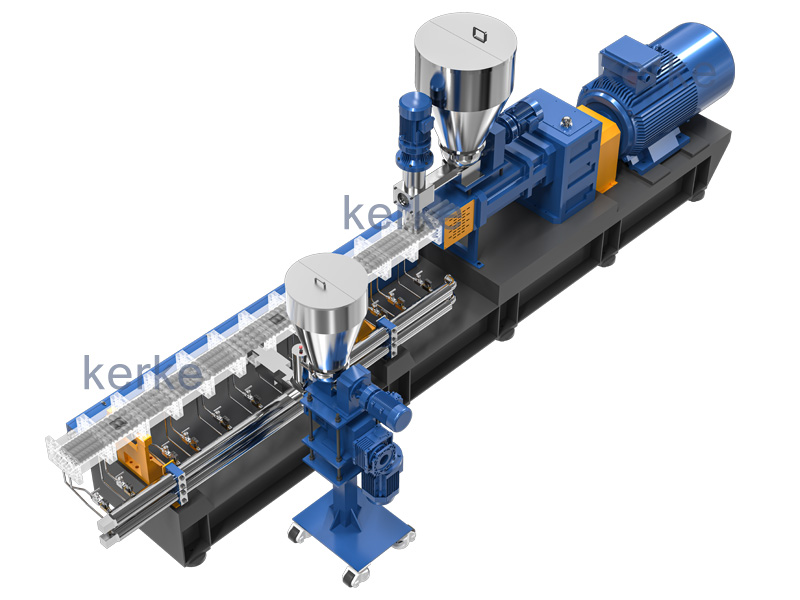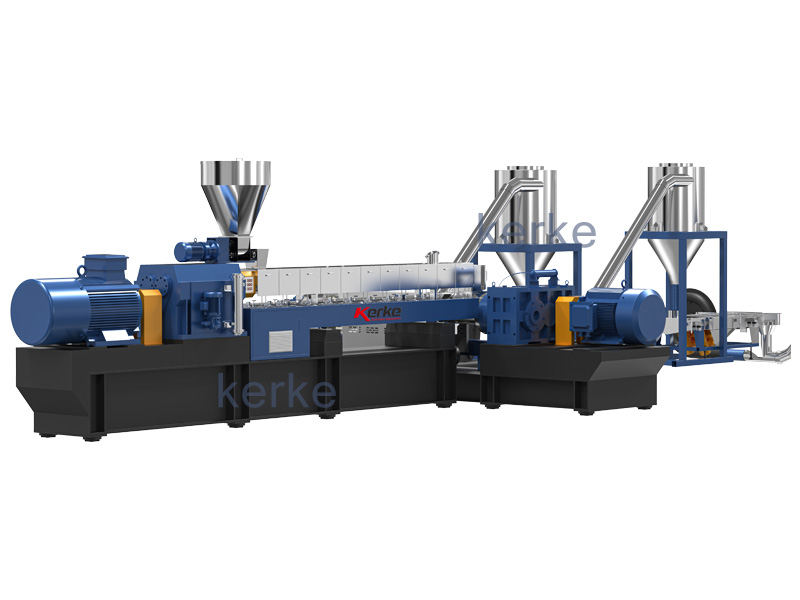
The die head is the final gateway in an extrusion system, shaping the molten plastic into the desired profile or form. In a twin screw extruder setup, particularly for compounding and masterbatch applications, the die head selection is critical. It determines the product quality, output rate, and even the energy consumption of the entire line. Choosing the wrong die can lead to issues like melt fracture, uneven flow, excessive back pressure, and frequent maintenance. This article provides a detailed, technical guide on selecting the optimal die head for your twin screw extruder, highlighting the expertise and product range available from Kerke Extruder. We will explore the nuances of strand dies, underwater dies, and profile dies, including detailed cost and maintenance analysis.
Understanding the Function of the Die Head
The primary function of the die head is to distribute the polymer melt evenly and shape it into a continuous profile. In compounding extruders, the die is most commonly used for strand pelletizing or underwater pelletizing. However, it can also be used for profile extrusion (window frames, pipes) or sheeting. The die must handle high pressures (often 200-300 bar) and temperatures (up to 350°C) while maintaining dimensional accuracy. The design of the die land (the straight section before the exit) is crucial for stabilizing the flow and eliminating sharkskin or melt fracture effects. The die is not just a shaping tool; it is a precision meter that controls the final dimensions and surface finish of the product. For masterbatch applications, the hole pattern in the die face directly affects the cutting efficiency and pellet shape.
Types of Die Heads for Twin Screw Extruders
When selecting a die head, you must first identify the application. Here are the most common types used in twin screw compounding, with technical specifications and use cases:
Strand Pelletizing Die Head
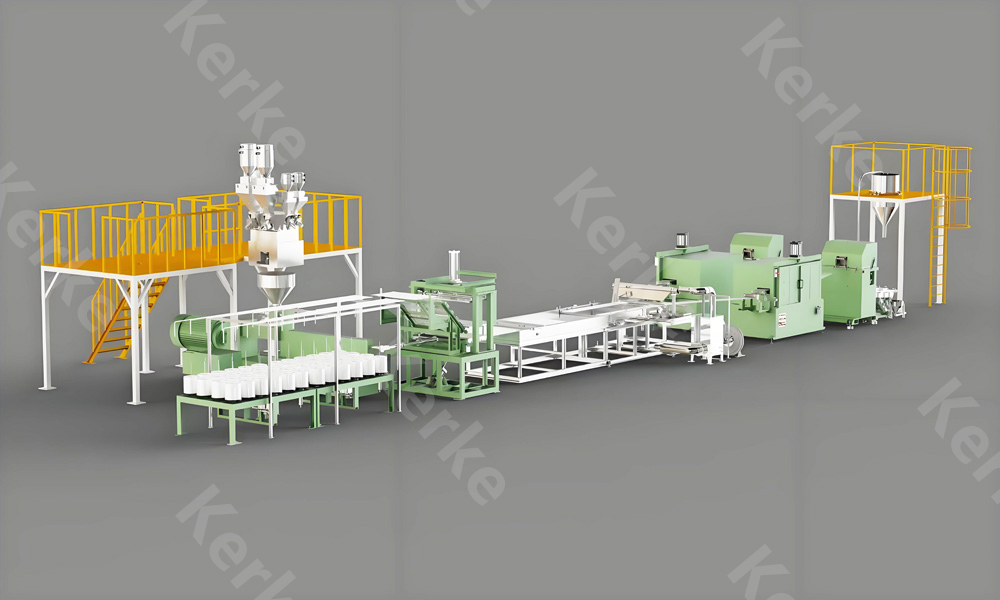
This is the most common type for compounding and masterbatch production. The molten plastic is extruded through multiple holes in the die face, forming strands. These strands are then cooled in a water bath and cut by a pelletizer. The key consideration here is hole density and land length. For glass-filled materials, the land length must be sufficient to prevent “drool” (material leaking out of the die face due to pressure) but not so long as to cause excessive pressure build-up or material degradation. Typical land lengths range from 2mm to 10mm depending on the viscosity. Kerke offers strand dies with interchangeable insert plates, allowing flexibility in pellet size (e.g., cylindrical, flat, or tri-lobal) and hole count (from 4 to 100+ holes). This modularity allows processors to adapt to different production rates without changing the entire die body. The material of the die plate is critical; for abrasive compounds, hardened tool steel or tungsten carbide is recommended to prevent hole enlargement over time.
Underwater Pelletizing Die Head
Underwater pelletizing is preferred for heat-sensitive materials (like PVC or TPU) or for producing perfectly spherical pellets with no water bath. The die face is submerged in a cutting chamber filled with process water, and a rotating cutter slices the strands immediately upon exit. This requires a very precise die design to ensure the cutter blades do not damage the die face. The tolerance for the die holes is extremely tight (often within 0.01mm) to ensure clean cuts. These dies are more expensive due to the complex water channels, high-precision machining, and the need for corrosion-resistant materials (often stainless steel 316L or duplex steel). The cost of an underwater die head can be 30-50% higher than a strand die, but it eliminates the need for a large water bath and dryer, saving significant floor space and labor. Kerke underwater dies feature a “self-cleaning” design where water flow scours the die face, reducing maintenance frequency.
Film and Sheet Dies (T-Die and Blown Die)
If the twin screw extruder is used for reactive extrusion or specialized film compounding (e.g., barrier films), a T-die (for cast film) or a Spider die (for blown film) is used. These require sophisticated internal manifolds to ensure uniform flow across the entire width of the die (which can be several meters). The challenge here is “die lip flexibility”—the ability to adjust the gap across the width to correct for thickness variations. Modern T-dies use automatic lip adjustment systems (thermal or mechanical bolts) controlled by the extruder’s PLC. The cost analysis here focuses on width uniformity; a cheaper die might produce “thick edges” and “thin center” film, leading to high scrap rates. For a 2-meter T-die, the cost can range from $40,000 to $80,000 depending on the automation level.
Critical Factors in Die Head Selection
Material Compatibility and Wear Resistance
The die head is subjected to high pressure, friction, and corrosive environments (from flame retardants or acids). For abrasive compounds containing glass fiber, silica, or carbon black, the die material must be extremely hard. Standard tool steel (D2 or H13) is common for general purpose polyolefins, but for highly abrasive applications (like 40% glass-filled nylon), powdered metallurgy (PM) steel or tungsten carbide inserts are recommended. While PM steel dies cost 2-3 times more than standard steel, their lifespan can be 5-10 times longer, making them cost-effective in the long run. Kerke Extruder supplies die heads made from high-grade materials tailored to the specific abrasiveness of your compound. They also offer bimetallic barrels and screws that match the die material to ensure uniform wear characteristics across the extrusion line.
Pressure Rating and Flow Distribution
The die must be rated for the maximum pressure of your extruder. A twin screw extruder can generate pressures up to 200-300 bar (3000-4500 psi), and some high-torque lines can exceed 400 bar. If the die is not rated for this, it may deform (bulge), causing dimensional inaccuracies. Computational Fluid Dynamics (CFD) is often used in modern die design to simulate flow and eliminate “dead spots” where material can degrade (causing black specks). Kerke utilizes advanced simulation software to design dies that ensure laminar flow and self-cleaning capabilities, reducing the frequency of die cleaning. The manifold design should be streamlined to minimize residence time, which is critical for heat-sensitive materials.
Heating and Cooling Zones
Precise temperature control is vital. The die usually has multiple heating zones (top, bottom, body, and lip) to control the temperature profile across the face. Some dies also require internal cooling channels (using chilled water or oil) to prevent the “freeze-off” of material in underwater systems or to control the melt temperature for heat-sensitive polymers to prevent degradation. The complexity of the temperature control system adds to the price. A basic die might have 2 zones, while a high-precision film die might have 10+ zones with independent PID control. Improper heating can cause “die drool” (leakage) or surface defects like “sharkskin.” Kerke dies are equipped with high-wattage cartridge heaters and thermocouples placed directly in the melt channel for accurate feedback.
Cost and Price Analysis of Die Heads
The price of a die head is highly variable and often represents 10-15% of the total extruder line cost. For a standard 150mm strand die for masterbatch, the price might range from $5,000 to $15,000. For a complex 300mm underwater pelletizing die with automatic screen changer, the price can exceed $50,000. Custom-engineered dies for special profiles (e.g., wood-plastic composite decking profiles) can cost upwards of $80,000.
Cost breakdown typically includes:
1. Raw Material: High-grade steel blocks (H13, D2, PM steel) are expensive. A large die block can weigh 500-1000 kg.
2. Machining: CNC machining, EDM (Electrical Discharge Machining) for hole drilling, and wire cutting are labor-intensive processes. A complex die with deep holes might take 4-8 weeks to manufacture.
3. Assembly and Testing: Hydrostatic pressure testing (to 1.5x working pressure) and polishing (to mirror finish for PVC) add to the cost.
4. Spare Parts: It is advisable to purchase a spare die plate (face plate) which costs roughly 20-30% of the total die cost. This allows for quick changes between different hole configurations without replacing the whole die body. For a 20-hole die, a spare plate might cost $2,000.
5. Engineering Fees: For custom CFD analysis and design, engineering fees can add $5,000-$10,000.
When budgeting, consider the “Cost of Ownership.” A cheaper die might save $5,000 upfront but could cause $20,000 in losses due to downtime for cleaning or poor pellet quality (fines). Investing in a high-quality Kerke die head with optimized flow channels ensures higher throughput and longer intervals between maintenance. The ROI on a premium die is often realized within 6 months through reduced scrap and higher line speeds.
Maintenance and Troubleshooting
Proper maintenance extends die life significantly. Common issues include “die drool” (leakage), which can be mitigated by using anti-stick coatings (like PTFE or chrome plating) or high-land-length designs. Carbon buildup is another issue, often solved by periodic cleaning with copper wire brushes or chemical cleaners (but care must be taken not to scratch the surface). Kerke die heads are designed with easy-disassembly features, allowing operators to clean the internals without heavy machinery. Regular inspection of the die land for scratches is crucial; even a minor scratch can ruin the surface finish of the extrudate, leading to product rejection.
Troubleshooting Guide:
1. Uneven Flow: Check heater bands for burnout. Verify that the manifold is not clogged with degraded material.
2. Surface Roughness: This indicates a scratch in the die land or contamination. Polish the die or perform a chemical clean.
3. Excessive Pressure: This could mean the screen pack is clogged or the die holes are partially blocked. Increase the backflush frequency.
Conclusion
Selecting the right die head for a twin screw extruder is a balance between initial cost, application requirements, and long-term durability. Whether you need a simple strand die for masterbatch or a sophisticated underwater die for engineering plastics, the choice impacts your bottom line. By considering factors like material abrasiveness, pressure rating, and flow distribution, and by choosing a reputable supplier like Kerke Extruder, you can ensure a smooth, efficient, and high-quality extrusion process. Remember, the die is the final touchpoint; getting it right ensures your product meets the market’s highest standards. A well-chosen die head is not an expense; it is an investment in quality and consistency that pays dividends in reduced waste and higher customer satisfaction.