Plastic pipes and profiles represent critical components in modern infrastructure, construction, and industrial applications, demanding materials that deliver exceptional durability, color stability, and environmental resistance. Masterbatch for plastic pipe and profile applications serves as a vital technology for enhancing the performance, aesthetics, and longevity of these essential products. From water distribution systems and drainage pipes to window profiles and cable conduits, the quality of masterbatch directly impacts the service life and performance characteristics of plastic pipe and profile products. This comprehensive guide explores the technical requirements, formulation strategies, production considerations, and applications of masterbatch specifically designed for plastic pipe and profile manufacturing, with particular emphasis on UV resistance, color stability, and long-term performance requirements.
Understanding Plastic Pipe and Profile Applications
Plastic pipes and profiles encompass a diverse range of products serving various functions across multiple industries and applications. Understanding these applications provides essential context for masterbatch formulation and selection, as different applications impose distinct performance requirements on materials.
Water Supply and Distribution Pipes
Water supply pipes represent one of the most critical applications for plastic pipe systems, carrying potable water from treatment facilities to consumers. These pipes must maintain integrity under continuous pressure while ensuring water quality and safety. Polyvinyl chloride (PVC) and high-density polyethylene (HDPE) represent the most common materials for water distribution pipes, each offering specific advantages for different applications. Masterbatch for water supply pipes must meet stringent potable water contact regulations while providing UV resistance for above-ground installations. The formulation must prevent leaching of substances that could affect water quality or pose health risks to consumers. Color coding through masterbatch enables identification of different pipe types and functions, with standard colors such as blue for potable water and green for wastewater providing universal identification systems.
Drainage and Sewage Pipes
Drainage and sewage systems require plastic pipes capable of handling challenging operating conditions including chemical exposure, abrasion, and biological degradation. These applications typically utilize PVC, polypropylene (PP), and high-density polyethylene materials selected for their chemical resistance and mechanical properties. Masterbatch for drainage applications must provide excellent chemical resistance to acids, alkalis, and other substances commonly found in wastewater systems. The formulation must resist abrasion from suspended solids and particulate matter flowing through the pipes. UV resistance remains important for above-ground installations, particularly for roof drainage systems and exposed components of sewage treatment infrastructure. Color stability ensures that identification colors remain distinct throughout the service life of the drainage system.
Gas Distribution Pipes
Gas distribution pipes transport natural gas and other combustible gases from transmission networks to end users, demanding materials with exceptional safety characteristics. Medium-density polyethylene (MDPE) and HDPE represent the preferred materials for gas distribution due to their flexibility, corrosion resistance, and excellent mechanical properties. Masterbatch for gas pipes must provide superior UV resistance for above-ground installations while maintaining color stability for identification purposes. Yellow coloration through masterbatch provides universal identification for gas pipes, enabling quick recognition by construction and maintenance personnel. The formulation must ensure that colorants do not compromise the mechanical properties or chemical resistance required for safe gas transport. Long-term stability under pressure and temperature variations represents a critical requirement for gas pipe masterbatch formulations.
Construction Profiles and Building Materials
Construction profiles encompass window and door frames, exterior trim, decking, fencing, and various architectural components that form integral parts of building envelopes and structures. These applications demand materials that withstand extreme weather conditions including UV radiation, temperature fluctuations, and moisture exposure. PVC, wood-plastic composites, and various engineering plastics serve as common materials for construction profiles. Masterbatch for these applications must provide exceptional UV resistance to prevent degradation and fading from continuous sun exposure. Color stability is critical for maintaining aesthetic appearance throughout the product’s service life, which can exceed 25 years for exterior building components. Weatherability testing according to standards such as ASTM D4329 and ISO 4892 ensures formulation performance under accelerated weathering conditions.
Cable Conduits and Electrical Applications
Cable conduits and electrical protection systems provide critical infrastructure for protecting electrical wiring and cables in residential, commercial, and industrial settings. These applications require materials with excellent fire resistance, mechanical strength, and environmental durability. PVC, HDPE, and modified polypropylene materials serve common conduit applications, each selected for specific performance characteristics. Masterbatch for cable conduits must provide flame retardant properties while maintaining color coding for identification of different cable types and voltage levels. UV resistance ensures outdoor installations maintain performance and appearance throughout their service life. The formulation must resist degradation from exposure to various chemicals and environmental conditions encountered in installation and service.
UV Resistance Requirements and Technology
UV resistance represents one of the most critical performance requirements for plastic pipe and profile masterbatch, particularly for applications exposed to outdoor conditions. Understanding UV degradation mechanisms and protection strategies enables formulation of masterbatch that delivers exceptional long-term performance.
UV Degradation Mechanisms
Ultraviolet radiation from sunlight initiates photochemical degradation processes in plastics, leading to material degradation and performance loss. The UV spectrum, particularly wavelengths between 290-400 nanometers, contains sufficient energy to break chemical bonds in polymer chains, initiating degradation processes. Photochemical oxidation occurs when UV radiation combines with oxygen to create free radicals that attack polymer chains, leading to chain scission and crosslinking reactions. Surface degradation manifests as chalking, cracking, and loss of mechanical properties as the outer surface degrades faster than the bulk material. Pigment and colorant degradation occurs as UV radiation breaks down colorant molecules, resulting in fading and color changes that compromise both appearance and identification functions.
UV Stabilizer Systems
Effective UV protection requires comprehensive stabilizer systems that absorb UV radiation and quench free radicals before damage occurs. Hindered amine light stabilizers (HALS) represent the most effective UV stabilizer class for polyolefin applications, providing long-term protection through a regenerative mechanism. HALS work by scavenging free radicals formed during UV exposure, preventing them from attacking polymer chains. UV absorbers such as benzotriazoles and benzophenones complement HALS by absorbing harmful UV radiation and converting it to harmless heat energy. Antioxidants, particularly hindered phenolic antioxidants, provide additional protection against thermal oxidation that can accelerate UV degradation. The synergistic combination of these stabilizer classes delivers comprehensive UV protection for demanding pipe and profile applications.
Carbon Black UV Protection
Carbon black represents the most effective and economical UV protection material for black pipe and profile applications. The carbon black particles act as efficient UV absorbers, protecting the polymer matrix through multiple mechanisms. Carbon black absorbs UV radiation across the entire UV spectrum, converting harmful radiation to harmless heat. The particles also scatter visible light, reducing UV penetration into the bulk material. High-quality carbon black with appropriate particle size distribution provides optimal UV protection while maintaining mechanical properties. Loading levels typically range from 1.5-2.5% for optimal UV protection without negatively affecting processing or final properties. Special conductive carbon black formulations provide both UV protection and electrical conductivity for applications requiring electrostatic dissipation.
Color Stability Requirements
Color stability is essential for maintaining product identification, aesthetic appeal, and brand consistency throughout the service life of plastic pipes and profiles. Understanding color degradation mechanisms and stabilization strategies enables formulation of masterbatch that delivers exceptional long-term color performance.
Color Degradation Mechanisms
Color degradation in plastic pipes and profiles occurs through multiple mechanisms that impact both organic and inorganic colorants. UV-induced fading affects organic colorants as radiation breaks down pigment molecules, changing color intensity and hue. Chemical degradation occurs when aggressive chemicals in the environment react with colorants, causing discoloration or color shifts. Heat-induced degradation results from processing temperatures and long-term exposure to elevated service temperatures, particularly for dark colors that absorb more solar energy. Migration of plasticizers and other additives can affect colorant distribution, leading to inconsistent coloration over time. Surface abrasion removes the outer color layer, revealing different colored underlying material and creating appearance defects.
Inorganic Pigment Advantages
Inorganic pigments provide superior color stability for pipe and profile applications due to their inherent resistance to environmental factors. Metal oxides such as iron oxides, chromium oxides, and titanium dioxide offer exceptional light fastness and chemical resistance. Iron oxide pigments provide earth tones from yellows through browns to reds, with excellent outdoor durability and chemical resistance. Chrome oxide green delivers stable green colors with outstanding light fastness and thermal stability. Titanium dioxide provides bright white coloration with excellent UV resistance and opacity, serving as both a colorant and UV protector. The superior stability of inorganic pigments makes them ideal choices for demanding pipe and profile applications where long-term color consistency is critical.
Organic Pigment Selection
Organic pigments offer brighter, more intense colors compared to inorganic options but require careful selection for pipe and profile applications. High-performance organic pigments such as phthalocyanines, quinacridones, and perylenes provide excellent light fastness and chemical resistance. Phthalocyanine blue and green pigments deliver intense colors with outstanding light fastness ratings of 7-8 on the Blue Wool scale. Quinacridone reds and violets provide exceptional color strength and light fastness, ideal for applications requiring vibrant colors. Perylene reds and maroons offer excellent weather resistance and thermal stability for demanding applications. Selecting organic pigments with appropriate chemical structure ensures they maintain color performance through long-term exposure to environmental stressors.
Long-Term Performance Requirements
Long-term performance represents the ultimate measure of masterbatch quality for plastic pipe and profile applications, as these products must maintain performance characteristics over service lives often exceeding 25-50 years. Understanding long-term performance requirements enables formulation strategies that deliver exceptional durability and reliability.
Mechanical Property Retention
Maintaining mechanical properties throughout the service life is essential for ensuring structural integrity and functional performance of pipes and profiles. Tensile strength and elongation at break must remain within specification limits after long-term environmental exposure. Impact strength retention ensures resistance to damage from external forces, particularly important for underground pipes subject to soil movement and loading. Creep resistance prevents deformation under sustained loads, critical for pipes carrying pressurized fluids over extended periods. Fatigue resistance ensures performance under cyclic loading conditions that occur in many applications, particularly pipes subject to pressure fluctuations and thermal cycling. Masterbatch formulation must ensure that colorants and additives do not negatively affect these mechanical properties over long-term exposure to environmental conditions.
Environmental Stress Crack Resistance
Environmental stress crack resistance (ESCR) represents a critical property for pipes exposed to aggressive chemicals and stress conditions. ESCR failure occurs when cracks initiate and propagate under the combined action of chemical exposure and stress, potentially leading to catastrophic failure. Pipe applications involving exposure to detergents, oils, fuels, and other chemicals require materials with exceptional ESCR performance. Masterbatch formulation must avoid components that could reduce ESCR performance, particularly certain low-molecular-weight additives that can migrate to the surface and create stress concentrations. Testing according to ASTM D1693 and other standards ensures ESCR performance under various chemical exposures and stress conditions. Proper material selection and stabilizer systems help maintain ESCR performance throughout the service life of pipe and profile products.
Chemical Resistance
Chemical resistance ensures that pipes and profiles maintain performance when exposed to various chemicals encountered in service environments. Acid resistance prevents degradation from acidic substances, particularly important for drainage and wastewater applications. Alkali resistance ensures performance in alkaline environments, including concrete encasement and exposure to alkaline soils. Salt resistance prevents degradation in marine environments and areas where deicing salts are used. Resistance to hydrocarbons and fuels ensures performance for pipes handling petroleum products and fuel distribution systems. Masterbatch formulation must ensure that colorants and additives maintain stability under chemical exposure without leaching, discoloration, or degradation that could compromise pipe performance or create environmental contamination.
Material Selection and Formulation Strategies
Successful masterbatch formulation for plastic pipe and profile applications requires careful consideration of carrier resin selection, pigment and additive selection, and stabilization strategies. The formulation process balances performance requirements with processing characteristics and cost considerations.
Carrier Resin Selection
Carrier resin selection represents a critical decision affecting masterbatch performance, processing, and final properties. For PVC applications, PVC carrier resins with appropriate molecular weight distribution and thermal stability provide optimal compatibility and processing. Polyethylene carrier resins for PE pipe applications must match the base resin type (HDPE, MDPE, LDPE) to ensure compatibility and prevent property degradation. Polypropylene carriers for PP applications provide optimal dispersion and compatibility while maintaining processability. The molecular weight of carrier resin affects pigment dispersion and processing characteristics, with medium molecular weight typically providing optimal balance. Carrier resin melt flow index should be compatible with processing conditions and final application requirements to ensure proper mixing and dispersion.
Pigment and Additive Selection
Pigment selection must balance color requirements with performance characteristics and regulatory compliance. High-purity pigments with low impurity levels provide better color consistency and performance. Pigment particle size distribution affects dispersion quality and final appearance, with optimal particle size ranging from 0.1-5 micrometers depending on application. Pigment loading levels typically range from 5-50% depending on color strength requirements and application demands. Functional additives such as UV stabilizers, antioxidants, and processing aids must be selected for compatibility with both carrier resin and base polymer. Additive synergies must be considered to ensure that combinations do not interfere with each other’s performance or create negative interactions that could affect final product quality.
Stabilizer System Design
Comprehensive stabilizer systems ensure long-term performance under demanding environmental conditions. Primary antioxidants, typically hindered phenolic types, protect during processing and provide initial protection against thermal degradation. Secondary antioxidants, usually phosphite or thioester types, provide long-term thermal stability and complement primary antioxidant performance. HALS UV stabilizers provide regenerative UV protection that maintains effectiveness over long-term exposure. UV absorbers complement HALS by absorbing UV radiation before it can damage polymer chains. Processing aids such as lubricants and internal mold releases improve processing characteristics without negatively affecting final properties. The stabilizer system must be balanced to provide comprehensive protection while avoiding negative interactions that could reduce effectiveness.
Production Considerations and Equipment Requirements
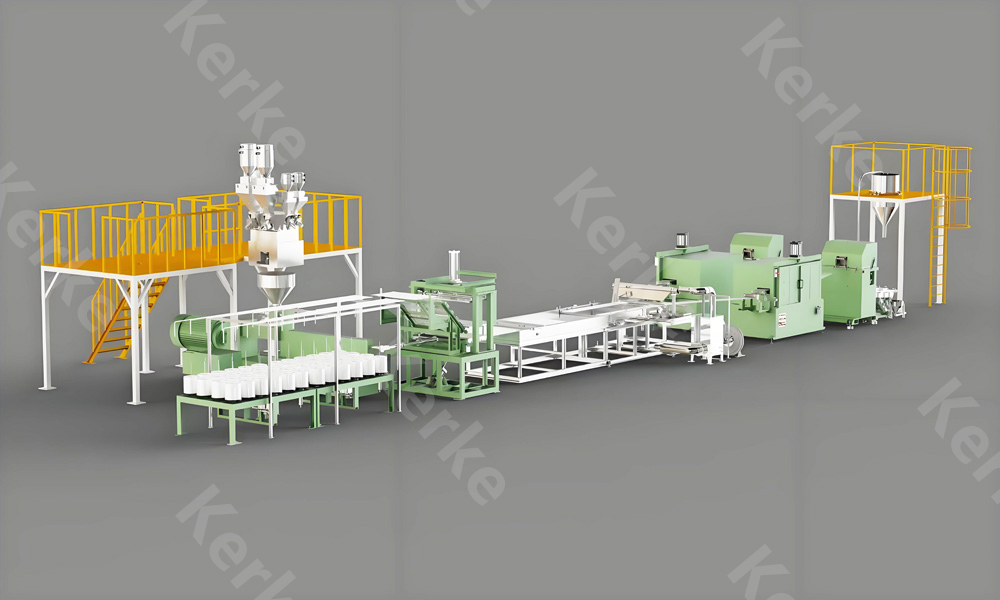
Producing high-quality masterbatch for plastic pipe and profile applications requires specialized equipment and processes designed to achieve optimal dispersion, consistent quality, and regulatory compliance. Advanced twin screw extruder technology plays a crucial role in achieving the dispersion quality and consistency required for demanding pipe and profile applications.
Twin Screw Extruder Technology
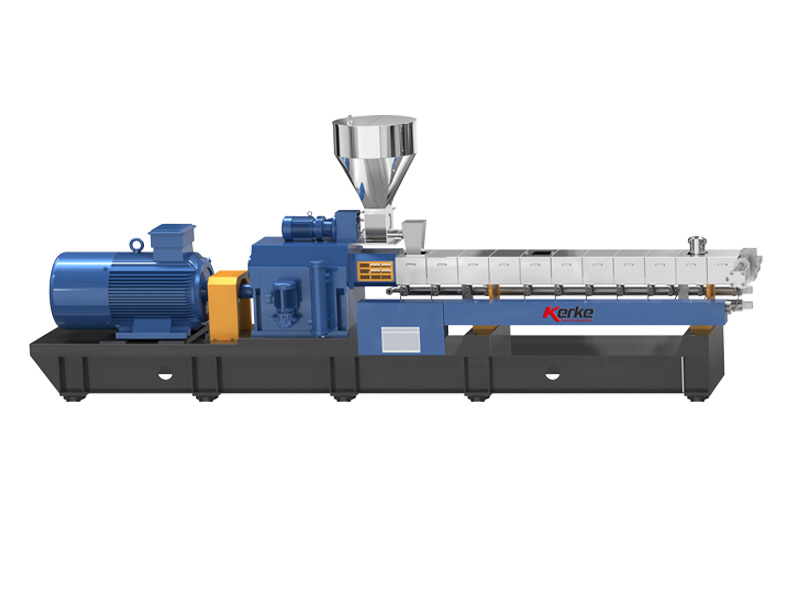
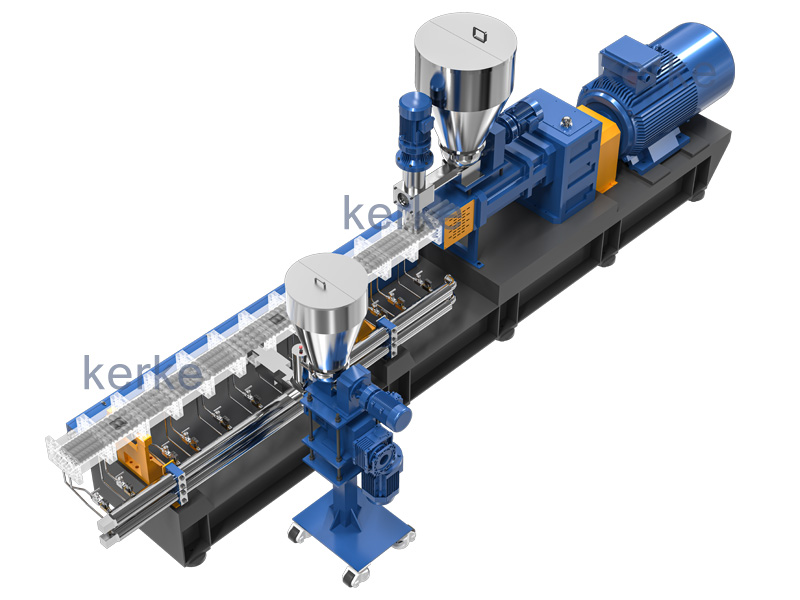
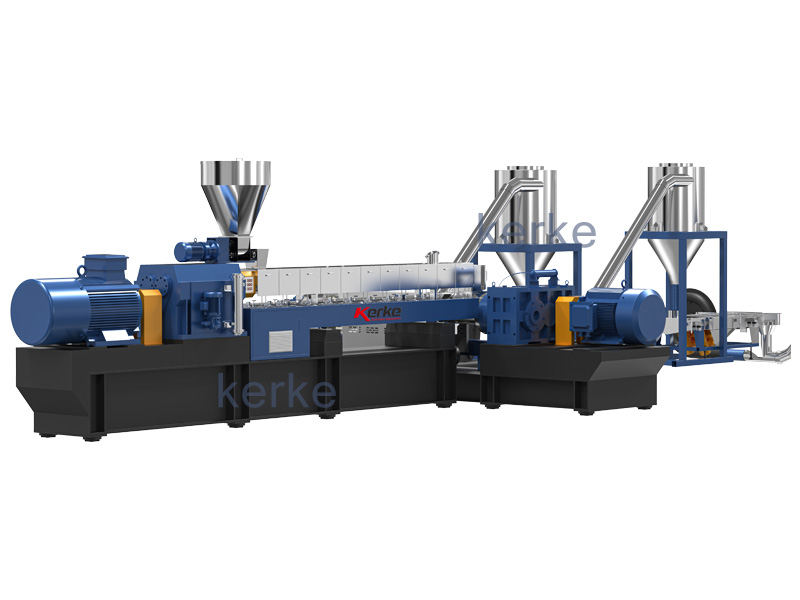
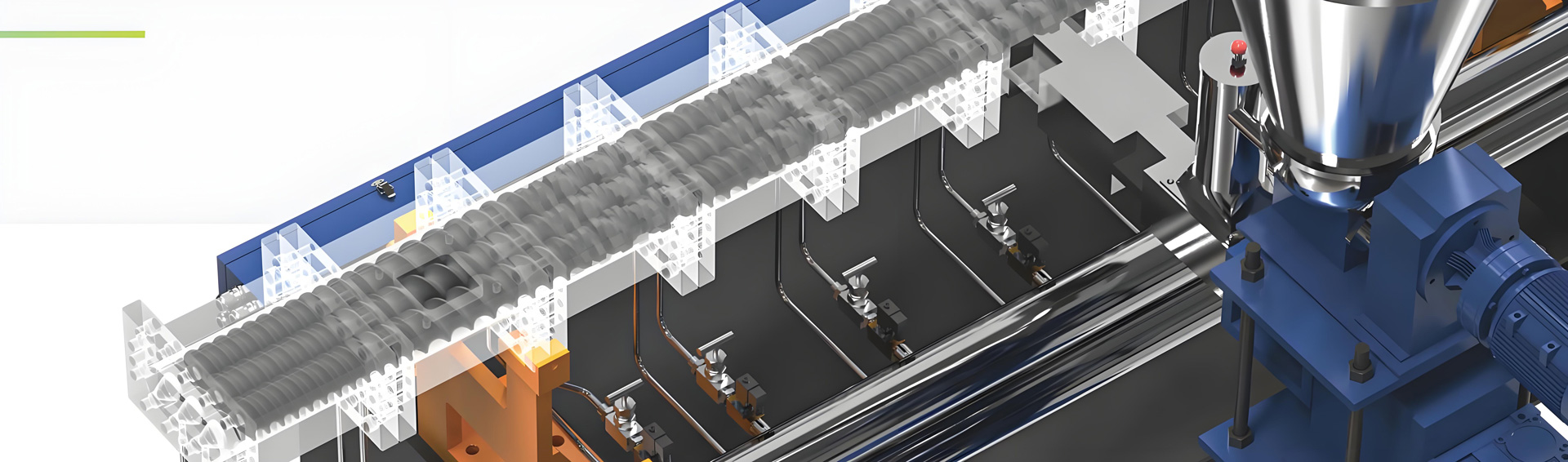
Kerke KTE series parallel co-rotating twin screw extruders provide the advanced mixing performance required for producing high-quality masterbatch for pipe and profile applications. The modular screw configuration allows optimization of mixing elements for specific formulations, with different kneading block arrangements providing varying levels of distributive and dispersive mixing. The intensive mixing action of intermeshing co-rotating screws ensures uniform dispersion of pigments and additives throughout the carrier resin. Precise temperature control along the barrel enables processing of heat-sensitive materials without degradation. High torque transmission ensures adequate mixing energy for high-viscosity formulations. Vacuum venting removes volatiles and moisture that could affect product quality and final pipe or profile performance.
Process Control Requirements
Consistent masterbatch quality requires comprehensive process control systems monitoring key parameters throughout production. Temperature control at multiple barrel zones ensures thermal profiles remain within specification for optimal pigment dispersion and resin stability. Screw speed and feed rate control provide appropriate residence time for complete dispersion without excessive thermal history. Vacuum venting control ensures effective removal of volatiles and moisture while maintaining process stability. Pressure monitoring provides indication of process conditions and potential issues requiring adjustment. Inline quality monitoring, including color measurement and dispersion analysis, provides real-time feedback for immediate correction of process deviations before they affect product quality.
Quality Control Systems
Comprehensive quality control systems ensure consistent masterbatch quality meeting the demanding requirements of pipe and profile applications. Incoming material inspection verifies raw material quality and compatibility with specifications. Dispersion analysis evaluates pigment distribution uniformity using microscopy and image analysis techniques. Color analysis confirms that color meets specification and remains consistent from batch to batch. Accelerated weathering testing according to ASTM and ISO standards verifies UV resistance and color stability performance. Mechanical property testing ensures that masterbatch does not negatively affect the mechanical properties of final pipe or profile products. Chemical resistance testing verifies performance under various environmental exposure conditions.
Cost Analysis and Economic Considerations
Masterbatch for plastic pipe and profile applications involves significant economic considerations affecting both production costs and total project economics. Understanding these cost factors enables manufacturers to optimize formulations and processes for cost-effective production while maintaining performance requirements.
Raw Material Costs
Raw material costs represent a significant component of masterbatch production for pipe and profile applications. Carrier resins typically range from 1.20-2.50 USD per kilogram depending on resin type and quality requirements. Pigment costs vary widely based on type, performance characteristics, and color, ranging from 5-50 USD per kilogram for standard colors to over 100 USD per kilogram for specialty high-performance pigments. UV stabilizers and antioxidants add 3-8 USD per kilogram to material costs, with HALS representing the most expensive component. Processing aids and dispersing agents add 1-3 USD per kilogram. Total raw material costs for pipe and profile masterbatch typically range from 3-15 USD per kilogram depending on formulation complexity and performance requirements.
Production Costs
Production costs for pipe and profile masterbatch encompass equipment, energy, labor, and quality control expenses. Kerke KTE series twin screw extruders for pipe and profile masterbatch production typically cost 120,000-350,000 USD depending on capacity and configuration. Energy consumption typically ranges from 0.15-0.30 kWh per kilogram of masterbatch produced, translating to 0.02-0.05 USD per kilogram at typical industrial electricity rates. Labor costs typically add 0.05-0.15 USD per kilogram depending on automation level and production volume. Quality control testing adds 0.10-0.25 USD per kilogram for comprehensive testing including color, dispersion, and performance testing. Total production costs typically range from 0.22-0.50 USD per kilogram, with higher costs for specialized formulations requiring extensive testing.
Cost-Performance Optimization
Optimizing the balance between cost and performance requires careful formulation strategy and supplier selection. Using inorganic pigments for standard colors provides better cost-performance ratio compared to organic pigments, particularly for applications where color intensity is not critical. Optimizing pigment loading levels achieves target coloration with minimum pigment usage, reducing material costs. Selecting appropriate stabilizer systems provides required performance without over-stabilization, which adds unnecessary cost. Working with reliable suppliers ensures consistent quality and reduces quality control costs from rejected batches. Process optimization reduces energy consumption and increases throughput, lowering unit production costs. Total masterbatch costs including raw materials, production, and overhead typically range from 3.50-18 USD per kilogram for pipe and profile applications.
Kerke Extruder Solutions for Pipe and Profile Masterbatch
Kerke Extrusion Equipment offers advanced twin screw extruder solutions specifically designed for producing high-quality masterbatch for plastic pipe and profile applications. The KTE series provides the mixing performance, production capacity, and reliability required for demanding pipe and profile masterbatch production.
KTE-52B for Medium-Scale Production
The KTE-52B twin screw extruder provides excellent capabilities for medium-scale pipe and profile masterbatch production. With a screw diameter of 52mm and L/D ratio of 40, this model delivers the mixing performance required for high-quality pigment dispersion. The motor power of 55-75kW enables processing of various polymer systems including PVC, PE, and PP. Production capacity ranges from 80-200kg/hour depending on formulation and processing conditions. The modular screw configuration allows optimization for different pipe and profile masterbatch formulations. Temperature control zones enable precise thermal management for heat-sensitive pigments and stabilizers. The price for KTE-52B configured for pipe and profile masterbatch typically ranges from 120,000-180,000 USD.
KTE-65D for High-Volume Production
For manufacturers requiring high-volume pipe and profile masterbatch production capacity, the KTE-65D twin screw extruder provides superior performance and production efficiency. With a screw diameter of 65mm and advanced high-torque design, this model provides exceptional mixing and dispersion capabilities for high-viscosity formulations. The motor power of 132-160kW enables processing at high throughput rates while maintaining excellent dispersion quality. Production capacity reaches 200-450kg/hour, making this model ideal for large-scale production facilities. The advanced screw configuration options enable optimization for various pipe and profile applications. The investment for KTE-65D configuration typically ranges from 180,000-260,000 USD, providing excellent return on investment through high production capacity and consistent product quality.
KTE-95B for Large-Scale Production
The KTE-95B twin screw extruder represents the ultimate solution for large-scale pipe and profile masterbatch production. With a screw diameter of 95mm and massive power output of 250-315kW, this model delivers exceptional production capacity and performance. Production capacity reaches 800-1500kg/hour, making this model ideal for major masterbatch producers serving large pipe and profile manufacturers. The advanced mixing elements ensure uniform dispersion even at high throughput rates. The robust construction provides long service life even under demanding production conditions. The investment for KTE-95B configuration typically ranges from 350,000-500,000 USD, representing significant capital investment justified by high production capacity and efficiency.
Quality Assurance and Performance Testing
Implementing comprehensive quality assurance and testing systems is essential for ensuring that masterbatch meets the demanding requirements of pipe and profile applications. These systems verify performance characteristics and ensure consistent quality from batch to batch.
Accelerated Weathering Testing
Accelerated weathering testing simulates long-term environmental exposure in laboratory conditions to predict long-term performance. Xenon arc weathering according to ASTM G155 and ISO 4892-2 provides comprehensive simulation of full-spectrum sunlight exposure. Fluorescent UV testing according to ASTM G154 and ISO 4892-3 focuses specifically on UV degradation effects. Accelerated weathering typically runs for 1000-2000 hours to simulate 5-10 years of outdoor exposure. Testing evaluates color changes, gloss retention, mechanical property retention, and surface degradation. Successful formulations show minimal color change and property degradation after accelerated weathering, predicting excellent long-term performance in actual service conditions.
Chemical Resistance Testing
Chemical resistance testing ensures that masterbatch maintains performance when exposed to various chemicals encountered in service environments. Immersion testing exposes masterbatch samples to various chemicals including acids, alkalis, salts, and hydrocarbons for specified periods. Tensile testing before and after exposure evaluates mechanical property retention. Color analysis identifies any discoloration or color changes resulting from chemical exposure. Visual inspection reveals surface degradation, cracking, or other physical changes. Testing typically uses 30-day immersion periods at various temperatures to simulate different service conditions. Results guide formulation adjustments to enhance chemical resistance for specific application environments.
Mechanical Property Testing
Mechanical property testing ensures that masterbatch does not negatively affect the mechanical performance of final pipe or profile products. Tensile testing according to ASTM D638 evaluates strength and elongation characteristics. Impact strength testing according to ASTM D256 measures resistance to sudden impact loads. Flexural testing evaluates stiffness and load-bearing capacity. Creep testing assesses performance under sustained loads over extended periods. ESCR testing according to ASTM D1693 evaluates resistance to environmental stress cracking. Testing is performed on both masterbatch and final pipe or profile materials to ensure that masterbatch does not negatively affect mechanical properties critical for long-term service performance.
Conclusion and Future Outlook
Masterbatch for plastic pipe and profile applications represents a critical technology enabling the production of durable, reliable, and aesthetically appealing piping and building products. As infrastructure development continues globally and building performance requirements become increasingly demanding, the importance of high-quality masterbatch that delivers exceptional UV resistance, color stability, and long-term performance continues to grow.
Kerke Extrusion Equipment provides advanced twin screw extruder solutions specifically designed for the challenges of pipe and profile masterbatch production. The KTE series offers options from medium-scale production equipment through large-scale high-capacity systems, providing solutions across the entire production spectrum. With over 12 years of experience focused on parallel co-rotating compounding extruder technology, Kerke offers the technical expertise and equipment reliability required for successful pipe and profile masterbatch manufacturing.
Investment in advanced twin screw extruder technology from Kerke enables manufacturers to produce pipe and profile masterbatch meeting the most demanding UV resistance, color stability, and long-term performance requirements. The combination of superior mixing performance, precise process control, and consistent product quality ensures masterbatch that helps manufacturers produce pipes and profiles delivering exceptional performance throughout their extended service lives in demanding applications.