Blown film and cast film production represent cornerstone technologies in the global packaging industry, enabling the manufacturing of diverse packaging solutions ranging from flexible food packaging to industrial films and agricultural applications. Masterbatch for blown film and cast film applications serves as a critical technology that allows manufacturers to achieve desired colors, functionality, and enhanced properties while maintaining the excellent optical performance and processing stability required for high-quality film production. As packaging innovation continues to advance and consumer demands for both aesthetic appeal and functional performance grow, understanding the specific requirements, formulation strategies, and production considerations for blown film and cast film masterbatch becomes essential for manufacturers serving this dynamic market segment. This comprehensive guide explores the technical requirements, optical property considerations, processing stability requirements, production processes, and diverse applications of masterbatch specifically designed for blown film and cast film manufacturing.
Understanding Blown Film and Cast Film Processes
Blown film and cast film represent the two primary technologies for producing plastic films, each offering distinct advantages and requiring specific masterbatch formulations optimized for the respective process characteristics and end-use requirements.
Blown Film Production Technology
Blown film production involves extruding molten polymer through a circular die, inflating the extruded tube with air to create a bubble, cooling the bubble, and flattening it to form a film. This process produces films with balanced properties in both machine and transverse directions, making it ideal for applications requiring uniform biaxial strength. The process offers excellent versatility in film gauge and width, with modern blown film lines capable of producing films from 10 to 250 micrometers thickness and widths exceeding 3 meters. Masterbatch for blown film must withstand the unique processing conditions including high extrusion temperatures (160-260°C depending on polymer type), rapid cooling rates, and the mechanical stresses involved in bubble formation and haul-off. The formulation must not cause bubble instability or thickness variations that could affect film quality and performance.
Cast Film Production Technology
Cast film production involves extruding molten polymer through a flat die onto a chilled casting roll, where the film solidifies rapidly before being trimmed and wound. This process typically produces films with superior optical clarity, excellent dimensional stability, and precise gauge control, making it ideal for applications requiring high transparency and consistent thickness. Cast film lines typically operate at higher speeds than blown film lines, with modern equipment capable of producing films at speeds exceeding 300 meters per minute. Masterbatch for cast film must be formulated to provide excellent dispersion and prevent gel formation that could cause defects in the high-speed casting process. The formulation must also be compatible with the rapid cooling rates characteristic of cast film production, which can differ significantly from the more gradual cooling in blown film processes.
Process Comparison and Selection
The choice between blown film and cast film production depends on multiple factors including required film properties, production volume, and cost considerations. Blown film typically offers lower capital equipment costs and better economics for small to medium production volumes, while cast film provides superior optical properties and higher production speeds for large volume applications. Blown film generally produces films with better orientation and mechanical properties in both directions, while cast film typically provides better optical clarity and gauge uniformity. Masterbatch formulations must be optimized for the specific process selected, as processing conditions, cooling rates, and mechanical stresses differ significantly between blown and cast film production. Many manufacturers maintain both process capabilities and use process-specific masterbatch formulations to optimize performance for each application.
Optical Properties Requirements
Optical properties represent critical quality parameters for many blown film and cast film applications, particularly in food packaging and consumer product packaging where visual appeal significantly impacts consumer perception and product success.
Transparency and Clarity
Transparency and clarity represent essential optical properties for packaging applications where product visibility enhances consumer appeal. High-clarity films require masterbatch formulations that do not introduce haze or reduce transparency. White masterbatch for opaque applications must provide consistent opacity without introducing gloss variations that could affect appearance uniformity. For applications requiring partial transparency, masterbatch must provide controlled light transmission without scattering that could cause visual defects. The particle size of pigments in masterbatch significantly affects clarity, with smaller particle sizes generally providing better clarity and lower haze. Titanium dioxide particles must be carefully controlled in size and distribution to optimize opacity while maintaining surface smoothness that affects light transmission.
Haze and Gloss Characteristics
Haze measures the scattering of light as it passes through film, affecting visual clarity and perceived quality. Low haze films (less than 2%) are required for premium packaging applications where product visibility and appearance are critical. Masterbatch formulations must minimize haze through excellent pigment dispersion and appropriate pigment selection. Haze can result from poor pigment dispersion, incompatible components, or thermal degradation during processing. Gloss measurement quantifies surface reflectivity, with high gloss typically desired for premium packaging applications. Masterbatch can affect surface gloss through influence on surface smoothness and light reflection characteristics. The formulation must provide consistent gloss across the film width and throughout production runs to ensure uniform appearance.
Color Consistency and Uniformity
Color consistency represents a critical requirement for film packaging, where color variations can significantly impact product appearance and consumer perception. Masterbatch must deliver uniform color distribution throughout the film without streaks, variations, or defects that could affect appearance. Process stability is essential for maintaining consistent color, as fluctuations in processing conditions can cause color variations. Color consistency across the film width requires masterbatch formulations that maintain uniform dispersion and prevent color migration during processing. Batch-to-batch color consistency demands precise formulation control and quality assurance systems. For applications requiring color matching across multiple packaging components, masterbatch must provide accurate color reproduction meeting specified color coordinates and tolerances.
Color Fastness Requirements
Color fastness determines how well color withstands various environmental factors and conditions during product use. Light fastness measures resistance to fading from UV light exposure, particularly important for packaging displayed under retail lighting or stored in sunny locations. Heat resistance ensures color stability during heat sealing processes and throughout product shelf life. Chemical resistance prevents color changes from contact with packaged products, particularly acidic or oily foods that can cause color migration. Storage stability ensures that color remains consistent during extended storage periods before use. Masterbatch formulations must incorporate appropriate stabilizers and colorants to meet the specific fastness requirements of each application.
Processing Stability Requirements
Processing stability represents a critical performance parameter for blown film and cast film masterbatch, as these processes operate at high speeds and require consistent performance throughout extended production runs.
Thermal Stability
Thermal stability ensures that masterbatch maintains properties and does not degrade at processing temperatures. Processing temperatures for blown film typically range from 160-260°C depending on polymer type, with cast film often operating at similar or slightly higher temperatures. Masterbatch must withstand these temperatures for extended residence times during processing without degradation that could cause color changes, gel formation, or processing difficulties. Thermal degradation can produce volatile byproducts that cause bubble instability in blown film or surface defects in cast film. Antioxidant systems incorporated into masterbatch formulations enhance thermal stability and prevent oxidative degradation during processing and throughout the product lifetime.
Shear Stability
Shear stability ensures that masterbatch maintains properties and dispersion quality under the high shear conditions encountered in film extrusion processes. Film extruders generate substantial shear through screw rotation, die restrictions, and flow through narrow channels. Masterbatch components must be stable under these shear conditions without degradation that could affect color or processing characteristics. Pigment dispersion must be maintained under shear, preventing reagglomeration that could cause defects. Certain pigments and additives may degrade under high shear, requiring careful selection and formulation to ensure shear stability. The formulation must provide consistent performance throughout the processing line despite varying shear conditions at different points in the extrusion system.
Melt Flow Compatibility
Melt flow compatibility ensures that masterbatch processes smoothly without causing processing difficulties. Masterbatch melt flow should match or be compatible with the base polymer melt flow to prevent viscosity mismatches that could cause processing instability. Melt flow index (MFI) for film applications typically ranges from 2-8 g/10min (190°C) for LDPE, 0.5-2 g/10min (230°C) for HDPE, and 5-12 g/10min (230°C) for PP, depending on film type and application. Masterbatch must be compatible with these MFI ranges without causing excessive melt pressure, surging, or other processing problems. Melt strength characteristics must also be considered, particularly for blown film where adequate melt strength is essential for stable bubble formation. The formulation should not reduce melt strength to the point of causing bubble instability or film breakage.
Anti-Block and Slip Properties
Anti-block and slip properties affect film handling and conversion processes, making them important considerations for masterbatch formulation. Anti-block additives prevent film layers from sticking together during winding and storage, which can cause unwinding difficulties. Slip agents reduce coefficient of friction, enabling smooth film processing through converting equipment such as printing and laminating machines. Masterbatch for certain applications may incorporate these functional additives to enhance processing and performance. However, these additives must be carefully balanced to avoid negatively affecting optical properties, sealability, or other critical film characteristics. The formulation must provide appropriate anti-block and slip levels for the intended application without causing processing problems or reducing product performance.
Material Selection and Formulation Strategies
Successful blown film and cast film masterbatch formulation requires careful consideration of carrier resins, pigments, dispersants, and functional additives optimized for optical properties and processing stability.
Carrier Resin Selection
Carrier resin selection represents a critical foundation for film masterbatch formulation. For LDPE film applications, low-density polyethylene carriers with matching density and melt characteristics provide optimal compatibility and dispersion. LLDPE carriers for linear low-density polyethylene film applications must provide excellent compatibility while maintaining processing characteristics. HDPE carriers for high-density polyethylene film applications ensure compatibility and prevent property degradation. Polypropylene carriers for PP film applications must match the specific polypropylene grade used in film production. The molecular weight distribution of carrier resin affects pigment dispersion and processing characteristics, with appropriate molecular weight ensuring good flow while maintaining pigment stability. Melt flow index must be carefully matched to base polymer requirements to prevent processing difficulties.
Pigment Selection and Characterization
Pigment selection for film applications requires careful consideration of multiple factors affecting both optical properties and processing performance. Particle size distribution significantly affects clarity and haze, with optimal particle size typically below 1 micrometer for high-clarity applications. Pigment surface treatment enhances compatibility with carrier resin and improves dispersion quality throughout the film. Light fastness ratings ensure pigments maintain color integrity under exposure conditions appropriate for the application. Heat stability ensures pigments withstand processing temperatures without degradation or color shift. Chemical resistance prevents pigment degradation or color changes from contact with packaged products. Pigment concentration in masterbatch typically ranges from 20-50% depending on color strength requirements and application demands.
Dispersant and Compatibilizer Systems
Effective dispersant and compatibilizer systems are essential for achieving and maintaining pigment dispersion in film applications. Polymeric dispersants provide steric stabilization of pigment particles, preventing reagglomeration during film processing. Surface-treated pigments with appropriate functional groups improve compatibility with carrier resin and enhance dispersion stability. Compatibilizers with molecular structures bridging pigment and polymer phases improve pigment wetting and distribution. The dispersant system must maintain effectiveness under the high shear and temperature conditions encountered during film extrusion. Optimal dispersant concentration balances dispersion quality with cost, typically ranging from 2-8% depending on pigment type and loading. For high-clarity applications, dispersant selection must minimize haze contribution to maintain optical performance.
Functional Additive Integration
Functional additives incorporated into film masterbatch must be carefully selected and integrated to maintain optical properties while delivering enhanced performance. UV stabilizers, particularly HALS (Hindered Amine Light Stabilizers) systems, provide light fastness for applications requiring outdoor exposure or retail display. Antioxidants prevent thermal oxidation during high-temperature processing and extend film life. Antistatic agents reduce static charge buildup that can cause handling difficulties and attract dust. Slip and anti-block additives enhance film handling and processing characteristics. Each additive must be evaluated for compatibility with both carrier resin and film processing conditions to ensure no adverse effects on optical properties or processing stability.
Cost Analysis and Economic Considerations
Blown film and cast film masterbatch production involves significant economic considerations affecting both manufacturing costs and total packaging production economics.
Raw Material Costs
Raw material costs represent a substantial component of film masterbatch production. Carrier resins typically range from 1.20-2.80 USD per kilogram depending on resin type, grade, and quality requirements. Pigment costs vary widely based on type, quality, and performance characteristics, with organic pigments typically 15-60 USD per kilogram and inorganic pigments 5-25 USD per kilogram. Titanium dioxide for white masterbatch ranges from 2.50-4.50 USD per kilogram depending on quality and surface treatment. Dispersants and compatibilizers add 2-6 USD per kilogram depending on type and concentration. UV stabilizers and antioxidants add 4-15 USD per kilogram for high-performance formulations. Total raw material costs for film masterbatch typically range from 4-30 USD per kilogram depending on formulation complexity and performance requirements.
Production Costs
Production costs for film masterbatch encompass equipment, energy, labor, and quality control expenses. Kerke KTE series twin screw extruders for film masterbatch typically cost 100,000-280,000 USD depending on capacity and configuration. Energy consumption typically ranges from 0.18-0.35 kWh per kilogram of masterbatch produced, translating to 0.03-0.05 USD per kilogram at industrial electricity rates. Labor costs add 0.08-0.16 USD per kilogram depending on automation level and production volume. Quality control testing adds 0.12-0.30 USD per kilogram for comprehensive testing including color measurement, haze analysis, and processing validation. Total production costs typically range from 0.25-0.55 USD per kilogram, with higher costs for specialized formulations requiring extensive testing.
Cost-Performance Optimization
Optimizing the balance between cost and performance requires strategic formulation and supplier decisions. Using cost-effective pigments for standard applications provides better cost-performance, reserving high-performance pigments for applications requiring exceptional light fastness or chemical resistance. Optimizing pigment loading through advanced dispersion technology achieves target colors with minimum pigment consumption. Selecting appropriate dispersant systems maximizes dispersion efficiency while minimizing additive costs. Process optimization reduces energy consumption and increases throughput, lowering unit production costs. Supplier consolidation and strategic purchasing arrangements improve material cost consistency and reduce administrative overhead. Total film masterbatch costs typically range from 4.50-32 USD per kilogram depending on formulation complexity and performance requirements.
Kerke Extruder Solutions for Film Masterbatch
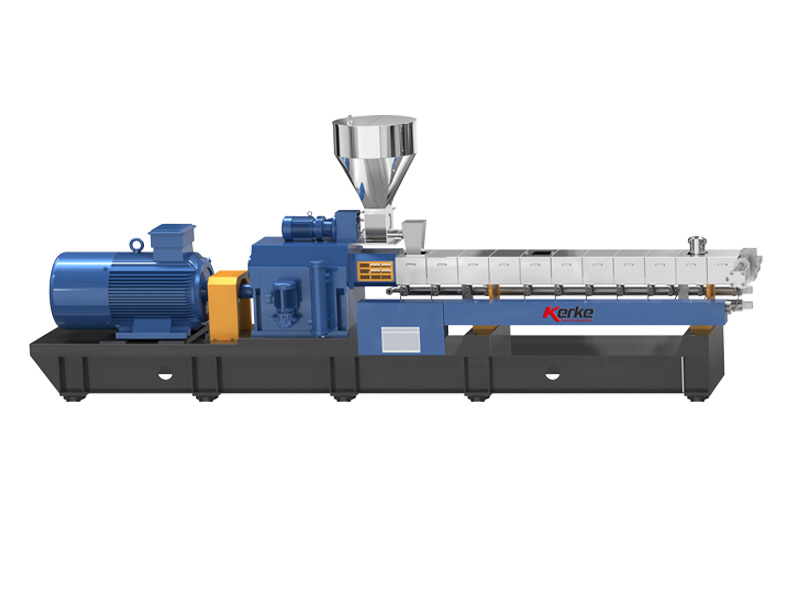
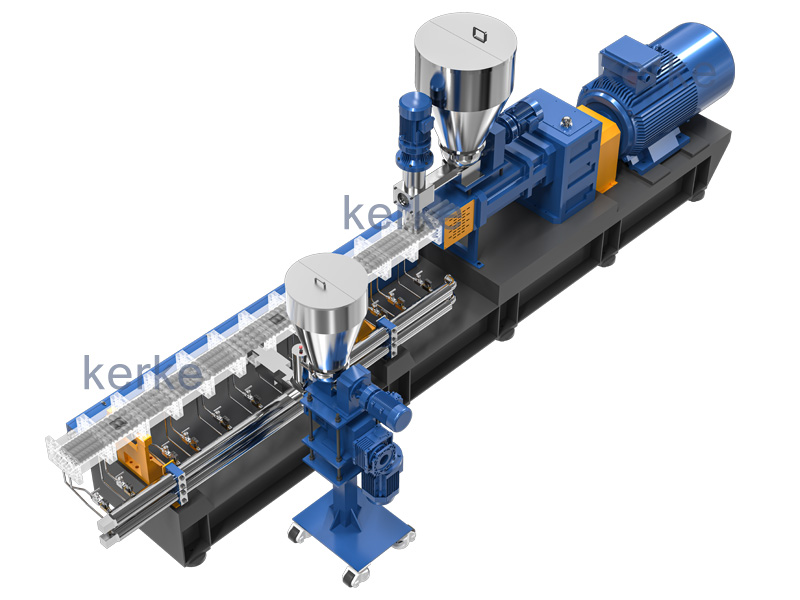
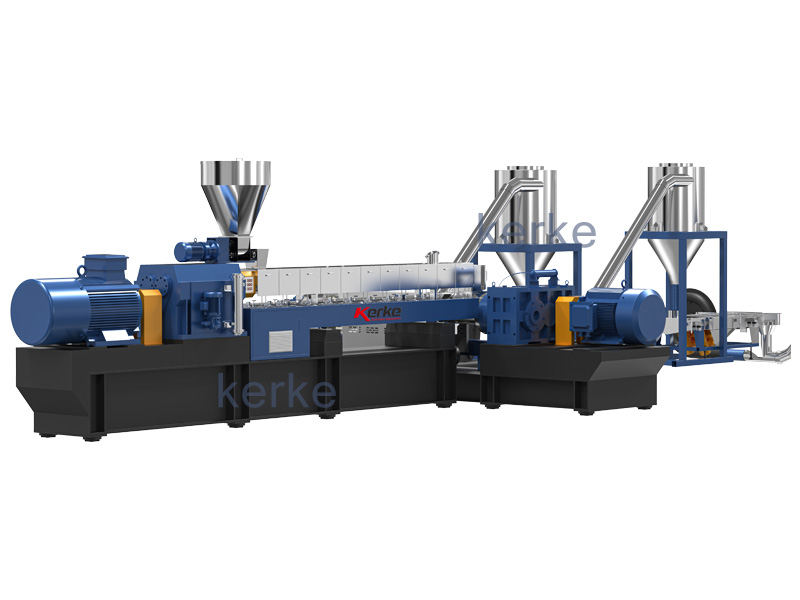
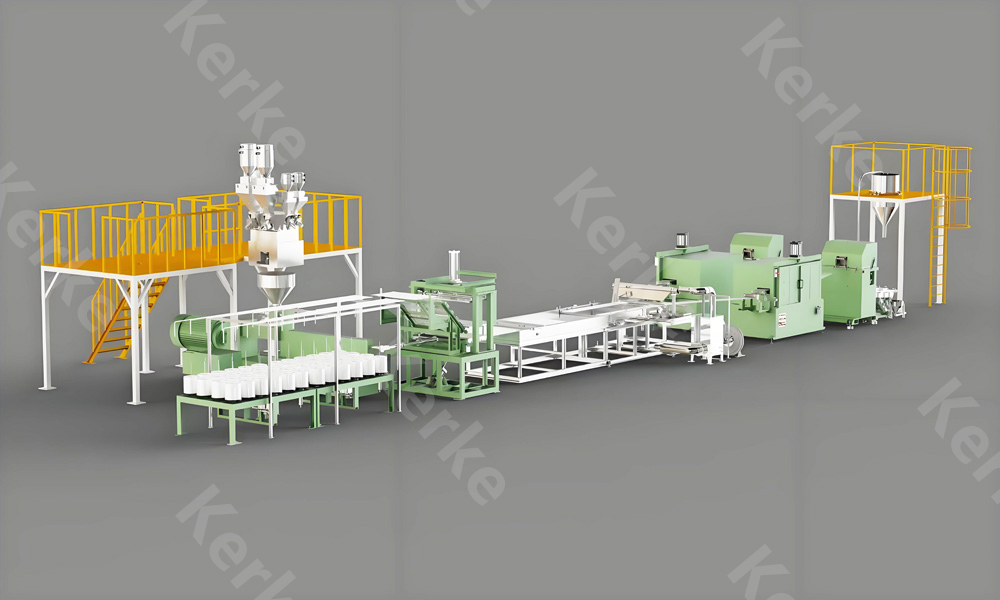
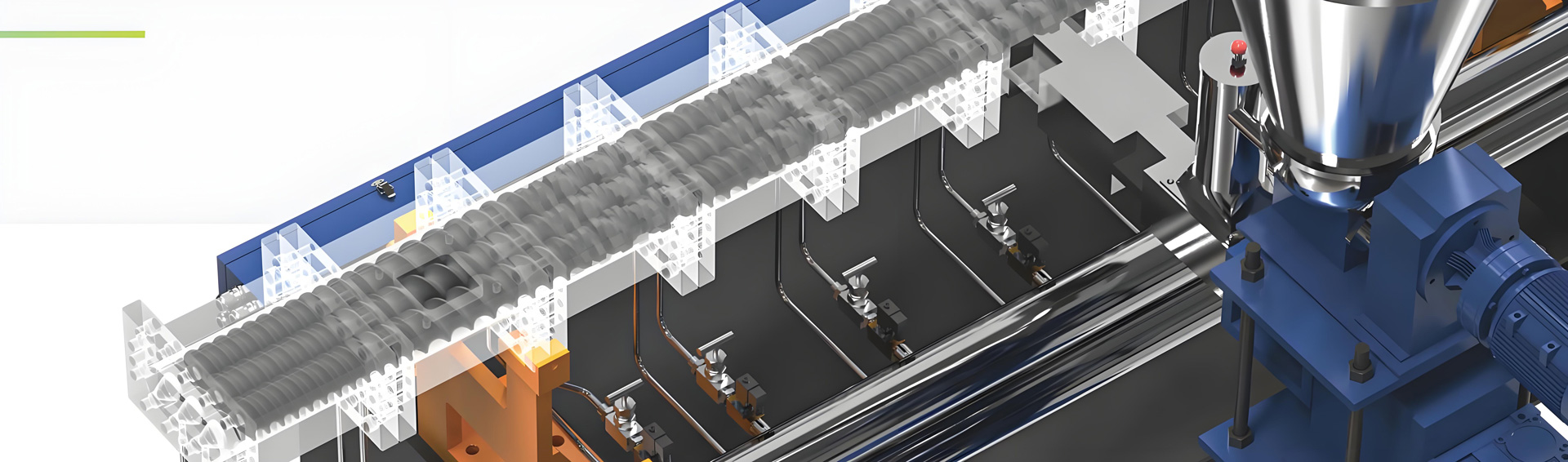
Kerke Extrusion Equipment offers advanced twin screw extruder solutions specifically designed for producing high-quality blown film and cast film masterbatch. The KTE series provides the mixing performance, precision control, and reliability required for demanding film applications.
KTE-52B for Medium-Scale Production
The KTE-52B twin screw extruder provides excellent capabilities for medium-scale film masterbatch production. With a screw diameter of 52mm and L/D ratio of 40, this model delivers the mixing performance required for high-quality pigment dispersion critical for optical clarity. The motor power of 55-75kW enables processing of various polymer systems including LDPE, LLDPE, HDPE, and polypropylene. Production capacity ranges from 80-200kg/hour, making it suitable for dedicated film masterbatch production lines. The modular screw configuration allows optimization for different film applications and polymer types. Temperature control zones enable precise thermal management for heat-sensitive pigments and additives. The price for KTE-52B configured for film masterbatch typically ranges from 120,000-180,000 USD.
KTE-65B for High-Volume Production
For manufacturers requiring high-volume film masterbatch production capacity, the KTE-65B twin screw extruder provides superior performance and production efficiency. With a screw diameter of 65mm and advanced design, this model provides exceptional mixing and dispersion capabilities for high-viscosity formulations. The motor power of 90-110kW enables processing at high throughput rates while maintaining excellent dispersion quality essential for optical properties. Production capacity reaches 200-450kg/hour, making this model ideal for large-scale production facilities serving the packaging industry. The advanced screw configuration options enable optimization for various film applications including food packaging, industrial films, and specialty films. The investment for KTE-65B configuration typically ranges from 150,000-220,000 USD.
KTE-75D for Large-Scale Production
The KTE-75D twin screw extruder represents the ultimate solution for large-scale film masterbatch production. With a screw diameter of 75mm and massive power output of 200-315kW, this model delivers exceptional production capacity and performance. Production capacity reaches 500-1000kg/hour, making this model ideal for major masterbatch producers serving the global packaging market. The advanced mixing elements ensure uniform dispersion even at high throughput rates, maintaining the optical quality required for demanding film applications. The robust construction provides long service life even under demanding production conditions. The investment for KTE-75D configuration typically ranges from 220,000-300,000 USD.
Packaging Market Applications
Blown film and cast film masterbatch serves diverse packaging market segments, each with specific requirements for optical properties, functionality, and performance.
Food Packaging Applications
Food packaging represents the largest market segment for blown and cast films, requiring masterbatch that meets both performance and regulatory requirements. Fresh produce packaging demands films with exceptional clarity to showcase product appearance and quality. Meat and poultry packaging requires specific colors and properties to maintain product freshness and appeal. Bakery and snack packaging needs films with appropriate barrier properties and appearance characteristics. Dairy packaging requires films that maintain product quality and provide visual appeal. Frozen food packaging needs films with excellent low-temperature properties and color stability. Food contact compliance requires masterbatch formulations using approved materials that meet FDA, EU, and other regulatory requirements. Antimicrobial masterbatch formulations extend shelf life and enhance food safety in specific applications.
Retail and Consumer Packaging
Retail packaging for consumer goods requires films with excellent appearance and handling characteristics. Shopping bags and carrier bags need masterbatch providing consistent color and adequate mechanical properties. Shrink wrap films for palletizing require specific shrink characteristics and appearance uniformity. Overwrap films for product display demand excellent clarity and gloss to enhance product visibility. Cosmetic and personal care packaging needs films with superior appearance and premium feel. The formulation must meet branding requirements for consistent corporate colors and appearance across product lines. Masterbatch for these applications must provide consistent batch-to-batch quality to maintain brand identity and consumer recognition.
Industrial and Technical Packaging
Industrial packaging applications require films with enhanced properties to meet demanding service conditions. Heavy-duty sacks and liners need masterbatch with excellent UV resistance for outdoor storage applications. Agricultural films require exceptional light fastness and weatherability for extended outdoor exposure. Construction films need UV stabilization and appropriate mechanical properties for building applications. Stretch films and pallet wrap require masterbatch that maintains performance under stretching and recovery conditions. Industrial packaging often incorporates functional additives for specific performance requirements such as flame retardancy or chemical resistance. Masterbatch formulations must provide consistent performance in challenging service environments.
Specialty Film Applications
Specialty films serve niche applications with unique requirements driving masterbatch innovation. Biodegradable and compostable films require masterbatch compatible with biodegradable polymers and meeting compostability standards. High-barrier films incorporate specialty additives and require masterbatch that does not compromise barrier properties. Anti-static films need masterbatch formulations incorporating permanent or dissipative antistatic additives. Print films require masterbatch that does not interfere with ink adhesion and print quality. These specialty applications often require custom formulations meeting specific performance criteria while maintaining optical properties and processing stability.
Quality Assurance and Performance Testing
Comprehensive quality assurance and testing systems ensure that film masterbatch meets the demanding optical and processing requirements of packaging applications.
Optical Properties Testing
Optical properties testing verifies that masterbatch delivers the appearance characteristics required for packaging applications. Haze measurement according to ASTM D1003 quantifies light scattering, with values typically below 2% for high-clarity applications. Clarity measurement evaluates the sharpness of images seen through the film. Gloss measurement according to ASTM D523 quantifies surface reflectivity, with values typically exceeding 70 gloss units for premium packaging applications. Spectrophotometric color analysis ensures color consistency and compliance with specified color coordinates. Transparency measurement quantifies light transmission through the film, with requirements varying from completely opaque to highly transparent depending on application.
Processing Validation Testing
Processing validation testing confirms that masterbatch performs satisfactorily in actual film production conditions. Laboratory blown film trials simulate actual production conditions to validate performance and identify potential processing issues. Cast film pilot trials validate masterbatch performance in cast film processes and identify any compatibility or processing problems. Melt flow index testing confirms compatibility with base polymer melt characteristics. Thermal analysis evaluates thermal stability and processing characteristics. Pressure and torque monitoring during processing trials identifies potential processing difficulties. Processing validation typically runs for extended periods (2-8 hours) to confirm consistent performance throughout production runs.
Dispersion Quality Analysis
Dispersion quality analysis verifies that pigments are properly dispersed throughout the masterbatch and will not cause film defects. Microscopic examination at various magnifications identifies pigment agglomerates that could cause gel formation or surface defects. Image analysis software quantifies particle size distribution and dispersion quality using standardized metrics. Laser diffraction analysis provides quantitative particle size data to complement microscopic examination. Surface roughness measurement evaluates film surface quality that affects optical appearance and printability. Dispersion quality is typically evaluated against standards specifying maximum acceptable particle sizes and agglomerate counts for specific film applications.
Emerging Trends and Future Developments
The blown film and cast film masterbatch industry continues to evolve in response to packaging innovation, sustainability demands, and technological advances.
Sustainable Packaging Solutions
Sustainability concerns are driving development of eco-friendly film masterbatch formulations. Recycled content masterbatch incorporates recycled polymers to support circular economy initiatives. Biodegradable polymer masterbatch formulations are optimized for PLA, PBAT, and other biodegradable polymers. Lightweighting masterbatch enables production of thinner films while maintaining performance, reducing material usage. Bio-based carrier resins derived from renewable sources reduce reliance on fossil-based polymers. Compostable masterbatch formulations meet compostability standards for food service packaging and other applications requiring end-of-life composting.
Active and Intelligent Packaging
Active and intelligent packaging innovations are creating new opportunities for functional masterbatch development. Oxygen scavenging masterbatch actively removes oxygen from package headspace, extending product shelf life. Moisture control masterbatch manages humidity levels within packages to maintain product quality. Antimicrobial masterbatch inhibits microbial growth on film surfaces, enhancing food safety and extending shelf life. Freshness indicator masterbatch incorporates color-changing elements that indicate product freshness or temperature abuse. These functional masterbatches must maintain optical properties while delivering targeted functionality.
Advanced Optical Solutions
Advanced optical technologies are enabling new possibilities in film appearance and functionality. Metallic effect masterbatch creates metallic finishes in films for premium packaging applications. Holographic effect masterbatch produces iridescent effects that enhance product appearance on shelf. Matte finish masterbatch provides controlled reduction in gloss for specific design requirements. Soft-touch masterbatch creates tactile surfaces that enhance consumer perception and handling experience. These advanced optical masterbatches must be carefully formulated to maintain processing stability and performance while delivering desired visual effects.
Conclusion and Future Outlook
Masterbatch for blown film and cast film production represents a critical technology enabling the creation of diverse, high-performance packaging solutions across multiple market segments. As packaging innovation continues to accelerate and consumer demands for both aesthetic appeal and functional performance grow, the importance of high-quality film masterbatch that delivers exceptional optical properties, processing stability, and performance characteristics continues to increase.
Kerke Extrusion Equipment provides advanced twin screw extruder solutions specifically designed for the challenges of blown film and cast film masterbatch production. The KTE series offers options from medium-scale production equipment through large-scale high-capacity systems, providing solutions across the entire production spectrum. With over 12 years of experience focused on parallel co-rotating compounding extruder technology, Kerke offers the technical expertise and equipment reliability required for successful film masterbatch manufacturing.
Investment in advanced twin screw extruder technology from Kerke enables manufacturers to produce blown film and cast film masterbatch meeting the most demanding optical, processing, and performance requirements. The combination of superior mixing performance, precise process control, and consistent product quality ensures masterbatch that helps packaging manufacturers produce films delivering exceptional appearance, functionality, and performance in applications ranging from everyday food packaging to demanding industrial films and specialty applications.