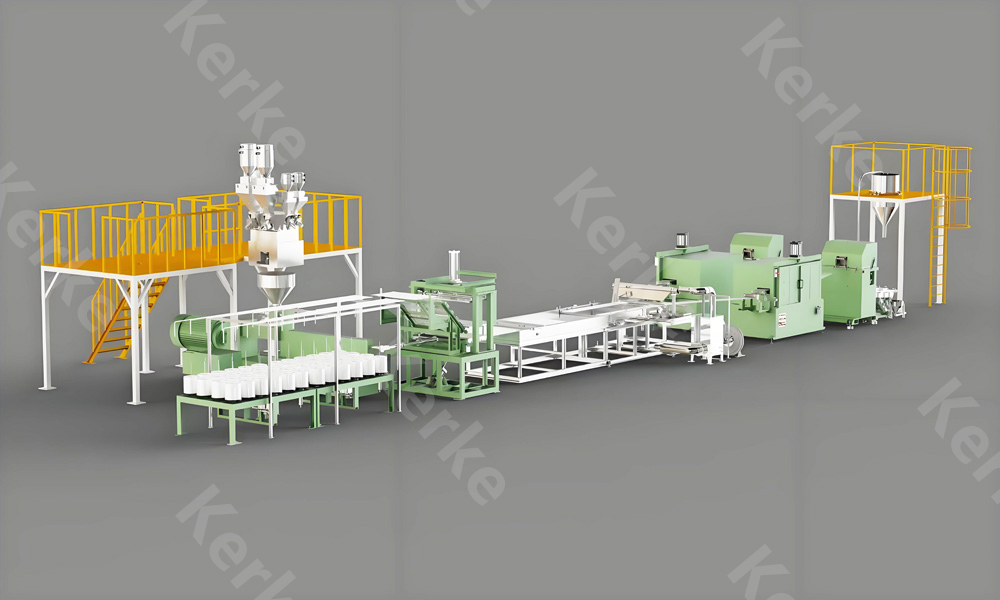
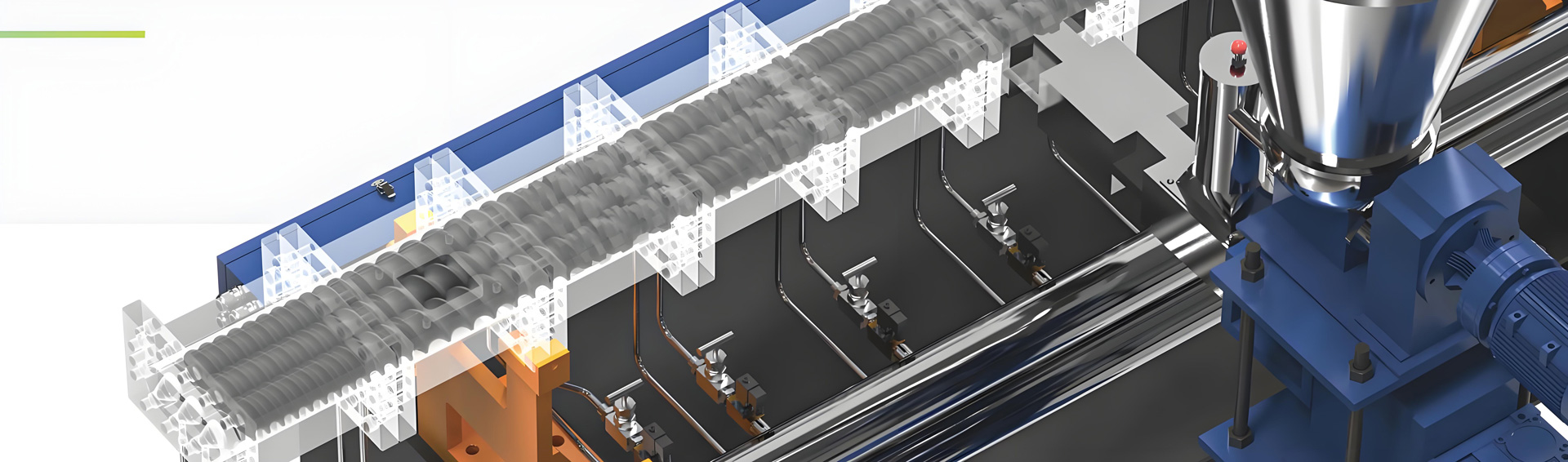
Maximizing the output of a masterbatch extrusion line requires systematic optimization across multiple dimensions including equipment configuration, process parameters, material handling, and operational practices. Production throughput directly impacts unit manufacturing costs and delivery capability, making output optimization essential for competitive masterbatch manufacturing. This comprehensive approach addresses all factors that constrain throughput rather than focusing on isolated improvements.
Twin screw extruders offer substantial optimization potential compared to single-screw alternatives. The positive displacement nature of twin screw design enables predictable throughput control, while the flexible screw configuration allows optimization for specific material and quality requirements. Realizing this potential requires understanding the factors that limit throughput and the strategies available for addressing them. This understanding guides the investment of time and resources in optimization efforts.
The business case for output optimization rests on both cost reduction and capability enhancement. Higher throughput reduces per-unit manufacturing costs, improving competitive position. Enhanced capability enables service to demanding customers who require volumes beyond previous capacity. Together, these benefits justify the systematic effort that comprehensive optimization requires.
Understanding Throughput Limitations in Twin Screw Extrusion
Extrusion line throughput is constrained by multiple factors including screw pumping capacity, motor power limits, thermal management capability, and material stability thresholds. The limiting constraint varies with formulation and operating conditions, requiring systematic analysis to identify optimization opportunities. Addressing the correct constraint generates improvements; optimizing a non-limiting factor wastes effort. This diagnostic discipline distinguishes effective optimization from futile experimentation.
In masterbatch production, throughput limits often involve combinations of factors rather than single constraints. High viscosity materials may be pumpable but exceed power limits when processed at desired rates. Alternatively, adequate pumping and power may exist but thermal constraints prevent stable operation. Understanding these interactions guides effective optimization. The analysis must consider how constraints change with operating conditions.
Throughput modeling based on equipment specifications and material properties predicts achievable output before practical testing begins. This modeling identifies potential constraints and guides experimental verification. Kerke applications engineering supports throughput analysis as part of comprehensive process development. This preliminary analysis saves time and resources by focusing optimization efforts appropriately.
Pumping Capacity Fundamentals
Screw pumping capacity depends on screw geometry, speed, and material viscosity. The flight depth, pitch, and number of starts determine the theoretical output of a screw configuration. Available output decreases as viscosity increases or as backward flow through leakages increases at higher pressures. These relationships define the pumping envelope within which operation is possible.
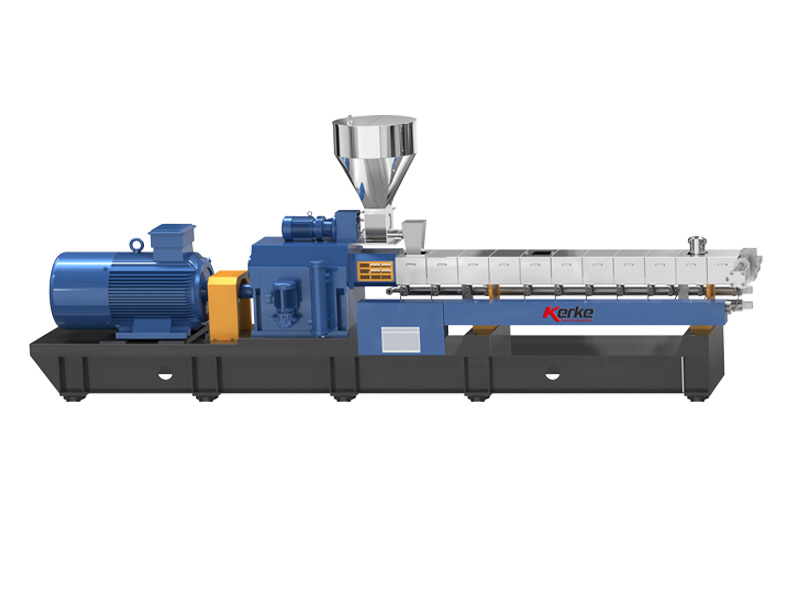
Twin screw extruders provide higher pumping capacity than single-screw machines of comparable size due to their positive displacement nature. The intermeshing screw geometry prevents backward leakage, enabling more precise throughput control. Kerke twin screw extruders incorporate optimized screw profiles that maximize pumping efficiency for demanding applications. This design advantage enables higher throughput capability than alternative equipment.
Pumping efficiency varies with operating conditions. Pressure requirements at the die affect how much of the theoretical pumping capacity translates to actual output. Back pressure management enables optimization of the pressure-throughput relationship. Understanding this relationship guides operating parameter selection.
Power and Torque Constraints
Motor power rating limits the torque available for driving screws through high-viscosity materials. When material viscosity exceeds the level that available torque can pump, throughput reaches a power-limited constraint. Higher power motors enable processing of higher viscosity materials or higher throughput rates of moderate-viscosity formulations. Power margin enables flexibility in operating conditions.
Kerke extruders feature power ratings scaled to their capacity and intended applications. The KTE-75B model offers substantial power reserves for challenging formulations, while the KTE-95D provides exceptional capability for the most demanding high-throughput applications. Power specifications should be evaluated against the viscosities and throughput targets of planned production. Oversizing relative to immediate requirements provides capacity for future growth.
Torque availability varies with screw speed due to motor and drive characteristics. Understanding how torque varies across the speed range enables optimization that maximizes available capability. Variable frequency drives affect torque-speed relationships in ways that influence operating strategies.
Thermal Management Boundaries
Heat generation during extrusion must be removed to maintain proper processing temperatures. Heat generates from mechanical shear and from barrel heating elements. When heat generation exceeds removal capacity, temperatures rise beyond acceptable limits, compromising quality or causing material degradation. Thermal limits often constrain throughput before other limits become relevant.
Thermal constraints often limit throughput in high-concentration masterbatch applications where reduced carrier content increases viscosity and shear heating. Kerke extruders incorporate efficient cooling systems with zoned temperature control to manage thermal loads across diverse operating conditions. This thermal management capability enables operation at higher throughputs than would otherwise be possible.
Temperature optimization involves balancing heat generation against heat removal to maintain stable conditions throughout the barrel. The optimal temperature profile depends on formulation characteristics and quality requirements. Kerke temperature control systems enable precise management of these thermal conditions.
Screw Configuration Optimization for Maximum Output
Screw configuration determines the pumping, melting, mixing, and heating characteristics of the extrusion process. Optimized configurations maximize throughput while maintaining quality requirements. Different formulations require different configurations to achieve optimal results, making flexibility in screw design essential for versatile production facilities. This configuration flexibility maximizes equipment utility across diverse products.
The modular screw design of Kerke extruders enables precise optimization for specific formulation requirements. Element types, lengths, and arrangements can be adjusted to balance pumping efficiency, mixing intensity, and thermal management for each application. This optimization typically requires collaboration between customer expertise in formulations and supplier expertise in equipment capability.
Screw Element Selection Strategy
Screw elements fall into several functional categories including conveying, compression, mixing, and specialty elements. Conveying elements transport material from feed to die with varying degrees of compression. Selecting appropriate conveying elements ensures stable feeding and prevents starve or flood conditions. Conveying efficiency directly affects maximum achievable throughput.
Forward-conveying elements move material toward the die with varying pressure development capability. Neutral or slightly backward elements provide mixing and residence time extension. Selecting the right combination balances throughput with mixing requirements. Too much mixing wastes capacity; too little compromises quality.
Specialty elements address specific requirements such as venting, mixing, or pressure development. Each element type affects throughput in different ways. Understanding these effects enables configuration optimization that addresses formulation-specific requirements while maximizing throughput.
Mixing Section Design for Output
The mixing section can limit throughput if mixing intensity is excessive relative to material capability. Over-intensive mixing generates excessive shear heat and increases viscosity beyond pumping limits. Optimizing mixing section design provides adequate dispersion with minimum adverse effects on throughput. This optimization balances quality requirements against throughput constraints.
Kneading block configuration affects both mixing intensity and throughput. Wider disks and more aggressive staggering increase mixing at the expense of conveying capability. Narrower disks and gentler staggering enable higher throughput with reduced mixing intensity. The optimal configuration balances these factors for specific formulation requirements. Kerke applications engineering supports this configuration optimization.
Multiple mixing zones can distribute mixing requirements across longer screw sections, reducing the intensity in any single zone. This distribution approach often enables higher throughput than concentrating all mixing in a single aggressive zone. Configuration design should consider how mixing intensity distributes through the complete screw assembly.
Residence Time Considerations
Material residence time in the extruder affects both quality and throughput. Longer residence times improve dispersion but reduce throughput by occupying barrel capacity. Optimizing residence time distribution enables efficient processing while achieving quality requirements. Residence time directly affects how much material can process through available barrel volume.
Twin screw extruders provide more predictable residence time distribution compared to single-screw machines. The plug-flow nature of intermeshing twin screws produces narrower residence time distributions, enabling shorter average residence times for equivalent mixing. This efficiency advantage translates directly to throughput benefits. Twin screw technology inherently enables higher throughput than alternatives.
Residence time distribution depends on screw configuration and operating conditions. Faster screw speeds reduce residence time while increasing throughput. Understanding this relationship guides operating parameter optimization for different formulations. Formulations requiring longer residence times may be limited by quality rather than throughput.
Process Parameter Optimization Techniques
Operating parameters significantly affect extrusion line throughput. Screw speed, temperature profiles, back pressure, and feed rates interact to determine achievable output. Systematic optimization identifies the parameter combinations that maximize throughput while maintaining quality specifications. This systematic approach distinguishes optimization from simple trial-and-error.
Kerke extruders feature advanced control systems that support systematic optimization. Programmable parameter sets enable quick comparison of operating conditions, while data logging supports analysis and optimization efforts. These capabilities accelerate the optimization process while ensuring complete documentation of results.
Screw Speed Optimization
Screw speed affects throughput directly through the pumping equation and indirectly through effects on viscosity and heat generation. Higher speeds increase throughput proportionally until limiting factors intervene. Power limits, thermal limits, or mixing quality limits may constrain maximum practical speed. Identifying which limit constrains operation guides further optimization.
The relationship between speed and throughput varies with formulation viscosity. Low-viscosity formulations may achieve stable operation at very high speeds, while high-viscosity formulations may be limited at lower speeds. Determining the optimal speed for each formulation balances these factors against quality requirements. Systematic testing reveals the speed-throughput relationship for specific formulations.
Speed optimization should consider both steady-state operation and transition periods. Startup and shutdown procedures affect the proportion of time spent at non-optimal speeds. Optimizing these procedures reduces the quality and productivity losses from transitions. Standardized procedures ensure consistent optimization across operators and shifts.
Temperature Profile Optimization
Temperature affects viscosity, which in turn affects pumping efficiency and heat generation. Higher temperatures reduce viscosity, improving pumping and reducing power consumption. However, excessive temperatures risk material degradation and may reduce mixing intensity below quality requirements. Temperature optimization balances these competing considerations.
Optimizing temperature profiles involves balancing viscosity reduction against thermal stability limits. Kerke multi-zone temperature control enables precise optimization, with temperatures adjusted independently in each zone to match local requirements. This granular control supports optimization not possible with simpler systems. Zone-by-zone optimization creates the complete temperature profile.
Thermal imaging and melt temperature measurement provide feedback on actual temperature conditions throughout the barrel. This feedback enables refinement of temperature setpoints beyond theoretical optimization. Practical optimization incorporates both modeling and measurement to achieve optimal results.
Throughput and Quality Trade-offs
Throughput increases often come with quality trade-offs that must be managed. Higher throughput reduces residence time, potentially affecting dispersion. Higher speeds increase shear rates and heat generation. Managing these trade-offs requires understanding which quality attributes are most critical for specific applications. This trade-off analysis guides where to accept throughput limits.
Some formulations tolerate throughput increases with minimal quality impact, while others are highly sensitive to processing variations. Identifying the sensitivity of each formulation to throughput changes guides optimization priorities. Formulations with low sensitivity can operate at maximum throughput; sensitive formulations may require conservative operation.
Quality specifications should reflect realistic manufacturing capabilities. Overly tight specifications may prevent operation at economically optimal throughputs. Working with customers to establish appropriate specifications enables both quality assurance and manufacturing efficiency.
Material Handling System Optimization
Material feeding and handling systems can limit extrusion line throughput if they cannot supply material fast enough or maintain adequate quality characteristics. Optimizing material handling removes these constraints and enables the extruder to operate at its full throughput capability. Handling system capability often limits overall line throughput.
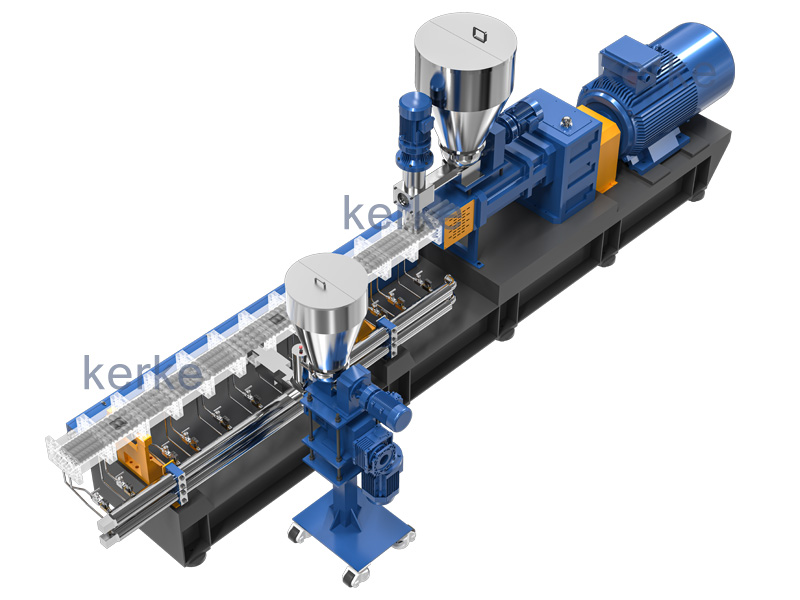
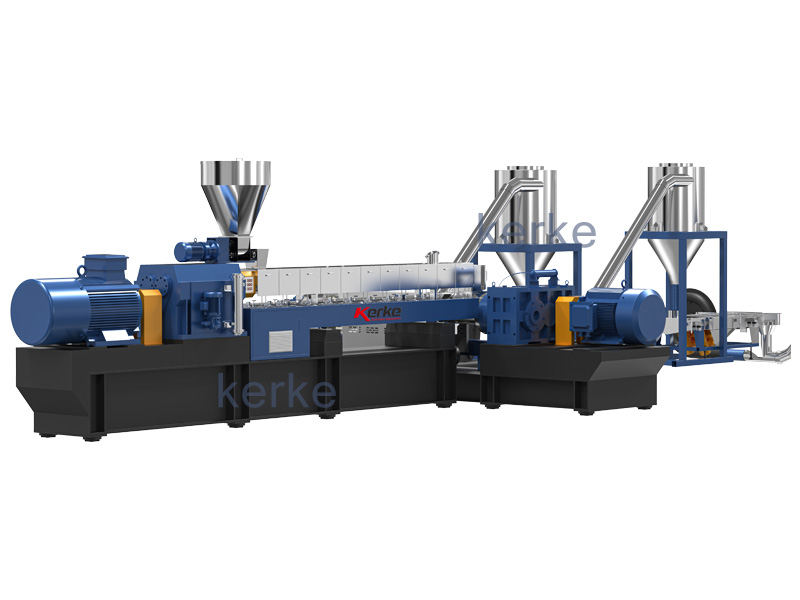
Integrated material handling systems from Kerke provide coordinated control between feeding and extrusion, ensuring stable operation at maximum throughput rates. This integration prevents feeding limitations from constraining extrusion performance. System design should consider both steady-state and transition requirements.
Feeding System Capacity
Feeding system capacity must match or exceed extrusion throughput to prevent starve conditions. Multiple feeders may be required for high-throughput lines, particularly when processing multiple ingredients. Feed system design should include margin to handle formulation variations and startup transients. Capacity planning should account for realistic operating conditions.
Gravimetric feeding systems provide accuracy necessary for quality at high throughput. Loss-in-weight feeders with appropriate capacity handle the material delivery rates that modern extrusion lines require. Kerke integrates feeder selection with extruder sizing to ensure matched system performance. This integrated approach prevents capacity mismatches that would limit throughput.
Feeder responsiveness affects how quickly the system responds to extrusion rate changes. Fast-responding feeders maintain formulation accuracy during transitions and disturbances. This responsiveness capability becomes more important as throughput increases.
Material Preparation and Preconditioning
Material preparation quality affects extrusion performance at all throughput levels but becomes more critical at high rates. Poorly prepared materials cause feeding instabilities that become more severe as throughput increases. Pre-blending, preheating, and other preparation steps support stable high-throughput operation. These preparation investments often prove economical through improved throughput.
Pre-blending colorant concentrates with carrier resin before extrusion feeding ensures homogeneous material delivery. This pre-blending reduces the formulation incorporation burden on the extrusion process. Pre-blending equipment and procedures should be designed for the throughput rates that production requires.
Pre-heating reduces the energy that must be supplied in the extruder, improving throughput capability for thermally limited formulations. Temperature-controlled premix vessels prepare materials at consistent temperatures before feeding. This preconditioning enables higher extrusion throughputs while maintaining quality.
Material Flow and Logistics
Material logistics affect the effective throughput of production lines by influencing changeover times and uptime. Efficient material handling reduces downtime between batches, improving overall line utilization. Material staging, container handling, and waste removal systems all contribute to throughput effectiveness. Logistics optimization often provides substantial throughput improvements.
Changeover optimization is particularly important for production facilities running multiple formulations. Quick-change procedures and equipment minimize downtime between colors. Well-organized material staging reduces search time and prevents mix-ups. SMED methodologies provide structured approaches to changeover reduction.
Material delivery systems should match extrusion throughput to prevent supply interruptions. Conveyor systems, pneumatic transfer, and manual handling each have capacity limits that affect effective throughput. System design should account for realistic operating rates and operator availability.
Preventive Maintenance for Sustained Output
Preventive maintenance ensures that equipment continues to perform at designed capability throughout its operational life. Worn components, misaligned systems, and degraded controls all reduce throughput capability. Establishing appropriate maintenance practices maintains throughput over extended production periods. Maintenance investment protects the throughput optimization achieved during commissioning.
Kerke provides maintenance guidance and spare parts support that enables customers to maintain equipment performance. Regular maintenance following recommended schedules prevents the gradual throughput decline that characterizes neglected equipment. This maintenance partnership supports long-term production success.
Wear Monitoring and Prediction
Monitoring wear progression enables scheduling maintenance before throughput becomes limited. Regular inspection of screws, barrels, and other wear surfaces reveals condition trends that predict maintenance needs. This predictive approach minimizes unscheduled downtime while avoiding unnecessary maintenance. Wear monitoring provides the information needed for effective maintenance planning.
Kerke provides wear rate guidelines based on application experience, enabling customers to estimate maintenance intervals for their specific formulations and operating conditions. These guidelines help customers develop maintenance schedules that balance equipment care against production requirements. Maintenance timing optimization reduces both downtime and quality risk.
Inspection techniques include visual examination, dimensional measurement, and performance testing. Each technique provides different information about equipment condition. Comprehensive inspection programs combine multiple techniques for complete condition assessment.
Component Replacement Timing
Deciding when to replace worn components balances maintenance costs against performance losses. Minor wear may have minimal throughput impact, while severe wear significantly limits capacity. Understanding these relationships guides replacement timing decisions. Waiting for obvious problems often costs more than proactive replacement.
Replacement strategies include reactive replacement when problems occur, scheduled replacement at fixed intervals, and predictive replacement based on monitoring data. Each approach has cost and risk implications. Selecting the appropriate strategy depends on equipment criticality, failure consequences, and monitoring capability.
Spare parts inventory should balance availability against inventory cost. Critical wear items warrant maintaining stock for rapid replacement. Less critical items may be ordered as needed. Kerke spare parts support helps customers develop appropriate inventory strategies.
Output Calculation and Capacity Planning
Accurate output calculation enables proper capacity planning and production scheduling. Understanding how formulation characteristics, equipment capability, and operating conditions combine to determine actual throughput guides production planning and equipment investment decisions. Accurate capacity information supports both operational and strategic planning.
Throughput calculations should account for both theoretical capability and practical operating rates. Theoretical calculations based on equipment specifications provide starting estimates; practical optimization establishes achievable operating rates. The difference between theoretical and practical reflects the real constraints that optimization addresses.
Throughput Formulas and Models
Throughput in twin screw extrusion depends on screw geometry, speed, viscosity, and pressure conditions. While exact calculations require detailed equipment specifications and material data, simplified models provide useful estimates for planning purposes. Kerke applications engineering supports detailed throughput calculations for specific applications.
Throughput scales with screw speed and displacement volume. Available throughput decreases as viscosity increases or as back pressure rises. These relationships guide parameter selection and equipment sizing decisions. Understanding the sensitivity of throughput to each parameter helps identify where optimization effort will be most productive.
Models should be validated against actual operating data to ensure their predictions reflect reality. Discrepancies between model predictions and actual performance reveal opportunities for both model refinement and process improvement.
Capacity Planning Considerations
Production capacity planning must account for both maximum throughput capability and practical operating rates. Maximum rates may not be sustainable for extended periods due to wear, quality concerns, or operator fatigue. Planning factors convert theoretical capacity to practical production capability. Conservative planning prevents the disruptions that overly optimistic plans create.
Line utilization targets should account for changeover time, maintenance downtime, and other interruptions. Typical utilization rates for well-managed extrusion lines range from seventy to eighty-five percent of maximum capability. This utilization level balances throughput optimization against equipment care and operational sustainability.
Capacity growth planning should consider both organic growth and potential new products. Equipment with expansion capability provides flexibility for future growth without requiring complete replacement. Kerke product range supports various growth scenarios.
Equipment Sizing Recommendations
Selecting appropriately sized equipment ensures adequate capacity for current and future requirements. Undersized equipment limits production and constrains growth, while oversized equipment represents unnecessary investment. Capacity planning projections guide equipment sizing decisions that affect business outcomes for years.
The Kerke product line spans capacities from approximately 100 kg/h with the KTE-36B model at $25,000 to $35,000 through approximately 2000 kg/h with the KTE-95D at $120,000 to $200,000. Intermediate models including the KTE-50B at $40,000 to $60,000, KTE-65B at $50,000 to $80,000, and KTE-75B at $70,000 to $100,000 address intermediate capacity requirements. Kerke applications engineering supports equipment selection for specific production requirements.
Multi-machine installations may be appropriate for very high volumes or when redundancy provides operational benefits. The economics of multi-machine versus single-machine installations depend on volume, product diversity, and operational requirements. Kerke experience across diverse installations supports analysis of these alternatives.
Line Efficiency Improvement Strategies
Overall line efficiency determines how much of installed capacity translates to actual production. Efficiency losses come from various sources including downtime, speed losses, and quality losses. Systematic efficiency improvement addresses each loss source to maximize effective output. This comprehensive approach generates larger improvements than focusing on isolated factors.
Overall equipment effectiveness combines availability, performance, and quality to quantify how effectively equipment contributes to production. OEE analysis reveals the relative importance of different loss sources, guiding improvement priorities. Improving OEE from eighty to eighty-five percent typically requires less effort than improving from seventy to seventy-five percent.
Downtime Reduction
Downtime includes scheduled downtime for maintenance and unscheduled downtime from failures or problems. Reducing both categories improves effective capacity. Scheduled downtime can often be reduced through improved maintenance efficiency or extended intervals. Unscheduled downtime reduction requires addressing root causes of failures and problems.
Changeover time represents a significant downtime source for multi-product facilities. Quick-change procedures, pre-staged materials, and standardized procedures reduce changeover time substantially. SMED methodologies provide structured approaches to changeover optimization. These improvements directly increase effective production time.
Failure analysis identifies the root causes of unscheduled downtime. Addressing these root causes prevents recurrence and extends equipment life. Kerke technical support assists with failure analysis and corrective action development.
Speed Loss Elimination
Speed losses occur when equipment operates below maximum designed speed due to quality constraints, material problems, or operational limitations. Identifying the constraints that prevent maximum-speed operation enables targeted improvements that recover lost throughput. Speed loss analysis reveals where optimization effort will be most productive.
Quality-related speed losses occur when maximum speed exceeds conditions that maintain product specifications. Process optimization may enable higher speeds without quality compromise. Material-related speed losses occur when formulations cannot be processed at desired rates. Formulation or preparation modifications may enable speed recovery.
Operational speed losses result from decisions to operate below maximum capability due to safety margins, equipment concerns, or management preferences. Examining these decisions reveals opportunities for higher-speed operation without increased risk.
Quality Loss Prevention
Quality losses occur when production must be slowed, diverted, or rejected due to specification concerns. Reducing quality losses improves effective output by increasing the proportion of first-quality production. Quality improvement investments often provide substantial throughput benefits through reduced waste and rework. Quality and productivity improvements reinforce each other.
Statistical process control identifies variation sources that cause quality problems. Addressing these sources improves both quality and throughput by eliminating constraints imposed by specification limits. SPC implementation requires both technology investment and operator training.
Root cause analysis of quality failures reveals systematic problems that might otherwise persist. Corrective action addressing root causes prevents recurrence while often improving productivity as well. This problem-solving discipline distinguishes continuous improvement operations.
Economic Analysis of Output Optimization
Output optimization investments must demonstrate economic justification through improved revenue, reduced costs, or both. Comprehensive economic analysis considers all relevant factors to determine whether optimization initiatives provide acceptable returns. This analysis ensures that resources flow to highest-value improvement opportunities.
Benefits from output optimization include increased revenue from additional production, reduced unit costs from higher utilization, and improved delivery capability from shorter lead times. Costs include capital investments, operating cost increases, and implementation effort. Net benefits determine whether optimization initiatives proceed.
Cost-Benefit Framework
Output increases directly increase revenue when production can be sold. When market demand limits sales, output increases provide inventory buildup or capacity for growth. The value of additional capacity depends on market conditions and growth expectations. Capacity planning should consider both current demand and anticipated future requirements.
Unit cost reduction from higher throughput improves margin and competitive position. Fixed costs spread over larger production volumes reduce per-unit cost. This cost efficiency benefit often provides faster return than revenue increase from additional sales.
Lead time reduction from higher throughput enables faster response to customer requirements. This capability advantage may support premium pricing or preferential customer relationships. The strategic value of lead time capability should be included in the economic analysis.
Investment Prioritization
Multiple optimization opportunities typically exist, requiring prioritization based on return on investment. Highest-return opportunities should receive priority for limited investment capital. Portfolio approaches balance quick-payback projects against longer-term strategic investments. This prioritization discipline ensures that improvement resources generate maximum value.
Kerke applications engineering supports optimization prioritization by identifying opportunities specific to customer operations. This application-focused approach ensures that optimization efforts target factors most limiting for specific situations. The expertise that Kerke brings helps avoid misdirected improvement efforts.
Implementation plans should include milestones and checkpoints that verify progress against expectations. Adjusting priorities based on actual results ensures that resources continue flowing to highest-value opportunities. This adaptive management approach improves the probability of successful outcomes.
Conclusion
Optimizing masterbatch extrusion line output requires systematic attention to equipment configuration, process parameters, material handling, maintenance practices, and operational procedures. Twin screw extrusion technology from Kerke provides the capability foundation for high-output production, with models ranging from the compact KTE-36B for specialty applications through the high-capacity KTE-95D for volume manufacturing. This technology foundation enables the optimization that competitive manufacturing requires.
Success in output optimization combines appropriate equipment with systematic improvement practices. Manufacturers who invest in understanding their constraints and addressing them systematically achieve sustained productivity improvements. The investment in optimization generates returns through improved competitiveness and profitability. This systematic approach distinguishes successful operations from those that plateau.
Contact Kerke applications engineering to discuss your output optimization opportunities and discover how modern twin screw extrusion technology can help you achieve your production goals. This consultation connects you with expertise that accelerates your optimization journey.