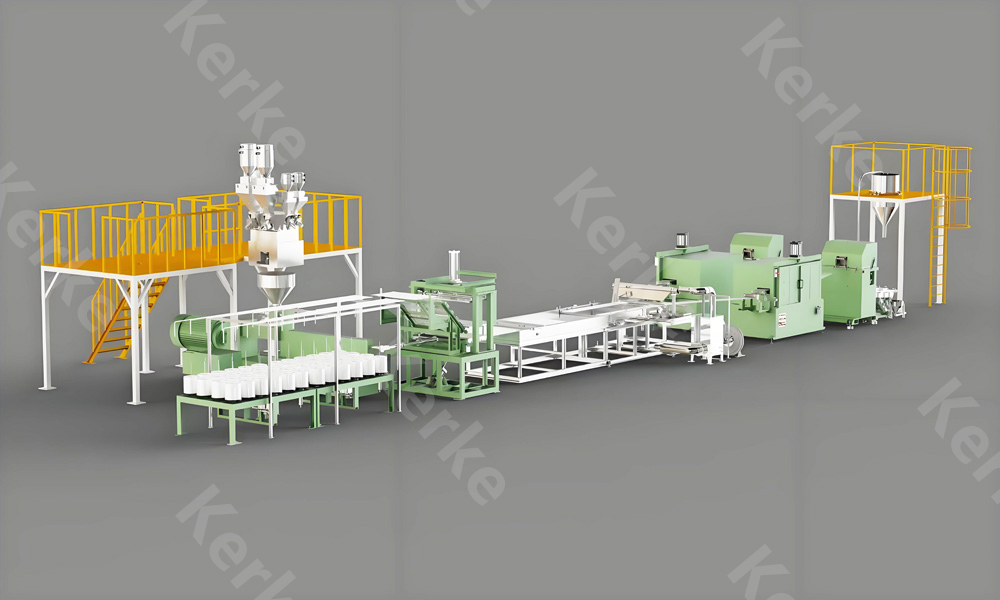
The modern plastic compounding industry is undergoing a rapid digital transformation, with advanced control systems emerging as the most critical differentiator between high-performance and outdated extrusion equipment. A compounding extruder’s control system is the brain of the entire production line, responsible for regulating every aspect of the process from raw material feeding to final pelletizing. For manufacturers producing masterbatch, engineering plastics, biodegradable polymers, and filled compounds, the quality of the control system directly impacts product consistency, production efficiency, operational costs, and overall profitability. According to industry research, extruders equipped with advanced control systems achieve 15-30% higher production efficiency, 40-60% lower scrap rates, and 20-40% longer equipment lifespan compared to machines with basic manual controls.
As a leading global manufacturer of twin screw extruders, masterbatch extruders, and compounding extruders, Kerke has been at the forefront of control system innovation for over 10 years. Kerke compounding extruders integrate state-of-the-art intelligent control technologies specifically optimized for plastic compounding applications. These advanced systems provide precise process regulation, real-time monitoring, comprehensive data management, and predictive maintenance capabilities, enabling manufacturers to achieve consistent, high-quality production even under the most demanding operating conditions. Whether you are producing color masterbatch, glass fiber-reinforced plastics, or biodegradable polymer compounds, Kerke’s advanced control systems deliver the performance and reliability required to compete in today’s global market.
This comprehensive guide provides a detailed roadmap for selecting a compounding extruder with an advanced control system. It explores the critical role of control systems in modern compounding operations, the key features and functionalities to look for, the specific requirements for different applications, and detailed cost and return on investment analysis. The guide also highlights common mistakes to avoid when evaluating control systems and provides practical advice on how to ensure you select the right system for your specific production needs. Whether you are upgrading an existing production line or investing in a new compounding extruder, this guide will help you make an informed decision that maximizes your return on investment and sets your operation up for long-term success.
1. The Critical Role of Advanced Control Systems in Compounding Extrusion
Advanced control systems have revolutionized the plastic compounding industry, transforming what was once a labor-intensive, inconsistent process into a highly automated, precise manufacturing operation. The benefits of investing in a compounding extruder with an advanced control system extend far beyond simple automation, impacting every aspect of your production operation.
1.1 Unmatched Product Consistency and Quality
The primary benefit of an advanced control system is the ability to achieve consistent product quality batch after batch. In plastic compounding, even minor variations in process parameters such as temperature, screw speed, feed rate, or melt pressure can result in significant changes in the properties of the final compound. These variations can lead to issues such as inconsistent color in masterbatch, reduced mechanical properties in engineering plastics, or poor dispersion of additives.
Advanced control systems maintain precise, stable control over all critical process parameters, eliminating the variations caused by manual adjustment or environmental changes. They continuously monitor process conditions and make real-time adjustments to maintain the desired set points, ensuring that every batch of compound meets the exact same specifications. This level of consistency is essential for meeting the strict quality requirements of industries such as automotive, electronics, and food packaging, where even minor product variations can result in rejected orders and lost customers.
1.2 Significant Reduction in Operational Costs
Advanced control systems help reduce operational costs in several ways. First, they minimize scrap rates by ensuring consistent product quality. Traditional extruders with basic controls typically have scrap rates of 3-5% or higher, while extruders with advanced control systems can achieve scrap rates of less than 1%. For a medium-sized compounding operation producing 1000 tons per year, this reduction in scrap rate can save over $50,000 annually in raw material costs alone.
Second, advanced control systems optimize energy consumption by regulating the heating and cooling systems more efficiently. They only use the energy required to maintain the desired process conditions, reducing energy waste. Studies have shown that advanced control systems can reduce energy consumption by 15-25% compared to basic control systems, resulting in significant annual energy cost savings.
Third, advanced control systems reduce labor costs by automating many routine tasks that would otherwise require manual intervention. A single operator can monitor and control multiple production lines simultaneously, reducing the number of operators required and lowering labor costs.
1.3 Increased Production Efficiency and Throughput
Advanced control systems enable higher production efficiency and throughput by optimizing the entire extrusion process. They allow for faster startup and shutdown times, reducing the time lost between production runs. They also enable faster product changeovers by storing multiple production recipes that can be recalled with a single touch, eliminating the need for manual parameter adjustment.
Additionally, advanced control systems allow the extruder to operate at its maximum safe capacity without risking product quality or equipment damage. They continuously monitor process conditions and adjust parameters to maintain optimal performance, ensuring that you get the highest possible throughput from your equipment.
1.4 Enhanced Process Visibility and Traceability
Advanced control systems provide complete visibility into the entire production process, allowing operators and managers to monitor real-time performance and identify areas for improvement. They collect and store detailed data on every aspect of the production process, including process parameters, production rates, material consumption, and quality metrics.
This data can be analyzed to identify trends, optimize processes, and troubleshoot issues. It also provides complete traceability for every batch of product produced, which is essential for meeting regulatory requirements and customer quality standards. In the event of a quality issue, you can quickly trace the problem back to its source and take corrective action.
1.5 Predictive Maintenance and Reduced Downtime
One of the most valuable features of modern advanced control systems is their ability to support predictive maintenance. These systems continuously monitor equipment performance parameters such as motor current, vibration, temperature, and pressure. By analyzing this data, they can detect early signs of potential equipment problems before they result in unplanned downtime.
This allows maintenance to be scheduled during planned downtime, rather than responding to unexpected breakdowns. Predictive maintenance can reduce unplanned downtime by 30-50% and extend the service life of your equipment by identifying and addressing issues before they cause significant damage.
2. Key Features of an Advanced Compounding Extruder Control System
Not all control systems are created equal, and the specific features and capabilities of the system will have a significant impact on its performance and value. When evaluating compounding extruder control systems, look for the following key features that are essential for modern compounding operations.
2.1 High-Performance PLC and HMI Architecture
The foundation of any advanced control system is a high-performance programmable logic controller (PLC) and human-machine interface (HMI). The PLC is responsible for executing the control logic and regulating the process, while the HMI provides the interface between the operator and the system.
Look for control systems that use industry-leading PLCs from reputable manufacturers such as Siemens, Allen-Bradley, or Mitsubishi. These PLCs offer high processing speed, reliable performance, and extensive connectivity options. The HMI should feature a large, high-resolution touch screen display with an intuitive, user-friendly interface. It should provide clear, easy-to-understand graphics and allow operators to quickly access all necessary information and controls.
Kerke compounding extruders are equipped with Siemens S7 series PLCs and 10-15 inch high-resolution touch screen HMIs as standard. These systems provide exceptional performance and reliability, with fast processing speeds and intuitive operation that minimizes operator training time.
2.2 Real-Time Process Monitoring and Data Acquisition
An advanced control system should provide comprehensive real-time monitoring of all critical process parameters. This includes temperature in each barrel zone, melt temperature, melt pressure, screw speed, feed rate, torque, motor load, and pelletizer speed. All parameters should be displayed on the HMI in real time, with graphical trends that allow operators to easily track changes over time.
The system should also include a robust data acquisition system that continuously records all process data. Data should be stored in a secure database and be easily retrievable for analysis and reporting. The system should allow you to view historical data for any time period and generate custom reports on production performance, quality, and energy consumption.
2.3 Closed-Loop Control of All Critical Parameters
Closed-loop control is essential for maintaining precise, stable process conditions. In a closed-loop system, the controller continuously measures the actual value of a parameter and compares it to the desired set point. It then automatically adjusts the output to bring the actual value back to the set point.
An advanced compounding extruder control system should provide closed-loop control for all critical parameters, including barrel temperatures, melt temperature, melt pressure, screw speed, and feed rate. The system should use advanced PID (Proportional-Integral-Derivative) control algorithms with auto-tuning capabilities to ensure optimal control performance.
Kerke’s advanced control systems feature closed-loop control for all process parameters, with PID auto-tuning that automatically optimizes the control parameters for each specific application. This ensures that the system maintains precise control even as process conditions change.
2.4 Comprehensive Recipe Management System
A comprehensive recipe management system is essential for efficient production, especially for operations that produce multiple products. The recipe system should allow you to store all process parameters for each product in a single recipe that can be recalled with a single touch.
The system should be able to store hundreds or even thousands of recipes, with password protection to prevent unauthorized changes. It should also allow you to easily create, edit, and copy recipes, and to track changes to recipes with a complete audit trail. When a recipe is loaded, the system should automatically set all process parameters to the correct values, eliminating the risk of human error during product changeovers.
2.5 Advanced Alarm and Fault Diagnosis System
An advanced alarm and fault diagnosis system is essential for minimizing downtime and ensuring safe operation. The system should continuously monitor all process and equipment parameters and generate alarms when any parameter exceeds its safe operating limits.
Alarms should be clearly displayed on the HMI with detailed information about the nature of the alarm, the time it occurred, and recommended corrective actions. The system should also maintain a complete alarm history that can be reviewed to identify recurring issues and improve process reliability.
For more serious faults, the system should automatically take appropriate action to protect the equipment and personnel. This may include reducing the screw speed, stopping the feeders, or shutting down the extruder in a controlled manner.
2.6 Remote Monitoring and Access Capabilities
Remote monitoring and access capabilities allow managers and engineers to monitor production and access the control system from anywhere in the world. This is particularly valuable for multi-plant operations or for companies that have technical support teams located off-site.
The system should provide secure remote access via the internet, allowing authorized users to view real-time process data, review historical data, and even make minor adjustments to process parameters. It should also support remote diagnostic capabilities, allowing service engineers to troubleshoot issues without having to travel to the site, significantly reducing downtime and service costs.
Kerke offers optional remote monitoring and access capabilities for all its compounding extruders. This allows Kerke’s technical support team to provide fast, efficient service to customers worldwide, minimizing downtime and ensuring maximum production uptime.
2.7 Predictive Maintenance and Condition Monitoring
As mentioned earlier, predictive maintenance is one of the most valuable features of modern advanced control systems. The system should continuously monitor equipment condition parameters such as motor current, vibration, bearing temperature, and gearbox oil temperature.
By analyzing this data, the system can detect early signs of wear or potential problems, such as a failing bearing or a worn screw element. It can then generate maintenance alerts, allowing you to schedule maintenance during planned downtime before the problem results in unplanned production loss.
2.8 Integration with Factory Automation Systems
For larger manufacturing operations, it is essential that the extruder control system can integrate with other factory automation systems such as Manufacturing Execution Systems (MES), Enterprise Resource Planning (ERP) systems, and Supervisory Control and Data Acquisition (SCADA) systems.
The control system should support standard communication protocols such as Modbus, Profibus, Ethernet/IP, or OPC UA, allowing it to exchange data with other systems seamlessly. This integration enables centralized monitoring and control of the entire production facility, improves data management, and streamlines business processes.
2.9 Comprehensive Safety Protection Features
Safety should always be a top priority in any industrial operation, and the control system plays a critical role in ensuring safe operation of the compounding extruder. The system should include comprehensive safety features such as emergency stop buttons, safety light curtains, door interlocks, over-temperature protection, over-pressure protection, and overload protection.
All safety systems should be designed to meet international safety standards such as CE, UL, or OSHA. The control system should continuously monitor all safety devices and immediately shut down the machine if any safety device is activated.
3. Factors to Consider When Selecting a Control System for Your Compounding Extruder
When selecting a control system for your compounding extruder, it is important to consider your specific production requirements and business goals. The following factors will help you determine which control system features are most important for your operation.
3.1 Your Specific Application and Product Requirements
The type of products you produce and the quality requirements of your customers will have a significant impact on the control system features you need. For example, if you produce high-quality color masterbatch that requires exceptional color consistency, you will need a control system with very precise temperature and feed rate control.
If you produce engineering plastics with glass fiber reinforcement, you will need a control system that can handle the higher torque and pressure requirements of these materials and provide precise control over the shear rate to minimize fiber breakage. If you produce food-contact or medical-grade compounds, you will need a control system that provides comprehensive data logging and traceability to meet regulatory requirements.
3.2 Production Volume and Automation Requirements
Your production volume and level of automation will also influence your control system selection. For low-volume, high-mix operations, you will need a control system with a robust recipe management system that allows for fast and easy product changeovers.
For high-volume, continuous production operations, you will need a control system with advanced automation capabilities, such as automatic startup and shutdown sequences, integrated material handling systems, and predictive maintenance features. These features will help maximize production efficiency and minimize labor costs.
3.3 Operator Skill Level and Training Requirements
The skill level of your operators is an important consideration when selecting a control system. The system should be intuitive and easy to use, with a user-friendly interface that minimizes the learning curve for new operators.
Look for systems that provide clear, graphical displays and step-by-step instructions for common operations. The system should also include built-in help functions and diagnostic tools that assist operators in troubleshooting issues. Additionally, the manufacturer should provide comprehensive training programs to ensure that your operators can use the system effectively.
3.4 Scalability and Future Upgradeability
When investing in a compounding extruder control system, it is important to consider your future growth plans. The system should be scalable and easily upgradeable to accommodate future production expansion or new product requirements.
Look for modular control systems that allow you to add additional features or capabilities as needed. For example, you may want to add remote monitoring capabilities or integrate the system with an MES system in the future. The system should also be able to support software updates to take advantage of new features and technologies as they become available.
3.5 Supplier Technical Support and Service
The level of technical support and service provided by the manufacturer is perhaps the most important factor to consider when selecting a control system. Even the most advanced control system will not perform well if you do not have access to timely, knowledgeable technical support.
Look for manufacturers with a proven track record of providing excellent customer support. They should have a team of experienced engineers who can provide installation, training, and troubleshooting services. They should also maintain a large inventory of spare parts to ensure fast delivery and minimize downtime.
Kerke provides comprehensive technical support and service to all its customers worldwide. The company’s team of experienced engineers is available 24/7 to assist with any issues that may arise, and they offer on-site installation, training, and maintenance services to ensure that your equipment operates at peak performance.
3.6 Total Cost of Ownership
While the initial cost of the control system is an important consideration, it is even more important to consider the total cost of ownership over the life of the equipment. A more expensive control system with advanced features may provide a much better return on investment through lower operational costs, higher production efficiency, and longer equipment lifespan.
When evaluating the total cost of ownership, consider factors such as energy consumption, maintenance costs, scrap rates, labor costs, and downtime. A control system that reduces scrap rates by just 2% can save tens of thousands of dollars annually, quickly offsetting any additional initial investment.
4. Kerke Advanced Control Systems for Compounding Extruders
Kerke has developed a range of advanced control systems specifically designed for twin screw extruders, masterbatch extruders, and compounding extruders. These systems integrate the latest technological innovations to deliver exceptional performance, reliability, and ease of use. The following are the key features and benefits of Kerke’s advanced control systems.
4.1 Kerke Intelligent Control Platform
All Kerke compounding extruders are equipped with the Kerke Intelligent Control Platform, a proprietary control system specifically optimized for plastic compounding applications. The platform is built on industry-leading Siemens S7 PLC hardware and features a custom-designed HMI interface that provides intuitive operation and comprehensive process control.
The Kerke Intelligent Control Platform includes all the advanced features discussed earlier, including real-time process monitoring, closed-loop control of all parameters, comprehensive recipe management, advanced alarm and fault diagnosis, and remote monitoring capabilities. The system is designed to be user-friendly, with a graphical interface that allows operators to easily monitor and control all aspects of the extrusion process.
4.2 Application-Specific Control Algorithms
One of the key advantages of Kerke’s control systems is that they include application-specific control algorithms optimized for different types of compounding processes. Kerke has over 10 years of experience in plastic compounding, and this expertise is built into the control system software.
For example, the system includes specialized algorithms for masterbatch production that optimize pigment dispersion and color consistency. For glass fiber-reinforced plastics, the system includes algorithms that minimize fiber breakage while maintaining excellent dispersion. For biodegradable polymers, the system includes algorithms that minimize thermal degradation and preserve polymer properties.
These application-specific algorithms ensure that you get the best possible performance from your Kerke compounding extruder, regardless of the type of product you produce.
4.3 Integrated Feeder Control System
Accurate feeding of raw materials is essential for consistent compound quality, and Kerke’s control system integrates seamlessly with all types of gravimetric and volumetric feeders. The system provides closed-loop control of all feeders, ensuring that the correct ratio of raw materials is maintained at all times.
The system can control up to 12 individual feeders simultaneously, making it suitable for even the most complex compound formulations. It also includes automatic feeder calibration and material level monitoring, ensuring continuous, uninterrupted production.
4.4 Advanced Data Management and Reporting
Kerke’s control system includes a comprehensive data management and reporting system that collects and stores all process data in a secure database. The system allows you to generate custom reports on production performance, quality, energy consumption, and material usage.
Reports can be exported in various formats for further analysis or for sharing with customers and regulatory agencies. The system also provides complete batch traceability, allowing you to track every batch of product from raw material receipt to final shipment.
4.5 Predictive Maintenance Module
Kerke offers an optional predictive maintenance module that continuously monitors equipment condition and alerts you to potential problems before they result in downtime. The module monitors parameters such as motor current, vibration, bearing temperature, and gearbox oil temperature, and uses advanced algorithms to detect early signs of wear or failure.
The system generates maintenance alerts with recommended actions, allowing you to schedule maintenance during planned downtime. This can reduce unplanned downtime by up to 50% and extend the service life of your equipment.
4.6 Scalable and Customizable Solutions
Kerke’s control systems are highly scalable and customizable to meet the specific needs of each customer. Whether you need a basic system for a laboratory extruder or a fully automated system for a large industrial production line, Kerke can provide a solution that fits your requirements and budget.
The modular design of the system allows you to add additional features and capabilities as your business grows. You can start with a basic system and later add features such as remote monitoring, predictive maintenance, or MES integration as needed.
5. Cost and Price Analysis of Advanced Control Systems for Compounding Extruders
Investing in an advanced control system for your compounding extruder requires a significant capital expenditure, but it provides substantial long-term benefits through improved productivity, reduced costs, and higher product quality. The following is a detailed cost and price analysis of advanced control systems for compounding extruders.
5.1 Initial Cost of Advanced Control Systems
The cost of an advanced control system for a compounding extruder depends on several factors, including the size and capacity of the extruder, the level of automation, and the specific features included. The following are approximate price ranges for advanced control systems for different types of Kerke compounding extruders.
Laboratory and pilot scale extruders (5-50 kg/h capacity):
- Standard advanced control system: $8,000 to $15,000
- Premium control system with remote monitoring and data logging: $15,000 to $25,000
Medium-scale production extruders (50-300 kg/h capacity):
- Standard advanced control system: $15,000 to $35,000
- Premium control system with all advanced features: $35,000 to $60,000
Large-scale industrial extruders (300-2000 kg/h capacity):
- Standard advanced control system: $35,000 to $80,000
- Premium control system with full automation and MES integration: $80,000 to $150,000
It is important to note that the control system typically represents 10-20% of the total cost of a complete compounding extruder line. While the premium control systems have a higher initial cost, they provide significantly better performance and a higher return on investment.
5.2 Return on Investment Calculation
The return on investment for an advanced control system is typically very short, often less than 1 year for medium to large-scale production operations. The following is an example ROI calculation for a medium-scale Kerke compounding extruder producing color masterbatch at a rate of 150 kg/h, operating 24 hours per day, 300 days per year.
Additional investment for premium advanced control system: $25,000
Annual cost savings:
- Reduced scrap rate (from 3% to 1%): $72,000 per year
- Energy savings (15% reduction): $18,000 per year
- Reduced labor costs (1 operator less): $40,000 per year
- Reduced downtime (from 10 days to 3 days per year): $35,000 per year
- Total annual cost savings: $165,000
Payback period: $25,000 / $165,000 = 0.15 years (approximately 1.8 months)
This is a conservative estimate, and actual ROI can be even higher for operations producing high-value products or operating at higher production volumes. Even for smaller operations, the return on investment is typically less than 2 years.
5.3 Cost Comparison: Basic vs. Advanced Control Systems
While basic control systems have a lower initial cost, they result in significantly higher operational costs over the life of the equipment. The following comparison highlights the key differences between basic and advanced control systems over a 5-year period.
Basic control system:
- Initial cost: $15,000
- Annual operational costs: $250,000
- Total 5-year cost: $15,000 + ($250,000 × 5) = $1,265,000
Advanced control system:
- Initial cost: $40,000
- Annual operational costs: $175,000
- Total 5-year cost: $40,000 + ($175,000 × 5) = $915,000
Total savings over 5 years: $1,265,000 – $915,000 = $350,000
This comparison clearly demonstrates that while the advanced control system has a higher initial investment, it provides substantial long-term cost savings. The additional $25,000 investment results in a total savings of $350,000 over 5 years, representing a 1400% return on investment.
6. Common Mistakes to Avoid When Choosing a Control System
Many manufacturers make costly mistakes when selecting a control system for their compounding extruder. Being aware of these common mistakes and knowing how to avoid them will help you make a better decision and get the most value from your investment.
6.1 Focusing Only on Initial Cost
The most common mistake is focusing solely on the initial cost of the control system and ignoring the total cost of ownership. As demonstrated in the previous section, a more expensive advanced control system will almost always provide a better return on investment through lower operational costs and higher productivity.
Avoid the temptation to choose the cheapest control system available. Instead, evaluate the system based on its features, performance, reliability, and the total cost of ownership over the life of the equipment.
6.2 Choosing a Generic Control System
Another common mistake is choosing a generic control system that is not specifically designed for plastic compounding applications. While generic PLC systems can be programmed to control an extruder, they lack the application-specific features and algorithms that are essential for optimal performance.
Look for control systems that are specifically designed and optimized for compounding extrusion. These systems will include built-in features and algorithms that have been developed and refined through years of industry experience, ensuring better performance and reliability.
6.3 Ignoring Scalability and Upgradeability
Many manufacturers fail to consider future growth when selecting a control system. They choose a system that meets their current needs but cannot be easily upgraded or expanded as their business grows. This can result in the need to replace the entire control system after just a few years, resulting in significant additional expense.
Choose a modular, scalable control system that can grow with your business. Ensure that the system supports software updates and that additional features can be added as needed without requiring a complete system replacement.
6.4 Underestimating Training Requirements
Even the most advanced control system will not perform well if your operators do not know how to use it properly. Many manufacturers underestimate the amount of training required to effectively operate and maintain an advanced control system.
Ensure that the manufacturer provides comprehensive training for your operators and maintenance personnel. The training should cover all aspects of system operation, maintenance, and troubleshooting. Also, look for systems that are intuitive and easy to use, with built-in help functions and diagnostic tools.
6.5 Neglecting After-Sales Support
After-sales support is critical for ensuring the long-term performance and reliability of your control system. Many manufacturers choose a control system based on price and features but fail to evaluate the quality of the manufacturer’s after-sales support.
Choose a manufacturer with a proven track record of providing excellent after-sales support. They should have a team of experienced engineers who can provide timely technical assistance, and they should maintain a large inventory of spare parts to ensure fast delivery.
7. Conclusion
Selecting the right control system is one of the most important decisions you will make when investing in a compounding extruder. An advanced control system is no longer a luxury but a necessity for modern compounding operations, providing unmatched product consistency, significant cost savings, increased production efficiency, and enhanced process visibility.
When evaluating control systems, look for key features such as high-performance PLC and HMI architecture, real-time process monitoring, closed-loop control of all critical parameters, comprehensive recipe management, advanced alarm and fault diagnosis, remote monitoring capabilities, and predictive maintenance. Also, consider factors such as your specific application requirements, production volume, operator skill level, scalability, and the manufacturer’s technical support.
Kerke compounding extruders, masterbatch extruders, and twin screw extruders are equipped with industry-leading advanced control systems specifically designed for plastic compounding applications. Kerke’s Intelligent Control Platform integrates the latest technological innovations with decades of industry experience to deliver exceptional performance, reliability, and ease of use. With comprehensive features, application-specific algorithms, and global technical support, Kerke’s control systems provide everything you need to achieve consistent, high-quality production and maximize the return on your investment.
While advanced control systems require a higher initial investment, they provide a very attractive return on investment, with payback periods typically less than 1 year for medium to large-scale operations. The savings from reduced scrap rates, lower energy consumption, reduced labor costs, and minimized downtime quickly offset the additional initial cost, resulting in significant long-term savings.
In conclusion, investing in a compounding extruder with an advanced control system is essential for remaining competitive in today’s plastic compounding industry. By choosing a high-quality system from a reputable manufacturer like Kerke, you can ensure that your operation is efficient, productive, and profitable for many years to come.