The global plastics compounding industry faces unprecedented pressure to reduce energy consumption amid rising electricity costs and stringent carbon emission regulations. Energy expenses now account for 20-30% of total production costs for compounding operations, making energy efficiency the single most critical factor in maintaining profitability and competitiveness. Twin screw compounding extruders are the heart of these operations, and they are also the largest energy consumers, with traditional models often operating at energy efficiencies as low as 40-50%. This means that more than half of the electricity consumed is wasted as heat, noise, or mechanical friction rather than being used to process materials.
According to industry research, the global compounding extruder market consumes over 50 billion kWh of electricity annually, equivalent to the annual energy consumption of 14 million households. Even a 10% improvement in energy efficiency across the industry would save 5 billion kWh per year, reducing carbon emissions by 3.5 million tons and saving manufacturers over $750 million in energy costs. These savings are not just environmental benefits—they directly translate into higher profit margins and a stronger competitive position in the market.
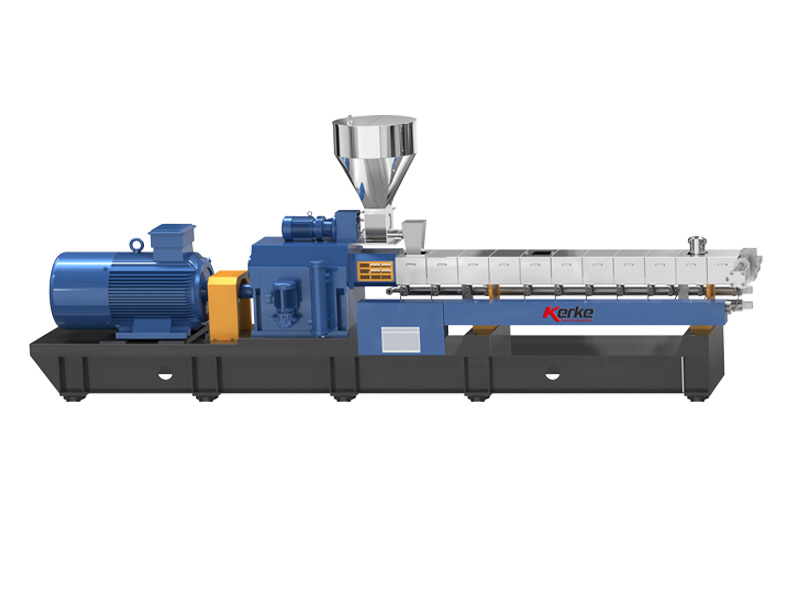
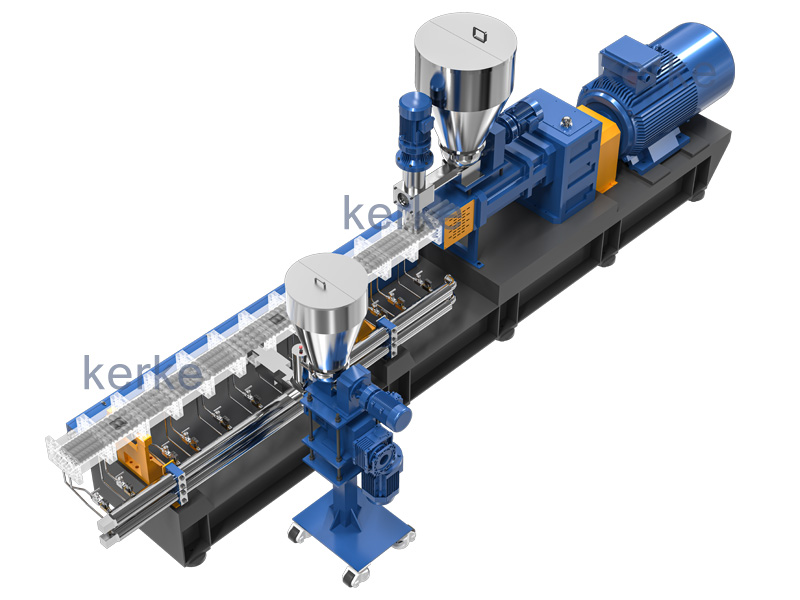
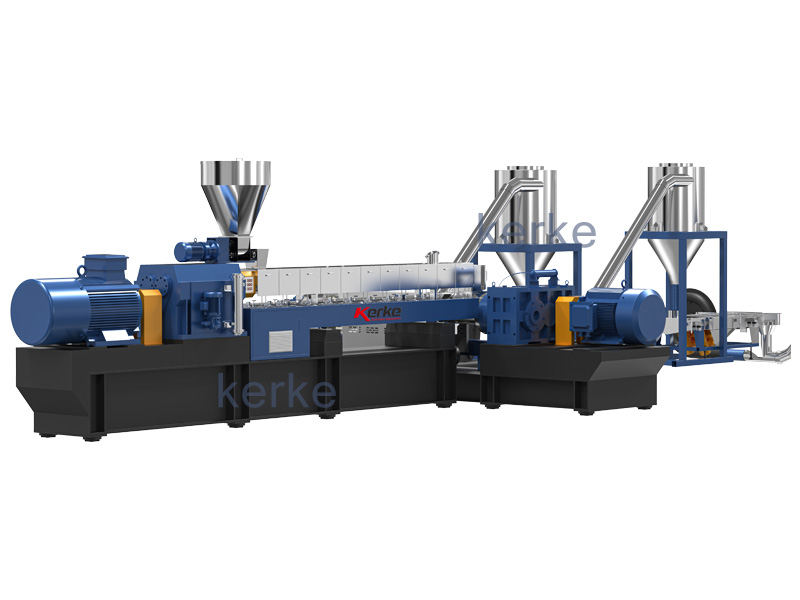
As a leading global manufacturer of twin screw compounding extruders with over 18 years of experience, Kerke has made energy efficiency a core design principle across its entire product lineup. Kerke compounding extruders integrate advanced energy-saving technologies that reduce energy consumption by 30-50% compared to conventional machines while maintaining or improving production output and product quality. From high-torque servo drive systems to intelligent temperature control and energy recovery solutions, Kerke has developed a comprehensive approach to eliminating energy waste at every stage of the extrusion process.
This comprehensive guide explores the various sources of energy waste in traditional compounding extruders and explains how modern energy-efficient technologies address these issues. It provides a detailed analysis of Kerke’s proprietary energy-saving features, including real-world performance data and cost-benefit calculations. The guide also offers practical best practices for optimizing energy efficiency in daily operations and maintenance. Whether you are operating a small masterbatch production facility or a large-scale compounding plant, this guide will help you understand how investing in energy-efficient compounding extruders can significantly reduce your operating costs and improve your bottom line.
1. Understanding Energy Waste in Traditional Compounding Extruders
Before exploring solutions to reduce energy waste, it is essential to understand where and how energy is wasted in traditional compounding extruders. Energy consumption in extrusion processes can be broken down into several key categories, each with its own unique sources of inefficiency.
1.1 Energy Consumption Breakdown
A typical twin screw compounding extruder consumes energy in four main areas: the main drive motor, the barrel heating system, the cooling system, and auxiliary equipment. The exact distribution varies depending on the extruder size, material being processed, and operating conditions, but the general breakdown is as follows:
The main drive motor is the largest energy consumer, accounting for 50-60% of total energy use. This motor provides the torque needed to rotate the screws, melt the polymer, and mix the additives. Traditional AC induction motors are particularly inefficient, as they run at constant speed regardless of load, drawing full current even during idle or low-load periods.
The barrel heating system is the second largest energy consumer, accounting for 30-40% of total energy use. Traditional resistance band heaters generate heat by passing electricity through a resistive element, which then transfers heat to the barrel through conduction. This process is inherently inefficient, as a significant portion of the heat is lost to the surrounding environment rather than being transferred to the material inside the barrel.
The cooling system accounts for 10-15% of total energy use. Cooling is necessary to remove excess heat generated by mechanical shear and to maintain precise temperature control along the barrel. Traditional cooling systems often operate at full capacity continuously, regardless of actual cooling requirements, resulting in unnecessary energy waste.
Auxiliary equipment, including feeders, pelletizers, conveyors, and material handling systems, accounts for the remaining 5-10% of energy use. While individual auxiliary components may not consume much energy, their combined consumption can be significant, especially in large production facilities.
1.2 Inefficiencies in the Main Drive System
The main drive system is responsible for converting electrical energy into mechanical energy to rotate the screws. Traditional drive systems suffer from several significant inefficiencies that waste a substantial amount of energy.
Traditional AC induction motors have a maximum efficiency of 82-85% at full load, and their efficiency drops significantly at partial loads. Since most extruders operate at varying loads throughout the production process, the average efficiency of traditional motors is often much lower, sometimes as low as 60-70%. This means that 30-40% of the electricity consumed by the motor is wasted as heat rather than being converted into useful mechanical energy.
Conventional gearboxes also contribute to energy waste. Gearboxes with spur gears or helical gears have mechanical efficiencies of 90-95% per stage, meaning that a multi-stage gearbox can lose 10-20% of the input energy through friction and heat. Worn or poorly lubricated gears can further reduce efficiency, increasing energy consumption by an additional 5-10%.
Another source of inefficiency is the mismatch between motor speed and process requirements. Traditional motors run at constant speed, and speed control is often achieved using mechanical transmissions or throttling valves, which waste energy by dissipating excess power as heat.
1.3 Heat Loss in Barrel Heating Systems
Traditional resistance heating systems are highly inefficient, with only 30-50% of the electrical energy consumed actually being transferred to the material inside the barrel. The remaining 50-70% is lost to the surrounding environment through convection and radiation.
Resistance band heaters are mounted on the outside of the barrel, and heat must travel through the barrel wall to reach the material. This creates a temperature gradient across the barrel wall, requiring the heater to operate at a higher temperature than the desired material temperature. The higher the temperature difference, the greater the heat loss to the environment.
Poor insulation exacerbates this problem. Many traditional extruders have little or no insulation on the barrel, allowing significant amounts of heat to escape into the factory. This not only wastes energy but also increases the factory temperature, creating uncomfortable working conditions and increasing the load on air conditioning systems.
Another issue with traditional heating systems is uneven heating. Resistance band heaters often create hotspots and cold spots along the barrel, leading to inconsistent material temperatures and poor product quality. To compensate for these inconsistencies, operators often run the heaters at higher temperatures than necessary, further increasing energy consumption.
1.4 Overcooling and Cooling System Inefficiencies
Cooling is essential for maintaining precise temperature control in the extrusion process, but traditional cooling systems are often oversized and operate inefficiently, wasting significant amounts of energy and water.
Many cooling systems are designed to handle the maximum possible cooling load, even though this maximum load is rarely encountered in actual operation. As a result, the systems operate at partial capacity most of the time, but they still consume nearly the same amount of energy as when operating at full load.
Traditional cooling systems use fixed-speed pumps and fans that run continuously at full speed, regardless of actual cooling requirements. This results in unnecessary energy consumption, especially during periods of low cooling demand.
Another source of inefficiency is the lack of integration between the heating and cooling systems. In many traditional extruders, the heating and cooling systems operate independently, often working against each other. For example, a heater may be running in one zone while a cooler is running in an adjacent zone, wasting energy in both processes.
1.5 Process and Operational Inefficiencies
In addition to equipment inefficiencies, there are several process and operational factors that contribute to energy waste in compounding extrusion.
Suboptimal screw design is a major source of energy waste. A poorly designed screw may require higher screw speeds or higher temperatures to achieve the desired level of mixing, increasing energy consumption. It may also result in incomplete melting or poor dispersion, leading to higher reject rates and wasted material and energy.
Idle time is another significant source of energy waste. Many extruders are left running at full power during breaks, changeovers, or when waiting for raw materials. An extruder running idle consumes 10-15% of its full-load energy while producing no output, representing a complete waste of energy.
Poor maintenance practices also contribute to energy waste. Worn screws, barrels, and bearings increase friction and reduce mechanical efficiency, increasing energy consumption by 10-20%. Dirty or clogged cooling systems reduce heat transfer efficiency, requiring more energy to achieve the same cooling effect.
Finally, overprocessing is a common source of energy waste. Running the extruder at higher temperatures or higher screw speeds than necessary to achieve the desired product quality wastes energy without providing any benefit. This often occurs when operators use conservative process parameters to avoid quality issues, rather than optimizing the process for maximum efficiency.
2. Core Energy-Saving Technologies for Compounding Extruders
Modern compounding extruders integrate a range of advanced technologies that address the various sources of energy waste in traditional machines. These technologies work together to significantly improve energy efficiency while maintaining or improving production performance.
2.1 High-Efficiency Servo Drive Systems
The most significant advancement in extruder energy efficiency is the development of high-efficiency servo drive systems, which replace traditional AC induction motors and gearboxes. Servo drive systems offer several key advantages that result in substantial energy savings.
Permanent magnet synchronous servo motors have energy conversion efficiencies of 92-95%, compared to 82-85% for traditional AC induction motors. This means that servo motors convert a much higher percentage of electrical energy into useful mechanical energy, reducing energy waste.
Unlike traditional motors that run at constant speed, servo motors adjust their speed and torque precisely to match the actual load demand. This is particularly beneficial in extrusion processes, where the load varies constantly during start-up, material feeding fluctuations, and temperature stabilization. A servo-driven extruder only consumes the amount of energy actually needed for the process, rather than running at full power continuously.
Servo drive systems also eliminate the need for many mechanical transmission components, such as pulleys, belts, and gearboxes, which are sources of energy loss. Direct-drive servo systems, which connect the motor directly to the screw, eliminate gearbox losses entirely, further improving efficiency.
Regenerative braking is another important energy-saving feature of servo drive systems. When the extruder decelerates or stops, the servo motor acts as a generator, converting kinetic energy back into electrical energy. This energy can be fed back into the power grid or used to power other equipment, reducing overall energy consumption by an additional 5-10%.
2.2 Induction Heating Technology
Induction heating technology represents a major improvement over traditional resistance heating systems, offering significantly higher energy efficiency and better temperature control.
Induction heating works by generating an alternating magnetic field around the barrel, which induces eddy currents in the barrel material. These eddy currents generate heat directly within the barrel wall, eliminating the need for heat transfer through conduction from an external heating element.
This direct heating method is much more efficient than resistance heating, with energy conversion efficiencies of 90-95% compared to 30-50% for resistance heaters. This means that induction heating systems use 30-50% less electricity to achieve the same barrel temperature.
Induction heating also provides faster and more uniform heating than resistance heating. The heat is generated directly within the barrel wall, resulting in faster heat-up times and more consistent temperature distribution along the barrel. This improves process stability and product quality while reducing energy consumption.
Another advantage of induction heating is that the induction coils themselves do not get hot, reducing heat loss to the surrounding environment. The barrel can also be insulated more effectively with induction heating, further reducing heat loss and improving energy efficiency.
2.3 Advanced Temperature Control Systems
Advanced temperature control systems play a critical role in optimizing energy efficiency by ensuring that the extruder operates at the minimum temperature necessary to achieve the desired product quality.
Modern PID (Proportional-Integral-Derivative) controllers with auto-tuning functionality provide much more precise temperature control than traditional on-off controllers. They continuously adjust the power output to the heaters based on real-time temperature feedback, maintaining the desired temperature within ±1°C. This eliminates temperature overshoot and reduces unnecessary energy consumption.
Segmented heating and cooling systems allow for independent temperature control of each barrel zone, ensuring that each zone operates at the optimal temperature for the specific stage of the extrusion process. This prevents overheating in some zones and underheating in others, improving both energy efficiency and product quality.
Intelligent temperature control systems can also predict temperature changes based on process conditions and adjust the heating and cooling outputs proactively. This predictive control further improves temperature stability and reduces energy waste.
2.4 Optimized Screw and Barrel Design
The design of the screw and barrel has a significant impact on the energy efficiency of the extrusion process. An optimized screw design can reduce energy consumption by 10-15% while improving mixing performance and product quality.
Modern screw designs feature optimized flight depths, pitches, and mixing elements that ensure efficient melting and mixing with minimal energy input. The screw geometry is tailored to the specific material being processed, ensuring that the material is melted and mixed at the lowest possible temperature and screw speed.
High-torque screw designs allow for higher torque at lower screw speeds, reducing energy consumption while maintaining the same level of shear and mixing. This is particularly beneficial for processing high-viscosity materials or highly filled formulations.
Barrel design also plays a role in energy efficiency. Barrels with optimized cooling channel designs provide more efficient heat transfer, reducing the energy required for both heating and cooling. Wear-resistant barrel linings extend the service life of the barrel, maintaining optimal performance and energy efficiency over time.
2.5 Energy Recovery Systems
Energy recovery systems capture waste energy from the extrusion process and reuse it for other purposes, further improving overall energy efficiency.
Heat recovery systems capture waste heat from the barrel cooling system and the extruder gearbox. This waste heat can be used to preheat raw materials, heat the factory, or provide hot water for other processes. Heat recovery systems can reduce overall energy consumption by 10-15% by utilizing energy that would otherwise be wasted.
As mentioned earlier, regenerative braking systems in servo drive systems recover kinetic energy during deceleration and feed it back into the power grid. This is particularly beneficial for extruders that experience frequent start-stop cycles or speed changes.
Some advanced extruders also feature energy recovery systems that capture waste heat from the exhaust air of the ventilation system and use it to preheat incoming fresh air. This reduces the energy required for factory heating in cold climates.
2.6 Intelligent Process Control and Automation
Intelligent process control and automation systems optimize energy efficiency by continuously monitoring and adjusting process parameters in real-time.
Modern PLC control systems with advanced process control algorithms can automatically adjust screw speed, feed rate, temperature, and other parameters to maintain optimal operating conditions. These systems can detect changes in material properties or process conditions and make adjustments to ensure consistent product quality while minimizing energy consumption.
Energy monitoring systems provide real-time visibility into energy consumption at the machine, zone, and component levels. This allows operators to identify energy-intensive processes and implement targeted improvements. Energy monitoring also helps to track the effectiveness of energy-saving initiatives and identify opportunities for further optimization.
Recipe management systems store optimized process parameters for each product, ensuring that the extruder always operates at the most efficient settings for the specific product being produced. This eliminates the energy waste associated with suboptimal process parameters.
3. Kerke KTE Series Energy-Efficient Compounding Extruders
Kerke KTE Series twin screw compounding extruders are specifically designed to maximize energy efficiency while delivering exceptional performance and reliability. These machines integrate all of the advanced energy-saving technologies discussed above, resulting in energy savings of 30-50% compared to conventional extruders.
3.1 High-Torque Servo Drive System
All Kerke KTE Series extruders feature high-torque permanent magnet servo drive systems that provide industry-leading energy efficiency and performance.
The servo motors used in Kerke extruders have energy conversion efficiencies of up to 95%, significantly higher than traditional AC induction motors. The direct-drive design eliminates gearbox losses, further improving overall efficiency.
The servo drive system continuously adjusts speed and torque to match the actual load demand, ensuring that the extruder only consumes the energy actually needed for the process. This results in energy savings of 30-40% compared to traditional drive systems, depending on the application.
The regenerative braking system recovers energy during deceleration and feeds it back into the power grid, reducing overall energy consumption by an additional 5-10%. The system also features power factor correction, which improves the quality of the electrical power and reduces energy waste in the electrical distribution system.
3.2 Induction Heating with High-Efficiency Insulation
Kerke offers optional induction heating systems for all KTE Series extruders, providing significant energy savings compared to traditional resistance heating.
The Kerke induction heating system achieves energy conversion efficiencies of up to 95%, reducing heating energy consumption by 30-50%. The system provides fast and uniform heating, resulting in shorter heat-up times and more consistent temperature control.
All Kerke extruders come standard with high-efficiency barrel insulation that reduces heat loss by 20% compared to uninsulated barrels. The insulation also reduces the surface temperature of the barrel, improving workplace safety and reducing the load on factory air conditioning systems.
The combination of induction heating and high-efficiency insulation can reduce total extruder energy consumption by 15-25% compared to traditional resistance heating systems without insulation.
3.3 Advanced Temperature and Process Control
Kerke KTE Series extruders feature advanced PLC control systems with intelligent temperature and process control capabilities that optimize energy efficiency.
The PID temperature controllers with auto-tuning functionality maintain temperature control accuracy of ±1°C, ensuring that each barrel zone operates at the optimal temperature. The segmented heating and cooling system allows for independent control of each zone, preventing overheating and reducing energy waste.
The control system features energy monitoring capabilities that provide real-time visibility into energy consumption at the machine and zone levels. This allows operators to identify energy-intensive processes and implement targeted improvements. The system also generates energy consumption reports that help track the effectiveness of energy-saving initiatives.
The recipe management system stores optimized process parameters for each product, ensuring that the extruder always operates at the most efficient settings. The system also features automatic start-up and shut-down sequences that minimize energy consumption during these periods.
3.4 Optimized Screw Geometry
Kerke has developed proprietary screw geometries that are optimized for energy efficiency and mixing performance.
The screws feature optimized flight depths, pitches, and mixing elements that ensure efficient melting and mixing with minimal energy input. The screw design is tailored to specific applications, such as masterbatch production, engineering plastic compounding, and biodegradable plastic processing, ensuring optimal performance for each material type.
The high-torque screw design allows for higher torque at lower screw speeds, reducing energy consumption while maintaining excellent mixing performance. This is particularly beneficial for processing highly filled formulations, where traditional screws often require higher speeds and consume more energy.
Kerke also offers custom screw design services to meet specific customer requirements. The company’s team of experienced engineers can design screws that are optimized for a customer’s specific materials and process conditions, further improving energy efficiency and product quality.
3.5 Integrated Energy Recovery Systems
Kerke offers optional integrated energy recovery systems that capture waste energy from the extrusion process and reuse it for other purposes.
The heat recovery system captures waste heat from the barrel cooling system and uses it to preheat raw materials. Preheating the raw materials reduces the amount of energy required to melt the polymer in the extruder, reducing overall energy consumption by 10-15%.
The heat recovery system can also be used to heat the factory or provide hot water for other processes, reducing the energy required for these purposes. This is particularly beneficial in cold climates, where factory heating is a significant energy expense.
The regenerative braking system in the servo drive system recovers energy during deceleration and feeds it back into the power grid. This energy can be used to power other equipment in the facility, reducing overall energy consumption.
3.6 Performance Data and Energy Savings Examples
The energy savings achieved by Kerke KTE Series extruders have been verified in numerous real-world applications across various industries.
In masterbatch production, Kerke KTE Series extruders typically achieve specific energy consumption (SEC) of 1.2-1.8 kWh per kilogram of product, compared to 2.5-3.0 kWh/kg for conventional extruders. This represents an energy savings of 30-50%. For a facility producing 1,000 tons of masterbatch per year, this translates to annual energy savings of 1.3-1.8 million kWh, equivalent to $195,000-$270,000 at an electricity cost of $0.15 per kWh.
In engineering plastic compounding, Kerke extruders achieve SEC of 0.2-0.4 kWh/kg, compared to 0.3-0.6 kWh/kg for conventional extruders. This represents an energy savings of 25-35%. For a facility producing 5,000 tons of compound per year, this translates to annual energy savings of 500,000-1,000,000 kWh, equivalent to $75,000-$150,000 per year.
In biodegradable plastic compounding, Kerke extruders achieve SEC of 0.3-0.5 kWh/kg, compared to 0.5-0.8 kWh/kg for conventional extruders. This represents an energy savings of 30-40%. For a facility producing 2,000 tons of biodegradable compound per year, this translates to annual energy savings of 400,000-600,000 kWh, equivalent to $60,000-$90,000 per year.
4. Cost-Benefit Analysis and Return on Investment
Investing in energy-efficient compounding extruders requires a higher initial capital expenditure than purchasing conventional machines, but the energy savings and other benefits result in a rapid return on investment.
4.1 Initial Investment Comparison
To demonstrate the financial benefits of investing in Kerke energy-efficient extruders, we will compare the costs and returns of a Kerke KTE-35 extruder versus a conventional 35mm twin screw extruder for masterbatch production.
The initial purchase price of a conventional 35mm twin screw extruder is approximately $32,000. In contrast, the initial purchase price of a Kerke KTE-35 extruder with servo drive system, induction heating, and energy recovery system is approximately $52,000. This represents an initial investment premium of $20,000 for the Kerke machine.
However, this initial premium is quickly offset by significant energy savings, reduced maintenance costs, and increased productivity, as we will demonstrate in the following sections.
4.2 Annual Energy Cost Savings
We will base our analysis on a production facility operating 20 days per month, 12 months per year, 8 hours per day, producing 300 tons of masterbatch per year. The electricity cost is $0.15 per kWh.
The conventional extruder has a specific energy consumption of 2.8 kWh/kg, resulting in annual energy consumption of 840,000 kWh. At $0.15 per kWh, the annual energy cost is $126,000.
The Kerke KTE-35 extruder has a specific energy consumption of 1.5 kWh/kg, resulting in annual energy consumption of 450,000 kWh. At $0.15 per kWh, the annual energy cost is $67,500.
This represents an annual energy cost savings of $58,500 for the Kerke extruder compared to the conventional extruder.
4.3 Additional Cost Savings
In addition to energy cost savings, the Kerke extruder provides several other cost savings that further improve the return on investment.
Maintenance cost savings: The Kerke extruder has fewer moving parts and uses high-quality components, resulting in lower maintenance costs. The annual maintenance cost for the conventional extruder is approximately $4,800, while the annual maintenance cost for the Kerke extruder is approximately $2,400. This represents an annual maintenance cost savings of $2,400.
Productivity gains: The Kerke extruder’s faster heat-up times and more stable process result in higher productivity. The conventional extruder has an average production rate of 62.5 kg/h, while the Kerke extruder has an average production rate of 68.75 kg/h, a 10% increase. This results in additional annual production of 30 tons, which at a profit margin of $1.50 per kg, generates additional annual profit of $45,000.
Reduced reject rates: The Kerke extruder’s more precise process control results in lower reject rates. The conventional extruder has a reject rate of 3%, while the Kerke extruder has a reject rate of 0.5%. This results in annual material savings of 7.5 tons, which at a material cost of $2.50 per kg, generates annual savings of $18,750.
4.4 Total Return on Investment Calculation
Adding up all the cost savings and additional profit, the total annual financial benefit of the Kerke KTE-35 extruder compared to the conventional extruder is:
Energy cost savings: $58,500
Maintenance cost savings: $2,400
Additional profit from increased productivity: $45,000
Material savings from reduced reject rates: $18,750
Total annual benefit: $124,650
With an initial investment premium of $20,000, the payback period for the Kerke extruder is less than 2 months. This is an exceptional return on investment that demonstrates the significant financial benefits of investing in energy-efficient compounding extruders.
Even if we exclude the additional profit from increased productivity and reduced reject rates and only consider the direct cost savings (energy and maintenance), the total annual direct savings are $60,900, resulting in a payback period of less than 4 months.
Over the 10-15 year service life of the extruder, the total savings will be well over $1 million, making the Kerke extruder one of the most profitable investments a compounding manufacturer can make.
5. Best Practices for Maximizing Energy Efficiency
While investing in energy-efficient equipment is the most effective way to reduce energy consumption, implementing best practices in daily operations and maintenance can further improve energy efficiency and reduce costs.
5.1 Process Optimization
Optimizing the extrusion process is essential for maximizing energy efficiency. This involves identifying and eliminating process inefficiencies that waste energy without improving product quality.
Optimize temperature profiles: Ensure that each barrel zone operates at the minimum temperature necessary to achieve the desired product quality. Higher temperatures than necessary waste energy and can also cause thermal degradation of the material.
Optimize screw speed: Run the extruder at the lowest screw speed that provides the required level of mixing and throughput. Higher screw speeds increase energy consumption and can also cause excessive shear heating, requiring more cooling.
Optimize feed rate: Operate the extruder at the highest possible feed rate that maintains consistent product quality. Higher feed rates increase throughput and reduce the specific energy consumption per kilogram of product.
Use the appropriate screw design: Ensure that the screw design is optimized for the specific material being processed. A screw that is not well-suited for the material will require higher energy consumption to achieve the desired level of mixing.
5.2 Preventive Maintenance
A comprehensive preventive maintenance program is essential for maintaining optimal energy efficiency and extending the service life of the extruder.
Regularly inspect and maintain the drive system: Check the motor, gearbox, and bearings for signs of wear or damage. Lubricate moving parts according to the manufacturer’s recommendations. A well-maintained drive system operates more efficiently and consumes less energy.
Regularly inspect and maintain the heating and cooling systems: Check heaters, thermocouples, and cooling lines for signs of damage or wear. Clean cooling coils and filters regularly to ensure efficient heat transfer. A well-maintained heating and cooling system operates more efficiently and provides more precise temperature control.
Regularly inspect and maintain the screw and barrel: Check the screw and barrel for signs of wear. Worn screws and barrels increase energy consumption and reduce product quality. Replace worn components promptly to maintain optimal performance.
Keep the extruder clean: Regularly clean the extruder and auxiliary equipment to remove dirt, dust, and material buildup. A clean extruder operates more efficiently and is less likely to experience breakdowns.
5.3 Reduce Idle Time
Reducing idle time is a simple but effective way to reduce energy consumption. An extruder running idle consumes 10-15% of its full-load energy while producing no output.
Optimize production scheduling: Plan production runs to minimize changeovers and idle time between batches. Group similar products together to reduce changeover time and material waste.
Implement energy-saving idle modes: Most modern extruders have energy-saving idle modes that reduce power consumption during periods of inactivity. Ensure that these modes are enabled and used during breaks, changeovers, and other periods of idle time.
Shut down the extruder during long periods of inactivity: If the extruder will be idle for more than 30 minutes, consider shutting it down to save energy. The energy saved during the shutdown will more than offset the energy required to restart the extruder.
5.4 Employee Training and Engagement
Employees play a critical role in maximizing energy efficiency. Well-trained and engaged employees are more likely to identify and implement energy-saving opportunities.
Provide comprehensive training: Train operators on energy-efficient operating practices and the proper use of the extruder’s energy-saving features. Ensure that operators understand how their actions affect energy consumption and product quality.
Establish energy efficiency goals: Set clear energy efficiency goals for the facility and communicate them to all employees. Track progress towards these goals and recognize and reward employees who contribute to energy savings.
Encourage employee suggestions: Encourage employees to suggest ideas for improving energy efficiency. Employees who work with the equipment every day often have valuable insights into ways to reduce energy consumption.
5.5 Monitor and Analyze Energy Consumption
Continuous monitoring and analysis of energy consumption are essential for identifying opportunities for improvement and tracking the effectiveness of energy-saving initiatives.
Install energy monitoring systems: Install energy meters to monitor energy consumption at the machine, zone, and component levels. This provides real-time visibility into energy use and helps identify energy-intensive processes.
Analyze energy data: Regularly analyze energy consumption data to identify trends, patterns, and anomalies. This helps identify opportunities for improvement and track the effectiveness of energy-saving initiatives.
Benchmark performance: Compare your facility’s energy performance to industry benchmarks and best practices. This helps identify areas where your facility is underperforming and provides targets for improvement.
Continuously improve: Use the insights gained from energy monitoring and analysis to implement continuous improvements in energy efficiency. Energy efficiency is an ongoing process, not a one-time project.
6. Future Trends in Energy-Efficient Compounding Extrusion
The compounding extrusion industry is continuously evolving, with new technologies and innovations emerging to further improve energy efficiency and sustainability.
6.1 Artificial Intelligence and Machine Learning
Artificial intelligence (AI) and machine learning are being increasingly applied to extrusion processes to optimize energy efficiency and product quality.
AI-powered process control systems can analyze vast amounts of process data in real-time and make automatic adjustments to optimize energy consumption while maintaining product quality. These systems can learn from past experience and continuously improve their performance over time.
Machine learning algorithms can also predict equipment failures before they occur, allowing for preventive maintenance that reduces downtime and maintains optimal energy efficiency.
6.2 Digital Twins and Virtual Simulation
Digital twin technology creates a virtual replica of the extrusion process, allowing manufacturers to simulate and optimize process parameters before implementing them in the real world.
Digital twins can be used to optimize screw design, temperature profiles, and other process parameters to minimize energy consumption while maximizing product quality. This reduces the need for time-consuming and expensive trial-and-error testing in the real world.
Virtual simulation also allows manufacturers to test new materials and formulations virtually, reducing the energy and material waste associated with physical testing.
6.3 Integration with Renewable Energy
As renewable energy becomes more affordable and accessible, more compounding facilities are integrating solar, wind, and other renewable energy sources into their operations.
Energy-efficient extruders are particularly well-suited for integration with renewable energy systems, as their lower energy consumption reduces the size and cost of the renewable energy system required to power them.
Some advanced extruders are also being designed to operate on variable power inputs, allowing them to adjust their energy consumption based on the availability of renewable energy. This helps maximize the use of renewable energy and reduce reliance on fossil fuels.
6.4 Circular Economy and Sustainable Manufacturing
The shift towards a circular economy is driving the development of more sustainable manufacturing practices, including the increased use of recycled and bio-based materials.
Energy-efficient extruders play a critical role in the circular economy by reducing the energy required to process recycled and bio-based materials. These materials often require more precise processing than virgin materials, making energy efficiency even more important.
Kerke is actively developing extruder technologies that are optimized for processing recycled and bio-based materials, helping manufacturers reduce their environmental footprint and meet sustainability goals.
7. Conclusion
Energy efficiency is no longer just an environmental concern—it is a critical business imperative for compounding manufacturers. Rising energy costs and stringent carbon emission regulations make reducing energy consumption essential for maintaining profitability and competitiveness.
Traditional compounding extruders waste a significant amount of energy through inefficient drive systems, heat loss, overcooling, and process inefficiencies. Modern energy-efficient extruders integrate advanced technologies such as servo drive systems, induction heating, intelligent temperature control, and energy recovery systems to reduce energy consumption by 30-50% while maintaining or improving production performance.
Kerke KTE Series compounding extruders are at the forefront of this energy efficiency revolution. These machines integrate all of the latest energy-saving technologies, delivering industry-leading energy efficiency and performance. The cost-benefit analysis clearly demonstrates that investing in Kerke energy-efficient extruders provides an exceptional return on investment, with payback periods often measured in months rather than years.
In addition to investing in energy-efficient equipment, implementing best practices in process optimization, preventive maintenance, idle time reduction, employee training, and energy monitoring can further improve energy efficiency and reduce costs.
As the industry continues to evolve, new technologies such as artificial intelligence, digital twins, and renewable energy integration will further improve the energy efficiency of compounding extrusion processes. Kerke is committed to staying at the forefront of these developments, continuously innovating to provide its customers with the most energy-efficient and sustainable compounding solutions available.
By investing in energy-efficient compounding extruders and implementing best practices in energy management, manufacturers can significantly reduce their operating costs, improve their environmental footprint, and position themselves for long-term success in an increasingly competitive and sustainable global market.