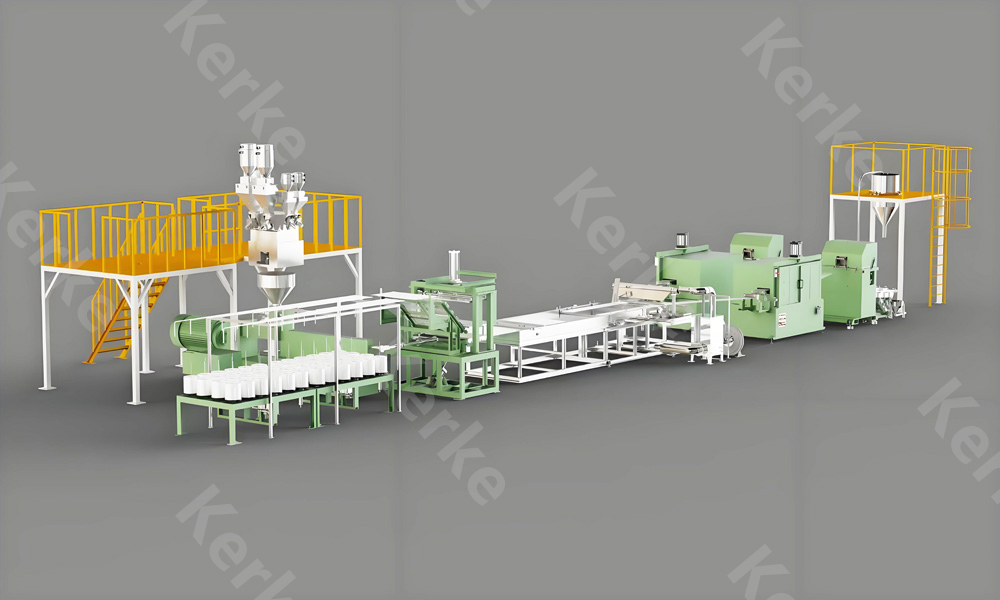
The global masterbatch market is undergoing a profound transformation driven by the rise of personalized manufacturing, fast fashion, and just-in-time supply chains. Today, more than 60% of masterbatch orders are for batches smaller than 500kg, and this trend is accelerating as brands increasingly demand custom colors, functional additives, and short production runs to respond quickly to market changes. For manufacturers specializing in small batch custom production, the choice of extrusion equipment is not just a purchasing decision—it is a strategic investment that directly determines profitability, product quality, and customer satisfaction.
Traditional high-volume twin screw extruders are poorly suited for small batch production. They require long changeover times, consume excessive amounts of purge material during color and formula changes, and operate inefficiently at partial capacity. These inefficiencies can increase production costs by 30-50% for small batch operations, eroding profit margins and making it difficult to compete in a price-sensitive market.
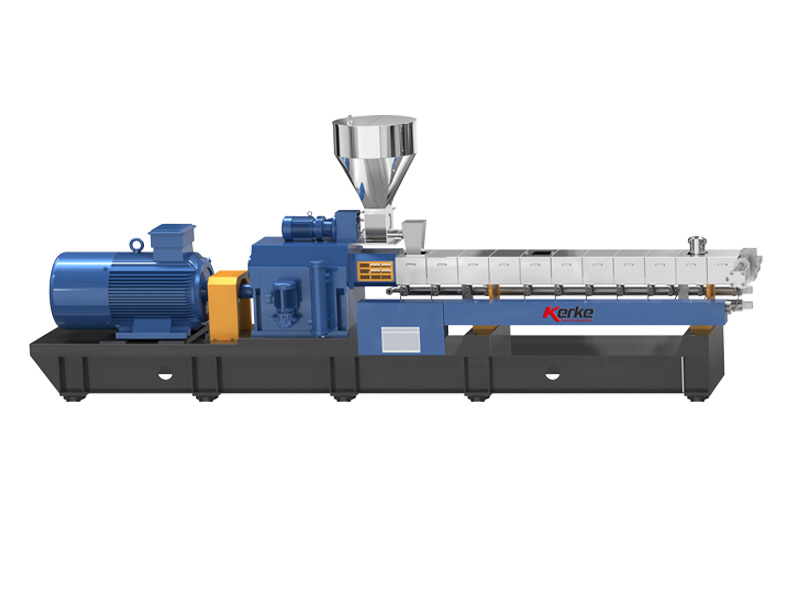
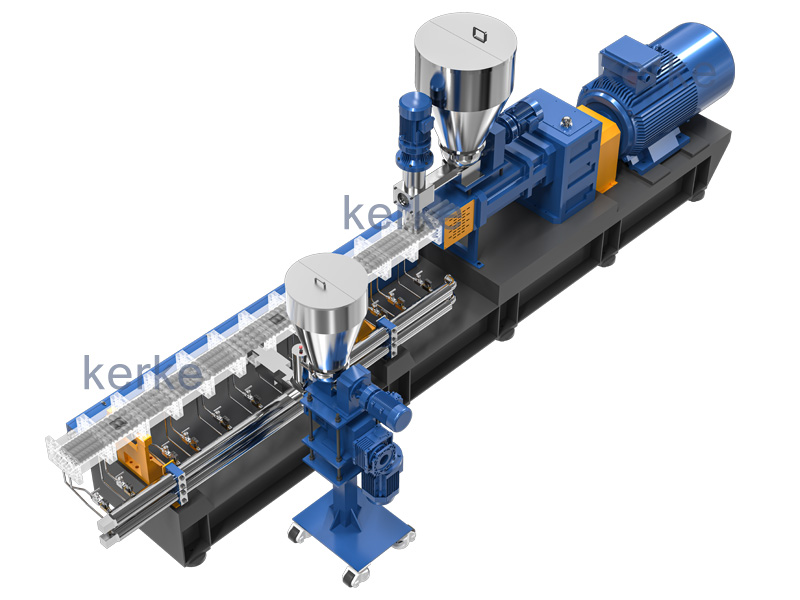
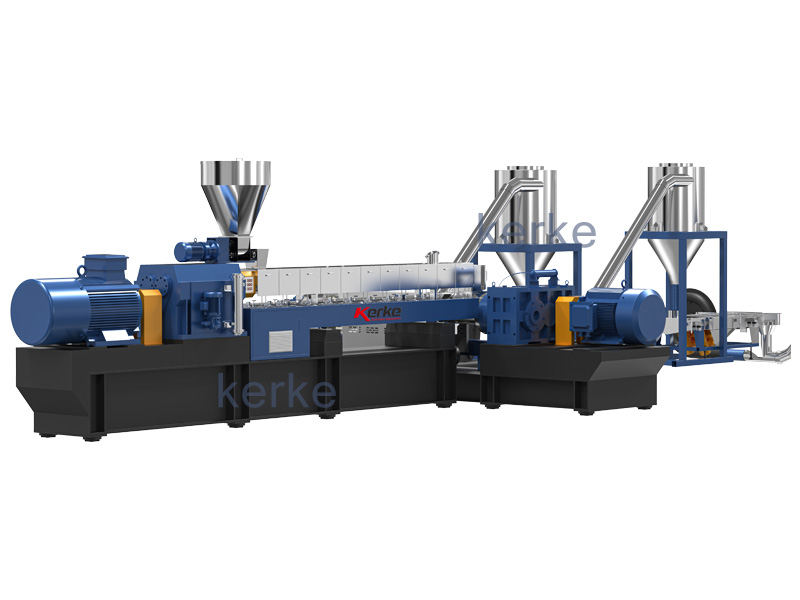
As a leading global manufacturer of twin screw extruders with over 18 years of experience, Kerke has developed a comprehensive range of masterbatch extruders specifically engineered for small batch custom production. Kerke compounding extruders combine advanced modular design, precision process control, and industry-leading cleanout efficiency to deliver exceptional performance for multi-variety, small-batch manufacturing. With a product lineup ranging from laboratory-scale machines to flexible production systems, Kerke offers solutions that balance affordability, performance, and scalability for businesses of all sizes.
This comprehensive guide provides everything you need to know about selecting the right masterbatch extruder for small batch custom production. It covers the unique challenges of small batch manufacturing, the critical design features that determine equipment performance, and a detailed review of Kerke’s specialized product lineup. The guide also includes a thorough cost-benefit analysis, return on investment calculations, and practical advice for avoiding common purchasing mistakes. Whether you are launching a new masterbatch business or upgrading your existing production capacity, this guide will help you make an informed decision that maximizes your return on investment.
1. Unique Challenges of Small Batch Masterbatch Production
Small batch custom masterbatch production presents a unique set of challenges that differ significantly from high-volume manufacturing. These challenges require specialized equipment design and operational strategies to maintain profitability and product quality.
1.1 Frequent Product Changeovers
The most significant challenge in small batch production is the frequency of product changeovers. A typical small batch operation may run 5-10 different products per day, compared to 1-2 products per week for a high-volume facility. Each changeover requires stopping production, cleaning the extruder and downstream equipment, changing the screw configuration if necessary, and setting up new process parameters.
Traditional extruders can take 1-2 hours to complete a color change, with purge material consumption ranging from 5-20kg per changeover. For a facility running 200 changeovers per month, this can result in over 2,000kg of wasted material and 200+ hours of lost production time annually. This waste directly impacts profitability, as purge material is often discarded or sold at a significant discount.
Additionally, incomplete cleaning between batches can lead to cross-contamination, resulting in off-color products and customer rejects. For custom masterbatch manufacturers, maintaining color consistency between batches is critical, as even minor color differences can lead to rejected orders and damaged customer relationships.
1.2 High Unit Production Costs
Small batch production inherently has higher unit costs than high-volume production due to economies of scale. Fixed costs such as labor, equipment depreciation, and overhead are spread over fewer kilograms of product, increasing the cost per kilogram.
Energy consumption is also higher per unit of output for small batch production. Extruders consume significant energy during startup and warmup, and these costs are amortized over smaller production runs. Additionally, operating at partial capacity reduces energy efficiency, as extruders are designed to operate most efficiently at their rated output.
Labor costs are another major factor. Small batch operations require more labor per kilogram of product due to frequent changeovers, manual material handling, and quality control checks. Without efficient equipment and processes, labor costs can account for 30-40% of total production costs for small batch manufacturers.
1.3 Strict Quality Consistency Requirements
Despite the smaller production volumes, custom masterbatch customers have the same strict quality requirements as high-volume customers. Color consistency, dispersion quality, and physical properties must be consistent from batch to batch and between different production runs.
Achieving consistent quality in small batch production is more challenging because there is less opportunity to adjust process parameters during the run. Process variations that would be averaged out over a long production run can have a significant impact on the quality of a small batch. This requires extruders with precise process control and excellent repeatability.
Additionally, custom masterbatch formulations often include specialty pigments, additives, and carrier resins that can be difficult to process. The extruder must be flexible enough to handle a wide range of materials and formulations without compromising product quality.
1.4 Fast Delivery Requirements
Customers for custom masterbatch typically require fast delivery times, often 1-2 weeks from order placement. This puts significant pressure on manufacturers to minimize lead times and maximize production efficiency.
Long changeover times and equipment downtime can delay production and result in missed delivery deadlines. This can lead to customer dissatisfaction and lost business, as customers will switch to suppliers who can meet their delivery requirements.
To meet these fast delivery requirements, manufacturers need equipment that can be quickly changed over between products and that operates reliably with minimal unplanned downtime.
1.5 Future Scalability
While many businesses start with small batch production, successful companies often grow into medium and large volume production. Choosing equipment that cannot scale with the business can result in costly premature replacement.
The ideal extruder for small batch production should be able to handle current production requirements while also providing a path for future expansion. This includes the ability to upgrade components, increase production capacity, and add new features as the business grows.
2. Critical Factors to Consider When Choosing a Masterbatch Extruder
When selecting an extruder for small batch custom masterbatch production, several critical factors must be evaluated to ensure the equipment meets your specific needs. These factors will determine the equipment’s productivity, operating costs, product quality, and long-term value.
2.1 Screw Design and L/D Ratio
The screw is the heart of any twin screw extruder, and its design is critical to achieving good dispersion, efficient processing, and easy cleaning. For small batch production, the screw design must balance excellent mixing performance with fast and thorough cleanout.
Modular screw design is essential for small batch masterbatch production. Kerke extruders feature a fully modular screw design with interchangeable elements, including conveying blocks, kneading blocks, reverse flight elements, and mixing elements. This allows you to configure the screw for specific formulations, optimizing dispersion for different pigments and additives. When changing products, you can quickly reconfigure the screw if necessary, rather than having to purchase an entirely new screw.
The length-to-diameter (L/D) ratio is another important consideration. For masterbatch production, an L/D ratio of 40:1 to 48:1 is generally recommended. This provides sufficient residence time for complete melting and dispersion of pigments and additives, while still allowing for fast cleanout between batches. Longer L/D ratios (52:1 or higher) are suitable for highly filled formulations or reactive extrusion, but they increase cleanout time and material waste. Shorter L/D ratios (32:1 or less) may not provide sufficient mixing for high-quality masterbatch production.
Kerke’s self-cleaning screw elements are specifically designed to minimize material residue between batches. The closely intermeshing screw design wipes material from the screw and barrel surfaces, reducing the amount of purge material required for color changes. This can reduce purge material consumption by 50-70% compared to conventional screw designs.
2.2 Changeover and Cleanout Efficiency
Changeover and cleanout efficiency is the single most important factor for profitability in small batch masterbatch production. Even small improvements in changeover time and purge material consumption can result in significant cost savings over the life of the equipment.
Split barrel design is a game-changer for small batch production. Kerke extruders feature a horizontally split barrel that can be opened in minutes, providing complete access to the screw and barrel interior. This allows for thorough manual cleaning between batches, eliminating cross-contamination and reducing purge material consumption by up to 80%. For color changes between very different colors (such as black to white), a split barrel can reduce cleanout time from hours to minutes.
Quick-change screen changers are another essential feature. Kerke offers continuous screen changers that allow you to replace the screen without stopping production, eliminating downtime during screen changes. This is particularly valuable for small batch production, where screen changes would otherwise interrupt production runs and increase lead times.
Screw extraction systems make it easy to remove the entire screw assembly from the barrel for thorough cleaning. Kerke’s hydraulic screw extractor allows one person to remove the screw in less than 10 minutes, compared to several hours for manual extraction. This is especially useful for deep cleaning between different product families or when changing from heavily pigmented formulations.
Optimized flow paths with minimal dead spots also contribute to faster cleanout. Kerke extruders are designed with streamlined flow paths that eliminate areas where material can accumulate and degrade. This reduces the amount of purge material required to flush out old material and minimizes the risk of contamination.
2.3 Feeding System Accuracy
Accurate feeding of raw materials is critical for consistent masterbatch quality, especially in small batch production where even minor variations in ingredient ratios can result in off-spec product.
Loss-in-weight (LIW) feeders are the gold standard for masterbatch production. Unlike volumetric feeders, which measure material by volume, LIW feeders measure material by weight, providing much higher accuracy and consistency. Kerke’s multi-component LIW feeding systems deliver feeding accuracy of ±0.1% or better, ensuring that each batch has the exact formulation specified by the customer.
For formulations with high pigment loadings (20-80%), side feeding is essential. Adding pigments and fillers downstream in the process, after the carrier resin has melted, improves dispersion and reduces wear on the screw and barrel. Kerke offers multiple side feeding options, allowing you to add different ingredients at optimal points along the extruder length.
Liquid feeding systems are also available for adding liquid additives such as plasticizers, lubricants, and colorants. Kerke’s precision liquid feeders provide accurate and consistent dosing of liquid ingredients, ensuring uniform distribution throughout the masterbatch.
All Kerke feeding systems are integrated with the main extruder control system, allowing for automatic recipe management and process control. This eliminates manual calculation errors and ensures that each batch is produced with the exact same parameters.
2.4 Energy Efficiency and Operating Costs
Energy costs are a significant component of masterbatch production costs, and they are even more impactful for small batch operations due to lower production volumes. Choosing an energy-efficient extruder can result in substantial long-term cost savings.
Servo motor drive systems are significantly more energy-efficient than traditional DC or AC motor drives. Kerke extruders use high-torque servo motors that consume 30-50% less energy than conventional drives. Servo motors also provide more precise speed and torque control, improving process consistency and product quality.
Intelligent temperature control systems also contribute to energy efficiency. Kerke’s PID temperature controllers with auto-tuning functionality maintain precise temperature control in each barrel zone, minimizing energy waste. The system also includes energy-saving modes that reduce power consumption during idle periods.
Energy recovery systems capture and reuse energy that would otherwise be wasted. Kerke’s regenerative drive systems recover energy during deceleration and feed it back into the power grid, further reducing energy consumption.
When evaluating the total cost of ownership, it is important to consider not only the initial purchase price but also the ongoing operating costs, including energy, maintenance, and material waste. A slightly more expensive energy-efficient extruder will often provide a better return on investment over its lifetime due to lower operating costs.
2.5 Footprint and Space Requirements
Many small batch masterbatch manufacturers operate in limited space, so the footprint of the extruder and downstream equipment is an important consideration.
Kerke’s compact integrated design minimizes the floor space required for the production line. The extruder, feeding system, and control cabinet are all integrated into a single unit, reducing the overall footprint by 20-30% compared to conventional systems.
Modular design also allows for flexible layout configuration. You can arrange the extruder and downstream equipment to fit your available space, rather than having to rearrange your facility to accommodate the equipment.
2.6 Automation and Digitalization
Automation and digitalization are essential for improving productivity and consistency in small batch production. They reduce the reliance on skilled operators, minimize human error, and provide valuable data for process optimization.
Kerke extruders feature advanced PLC control systems with intuitive touchscreen interfaces. The system stores an unlimited number of recipes, allowing operators to recall process parameters for different products with a single touch. This eliminates the need for manual parameter adjustment and ensures consistent production between batches.
Data acquisition and traceability features allow you to record and store all process parameters for each batch. This data can be used to verify product quality, troubleshoot process issues, and demonstrate compliance with customer requirements and regulatory standards.
Remote monitoring and diagnostic capabilities allow Kerke technicians to access your extruder control system remotely to troubleshoot issues and provide technical support. This reduces downtime and ensures that any problems are resolved quickly, minimizing the impact on production.
2.7 After-Sales Support and Service
After-sales support is critical for small batch manufacturers, who often do not have extensive in-house technical expertise. A reliable supplier should provide comprehensive support throughout the life of the equipment.
Kerke offers a complete range of after-sales services, including installation and commissioning, operator training, preventive maintenance, and spare parts supply. The company has a global service network with technicians located in major markets around the world, ensuring fast response times and local support.
Installation and commissioning services ensure that your extruder is installed correctly and operates at peak performance from day one. Kerke technicians will also train your operators on proper machine operation, maintenance, and troubleshooting.
Preventive maintenance programs help to minimize unplanned downtime and extend the life of your equipment. Kerke offers customized maintenance plans based on your production volume and operating conditions.
A reliable spare parts supply is also essential. Kerke maintains a global inventory of spare parts, ensuring that critical parts are available when you need them. The company also offers fast shipping options for emergency parts.
2.8 Future Scalability
As your business grows, your production requirements will change. Choosing an extruder that can scale with your business will protect your investment and avoid costly premature replacement.
Kerke extruders are designed with scalability in mind. Many models can be upgraded with additional features, such as extra feeding ports, higher torque gearboxes, or larger drive motors, to increase production capacity or handle more demanding formulations.
The modular design also allows you to add downstream equipment as needed, such as underwater pelletizers, classifiers, or packaging systems. This means you can start with a basic production line and expand it as your business grows, rather than having to purchase an entirely new system.
3. Kerke Masterbatch Extruder Lineup for Small Batch Production
Kerke offers a comprehensive range of twin screw extruders specifically designed for small batch custom masterbatch production. Each model is engineered to deliver exceptional performance, cleanout efficiency, and reliability, with options to meet different production requirements and budgets.
3.1 KTE-20 Laboratory and Pilot Scale Extruder
The KTE-20 is a compact laboratory and pilot scale extruder ideal for formula development, small sample production, and very small batch manufacturing. With a screw diameter of 20mm and a production capacity of 5-15kg/h, it is perfect for producing small batches of custom masterbatch for customer evaluation or testing.
The KTE-20 features all the same advanced technologies as Kerke’s larger production machines, including modular screw design, split barrel construction, and precision loss-in-weight feeding. This ensures that results obtained in the laboratory can be directly scaled up to production size machines, eliminating costly trial and error during production scale-up.
The compact footprint of the KTE-20 makes it suitable for installation in laboratories or small production facilities. It also features a user-friendly control system with recipe storage and data logging capabilities, making it easy to use for both experienced operators and researchers.
The price of the Kerke KTE-20 laboratory extruder ranges from $18,000 to $28,000, depending on configuration and optional features. This includes the base extruder, main feeder, control system, and basic downstream equipment.
3.2 KTE-35 Small Batch Production Extruder
The KTE-35 is Kerke’s most popular model for small batch custom masterbatch production. With a screw diameter of 35.6mm and a production capacity of 20-80kg/h, it strikes the perfect balance between production capacity and changeover efficiency.
The KTE-35 features a 44:1 L/D ratio, which provides excellent mixing performance for a wide range of masterbatch formulations, from standard color masterbatches to highly filled functional masterbatches. The split barrel design and self-cleaning screw elements allow for fast color changes, with typical changeover times of 15-30 minutes and purge material consumption of less than 3kg per changeover.
The machine is equipped with a high-torque gearbox and servo motor drive system, providing excellent energy efficiency and process control. It can be configured with up to three side feeders and multiple liquid feeders, allowing for the production of complex formulations with multiple ingredients.
The KTE-35 is available with a variety of downstream options, including water strand pelletizers, underwater pelletizers, and hot face pelletizers, to meet different product requirements. It also features an integrated control system with recipe management, data logging, and remote monitoring capabilities.
The price of the Kerke KTE-35 small batch production extruder ranges from $38,000 to $62,000, depending on configuration. A typical turnkey system including feeding system, extruder, pelletizer, and classifier costs approximately $55,000.
3.3 KTE-36 High-Torque Small Batch Extruder
The KTE-36 is a high-torque version of the KTE-35, designed for more demanding applications such as high-filled masterbatches, engineering plastic compounds, and biodegradable materials. With a specific torque of 13Nm/cm³, it provides 30% more torque than the standard KTE-35, allowing for higher throughput and better processing of difficult materials.
The KTE-36 features the same compact design and fast changeover capabilities as the KTE-35, making it ideal for small batch production of high-performance compounds. It is available with the same range of options and downstream equipment as the KTE-35, providing maximum flexibility.
The price of the Kerke KTE-36 high-torque extruder ranges from $48,000 to $75,000, depending on configuration. This makes it an excellent value for manufacturers who need the extra torque but still require the flexibility of small batch production.
3.4 KTE-50 Flexible Production Extruder
The KTE-50 is a flexible production extruder that bridges the gap between small batch and medium volume production. With a screw diameter of 51.4mm and a production capacity of 50-220kg/h, it is ideal for manufacturers who have a mix of small batch custom orders and larger volume production runs.
The KTE-50 features a 44:1 L/D ratio and high-torque drive system, providing excellent mixing performance for a wide range of formulations. It retains all the fast changeover features of Kerke’s smaller machines, including split barrel construction, self-cleaning screw elements, and quick-change screen changers. This allows it to efficiently handle both small batch custom orders and larger production runs, maximizing equipment utilization.
The KTE-50 can be configured with up to four side feeders and multiple liquid feeders, making it suitable for complex formulations with multiple ingredients. It is available with a full range of downstream options, including advanced underwater pelletizing systems for high-quality pellet production.
The price of the Kerke KTE-50 flexible production extruder ranges from $82,000 to $135,000, depending on configuration. A complete turnkey system costs approximately $110,000.
3.5 Complete Turnkey Solutions
In addition to individual extruders, Kerke offers complete turnkey masterbatch production lines tailored to the specific needs of small batch manufacturers. These turnkey solutions include all the equipment necessary to start production, from raw material handling and pre-mixing to finished product packaging.
Kerke’s turnkey lines are designed to be fully integrated and optimized for small batch production. They feature centralized control systems that allow operators to monitor and control the entire production process from a single interface. This reduces the number of operators required and improves production efficiency.
The company also provides complete project management services, including facility layout design, equipment installation and commissioning, operator training, and ongoing technical support. This ensures that your production line is up and running quickly and operates at peak performance from day one.
The price of a complete Kerke turnkey masterbatch production line for small batch production ranges from $65,000 for a basic KTE-35 system to $180,000 for a fully automated KTE-50 system with advanced downstream equipment.
4. Cost-Benefit Analysis and Return on Investment
Investing in a high-quality masterbatch extruder specifically designed for small batch production provides a significant return on investment through reduced material waste, lower energy consumption, higher productivity, and improved product quality.
4.1 Initial Investment Comparison
To demonstrate the financial benefits of choosing a Kerke extruder for small batch production, we will compare the costs and returns of a Kerke KTE-35 extruder versus a conventional 35mm twin screw extruder from a budget manufacturer.
The initial purchase price of a conventional 35mm twin screw extruder is approximately $32,000. In contrast, the initial purchase price of a Kerke KTE-35 extruder with comparable capacity is approximately $52,000. This represents an initial investment premium of $20,000 for the Kerke machine.
However, this initial premium is quickly offset by significant operating cost savings, as we will demonstrate in the following sections.
4.2 Annual Operating Cost Savings
We will base our analysis on a typical small batch masterbatch operation running 20 days per month, 12 months per year, with an average of 6 changeovers per day. The production volume is approximately 30,000kg per year.
Purge material savings are the most significant cost benefit of the Kerke extruder. The conventional extruder requires approximately 12kg of purge material per changeover, while the Kerke extruder requires only 3kg per changeover due to its split barrel design and self-cleaning screw elements. At a material cost of $2.50 per kg, this results in annual savings of:
(12kg – 3kg) × 6 changeovers/day × 20 days/month × 12 months/year × $2.50/kg = $32,400 per year.
Energy savings are another major benefit. The conventional extruder consumes approximately 28kW of electricity, while the Kerke extruder with servo drive consumes approximately 16kW. At an electricity cost of $0.15 per kWh, operating 8 hours per day, this results in annual savings of:
(28kW – 16kW) × 8 hours/day × 20 days/month × 12 months/year × $0.15/kWh = $3,456 per year.
Labor savings are also significant. The conventional extruder requires 2 operators per shift due to its manual changeover and cleaning procedures, while the Kerke extruder can be operated by 1 operator due to its automated features and fast changeover design. At a labor cost of $3,000 per operator per month, this results in annual savings of:
1 operator × $3,000/month × 12 months/year = $36,000 per year.
Productivity gains from reduced changeover time also contribute to cost savings. The conventional extruder requires approximately 1.5 hours per changeover, while the Kerke extruder requires only 0.5 hours per changeover. This results in an additional 6 hours of production time per day, which can be used to increase production volume or reduce overtime costs. Assuming a production rate of 50kg/h and a profit margin of $1.50 per kg, this results in additional annual profit of:
6 hours/day × 20 days/month × 12 months/year × 50kg/hour × $1.50/kg = $108,000 per year.
Reduced reject rates also contribute to savings. The Kerke extruder’s precise process control results in a reject rate of approximately 0.5%, compared to 3% for the conventional extruder. This results in annual savings of:
30,000kg/year × (3% – 0.5%) × $2.50/kg = $1,875 per year.
Adding these savings together, the total annual operating cost savings and additional profit from the Kerke extruder is approximately $181,731 per year.
4.3 Return on Investment Calculation
With an initial investment premium of $20,000 and annual savings of over $180,000, the payback period for the Kerke KTE-35 extruder is less than 1.5 months. This is an exceptional return on investment that demonstrates the significant financial benefits of choosing equipment specifically designed for small batch production.
Even if we exclude the additional profit from increased production volume and only consider the direct cost savings (purge material, energy, labor, and rejects), the total annual direct savings are $73,731, resulting in a payback period of approximately 3.3 months.
Over the 10-15 year service life of the extruder, the total savings will be well over $1 million, making the Kerke extruder one of the most profitable investments a small batch masterbatch manufacturer can make.
5. Common Mistakes to Avoid When Choosing an Extruder
When selecting an extruder for small batch masterbatch production, there are several common mistakes that manufacturers should avoid to ensure they get the best value for their investment.
5.1 Focusing Only on Initial Purchase Price
The biggest mistake manufacturers make is focusing solely on the initial purchase price of the extruder, without considering the total cost of ownership. As demonstrated in our cost-benefit analysis, a slightly more expensive machine that offers better efficiency and lower operating costs will provide a much better return on investment over its lifetime.
Budget extruders often use lower quality components that wear out faster, resulting in higher maintenance costs and more downtime. They also typically have poor cleanout efficiency, leading to higher material waste and lower productivity. These hidden costs can quickly exceed the initial savings from purchasing a cheaper machine.
5.2 Overestimating Production Capacity Requirements
Another common mistake is purchasing an extruder with more capacity than you currently need. While it is important to plan for future growth, purchasing a machine that is too large for your current production volume will result in inefficient operation and higher unit costs.
Larger extruders have higher energy consumption, longer changeover times, and require more purge material per changeover. For small batch production, a smaller, more flexible machine will often be more profitable than a larger machine that operates at partial capacity.
5.3 Ignoring Changeover and Cleanout Efficiency
As we have emphasized throughout this guide, changeover and cleanout efficiency is the most critical factor for profitability in small batch production. Many manufacturers underestimate the impact of changeover time and material waste on their bottom line.
When evaluating extruders, always ask for specific data on changeover time and purge material consumption for different types of color changes. Test the machine if possible to verify these claims. A machine that saves even 30 minutes per changeover can result in significant productivity gains over the course of a year.
5.4 Neglecting After-Sales Support
After-sales support is often overlooked during the purchasing process, but it is essential for small batch manufacturers who may not have extensive in-house technical expertise. A machine that is down for several days waiting for a service technician or spare parts can result in significant lost production and missed customer deadlines.
Before purchasing an extruder, research the supplier’s service capabilities and reputation. Ask for references from other customers in your industry and inquire about their experience with after-sales support. Choose a supplier with a global service network and a proven track record of fast response times.
5.5 Failing to Plan for Future Growth
While it is important not to overbuy capacity, it is also important to choose an extruder that can grow with your business. Look for machines that offer upgrade options, such as additional feeding ports, higher torque drives, or expanded control capabilities. This will allow you to increase production capacity or add new capabilities as your business grows, without having to purchase an entirely new machine.
6. Best Practices for Small Batch Masterbatch Production
In addition to choosing the right equipment, implementing best practices in your production process will further improve efficiency, reduce costs, and enhance product quality.
6.1 Optimize Production Scheduling
Optimize your production schedule to minimize changeover time and material waste. Group similar colors and formulations together, running lighter colors first and progressing to darker colors. This reduces the amount of purge material required between batches and speeds up changeovers.
Also, try to batch similar orders together to maximize production run length. This reduces the number of changeovers required and improves overall equipment utilization.
6.2 Implement a Recipe Management System
Implement a comprehensive recipe management system to store and retrieve process parameters for each product. This ensures that each batch is produced with the exact same parameters, resulting in consistent product quality. It also reduces setup time between batches, as operators can simply recall the recipe for the next product.
Kerke’s control system includes built-in recipe management capabilities that allow you to store an unlimited number of recipes. The system also includes security features to prevent unauthorized changes to process parameters.
6.3 Establish a Preventive Maintenance Program
Establish a regular preventive maintenance program to keep your extruder operating at peak performance and minimize unplanned downtime. This should include daily, weekly, monthly, and annual maintenance tasks, such as lubrication, inspection, and component replacement.
Kerke provides detailed maintenance manuals and can help you develop a customized maintenance program based on your production volume and operating conditions. The company also offers preventive maintenance services performed by factory-trained technicians.
6.4 Invest in Operator Training
Invest in comprehensive operator training to ensure that your staff can operate the extruder efficiently and safely. Well-trained operators will be able to optimize process parameters, reduce changeover time, and identify and resolve minor issues before they become major problems.
Kerke provides comprehensive operator training as part of the installation and commissioning process. The company also offers advanced training courses to help your operators develop their skills and get the most out of your equipment.
6.5 Continuously Improve Your Process
Continuously monitor and analyze your production process to identify areas for improvement. Use the data logging capabilities of your extruder control system to track process parameters, production rates, and material consumption. This data can be used to identify bottlenecks, optimize process parameters, and reduce waste.
Regularly review your production data and implement changes to improve efficiency and reduce costs. This continuous improvement approach will help you stay competitive in the dynamic masterbatch market.
7. Conclusion
Small batch custom masterbatch production presents unique challenges that require specialized equipment designed for flexibility, efficiency, and fast changeovers. The right extruder can make the difference between a profitable operation and one that struggles to compete in a demanding market.
When choosing a masterbatch extruder for small batch production, prioritize changeover and cleanout efficiency, feeding accuracy, energy efficiency, and after-sales support. These factors will have a much greater impact on your long-term profitability than the initial purchase price of the equipment.
Kerke twin screw extruders are specifically engineered to meet the needs of small batch custom masterbatch manufacturers. With their modular screw design, split barrel construction, self-cleaning elements, and advanced control systems, Kerke extruders deliver industry-leading cleanout efficiency, precise process control, and exceptional reliability. The comprehensive product lineup offers solutions for every production requirement, from laboratory-scale formula development to flexible production systems that can handle both small batch and medium volume orders.
The cost-benefit analysis clearly demonstrates that investing in a Kerke extruder provides an exceptional return on investment, with payback periods often measured in months rather than years. The significant savings in material waste, energy, labor, and downtime quickly offset the initial investment premium, resulting in substantial long-term profits.
By choosing the right equipment and implementing best practices in your production process, you can build a successful and profitable small batch masterbatch business that meets the evolving needs of your customers. With Kerke as your partner, you will have access to the technology, expertise, and support you need to thrive in the competitive global masterbatch market.
If you are considering investing in a masterbatch extruder for small batch custom production, contact Kerke today to discuss your specific requirements. Our team of experienced engineers will work with you to design a customized solution that meets your production needs, budget, and growth plans.