The global masterbatch market is projected to reach $18.7 billion in 2026, growing at a compound annual growth rate (CAGR) of 6.2% through 2033. This growth is driven by the increasing demand for customized plastic solutions across diverse industries, each with unique performance requirements, regulatory standards, and sustainability goals. Today, more than 68% of masterbatch producers report that custom formulations account for over 40% of their revenue, up from just 35% in 2020. This shift toward customization has transformed the masterbatch industry from a commodity business to a high-value, technology-driven sector.
Each industry presents distinct challenges that require specialized masterbatch solutions. Food packaging requires FDA-compliant materials with zero migration risks. Automotive applications demand flame-retardant, UV-stabilized masterbatches that withstand extreme temperatures. Medical devices need biocompatible formulations that meet ISO 10993 standards. A one-size-fits-all approach to masterbatch production no longer works in today’s competitive market. The masterbatch extruder is the critical piece of equipment that determines a producer’s ability to meet these diverse custom requirements efficiently and profitably.
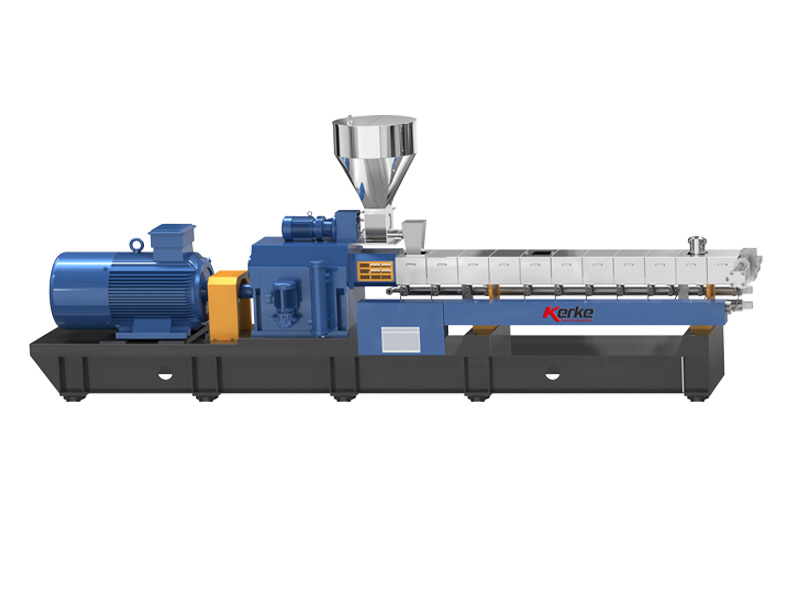
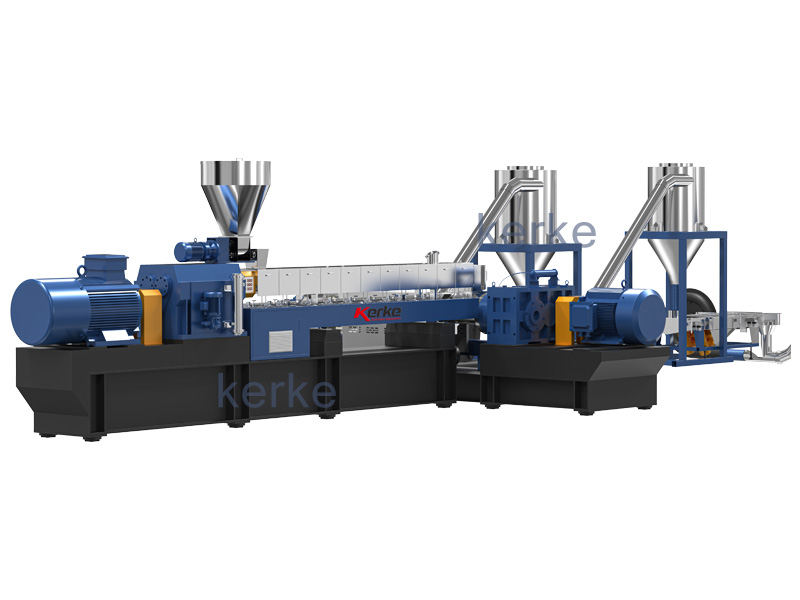
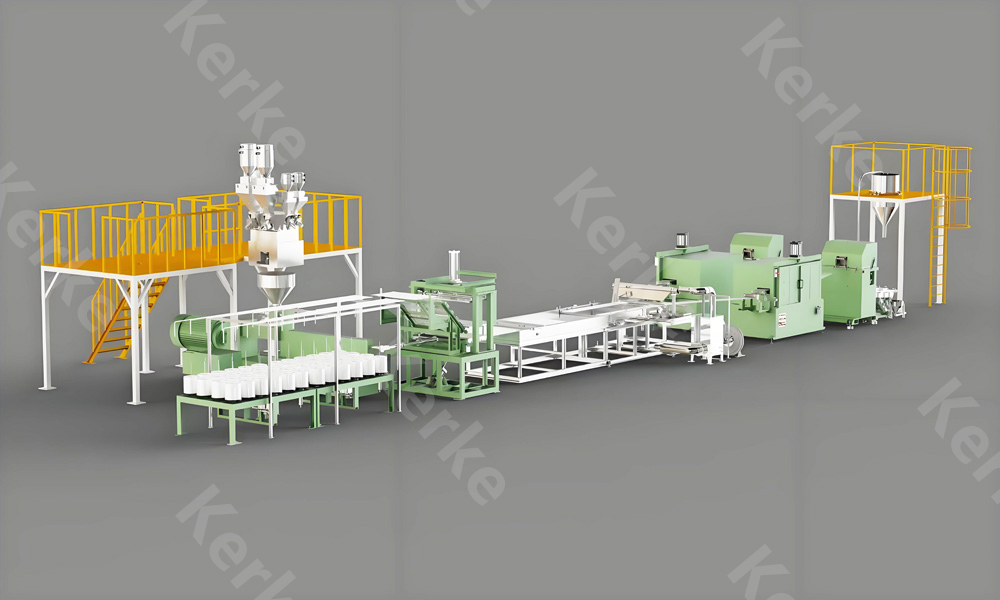
As a leading global manufacturer of twin screw extruders with over 18 years of experience, Kerke has established itself as the preferred partner for custom masterbatch production. Kerke masterbatch extruders, compounding extruders, and twin screw extruders are engineered with modular designs and advanced technologies that can be tailored to the specific needs of any industry. With over 3,000 machines installed in more than 70 countries, Kerke has helped thousands of masterbatch producers develop custom solutions that give them a competitive edge in their target markets.
This comprehensive guide explains how modern masterbatch extruders fulfill the custom requirements of different industries. It examines the key drivers of customization in the masterbatch market, details Kerke’s proprietary technologies for custom production, provides industry-specific solutions for seven major sectors, and includes a complete cost analysis and real-world case studies. Whether you are a small specialty masterbatch producer or a large multinational corporation, this guide will help you understand how investing in a Kerke custom masterbatch extruder can expand your product offerings and grow your business.
1. The Growing Demand for Custom Masterbatch Solutions
The shift toward custom masterbatch solutions is being driven by three key trends: evolving downstream industry requirements, increasingly strict regulatory standards, and the global push for sustainability. These trends are forcing masterbatch producers to develop more specialized products and production capabilities.
1.1 Diverse Downstream Industry Requirements
Downstream industries are becoming more specialized, with each sector developing unique performance requirements for plastic materials. For example:
- Packaging manufacturers need masterbatches that provide barrier properties, UV protection, and antimicrobial functionality
- Automotive OEMs require lightweight, heat-resistant masterbatches that improve fuel efficiency and durability
- Electronics manufacturers demand antistatic and flame-retardant masterbatches that meet strict safety standards
- Medical device companies need biocompatible masterbatches that can withstand sterilization processes
These diverse requirements cannot be met with standard off-the-shelf masterbatches. Producers must develop custom formulations and production processes to address each industry’s specific needs.
1.2 Increasingly Strict Regulatory Standards
Regulatory standards for plastic materials are becoming stricter worldwide, particularly in sensitive applications such as food contact, medical devices, and children’s products. These regulations vary by country and region, adding complexity to masterbatch production.
Key regulatory requirements include:
- FDA 21 CFR regulations for food contact materials in the United States
- EU Regulation 10/2011 for plastic materials and articles intended to come into contact with food
- ISO 10993 standards for biocompatibility of medical devices
- REACH regulations restricting the use of hazardous substances in the European Union
- RoHS directives limiting the use of certain hazardous substances in electrical and electronic equipment
Masterbatch producers must ensure that their products comply with all applicable regulations in the markets where they are sold. This requires specialized production equipment and quality control processes.
1.3 Sustainability and Circular Economy Goals
The global push for sustainability and the circular economy is driving demand for custom masterbatch solutions that improve the recyclability of plastic products and enable the use of recycled materials. Producers are developing masterbatches that:
- Enhance the recyclability of multi-material plastic products
- Improve the performance of recycled plastics
- Enable the use of higher percentages of post-consumer recycled (PCR) content
- Are biodegradable or compostable
- Reduce the carbon footprint of plastic products
These sustainable masterbatches require specialized formulation and processing capabilities that standard extruders cannot provide.
2. Kerke’s Core Capabilities for Custom Masterbatch Production
Kerke has developed a range of proprietary technologies and capabilities that enable us to deliver custom masterbatch extruder solutions tailored to the specific needs of any industry. Our modular design approach and flexible manufacturing processes allow us to configure each machine to meet our customers’ exact requirements.
2.1 Modular Twin Screw Design
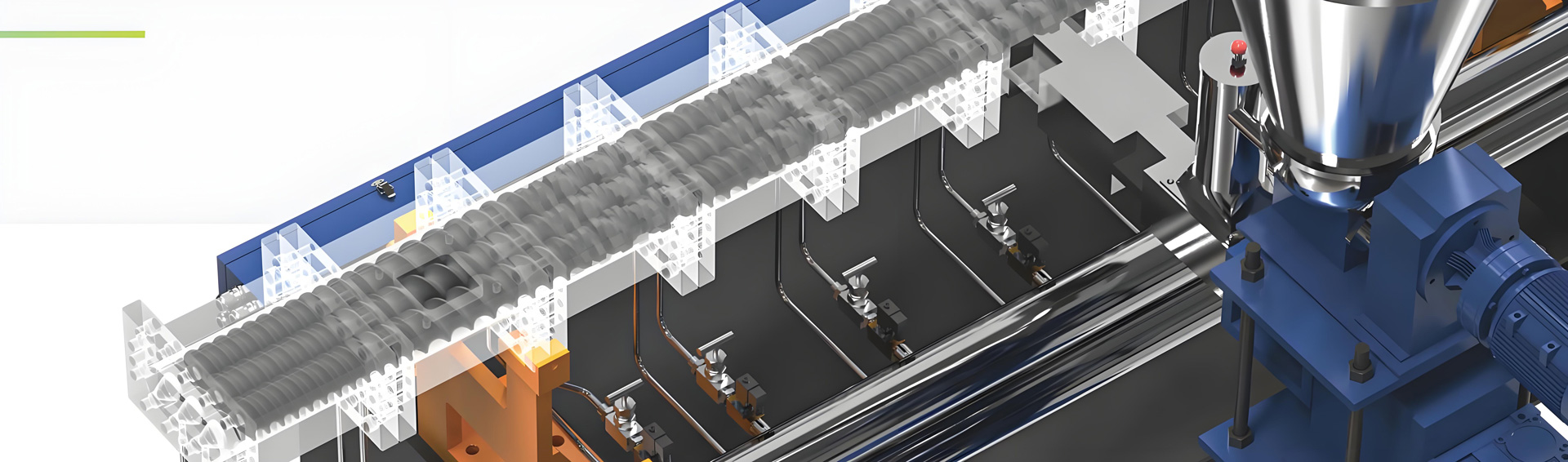
The foundation of Kerke’s custom capabilities is our modular twin screw design. Our extruders feature a segmented barrel and screw system that can be configured in thousands of different ways to optimize performance for specific formulations and applications.
Key modular design features include:
- Interchangeable screw elements: We offer over 200 different screw element designs, including conveying elements, kneading blocks, and mixing elements, that can be arranged to create custom screw profiles
- Modular barrel segments: Barrel segments can be added or removed to adjust the length-to-diameter (L/D) ratio from 28:1 to 64:1, depending on the application
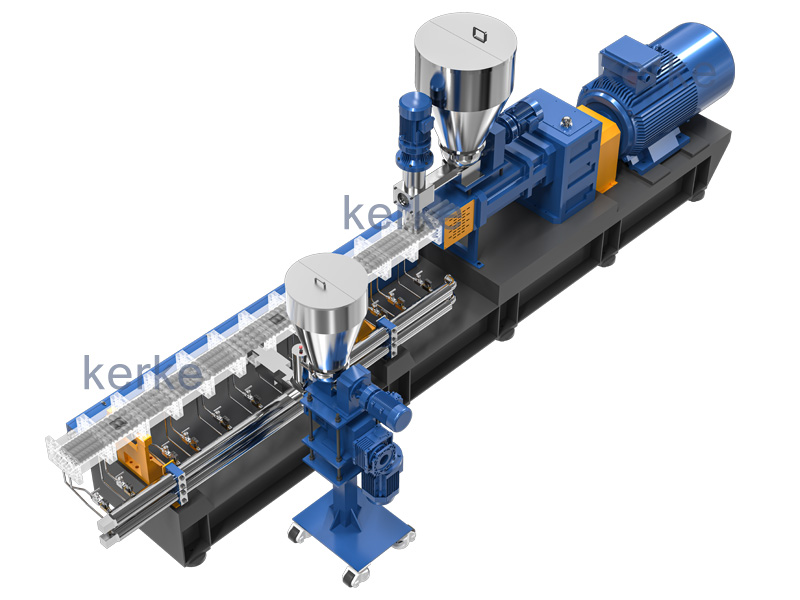
- Multiple feed ports: Up to six feed ports can be configured along the barrel to allow for sequential addition of different materials at optimal points in the process
- Multiple venting options: Atmospheric and vacuum venting ports can be positioned to remove volatiles and moisture effectively
This modular design allows us to optimize the extruder for everything from high-pigment-load color masterbatches to low-shear sensitive functional masterbatches.
2.2 Customized Drive and Control Systems
Kerke offers customized drive and control systems that can be tailored to the specific torque and speed requirements of different applications. Our high-torque drive systems provide torque densities up to 13 Nm/cm³, enabling processing of high-viscosity materials and high-fill formulations.
The Kerke SmartControl system can be customized with industry-specific features and functions, including:
- Industry-specific recipe libraries with pre-optimized process parameters
- Integrated quality monitoring and control systems
- Regulatory compliance documentation and reporting
- Energy management and optimization features
- Remote monitoring and diagnostic capabilities
These customized control systems ensure that the extruder operates at peak performance for the specific application while maintaining consistent product quality.
2.3 Advanced Material Handling and Feeding Systems
Accurate and consistent feeding of raw materials is critical for producing high-quality custom masterbatches. Kerke offers a range of advanced feeding systems that can be customized to handle different material types, from free-flowing pellets to fine powders and liquids.
Custom feeding options include:
- Loss-in-weight gravimetric feeders with accuracy of ±0.1% or better
- Side feeders for adding fillers and reinforcements
- Liquid feeders for adding oils, plasticizers, and other liquid additives
- Centralized material conveying systems for automated material handling
- Quick-change hoppers for fast material changes
These feeding systems ensure that even the most complex formulations are processed accurately and consistently.
2.4 Specialized Pelletizing and Cooling Systems
Kerke offers a range of pelletizing and cooling systems that can be customized to the specific requirements of different masterbatch types and applications. Our pelletizing options include:
- Strand pelletizing systems for general-purpose color and additive masterbatches
- Water ring pelletizing systems for polyolefin-based masterbatches
- Underwater pelletizing systems for high-quality spherical pellets
- Hot face pelletizing systems for heat-sensitive materials
Each pelletizing system can be customized with different die designs, cutting speeds, and cooling parameters to produce pellets with the desired size, shape, and properties.
2.5 Comprehensive Formulation and Process Development Support
In addition to custom equipment design, Kerke provides comprehensive formulation and process development support to help our customers develop new custom masterbatch products. Our fully equipped laboratory and pilot plant facilities allow us to test new formulations and process parameters before full-scale production.
Our process development services include:
- Formulation development and optimization
- Process parameter optimization
- Scale-up from laboratory to production scale
- Quality control method development
- Regulatory compliance support
This end-to-end support ensures that our customers can successfully develop and commercialize new custom masterbatch products.
3. Industry-Specific Custom Solutions
Kerke has developed specialized masterbatch extruder solutions for seven major industries, each with unique requirements and challenges. Our industry-specific solutions are designed to address the particular performance, regulatory, and production needs of each sector.
3.1 Food and Beverage Packaging Industry
The food and beverage packaging industry has the strictest requirements for masterbatch safety and quality. Masterbatches used in food contact applications must comply with FDA 21 CFR, EU 10/2011, and other regional regulations, with zero tolerance for migration of harmful substances.
Kerke’s custom solution for food packaging masterbatch production includes:
- All product contact parts made from polished 316L stainless steel (Ra ≤ 0.4 μm) to prevent material buildup and bacterial growth
- No-dead-zone design to eliminate areas where material can accumulate and degrade
- Integrated Clean-in-Place (CIP) systems for automated cleaning and validation
- Low-shear screw designs to prevent degradation of sensitive food-grade additives
- Precision temperature control with ±0.5°C accuracy to prevent thermal degradation
- Comprehensive documentation and traceability systems for regulatory compliance
Our food-grade extruders can produce a wide range of custom masterbatches, including color masterbatches, UV stabilizer masterbatches, antioxidant masterbatches, and antimicrobial masterbatches, all meeting the strictest global food safety standards.
3.2 Automotive Manufacturing Industry
The automotive industry requires masterbatches that provide exceptional performance and durability under extreme conditions. Automotive masterbatches must meet strict flame retardancy standards, UV resistance requirements, and thermal stability specifications.
Kerke’s custom solution for automotive masterbatch production includes:
- High-torque drive systems for processing high-fill flame retardant and reinforced masterbatches
- Specialized screw designs for excellent dispersion of flame retardants, glass fibers, and other additives
- Multi-stage degassing systems to remove volatiles and prevent plate-out
- Advanced temperature control systems to prevent degradation of heat-sensitive additives
- Integrated filtration systems to remove contaminants and ensure product purity
- Process monitoring systems to ensure consistent product quality
Our automotive extruders can produce custom masterbatches for interior and exterior components, including flame retardant masterbatches, UV stabilizer masterbatches, color masterbatches, and lightweighting masterbatches, all meeting OEM specifications and industry standards such as FMVSS 302.
3.3 Electronics and Electrical Industry
The electronics and electrical industry requires masterbatches that provide electrical insulation, flame retardancy, and antistatic properties. These masterbatches must meet strict safety standards such as UL 94 and RoHS.
Kerke’s custom solution for electronics masterbatch production includes:
- High-torque drive systems for processing high-fill conductive and flame retardant masterbatches
- Specialized screw designs for uniform dispersion of carbon black, carbon nanotubes, and other conductive additives
- Halogen-free flame retardant processing capabilities
- Precision feeding systems for accurate addition of low-concentration additives
- Integrated quality monitoring systems to ensure consistent electrical properties
- ESD-safe design features to prevent static discharge during production
Our electronics extruders can produce custom masterbatches for a wide range of applications, including antistatic masterbatches, conductive masterbatches, flame retardant masterbatches, and color masterbatches for electrical enclosures and components.
3.4 Medical and Pharmaceutical Industry
The medical and pharmaceutical industry has the most stringent requirements for masterbatch purity, biocompatibility, and consistency. Medical masterbatches must comply with ISO 10993 biocompatibility standards and GMP manufacturing practices.
Kerke’s custom solution for medical masterbatch production includes:
- All product contact parts made from electropolished 316L stainless steel (Ra ≤ 0.2 μm)
- Completely sealed design to prevent contamination
- Pharmaceutical-grade lubricants and seals
- Gentle processing conditions to maintain the integrity of sensitive medical additives
- Integrated CIP systems with validation capabilities
- Comprehensive documentation and batch record systems for regulatory compliance
- ISO 13485 compliant manufacturing processes
Our medical extruders can produce custom masterbatches for pharmaceutical packaging, medical devices, and diagnostic equipment, including color masterbatches, radiopaque masterbatches, antimicrobial masterbatches, and lubricant masterbatches, all meeting the strictest medical industry standards.
3.5 Agriculture Industry
The agriculture industry requires masterbatches that provide long-term UV protection, weather resistance, and functional properties such as anti-fog and anti-drip for greenhouse films and mulch films.
Kerke’s custom solution for agriculture masterbatch production includes:
- High-throughput designs for large-scale production of agricultural masterbatches
- Specialized screw designs for excellent dispersion of UV stabilizers and other additives
- Multi-feed systems for adding multiple functional additives
- High-efficiency degassing systems to remove moisture and volatiles
- Wear-resistant components for processing abrasive fillers and additives
- Energy-efficient designs to reduce production costs
Our agriculture extruders can produce custom masterbatches for greenhouse films, mulch films, irrigation pipes, and agricultural containers, including UV stabilizer masterbatches, anti-fog masterbatches, anti-drip masterbatches, and biodegradable masterbatches.
3.6 Cosmetics and Personal Care Industry
The cosmetics and personal care industry requires masterbatches with exceptional color consistency, low migration, and safety compliance for packaging that comes into contact with cosmetics and personal care products.
Kerke’s custom solution for cosmetics masterbatch production includes:
- High-precision color matching capabilities
- Low-shear processing to preserve the properties of sensitive pigments and additives
- Food-grade and cosmetic-grade construction materials
- Integrated inline color measurement systems for real-time color control
- Easy-clean design for fast color changes
- Comprehensive documentation for regulatory compliance
Our cosmetics extruders can produce custom masterbatches for packaging such as bottles, tubes, jars, and compacts, including color masterbatches, pearlescent masterbatches, and UV stabilizer masterbatches, all meeting the safety requirements for cosmetics packaging.
3.7 Construction and Building Materials Industry
The construction and building materials industry requires masterbatches that provide long-term weather resistance, UV stability, flame retardancy, and mechanical performance for applications such as window profiles, pipes, siding, and flooring.
Kerke’s custom solution for construction masterbatch production includes:
- High-torque drive systems for processing high-fill PVC and polyolefin masterbatches
- Specialized screw designs for excellent dispersion of pigments, fillers, and additives
- Wear-resistant components for processing abrasive materials such as calcium carbonate and titanium dioxide
- Multi-stage degassing systems to remove moisture and volatiles
- Precision temperature control to prevent degradation of heat-sensitive additives
- High-throughput designs for large-scale production
Our construction extruders can produce custom masterbatches for a wide range of building materials, including color masterbatches, UV stabilizer masterbatches, flame retardant masterbatches, and impact modifier masterbatches, all designed to provide long-term performance in harsh outdoor conditions.
4. Kerke’s Custom Project Execution Process
Kerke follows a structured, customer-centric project execution process to ensure that every custom masterbatch extruder solution meets our customers’ exact requirements and is delivered on time and within budget.
4.1 Initial Consultation and Requirements Analysis
Every custom project begins with a detailed consultation to understand our customer’s specific requirements, including:
- Target masterbatch types and formulations
- Required production capacity
- Product quality specifications
- Regulatory compliance requirements
- Budget and timeline constraints
- Existing production facilities and infrastructure
Our team of experienced engineers works closely with the customer to develop a clear understanding of their needs and identify the optimal solution.
4.2 Solution Design and Proposal
Based on the requirements analysis, our engineering team develops a detailed custom solution design, including:
- Extruder configuration and specifications
- Screw and barrel design
- Feeding and material handling system design
- Pelletizing and cooling system design
- Control system configuration
- Layout and installation requirements
- Cost estimate and project timeline
We present the proposed solution to the customer and work with them to refine the design until it meets all their requirements.
4.3 Laboratory Testing and Validation
For new or complex formulations, we conduct laboratory testing and pilot-scale trials in our fully equipped test center to validate the process parameters and product performance. This allows us to identify and resolve any potential issues before full-scale production begins.
Our testing capabilities include:
- Formulation development and optimization
- Process parameter optimization
- Product quality testing
- Scale-up studies
- Regulatory compliance testing
We provide the customer with detailed test reports and samples for their evaluation and approval.
4.4 Manufacturing and Assembly
Once the solution design is finalized and approved, we begin manufacturing the custom extruder at our state-of-the-art production facility. All components are manufactured to the highest quality standards and undergo rigorous inspection before assembly.
Our manufacturing process includes:
- Precision machining of components
- Quality inspection at every stage of production
- Assembly of the extruder and auxiliary equipment
- Factory acceptance testing (FAT) under full load conditions
- Documentation of all manufacturing and testing processes
We invite the customer to attend the factory acceptance testing to verify that the extruder meets all specifications and performance requirements.
4.5 Installation, Commissioning, and Training
After the extruder passes factory acceptance testing, we deliver it to the customer’s facility and provide professional installation and commissioning services. Our team of experienced technicians ensures that the extruder is properly installed, calibrated, and integrated with the customer’s existing production systems.
We also provide comprehensive training for the customer’s operators and maintenance personnel, including:
- Machine operation and control
- Process parameter optimization
- Preventive maintenance procedures
- Troubleshooting and problem resolution
- Safety procedures
Our training programs are designed to ensure that the customer’s staff can operate and maintain the extruder safely and efficiently.
4.6 Ongoing Support and Service
Kerke provides ongoing support and service throughout the entire life cycle of the extruder. Our global service network ensures that customers receive fast, professional support whenever they need it.
Our ongoing support services include:
- 24/7 technical support
- Preventive maintenance programs
- Spare parts supply
- Upgrades and retrofits
- Process optimization support
- Regulatory compliance updates
We are committed to ensuring that our customers’ extruders operate at peak performance throughout their service life.
5. Cost Analysis and Return on Investment
Investing in a custom masterbatch extruder provides a rapid return on investment through increased product offerings, higher profit margins, and improved operational efficiency. The following analysis compares the costs and benefits of a standard extruder versus a Kerke custom extruder for a typical medium-sized masterbatch producer.
5.1 Initial Investment Comparison
Consider a medium-sized masterbatch producer looking to expand their production capacity with a 65mm twin screw extruder. The following table compares the initial investment for a standard extruder versus a Kerke custom extruder configured for multi-industry production:
- Standard 65mm twin screw extruder:
- Base extruder: $180,000
- Standard feeding system: $20,000
- Standard pelletizing system: $30,000
- Basic control system: $15,000
- Installation and commissioning: $25,000
- Total initial investment: $270,000
- Kerke custom 65mm masterbatch extruder:
- Custom extruder with modular design: $220,000
- Advanced gravimetric feeding system: $40,000
- Custom pelletizing system: $45,000
- Industry-specific SmartControl system: $30,000
- Installation, commissioning, and training: $35,000
- Total initial investment: $370,000
While the custom extruder has a 37% higher initial investment, it provides significant long-term benefits that more than offset the additional cost.
5.2 Annual Operating Cost and Revenue Comparison
The following table compares the annual operating costs and revenue for the standard extruder versus the Kerke custom extruder, based on 24 hours per day, 300 days per year operation:
- Standard extruder:
- Annual production capacity: 2,400 tons
- Product mix: 70% standard masterbatches, 30% custom masterbatches
- Average profit margin: $0.30/kg
- Annual revenue: $720,000
- Annual operating costs: $540,000
- Annual net profit: $180,000
- Kerke custom extruder:
- Annual production capacity: 3,000 tons (25% higher due to improved efficiency)
- Product mix: 40% standard masterbatches, 60% custom masterbatches
- Average profit margin: $0.50/kg (higher due to more custom products)
- Annual revenue: $1,500,000
- Annual operating costs: $900,000
- Annual net profit: $600,000
Annual profit increase with Kerke custom extruder: $600,000 – $180,000 = $420,000
5.3 Return on Investment Calculation
The additional initial investment for the Kerke custom extruder is $370,000 – $270,000 = $100,000.
With annual profit increase of $420,000, the payback period for the additional investment is:
Payback period = Additional investment ÷ Annual profit increase = $100,000 ÷ $420,000 = 0.24 years (approximately 2.9 months)
This means that the additional investment in the custom extruder is fully recovered in less than 3 months. After the payback period, the additional profit continues to add directly to the company’s bottom line.
Over the 15-year service life of the extruder, the total additional profit would be:
Total additional profit over 15 years = ($420,000 × 15) – $100,000 = $6,200,000
This represents a return on investment of over 6200% over the life of the machine.
5.3 Kerke Custom Masterbatch Extruder Price List 2026
The following are the base prices for Kerke custom masterbatch extruders in 2026. These prices include standard configuration and FOB Shanghai shipping terms. Customization options and additional features will increase the price accordingly.
- Kerke KTE-20 custom laboratory extruder: $35,000 – $55,000. Production capacity: 5-20 kg/hour. Ideal for formulation development and small-batch custom production.
- Kerke KTE-35 custom pilot extruder: $75,000 – $110,000. Production capacity: 50-150 kg/hour. Suitable for pilot production and small-scale custom manufacturing.
- Kerke KTE-50 custom small production extruder: $130,000 – $190,000. Production capacity: 150-400 kg/hour. Perfect for small to medium-sized custom masterbatch producers.
- Kerke KTE-65 custom medium production extruder: $210,000 – $300,000. Production capacity: 300-800 kg/hour. Most popular model for medium-scale custom masterbatch production.
- Kerke KTE-75 custom large production extruder: $320,000 – $450,000. Production capacity: 600-1500 kg/hour. Designed for high-volume custom masterbatch production.
- Kerke KTE-95 custom high capacity extruder: $500,000 – $700,000. Production capacity: 1200-2500 kg/hour. For large-scale industrial custom masterbatch operations.
Common customization options and their approximate costs:
- Food-grade stainless steel construction: +10-15% of base machine price
- Medical-grade construction and CIP system: +20-30% of base machine price
- High-torque drive system upgrade: +15-25% of base machine price
- Advanced gravimetric feeding system: +$10,000 – $30,000
- Underwater pelletizing system: +$100,000 – $250,000
- Inline quality monitoring system: +$40,000 – $80,000
6. Real-World Case Studies
The following case studies demonstrate how Kerke custom masterbatch extruders have helped producers around the world meet the unique requirements of different industries and grow their businesses.
6.1 Case Study 1: Food Packaging Masterbatch Producer in the Netherlands
A leading food packaging masterbatch producer in the Netherlands was struggling to meet the increasing demand for low-migration food-grade masterbatches. Their existing extruders could not produce masterbatches that met the strict EU 10/2011 migration limits, and they were losing business to competitors who could offer compliant products.
The company needed a custom extruder solution that could produce high-quality, low-migration masterbatches while maintaining high production efficiency. They also required comprehensive documentation and traceability capabilities to meet regulatory requirements.
Kerke Solution: We designed and manufactured a custom KTE-65 food-grade masterbatch extruder featuring:
- All product contact parts made from polished 316L stainless steel
- No-dead-zone design to eliminate material accumulation
- Integrated CIP system with validation capabilities
- Low-shear screw design to prevent additive degradation
- Advanced gravimetric feeding system for accurate additive addition
- Comprehensive data logging and reporting system
Results after installation:
- Successfully developed and commercialized a full line of low-migration food-grade masterbatches
- Achieved migration levels 70% below EU limits
- Production capacity increased by 35%
- Scrap rate reduced from 4.5% to 0.8%
- Regulatory compliance audits passed with zero findings
- Secured contracts with three major European food packaging manufacturers
- Annual revenue increased by 65%
- Payback period: 10 months
6.2 Case Study 2: Automotive Masterbatch Producer in Germany
A German automotive masterbatch producer was having difficulty producing high-quality halogen-free flame retardant masterbatches for automotive interior components. Their existing extruders could not achieve the required dispersion of the flame retardant additives, resulting in inconsistent flame retardant performance and high scrap rates.
The company needed a custom extruder solution that could process high-load halogen-free flame retardant formulations while maintaining excellent dispersion and consistent product quality. They also required the flexibility to produce a wide range of other automotive masterbatches, including UV stabilizer and color masterbatches.
Kerke Solution: We delivered a custom KTE-75 automotive masterbatch extruder with:
- High-torque drive system (13 Nm/cm³) for processing high-viscosity formulations
- Custom screw design optimized for flame retardant dispersion
- Multi-stage degassing system to remove volatiles
- Multiple feed ports for sequential addition of additives
- Integrated inline rheometer for real-time quality monitoring
- Modular design for easy reconfiguration for different product types
Results after installation:
- Flame retardant dispersion improved by 85%
- Consistently met FMVSS 302 flame retardancy standards
- Scrap rate reduced from 6.2% to 1.1%
- Production capacity increased by 40%
- Energy consumption reduced by 32%
- Successfully secured a 5-year contract with a major German automotive OEM
- Annual revenue increased by 55%
- Payback period: 11 months
6.3 Case Study 3: Medical Masterbatch Producer in the United States
A medical masterbatch producer in the United States needed to expand their production capacity to meet growing demand for biocompatible masterbatches for medical devices. Their existing extruders did not meet GMP requirements and could not provide the level of consistency and traceability required for medical applications.
The company required a custom extruder solution that complied with ISO 13485 and GMP standards, could produce biocompatible masterbatches with consistent properties, and provided comprehensive documentation for regulatory submissions.
Kerke Solution: We provided a custom KTE-50 medical-grade masterbatch extruder featuring:
- Electropolished 316L stainless steel product contact parts (Ra ≤ 0.2 μm)
- Completely sealed design to prevent contamination
- Pharmaceutical-grade lubricants and seals
- Gentle processing conditions for sensitive medical additives
- Integrated CIP system with automated validation
- Comprehensive batch record and documentation system
- ISO 13485 compliant manufacturing and documentation
Results after installation:
- Achieved ISO 13485 certification for their medical masterbatch production
- Successfully developed three new biocompatible masterbatch product lines
- Product consistency improved by 90%
- Regulatory submission approval time reduced by 50%
- Production capacity increased by 50%
- Secured contracts with four major medical device manufacturers
- Annual revenue increased by 75%
- Payback period: 14 months
7. Best Practices for Maximizing the Value of Your Custom Extruder
To maximize the value and performance of your Kerke custom masterbatch extruder, follow these best practices:
7.1 Invest in Comprehensive Training
Ensure that all operators and maintenance personnel receive comprehensive training on the proper operation, maintenance, and troubleshooting of your custom extruder. Well-trained employees can maximize machine performance, reduce downtime, and ensure consistent product quality. Kerke offers ongoing training programs to keep your staff up-to-date with the latest techniques and best practices.
7.2 Implement a Preventive Maintenance Program
Develop and implement a regular preventive maintenance program based on Kerke’s recommendations. Regular maintenance reduces downtime, extends the service life of the equipment, and ensures consistent performance. Use the predictive maintenance features of the Kerke SmartControl system to schedule maintenance activities more effectively and avoid unplanned downtime.
7.3 Continuously Develop New Products
Use the flexibility of your custom extruder to continuously develop new custom masterbatch products and expand your product offerings. Stay informed about industry trends and regulatory changes to identify new market opportunities. Kerke’s process development team can help you develop and optimize new formulations and processes.
7.4 Optimize Your Production Scheduling
Optimize your production scheduling to minimize changeover time and maximize production efficiency. Group similar products and formulations together in the production schedule to reduce the time and material waste associated with changeovers. Use the recipe management system in the Kerke SmartControl system to store and recall production parameters for different products quickly.
7.5 Maintain Close Collaboration with Kerke
Maintain close collaboration with Kerke throughout the life of your extruder. Our technical support team can provide assistance with process optimization, troubleshooting, and regulatory compliance. We also offer a range of upgrades and retrofits to improve the performance of your extruder as your business grows and your needs change.
8. Conclusion
In today’s competitive masterbatch market, the ability to fulfill custom requirements for different industries is essential for success. Downstream customers are demanding more specialized products that meet their unique performance, regulatory, and sustainability needs, and masterbatch producers must have the right equipment and capabilities to meet these demands.
Kerke custom masterbatch extruders provide the flexibility, performance, and reliability needed to produce high-quality custom masterbatches for any industry. Our modular design approach, advanced technologies, and comprehensive support services allow us to deliver tailored solutions that address the specific challenges of each sector, from food packaging and automotive to medical and electronics.
The real-world case studies presented in this guide demonstrate that investing in a Kerke custom masterbatch extruder provides a rapid return on investment, typically within 3-14 months. Over the life of the machine, the additional revenue from expanded product offerings and higher profit margins can amount to millions of dollars, directly contributing to your company’s long-term success and growth.
Whether you are looking to enter new markets, expand your product offerings, or improve the efficiency of your existing custom production, Kerke has the expertise and technology to help you achieve your goals. Our team of experienced engineers will work with you from initial concept through final commissioning to develop a custom extruder solution that meets your exact requirements and gives you a competitive edge in the global marketplace.
If you are looking for a masterbatch extruder that can fulfill the custom requirements of different industries, contact Kerke today to schedule a free consultation. With Kerke as your partner, you can be confident that you are getting the most advanced, reliable, and efficient custom extrusion solution available on the market.