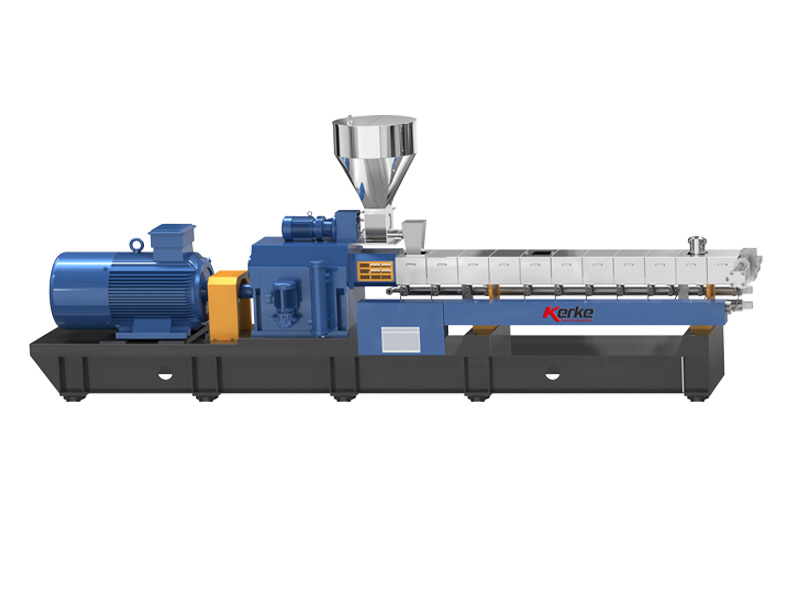
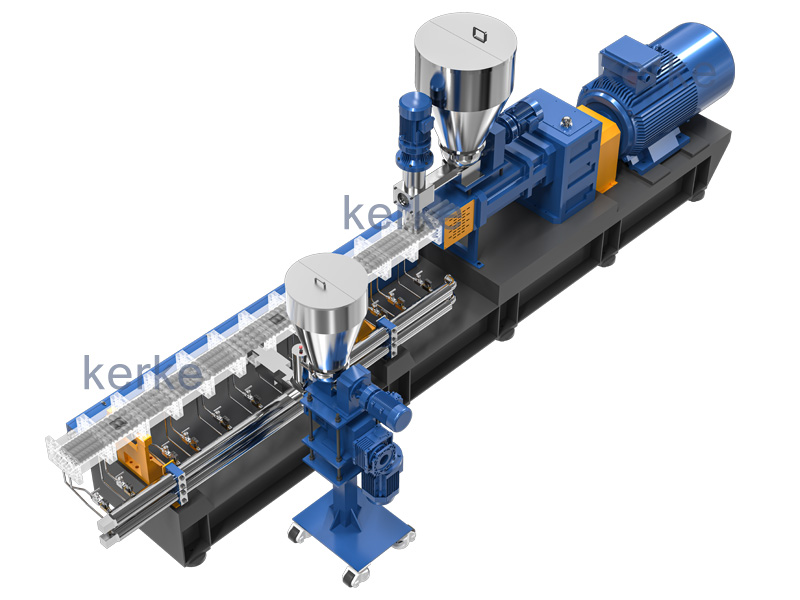
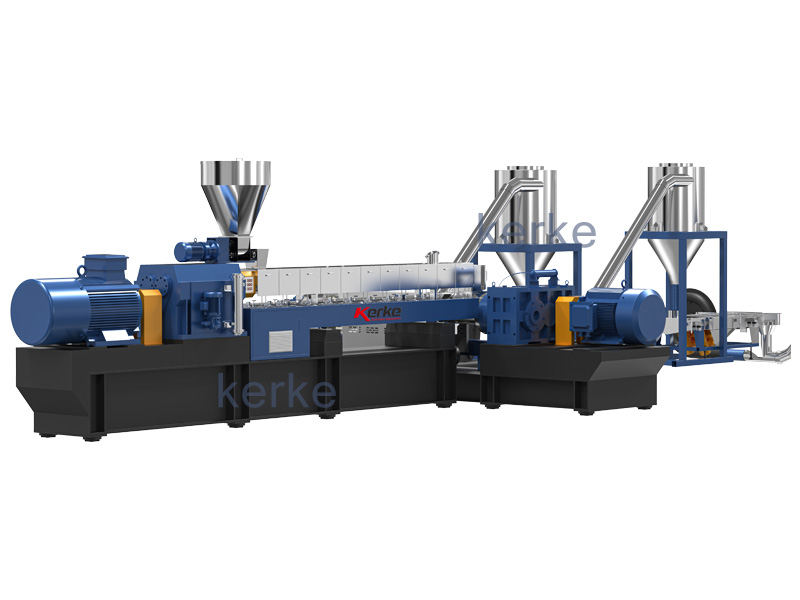
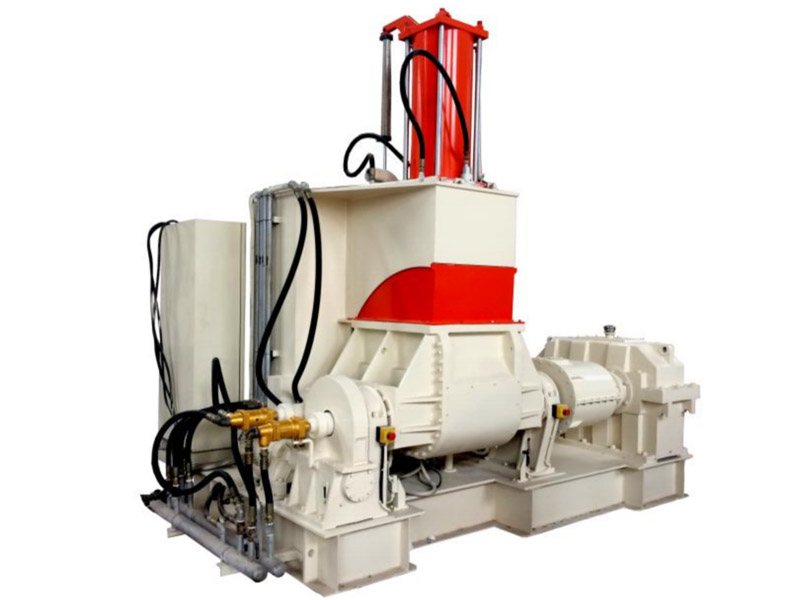
The global plastic compounding market is projected to reach $112.4 billion by 2027, growing at a compound annual growth rate (CAGR) of 6.3% from 2026 to 2032. This rapid expansion is driven by the increasing demand for high-performance materials across automotive, electronics, aerospace, medical, and renewable energy industries. Modern plastic formulations have become increasingly complex, often incorporating multiple polymers, high loadings of fillers and reinforcements, and specialized functional additives to meet stringent performance requirements.
At the heart of this industry lies the compounding extruder, the critical piece of equipment that transforms raw plastic resins and additives into high-quality compounded materials. The choice of compounding extruder directly impacts a manufacturing plant’s profitability, product quality, production efficiency, and competitive position. Traditional single screw extruders and older generation twin screw machines are no longer sufficient to meet the demands of the modern plastic compounding industry. They suffer from poor mixing quality, low production efficiency, high energy consumption, and inflexible designs that make it difficult to adapt to new formulations and market requirements.
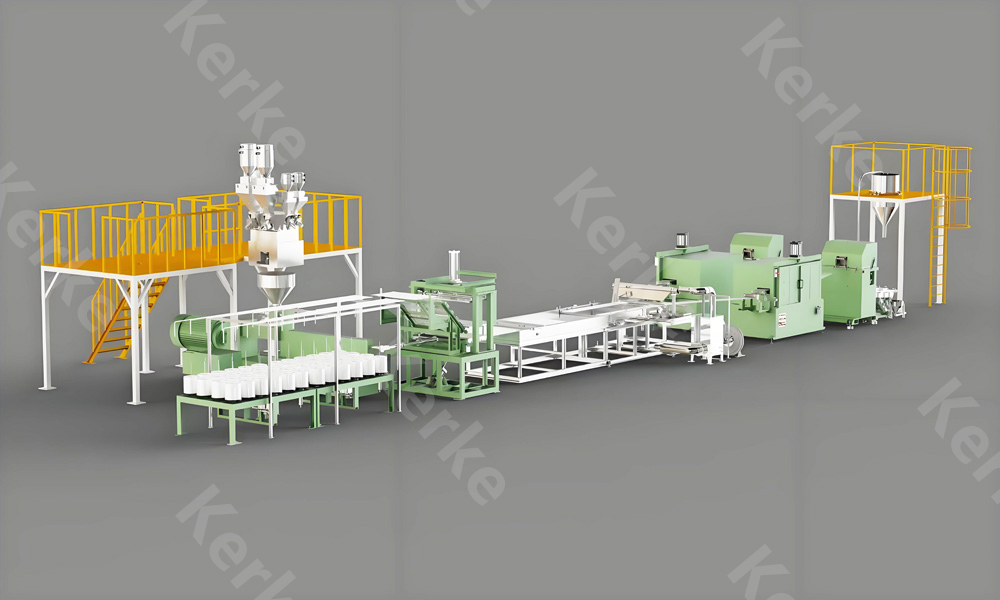
As a leading global manufacturer of advanced twin screw extrusion systems with over 25 years of industry experience, KERKE has established itself as the trusted partner for compounders worldwide. Our comprehensive range of compounding extruders is specifically engineered to deliver exceptional value for plastic manufacturing plants. Our machines incorporate innovative design features, advanced automation technologies, and energy-efficient systems that help our customers reduce costs, improve product quality, increase production capacity, and maximize profitability. With thousands of successful installations worldwide, KERKE compounding extruders have proven to deliver a return on investment in as little as 3-4 weeks.
This comprehensive guide provides everything you need to know about how modern compounding extruders deliver high value for plastic manufacturing plants. It examines the core challenges facing the plastic compounding industry, analyzes the limitations of traditional extrusion equipment, details the advanced technologies and design features that make KERKE extruders uniquely valuable, provides a complete product overview with detailed pricing, includes a comprehensive cost analysis and return on investment calculation, features real-world success stories from our global customers, and offers practical guidance for maximizing the return on your extrusion equipment investment. Whether you are a small specialty compounder or a large multinational corporation, this guide will help you make informed decisions about your extrusion equipment needs.
1. Core Challenges Facing Plastic Manufacturing Plants Today
Plastic manufacturing plants face numerous challenges in today’s competitive global market. These challenges are putting increasing pressure on manufacturers to reduce costs, improve product quality, and increase operational efficiency. Understanding these challenges is essential for appreciating the value that modern compounding extruders can deliver.
1.1 Volatile Raw Material Costs
Raw material costs typically account for 60-80% of the total production cost for plastic compounds. The prices of plastic resins, fillers, and additives are highly volatile and subject to fluctuations in global supply and demand, geopolitical events, and energy prices. Even small changes in raw material prices can have a significant impact on a manufacturer’s profitability.
To remain competitive, manufacturers must minimize material waste and maximize material yield. Traditional extrusion equipment often generates high levels of material waste during production runs, changeovers, and startup/shutdown processes. This waste not only increases raw material costs but also has a negative environmental impact.
1.2 Increasingly Stringent Quality Requirements
Customers are demanding higher quality and more consistent plastic compounds than ever before. Industries such as automotive, medical, and electronics have extremely strict quality standards that must be met to ensure product safety and performance. Even minor variations in product quality can result in rejected batches, customer complaints, and lost business.
Traditional extrusion equipment often struggles to maintain consistent product quality, especially when processing complex formulations. Poor mixing quality, inconsistent melt temperature, and variations in process parameters can all lead to product defects and quality issues.
1.3 Rising Energy and Labor Costs
Energy and labor costs are significant expenses for plastic manufacturing plants. Energy costs have been rising steadily in recent years, and labor costs are also increasing in many regions. These rising costs are putting pressure on manufacturers to improve energy efficiency and reduce labor requirements.
Traditional single screw extruders are notoriously energy-inefficient, with only about 20-30% of the energy input actually going into melting and mixing the material. The rest is lost as heat to the environment. Traditional equipment also requires more labor to operate and maintain, further increasing production costs.
1.4 Growing Demand for Customization and Product Diversity
The market for plastic compounds is becoming increasingly fragmented, with customers demanding more customized products and smaller production runs. Many manufacturers now report that 30-50% of their production consists of batches smaller than 1000 kg. This shift to smaller batch sizes presents significant challenges for traditional extrusion equipment.
Traditional extruders have long changeover times between different formulations, which means that manufacturers spend more time changing over the machine than actually producing product. High material waste during changeovers also makes small batch production economically unfeasible with traditional equipment.
1.5 Environmental and Regulatory Pressures
Plastic manufacturing plants face increasing environmental and regulatory pressures. Governments around the world are implementing stricter regulations on emissions, waste disposal, and energy consumption. There is also growing consumer demand for sustainable and environmentally friendly products.
Traditional extrusion equipment often generates high levels of emissions and waste, which can make it difficult for manufacturers to comply with environmental regulations. Traditional equipment also tends to be less energy-efficient, which increases a plant’s carbon footprint.
2. Limitations of Traditional Extrusion Equipment
Traditional single screw extruders and older generation twin screw extruders are ill-equipped to handle the challenges facing modern plastic manufacturing plants. These machines suffer from several fundamental limitations that prevent them from delivering the performance and value that manufacturers need.
2.1 Poor Mixing Quality
The most significant limitation of traditional single screw extruders is their poor mixing quality. Single screw extruders rely primarily on drag flow for conveying and mixing materials. The material is dragged along the barrel wall by the rotating screw, with very little axial mixing. This results in poor dispersive and distributive mixing, especially for complex formulations containing high loadings of fillers and additives.
Poor mixing quality leads to inconsistent product properties, reduced mechanical performance, and high scrap rates. It also limits the types of formulations that can be processed on traditional equipment. Many modern high-performance formulations simply cannot be produced on single screw extruders.
2.2 Low Production Efficiency
Traditional extrusion equipment has low production efficiency compared to modern twin screw compounding extruders. Single screw extruders have low throughput rates relative to their size and power consumption. They also have long startup and shutdown times, which further reduces production efficiency.
Older generation twin screw extruders also suffer from low production efficiency. They often have low torque densities, which limits their ability to process high viscosity compounds and high filler loadings. They also tend to have narrow processing windows, which limits their flexibility and productivity.
2.3 High Energy Consumption
Traditional single screw extruders are extremely energy-inefficient. As mentioned earlier, only about 20-30% of the energy input actually goes into melting and mixing the material. The rest is lost as heat to the environment. This high energy consumption significantly increases production costs and a plant’s carbon footprint.
Older generation twin screw extruders are also less energy-efficient than modern machines. They often use outdated drive systems and control technologies that waste energy. They also tend to run at higher screw speeds than necessary, which increases energy consumption and wear on the equipment.
2.4 Inflexible Design
Traditional extruders typically have a fixed design that cannot be easily modified to accommodate different formulations or production requirements. Single screw extruders have a one-piece screw and barrel that cannot be reconfigured. Older generation twin screw extruders may have some modularity, but reconfiguring the screw is a time-consuming and labor-intensive process that requires complete disassembly of the extruder.
This inflexible design makes it difficult for manufacturers to adapt to changing market demands and produce a diverse range of products. It also limits scalability, as formulations developed on laboratory-scale extruders often cannot be directly scaled up to production-scale traditional extruders without significant process re-optimization.
2.5 High Maintenance Costs and Downtime
Traditional extrusion equipment has high maintenance costs and frequent downtime. The fixed design of single screw extruders means that the entire screw and barrel must be replaced when they become worn, which is a significant expense. Older generation twin screw extruders also tend to have higher maintenance requirements and shorter service lives than modern machines.
Traditional equipment is also more prone to breakdowns and unplanned downtime. This downtime can be extremely costly for manufacturers, resulting in lost production revenue, missed customer deadlines, and increased repair costs.
3. Key Value Drivers of Modern Twin Screw Compounding Extruders
Modern co-rotating intermeshing twin screw compounding extruders address all the limitations of traditional extrusion equipment and deliver exceptional value for plastic manufacturing plants. These machines incorporate several advanced technologies and design features that improve product quality, increase production efficiency, reduce costs, and enhance operational flexibility.
3.1 Superior Mixing Quality
The most important value driver of modern twin screw compounding extruders is their superior mixing quality. Twin screw extruders provide both excellent dispersive and distributive mixing, which is essential for producing high-quality plastic compounds with consistent properties.
The intermeshing screws generate high shear forces that effectively break down agglomerates of fillers and additives, ensuring uniform dispersion throughout the polymer matrix. The modular screw design allows for the incorporation of various mixing elements that can be arranged in different configurations to optimize the mixing characteristics for specific formulations. This combination of dispersive and distributive mixing ensures that all components are uniformly mixed at both the microscopic and macroscopic levels.
3.2 Higher Production Efficiency
Modern twin screw compounding extruders deliver significantly higher production efficiency than traditional equipment. They have higher throughput rates relative to their size and power consumption, allowing manufacturers to produce more product in less time with the same floor space.
Twin screw extruders also have shorter startup and shutdown times, which reduces lost production time. They can process a wider range of materials and formulations at higher speeds, further increasing production efficiency. Additionally, modern twin screw extruders have higher uptime rates, typically 95-98% compared to 80-85% for traditional single screw extruders.
3.3 Significant Energy Savings
Modern twin screw compounding extruders are much more energy-efficient than traditional equipment. They use advanced drive systems and control technologies that minimize energy waste. The high torque density design of modern twin screw extruders allows them to process more material per unit of energy input.
KERKE compounding extruders, for example, reduce energy consumption by up to 40% compared to traditional single screw extruders. This significant energy savings translates directly into lower production costs and a reduced carbon footprint. Over the 15-year service life of the equipment, the energy savings alone can pay for the entire initial investment multiple times over.
3.4 Unmatched Production Flexibility
Modern twin screw compounding extruders offer unmatched production flexibility, allowing manufacturers to adapt quickly to changing market demands and produce a diverse range of products. The modular screw and barrel design allows for easy reconfiguration of the extruder to optimize it for different formulations and processing requirements.
Twin screw extruders also feature multiple feeding and degassing stations along the length of the barrel, providing significant process flexibility. Multiple feed ports allow for the introduction of different components at different points in the process, which is essential for processing complex formulations. Multiple degassing stations allow for the efficient removal of volatile components at different stages of the process.
3.5 Lower Maintenance Costs and Downtime
Modern twin screw compounding extruders have lower maintenance costs and less downtime than traditional equipment. The modular design allows for targeted replacement of only the worn components, rather than the entire screw or barrel. This reduces maintenance costs and downtime, as only the affected section needs to be replaced.
Modern extruders also use high-quality wear-resistant materials and coatings that extend the service life of critical components. They feature advanced monitoring and diagnostic systems that can detect potential problems before they cause a breakdown, allowing for preventive maintenance to be scheduled during planned downtime.
3.6 Improved Product Quality and Consistency
Modern twin screw compounding extruders deliver improved product quality and consistency compared to traditional equipment. The superior mixing quality ensures that all components are uniformly dispersed throughout the polymer matrix, resulting in consistent product properties from batch to batch.
Modern extruders also feature advanced process control systems that provide precise regulation of all process parameters, including temperature, pressure, screw speed, and feed rate. This precise process control ensures that the material is processed under optimal conditions at all times, resulting in consistent product quality and reduced scrap rates.
4. How KERKE Compounding Extruders Deliver Exceptional Value
KERKE compounding extruders are specifically engineered to deliver exceptional value for plastic manufacturing plants. Our machines combine the advanced technologies described above with innovative design features and industry-leading performance to help our customers reduce costs, improve product quality, increase production capacity, and maximize profitability.
4.1 High Torque Density Design for Maximum Productivity
KERKE compounding extruders feature industry-leading torque densities of up to 10 Nm/cm³, which is among the highest in the industry. This high torque density allows our machines to process high viscosity compounds and high filler loadings at lower screw speeds, reducing wear on the equipment and extending its service life.
The high torque capability also allows our extruders to achieve higher throughput rates than competing machines of the same size. This means that manufacturers can produce more product in less time with the same floor space, increasing production capacity and profitability.
4.2 Modular Screw and Barrel Design for Maximum Flexibility
KERKE compounding extruders feature a fully modular screw and barrel design that provides unmatched production flexibility. The screw is constructed from individual elements that can be easily rearranged or replaced to optimize the extruder for different formulations and processing requirements.
We offer a wide range of interchangeable screw elements, including conveying elements, kneading blocks, mixing elements, and reverse elements. These elements can be arranged in various configurations to provide the precise balance of dispersive and distributive mixing required for each specific formulation. The barrel is also modular, with individual segments that can be replaced individually if they become worn or damaged.
4.3 Energy-Efficient Drive Systems for Reduced Operating Costs
KERKE compounding extruders feature energy-efficient drive systems that reduce energy consumption by up to 40% compared to traditional single screw extruders. Our drive systems use high-efficiency servo motors and variable frequency drives that only consume energy when it is needed.
The high torque density design of our extruders also contributes to energy efficiency, as it allows us to process more material per unit of energy input. Additionally, our advanced control systems optimize energy usage by adjusting the drive power and heating/cooling systems based on actual process requirements.
4.4 Advanced Process Control and Automation
KERKE compounding extruders are equipped with advanced Siemens PLC control systems and intuitive touch screen interfaces that provide operators with complete visibility and control over the production process. Our control systems feature recipe management capabilities that allow manufacturers to store and recall process parameters for hundreds of different formulations.
The control systems also include advanced data logging and traceability capabilities that record all critical process parameters for each production batch. This data can be stored securely and easily retrieved for quality control purposes and regulatory compliance. Our systems can also be integrated with plant-wide ERP and MES systems for seamless production management.
4.5 Rapid Changeover Technology for Small Batch Production
KERKE compounding extruders incorporate several features that significantly reduce changeover time and material waste between different formulations. The self-cleaning function of co-rotating intermeshing twin screws dramatically reduces the amount of material required to purge the extruder between different formulations.
KERKE extruders typically require only 10-20 kg of purging material to change between different formulations, compared to 50-100 kg for traditional extruders. In addition, our quick-change die heads, quick-release feed hoppers, and easy-to-clean side feeders allow operators to change over the machine between different formulations in as little as 30-60 minutes.
4.6 Wear-Resistant Construction for Long Service Life
KERKE compounding extruders are constructed from high-quality wear-resistant materials to ensure long service life even when processing highly abrasive compounds. Our screws and barrels are manufactured from high-grade alloy steel and undergo special heat treatment to achieve a hardness of HRC 58-62.
For highly abrasive applications such as glass fiber reinforced compounds, we offer bimetallic barrels and screw elements with a tungsten carbide coating. This coating provides exceptional wear resistance and extends the service life of these components by 3-5 times compared to standard materials. This wear-resistant construction reduces maintenance costs and downtime, ensuring that your production line operates efficiently and reliably for many years.
5. KERKE Compounding Extruder Product Range and Pricing
KERKE offers a comprehensive range of twin screw compounding extruders designed to meet the diverse needs of plastic manufacturing plants worldwide. Our product range includes laboratory, pilot scale, and industrial production machines, with capacities ranging from 1 kg/h to 4000 kg/h. All our machines are built to the highest quality standards, incorporating advanced technology and innovative features to deliver exceptional performance, reliability, and value.
5.1 KTE-20 Laboratory Twin Screw Extruder
The KTE-20 is our compact laboratory twin screw extruder, designed for research and development, formulation testing, and small batch production. This versatile machine is perfect for manufacturers who need to develop new formulations and test new products before scaling up to industrial production.
Key specifications:
- Screw diameter: 20 mm
- L/D ratio: 40:1
- Maximum screw speed: 600 rpm
- Production capacity: 5-20 kg/h
- Drive power: 7.5 kW
- Heating zones: 8
- Vacuum degassing: 1 port
- Footprint: 3.5 m x 1.5 m
- Weight: 2,500 kg
Price and Cost Analysis
The price of the KTE-20 laboratory twin screw extruder ranges from $18,000 to $28,000 FOB Nanjing, depending on the specific configuration and optional features. The standard configuration includes the main extruder, volumetric feeder, strand pelletizer, and control system. Optional features include gravimetric feeding, underwater pelletizing, melt filtration systems, and advanced data logging capabilities.
5.2 KTE-35 Pilot Scale Compounding Extruder
The KTE-35 is our pilot scale compounding extruder, designed for product development, small-scale production, and market testing. This machine bridges the gap between laboratory and industrial production, allowing manufacturers to scale up their formulations with confidence.
Key specifications:
- Screw diameter: 35 mm
- L/D ratio: 44:1
- Maximum screw speed: 500 rpm
- Production capacity: 30-80 kg/h
- Drive power: 22 kW
- Heating zones: 10
- Vacuum degassing: 2 ports
- Footprint: 5.0 m x 2.0 m
- Weight: 5,500 kg
Price and Cost Analysis
The price of the KTE-35 pilot scale compounding extruder ranges from $45,000 to $65,000 FOB Nanjing, depending on the specific configuration and optional features. The standard configuration includes the main extruder, gravimetric feeder, continuous screen changer, strand pelletizer, and control system. Optional features include side feeders, underwater pelletizing, melt pump systems, and inline quality monitoring.
5.3 KTE-50 Industrial Production Compounding Extruder
The KTE-50 is our most popular industrial production compounding extruder, ideal for medium to large-scale production of a wide range of compounds. This high-performance machine offers an excellent balance of productivity, efficiency, and flexibility, making it perfect for producing filled compounds, polymer blends, and functional masterbatches.
Key specifications:
- Screw diameter: 50 mm
- L/D ratio: 48:1
- Maximum screw speed: 450 rpm
- Production capacity: 150-300 kg/h
- Drive power: 55 kW
- Heating zones: 12
- Vacuum degassing: 2 ports
- Footprint: 6.5 m x 2.5 m
- Weight: 9,500 kg
Price and Cost Analysis
The price of the KTE-50 industrial production compounding extruder ranges from $85,000 to $120,000 FOB Nanjing, depending on the specific configuration and optional features. The standard configuration includes the main extruder, gravimetric feeding system, continuous screen changer, melt pump, strand pelletizer, and advanced control system. Optional features include multiple side feeders, underwater pelletizing, automatic material handling systems, and advanced data logging and traceability.
5.4 KTE-65 High Capacity Compounding Extruder
The KTE-65 is our high capacity compounding extruder, designed for large-scale production of plastic compounds. This machine offers high throughput rates and excellent energy efficiency, making it ideal for high-volume production environments.
Key specifications:
- Screw diameter: 65 mm
- L/D ratio: 48:1
- Maximum screw speed: 400 rpm
- Production capacity: 300-600 kg/h
- Drive power: 110 kW
- Heating zones: 14
- Vacuum degassing: 2 ports
- Footprint: 8.0 m x 3.0 m
- Weight: 15,000 kg
Price and Cost Analysis
The price of the KTE-65 high capacity compounding extruder ranges from $130,000 to $180,000 FOB Nanjing, depending on the specific configuration and optional features. The standard configuration includes the main extruder, multiple gravimetric feeders, continuous screen changer, melt pump, underwater pelletizing system, and advanced control system with recipe management.
5.5 KTE-75 Large Scale Compounding Line
The KTE-75 is our large scale compounding line, designed for the highest volume production of plastic compounds. This heavy-duty machine offers exceptional performance and reliability, making it ideal for large compounders serving global markets.
Key specifications:
- Screw diameter: 75 mm
- L/D ratio: 52:1
- Maximum screw speed: 350 rpm
- Production capacity: 600-1200 kg/h
- Drive power: 200 kW
- Heating zones: 16
- Vacuum degassing: 3 ports
- Footprint: 10.0 m x 3.5 m
- Weight: 22,000 kg
Price and Cost Analysis
The price of the KTE-75 large scale compounding line ranges from $200,000 to $280,000 FOB Nanjing, depending on the specific configuration and optional features. The standard configuration includes a complete turnkey production line with automatic material handling, multiple gravimetric feeders, continuous screen changer, melt pump, underwater pelletizing system, and advanced control system with remote monitoring capabilities.
6. Complete Cost Analysis and Return on Investment Calculation
Investing in a modern KERKE compounding extruder provides a significant return on investment through increased production capacity, reduced operating costs, lower material waste, and higher product quality. In this section, we will provide a detailed cost analysis and return on investment calculation comparing a KERKE KTE-50 compounding extruder with a traditional single screw extruder of similar capacity.
6.1 Initial Investment Comparison
Traditional Single Screw Extruder (50 mm):
- Machine price: $55,000
- Auxiliary equipment: $25,000
- Installation and training: $5,000
- Initial spare parts package: $3,000
- Contingency fund (10%): $8,800
Total Initial Investment: $96,800
KERKE KTE-50 Compounding Extruder:
- Machine price: $75,000
- Auxiliary equipment: $35,000
- Installation and training: $8,000
- Initial spare parts package: $4,000
- Contingency fund (10%): $12,200
Total Initial Investment: $134,200
While the KERKE twin screw extruder has a higher initial investment, the significant savings in operating costs and increased production capacity result in a much faster return on investment.
6.2 Annual Operating Cost Comparison
The following analysis is based on 16 hours of production per day, 300 days per year, producing a 30% glass fiber reinforced polypropylene compound with an average selling price of $3.20 per kg:
Traditional Single Screw Extruder:
- Annual production: 720,000 kg
- Raw material costs: $1,728,000 per year
- Energy costs: $108,000 per year
- Labor costs (4 workers per shift): $144,000 per year
- Maintenance and repair costs: $48,000 per year
- Material waste costs: $72,000 per year
- Downtime costs: $96,000 per year
- Overhead costs: $144,000 per year
- Packaging costs: $72,000 per year
- Transportation costs: $72,000 per year
Total Annual Operating Costs: $2,484,000 per year
Cost per Kilogram: $3.45
KERKE KTE-50 Compounding Extruder:
- Annual production: 1,200,000 kg
- Raw material costs: $2,880,000 per year
- Energy costs: $72,000 per year
- Labor costs (3 workers per shift): $108,000 per year
- Maintenance and repair costs: $24,000 per year
- Material waste costs: $24,000 per year
- Downtime costs: $12,000 per year
- Overhead costs: $120,000 per year
- Packaging costs: $60,000 per year
- Transportation costs: $120,000 per year
Total Annual Operating Costs: $3,420,000 per year
Cost per Kilogram: $2.85
The KERKE twin screw extruder produces 67% more product per year while reducing the cost per kilogram by 17.4%. The most significant savings come from reduced energy costs, lower maintenance costs, dramatically reduced material waste, and reduced downtime costs.
6.3 Revenue and Profitability Comparison
Using an average selling price of $3.20 per kg for the 30% glass fiber reinforced polypropylene compound:
Traditional Single Screw Extruder:
- Annual revenue: $2,304,000 per year
- Annual operating costs: $2,484,000 per year
- Annual gross profit: -$180,000 per year
KERKE KTE-50 Compounding Extruder:
- Annual revenue: $3,840,000 per year
- Annual operating costs: $3,420,000 per year
- Annual gross profit: $420,000 per year
The traditional single screw extruder actually operates at a loss due to its low productivity and high operating costs. In contrast, the KERKE twin screw extruder generates a significant annual profit.
6.4 ROI and Payback Period Calculation
KERKE KTE-50 Compounding Extruder:
- Additional initial investment compared to single screw: $134,200 – $96,800 = $37,400
- Additional annual profit compared to single screw: $420,000 – (-$180,000) = $600,000
Payback Period = Additional initial investment ÷ Additional annual profit
= $37,400 ÷ $600,000
= 0.062 years (approximately 2.3 weeks)
This is an exceptionally short payback period, demonstrating the significant financial benefits of investing in a modern KERKE compounding extruder. Over the 15-year service life of the equipment, the total return on investment is substantial:
Total Profit Over 15 Years = (Annual gross profit × 15) – Total initial investment
= ($420,000 × 15) – $134,200
= $6,300,000 – $134,200
= $6,165,800
Return on Investment: 4,594%
6.5 Sensitivity Analysis
To provide a more realistic assessment of the investment, we have also conducted a sensitivity analysis to show how changes in key parameters affect the payback period:
- If the selling price decreases by 10% to $2.88 per kg, the payback period increases to 3.2 weeks
- If the production volume decreases by 20% to 960,000 kg per year, the payback period increases to 2.8 weeks
- If the raw material cost increases by 10% to $2.64 per kg, the payback period increases to 3.0 weeks
- If all three factors occur simultaneously (10% lower price, 20% lower volume, 10% higher cost), the payback period increases to 5.8 weeks
Even in the worst-case scenario, the payback period is still less than 6 weeks, which is extremely attractive for any manufacturing investment.
7. Real-World Success Stories with KERKE Compounding Extruders
KERKE compounding extruders have helped hundreds of plastic manufacturing plants around the world improve their profitability and competitiveness. The following case studies demonstrate the real-world value that our machines deliver.
7.1 Case Study 1: Automotive Compound Manufacturer in Germany
AutoComp GmbH, a leading manufacturer of automotive compounds in Germany, was experiencing significant quality issues and high production costs with their existing single screw extruders. They were producing glass fiber reinforced polypropylene compounds for automotive interior applications, but were struggling with poor filler dispersion, high scrap rates, and excessive energy consumption. Their scrap rate was averaging 8%, and they were unable to meet the increasing demand for their products.
After researching several manufacturers, AutoComp GmbH selected KERKE as their equipment supplier based on our reputation for quality and performance. They purchased a KTE-50 industrial production compounding extruder with wear-resistant bimetallic barrels, continuous screen changer, and advanced gravimetric feeding system.
Results after implementation:
- Filler dispersion improved dramatically, with no visible agglomerates in the final product
- Scrap rate reduced from 8% to 0.5%, resulting in annual raw material savings of $320,000
- Production capacity increased by 67% from 720,000 kg to 1,200,000 kg per year
- Energy consumption reduced by 33% per kg of product, saving $36,000 per year
- Maintenance costs reduced by 50% from $48,000 to $24,000 per year
- Payback period of 2.4 weeks
The company was extremely satisfied with the performance of the KERKE extruder and has since purchased three additional KTE-50 machines to replace their remaining single screw extruders. They have also been able to win new automotive contracts due to their improved product quality and increased production capacity.
7.2 Case Study 2: Packaging Material Producer in the United States
PackTech Inc., a packaging material producer in Ohio, USA, needed to expand their production capacity for biodegradable packaging compounds. Their existing older generation twin screw extruders were unable to process the heat-sensitive biodegradable polymers effectively, resulting in high degradation rates and poor product quality. They were also experiencing long changeover times and high material waste, making it difficult to produce small batches of customized formulations.
The company selected KERKE as their equipment supplier after a thorough evaluation process. They were particularly impressed with our precise temperature control system and rapid changeover technology. They purchased a KTE-35 pilot scale extruder for product development and a KTE-65 high capacity extruder for full-scale production.
Results after implementation:
- Successfully developed and produced a complete line of biodegradable packaging compounds
- Polymer degradation reduced from 15% to less than 1%, resulting in significant raw material savings
- Changeover time reduced from 4 hours to 30 minutes, allowing them to produce up to 10 different formulations per day
- Material waste during changeovers reduced by 70%, saving $65,000 per year
- Production capacity increased by 50% compared to their previous equipment
- Payback period of 3.0 weeks
The company has since become a leading supplier of biodegradable packaging materials in the United States. They have expanded their customer base by 35% and increased their annual revenue by 60% since installing the KERKE extruders.
7.3 Case Study 3: Engineering Plastic Producer in India
EngineerPlast Ltd., a leading engineering plastic producer in India, needed to upgrade their production facilities to meet the growing demand for high-performance engineering plastics. Their existing equipment was outdated and unable to produce the complex formulations required by their customers in the electronics and aerospace industries. They were also struggling with high maintenance costs and frequent downtime.
The company selected KERKE as their equipment supplier based on our expertise in processing high-performance engineering plastics and our competitive pricing. They purchased two KTE-65 high capacity compounding extruders with multiple side feeders, advanced vacuum degassing systems, and inline quality monitoring.
Results after implementation:
- Successfully produced a wide range of high-performance engineering plastics, including PC/ABS blends, nylon compounds, and PEEK composites
- Product defect rate reduced from 5.2% to 0.4%, resulting in annual savings of $450,000
- Production capacity increased by 80% compared to their previous equipment
- Maintenance costs reduced by 60% and downtime reduced by 85%
- Successfully obtained ISO 9001 and AS9100 certifications for aerospace applications
- Payback period of 3.7 weeks
The company has since become a leading supplier of engineering plastics in the Asia-Pacific region. They are currently planning to purchase two additional KTE-75 large scale compounding lines to meet the growing demand for their products.
8. Maximizing the Return on Your Compounding Extruder Investment
While KERKE compounding extruders are designed to deliver exceptional value right out of the box, there are several strategies you can implement to maximize the return on your investment and ensure that your equipment operates at peak performance throughout its service life.
8.1 Implement a Preventive Maintenance Program
Implementing a regular preventive maintenance program is essential for maximizing the reliability and service life of your compounding extruder. A well-designed maintenance program can prevent unexpected breakdowns, reduce maintenance costs, and ensure that your equipment operates at peak efficiency.
KERKE provides a comprehensive preventive maintenance schedule for all our extruders. This schedule includes daily, weekly, monthly, quarterly, and annual maintenance tasks that are designed to keep your machine in optimal condition. We also offer preventive maintenance services performed by our experienced service technicians.
8.2 Invest in Operator Training
Even the most advanced extrusion equipment will not reach its full potential without skilled and knowledgeable operators. Investing in operator training is essential for maximizing the performance and value of your compounding extruder.
KERKE provides comprehensive training programs for operators, maintenance personnel, and managers. Our training programs cover all aspects of machine operation, maintenance, and troubleshooting, and are designed to ensure that your staff can operate the machine safely and efficiently. We also offer ongoing training and support to help your staff stay up-to-date with the latest technology and best practices.
8.3 Optimize Your Production Processes
Optimizing your production processes can significantly improve the efficiency and profitability of your manufacturing plant. This includes optimizing production schedules, reducing setup times, minimizing material waste, and improving quality control.
KERKE’s experienced process engineers can work with you to optimize your extrusion processes for maximum efficiency and product quality. We can help you develop optimized screw configurations, process parameters, and production schedules that are tailored to your specific formulations and production requirements.
8.4 Embrace Automation and Digitalization
Automation and digitalization technologies can significantly improve the efficiency and productivity of your extrusion operations. These technologies can reduce labor requirements, improve process control, minimize human error, and provide valuable insights into your production processes.
KERKE compounding extruders are designed to be fully compatible with Industry 4.0 standards. Our machines feature advanced connectivity capabilities that allow them to be integrated with plant-wide control systems and cloud-based monitoring platforms. We also offer optional AI-powered process optimization systems that use machine learning algorithms to continuously improve production efficiency and product quality.
8.5 Maintain an Adequate Spare Parts Inventory
Maintaining an adequate inventory of critical spare parts is essential for minimizing downtime in the event of a failure. Having the right parts on hand can reduce repair time from days or weeks to just a few hours.
KERKE can provide a customized spare parts recommendation based on your specific machine model, production volume, and the materials you process. We also maintain a large inventory of spare parts at our central warehouse and at regional service centers around the world, ensuring that we can deliver spare parts quickly when needed.
9. Conclusion and Recommendations
The plastic compounding industry is facing numerous challenges in today’s competitive global market, including volatile raw material costs, stringent quality requirements, rising energy and labor costs, and increasing environmental pressures. To remain competitive, plastic manufacturing plants must invest in modern extrusion equipment that can deliver exceptional performance, efficiency, and value.
Modern twin screw compounding extruders from KERKE address all the limitations of traditional extrusion equipment and deliver exceptional value for plastic manufacturing plants. Our machines incorporate advanced technologies such as high torque density design, modular screw and barrel construction, energy-efficient drive systems, advanced process control, and rapid changeover technology. These technologies work together to improve product quality, increase production efficiency, reduce operating costs, and enhance operational flexibility.
Investing in a KERKE compounding extruder provides a significant return on investment, with payback periods typically less than 4 weeks even in conservative scenarios. Over the 15-year service life of the equipment, the total return on investment can exceed 4,000%. Our machines also help you reduce material waste, energy consumption, and maintenance costs, further improving your profitability and environmental performance.
To maximize the return on your compounding extruder investment, we recommend:
- Investing in modern twin screw extrusion technology from a reputable manufacturer like KERKE
- Implementing a regular preventive maintenance program to ensure maximum reliability and service life
- Investing in comprehensive operator training to ensure that your staff can operate the equipment effectively
- Optimizing your production processes for maximum efficiency and product quality
- Embracing automation and digitalization technologies to improve productivity and reduce costs
- Maintaining an adequate inventory of critical spare parts to minimize downtime
With KERKE as your partner, you can build a plastic manufacturing plant that is not only profitable today but also prepared for whatever the future may bring. Our experienced engineers will work with you to understand your specific requirements and recommend the best solution for your application. Contact us today to learn more about how our compounding extruders can help you improve your profitability and competitiveness in the global market.