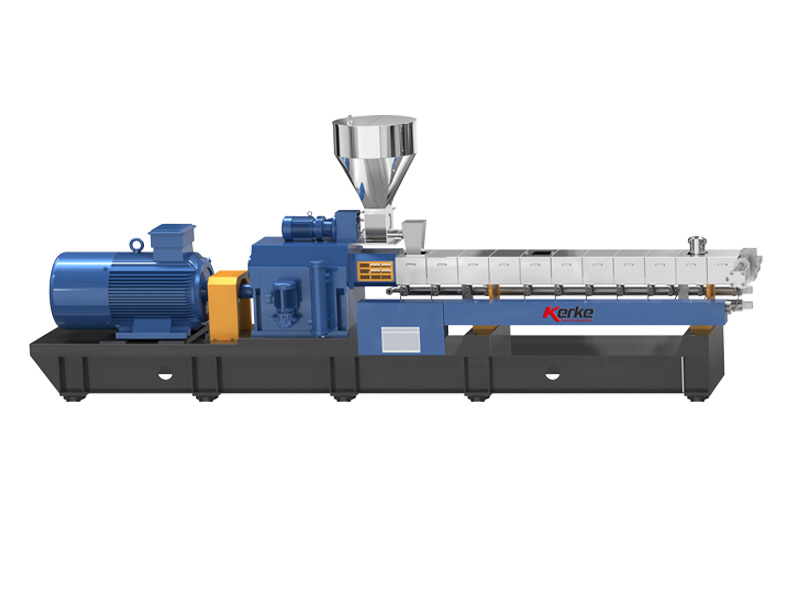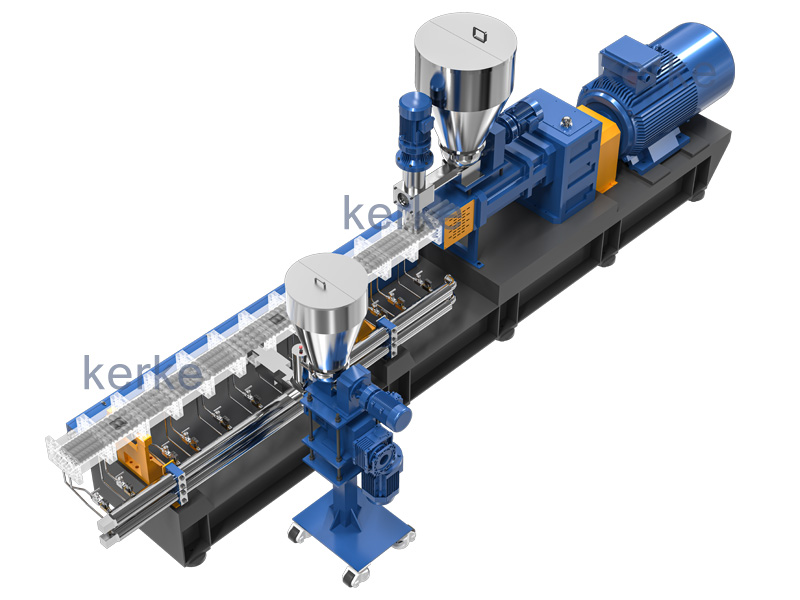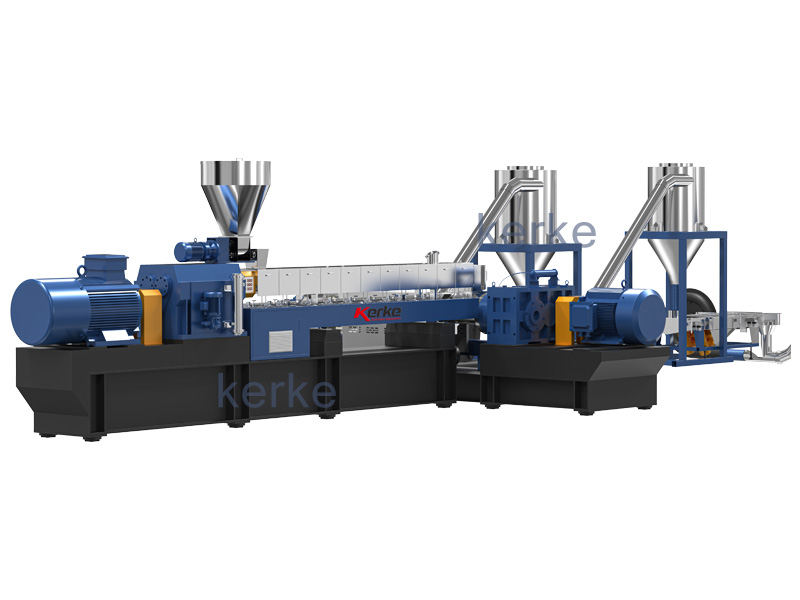
The global plastic processing industry is experiencing an unprecedented era of polarization, with two distinct growth trajectories driving market evolution. On one hand, small-scale factories and startups are flourishing, fueled by the demand for customized products, small-batch production runs, and niche market opportunities. On the other hand, large-scale manufacturing facilities are expanding rapidly to meet the massive global demand for commodity plastics, automotive components, and packaging materials. Despite their vastly different operational models and production requirements, both small and large scale factories are increasingly turning to twin screw extruders as their core processing equipment. This remarkable versatility stems from the unique design characteristics of modern twin screw extruders, which offer unmatched flexibility, scalability, and performance across the entire production spectrum.
Traditional manufacturing equipment often suffers from a fundamental limitation: it is optimized for either small-scale production or large-scale production, but rarely both. Single screw extruders, for example, are relatively inexpensive but lack the mixing performance and flexibility required for many modern applications. They also scale poorly, with small single screw extruders being inefficient for large production runs and large single screw extruders being uneconomical for small batches. In contrast, twin screw extruders feature a modular design and geometric similarity across scales that allow them to deliver consistent performance from laboratory-scale R&D to full-scale industrial production. This means that a formulation developed on a small laboratory twin screw extruder can be directly scaled up to a large production machine with minimal adjustments, significantly reducing development time and risk.
As a leading global manufacturer of advanced twin screw extruders with over 20 years of industry experience, Kerke has perfected the art of designing extrusion systems that meet the diverse needs of both small and large scale factories. Our comprehensive KTE series twin screw extruders range from compact laboratory models with outputs as low as 2 kg/h to massive industrial machines capable of processing over 5,000 kg/h. All Kerke extruders share a common design philosophy and technology platform, ensuring seamless scale-up and consistent performance across our entire product range. Whether you are a startup with limited capital and space or a multinational corporation with high-volume production requirements, Kerke has a twin screw extruder solution that is perfectly tailored to your needs.
This comprehensive guide provides everything you need to know about how twin screw extruders fit both small and large scale factories. It examines the global market trends driving the demand for flexible manufacturing solutions, explains the core design principles that make twin screw extruders uniquely versatile, details how these machines address the specific challenges of small and large scale production, provides a complete overview of Kerke’s full range of twin screw extruders with detailed pricing and cost analysis, includes comprehensive return on investment calculations for different production scales, features real-world success stories from Kerke customers of all sizes, offers practical guidance for selecting the right extruder for your specific requirements, and explores future trends in extrusion technology that will further enhance scalability and flexibility. Whether you are just starting your manufacturing journey or looking to expand your existing production capacity, this guide will help you understand why a twin screw extruder from Kerke is the smartest investment for your business.
1. The Polarized Global Plastic Processing Market: Challenges for Small and Large Factories
The global plastic processing market is undergoing a profound transformation, characterized by the simultaneous growth of both small-scale customized production and large-scale mass production. This polarization presents unique challenges for manufacturers of all sizes, who must balance the need for flexibility, efficiency, and cost-effectiveness in an increasingly competitive marketplace.
1.1 The Rise of Small-Scale Customized Production
In recent years, there has been a dramatic shift towards customized and personalized products across virtually all industries. Consumers are increasingly seeking products that reflect their individual style and preferences, and brands are responding by offering more product variations and limited-edition releases. This trend has created a booming market for small-scale manufacturers who can quickly adapt to changing customer demands and produce small batches of specialized products.
Small-scale factories and startups play a crucial role in this new manufacturing landscape. They are often more agile and innovative than large corporations, able to develop and bring new products to market much faster. However, small-scale manufacturers face significant challenges when it comes to selecting production equipment. They typically have limited capital investment budgets, limited floor space, and smaller production volumes. They also need equipment that is easy to operate and maintain, as they may not have dedicated technical staff. Additionally, small-scale manufacturers often need to produce a wide variety of products, requiring equipment that can be quickly changed over between different formulations and processes.
Many small-scale manufacturers initially turn to used equipment or low-cost single screw extruders to minimize initial investment. However, these solutions often prove to be false economies. Used equipment may be outdated and unreliable, leading to costly downtime and maintenance. Single screw extruders lack the mixing performance and process flexibility required for many modern applications, limiting the range of products that can be produced. They also have high material waste rates, which is particularly costly for small production runs where material costs represent a significant portion of total production expenses.
1.2 The Continued Growth of Large-Scale Mass Production
While customized production is growing rapidly, large-scale mass production remains the backbone of the global plastic processing industry. The demand for commodity plastics, packaging materials, automotive components, and construction materials continues to increase, driven by population growth, urbanization, and economic development in emerging economies. Large-scale factories that can produce these products efficiently and cost-effectively are essential to meeting this global demand.
Large-scale manufacturers face a different set of challenges than their small-scale counterparts. Their primary concerns are maximizing production output, minimizing per-unit production costs, ensuring consistent product quality across large volumes, and maintaining high equipment uptime. They also need equipment that can operate continuously 24 hours a day, 7 days a week, with minimal maintenance and downtime. Additionally, large-scale manufacturers are increasingly focused on sustainability and energy efficiency, as energy costs represent a significant portion of their operating expenses and environmental regulations become more stringent.
Traditional large-scale production equipment often lacks the flexibility to adapt to changing market conditions. Many large factories are equipped with dedicated production lines that can only produce one type of product. This makes it difficult to respond quickly to changes in demand or introduce new products. It also results in underutilized capacity when demand for a particular product decreases, leading to higher per-unit production costs and reduced profitability.
1.3 The Need for Versatile Manufacturing Solutions
Despite their differences, both small and large scale factories share a common need for versatile manufacturing solutions that can adapt to changing market conditions. Small-scale manufacturers need equipment that can grow with their business, allowing them to increase production capacity as their sales grow without having to invest in entirely new production lines. Large-scale manufacturers need equipment that can produce multiple products on the same line, allowing them to optimize capacity utilization and respond quickly to changes in demand.
Modern twin screw extruders have emerged as the ideal solution to these challenges. Their unique design characteristics make them equally well-suited for small-scale customized production and large-scale mass production. They offer unmatched flexibility, allowing manufacturers to process a wide range of materials and produce a diverse array of products on the same machine. They also offer excellent scalability, with consistent performance across the entire range of machine sizes. This means that manufacturers can start with a small twin screw extruder for product development and initial production, and then seamlessly scale up to larger machines as their business grows, without having to redevelop their formulations or processes.
2. Core Design Principles That Make Twin Screw Extruders Universally Versatile
The remarkable versatility of twin screw extruders stems from several core design principles that distinguish them from other types of processing equipment. These design features enable twin screw extruders to deliver consistent performance across a wide range of production scales, from laboratory R&D to full-scale industrial production.
2.1 Modular Design Architecture
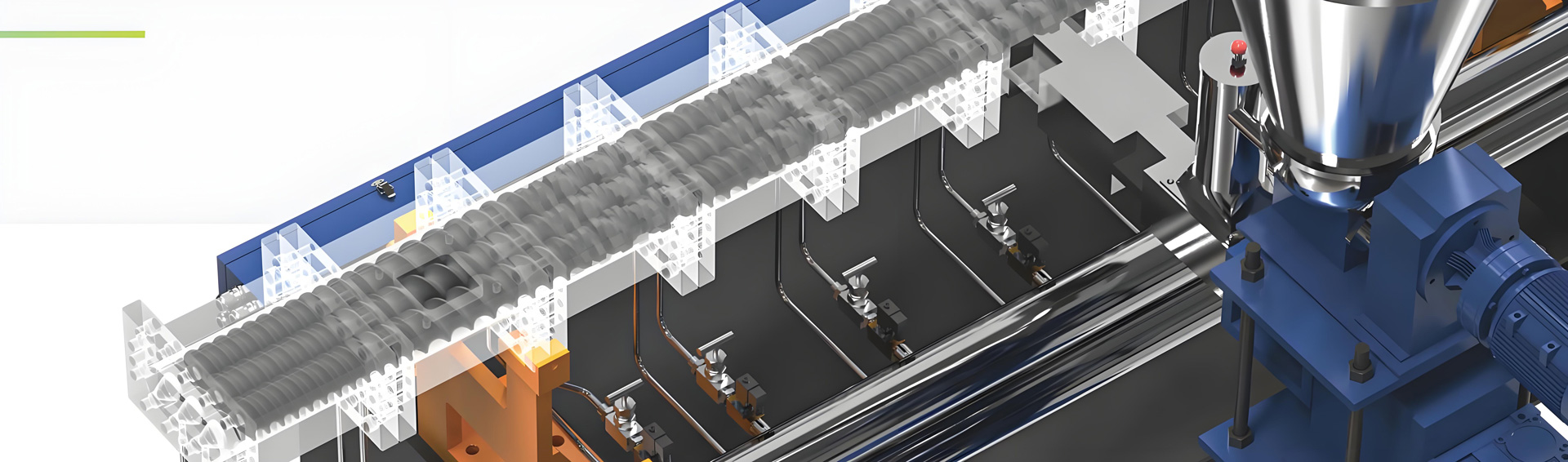
The most important design feature of modern twin screw extruders is their modular architecture. Unlike single screw extruders, which typically have a one-piece barrel and screw, twin screw extruders are constructed from individual modular components that can be easily interchanged and reconfigured. This modular design allows manufacturers to customize the extruder to meet their specific processing requirements, and to easily modify the machine as their needs change over time.
The barrel of a twin screw extruder is composed of individual segments, typically 4D or 6D in length, that are bolted together. Each barrel segment can be equipped with different features, such as feeding ports, venting ports, or side feeders, depending on the specific processing requirements. The screws are also composed of individual elements that slide onto a common shaft. These elements include conveying elements, kneading blocks, mixing elements, and reverse elements, each designed to perform a specific function in the extrusion process. By rearranging these screw elements, manufacturers can optimize the screw configuration for different materials and formulations, achieving the desired level of mixing, shearing, and conveying.
This modular design offers significant advantages for both small and large scale factories. For small-scale manufacturers, it means that they can start with a basic machine configuration and add additional features as their product range expands. For example, a manufacturer initially producing simple color masterbatches can later add a side feeder to produce glass fiber reinforced compounds, or add a vacuum venting system to process moisture-sensitive materials. For large-scale manufacturers, modular design allows them to quickly reconfigure the extruder for different products, reducing changeover time and increasing production flexibility. It also simplifies maintenance and repair, as individual components can be replaced without having to disassemble the entire machine.
2.2 Geometric Similarity Across Scales
Another critical design principle that enables seamless scale-up of twin screw extruders is geometric similarity. All twin screw extruders in a product series are designed with the same basic geometric proportions, including the screw diameter ratio (Do/Di), the center distance between the screws, and the flight depth ratio. This means that the flow characteristics and mixing behavior of the material are consistent across different machine sizes, allowing formulations developed on a small laboratory extruder to be directly scaled up to a large production machine with minimal adjustments.
Geometric similarity ensures that the key process parameters, such as shear rate, residence time, and specific energy input, remain constant as the machine size increases. This is in stark contrast to single screw extruders, where the flow characteristics change significantly with machine size, making scale-up a difficult and time-consuming process that often requires extensive trial and error. With twin screw extruders, manufacturers can develop and optimize their formulations on a small, cost-effective laboratory machine, and then confidently scale up to production size knowing that the product quality will be identical.
Kerke KTE series twin screw extruders are designed with strict geometric similarity across our entire product range, from the smallest KTE-16B laboratory model to the largest KTE-120 industrial machine. This ensures that our customers can seamlessly transition from product development to full-scale production, reducing time-to-market and minimizing the risk of costly production issues.
2.3 Wide Range of Configurable Throughput Capacities
Modern twin screw extruders offer an extremely wide range of configurable throughput capacities, from just a few kilograms per hour for laboratory models to over 5,000 kilograms per hour for large industrial machines. This wide capacity range allows manufacturers to select a machine that is perfectly sized for their current production requirements, while still having the flexibility to increase production in the future.
The throughput capacity of a twin screw extruder is primarily determined by the screw diameter, the screw speed, and the torque rating of the drive system. Kerke offers twin screw extruders with screw diameters ranging from 16 mm to 120 mm, with corresponding throughput capacities ranging from 2-10 kg/h for the KTE-16B to 1,200-5,000 kg/h for the KTE-120. Within each machine size, the throughput can be further adjusted by varying the screw speed and feed rate, allowing manufacturers to optimize production for different products and formulations.
This wide range of configurable capacities is particularly beneficial for growing businesses. A small startup can begin with a KTE-35 pilot-scale extruder with a capacity of 50-150 kg/h for initial production, and then upgrade to a KTE-65 industrial extruder with a capacity of 300-800 kg/h as their sales grow. When they need even more capacity, they can further upgrade to a KTE-95 or KTE-120 machine. Since all Kerke extruders share the same design platform and geometric similarity, the transition between machine sizes is seamless, with no need to redevelop formulations or retrain operators.
2.4 Precise and Consistent Process Control
Precise process control is essential for ensuring consistent product quality, regardless of production scale. Modern twin screw extruders are equipped with advanced control systems that provide precise regulation of all critical process parameters, including temperature, pressure, screw speed, feed rate, and torque. These control systems continuously monitor and adjust process parameters in real time, ensuring that the extrusion process remains stable and consistent, even during long production runs.
Kerke twin screw extruders are equipped with advanced Siemens PLC control systems with intuitive touch screen HMIs. These control systems feature recipe management capabilities that allow manufacturers to store and recall process parameters for different products, ensuring consistent quality every time a product is produced. The control systems also feature advanced data logging and reporting capabilities that allow manufacturers to track production data, monitor process performance, and identify opportunities for improvement. For large-scale factories, Kerke extruders can be integrated with plant-wide MES (Manufacturing Execution Systems) for centralized production management and control.
This precise process control is equally important for small and large scale factories. For small-scale manufacturers producing small batches of specialized products, it ensures that each batch meets the required quality standards, reducing waste and rework. For large-scale manufacturers producing high volumes of commodity products, it ensures consistent quality across thousands of tons of material, reducing customer complaints and product recalls.
2.5 Energy-Efficient Operation Across All Scales
Energy efficiency is a critical consideration for manufacturers of all sizes, as energy costs represent a significant portion of total production expenses. Modern twin screw extruders are significantly more energy-efficient than traditional single screw extruders, and they maintain their energy efficiency across the entire range of production scales.
The energy efficiency of twin screw extruders stems from their positive displacement conveying mechanism and efficient mixing design. Unlike single screw extruders, which rely on friction between the material and the barrel wall to convey and melt the material, twin screw extruders use intermeshing screws to positively convey the material through the barrel. This results in more efficient melting and mixing, requiring less energy input per kilogram of material processed. Additionally, modern twin screw extruders are equipped with high-efficiency servo drive systems and advanced heating systems that further reduce energy consumption.
Kerke twin screw extruders feature advanced energy-saving technologies that reduce energy consumption by up to 40% compared to traditional extrusion equipment. Our high-torque servo drive systems provide precise speed control and excellent torque response, while our ceramic band heaters and induction heating systems minimize heat loss. For large-scale factories, these energy savings can amount to hundreds of thousands of dollars per year. For small-scale factories, the lower energy consumption reduces operating costs and improves profitability, even at lower production volumes.
3. How Twin Screw Extruders Meet the Unique Needs of Small-Scale Factories
Small-scale factories and startups have unique requirements that are often not met by traditional manufacturing equipment. They need machines that are affordable, compact, easy to operate and maintain, and flexible enough to produce a wide range of products. Modern twin screw extruders from Kerke are specifically designed to meet these needs, offering small-scale manufacturers the same advanced technology and performance that was once only available to large corporations.
3.1 Low Initial Investment and Fast ROI
One of the biggest challenges facing small-scale manufacturers is limited capital investment budget. Purchasing production equipment is often the largest single expense for a new business, and many small manufacturers cannot afford to invest hundreds of thousands of dollars in a production line. Kerke offers a range of affordable twin screw extruders specifically designed for small-scale production, with prices starting at just $15,000 for our KTE-16B laboratory model.
Despite their low initial cost, Kerke small-scale twin screw extruders do not compromise on quality or performance. They incorporate the same advanced technology and design features as our larger industrial machines, including modular screw and barrel design, high-torque drive systems, and advanced process control. This means that small-scale manufacturers can produce high-quality products that compete with those from larger factories, while still maintaining healthy profit margins.
The fast return on investment (ROI) of Kerke twin screw extruders is another significant advantage for small-scale manufacturers. Due to their high production efficiency, low energy consumption, and minimal waste, Kerke extruders typically pay for themselves in just 6-12 months, even at relatively low production volumes. This fast ROI allows small manufacturers to quickly recoup their initial investment and reinvest profits back into their business to fuel further growth.
3.2 Compact Footprint for Limited Workshop Space
Another common challenge for small-scale manufacturers is limited workshop space. Many small factories operate out of small workshops or garages, where floor space is at a premium. Traditional production equipment is often large and bulky, requiring significant floor space that small manufacturers simply do not have. Kerke small-scale twin screw extruders feature a compact, space-saving design that allows them to fit into even the smallest workshops.
The Kerke KTE-16B laboratory extruder, for example, has a footprint of just 2.0 m x 1.0 m, making it small enough to fit on a workbench. The KTE-35 pilot-scale extruder, which is capable of producing up to 150 kg/h, has a footprint of just 4.0 m x 1.8 m. These compact dimensions allow small manufacturers to install a complete production line in a fraction of the space required by traditional equipment, maximizing the use of available floor space.
In addition to their compact footprint, Kerke small-scale extruders are designed for easy installation and setup. They do not require special foundations or extensive facility modifications, and can be up and running in just a few days. This is particularly beneficial for small manufacturers who may not have the resources for complex installation projects.
3.3 Easy Operation and Maintenance
Small-scale manufacturers often do not have dedicated technical staff or experienced operators. They need equipment that is easy to operate and maintain, with minimal training required. Kerke twin screw extruders are designed with user-friendliness in mind, featuring intuitive controls and simple maintenance procedures that can be performed by personnel with basic technical skills.
The Siemens PLC control system used in all Kerke extruders features a user-friendly touch screen interface that guides operators through the production process. The system includes built-in help functions and diagnostic tools that make it easy to troubleshoot common issues. Recipe management capabilities allow operators to simply select the desired product from a menu, and the system automatically sets all process parameters accordingly. This reduces the risk of human error and ensures consistent product quality, even with less experienced operators.
Maintenance of Kerke twin screw extruders is also straightforward and cost-effective. The modular design allows individual components to be easily accessed and replaced, minimizing downtime. The screws and barrels are made from high-quality alloy steel with hardened surfaces, providing excellent wear resistance and long service life. Kerke also provides comprehensive training and support to our customers, ensuring that they have the knowledge and skills to operate and maintain their equipment properly.
3.4 Quick Changeover for Multi-Product Production
Small-scale manufacturers typically produce a wide variety of products in small batches, requiring frequent changeovers between different formulations and processes. Traditional production equipment often requires lengthy changeover times, which can significantly reduce production efficiency and increase costs. Kerke twin screw extruders are designed for quick and easy changeover, allowing manufacturers to switch between different products in as little as 30 minutes.
The modular screw and barrel design of Kerke extruders allows for quick disassembly and cleaning between product runs. The screw elements can be easily removed from the shaft, and the barrel segments can be separated for thorough cleaning. This is particularly important for color masterbatch production and other applications where cross-contamination between different colors or formulations must be avoided. Additionally, the recipe management system allows operators to quickly recall process parameters for different products, eliminating the need for manual parameter adjustment during changeover.
This quick changeover capability allows small-scale manufacturers to efficiently produce small batches of multiple products, maximizing production flexibility and responsiveness to customer demands. It also reduces waste associated with changeover, as less material is required to purge the machine between different formulations.
3.5 Integrated R&D and Production Capability
One of the greatest advantages of twin screw extruders for small-scale manufacturers is their ability to serve as both R&D and production equipment. Many small manufacturers start by developing new products in a laboratory, and then need to scale up to production once the product is ready for market. With traditional equipment, this often requires purchasing separate R&D and production machines, which is prohibitively expensive for most small businesses.
Kerke small-scale twin screw extruders bridge the gap between R&D and production, allowing manufacturers to develop new products and produce commercial quantities on the same machine. The KTE-16B and KTE-20 models are ideal for product development and formulation testing, while still being capable of producing small commercial batches. The KTE-35 model is perfect for pilot-scale production and small-batch manufacturing, offering a balance between R&D flexibility and production capacity.
This integrated R&D and production capability allows small manufacturers to significantly reduce product development time and cost. They can test new formulations and processes on a small scale, and then immediately scale up to production once the formulation is optimized. This gives small manufacturers a competitive advantage over larger companies, who often have longer product development cycles and higher development costs.
3.6 Kerke Small-Scale Twin Screw Extruder Product Range
Kerke offers a comprehensive range of small-scale twin screw extruders designed to meet the diverse needs of small manufacturers and startups. Our small-scale machines deliver the same advanced technology and performance as our larger industrial models, in a compact and affordable package.
Kerke KTE-16B Laboratory Twin Screw Extruder
The KTE-16B is our entry-level laboratory-scale twin screw extruder designed for research and development, formulation testing, and very small-batch production. This compact machine is perfect for universities, research institutions, and small manufacturers that need a reliable, high-precision extruder for developing new products.
- Screw diameter: 16 mm
- L/D ratio: 32:1/40:1 optional
- Maximum speed: 600 rpm
- Maximum output: 2-10 kg/h
- Drive power: 4 kW
- Control system: Siemens PLC with 10-inch touch screen HMI
- Energy consumption: 2-4 kW
- Footprint: 2.0 m x 1.0 m
- Weight: 800 kg
Price and Cost Analysis: The price of the Kerke KTE-16B laboratory twin screw extruder ranges from $15,000 to $25,000 FOB Shanghai, depending on the specific configuration and optional features. The standard configuration includes the main extruder, gravimetric feeder, strand pelletizer, and basic control system. Optional features include vacuum venting system, liquid feeder, side feeder, and data acquisition system. The typical payback period for the KTE-16B is 12-18 months for manufacturers producing small batches of high-value compounds.
Kerke KTE-20 Compact Twin Screw Extruder
The KTE-20 is our compact twin screw extruder designed for small-batch production and pilot-scale testing. This machine offers a balance between R&D flexibility and production capacity, making it ideal for small manufacturers that need to produce commercial quantities of specialized products.
- Screw diameter: 20 mm
- L/D ratio: 40:1
- Maximum speed: 600 rpm
- Maximum output: 10-30 kg/h
- Drive power: 7.5 kW
- Control system: Siemens PLC with 10-inch touch screen HMI
- Energy consumption: 3-6 kW
- Footprint: 2.5 m x 1.2 m
- Weight: 1,200 kg
Price and Cost Analysis: The price of the Kerke KTE-20 compact twin screw extruder ranges from $25,000 to $40,000 FOB Shanghai, depending on the specific configuration and optional features. The standard configuration includes the main extruder, gravimetric feeder, vacuum venting system, strand pelletizer, and advanced control system. Optional features include side feeder, liquid feeder, melt pump, and underwater pelletizer. The typical payback period for the KTE-20 is 8-12 months for small-batch production of high-value masterbatches and compounds.
Kerke KTE-35 Pilot-Scale Twin Screw Extruder
The KTE-35 is our pilot-scale twin screw extruder designed for medium-volume production and scale-up testing. This machine bridges the gap between laboratory research and industrial production, allowing manufacturers to test new formulations and processes on a larger scale before full-scale production.
- Screw diameter: 35 mm
- L/D ratio: 44:1
- Maximum speed: 500 rpm
- Maximum output: 50-150 kg/h
- Drive power: 37 kW
- Control system: Siemens S7-1200 PLC with 12-inch touch screen HMI
- Energy consumption: 15-25 kW
- Footprint: 4.0 m x 1.8 m
- Weight: 3,500 kg
Price and Cost Analysis: The price of the Kerke KTE-35 pilot-scale twin screw extruder ranges from $45,000 to $75,000 FOB Shanghai, depending on the specific configuration and optional features. The standard configuration includes the main extruder, multiple gravimetric feeders, vacuum venting system, strand pelletizer, and advanced control system with recipe management. Optional features include side feeder, liquid feeder, melt pump, underwater pelletizer, and integrated emission control system. The typical payback period for the KTE-35 is 6-10 months for medium-volume production of compounded plastics.
4. How Twin Screw Extruders Meet the Unique Needs of Large-Scale Factories
While twin screw extruders are ideal for small-scale production, they are equally well-suited for large-scale industrial manufacturing. Modern high-capacity twin screw extruders offer exceptional production efficiency, consistent product quality, and advanced automation capabilities that allow large factories to maximize output and minimize per-unit production costs.
4.1 High-Throughput Production Capability
The primary requirement for large-scale factories is high production throughput to meet global demand for plastic products. Modern twin screw extruders are capable of processing extremely large volumes of material, with some large industrial machines capable of producing over 5,000 kg/h of compounded plastic. This high throughput capability allows large factories to produce thousands of tons of product per year, achieving economies of scale that minimize per-unit production costs.
Kerke large-scale twin screw extruders are specifically designed for high-volume production, featuring heavy-duty construction and advanced design features that maximize throughput while maintaining product quality. Our KTE-95 high-capacity extruder, for example, can process 1,200-2,500 kg/h of material, making it ideal for large-scale production of commodity compounds such as filled polypropylene, black masterbatch, and recycled compounds. Our largest model, the KTE-120, can process up to 5,000 kg/h, making it suitable for the largest manufacturing facilities.
The high throughput capability of Kerke twin screw extruders is achieved through a combination of advanced screw design, high-torque drive systems, and optimized processing zones. Our screws are designed to provide efficient material conveyance, melting, and mixing at high throughput rates, while our high-torque drive systems provide the power needed to process high-viscosity materials and high-loading formulations. This allows large factories to achieve maximum production output without compromising product quality.
4.2 Continuous 24/7 Operation with High Reliability
Large-scale factories typically operate 24 hours a day, 7 days a week, to maximize production capacity and return on investment. This requires production equipment that is extremely reliable and durable, with minimal maintenance requirements and downtime. Kerke large-scale twin screw extruders are built to withstand the rigors of continuous industrial operation, featuring heavy-duty construction and high-quality components that ensure long service life and high uptime.
All Kerke extruders are constructed from high-quality materials and manufactured to the strictest quality standards. The gearboxes are heavy-duty, precision-engineered units with high torque density ratings, designed for continuous operation with minimal maintenance. The screws and barrels are made from high-grade alloy steel with hardened surfaces, providing excellent wear resistance even when processing abrasive materials such as glass fibers and mineral fillers. The electrical components are from leading international manufacturers such as Siemens and Schneider, ensuring reliable performance and easy availability of spare parts.
With proper maintenance, Kerke large-scale twin screw extruders can operate continuously for 8,000+ hours per year, with uptime rates exceeding 97%. This high reliability allows large factories to maximize production output and meet tight delivery schedules, while minimizing maintenance costs and downtime.
4.3 Advanced Automation and Digitalization
Advanced automation and digitalization are essential for efficient large-scale manufacturing, allowing factories to optimize production processes, reduce labor costs, and improve product quality. Kerke large-scale twin screw extruders are equipped with state-of-the-art automation and digitalization features that enable fully automated production and real-time process monitoring and control.
Our advanced control systems feature recipe management, automatic process adjustment, and comprehensive data logging and reporting capabilities. They can be integrated with plant-wide MES (Manufacturing Execution Systems) and ERP (Enterprise Resource Planning) systems for centralized production management and control. This allows factory managers to monitor production performance, track material usage, and manage inventory in real time, improving overall operational efficiency.
Kerke extruders also feature advanced predictive maintenance capabilities that use sensors and data analytics to monitor equipment health and predict potential failures before they occur. This allows maintenance teams to schedule maintenance during planned downtime, reducing unplanned downtime and increasing equipment uptime. Additionally, our remote monitoring and control capabilities allow technical support teams to diagnose and resolve issues remotely, further minimizing downtime and improving productivity.
For large factories with multiple production lines, Kerke offers centralized control systems that allow all extruders to be monitored and controlled from a single control room. This reduces the number of operators required, lowering labor costs and improving production efficiency.
4.4 Integrated Production Line Solutions
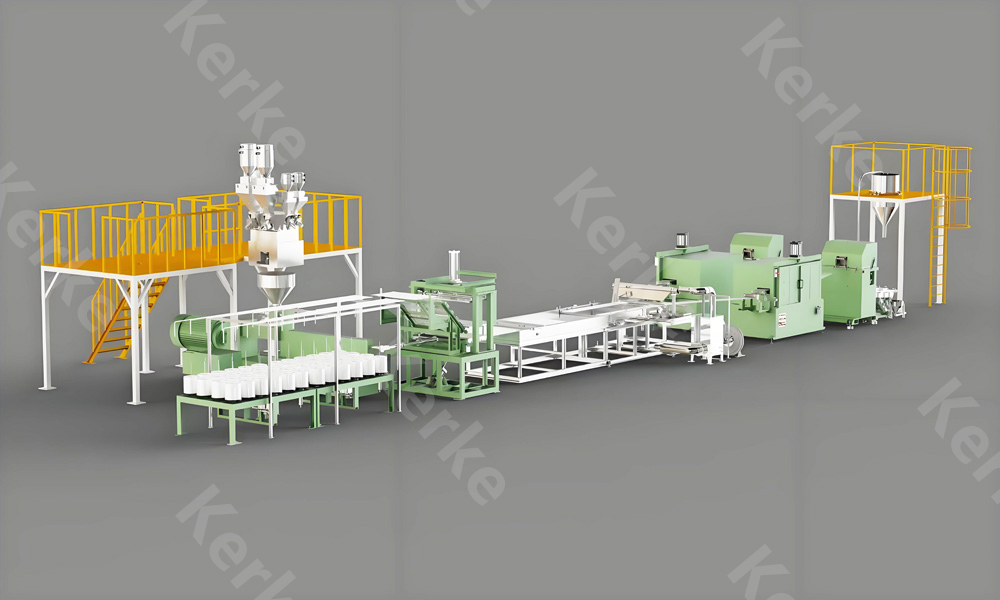
Large-scale factories require complete production line solutions that integrate all aspects of the manufacturing process, from raw material handling to finished product packaging. Kerke offers turnkey integrated production line solutions for large-scale plastic compounding, masterbatch production, and recycling applications. Our turnkey solutions include everything needed for a complete production line, including raw material storage and conveying systems, gravimetric feeding systems, twin screw extruders, pelletizing systems, cooling systems, screening systems, and finished product packaging systems.
Our integrated production lines are designed to work seamlessly together, optimizing material flow and minimizing manual handling. This reduces labor costs, improves production efficiency, and ensures consistent product quality throughout the entire manufacturing process. Kerke’s turnkey solutions also include complete installation, commissioning, and training services, ensuring that the production line is up and running quickly and efficiently.
For large factories with specific requirements, Kerke can customize the production line to meet their exact needs. We can design and build custom material handling systems, specialized pelletizing systems, and integrated quality control systems to ensure that the production line is perfectly tailored to the customer’s products and processes.
4.5 Sustainable and Energy-Efficient Manufacturing
Sustainability and energy efficiency are becoming increasingly important for large-scale factories, as energy costs continue to rise and environmental regulations become more stringent. Kerke large-scale twin screw extruders are designed with advanced energy-saving technologies that minimize energy consumption and reduce environmental impact, while still delivering maximum production output.
Our high-efficiency servo drive systems reduce energy consumption by up to 40% compared to traditional AC induction motors. Our advanced heating systems, including ceramic band heaters and induction heating systems, minimize heat loss and reduce heating energy requirements. We also offer energy recovery systems that capture waste heat from the extrusion process and use it to preheat raw materials or for other plant heating needs, further reducing energy consumption.
In addition to energy efficiency, Kerke extruders are designed to minimize material waste. Our precise feeding systems and process control ensure consistent product quality, reducing scrap rates to less than 1%. Our machines are also capable of processing recycled materials, allowing large factories to incorporate recycled content into their products and reduce their environmental footprint. Kerke also offers integrated emission control systems that capture and treat volatile organic compounds (VOCs) and other emissions, ensuring compliance with environmental regulations.
For large-scale factories, these sustainability and energy efficiency features can result in significant cost savings. A single KTE-95 extruder operating 24/7 can save over $100,000 per year in energy costs compared to a traditional extruder, while also reducing carbon emissions by hundreds of tons per year.
4.6 Kerke Large-Scale Twin Screw Extruder Product Range
Kerke offers a comprehensive range of large-scale twin screw extruders designed to meet the high-volume production requirements of large industrial factories. Our large-scale machines deliver exceptional performance, reliability, and efficiency, making them the preferred choice for leading plastic manufacturers worldwide.
Kerke KTE-65 Industrial Twin Screw Extruder
The KTE-65 is our most popular industrial-scale twin screw extruder designed for medium to high-volume production of all types of compounded plastics, including filled compounds, reinforced compounds, masterbatches, and recycled compounds. This machine offers an excellent balance of production capacity, energy efficiency, and flexibility.
- Screw diameter: 65 mm
- L/D ratio: 48:1
- Maximum speed: 450 rpm
- Maximum output: 300-800 kg/h
- Drive power: 160 kW
- Control system: Siemens S7-1200 PLC with 15-inch touch screen HMI
- Energy consumption: 60-100 kW
- Footprint: 6.5 m x 2.5 m
- Weight: 12,000 kg
Price and Cost Analysis: The price of the Kerke KTE-65 industrial twin screw extruder ranges from $120,000 to $200,000 FOB Shanghai, depending on the specific configuration and optional features. The standard configuration includes the main extruder, multiple high-precision gravimetric feeders, high-performance vacuum venting system, underwater pelletizer, advanced control system with recipe management and data logging, and basic emission control system. Optional features include multiple side feeders, liquid feeders, melt pump, integrated VOC treatment system, and fully automated production line integration. The typical payback period for the KTE-65 is 4-8 months for high-volume production of compounded plastics.
Kerke KTE-75 High-Output Twin Screw Extruder
The KTE-75 is our high-output twin screw extruder designed for large-scale production of commodity compounds and masterbatches. This machine offers increased production capacity compared to the KTE-65, while still maintaining excellent energy efficiency and product quality.
- Screw diameter: 75 mm
- L/D ratio: 48:1
- Maximum speed: 450 rpm
- Maximum output: 600-1,200 kg/h
- Drive power: 250 kW
- Control system: Siemens S7-1200 PLC with 15-inch touch screen HMI
- Energy consumption: 90-150 kW
- Footprint: 7.5 m x 3.0 m
- Weight: 18,000 kg
Price and Cost Analysis: The price of the Kerke KTE-75 high-output twin screw extruder ranges from $180,000 to $280,000 FOB Shanghai, depending on the specific configuration and optional features. The standard configuration includes the main extruder, multiple high-capacity gravimetric feeders, advanced vacuum venting system, high-speed underwater pelletizer, fully integrated control system with advanced process monitoring, and comprehensive emission control system. Optional features include multiple side feeders, liquid feeders, melt pump, integrated wastewater treatment system, and plant-wide automation integration. The typical payback period for the KTE-75 is 3-6 months for high-volume production of commodity compounds.
Kerke KTE-95 High-Capacity Twin Screw Extruder
The KTE-95 is our high-capacity twin screw extruder designed for the largest compounding manufacturers and multinational corporations. This machine offers industry-leading production capacity and efficiency, making it perfect for high-volume production of commodity compounds such as filled polypropylene, black masterbatch, and recycled compounds.
- Screw diameter: 95 mm
- L/D ratio: 52:1
- Maximum speed: 400 rpm
- Maximum output: 1,200-2,500 kg/h
- Drive power: 450 kW
- Control system: Siemens S7-1500 PLC with 19-inch touch screen HMI
- Energy consumption: 150-250 kW
- Footprint: 9.0 m x 3.5 m
- Weight: 28,000 kg
Price and Cost Analysis: The price of the Kerke KTE-95 high-capacity twin screw extruder ranges from $280,000 to $450,000 FOB Shanghai, depending on the specific configuration and optional features. The standard configuration includes the main extruder, multiple high-capacity gravimetric feeders, advanced vacuum venting system, high-speed underwater pelletizer, fully integrated control system with advanced process monitoring and data logging, and comprehensive emission control system. Optional features include multiple side feeders, liquid feeders, melt pump, integrated wastewater treatment system, and plant-wide automation integration. The typical payback period for the KTE-95 is 3-5 months for high-volume production of commodity compounds.
Kerke KTE-120 Ultra-High-Capacity Twin Screw Extruder
The KTE-120 is our ultra-high-capacity twin screw extruder designed for the largest manufacturing facilities with extremely high production requirements. This machine offers the highest production capacity in our product range, making it ideal for large-scale petrochemical compounding and global masterbatch manufacturers.
- Screw diameter: 120 mm
- L/D ratio: 56:1
- Maximum speed: 350 rpm
- Maximum output: 2,500-5,000 kg/h
- Drive power: 800 kW
- Control system: Siemens S7-1500 PLC with 19-inch touch screen HMI
- Energy consumption: 250-400 kW
- Footprint: 12.0 m x 4.5 m
- Weight: 45,000 kg
Price and Cost Analysis: The price of the Kerke KTE-120 ultra-high-capacity twin screw extruder ranges from $450,000 to $750,000 FOB Shanghai, depending on the specific configuration and optional features. The standard configuration includes the main extruder, multiple high-capacity gravimetric feeders, advanced vacuum venting system, high-speed underwater pelletizer, fully integrated control system with advanced process monitoring and data logging, and comprehensive emission control system. Optional features include multiple side feeders, liquid feeders, melt pump, integrated wastewater treatment system, and plant-wide automation integration. The typical payback period for the KTE-120 is 2-4 months for ultra-high-volume production of commodity compounds.
5. Seamless Scale-Up Path: From Startup to Global Manufacturer with Kerke
One of the greatest advantages of choosing Kerke as your extrusion equipment supplier is the seamless scale-up path we provide for our customers. Our comprehensive product range and consistent technology platform allow manufacturers to start with a small laboratory extruder for product development, and then seamlessly scale up to larger production machines as their business grows, without having to redevelop formulations or retrain operators.
5.1 Consistent Technology Platform Across All Scales
All Kerke twin screw extruders, from the smallest KTE-16B laboratory model to the largest KTE-120 industrial machine, share a common technology platform and design philosophy. This means that the key design features, control systems, and operating principles are identical across our entire product range. Operators who are trained on a small Kerke extruder can easily transition to operating a larger machine, with minimal additional training. Formulations developed on a small laboratory extruder can be directly scaled up to a large production machine, with predictable and consistent results.
This consistent technology platform is made possible by our strict adherence to geometric similarity across all machine sizes. As discussed earlier, geometric similarity ensures that the flow characteristics and mixing behavior of the material are consistent across different machine sizes. This eliminates the guesswork and trial and error typically associated with scale-up, significantly reducing time-to-market and minimizing the risk of costly production issues.
For example, a manufacturer that develops a new flame retardant compound on a KTE-16B laboratory extruder can directly transfer the process parameters to a KTE-65 production machine. The screw configuration, temperature profile, screw speed, and feed rate will all scale proportionally, resulting in a final product with identical properties to the laboratory sample. This seamless scale-up allows manufacturers to quickly move from product development to full-scale production, giving them a significant competitive advantage in the marketplace.
5.2 Modular Upgrades for Existing Machines
In addition to offering a complete range of machine sizes, Kerke also provides modular upgrades for existing machines, allowing manufacturers to increase production capacity or add new capabilities without having to purchase an entirely new machine. This modular upgrade approach is a cost-effective way for growing businesses to expand their production capabilities while maximizing the return on their existing equipment investment.