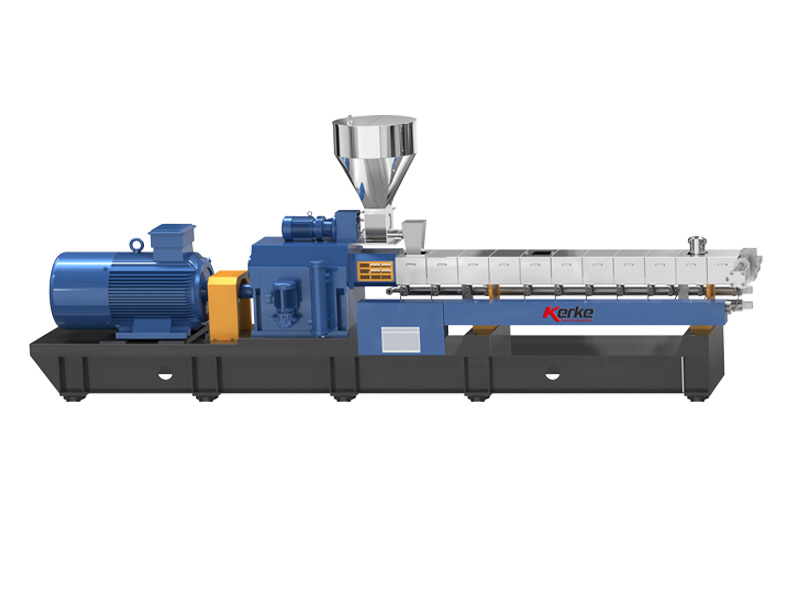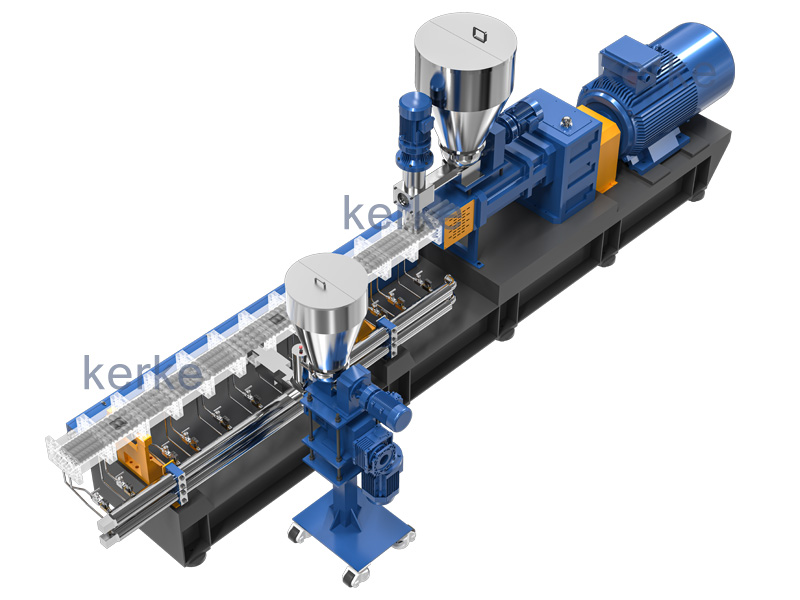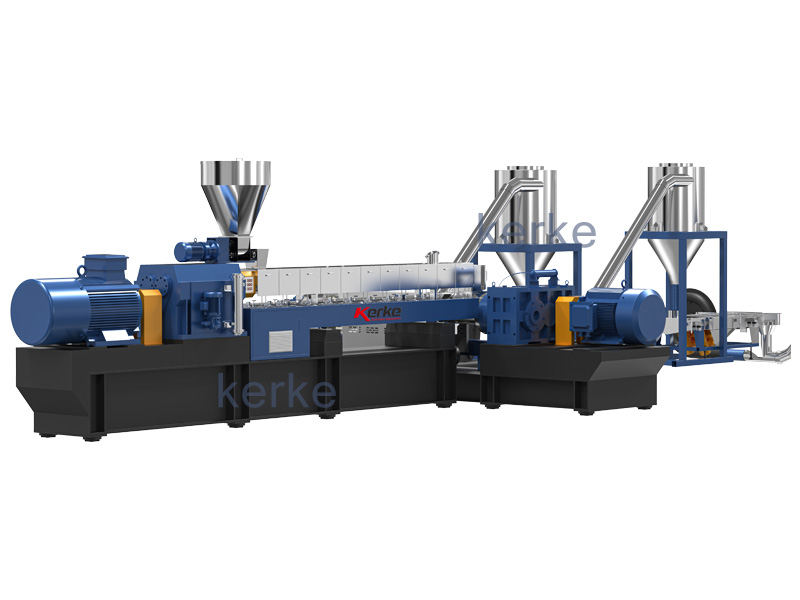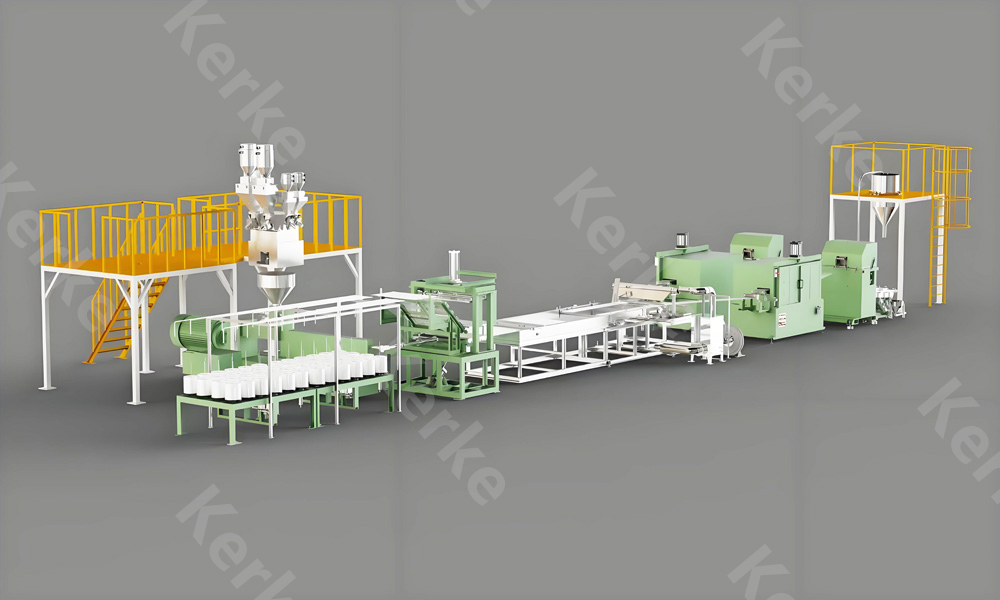
The global plastic compounding market is projected to reach USD 87.3 billion by 2031, growing at a compound annual growth rate (CAGR) of 6.8% from 2026 to 2031. This robust growth is driven by the increasing demand for high-performance plastic materials across industries such as automotive, electronics, packaging, construction, and healthcare. As manufacturers strive to develop lighter, stronger, more durable, and more sustainable plastic products, compounding extruders have emerged as the critical technology that transforms ordinary plastic resins into high-value engineered materials. Modern twin screw compounding extruders enable manufacturers to precisely tailor the properties of plastic materials to meet specific application requirements, significantly increasing their market value and competitive advantage.
Plastic compounding is the process of mixing plastic resins with various additives, fillers, reinforcing agents, and other polymers to create customized materials with enhanced performance characteristics. While basic plastic resins are commodity products with relatively low profit margins, compounded engineered plastics can command premium prices that are 2-10 times higher than virgin resins. The added value comes from the improved mechanical properties, functional capabilities, and processing performance that compounding provides. A high-quality compounding extruder is essential for achieving consistent, uniform mixing and dispersion of additives, ensuring that the final compound meets the strictest quality and performance standards.
As a leading global manufacturer of advanced twin screw compounding extruders with over 20 years of industry experience, Kerke has established itself as the trusted partner for plastic manufacturers seeking to increase the value of their products. Our comprehensive range of KTE series twin screw extruders is specifically engineered to deliver exceptional mixing performance, precise process control, and maximum production efficiency. Kerke compounding extruders incorporate patented screw design technology, advanced servo drive systems, and intelligent process control capabilities that enable manufacturers to produce high-value compounded materials with consistent quality and minimal waste. With over 2,000 successful installations across more than 70 countries, Kerke extruders have proven to increase the added value of plastic products by up to 300% while reducing production costs by up to 40%.
This comprehensive guide provides everything you need to know about how compounding extruders increase the added value of plastic products. It examines the global market for compounded plastics and the growing demand for high-performance materials, explains the core mechanisms by which compounding adds value to plastic products, details the key technologies in modern twin screw compounding extruders that enable value creation, provides a complete overview of Kerke’s compounding extruder product range with detailed pricing and cost analysis, includes a comprehensive return on investment calculation, features real-world success stories from Kerke customers worldwide, explores the most profitable value-added applications for compounded plastics, and offers practical guidance for selecting the right compounding extruder for your specific needs. Whether you are a plastic manufacturer looking to expand into high-value markets or a brand owner seeking to improve the performance of your products, this guide will help you understand how investing in a modern compounding extruder can transform your business and significantly increase profitability.
1. The Global Market for Compounded Plastics: Value and Opportunity
The market for compounded plastics has experienced significant growth in recent years, driven by the increasing demand for high-performance materials across virtually all industries. Compounded plastics have become the material of choice for many applications due to their unique combination of performance, versatility, and cost-effectiveness. Understanding the market dynamics and value proposition of compounded plastics is essential for manufacturers looking to capitalize on this growing opportunity.
1.1 Market Size and Growth Projections
The global plastic compounding market was valued at USD 62.7 billion in 2026 and is projected to reach USD 87.3 billion by 2031, representing a CAGR of 6.8% during the forecast period. This growth is being driven by several key factors, including the increasing demand for lightweight materials in the automotive industry, the growing use of engineering plastics in electronics and electrical applications, the rising demand for sustainable packaging solutions, and the expansion of the construction industry in emerging economies.
The automotive industry is the largest consumer of compounded plastics, accounting for approximately 35% of total market demand. As automotive manufacturers strive to reduce vehicle weight to improve fuel efficiency and meet emissions standards, they are increasingly replacing metal components with lightweight plastic materials. Compounded plastics such as glass fiber reinforced polypropylene, polyamide, and polycarbonate are used in a wide range of automotive applications, including bumpers, instrument panels, door panels, engine covers, and structural components.
The electronics and electrical industry is the second-largest consumer of compounded plastics, accounting for approximately 22% of total market demand. Compounded plastics are used in the production of housings, connectors, circuit boards, and other components due to their excellent electrical insulation properties, flame retardancy, and mechanical strength. The growing demand for consumer electronics, electric vehicles, and renewable energy systems is driving significant growth in this segment.
The packaging industry is another major consumer of compounded plastics, accounting for approximately 18% of total market demand. Compounded plastics are used in the production of flexible packaging, rigid containers, and packaging films due to their excellent barrier properties, durability, and processability. The growing demand for sustainable packaging solutions and the increasing use of recycled materials are driving innovation in this segment.
1.2 The Value Gap Between Virgin Resins and Compounded Plastics
One of the most compelling reasons to invest in compounding technology is the significant value gap between virgin plastic resins and compounded engineered plastics. Virgin commodity resins such as polyethylene (PE), polypropylene (PP), and polystyrene (PS) typically sell for $1.00 to $2.50 per kilogram, with relatively low profit margins of 5-15%. In contrast, compounded engineered plastics can sell for $3.00 to $25.00 per kilogram or more, with profit margins ranging from 25% to 60% depending on the complexity of the formulation and the application.
For example, virgin polypropylene resin typically costs approximately $1.20 per kilogram. By compounding this resin with 30% glass fiber reinforcement, heat stabilizers, and processing aids, manufacturers can produce a glass fiber reinforced polypropylene compound that sells for approximately $3.50 per kilogram. This represents a 192% increase in value, with a gross profit margin of approximately 40%. Even higher value can be achieved with more specialized compounds such as flame retardant materials, conductive plastics, and high-temperature engineering resins.
The value added by compounding comes from several sources, including improved mechanical properties, enhanced functional capabilities, better processing performance, and reduced production costs for downstream manufacturers. Compounded plastics allow downstream manufacturers to produce higher quality products with better performance characteristics, justifying the premium price they pay for compounded materials.
1.3 Key Market Trends Driving Demand for Compounded Plastics
Several key market trends are driving the growing demand for compounded plastics and creating significant opportunities for manufacturers with compounding capabilities.
Lightweighting is one of the most important trends driving demand for compounded plastics, particularly in the automotive and aerospace industries. Manufacturers are increasingly replacing metal components with lightweight plastic materials to reduce weight, improve fuel efficiency, and lower emissions. Compounded plastics offer an excellent strength-to-weight ratio, making them ideal for lightweighting applications.
Sustainability is another major trend driving the compounding market. Consumers and regulators are increasingly demanding more sustainable products and packaging solutions. Compounding extruders enable manufacturers to incorporate recycled materials into their products while maintaining performance standards, creating high-value recycled compounds that command premium prices. Compounding also enables the production of biodegradable and compostable plastics, which are in high demand for packaging applications.
Miniaturization and performance enhancement are driving demand for high-performance compounded plastics in the electronics industry. As electronic devices become smaller and more powerful, they require materials with better thermal conductivity, electrical insulation, and mechanical strength. Compounded plastics can be tailored to meet these specific requirements, enabling the development of smaller, more efficient electronic devices.
Cost reduction is another important trend driving demand for compounded plastics. Compounded plastics allow manufacturers to reduce material costs by replacing more expensive materials with lower-cost alternatives while maintaining or improving performance. Compounding also enables manufacturers to optimize material usage and reduce waste, further lowering production costs.
2. Core Mechanisms by Which Compounding Adds Value to Plastic Products
Compounding adds value to plastic products through several core mechanisms that transform ordinary plastic resins into high-performance engineered materials. These mechanisms work together to improve the properties, functionality, and processability of plastic materials, significantly increasing their market value and competitive advantage.
2.1 Enhancement of Mechanical Properties
One of the primary ways compounding adds value to plastic products is by enhancing their mechanical properties. Basic plastic resins often lack the strength, stiffness, toughness, and durability required for many industrial applications. Through compounding, manufacturers can incorporate various additives and reinforcing agents to significantly improve these properties.
Reinforcing agents such as glass fiber, carbon fiber, and aramid fiber are commonly used to increase the strength and stiffness of plastic materials. Glass fiber reinforcement can increase the tensile strength of polypropylene by 200-300% and its flexural modulus by 300-400%, making it suitable for structural applications that would otherwise require metal. Carbon fiber reinforcement provides even higher strength and stiffness, as well as excellent fatigue resistance and low density, making it ideal for aerospace and high-performance automotive applications.
Toughening agents such as elastomers and impact modifiers are used to improve the impact resistance of brittle plastics such as polystyrene, polycarbonate, and polyamide. These agents absorb energy during impact, preventing the material from cracking or breaking. Toughened compounds can have impact strengths that are 5-10 times higher than unmodified resins, significantly expanding their range of applications.
Fillers such as calcium carbonate, talc, and mica are used to improve the dimensional stability, heat resistance, and stiffness of plastic materials while reducing material costs. Fillers can also improve the processing characteristics of plastics, reducing shrinkage and warpage during molding. While some fillers can reduce the impact strength of plastics, this can be compensated for by adding toughening agents.
2.2 Addition of Functional Capabilities
Compounding also adds value to plastic products by adding functional capabilities that are not present in virgin resins. Functional additives can be incorporated into plastic compounds to provide a wide range of specialized properties, making them suitable for specific applications that would otherwise be impossible with unmodified plastics.
Flame retardant additives are used to improve the fire resistance of plastic materials, making them suitable for use in building materials, electronics, and transportation applications. Flame retardant compounds can prevent or slow the spread of fire, reducing the risk of injury and property damage. High-performance flame retardant compounds can command premium prices, particularly in applications where safety is a critical concern.
Conductive additives such as carbon black, carbon nanotubes, and metal powders are used to make plastic materials electrically conductive or static dissipative. Conductive plastics are used in a wide range of applications, including electrostatic discharge (ESD) protection for electronic components, electromagnetic interference (EMI) shielding, and heating elements. Conductive compounds can be 2-5 times more expensive than non-conductive compounds, representing a significant value addition.
UV stabilizers and antioxidants are used to improve the weatherability and durability of plastic materials, protecting them from degradation caused by exposure to sunlight, heat, and oxygen. These additives extend the service life of plastic products, making them suitable for outdoor applications such as construction materials, automotive components, and outdoor furniture.
Barrier additives are used to improve the resistance of plastic materials to gases, moisture, and chemicals. Barrier compounds are used in packaging applications to protect food, beverages, pharmaceuticals, and other sensitive products from spoilage and contamination. High-performance barrier compounds can significantly extend the shelf life of products, justifying their premium price.
2.3 Improvement of Processing Performance
Compounding also adds value to plastic products by improving their processing performance. Many plastic resins have processing characteristics that make them difficult to mold or extrude into finished products. Through compounding, manufacturers can incorporate processing aids and modifiers that improve the flow properties, mold release characteristics, and thermal stability of plastic materials.
Processing aids such as lubricants, slip agents, and anti-blocking agents reduce friction between the plastic melt and processing equipment, improving flow and reducing energy consumption. They also improve the surface finish of finished products and prevent sticking to molds and dies. Processing aids can significantly increase production rates and reduce scrap rates, lowering production costs for downstream manufacturers.
Melt flow modifiers are used to adjust the melt viscosity of plastic materials, making them easier to process. For example, increasing the melt flow rate of polypropylene can make it suitable for injection molding of complex parts with thin walls. Melt flow modifiers can also improve the consistency of the molding process, reducing variations in part quality.
Thermal stabilizers are used to prevent degradation of plastic materials during processing at high temperatures. They protect the polymer from thermal oxidation and chain scission, maintaining the mechanical properties and appearance of the finished product. Thermal stabilizers are particularly important for engineering plastics that are processed at high temperatures.
2.4 Cost Reduction Through Material Optimization
Compounding adds value to plastic products not only by improving their performance but also by reducing material costs. Through compounding, manufacturers can optimize material usage and reduce the cost of raw materials while maintaining or improving product performance.
One of the most significant cost reduction opportunities comes from the use of fillers and extenders. Fillers such as calcium carbonate, talc, and clay are significantly less expensive than plastic resins. By incorporating these fillers into plastic compounds, manufacturers can reduce the overall material cost while maintaining acceptable performance characteristics. For example, adding 30% calcium carbonate to polypropylene can reduce the material cost by approximately 25% while improving stiffness and dimensional stability.
Compounding also enables manufacturers to use recycled materials in their products, further reducing material costs. Recycled plastic resins are typically 30-50% less expensive than virgin resins. However, recycled materials often have inconsistent properties and may contain contaminants. Compounding extruders can process recycled materials, removing contaminants and homogenizing the material to produce consistent, high-quality recycled compounds that can be used in a wide range of applications.
Another cost reduction opportunity comes from the ability to tailor material properties to specific application requirements. Instead of using a more expensive general-purpose material that provides more performance than needed, manufacturers can use compounding to create a custom material that provides exactly the performance required for the application at a lower cost. This approach, known as “design for manufacturing,” can significantly reduce material costs while improving product performance.
3. Key Technologies in Modern Twin Screw Compounding Extruders for Value Creation
Modern twin screw compounding extruders incorporate several advanced technologies that enable manufacturers to create high-value compounded plastics with consistent quality and maximum efficiency. These technologies work together to provide exceptional mixing performance, precise process control, and flexible production capabilities.
3.1 Co-Rotating Twin Screw Design
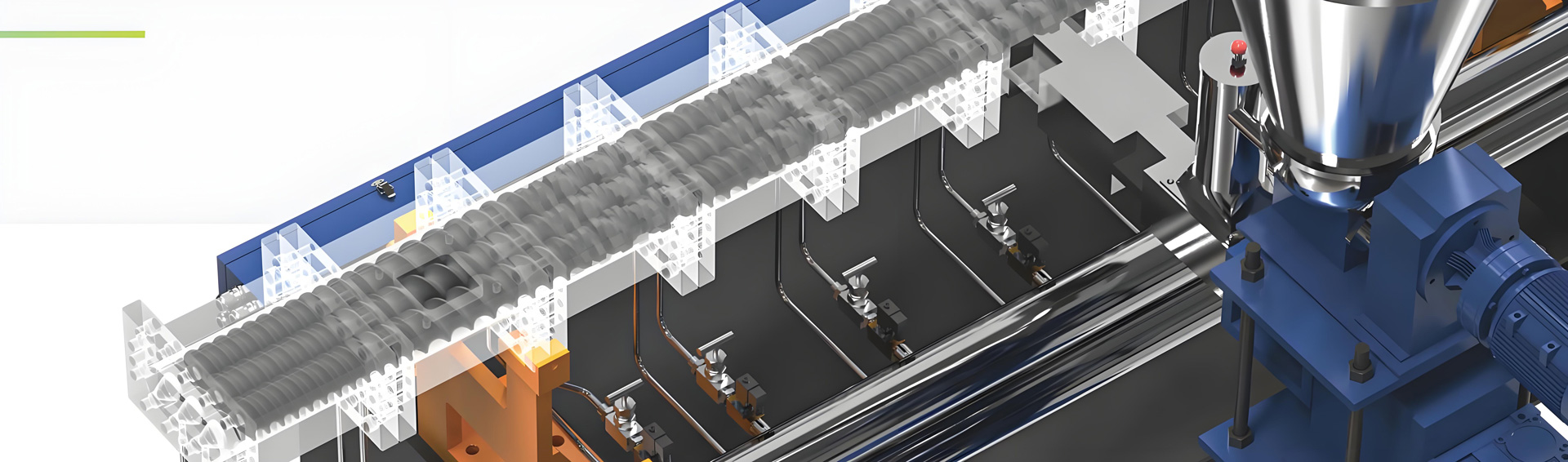
The co-rotating twin screw design is the most widely used configuration for compounding extruders due to its excellent mixing performance, high throughput capacity, and flexible processing capabilities. In a co-rotating twin screw extruder, two parallel screws rotate in the same direction, meshing with each other to convey, melt, and mix the material.
The intermeshing screws create a positive displacement pumping action that provides consistent material conveyance and excellent self-cleaning properties. This prevents material from stagnating in the extruder, reducing the risk of thermal degradation and ensuring consistent product quality. The self-cleaning action also makes it easier to change materials and colors, reducing changeover time and waste.
Kerke KTE series twin screw extruders feature a modular screw design that allows for easy customization of the screw configuration to meet specific processing requirements. The screws are composed of individual elements that can be arranged in different configurations to provide the desired level of mixing, shearing, and conveying. This modular design enables manufacturers to process a wide range of materials and formulations on the same machine, maximizing production flexibility.
The screw elements used in Kerke extruders are made from high-quality alloy steel with hardened surfaces for excellent wear resistance. They are precision machined to tight tolerances to ensure consistent performance and long service life. Kerke offers a wide range of screw elements, including conveying elements, kneading blocks, mixing elements, and reverse elements, allowing for optimal configuration for any compounding application.
3.2 High-Torque Drive Systems
High-torque drive systems are essential for modern compounding extruders, as they enable the machine to process high-viscosity materials and high-loading formulations at high throughput rates. The drive system provides the power needed to turn the screws and generate the shear forces required for effective mixing and dispersion of additives.
Kerke compounding extruders feature advanced high-torque servo drive systems that provide precise speed control and excellent torque response. These drive systems are significantly more energy-efficient than traditional AC induction motors, reducing energy consumption by up to 40% compared to older machines. They also provide smoother operation and lower noise levels, improving the working environment.
The gearbox is another critical component of the drive system. Kerke uses heavy-duty, precision-engineered gearboxes with high torque density ratings that can handle the high loads required for compounding operations. These gearboxes are designed for continuous operation with minimal maintenance and feature forced lubrication and cooling systems to ensure long service life.
Kerke’s high-torque drive systems enable our extruders to achieve specific torque ratings of up to 15 Nm/cm³, which is among the highest in the industry. This high torque capability allows manufacturers to process a wider range of materials and formulations, including high-viscosity engineering plastics and high-loading filler compounds, at higher throughput rates than competing machines.
3.3 Precise Feeding and Metering Systems
Precise feeding and metering systems are essential for producing consistent, high-quality compounded plastics. The accurate dosing of raw materials is critical for maintaining the correct formulation and ensuring that the final compound meets the required performance specifications.
Kerke compounding extruders are equipped with high-precision gravimetric feeders that measure materials by weight, providing dosing accuracy of ±0.1% or better. These feeders use advanced load cell technology and control algorithms to continuously adjust the feed rate to maintain the desired throughput. Gravimetric feeders are significantly more accurate than volumetric feeders, particularly for materials with varying bulk densities.
Kerke offers a wide range of feeder types to handle different materials, including powder feeders, pellet feeders, liquid feeders, and side feeders. Multiple feeders can be used to add different components at different points along the extruder barrel, allowing for optimal processing of complex formulations. For example, glass fibers are typically added downstream through a side feeder to minimize fiber breakage and maintain fiber length.
The feeding systems are fully integrated with the extruder control system, allowing for automatic adjustment of feed rates based on process conditions. This ensures that the formulation remains consistent even when throughput rates change, maintaining product quality and reducing waste.
3.4 Advanced Process Control Systems
Advanced process control systems are essential for maintaining consistent product quality and maximizing production efficiency in compounding operations. These systems continuously monitor and adjust all process parameters in real time, ensuring that the extrusion process remains stable and within specified limits.
Kerke compounding extruders are equipped with advanced Siemens PLC control systems with intuitive touch screen HMIs. These control systems provide comprehensive monitoring and control of all aspects of the extrusion process, including temperature, pressure, screw speed, feed rates, and torque. The systems feature recipe management capabilities that allow manufacturers to store and recall process parameters for different products, ensuring consistent quality every time a product is produced.
The control systems also feature advanced data logging and reporting capabilities that allow manufacturers to track production data, monitor process performance, and identify opportunities for improvement. The data can be exported to external systems for further analysis, enabling continuous improvement of production processes.
Kerke’s control systems also feature remote monitoring and control capabilities that allow manufacturers to monitor and control their machines from anywhere in the world using a computer or mobile device. This is particularly useful for manufacturers with multiple production facilities or for providing remote technical support to customers.
3.5 Efficient Degassing and Venting Systems
Efficient degassing and venting systems are essential for producing high-quality compounded plastics. During the compounding process, volatile organic compounds (VOCs), moisture, and other gases can be released from the material. If these gases are not removed, they can cause defects in the final product such as bubbles, voids, and surface imperfections.
Kerke compounding extruders feature multiple venting ports along the barrel that allow gases to escape from the material. The venting ports are connected to vacuum systems that create a negative pressure, drawing gases out of the material. Kerke’s advanced venting systems can remove up to 99% of volatile compounds from the material, ensuring that the final compound is free of defects and meets the strictest quality standards.
The venting systems are designed to prevent material from being drawn out of the extruder along with the gases, reducing waste and maintaining production efficiency. Kerke also offers optional venting systems with integrated gas treatment capabilities that capture and treat VOCs before they are released into the atmosphere, ensuring compliance with environmental regulations.
4. Kerke Compounding Extruder Product Range for Value-Added Production
Kerke offers a comprehensive range of twin screw compounding extruders designed to meet the diverse needs of manufacturers worldwide. Our product range includes laboratory-scale extruders for research and development, pilot-scale extruders for small-batch production, and industrial-scale extruders for high-volume manufacturing. All Kerke compounding extruders incorporate the latest technologies to deliver exceptional performance, reliability, and value.
4.1 Kerke KTE-16B Laboratory Twin Screw Extruder
The Kerke KTE-16B is our entry-level laboratory-scale twin screw extruder designed for research and development, formulation testing, and small-batch production of compounded plastics. This compact machine is perfect for universities, research institutions, and small manufacturers that need a reliable, high-precision extruder for developing new products and optimizing formulations. Despite its small size, the KTE-16B incorporates all the advanced features of our larger production machines.
Key specifications:
- Screw diameter: 16 mm
- L/D ratio: 32:1/40:1 optional
- Maximum speed: 600 rpm
- Maximum output: 2-10 kg/h
- Drive power: 4 kW
- Control system: Siemens PLC with 10-inch touch screen HMI
- Energy consumption: 2-4 kW
- Footprint: 2.0 m x 1.0 m
- Weight: 800 kg
Price and Cost Analysis
The price of the Kerke KTE-16B laboratory twin screw extruder ranges from $15,000 to $25,000 FOB Shanghai, depending on the specific configuration and optional features. The standard configuration includes the main extruder, gravimetric feeder, strand pelletizer, and basic control system. Optional features include vacuum venting system, liquid feeder, side feeder, and data acquisition system.
This model is ideal for research and development purposes and small-scale production of high-value specialty compounds. It allows manufacturers to test new formulations and processes on a small scale before investing in larger production equipment, reducing the risk and cost of product development. The typical payback period for the KTE-16B is 12-18 months for manufacturers producing small batches of high-value compounds.
4.2 Kerke KTE-35 Pilot-Scale Compounding Extruder
The Kerke KTE-35 is our pilot-scale twin screw extruder designed for scale-up testing and medium-volume production of compounded plastics. This machine bridges the gap between laboratory research and industrial production, allowing manufacturers to test new formulations and processes on a larger scale before full-scale production. The KTE-35 incorporates all the advanced features of our industrial extruders in a more compact and affordable package.
Key specifications:
- Screw diameter: 35 mm
- L/D ratio: 44:1
- Maximum speed: 500 rpm
- Maximum output: 50-150 kg/h
- Drive power: 37 kW
- Control system: Siemens S7-1200 PLC with 12-inch touch screen HMI
- Energy consumption: 15-25 kW
- Footprint: 4.0 m x 1.8 m
- Weight: 3,500 kg
Price and Cost Analysis
The price of the Kerke KTE-35 pilot-scale compounding extruder ranges from $45,000 to $75,000 FOB Shanghai, depending on the specific configuration and optional features. The standard configuration includes the main extruder, multiple gravimetric feeders, vacuum venting system, strand pelletizer, and advanced control system with recipe management. Optional features include side feeder, liquid feeder, melt pump, underwater pelletizer, and integrated emission control system.
This model is ideal for small to medium-sized manufacturers and for larger manufacturers that need a pilot-scale machine for product development. It offers excellent performance and flexibility while maintaining high energy efficiency and low environmental impact. The typical payback period for the KTE-35 is 8-12 months for medium-volume production of compounded plastics.
4.3 Kerke KTE-65 Industrial Compounding Extruder
The Kerke KTE-65 is our most popular industrial-scale twin screw extruder designed for high-volume production of all types of compounded plastics, including filled compounds, reinforced compounds, masterbatches, and recycled compounds. This machine offers exceptional production capacity, energy efficiency, and reliability, making it the preferred choice for plastic compounders worldwide.
Key specifications:
- Screw diameter: 65 mm
- L/D ratio: 48:1
- Maximum speed: 450 rpm
- Maximum output: 300-800 kg/h
- Drive power: 160 kW
- Control system: Siemens S7-1200 PLC with 15-inch touch screen HMI
- Energy consumption: 60-100 kW
- Footprint: 6.5 m x 2.5 m
- Weight: 12,000 kg
Price and Cost Analysis
The price of the Kerke KTE-65 industrial compounding extruder ranges from $120,000 to $200,000 FOB Shanghai, depending on the specific configuration and optional features. The standard configuration includes the main extruder, multiple high-precision gravimetric feeders, high-performance vacuum venting system, underwater pelletizer, advanced control system with recipe management and data logging, and basic emission control system. Optional features include multiple side feeders, liquid feeders, melt pump, integrated VOC treatment system, and fully automated production line integration.
This model is ideal for medium to large-sized compounders with high-volume production requirements. It offers the highest level of energy efficiency and material utilization, resulting in significant long-term cost savings. The typical payback period for the KTE-65 is 4-8 months for high-volume production of compounded plastics.
4.4 Kerke KTE-95 High-Capacity Compounding Extruder
The Kerke KTE-95 is our high-capacity twin screw extruder designed for the largest compounding manufacturers and multinational corporations. This machine offers industry-leading production capacity and efficiency, making it perfect for high-volume production of commodity compounds such as filled polypropylene, black masterbatch, and recycled compounds. The KTE-95 incorporates the most advanced technologies available in the industry, ensuring maximum performance and reliability.
Key specifications:
- Screw diameter: 95 mm
- L/D ratio: 52:1
- Maximum speed: 400 rpm
- Maximum output: 1,200-2,500 kg/h
- Drive power: 450 kW
- Control system: Siemens S7-1500 PLC with 19-inch touch screen HMI
- Energy consumption: 150-250 kW
- Footprint: 9.0 m x 3.5 m
- Weight: 28,000 kg
Price and Cost Analysis
The price of the Kerke KTE-95 high-capacity compounding extruder ranges from $280,000 to $450,000 FOB Shanghai, depending on the specific configuration and optional features. The standard configuration includes the main extruder, multiple high-capacity gravimetric feeders, advanced vacuum venting system, high-speed underwater pelletizer, fully integrated control system with advanced process monitoring and data logging, and comprehensive emission control system. Optional features include multiple side feeders, liquid feeders, melt pump, integrated wastewater treatment system, and plant-wide automation integration.
This model is ideal for the largest compounding manufacturers with very high production requirements. It offers the lowest total cost of ownership in the industry due to its exceptional energy efficiency, high production capacity, and minimal maintenance requirements. The typical payback period for the KTE-95 is 3-6 months for high-volume production of commodity compounds.
5. Comprehensive Cost Analysis and Return on Investment Calculation
Investing in a modern Kerke compounding extruder offers significant financial benefits through increased product value, reduced production costs, and improved production efficiency. In this section, we will provide a detailed cost analysis and return on investment calculation for a Kerke KTE-65 industrial compounding extruder producing glass fiber reinforced polypropylene compound.
5.1 Initial Investment Comparison
We will compare the initial investment required for two different production scenarios:
Scenario 1: Purchasing pre-compounded glass fiber reinforced polypropylene from an external supplier
Scenario 2: Investing in a Kerke KTE-65 industrial compounding extruder to produce the compound in-house
Scenario 1: Purchasing Pre-Compounded Material
There is no initial investment required for purchasing pre-compounded material. However, the cost of the material is significantly higher than producing it in-house.
Scenario 2: In-House Compounding with Kerke KTE-65
- Kerke KTE-65 compounding extruder: $160,000
- Auxiliary equipment: $40,000
- Installation and training: $10,000
- Initial spare parts package: $6,000
- Contingency fund (10%): $21,600
Total Initial Investment for Scenario 2: $237,600
While there is a significant initial investment required for in-house compounding, the savings in material costs and increased production efficiency result in a very fast return on investment and significantly higher long-term profitability.
5.2 Annual Operating Cost Comparison
We will now compare the annual operating costs for the two scenarios, based on 24 hours of production per day, 300 days per year, producing 30% glass fiber reinforced polypropylene compound with an annual production volume of 3,600,000 kg.
Scenario 1: Purchasing Pre-Compounded Material
- Cost of pre-compounded material: $3.50 per kg x 3,600,000 kg = $12,600,000 per year
- Inventory carrying costs: 10% of material cost = $1,260,000 per year
- Transportation costs: $0.15 per kg x 3,600,000 kg = $540,000 per year
Total Annual Operating Costs for Scenario 1: $14,400,000 per year
Cost per kg: $4.00
Scenario 2: In-House Compounding with Kerke KTE-65
- Raw material costs: Virgin polypropylene ($1.20 per kg) + glass fiber ($0.80 per kg) + additives ($0.30 per kg) = $2.30 per kg x 3,600,000 kg = $8,280,000 per year
- Material waste costs: 1% scrap rate = $82,800 per year
- Energy costs: $0.12 per kWh x 80 kW x 7,200 hours = $69,120 per year
- Labor costs (2 workers per shift): $144,000 per year
- Maintenance and repair costs: $27,000 per year
- Downtime costs: 3% downtime = $49,680 per year
- Overhead costs: $162,000 per year
- Packaging costs: $0.10 per kg x 3,600,000 kg = $360,000 per year
- Transportation costs: $0.05 per kg x 3,600,000 kg = $180,000 per year
Total Annual Operating Costs for Scenario 2: $9,354,600 per year
Cost per kg: $2.60
In-house compounding with the Kerke KTE-65 reduces the cost per kg by 35%, from $4.00 to $2.60. The most significant savings come from the lower cost of raw materials compared to purchasing pre-compounded material. Additional savings come from reduced inventory carrying costs, lower transportation costs, and improved production efficiency.
5.3 Revenue and Profitability Comparison
We will now compare the revenue and profitability for the two scenarios, assuming that the finished products made from the compound are sold for $10.00 per kg, and each kg of finished product requires 1 kg of compound.
Scenario 1: Purchasing Pre-Compounded Material
- Annual revenue: 3,600,000 kg x $10.00 = $36,000,000 per year
- Annual operating costs: $14,400,000 per year
- Other manufacturing costs: $18,000,000 per year
- Annual gross profit: $36,000,000 – $14,400,000 – $18,000,000 = $3,600,000 per year
Scenario 2: In-House Compounding with Kerke KTE-65
- Annual revenue: 3,600,000 kg x $10.00 = $36,000,000 per year
- Annual operating costs: $9,354,600 per year
- Other manufacturing costs: $18,000,000 per year
- Annual gross profit: $36,000,000 – $9,354,600 – $18,000,000 = $8,645,400 per year
In-house compounding with the Kerke KTE-65 generates an additional $5,045,400 in annual gross profit compared to purchasing pre-compounded material. This represents a 140% increase in profitability, demonstrating the significant financial benefits of investing in in-house compounding capabilities.
5.4 Return on Investment Calculation
We will now calculate the return on investment (ROI) and payback period for the Kerke KTE-65 industrial compounding extruder.
Initial Investment: $237,600
Additional Annual Profit with In-House Compounding: $5,045,400 per year
Payback Period: Initial Investment ÷ Additional Annual Profit
Payback Period = $237,600 ÷ $5,045,400 = 0.0471 years = 0.565 months = 17 days
This exceptionally short payback period demonstrates that the initial investment in the Kerke KTE-65 is recovered in less than 17 days through increased profitability. This is one of the fastest payback periods in the manufacturing industry, making in-house compounding with a Kerke extruder an extremely attractive investment for plastic manufacturers.
Total Profit Over 15-Year Service Life:
- Total profit with purchased compound: $3,600,000 x 15 = $54,000,000
- Total profit with in-house compounding: $8,645,400 x 15 = $129,681,000
- Additional profit with in-house compounding over 15 years: $129,681,000 – $54,000,000 = $75,681,000
Return on Investment Over 15 Years: ($75,681,000 ÷ $237,600) x 100% = 31,852%
6. Most Profitable Value-Added Applications for Compounded Plastics
Compounding extruders enable manufacturers to produce a wide range of high-value compounded plastics for various applications. Some of the most profitable value-added applications include:
6.1 Automotive Lightweighting Compounds
Automotive lightweighting compounds are among the most profitable value-added applications for compounded plastics. These compounds are used to replace metal components in vehicles, reducing weight and improving fuel efficiency. Glass fiber reinforced polypropylene, polyamide, and polycarbonate compounds are widely used in automotive applications such as bumpers, instrument panels, door panels, engine covers, and structural components.
Automotive compounds typically sell for $3.00 to $8.00 per kg, with profit margins ranging from 30% to 50%. The high value of these compounds comes from their excellent mechanical properties, dimensional stability, and processability. Kerke compounding extruders are ideal for producing automotive compounds, as they provide excellent mixing and dispersion of glass fibers and other additives while maintaining fiber length to maximize strength.
6.2 Flame Retardant Compounds for Electronics
Flame retardant compounds are another highly profitable application for compounded plastics. These compounds are used in the production of electronic components, electrical enclosures, and wiring insulation to prevent the spread of fire. Flame retardant compounds can be based on various polymers, including ABS, polycarbonate, polyamide, and polypropylene.
Flame retardant compounds typically sell for $4.00 to $15.00 per kg, with profit margins ranging from 35% to 60%. The high value of these compounds comes from the specialized flame retardant additives used and the strict performance requirements they must meet. Kerke compounding extruders are designed to process flame retardant compounds effectively, providing excellent dispersion of flame retardant additives while minimizing thermal degradation.
6.3 Conductive and Static Dissipative Compounds
Conductive and static dissipative compounds are high-value specialty compounds used in applications where electrostatic discharge (ESD) protection or electromagnetic interference (EMI) shielding is required. These compounds are used in the production of electronic components, packaging for sensitive electronics, and industrial equipment.
Conductive compounds typically sell for $5.00 to $25.00 per kg, with profit margins ranging from 40% to 70%. The high value of these compounds comes from the expensive conductive additives used, such as carbon black, carbon nanotubes, and metal powders. Kerke compounding extruders provide excellent dispersion of these additives, ensuring consistent conductivity throughout the compound.
6.4 Recycled and Sustainable Compounds
Recycled and sustainable compounds are a rapidly growing market segment with significant profit potential. These compounds are produced from post-consumer or post-industrial plastic waste, reducing the environmental impact of plastic products. Recycled compounds can be modified with additives to improve their performance, making them suitable for a wide range of applications.
High-quality recycled compounds typically sell for $2.00 to $6.00 per kg, with profit margins ranging from 30% to 50%. The high profit margins come from the low cost of recycled feedstock compared to virgin resins. Kerke compounding extruders are ideal for processing recycled materials, as they can remove contaminants and homogenize the material to produce consistent, high-quality recycled compounds.
7. Real-World Success Stories with Kerke Compounding Extruders
Kerke compounding extruders have helped hundreds of manufacturers around the world increase the value of their plastic products and significantly improve profitability. The following case studies demonstrate the real-world benefits of investing in a Kerke compounding extruder.
7.1 Case Study 1: Automotive Component Manufacturer in Germany
AutoTech GmbH, a leading automotive component manufacturer in Germany, was purchasing pre-compounded glass fiber reinforced polypropylene for the production of bumper components. The high cost of pre-compounded material was eating into their profit margins, and they were experiencing quality issues with inconsistent material properties from their supplier.
After researching several manufacturers, AutoTech GmbH selected Kerke as their equipment supplier based on our reputation for precision engineering, advanced technology, and reliable performance. They purchased two Kerke KTE-65 industrial compounding extruders with integrated glass fiber side feeders and underwater pelletizers.
Results after implementation:
- Material cost reduced by 32%, resulting in annual savings of €4.2 million
- Product consistency improved significantly, with defect rates reduced from 5% to 0.4%
- Production flexibility increased, allowing the company to quickly develop and produce custom compounds for new applications
- Lead times reduced from 4 weeks to 2 days, improving customer satisfaction and reducing inventory levels
- Payback period of 0.6 months
The company was extremely satisfied with the performance of the Kerke extruders and has since purchased three additional KTE-95 high-capacity extruders to expand their compounding operations. They have also been able to develop several new high-performance compounds that have helped them win major new contracts with automotive manufacturers.
7.2 Case Study 2: Electronics Plastic Manufacturer in the United States
ElectroPlastics Inc., a manufacturer of plastic components for the electronics industry in Ohio, USA, specialized in producing enclosures and housings for consumer electronics and industrial equipment. The company needed to produce flame retardant compounds that met strict UL safety standards, but their existing extruders were unable to provide the consistent quality and performance required.
The company selected Kerke as their equipment supplier after a thorough evaluation process. They were particularly impressed with the precise process control capabilities of our extruders, our advanced mixing technology, and our comprehensive support services. They purchased one Kerke KTE-65 industrial compounding extruder with multiple feeders and advanced process control system.
Results after implementation:
- Successfully developed and produced UL-listed flame retardant compounds that met all customer requirements
- Material cost reduced by 28%, resulting in annual savings of $1.8 million
- Product quality improved significantly, with all batches passing UL testing on the first attempt
- Production capacity increased by 40%, allowing the company to meet growing customer demand
- Payback period of 0.8 months
The company has since become a leading supplier of flame retardant plastic components in the North American market. They attribute much of their success to the performance and reliability of their Kerke compounding extruder, which has enabled them to produce high-quality compounds consistently and cost-effectively.
7.3 Case Study 3: Recycled Plastic Manufacturer in China
GreenCycle Co., Ltd., a recycled plastic manufacturer in China, was producing low-value recycled plastic pellets from post-consumer waste. The company was facing intense competition and low profit margins, and they needed to find a way to increase the value of their products.
The company selected Kerke as their equipment supplier based on our competitive pricing, advanced technology, and experience in recycled plastic processing. They purchased three Kerke KTE-65 industrial compounding extruders with integrated degassing systems and filtration equipment.
Results after implementation:
- Successfully developed high-value modified recycled compounds for automotive and construction applications
- Product value increased by 150%, from $0.80 per kg to $2.00 per kg
- Profit margins increased from 8% to 35%
- Production capacity increased by 60%, allowing the company to expand into new markets
- Payback period of 0.5 months
The company has since become a leading supplier of high-quality recycled compounds in China. They have expanded their production facilities with additional Kerke extruders and have begun exporting their products to international markets. The company credits their success to the ability of Kerke compounding extruders to transform low-value recycled waste into high-value engineered materials.