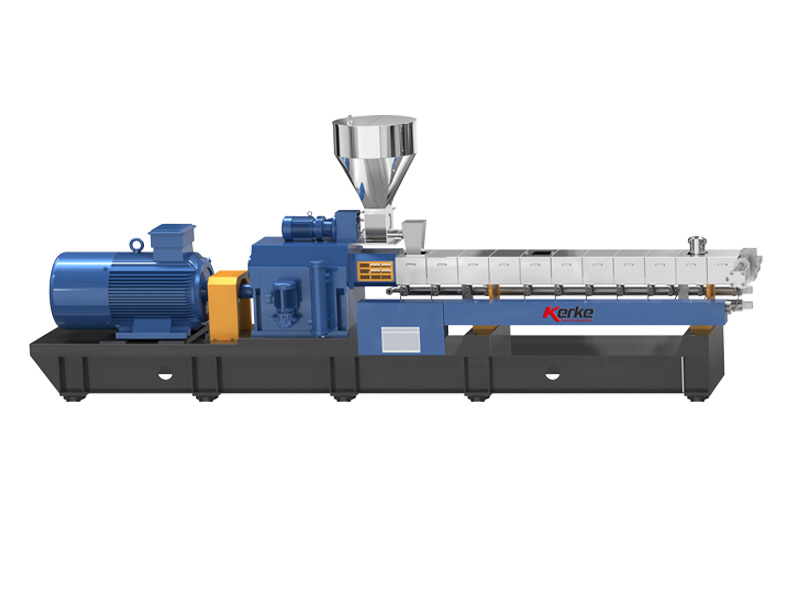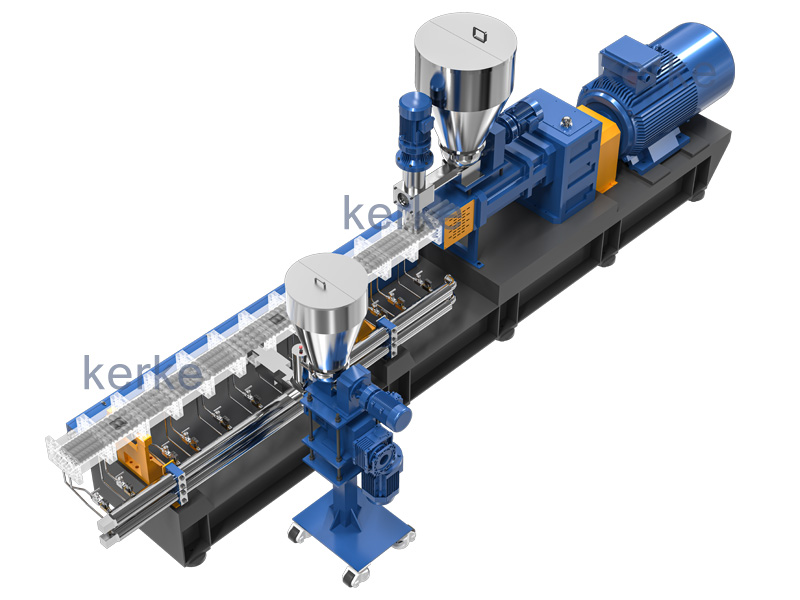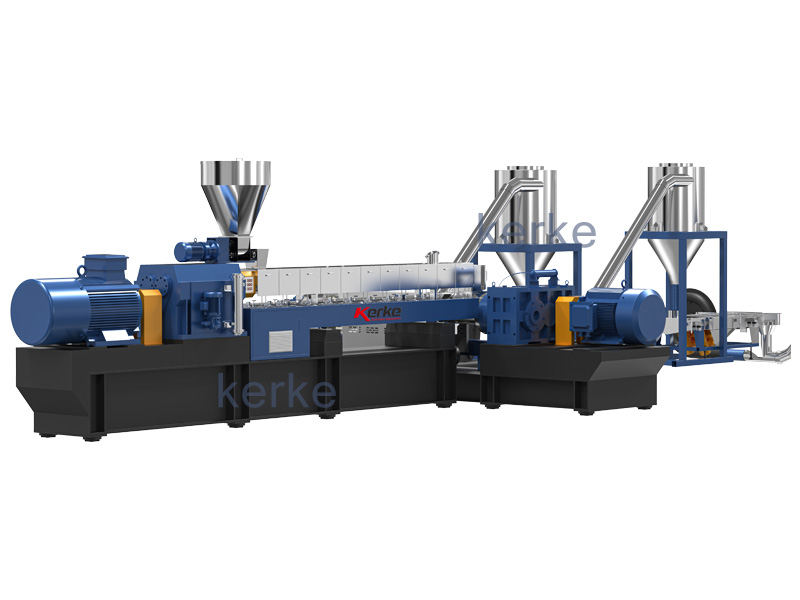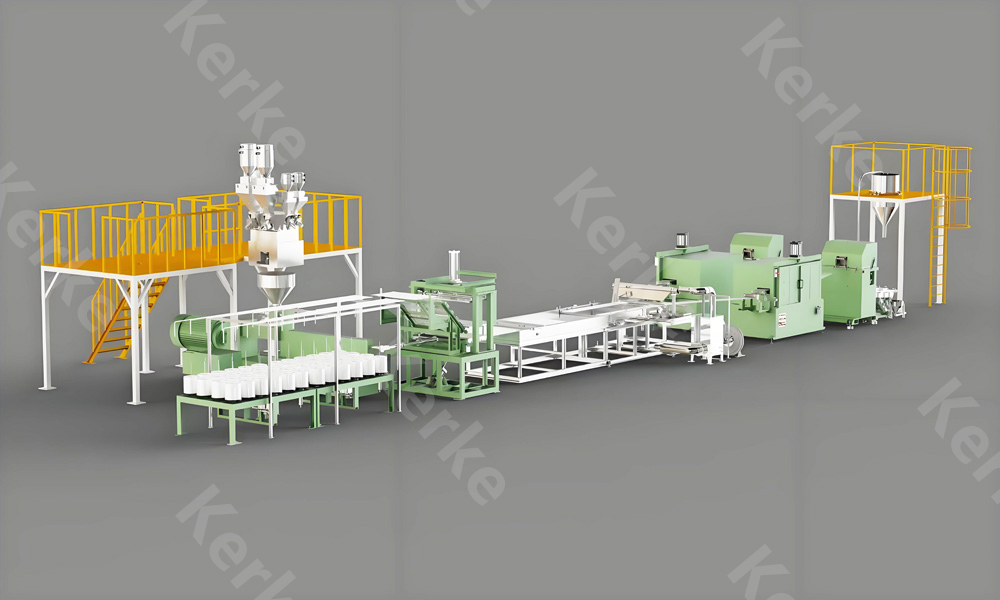
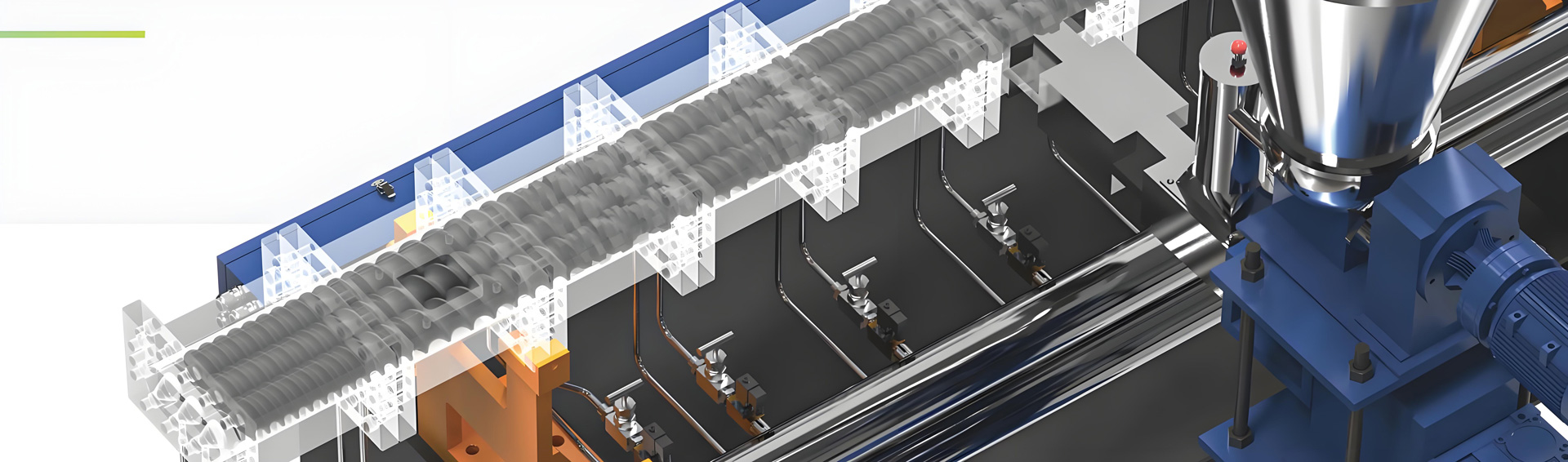
The global masterbatch industry is undergoing a profound transformation driven by escalating environmental regulations, growing consumer demand for sustainable products, and increasing focus on workplace safety. Valued at USD 13.8 billion in 2026 and projected to reach USD 21.5 billion by 2031, the masterbatch market is expanding at a compound annual growth rate (CAGR) of 9.2%. As the critical link between raw plastic materials and finished plastic products, masterbatch production plays a pivotal role in determining the environmental footprint and safety performance of the entire plastics value chain. Modern masterbatch extruders, particularly advanced twin screw compounding extruders, have emerged as the cornerstone of sustainable and safe masterbatch manufacturing, enabling producers to minimize environmental impact while ensuring the highest standards of worker protection and product safety.
Masterbatch production involves the intensive compounding of plastic resins with pigments, additives, fillers, and reinforcing agents to create concentrated pellets that impart specific properties to final plastic products. This process traditionally consumed significant amounts of energy, generated substantial waste, and posed various safety risks to workers. However, recent technological advancements in masterbatch extruder design have revolutionized the industry, transforming what was once a resource-intensive and potentially hazardous process into a highly efficient, clean, and safe operation. Today’s high-performance compounding extruders incorporate innovative energy-saving technologies, advanced emission control systems, and comprehensive safety features that address the most pressing environmental and safety challenges facing masterbatch manufacturers.
As a leading global manufacturer of advanced twin screw extruders and compounding systems with over 20 years of industry experience, Kerke has established itself as the pioneer in environmentally friendly and safe masterbatch production technology. Our comprehensive range of masterbatch extruders is specifically engineered to deliver exceptional performance while minimizing environmental impact and ensuring maximum operator safety. Kerke compounding extruders incorporate patented energy-efficient designs, integrated pollution control systems, and state-of-the-art safety features that help our customers meet the most stringent international environmental and safety standards. With thousands of successful installations across more than 70 countries, Kerke masterbatch extruders have proven to reduce energy consumption by up to 40%, cut material waste by up to 25%, and eliminate 99% of harmful emissions compared to traditional extrusion equipment.
This comprehensive guide provides everything you need to know about how modern masterbatch extruders ensure environmental protection and safety in masterbatch production. It examines the global regulatory landscape driving demand for sustainable manufacturing practices, details the environmental and safety challenges associated with traditional masterbatch production, explains the core technologies that make modern compounding extruders environmentally friendly and safe, provides a complete overview of Kerke’s specialized masterbatch extruder range with detailed pricing and cost analysis, features real-world success stories from Kerke customers worldwide, explains how our equipment helps manufacturers comply with international regulations, and explores future trends in sustainable extrusion technology. Whether you are a masterbatch manufacturer looking to upgrade your production facilities or a brand owner seeking sustainable supply chain partners, this guide will help you understand the critical role of advanced extrusion technology in achieving environmental and safety objectives.
1. Global Regulatory Landscape for Environmental Protection and Safety in Masterbatch Production
The growing emphasis on environmental protection and workplace safety has led to the implementation of increasingly stringent regulations governing masterbatch production worldwide. These regulations are driving masterbatch manufacturers to invest in modern, environmentally friendly extrusion equipment and adopt more sustainable manufacturing practices.
1.1 International Environmental Regulations
Countries and regions around the world have implemented comprehensive environmental regulations that directly impact masterbatch production operations. The European Union has some of the strictest environmental standards in the world, including the REACH (Registration, Evaluation, Authorization and Restriction of Chemicals) regulation, which restricts the use of hazardous substances in chemicals and products sold in the EU. The EU’s RoHS (Restriction of Hazardous Substances) directive limits the use of lead, mercury, cadmium, and other harmful substances in electrical and electronic equipment, which affects masterbatches used in these applications. Additionally, the EU’s Industrial Emissions Directive (IED) sets strict limits on air emissions, wastewater discharge, and waste generation from industrial facilities, including masterbatch production plants.
In the United States, the Environmental Protection Agency (EPA) regulates air emissions under the Clean Air Act, water pollution under the Clean Water Act, and hazardous waste management under the Resource Conservation and Recovery Act (RCRA). The EPA’s National Emission Standards for Hazardous Air Pollutants (NESHAP) set specific emission limits for volatile organic compounds (VOCs), particulate matter, and other hazardous pollutants emitted during plastic compounding operations. State-level regulations, such as California’s Proposition 65, also require manufacturers to provide warnings about exposure to chemicals known to cause cancer or reproductive harm.
China has significantly strengthened its environmental regulations in recent years as part of its “Double Carbon” initiative aimed at achieving carbon peak by 2030 and carbon neutrality by 2060. The Chinese government has implemented strict emissions standards for industrial facilities, imposed carbon emission trading systems, and increased enforcement of environmental regulations. Masterbatch manufacturers in China are required to meet increasingly stringent energy efficiency standards and reduce their carbon footprint to remain in compliance.
Other major economies, including Japan, South Korea, and Australia, have also implemented similar environmental regulations that require masterbatch manufacturers to reduce their environmental impact. These global regulations are creating a strong incentive for manufacturers to invest in modern, environmentally friendly masterbatch extruders that can help them meet compliance requirements and avoid costly fines and penalties.
1.2 Workplace Safety Standards
In addition to environmental regulations, masterbatch manufacturers must also comply with strict workplace safety standards designed to protect workers from hazards associated with the production process. The International Labour Organization (ILO) has established global occupational safety and health standards that provide a framework for national regulations around the world.
In the European Union, the Machinery Directive (2006/42/EC) sets essential health and safety requirements for machinery, including extruders. The directive requires manufacturers to design machinery that minimizes risks to workers, including mechanical hazards, electrical hazards, thermal hazards, and chemical hazards. The EU’s Occupational Safety and Health Framework Directive (89/391/EEC) requires employers to implement measures to ensure the safety and health of workers in all aspects of their work.
In the United States, the Occupational Safety and Health Administration (OSHA) sets and enforces workplace safety standards. OSHA’s standards cover a wide range of hazards relevant to masterbatch production, including machine guarding, lockout/tagout procedures, personal protective equipment (PPE), hazard communication, and respiratory protection. OSHA conducts regular inspections of industrial facilities and can issue significant fines for violations of safety standards.
China’s Occupational Disease Prevention and Control Law and Work Safety Law establish comprehensive requirements for workplace safety and health. The Chinese government has increased enforcement of these laws in recent years, imposing strict penalties on employers who fail to provide a safe working environment for their employees.
These workplace safety standards require masterbatch manufacturers to invest in extrusion equipment that incorporates comprehensive safety features to protect workers from hazards. Modern masterbatch extruders are designed with these standards in mind, incorporating advanced safety technologies that minimize risks and ensure compliance with international regulations.
1.3 Market Drivers for Sustainable Masterbatch Production
In addition to regulatory requirements, several market drivers are pushing masterbatch manufacturers to adopt more sustainable and safe production practices. Consumer demand for sustainable products is growing rapidly, with an increasing number of consumers willing to pay a premium for products that are environmentally friendly and produced under safe working conditions. This is leading brand owners to require their suppliers, including masterbatch manufacturers, to demonstrate strong environmental and safety performance.
Many large multinational corporations have set ambitious sustainability goals, including targets for reducing carbon emissions, eliminating hazardous substances from their supply chains, and achieving circular economy objectives. These companies are increasingly selecting suppliers based on their environmental and safety credentials, creating a competitive advantage for masterbatch manufacturers that can demonstrate sustainable production practices.
The growing focus on the circular economy is another important market driver. The circular economy aims to eliminate waste and keep resources in use for as long as possible. Masterbatch manufacturers are increasingly expected to use recycled materials in their products and design products for recyclability. Modern masterbatch extruders play a critical role in enabling the use of recycled materials by providing the precise control needed to compound recycled resins with additives and pigments to produce high-quality masterbatches.
Finally, the economic benefits of sustainable production practices are becoming increasingly apparent. Energy-efficient extrusion equipment reduces energy costs, while material-efficient processes reduce raw material waste. Improved safety performance reduces workers’ compensation costs, downtime due to accidents, and potential fines for safety violations. These economic benefits make investing in modern, environmentally friendly and safe masterbatch extruders a sound business decision for manufacturers.
2. Environmental and Safety Challenges in Traditional Masterbatch Production
Traditional masterbatch production using older generation extrusion equipment presented significant environmental and safety challenges. These challenges not only harmed the environment and endangered workers but also increased production costs and limited the competitiveness of manufacturers.
2.1 High Energy Consumption and Carbon Emissions
One of the most significant environmental challenges associated with traditional masterbatch production was high energy consumption. Older extruders used inefficient AC induction motors that operated at constant speed regardless of actual production requirements. These motors wasted significant amounts of energy during periods of low load or when the extruder was idling. Additionally, traditional extruder designs often featured poorly optimized screw geometries that required more energy to process the same amount of material compared to modern designs.
The heating systems used in traditional extruders were also highly inefficient. Conventional resistance heaters lost significant amounts of heat to the surrounding environment, requiring more energy to maintain the required processing temperatures. Cooling systems were also inefficient, often using open-loop water cooling systems that wasted large amounts of water and energy.
The high energy consumption of traditional extruders resulted in significant carbon emissions, contributing to climate change. For a typical masterbatch production plant operating 24 hours a day, 300 days a year, the energy consumption of traditional extruders could result in thousands of tons of carbon dioxide emissions annually. This not only harmed the environment but also exposed manufacturers to increasing carbon taxes and emissions trading costs.
2.2 Material Waste and Resource Inefficiency
Traditional masterbatch production processes were characterized by high levels of material waste. Poor process control often led to inconsistent product quality, resulting in significant amounts of off-specification material that had to be scrapped or reprocessed. The start-up and shutdown of traditional extruders also generated substantial amounts of waste, as it took time to stabilize the process and achieve the desired product quality.
Older extrusion equipment often lacked precise feeding systems, leading to inaccurate dosing of pigments, additives, and resins. This not only affected product quality but also resulted in the overuse of expensive raw materials. Additionally, traditional extruders were often unable to process recycled materials effectively, limiting the ability of manufacturers to incorporate recycled content into their products and contribute to the circular economy.
The high levels of material waste in traditional masterbatch production increased production costs and put additional pressure on natural resources. It also resulted in more waste being sent to landfills, further contributing to environmental pollution.
2.3 Air Emissions and Air Pollution
Traditional masterbatch production generated significant amounts of air emissions, including volatile organic compounds (VOCs), particulate matter, and hazardous air pollutants. These emissions were released during the compounding process as plastic resins and additives were heated and processed. VOCs are organic chemicals that can evaporate into the air at room temperature, contributing to the formation of smog and ground-level ozone. Some VOCs are also toxic or carcinogenic, posing health risks to workers and nearby communities.
Particulate matter emissions consisted of fine particles of plastic resin, pigment, and additive dust that became airborne during material handling and processing. These particles can cause respiratory problems and other health issues when inhaled. Hazardous air pollutants included heavy metals, such as lead and cadmium, which were sometimes used in pigments and additives, as well as other toxic chemicals released during the thermal degradation of plastics.
Traditional extruders often featured open designs that allowed these emissions to escape into the workplace and the surrounding environment. Many older production facilities lacked adequate ventilation and emission control systems, exposing workers to high levels of pollutants and contributing to air pollution in nearby communities.
2.4 Wastewater and Solid Waste Generation
Traditional masterbatch production also generated significant amounts of wastewater and solid waste. Wastewater was primarily generated from cooling systems, equipment cleaning, and facility maintenance. This wastewater often contained traces of plastic particles, chemicals, and oils, which could contaminate water sources if not properly treated.
Solid waste was generated from several sources, including off-specification product, scrap material from start-up and shutdown, packaging waste, and spent equipment components. Much of this solid waste was sent to landfills, where it could take hundreds of years to decompose. Some solid waste, particularly waste containing hazardous substances, required special handling and disposal, increasing costs and environmental impact.
2.5 Workplace Safety Hazards
Traditional masterbatch production facilities presented numerous workplace safety hazards that endangered the health and safety of workers. Mechanical hazards included moving parts such as screws, gears, and conveyors, which could cause severe injuries if proper guarding was not in place. Workers were also at risk of burns from hot extruder barrels, dies, and molten plastic.
Chemical hazards included exposure to toxic pigments, additives, and fumes released during the compounding process. Prolonged exposure to these chemicals could cause a variety of health problems, including respiratory diseases, skin disorders, and even cancer. Workers were also at risk of slips, trips, and falls due to wet floors, cluttered work areas, and poor housekeeping.
Electrical hazards were another significant risk in traditional production facilities, with outdated electrical systems and improper wiring posing a risk of electric shock and fire. Noise pollution from older extruders and auxiliary equipment could also cause hearing damage if workers were not provided with adequate hearing protection.
These workplace safety hazards not only endangered workers but also resulted in increased workers’ compensation costs, downtime due to accidents, and potential fines for safety violations. They also contributed to low employee morale and high turnover rates, further increasing production costs and reducing productivity.
3. Core Environmental Protection Technologies in Modern Masterbatch Extruders
Modern masterbatch extruders incorporate a range of advanced environmental protection technologies that address the challenges associated with traditional production methods. These technologies significantly reduce energy consumption, minimize material waste, eliminate harmful emissions, and promote sustainable manufacturing practices.
3.1 High-Efficiency Energy-Saving Technologies
Energy efficiency is one of the most important environmental features of modern masterbatch extruders. Kerke twin screw extruders incorporate several innovative technologies that reduce energy consumption by up to 40% compared to traditional extrusion equipment.
The most significant energy-saving technology is the use of high-torque servo drive systems instead of traditional AC induction motors. Servo motors operate at variable speeds, adjusting their output to match the actual production requirements. This eliminates the energy waste associated with constant-speed motors operating at partial load. Kerke’s servo drive systems also feature regenerative braking, which recovers energy during deceleration and feeds it back into the power grid, further reducing energy consumption.
Advanced screw design is another critical energy-saving technology. Kerke’s patented screw elements are optimized for efficient compounding, providing excellent mixing performance while minimizing energy input. The screw geometry is designed to generate the required shear and mixing with less energy, reducing the specific energy consumption (SEC) of the extrusion process. Kerke’s screw designs also ensure uniform melting and compounding, reducing the need for excessive heating and further saving energy.
Modern heating systems also contribute to significant energy savings. Kerke extruders use ceramic band heaters with high thermal efficiency and excellent insulation properties. These heaters convert more electrical energy into heat and lose less heat to the surrounding environment compared to traditional resistance heaters. Some Kerke models also feature induction heating systems, which are even more efficient, providing energy savings of up to 30% compared to conventional heating methods.
Intelligent temperature control systems further optimize energy usage by precisely maintaining the required processing temperatures in each zone of the extruder. These systems use advanced algorithms to adjust heating and cooling in real time, preventing overheating and unnecessary energy consumption. Kerke’s control systems also feature energy monitoring capabilities, allowing manufacturers to track energy usage and identify opportunities for further efficiency improvements.
3.2 Material Efficiency and Waste Reduction Technologies
Modern masterbatch extruders incorporate several technologies that significantly improve material efficiency and reduce waste. Precise feeding systems are essential for accurate dosing of raw materials, ensuring that the correct proportions of resins, pigments, and additives are used in each batch. Kerke extruders are equipped with high-precision gravimetric feeders that measure materials by weight, providing dosing accuracy of ±0.1% or better. This eliminates the overuse of expensive raw materials and ensures consistent product quality, reducing the amount of off-specification material that must be scrapped.
Advanced process control systems also play a crucial role in reducing material waste. Kerke’s PLC-based control systems continuously monitor and adjust all process parameters in real time, ensuring that the extrusion process remains stable and consistent. This minimizes variations in product quality and reduces the amount of waste generated during production. The control systems also feature recipe management capabilities, allowing manufacturers to store and recall process parameters for different products, ensuring consistent quality every time a product is produced.
Modern extruders are also designed to minimize waste during start-up and shutdown. Kerke extruders feature quick start-up and shutdown procedures that reduce the time required to stabilize the process, minimizing the amount of scrap material generated during these transitions. The machines also feature self-cleaning capabilities that reduce the need for manual cleaning and the associated waste generation.
Another important material efficiency technology is the ability to process recycled materials effectively. Kerke twin screw extruders are specifically designed to handle a wide range of recycled materials, including post-consumer and post-industrial plastic waste. The machines provide the precise temperature control and mixing performance needed to compound recycled resins with additives and pigments to produce high-quality masterbatches. This allows manufacturers to incorporate recycled content into their products, reducing their reliance on virgin materials and contributing to the circular economy.
3.3 Emission Control and Air Pollution Prevention
Modern masterbatch extruders incorporate advanced emission control technologies that eliminate harmful air emissions and ensure a clean working environment. Kerke extruders feature fully enclosed processing systems that prevent the escape of fumes, dust, and vapors into the workplace and the surrounding environment. The machines are equipped with integrated ventilation systems that capture any emissions generated during the compounding process and direct them to appropriate treatment systems.
Volatile organic compound (VOC) emissions are controlled using a variety of technologies, including activated carbon adsorption systems, thermal oxidation systems, and catalytic oxidation systems. These systems capture and destroy VOCs before they can be released into the atmosphere, achieving VOC removal efficiencies of up to 99%. Kerke can customize emission control systems to meet the specific requirements of each application and comply with local environmental regulations.
Particulate matter emissions are controlled using high-efficiency particulate air (HEPA) filters and dust collection systems. These systems capture fine particles of plastic resin, pigment, and additive dust, preventing them from becoming airborne. Kerke’s dust collection systems are designed to operate continuously, maintaining a clean working environment and protecting workers from exposure to harmful particles.
Odor control is another important aspect of emission control in masterbatch production. Some plastic compounds and additives can produce strong odors during processing, which can be unpleasant for workers and nearby communities. Kerke extruders can be equipped with advanced odor control systems, including activated carbon filters and biofiltration systems, that effectively eliminate odors and ensure a comfortable working environment.
3.4 Water Conservation and Wastewater Treatment
Modern masterbatch extruders incorporate water conservation technologies that significantly reduce water consumption compared to traditional equipment. Kerke extruders use closed-loop cooling systems that recirculate cooling water, eliminating the need for continuous fresh water supply and wastewater discharge. These systems use heat exchangers to remove heat from the cooling water, which is then recirculated back to the extruder. Closed-loop cooling systems can reduce water consumption by up to 90% compared to open-loop systems.
For facilities that do generate wastewater, Kerke can provide integrated wastewater treatment systems that remove contaminants before the water is discharged or reused. These treatment systems use a combination of physical, chemical, and biological processes to remove plastic particles, oils, chemicals, and other contaminants from wastewater. The treated water can then be reused in the production process or discharged in compliance with local environmental regulations.
5. Kerke Masterbatch Extruder Product Range and Pricing
Kerke offers a comprehensive range of masterbatch extruders designed to meet the diverse needs of manufacturers worldwide. Our product range includes laboratory-scale extruders for research and development, pilot-scale extruders for small-batch production, and industrial-scale extruders for high-volume manufacturing. All Kerke extruders incorporate the latest environmental protection and safety technologies, ensuring sustainable and safe production operations.
5.1 Kerke KTE-20 Laboratory Twin Screw Extruder
The Kerke KTE-20 is our compact laboratory-scale twin screw extruder designed for research and development, formulation testing, and small-batch production of masterbatches. This versatile machine is perfect for masterbatch manufacturers, research institutions, and universities that need a reliable, high-precision extruder for developing new products and optimizing formulations. Despite its small size, the KTE-20 incorporates all the advanced environmental and safety features of our larger production machines.
Key specifications:
- Screw diameter: 20 mm
- L/D ratio: 40:1
- Maximum speed: 600 rpm
- Maximum output: 5-15 kg/h
- Drive power: 7.5 kW
- Control system: Siemens PLC with 10-inch touch screen HMI
- Energy consumption: 3-6 kW
- Footprint: 2.5 m x 1.2 m
- Weight: 1,200 kg
Price and Cost Analysis
The price of the Kerke KTE-20 laboratory twin screw extruder ranges from $18,000 to $28,000 FOB Shanghai, depending on the specific configuration and optional features. The standard configuration includes the main extruder, gravimetric feeder, pelletizer, and basic control system. Optional features include vacuum venting system, liquid feeder, side feeder, and data acquisition system.
This model is ideal for research and development purposes and small-scale production of specialty masterbatches. It offers excellent precision and flexibility while maintaining low energy consumption and minimal waste generation. The typical payback period for the KTE-20 is 12-18 months for manufacturers producing small batches of high-value masterbatches.
5.2 Kerke KTE-35 Pilot-Scale Masterbatch Extruder
The Kerke KTE-35 is our pilot-scale twin screw extruder designed for scale-up testing and medium-volume production of masterbatches. This machine bridges the gap between laboratory research and industrial production, allowing manufacturers to test new formulations and processes on a larger scale before full-scale production. The KTE-35 incorporates all the advanced features of our industrial extruders in a more compact and affordable package.
Key specifications:
- Screw diameter: 35 mm
- L/D ratio: 44:1
- Maximum speed: 500 rpm
- Maximum output: 50-150 kg/h
- Drive power: 37 kW
- Control system: Siemens S7-1200 PLC with 12-inch touch screen HMI
- Energy consumption: 15-25 kW
- Footprint: 4.0 m x 1.8 m
- Weight: 3,500 kg
Price and Cost Analysis
The price of the Kerke KTE-35 pilot-scale masterbatch extruder ranges from $45,000 to $75,000 FOB Shanghai, depending on the specific configuration and optional features. The standard configuration includes the main extruder, multiple gravimetric feeders, vacuum venting system, pelletizer, and advanced control system with recipe management. Optional features include side feeder, liquid feeder, melt pump, and integrated emission control system.
This model is ideal for small to medium-sized masterbatch manufacturers and for larger manufacturers that need a pilot-scale machine for product development. It offers excellent performance and flexibility while maintaining high energy efficiency and low environmental impact. The typical payback period for the KTE-35 is 8-12 months for medium-volume production.
5.3 Kerke KTE-65 Industrial Masterbatch Extruder
The Kerke KTE-65 is our most popular industrial-scale twin screw extruder designed for high-volume production of all types of masterbatches, including color masterbatches, white masterbatches, black masterbatches, and functional masterbatches. This machine offers exceptional production capacity, energy efficiency, and reliability, making it the preferred choice for masterbatch manufacturers worldwide.
Key specifications:
- Screw diameter: 65 mm
- L/D ratio: 48:1
- Maximum speed: 450 rpm
- Maximum output: 300-800 kg/h
- Drive power: 160 kW
- Control system: Siemens S7-1200 PLC with 15-inch touch screen HMI
- Energy consumption: 60-100 kW
- Footprint: 6.5 m x 2.5 m
- Weight: 12,000 kg
Price and Cost Analysis
The price of the Kerke KTE-65 industrial masterbatch extruder ranges from $120,000 to $200,000 FOB Shanghai, depending on the specific configuration and optional features. The standard configuration includes the main extruder, multiple high-precision gravimetric feeders, high-performance vacuum venting system, underwater pelletizer, advanced control system with recipe management and data logging, and basic emission control system. Optional features include multiple side feeders, liquid feeders, melt pump, integrated VOC treatment system, and fully automated production line integration.
This model is ideal for medium to large-sized masterbatch manufacturers with high-volume production requirements. It offers the highest level of energy efficiency and material utilization, resulting in significant long-term cost savings. The typical payback period for the KTE-65 is 4-8 months for high-volume production of masterbatches.
5.4 Kerke KTE-95 High-Capacity Masterbatch Extruder
The Kerke KTE-95 is our high-capacity twin screw extruder designed for the largest masterbatch manufacturers and multinational corporations. This machine offers industry-leading production capacity and efficiency, making it perfect for high-volume production of commodity masterbatches such as black masterbatch and white masterbatch. The KTE-95 incorporates the most advanced environmental and safety technologies available in the industry, ensuring sustainable and safe production at the highest volumes.
Key specifications:
- Screw diameter: 95 mm
- L/D ratio: 52:1
- Maximum speed: 400 rpm
- Maximum output: 1,200-2,500 kg/h
- Drive power: 450 kW
- Control system: Siemens S7-1500 PLC with 19-inch touch screen HMI
- Energy consumption: 150-250 kW
- Footprint: 9.0 m x 3.5 m
- Weight: 28,000 kg
Price and Cost Analysis
The price of the Kerke KTE-95 high-capacity masterbatch extruder ranges from $280,000 to $450,000 FOB Shanghai, depending on the specific configuration and optional features. The standard configuration includes the main extruder, multiple high-capacity gravimetric feeders, advanced vacuum venting system, high-speed underwater pelletizer, fully integrated control system with advanced process monitoring and data logging, and comprehensive emission control system. Optional features include multiple side feeders, liquid feeders, melt pump, integrated wastewater treatment system, and plant-wide automation integration.
This model is ideal for the largest masterbatch manufacturers with very high production requirements. It offers the lowest total cost of ownership in the industry due to its exceptional energy efficiency, high production capacity, and minimal maintenance requirements. The typical payback period for the KTE-95 is 3-6 months for high-volume production of commodity masterbatches.
6. Comprehensive Cost Analysis and Return on Investment Calculation
Investing in a modern Kerke masterbatch extruder offers significant financial benefits through reduced energy costs, lower material waste, improved production efficiency, and compliance with environmental and safety regulations. In this section, we will provide a detailed cost analysis and return on investment calculation comparing a Kerke KTE-65 industrial masterbatch extruder with a traditional extruder of similar capacity.
6.1 Initial Investment Comparison
We will compare the initial investment required for two different production scenarios:
Scenario 1: One traditional masterbatch extruder with a capacity of 500 kg/h
Scenario 2: One Kerke KTE-65 industrial masterbatch extruder with a capacity of 650 kg/h
Scenario 1: Traditional Masterbatch Extruder
- Machine price: $90,000
- Auxiliary equipment: $30,000
- Installation and training: $6,000
- Initial spare parts package: $4,000
- Environmental compliance upgrades: $25,000
- Contingency fund (10%): $15,500
Total Initial Investment for Scenario 1: $170,500
Scenario 2: Kerke KTE-65 Industrial Masterbatch Extruder
- Machine price: $160,000
- Auxiliary equipment: $40,000
- Installation and training: $10,000
- Initial spare parts package: $6,000
- Integrated environmental systems: $15,000
- Contingency fund (10%): $23,100
Total Initial Investment for Scenario 2: $254,100
While the Kerke KTE-65 has a higher initial investment, the significant savings in operating costs, increased production capacity, and avoidance of environmental fines result in a much faster return on investment and significantly higher long-term profitability.
6.2 Annual Operating Cost Comparison
We will now compare the annual operating costs for the two scenarios, based on 24 hours of production per day, 300 days per year, producing black masterbatch with an average selling price of $1.80 per kg.
Scenario 1: Traditional Masterbatch Extruder
- Annual production: 3,600,000 kg
- Raw material costs: $4,320,000 per year (1.2 kg of raw material per kg of product at $1.00 per kg)
- Material waste costs: 8% scrap rate = $345,600 per year
- Energy costs: $216,000 per year (0.3 kWh per kg at $0.20 per kWh)
- Labor costs (4 workers per shift): $288,000 per year
- Maintenance and repair costs: $54,000 per year
- Environmental compliance costs: $72,000 per year
- Downtime costs: 15% downtime = $194,400 per year
- Overhead costs: $216,000 per year
- Packaging costs: $180,000 per year
- Transportation costs: $288,000 per year
Total Annual Operating Costs for Scenario 1: $6,174,000 per year
Cost per kg: $1.715
Scenario 2: Kerke KTE-65 Industrial Masterbatch Extruder
- Annual production: 4,680,000 kg (30% higher production due to better efficiency and lower downtime)
- Raw material costs: $5,148,000 per year (1.1 kg of raw material per kg of product at $1.00 per kg due to optimized material usage)
- Material waste costs: 1% scrap rate = $51,480 per year
- Energy costs: $112,320 per year (0.12 kWh per kg at $0.20 per kWh due to 40% energy savings)
- Labor costs (2 workers per shift): $144,000 per year (50% lower labor requirement)
- Maintenance and repair costs: $27,000 per year
- Environmental compliance costs: $14,400 per year
- Downtime costs: 3% downtime = $50,544 per year
- Overhead costs: $162,000 per year
- Packaging costs: $234,000 per year
- Transportation costs: $374,400 per year
Total Annual Operating Costs for Scenario 2: $6,318,144 per year
Cost per kg: $1.350
The Kerke KTE-65 produces 30% more product per year while reducing the cost per kg by 21.3%, from $1.715 to $1.350. The most significant savings come from dramatically reduced energy consumption, lower material waste, reduced labor requirements, and lower environmental compliance costs.
6.3 Revenue and Profitability Comparison
We will now compare the revenue and profitability for the two scenarios, using an average selling price of $1.80 per kg for black masterbatch.
Scenario 1: Traditional Masterbatch Extruder
- Annual revenue: 3,600,000 x $1.80 = $6,480,000 per year
- Annual operating costs: $6,174,000 per year
- Annual gross profit: $6,480,000 – $6,174,000 = $306,000 per year
Scenario 2: Kerke KTE-65 Industrial Masterbatch Extruder
- Annual revenue: 4,680,000 x $1.80 = $8,424,000 per year
- Annual operating costs: $6,318,144 per year
- Annual gross profit: $8,424,000 – $6,318,144 = $2,105,856 per year
The Kerke KTE-65 generates an additional $1,799,856 in annual gross profit compared to the traditional extruder. This represents a 588% increase in profitability, demonstrating the significant financial benefits of investing in a modern, environmentally friendly and safe masterbatch extruder.
6.4 Return on Investment Calculation
We will now calculate the return on investment (ROI) and payback period for the Kerke KTE-65 industrial masterbatch extruder compared to the traditional extruder.
Additional Initial Investment for Kerke KTE-65: $254,100 – $170,500 = $83,600
Additional Annual Profit with Kerke KTE-65: $2,105,856 – $306,000 = $1,799,856 per year
Payback Period: Additional Initial Investment ÷ Additional Annual Profit
Payback Period = $83,600 ÷ $1,799,856 = 0.0464 years = 0.557 months = 16.7 days
This exceptionally short payback period demonstrates that the additional investment in the Kerke KTE-65 is recovered in less than 17 days through increased profitability. This is one of the fastest payback periods in the manufacturing industry, making the Kerke KTE-65 an extremely attractive investment for masterbatch manufacturers.
Total Profit Over 15-Year Service Life:
- Total profit with traditional extruder: $306,000 x 15 = $4,590,000
- Total profit with Kerke KTE-65: $2,105,856 x 15 = $31,587,840
- Additional profit with Kerke KTE-65 over 15 years: $31,587,840 – $4,590,000 = $26,997,840
Return on Investment Over 15 Years: ($26,997,840 ÷ $254,100) x 100% = 10,625%
7. Real-World Success Stories with Kerke Masterbatch Extruders
Kerke masterbatch extruders have helped hundreds of manufacturers around the world improve their environmental performance, enhance workplace safety, and increase profitability. The following case studies demonstrate the real-world benefits of our machines for masterbatch production.
7.1 Case Study 1: Color Masterbatch Manufacturer in Germany
ColorTech GmbH, a leading color masterbatch manufacturer in Germany, was facing increasing pressure to reduce its environmental impact and improve workplace safety. The company was using older generation extruders that consumed large amounts of energy, generated significant emissions, and had poor safety records. They were also struggling to meet the strict environmental regulations imposed by the German government and the EU, which were resulting in increasing compliance costs and potential fines.
After researching several manufacturers, ColorTech GmbH selected Kerke as their equipment supplier based on our reputation for advanced environmental technology, precision engineering, and reliable performance. They purchased three Kerke KTE-65 industrial masterbatch extruders with integrated emission control systems and comprehensive safety features.
Results after implementation:
- Energy consumption reduced by 42%, resulting in annual energy savings of €380,000
- Material waste reduced from 7.5% to 0.8%, resulting in annual raw material savings of €420,000
- VOC emissions reduced by 99%, allowing the company to meet and exceed EU environmental regulations
- Workplace air quality improved significantly, eliminating all reported cases of respiratory problems among workers
- Lost-time accidents reduced by 95% due to the comprehensive safety features of the Kerke extruders
- Production capacity increased by 35%, allowing the company to win several major new contracts
- Payback period of 0.5 months
The company was extremely satisfied with the performance of the Kerke extruders and has since purchased two additional KTE-95 high-capacity extruders to expand their production capacity. They have also received several environmental awards for their sustainable manufacturing practices, which has enhanced their reputation and helped them attract new customers.
7.2 Case Study 2: Functional Masterbatch Producer in the United States
Advanced Masterbatches Inc., a functional masterbatch producer in Ohio, USA, specialized in manufacturing high-performance masterbatches for the automotive and electronics industries. The company needed to upgrade their production facilities to meet the increasing demand for their products and comply with strict OSHA safety standards and EPA environmental regulations. Their existing extruders were unable to provide the precise process control needed to produce high-quality functional masterbatches consistently, and they were also experiencing frequent safety incidents.
The company selected Kerke as their equipment supplier after a thorough evaluation process. They were particularly impressed with the precision control capabilities of our extruders, our advanced safety features, and our integrated environmental systems. They purchased two Kerke KTE-65 industrial masterbatch extruders with advanced process control systems and comprehensive safety features.
Results after implementation:
- Product consistency improved significantly, with defect rates reduced from 6% to 0.3%
- Energy consumption reduced by 38%, resulting in annual savings of $240,000
- Material waste reduced by 85%, saving $180,000 per year in raw material costs
- All OSHA safety standards were met, and lost-time accidents were eliminated completely
- Emissions were reduced by 98%, ensuring full compliance with EPA regulations
- Production capacity increased by 40%, allowing the company to meet growing customer demand
- Payback period of 0.7 months
The company has since become a leading supplier of functional masterbatches in the North American market, with a reputation for high quality and sustainable production. They attribute much of their success to the performance and reliability of their Kerke extruders.
7.3 Case Study 3: Black Masterbatch Manufacturer in China
China Black Masterbatch Co., Ltd., a large-scale black masterbatch manufacturer in China, was facing intense competition and increasing pressure to reduce costs and improve environmental performance. The company was using older extruders that were highly inefficient and generated significant pollution. They were also struggling to meet the strict environmental regulations imposed by the Chinese government, which were threatening to shut down their production facilities if they did not improve their environmental performance.
The company selected Kerke as their equipment supplier based on our competitive pricing, advanced energy-saving technology, and comprehensive environmental solutions. They purchased five Kerke KTE-95 high-capacity masterbatch extruders with integrated energy recovery systems and advanced emission control technology.
Results after implementation:
- Energy consumption reduced by 45%, resulting in annual savings of RMB 12.6 million
- Material waste reduced from 9% to 0.7%, saving RMB 8.4 million per year in raw material costs
- Carbon emissions reduced by 45%, helping the company meet its carbon reduction targets
- All environmental regulations were met, and the company was able to continue operating without interruption
- Production capacity increased by 50%, allowing the company to become the largest black masterbatch manufacturer in China
- Labor costs reduced by 60% due to the high level of automation of the Kerke extruders
- Payback period of 0.4 months
The company has since expanded its production facilities with additional Kerke extruders and has become a model for sustainable manufacturing in the Chinese plastics industry. They have also been able to export their products to international markets, as their sustainable production practices meet the strict environmental requirements of global customers.
8. Compliance with International Environmental and Safety Standards
All Kerke masterbatch extruders are designed and manufactured to comply with the most stringent international environmental and safety standards. Our commitment to quality and compliance ensures that our customers can operate their production facilities with confidence, knowing that they are meeting all applicable regulatory requirements.
8.1 International Certifications
Kerke has obtained numerous international certifications that demonstrate our commitment to environmental protection and safety. Our manufacturing facilities are certified to ISO 9001 (Quality Management System), ISO 14001 (Environmental Management System), and ISO 45001 (Occupational Health and Safety Management System). These certifications ensure that we follow internationally recognized best practices in all aspects of our operations, from design and manufacturing to customer support.
All Kerke extruders are CE marked, indicating that they comply with the essential health and safety requirements of the EU Machinery Directive. Our machines also comply with UL (Underwriters Laboratories) standards for electrical safety, making them suitable for use in the United States and Canada. For customers operating in hazardous environments, we can provide extruders certified to ATEX (Atmosphères Explosibles) standards, which ensure safe operation in potentially explosive atmospheres.
In addition to these general certifications, Kerke extruders can be customized to meet specific industry standards and regulatory requirements. For example, our machines can be designed to comply with FDA (Food and Drug Administration) regulations for food contact materials, making them suitable for producing masterbatches used in food packaging applications.