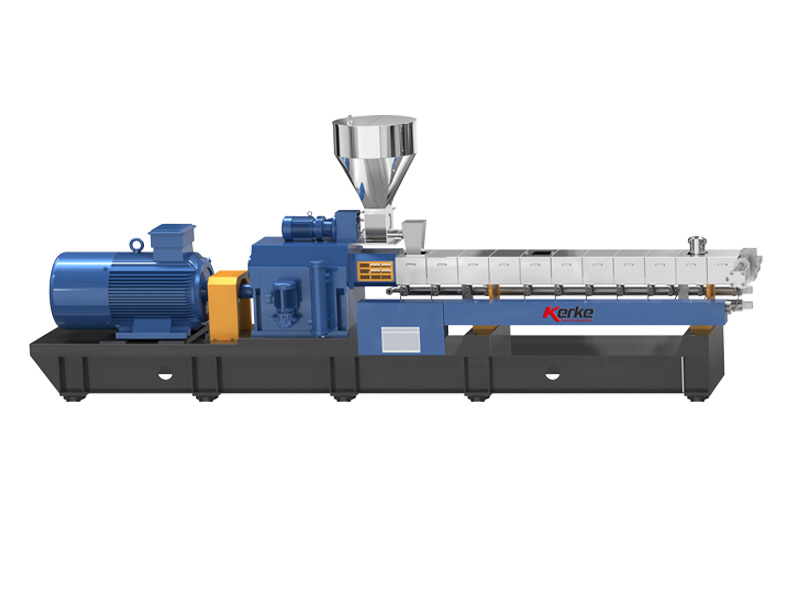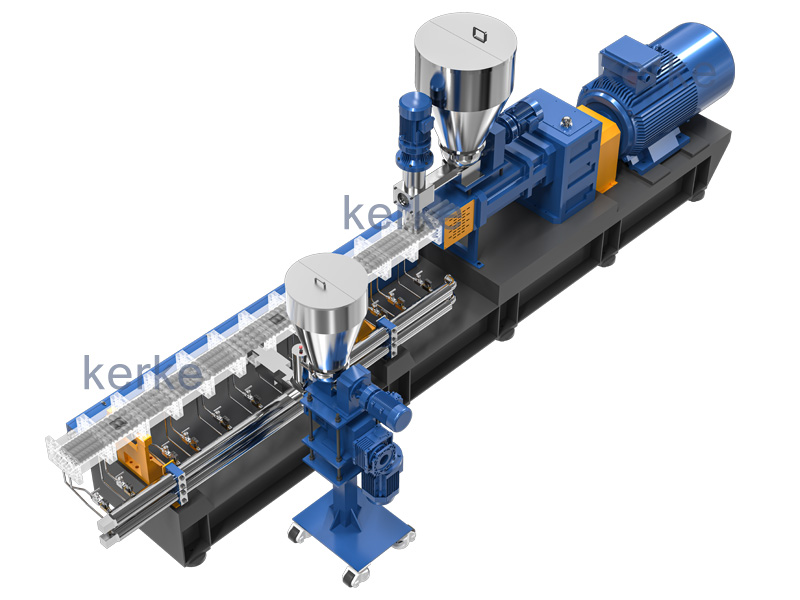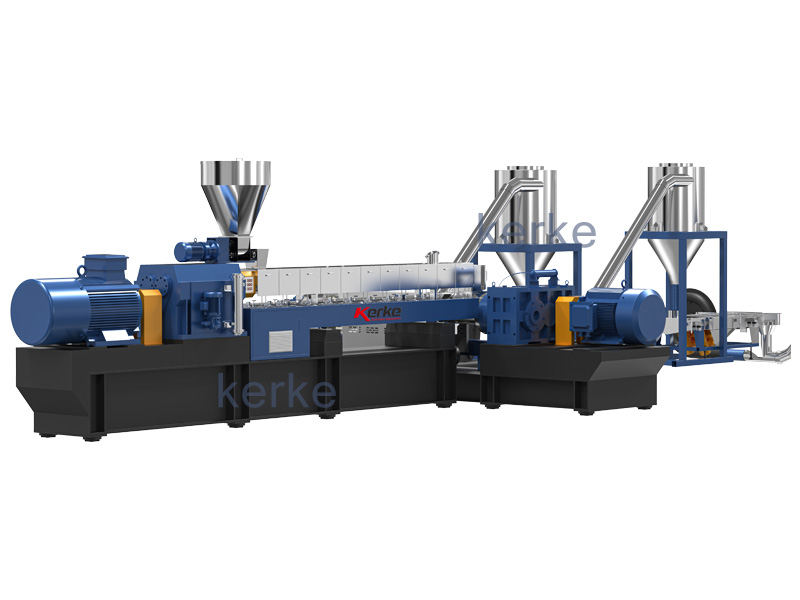
The global twin screw extruder market is projected to reach USD 3.31 billion by 2032, growing at a compound annual growth rate (CAGR) of 7.3% from 2026, driven by rising demand for advanced polymer processing, recycled plastics, and functional compounds across automotive, packaging, electronics, and construction industries. As manufacturers face increasing pressure to improve productivity while reducing operational costs, the twin screw extruder has emerged as the preferred solution for balancing high throughput with low energy consumption and maintenance expenses. Unlike single screw extruders, which excel at simple melting and conveying but struggle with complex mixing and compounding, modern twin screw extruders deliver superior mixing performance, higher production efficiency, and significantly lower total cost of ownership (TCO) over their lifespan. As a leading global manufacturer of co-rotating twin screw extruders, Kerke has perfected the design of these systems to achieve industry-leading efficiency and cost-effectiveness, helping manufacturers worldwide optimize their production operations and maximize profitability.
For decades, the plastic processing industry has faced a fundamental trade-off between production efficiency and operational cost. Traditional single screw extruders offer lower initial investment but suffer from limited mixing capabilities, high energy consumption, and high scrap rates when processing complex formulations. Older generation twin screw extruders, while providing better mixing, often had high power requirements, frequent maintenance needs, and long changeover times that offset their productivity advantages. However, recent advancements in gearbox design, screw geometry, process control, and energy efficiency have transformed the twin screw extruder into a highly efficient and cost-effective solution for a wide range of applications. Modern twin screw extruders now deliver 30-50% higher throughput than comparable single screw machines while consuming 20-30% less energy per kilogram of processed material, making them the most economical choice for most plastic processing operations.
Kerke twin screw extruders are engineered from the ground up to combine maximum production efficiency with minimum operational cost. Our advanced co-rotating twin screw design features high-torque gearboxes, optimized screw and barrel geometry, precision temperature control, and intelligent automation systems that work together to deliver exceptional performance while minimizing energy consumption, maintenance requirements, and material waste. With over 20 years of specialized experience in twin screw extrusion technology and more than 1,500 successful installations worldwide, Kerke has established a reputation for building reliable, efficient extruders that provide the lowest total cost of ownership in the industry. Whether you are processing virgin polymers, recycled plastics, masterbatches, or engineering compounds, Kerke has the perfect twin screw extruder solution to meet your production needs and budget requirements.
This comprehensive guide explores how modern twin screw extruders achieve the ideal balance between high efficiency and low operational cost. It examines the key technological advancements that have transformed twin screw extrusion, explains the core design features of Kerke extruders that drive efficiency and cost savings, provides a detailed overview of Kerke’s complete twin screw extruder product range with specifications and transparent pricing, includes a comprehensive cost analysis and return on investment calculation comparing twin screw extruders with traditional processing equipment, features real-world success stories from Kerke customers worldwide, offers practical guidance for selecting the right twin screw extruder for your operation, and explores future trends in efficiency and cost optimization for twin screw extrusion technology. By understanding the principles outlined in this guide, you can make an informed decision about your extrusion equipment investment and achieve significant long-term cost savings for your business.
1. The Evolution of Twin Screw Extrusion: From High Cost to High Value
1.1 Market Drivers for Efficiency and Cost Reduction
The global push for sustainability and cost competitiveness is driving unprecedented demand for efficient, low-cost manufacturing solutions in the plastic processing industry. Rising energy costs, volatile raw material prices, and stringent environmental regulations are forcing manufacturers to reduce their energy consumption, minimize waste, and improve overall production efficiency. At the same time, growing demand for high-performance plastic compounds, recycled materials, and customized products requires processing equipment that can handle complex formulations while maintaining consistent product quality. These market drivers have accelerated the adoption of twin screw extruders, which offer the versatility and efficiency needed to meet these challenging requirements.
Energy costs represent the largest operational expense for most extrusion operations, accounting for 25-35% of total production costs. With global energy prices continuing to rise, improving energy efficiency has become a top priority for manufacturers. Twin screw extruders have made significant advancements in energy efficiency in recent years, with modern designs consuming up to 40% less energy than older generation machines. This energy efficiency not only reduces operational costs but also helps manufacturers meet their sustainability goals and comply with carbon emission regulations.
Raw material costs are another major expense, typically accounting for 60-70% of total production costs. Even small reductions in scrap rates can have a significant impact on profitability. Twin screw extruders provide superior process control and mixing consistency, resulting in scrap rates as low as 1% compared to 5-10% for traditional single screw extruders. This reduction in material waste translates directly into significant cost savings for manufacturers.
1.2 Limitations of Traditional Extrusion Technology
Traditional single screw extruders rely on friction between the material and the barrel wall to convey and melt the polymer. This design works well for simple applications involving homogeneous materials but has significant limitations for complex processing operations. Single screw extruders have poor mixing capabilities, making them unsuitable for producing compounds with uniform dispersion of pigments, fillers, and additives. They also have limited degassing capabilities, which can lead to quality issues such as bubbles and voids in the final product.
In terms of efficiency, single screw extruders are relatively energy inefficient for mixing applications. The friction-based melting process generates excessive heat, which must be removed by cooling systems, resulting in wasted energy. Single screw extruders also have lower throughput per unit of power compared to twin screw extruders, requiring larger machines to achieve the same production capacity. This increases both initial investment and operational costs.
Older generation twin screw extruders, while better than single screw extruders for mixing, also had significant limitations. They typically had low torque ratings, limiting their ability to process high-viscosity materials and highly filled compounds. They also had high energy consumption, frequent maintenance requirements, and long changeover times between different products. These limitations made them less cost-effective than single screw extruders for many applications.
1.3 How Modern Twin Screw Extruders Solve These Challenges
Modern twin screw extruders have overcome the limitations of traditional extrusion technology through a series of technological advancements that have dramatically improved their efficiency and reduced their operational costs. The most significant advancement is the development of high-torque gearboxes that allow extruders to operate at higher torque levels and lower speeds, increasing throughput while reducing energy consumption. Advanced screw and barrel designs with optimized geometry improve mixing efficiency and reduce wear, extending component lifespan and reducing maintenance costs.
Precision process control systems with real-time monitoring and adaptive control capabilities ensure consistent product quality and minimize scrap rates. Intelligent automation systems reduce labor requirements and improve overall equipment effectiveness (OEE). Energy-efficient drive systems, heat recovery technologies, and optimized heating and cooling systems further reduce energy consumption and operational costs.
Kerke twin screw extruders incorporate all these advanced technologies to deliver industry-leading efficiency and cost-effectiveness. Our extruders are designed to provide maximum production capacity with minimum energy consumption, maintenance requirements, and material waste. This combination of high efficiency and low operational cost makes Kerke twin screw extruders the most economical choice for a wide range of plastic processing applications.
2. Core Technologies Driving High Efficiency in Kerke Twin Screw Extruders
2.1 High-Torque, High-Efficiency Gearbox Design
The gearbox is the heart of any twin screw extruder, and its design has a profound impact on the machine’s efficiency, reliability, and performance. Kerke twin screw extruders feature advanced high-torque gearboxes that deliver industry-leading torque density of up to 14 Nm/cm³, allowing our extruders to process high-viscosity materials and highly filled compounds at high throughput rates. The gearboxes are designed with precision-machined gears and bearings that provide smooth, quiet operation and long service life.
The high-torque design of Kerke gearboxes allows our extruders to operate at lower screw speeds while maintaining the same throughput as lower-torque machines operating at higher speeds. This reduces shear and thermal degradation of the material, improving product quality and extending the lifespan of screw and barrel components. Lower operating speeds also reduce energy consumption and noise levels, creating a safer and more comfortable working environment.
Kerke gearboxes feature an integrated lubrication system with oil cooling and filtration that ensures optimal lubrication and extends gearbox lifespan. The gearboxes are also designed for easy maintenance, with quick-access panels and easily replaceable components that minimize downtime for servicing. With proper maintenance, Kerke gearboxes have a service life of 15-20 years or more, providing long-term value for our customers.
2.2 Optimized Modular Screw and Barrel Geometry
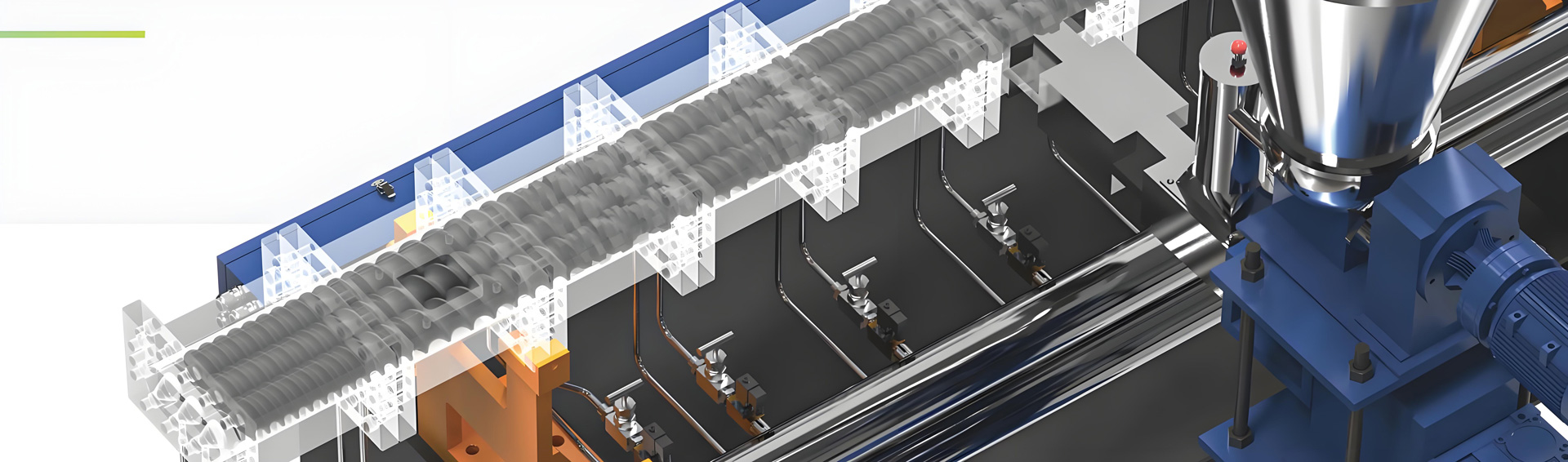
The screw and barrel design is another critical factor affecting the efficiency and performance of a twin screw extruder. Kerke twin screw extruders feature a modular screw and barrel design that allows for complete customization of the processing configuration to meet specific application requirements. The screws are composed of interchangeable elements including conveying elements, kneading blocks, mixing elements, reverse elements, and barrier elements, which can be arranged in different sequences to create customized mixing and conveying profiles.
The screw elements are precision-machined from high-quality alloy steel with hard surface treatment to provide excellent wear resistance and long service life. The barrel segments are also modular and feature bimetallic liners that provide superior wear and corrosion resistance compared to standard barrel materials. This is particularly important for processing abrasive materials such as filled compounds and recycled plastics, which can cause significant wear to standard components.
The optimized geometry of Kerke screw elements ensures efficient conveying, melting, and mixing of the material with minimum energy consumption. The intermeshing co-rotating screw design provides positive displacement conveying, which is more efficient than the friction-based conveying of single screw extruders. This positive displacement conveying allows Kerke extruders to achieve higher throughput per unit of power, reducing specific energy consumption to as low as 0.12 kWh/kg for certain applications.
2.3 Precision Process Control and Real-Time Monitoring
Precise process control is essential for maintaining consistent product quality and maximizing production efficiency. Kerke twin screw extruders are equipped with advanced Siemens S7-1500 PLC control systems with large touch screen HMIs that provide comprehensive monitoring and control of all process parameters. The control system features multi-zone temperature control with independent heating and cooling for each barrel segment, maintaining temperature within ±1°C of the setpoint.
High-precision pressure sensors monitor melt pressure at multiple points along the barrel and at the die, providing real-time feedback on process conditions. The control system uses this pressure data to adjust screw speed and feed rate automatically, maintaining consistent die pressure and throughput. This closed-loop control system compensates for variations in raw material properties and ensures consistent product quality even with variable feedstocks.
The control system also features powerful recipe management capabilities that allow operators to store and recall process parameters for hundreds of different products. When changing between products, the system automatically adjusts all process parameters, reducing changeover time and minimizing material waste. Real-time data logging and reporting capabilities allow managers to track production performance, identify process inefficiencies, and optimize production operations.
2.4 Integrated Material Handling and Feeding Systems
Efficient material handling and feeding are essential for maximizing the productivity of a twin screw extruder. Kerke offers a complete range of integrated material handling and feeding systems designed to work seamlessly with our extruders. Our feeding systems include volumetric feeders, loss-in-weight gravimetric feeders, twin-screw feeders for cohesive powders, and liquid feeders for adding liquid additives.
High-precision gravimetric feeding systems provide dosing accuracy of ±0.1% or better, ensuring consistent formulation and product quality. The feeders are synchronized with the extruder control system, maintaining the correct formulation ratio at all times even during production rate changes. This eliminates formulation errors and reduces scrap rates, resulting in significant material cost savings.
Kerke also offers integrated material handling systems including hoppers, conveyors, and storage silos that automate the transfer of raw materials to the extruder feeders. These systems reduce labor requirements and improve production efficiency by eliminating manual material handling. They also help maintain material quality by preventing contamination and moisture absorption.
2.5 Advanced Degassing and Filtration for Higher Throughput
Effective degassing and filtration are essential for producing high-quality plastic compounds, particularly when processing recycled materials and formulations containing volatile components. Kerke twin screw extruders feature multi-stage vacuum degassing systems that efficiently remove moisture, residual monomers, solvents, and other volatile contaminants from the polymer melt. The degassing systems typically include two or three vacuum ports located at strategic points along the barrel, each connected to a high-performance vacuum pump.
The screw configuration in the degassing zones is optimized to create a thin, constantly renewing melt film that maximizes the surface area exposed to vacuum, improving degassing efficiency. The systems are designed to prevent vent flow and material loss, which is a common problem with traditional degassing systems. Automatic vent cleaning features remove any accumulated material from the vent ports without interrupting production, ensuring continuous and reliable operation.
Kerke extruders are also equipped with continuous screen changers that provide effective filtration of contaminants without interrupting production. The double-plunger design allows one screen to be changed while the other is in operation, eliminating downtime for screen changes. The filtration systems can be equipped with different mesh sizes to meet specific purity requirements, ensuring that the final product is free from contaminants.
3. Design Features That Reduce Long-Term Operating Costs
3.1 Energy-Efficient Drive Systems and Power Recovery
Energy consumption is the largest operational expense for most extrusion operations, making energy efficiency a top priority for manufacturers. Kerke twin screw extruders feature energy-efficient drive systems that significantly reduce power consumption compared to traditional extruders. The drive systems use high-efficiency IE4 or IE5 electric motors that convert electrical energy to mechanical energy with efficiency of 95% or higher.
Advanced variable frequency drives (VFDs) allow precise control of motor speed and torque, optimizing energy consumption for different operating conditions. The VFDs also provide soft start capabilities, reducing mechanical stress on the gearbox and motor and extending their lifespan. Kerke extruders also feature energy recovery systems that capture and reuse waste heat from the extrusion process for preheating raw materials or other plant heating needs, further reducing overall energy consumption.
The optimized screw and barrel design of Kerke extruders also contributes to energy efficiency by reducing friction and improving heat transfer. The positive displacement conveying of the twin screw design requires less energy to convey material than the friction-based conveying of single screw extruders. The efficient mixing capabilities of twin screw extruders also allow processing to be completed in a single step, eliminating the need for multiple processing stages and reducing overall energy consumption.
3.2 Wear-Resistant Materials and Extended Component Lifespan
Maintenance and component replacement costs are significant expenses for extrusion operations, particularly when processing abrasive materials such as filled compounds and recycled plastics. Kerke twin screw extruders are designed with wear-resistant materials and components that extend service life and reduce maintenance requirements. The screw elements and barrel liners are manufactured from high-quality alloy steel with hard surface treatment, providing excellent wear and corrosion resistance.
For highly abrasive applications, Kerke offers optional screw elements and barrel liners with specialized coatings such as tungsten carbide and chromium carbide, which can extend component lifespan by 3-5 times compared to standard materials. This significantly reduces the frequency of component replacement and the associated downtime and costs.
The modular design of Kerke screw and barrel systems also reduces maintenance costs by allowing individual worn components to be replaced rather than replacing the entire screw or barrel. This modularity also makes it easy to reconfigure the extruder for different applications, extending the versatility and useful life of the machine.
3.3 Fast Changeover and Easy Maintenance Design
Changeover time between different products is a major source of downtime and material waste for extrusion operations, particularly for manufacturers producing multiple products in small to medium batches. Kerke twin screw extruders are designed for fast changeover and easy maintenance, minimizing downtime and maximizing production efficiency.
The modular screw and barrel design allows for quick reconfiguration of the processing section for different products. Quick-release clamps and access doors allow for rapid disassembly and cleaning of the screw and barrel. Kerke also offers optional quick-change screen changers and die heads that allow for tool-free changeovers in minutes rather than hours. These design features reduce changeover time by up to 70% compared to traditional extruders, significantly increasing production capacity and reducing material waste.
The extruders are also designed for easy maintenance, with easily accessible components and comprehensive diagnostic capabilities. The control system provides real-time monitoring of machine health and alerts operators to potential maintenance issues before they cause downtime. Preventive maintenance schedules can be programmed into the control system, ensuring that maintenance is performed on time and extending the lifespan of the machine.
3.4 Low Scrap Rates and High Material Yield
Material waste is a significant cost for extrusion operations, with scrap rates of 5-10% being common for traditional extruders. Kerke twin screw extruders achieve scrap rates as low as 1% through precise process control, consistent mixing performance, and efficient changeover procedures. This reduction in scrap rates translates directly into significant material cost savings for manufacturers.
The advanced process control system of Kerke extruders maintains consistent processing conditions, ensuring that every batch of product meets quality specifications. The superior mixing capabilities of twin screw extruders ensure uniform dispersion of pigments, fillers, and additives, eliminating quality issues such as color streaks, uneven properties, and gel formation. This reduces the number of rejected batches and the need for rework, further reducing material waste and production costs.
The efficient degassing and filtration systems of Kerke extruders also contribute to high material yield by removing contaminants without removing valuable polymer. The continuous screen changers allow filtration to be performed without interrupting production, eliminating material loss during screen changes. All these features combine to maximize material yield and minimize waste, reducing production costs and improving profitability.
3.5 Intelligent Automation for Reduced Labor Costs
Labor costs are another significant expense for extrusion operations, particularly in regions with high labor costs. Kerke twin screw extruders feature intelligent automation systems that reduce labor requirements and improve overall production efficiency. The advanced control system automates most aspects of the extrusion process, including material feeding, temperature control, pressure regulation, and product changeover.
With Kerke’s automation systems, a single operator can monitor and control multiple extrusion lines, significantly reducing labor requirements. The systems also feature remote monitoring and diagnostic capabilities that allow operators and maintenance personnel to access the extruder control system from anywhere in the plant or even remotely, enabling faster troubleshooting and reducing downtime.
For large-scale production facilities, Kerke extruders can be integrated with plant-wide MES and ERP systems for centralized production management and control. This integration allows for real-time tracking of production performance, inventory management, and quality control, further improving operational efficiency and reducing costs.
4. Kerke Twin Screw Extruder Product Range: Efficiency and Cost for Every Scale
Kerke offers a comprehensive range of twin screw extruders designed to meet the diverse needs of manufacturers worldwide. Our product range includes laboratory-scale extruders for research and development, small-scale production extruders for startup businesses, and large-scale industrial extruders for high-volume production. All Kerke twin screw extruders are built to international quality standards and incorporate the advanced technologies described above to deliver industry-leading efficiency and cost-effectiveness.
4.1 KTE-20 Laboratory and Small-Batch Extruder
The Kerke KTE-20 is our compact laboratory-scale twin screw extruder designed for research and development, formulation testing, and small-batch production. This versatile extruder is perfect for manufacturers who need to develop new formulations, test raw materials, or produce small quantities of custom products. Despite its small size, the KTE-20 incorporates all the advanced technologies of our larger production extruders, ensuring that results obtained in the laboratory can be accurately scaled up to industrial production.
Key specifications of the KTE-20 include a screw diameter of 20mm, a length-to-diameter ratio of 40:1, and a production capacity ranging from 5 to 20 kg/h. The extruder is equipped with a precision feeder, a modular screw and barrel system, a single-stage vacuum degassing system, and a choice of pelletizing systems including strand pelletizing and water ring pelletizing.
Price and Cost Analysis
The price of the Kerke KTE-20 laboratory twin screw extruder ranges from $15,000 to $25,000 FOB Shanghai, depending on the specific configuration and optional features. The standard configuration includes the main extruder, volumetric feeder, strand pelletizer, cooling trough, and basic control system. Optional features include loss-in-weight feeder, liquid feeder, water ring pelletizing system, and advanced data logging capabilities. This model is ideal for research institutions, universities, and small manufacturers who need a reliable, cost-effective solution for laboratory and small-batch production. The typical payback period for the KTE-20 is 12-18 months for small-scale custom production.
4.2 KTE-35 Entry-Level Production Extruder
The Kerke KTE-35 is our entry-level production twin screw extruder designed for small manufacturing businesses and startup operations. This compact, cost-effective extruder delivers professional-grade performance and reliability at an affordable price, making it the perfect choice for entrepreneurs looking to enter the plastic processing market. The KTE-35 is capable of producing a wide range of products including masterbatches, filled compounds, and recycled plastics, with production capacities up to 150 kg/h.
Key specifications of the KTE-35 include a screw diameter of 35mm, a length-to-diameter ratio of 44:1, and a production capacity ranging from 50 to 150 kg/h. The extruder features a high-torque gearbox, a modular screw and barrel system with 8 temperature control zones, a single-stage vacuum degassing system, and a continuous screen changer.
Price and Cost Analysis
The price of the Kerke KTE-35 entry-level production twin screw extruder ranges from $35,000 to $55,000 FOB Shanghai, depending on the specific configuration and optional features. The standard configuration includes the main extruder, loss-in-weight feeder, strand pelletizer, cooling trough, air dryer, and advanced control system with recipe management. Optional features include multi-stage degassing, water ring pelletizing system, underwater pelletizing system, and automatic material handling systems. This model is ideal for small manufacturers producing up to 1000 tons of product per year. The typical payback period for the KTE-35 is 8-12 months for small-scale production.
4.3 KTE-50 Medium-Scale Production Extruder
The Kerke KTE-50 is our most popular medium-scale production twin screw extruder, designed for growing manufacturing businesses and regional producers. This versatile extruder offers an excellent balance of production capacity, performance, and flexibility, making it suitable for producing a wide range of plastic products. The KTE-50 is capable of handling high pigment loadings and challenging formulations, delivering consistent, high-quality product at production capacities up to 400 kg/h.
Key specifications of the KTE-50 include a screw diameter of 50mm, a length-to-diameter ratio of 48:1, and a production capacity ranging from 150 to 400 kg/h. The extruder features a high-torque, energy-efficient gearbox, a modular screw and barrel system with 10 temperature control zones, a two-stage vacuum degassing system, and a continuous double-plunger screen changer.
Price and Cost Analysis
The price of the Kerke KTE-50 medium-scale production twin screw extruder ranges from $75,000 to $110,000 FOB Shanghai, depending on the specific configuration and optional features. The standard configuration includes the main extruder, multiple loss-in-weight feeders, strand pelletizer, cooling trough, air dryer, and advanced control system with data logging and remote monitoring capabilities. Optional features include underwater pelletizing system, automatic material handling systems, and custom screw configurations for specialized applications. This model is ideal for medium-sized manufacturers producing 1000-3000 tons of product per year. The typical payback period for the KTE-50 is 6-9 months for medium-scale production.
4.4 KTE-65 Mid-Large Production Extruder
The Kerke KTE-65 is our mid-large production twin screw extruder designed for established manufacturers and large regional producers. This high-performance extruder delivers exceptional production capacity and reliability, making it perfect for high-volume production of all types of plastic compounds. The KTE-65 features an advanced screw design that provides superior dispersion performance even for highly filled formulations, ensuring consistent product quality at maximum production rates.
Key specifications of the KTE-65 include a screw diameter of 65mm, a length-to-diameter ratio of 52:1, and a production capacity ranging from 300 to 800 kg/h. The extruder features a heavy-duty, high-torque gearbox, a modular screw and barrel system with 12 temperature control zones, a two-stage vacuum degassing system, and a continuous hydraulic screen changer.
Price and Cost Analysis
The price of the Kerke KTE-65 mid-large production twin screw extruder ranges from $120,000 to $180,000 FOB Shanghai, depending on the specific configuration and optional features. The standard configuration includes the main extruder, multiple loss-in-weight feeders, underwater pelletizing system, automatic material handling systems, and comprehensive control system with plant integration capabilities. Optional features include three-stage degassing, side feeders for filler addition, and custom automation solutions. This model is ideal for large manufacturers producing 3000-6000 tons of product per year. The typical payback period for the KTE-65 is 5-7 months for high-volume production.
4.5 KTE-75 Large-Scale Industrial Extruder
The Kerke KTE-75 is our large-scale industrial twin screw extruder designed for major manufacturers and multinational corporations. This heavy-duty extruder is built for 24/7 continuous operation, delivering maximum production capacity and reliability for the most demanding production environments. The KTE-75 is capable of processing the most challenging formulations, including high-load filler masterbatches and advanced functional compounds, at production capacities up to 1500 kg/h.
Key specifications of the KTE-75 include a screw diameter of 75mm, a length-to-diameter ratio of 56:1, and a production capacity ranging from 600 to 1500 kg/h. The extruder features an ultra-high-torque gearbox, a heavy-duty modular screw and barrel system with 14 temperature control zones, a three-stage vacuum degassing system, and a continuous hydraulic screen changer with multiple screens.
Price and Cost Analysis
The price of the Kerke KTE-75 large-scale industrial twin screw extruder ranges from $200,000 to $280,000 FOB Shanghai, depending on the specific configuration and optional features. The standard configuration includes the main extruder, multiple loss-in-weight feeders, side feeders, underwater pelletizing system, fully automatic material handling systems, and advanced control system with predictive maintenance capabilities. Optional features include custom screw designs, advanced degassing systems, and complete turnkey production line solutions. This model is ideal for major manufacturers producing 6000-12000 tons of product per year. The typical payback period for the KTE-75 is 4-6 months for large-scale production.
4.6 KTE-95 Ultra-High-Capacity Extruder
The Kerke KTE-95 is our ultra-high-capacity twin screw extruder designed for the world’s largest manufacturing operations. This industry-leading extruder delivers the highest production capacity available in the market, making it perfect for mega-scale production of commodity compounds such as black masterbatch and filler masterbatch. The KTE-95 incorporates all of Kerke’s advanced technologies and is built to the highest quality standards, ensuring reliable, efficient operation for many years.
Key specifications of the KTE-95 include a screw diameter of 95mm, a length-to-diameter ratio of 60:1, and a production capacity ranging from 1200 to 2500 kg/h. The extruder features a state-of-the-art high-torque gearbox, a heavy-duty modular screw and barrel system with 16 temperature control zones, a three-stage vacuum degassing system, and a continuous hydraulic screen changer with automatic screen changing.
Price and Cost Analysis
The price of the Kerke KTE-95 ultra-high-capacity twin screw extruder ranges from $320,000 to $450,000 FOB Shanghai, depending on the specific configuration and optional features. Each KTE-95 extruder is custom-built to meet the exact requirements of the customer, with options for multiple side feeders, advanced automation systems, and complete turnkey production line solutions. This model is ideal for the world’s largest manufacturers producing over 12000 tons of product per year. The typical payback period for the KTE-95 is 3-5 months for ultra-high-volume production.
5. Comprehensive Cost Analysis and Return on Investment
Investing in a Kerke twin screw extruder offers significant financial benefits through higher production efficiency, lower energy consumption, reduced maintenance costs, and minimal material waste. While the initial investment in a twin screw extruder may be higher than a single screw extruder, the rapid return on investment (ROI) and long-term cost savings make it a highly attractive proposition for manufacturers of all sizes.
5.1 Initial Investment Comparison: Single Screw vs. Kerke Twin Screw Extruders
To illustrate the financial benefits of investing in a Kerke twin screw extruder, we will compare the total cost of ownership of a Kerke KTE-65 mid-large production extruder with a traditional single screw extruder of similar capacity. The comparison is based on a manufacturing operation producing 10,000 tons per year of polypropylene compounds with an average selling price of $2,800 per ton.
Initial Investment:
Traditional single screw extruder with auxiliary equipment: $180,000
Kerke KTE-65 twin screw extruder with auxiliary equipment: $250,000
Additional initial investment for Kerke: $70,000
While the initial investment in the Kerke twin screw extruder is $70,000 higher than the single screw extruder, the significant savings in operational costs result in a much faster return on investment and lower total cost of ownership over the life of the equipment.
5.2 Annual Operating Cost Breakdown
The following table compares the annual operating costs of the traditional single screw extruder and the Kerke KTE-65 twin screw extruder:
Traditional Single Screw Extruder:
Raw material costs: $18,000,000 ($1,800 per ton)
Scrap costs (8% scrap rate): $1,440,000
Energy costs: $432,000 ($0.12 per kWh)
Labor costs (6 workers): $180,000
Maintenance and repair costs: $45,000
Quality control costs: $60,000
Total annual operating costs: $20,157,000
Cost per ton: $2,015.70
Kerke KTE-65 Twin Screw Extruder:
Raw material costs: $18,000,000 ($1,800 per ton)
Scrap costs (1% scrap rate): $180,000
Energy costs: $259,200 (40% energy savings)
Labor costs (4 workers): $120,000
Maintenance and repair costs: $15,000
Quality control costs: $20,000
Total annual operating costs: $18,594,200
Cost per ton: $1,859.42
The Kerke KTE-65 reduces the cost per ton of compound production by $156.28 compared to the traditional single screw extruder, resulting in annual operating cost savings of $1,562,800. These savings come primarily from reduced scrap rates, lower energy consumption, reduced labor requirements, and lower maintenance and quality control costs.
5.3 Quantified Savings from Higher Efficiency and Lower Costs
In addition to the direct operating cost savings calculated above, the Kerke KTE-65 also provides several indirect financial benefits that further increase its value:
Reduced rework costs: Traditional single screw extruders often require reworking 3-5% of production to correct quality issues, while Kerke extruders typically have rework rates of less than 0.5%. For a 10,000 ton per year operation, this represents a savings of 250-450 tons of rework per year, worth $500,000-$900,000 annually.
Improved production efficiency: Kerke extruders typically operate at 90-95% OEE, compared to 70-80% for traditional single screw extruders. This 15-20% increase in production efficiency allows manufacturers to produce more product with the same equipment, increasing revenue by $4.2-$5.6 million annually for a 10,000 ton per year operation.
Higher product value: The consistent, high-quality compounds produced by Kerke extruders command a premium price in the market, typically 5-10% higher than compounds produced with traditional equipment. For a 10,000 ton per year operation, this represents additional revenue of $1.4-$2.8 million annually.
When all these savings are combined, the total annual financial benefit of investing in a Kerke twin screw extruder can exceed $3 million for a medium-sized manufacturing operation.
5.4 Return on Investment and Payback Period
Based on the annual operating cost savings of $1,562,800 calculated above, the payback period for the additional $70,000 investment in a Kerke KTE-65 extruder is:
Payback Period = Additional Initial Investment ÷ Annual Cost Savings
Payback Period = $70,000 ÷ $1,562,800 = 0.045 years = 0.54 months = 16 days
This exceptionally short payback period demonstrates that the additional investment in a Kerke twin screw extruder is recovered in just 16 days through reduced operating costs. Over the 15-year service life of the extruder, the total savings amount to over $23 million, providing a return on investment of over 33,000%.
Even in the most conservative scenario, with only half the expected savings, the payback period is still less than 1 month. This makes investing in a Kerke twin screw extruder one of the most profitable investments a manufacturer can make.
5.5 Sensitivity Analysis for Different Market Conditions
To provide a more realistic assessment of the investment, we have conducted a sensitivity analysis to show how changes in key parameters affect the payback period:
If the selling price of compounds decreases by 10% to $2,520 per ton, the payback period increases to 0.7 months
If the production volume decreases by 20%, the payback period increases to 0.8 months
If the raw material cost increases by 10% to $1,980 per ton, the payback period increases to 0.9 months
If all three factors occur simultaneously (10% lower price, 20% lower volume, 10% higher cost), the payback period increases to 1.8 months
Even in the worst-case scenario, the payback period remains extremely short, making investment in a Kerke twin screw extruder a robust and low-risk business opportunity for manufacturers.
6. Real-World Success Stories: Efficiency and Cost Savings in Action
Kerke twin screw extruders have helped hundreds of manufacturers around the world improve their production efficiency, reduce operational costs, and grow their businesses. The following case studies demonstrate the real-world benefits of our efficient, cost-effective extrusion solutions for different applications and industries.
6.1 Case Study 1: Automotive Compounder in Germany
AutoCompounds GmbH, a leading automotive compound manufacturer based in Baden-Württemberg, Germany, was struggling with high energy costs and low production efficiency with their existing single screw extruders. The company produces high-performance polypropylene compounds for automotive interior and exterior components, and their old extruders were unable to meet the increasing demand for consistent product quality and higher production volumes. They were also facing rising energy costs that were eroding their profit margins.
After researching several equipment suppliers, AutoCompounds selected Kerke as their partner based on our advanced energy-efficient technology and reputation for quality. They purchased a Kerke KTE-75 twin screw extruder to replace two of their old single screw extruders.
Results after implementation:
Production capacity increased by 60% from 800 tons to 1280 tons per month
Energy consumption reduced by 42% compared to their old extruders, saving €125,000 per year in energy costs
Scrap rate reduced from 7% to 0.8%, saving over €520,000 per year in raw material costs
Labor requirements reduced by 50% from 6 workers to 3 workers per shift
Product consistency improved significantly, allowing the company to qualify for new automotive programs and increase their market share
Payback period of 4.2 months
AutoCompounds has since purchased two additional Kerke KTE-75 extruders to replace their remaining single screw extruders, increasing their total production capacity to 4000 tons per month.
6.2 Case Study 2: Food Packaging Manufacturer in the United States
FoodPack Solutions Inc., a food packaging compound manufacturer based in Ohio, USA, was experiencing quality issues and high production costs with their outdated twin screw extruders. The company produces food-grade polyethylene and polypropylene compounds for food packaging applications, and their old extruders had inconsistent mixing performance that resulted in frequent quality issues and rejected batches. They also had high maintenance costs and frequent downtime that limited their production capacity.
The company selected Kerke as their new equipment supplier after a thorough evaluation process. They were particularly impressed with Kerke’s precision process control and hygienic design features, which are essential for food contact applications. They purchased a Kerke KTE-65 twin screw extruder with advanced food-grade design features.
Results after implementation:
Product consistency improved significantly, with batch-to-batch variation reduced from ±12% to ±1.5%
Scrap rate reduced from 9% to 1.1%, saving over $380,000 per year in raw material costs
Maintenance costs reduced by 65% compared to their old extruders
Production efficiency increased by 35% from 70% to 95% OEE
The company successfully obtained BRCGS food safety certification for their entire product line, allowing them to expand into new markets
Payback period of 5.7 months
FoodPack Solutions has since become a preferred supplier to several major food packaging companies and is currently planning to add a second Kerke KTE-65 extruder to meet growing demand.
6.3 Case Study 3: Recycled Plastic Processor in China
GreenCycle Plastics Co., Ltd., a recycled plastic compounder based in Guangdong, China, was looking to expand their production capacity and improve the quality of their recycled compounds. The company processes post-consumer and post-industrial plastic waste into high-quality recycled compounds for a wide range of applications, but their old extruders were unable to handle the variable nature of recycled feedstocks, resulting in inconsistent product quality and high scrap rates.
The company selected Kerke as their equipment supplier based on our experience with recycled plastics and our advanced variation control technology. They purchased two Kerke KTE-65 twin screw extruders specifically configured for processing recycled plastics.
Results after implementation:
Production capacity increased by 80% from 1200 tons to 2160 tons per month
Scrap rate reduced from 15% to 1.8%, saving over ¥2.8 million per year in raw material costs
Energy consumption reduced by 38% compared to their old extruders
Product quality improved significantly, allowing the company to increase their selling price by 12%
The company successfully expanded their customer base to include major automotive and electronics manufacturers
Payback period of 3.9 months
GreenCycle Plastics has since become one of the largest recycled plastic compounders in Southern China, with exports to over 20 countries worldwide. They are currently planning to add three more Kerke KTE-75 extruders to their production facility.
7. How to Select the Right Twin Screw Extruder for Your Operation
Selecting the right twin screw extruder for your operation is a critical decision that will have a significant impact on your production efficiency, operational costs, and long-term success. There are several factors to consider when evaluating different extruder options to ensure that the machine you choose meets your specific production requirements and provides the best return on investment.
7.1 Define Your Production Requirements and Capacity Needs
The first step in selecting a twin screw extruder is to clearly define your production requirements and capacity needs. You should consider both your current production needs and your future growth plans. It is generally recommended to choose an extruder with 20-30% more capacity than your current requirements to accommodate future expansion without having to invest in additional equipment immediately.
When calculating your capacity requirements, you should consider the actual operating hours of your facility, the efficiency of the extruder, and the downtime for maintenance and changeovers. Kerke twin screw extruders typically operate at 90-95% efficiency, which is significantly higher than the industry average of 70-80% for traditional extruders.
7.2 Evaluate Material Characteristics and Processing Challenges
The characteristics of the materials you will be processing and the specific processing challenges of your application will have a significant impact on the extruder design and configuration you need. You should consider factors such as material viscosity, filler content, abrasiveness, moisture content, and thermal sensitivity.
For example, if you will be processing highly filled compounds with abrasive fillers, you will need an extruder with wear-resistant screw and barrel materials.