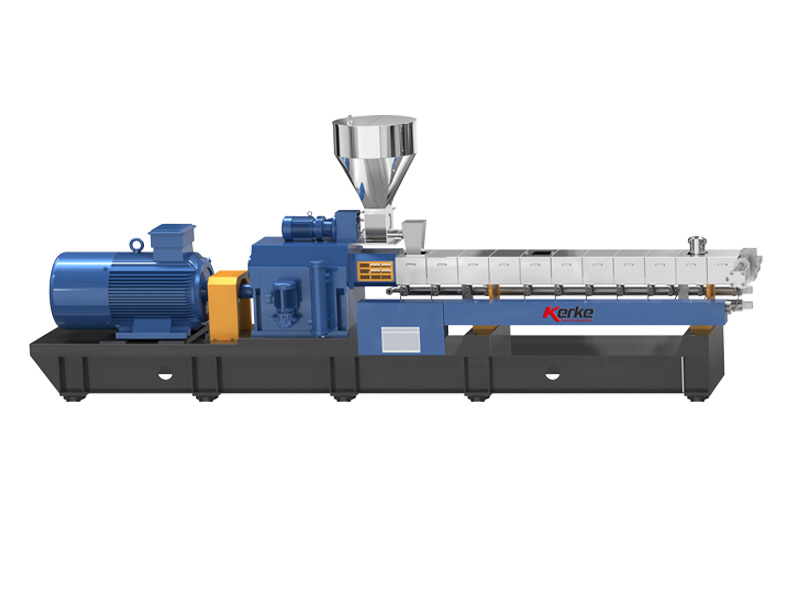
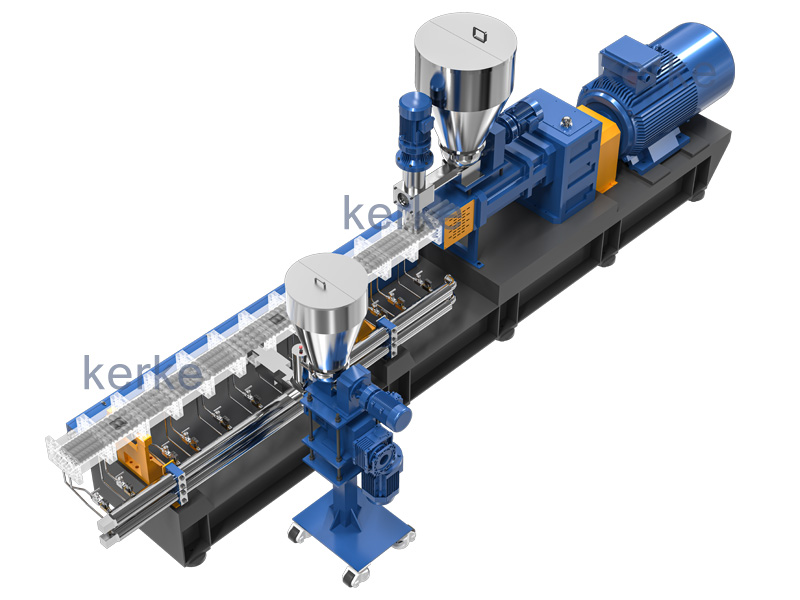
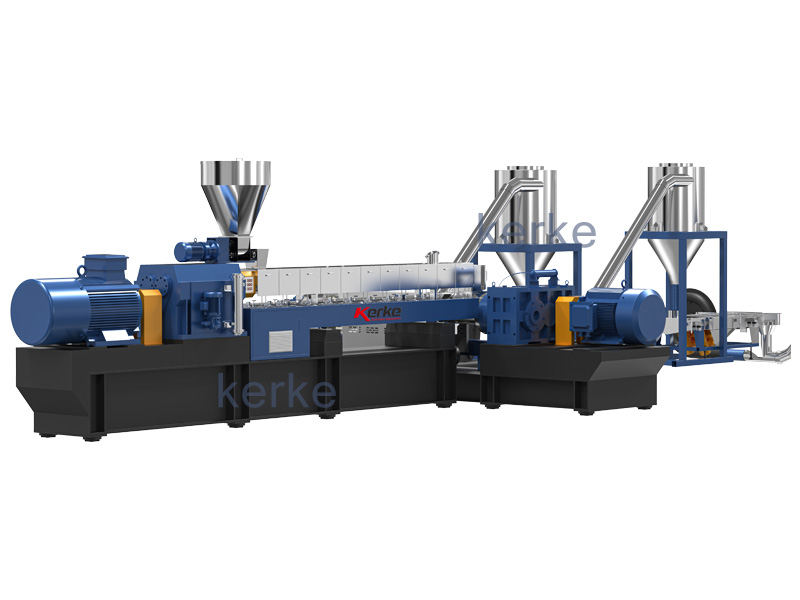
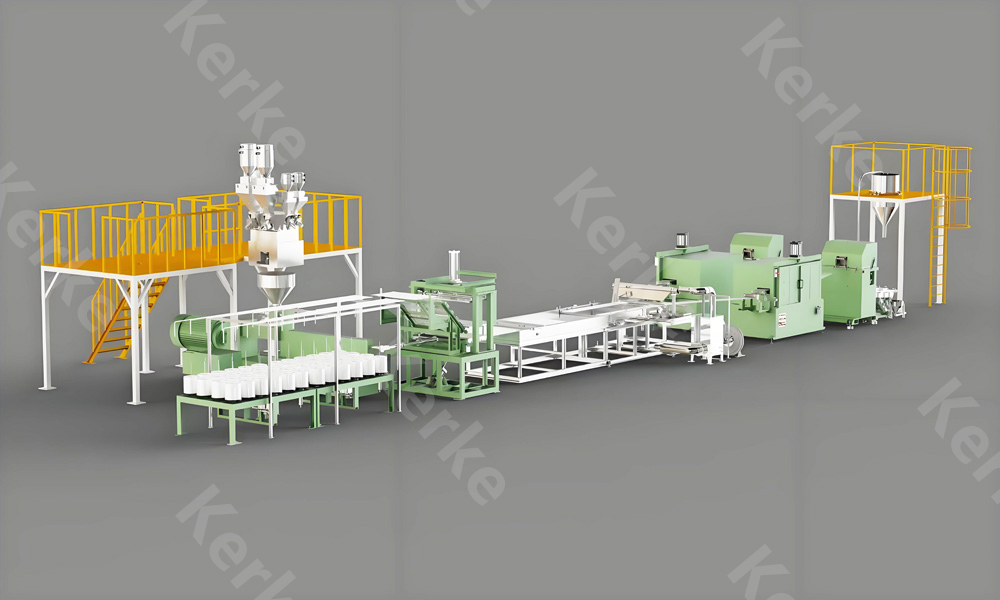
The global masterbatch market is experiencing unprecedented growth, valued at USD 14.8 billion in 2026 and projected to reach USD 22.7 billion by 2031, growing at a compound annual growth rate (CAGR) of 8.9%. This rapid expansion is driven by the booming global plastics industry, increasing demand for high-performance materials, and the global transition towards sustainable manufacturing practices. Masterbatches have become essential components in modern plastic production, providing coloration, functional enhancement, and performance modification for virtually all plastic products. At the heart of successful masterbatch production lies the masterbatch extruder, a specialized compounding system that directly determines product quality, production efficiency, and long-term business profitability. As a leading global manufacturer of twin screw extruders and compounding equipment with over 22 years of industry experience, Kerke has established itself as the trusted partner for masterbatch manufacturers worldwide, delivering high-performance masterbatch extrusion lines that enable sustainable long-term business growth.
Masterbatch production is a highly competitive industry where consistent quality, production efficiency, and cost control are the key factors that determine long-term success. Unlike general-purpose extrusion, masterbatch compounding requires precise control over material dispersion, distribution, and temperature to ensure uniform color and functional properties throughout the final product. Traditional single screw extruders and outdated twin screw systems often struggle with these requirements, resulting in inconsistent product quality, high scrap rates, low production efficiency, and high energy consumption. For masterbatch manufacturers, these issues translate directly into lost customers, reduced profit margins, and limited growth potential. Investing in a high-quality, reliable masterbatch extruder from a reputable manufacturer is therefore not just an equipment purchase but a strategic investment in the long-term stability and growth of your business.
Kerke masterbatch extruders are engineered from the ground up to address the unique challenges of masterbatch production and support sustainable long-term business growth. Our advanced twin screw compounding systems incorporate cutting-edge technologies that deliver exceptional mixing performance, precise process control, high production efficiency, and low operating costs. Kerke masterbatch extruders are capable of producing all types of masterbatches including color masterbatches, white masterbatches, black masterbatches, additive masterbatches, and functional masterbatches with capacities ranging from 5 kg/h to 5000 kg/h. With over 700 successful installations across 58 countries, Kerke has earned a reputation for delivering reliable, cost-effective solutions that help masterbatch manufacturers improve their product quality, expand their production capacity, and increase their market share.
This comprehensive guide explains how investing in a high-quality masterbatch extruder can support long-term stable business growth for masterbatch manufacturers. It examines the global masterbatch market landscape and growth opportunities, explains the core challenges in masterbatch production and how they impact business performance, details the advanced technologies that make Kerke masterbatch extruders the industry standard, provides a complete overview of Kerke’s masterbatch extruder product range with detailed specifications and transparent pricing, includes a comprehensive cost analysis and return on investment calculation for different production scales, features real-world success stories from Kerke customers worldwide, offers practical guidance for selecting the right masterbatch extruder for your business, and explores future trends in masterbatch production technology. Whether you are starting a new masterbatch manufacturing business, expanding your production capacity, or upgrading your existing equipment, this guide will help you understand how the right masterbatch extruder can be the foundation for your long-term business success.
1. Global Masterbatch Market Growth and Business Opportunities
1.1 Market Size and Key Growth Drivers
The global masterbatch market is growing at an impressive rate, driven by several powerful long-term trends that are creating significant business opportunities for masterbatch manufacturers worldwide. The plastics industry continues to expand globally, with plastic production projected to reach 600 million tons by 2030. This growth is particularly strong in emerging markets such as Asia-Pacific, Latin America, and Africa, where rapid industrialization, urbanization, and increasing disposable income are driving demand for plastic products across all sectors.
One of the most significant growth drivers is the increasing demand for high-performance plastics in automotive, packaging, construction, electronics, and healthcare industries. These industries require plastics with specific properties such as UV resistance, flame retardancy, antimicrobial properties, and electrical conductivity, all of which are achieved through the use of specialized functional masterbatches. The global functional masterbatch segment is growing at a CAGR of 10.2%, faster than the overall masterbatch market, creating lucrative opportunities for manufacturers who can produce high-quality functional masterbatches.
Another major growth driver is the global focus on sustainability and circular economy. Governments and consumers around the world are increasingly demanding sustainable plastic products made from recycled materials. This has led to growing demand for masterbatches specifically designed for recycled plastics, as well as biodegradable and compostable masterbatches. Masterbatch manufacturers who can adapt to these sustainability trends will be well-positioned for long-term growth in the coming years.
1.2 Long-Term Market Trends Shaping the Industry
Several long-term market trends are reshaping the masterbatch industry and creating both challenges and opportunities for manufacturers. The first trend is the increasing demand for customized and specialty masterbatches. Customers are no longer satisfied with standard off-the-shelf products; they require masterbatches specifically formulated to meet their unique performance requirements and application needs. This trend is driving masterbatch manufacturers to expand their product portfolios and develop specialized formulation expertise.
The second trend is the consolidation of the masterbatch industry. Large multinational companies are acquiring smaller regional manufacturers to expand their global reach and product offerings. While this increases competition, it also creates opportunities for smaller, more agile manufacturers who can focus on niche markets and provide superior customer service and technical support.
The third trend is the increasing importance of quality and consistency. As plastic products become more sophisticated and performance-critical, customers are demanding masterbatches with extremely tight tolerances and consistent quality from batch to batch. This requires masterbatch manufacturers to invest in advanced production equipment and quality control systems to meet these increasingly stringent requirements.
1.3 The Critical Role of Masterbatch Extruders in Business Success
In this highly competitive and rapidly evolving market, the masterbatch extruder is the single most important factor that determines a manufacturer’s ability to succeed and grow. A high-quality masterbatch extruder enables manufacturers to produce consistent, high-quality products at competitive prices, while a low-quality or outdated extruder will limit production capacity, increase operating costs, and result in inconsistent product quality that drives customers away.
The right masterbatch extruder provides several key benefits that directly support long-term business growth. It allows manufacturers to produce a wide range of masterbatch products with consistent quality, enabling them to expand their customer base and enter new markets. It increases production efficiency and reduces operating costs, improving profit margins and providing a competitive advantage. It also provides the flexibility to adapt to changing market demands and develop new products, ensuring long-term business sustainability.
2. Core Challenges in Masterbatch Production and Their Business Impact
Masterbatch production presents several unique technical challenges that can significantly impact business performance if not properly addressed. These challenges arise from the complex nature of the compounding process, which requires dispersing high concentrations of pigments, additives, and fillers into a polymer matrix uniformly and consistently.
2.1 Consistent Product Quality and Batch-to-Batch Uniformity
The most critical challenge in masterbatch production is achieving consistent product quality and batch-to-batch uniformity. Even minor variations in color, dispersion, or functional properties can result in customer complaints, product returns, and lost business. For masterbatch manufacturers, maintaining consistent quality is essential for building customer trust and loyalty, which are the foundation of long-term business success.
Achieving consistent quality requires precise control over all aspects of the compounding process, including material feeding, temperature, screw speed, and residence time. Traditional extruders with manual control systems and outdated design often struggle with this, resulting in significant variations between batches. This not only increases scrap rates but also requires extensive quality control testing, adding to production costs and lead times.
2.2 Production Capacity and Scalability Limitations
As your business grows, you need production equipment that can scale with your increasing demand. Many masterbatch manufacturers find themselves limited by outdated extruders that cannot provide sufficient production capacity or require frequent downtime for maintenance and repairs. This can result in missed delivery deadlines, lost orders, and missed growth opportunities.
Scalability is particularly important in the masterbatch industry, where order sizes can vary significantly and demand can fluctuate seasonally. A good masterbatch extruder should be able to operate efficiently at different production rates and be easily upgraded to increase capacity as your business grows. It should also have high reliability and availability to ensure that you can meet your production commitments consistently.
2.3 High Operating Costs and Profit Margin Pressure
Masterbatch manufacturers face constant pressure to reduce costs and maintain profit margins in the face of increasing raw material prices and competitive pricing. Raw material costs typically account for 70-80% of total production costs, making material efficiency a critical factor in profitability. Energy costs are another significant expense, accounting for 10-15% of total production costs for many masterbatch operations.
Outdated extruders are often inefficient in both material and energy usage, resulting in higher operating costs and lower profit margins. They may have high scrap rates due to inconsistent quality, wasting valuable raw materials. They may also consume excessive energy, increasing utility costs and reducing competitiveness. Over time, these inefficiencies can significantly impact the financial performance of your business and limit your ability to invest in growth.
2.4 Regulatory Compliance and Environmental Requirements
Masterbatch manufacturers face increasingly strict regulatory requirements related to product safety, environmental protection, and workplace safety. These regulations vary by country and region but generally require manufacturers to ensure that their products are safe for their intended use and that their production processes minimize environmental impact.
Complying with these regulations requires production equipment that can meet strict quality and environmental standards. For example, many countries have regulations limiting the use of certain chemicals in masterbatches, requiring manufacturers to have precise control over their formulations. Environmental regulations also require manufacturers to reduce emissions and waste, which can be challenging with outdated extrusion equipment.
3. How Kerke Masterbatch Extruders Address These Challenges
Kerke masterbatch extruders are specifically designed to address the core challenges of masterbatch production and provide a solid foundation for long-term stable business growth. Our advanced twin screw compounding technology incorporates a range of innovative features that deliver exceptional product quality, high production efficiency, low operating costs, and maximum reliability.
3.1 Advanced Co-Rotating Twin Screw Design
The foundation of Kerke’s masterbatch extrusion technology is our advanced co-rotating twin screw design. Our twin screws feature a modular design with interchangeable screw elements that can be configured to meet the specific requirements of different masterbatch formulations. This provides exceptional flexibility, allowing you to produce a wide range of masterbatch products on the same machine.
The co-rotating twin screw design provides superior mixing and dispersion performance compared to single screw extruders or counter-rotating twin screw systems. The intermeshing screws create high shear forces that effectively break down pigment agglomerates and disperse additives uniformly throughout the polymer matrix. This results in masterbatches with excellent color strength, consistent dispersion, and superior functional properties.
Our twin screws also feature a self-cleaning design that minimizes material buildup and cross-contamination between different formulations. This reduces changeover time and material waste when switching between different colors or products, improving production efficiency and reducing operating costs.
3.2 Precision Feeding and Dosing System
Accurate and consistent feeding of raw materials is essential for producing high-quality masterbatches with consistent properties. Kerke masterbatch extruders feature advanced gravimetric feeding systems that provide precise control over the feeding rate of each component in the formulation. The gravimetric feeders continuously weigh the material being fed and adjust the feed rate in real time to maintain the desired formulation accuracy.
Our feeding systems can handle a wide range of materials including powders, pellets, fibers, and liquids. They are equipped with loss-in-weight technology that ensures accurate dosing even with materials that have poor flow properties. The feeding system is fully integrated with the machine’s control system, allowing operators to store and recall formulation recipes for different products.
Precision feeding ensures that each batch of masterbatch has exactly the correct composition, resulting in consistent color and functional properties from batch to batch. This reduces scrap rates and eliminates the need for extensive quality control testing, saving both time and money.
3.3 Advanced Temperature Control and Process Monitoring
Precise temperature control is critical for masterbatch production, as different materials have different processing temperature requirements and excessive heat can cause thermal degradation of pigments and additives. Kerke masterbatch extruders feature an advanced temperature control system with independent heating and cooling zones along the entire length of the barrel.
Each temperature zone is controlled by a high-precision PID controller that maintains temperature within ±1°C of the setpoint. The system also features real-time temperature monitoring and alarm functions that alert operators to any temperature deviations that could affect product quality. The barrel is equipped with efficient cooling systems that allow for rapid temperature adjustments and prevent overheating.
In addition to temperature control, Kerke extruders feature comprehensive process monitoring systems that continuously measure and record all key process parameters including screw speed, torque, pressure, and production rate. This data is logged and stored by the control system, providing a complete record of each production run for quality assurance and process optimization purposes.
3.4 High-Efficiency Energy Saving Technology
Energy efficiency is a key factor in reducing operating costs and improving profitability in masterbatch production. Kerke masterbatch extruders incorporate several advanced energy-saving technologies that significantly reduce energy consumption compared to traditional extrusion systems.
Our extruders are equipped with high-efficiency AC servo motors and variable frequency drives that optimize energy usage based on actual production requirements. The motors only consume the power needed for the current operating conditions, resulting in energy savings of 30-40% compared to traditional fixed-speed motors. We also use high-efficiency heating elements and barrel insulation to minimize heat loss and reduce heating energy consumption.
Our advanced screw design also contributes to energy efficiency by providing excellent mixing performance at lower screw speeds and temperatures. This reduces the energy required for plasticization and mixing, further lowering overall energy consumption. Over the 15-20 year service life of the extruder, these energy savings can amount to hundreds of thousands of dollars, significantly improving your bottom line.
3.5 Intelligent Automation and Control System
All Kerke masterbatch extruders are equipped with an advanced intelligent automation and control system that ensures consistent production quality and maximum operational efficiency. The system features a state-of-the-art Siemens S7-1500 PLC with a large touch screen HMI that provides comprehensive monitoring and control of all aspects of the extrusion process.
The control system includes powerful recipe management capabilities that allow operators to store and recall process parameters for hundreds of different masterbatch formulations. When changing between products, the operator simply selects the appropriate recipe from the menu, and the system automatically adjusts all process parameters including feeding rates, temperature settings, and screw speed. This ensures consistent quality every time and reduces changeover time between products.
The system also features real-time data logging and reporting capabilities, allowing managers to track production performance, identify process inefficiencies, and optimize production operations. For large-scale production facilities, Kerke extruders can be integrated with plant-wide MES and ERP systems for centralized production management and control. The system also supports remote monitoring and diagnostics, allowing Kerke’s technical support team to quickly identify and resolve any issues that may arise, minimizing production downtime.
4. Kerke Masterbatch Extruder Product Range
Kerke offers a comprehensive range of masterbatch extruders designed to meet the diverse needs of masterbatch manufacturers worldwide. Our product range includes laboratory-scale extruders for research and development, small to medium-sized extruders for pilot production and small-scale manufacturing, and large high-capacity extruders for mass production. All Kerke extruders are built to international quality standards and incorporate the advanced technologies described above.
4.1 Kerke KTE-20 Laboratory Masterbatch Extruder
The Kerke KTE-20 is our laboratory-scale masterbatch extruder, designed for research and development, formulation testing, and small-batch production. This compact and versatile machine is perfect for masterbatch manufacturers who need to develop new formulations and test new products before scaling up to full production.
Key specifications of the KTE-20 include a 20mm screw diameter, a length-to-diameter ratio of 40:1, a maximum screw speed of 600 rpm, and a production capacity of 5-20 kg/h. The machine is equipped with a modular screw design, precision gravimetric feeding system, and advanced control system with recipe management capabilities.
Price and Cost Analysis
The price of the Kerke KTE-20 laboratory masterbatch extruder ranges from $25,000 to $40,000 FOB Shanghai, depending on the specific configuration and optional features. The standard configuration includes the main extruder, gravimetric feeder, water cooling bath, pelletizer, and basic control system. Optional features include liquid feeding system, side feeder, and online quality monitoring. This model is ideal for research and development laboratories and small masterbatch manufacturers producing specialty products in small batches. The typical payback period for the KTE-20 is 18-24 months for small-scale production.
4.2 Kerke KTE-35 Small-Scale Masterbatch Extruder
The Kerke KTE-35 is our small-scale masterbatch extruder, designed for pilot production and small to medium-sized masterbatch manufacturers. This versatile machine is capable of producing all types of masterbatches including color masterbatches, white masterbatches, and additive masterbatches.
Key specifications of the KTE-35 include a 35mm screw diameter, a length-to-diameter ratio of 44:1, a maximum screw speed of 500 rpm, and a production capacity of 50-150 kg/h. The machine is equipped with a modular screw design, multiple gravimetric feeders, side feeder for filler addition, and advanced control system with data logging capabilities.
Price and Cost Analysis
The price of the Kerke KTE-35 small-scale masterbatch extruder ranges from $55,000 to $85,000 FOB Shanghai, depending on the specific configuration and optional features. The standard configuration includes the main extruder, three gravimetric feeders, side feeder, water cooling bath, strand pelletizer, and advanced control system. Optional features include liquid feeding system, underwater pelletizer, and online quality monitoring. This model is ideal for masterbatch manufacturers producing up to 1000 tons of masterbatch per year. The typical payback period for the KTE-35 is 12-16 months for small to medium-scale production.
4.3 Kerke KTE-50 Medium-Scale Masterbatch Extruder
The Kerke KTE-50 is our most popular medium-scale masterbatch extruder, designed for medium-sized masterbatch manufacturers who need higher production capacity and flexibility. This high-performance machine is capable of producing a wide range of masterbatches including high-concentration color masterbatches and functional masterbatches.
Key specifications of the KTE-50 include a 50mm screw diameter, a length-to-diameter ratio of 48:1, a maximum screw speed of 450 rpm, and a production capacity of 150-400 kg/h. The machine is equipped with an advanced modular screw design, multiple gravimetric feeders, dual side feeders, and a comprehensive control system with recipe management and data logging capabilities.
Price and Cost Analysis
The price of the Kerke KTE-50 medium-scale masterbatch extruder ranges from $95,000 to $150,000 FOB Shanghai, depending on the specific configuration and optional features. The standard configuration includes the main extruder, four gravimetric feeders, dual side feeders, water cooling bath, strand pelletizer, and advanced control system. Optional features include liquid feeding system, underwater pelletizer, vacuum degassing system, and online quality monitoring. This model is ideal for masterbatch manufacturers producing 1000-3000 tons of masterbatch per year. The typical payback period for the KTE-50 is 8-12 months for medium-scale production.
4.4 Kerke KTE-65 High-Capacity Masterbatch Extruder
The Kerke KTE-65 is our high-capacity masterbatch extruder, designed for large-sized masterbatch manufacturers who need maximum production efficiency and reliability. This heavy-duty machine is built for 24/7 continuous operation, delivering consistent high-quality masterbatch production at high output rates.
Key specifications of the KTE-65 include a 65mm screw diameter, a length-to-diameter ratio of 52:1, a maximum screw speed of 400 rpm, and a production capacity of 300-800 kg/h. The machine is equipped with an advanced high-torque gearbox, modular screw design, multiple gravimetric feeders, multiple side feeders, and the most advanced control system available with predictive maintenance capabilities.
Price and Cost Analysis
The price of the Kerke KTE-65 high-capacity masterbatch extruder ranges from $160,000 to $250,000 FOB Shanghai, depending on the specific configuration and optional features. The standard configuration includes the main extruder, six gravimetric feeders, three side feeders, water cooling bath, strand pelletizer, and comprehensive control system. Optional features include liquid feeding system, underwater pelletizer, vacuum degassing system, online quality monitoring, and fully automated production line. This model is ideal for masterbatch manufacturers producing 3000-8000 tons of masterbatch per year. The typical payback period for the KTE-65 is 6-9 months for high-volume production.
4.5 Kerke KTE-75 and KTE-95 Large-Scale Masterbatch Extruders
For the largest masterbatch manufacturers who need maximum production capacity, Kerke offers the KTE-75 and KTE-95 large-scale masterbatch extruders. These heavy-duty machines are designed for mass production of masterbatches, delivering exceptional performance and reliability in 24/7 continuous operation.
The KTE-75 features a 75mm screw diameter, a length-to-diameter ratio of 56:1, a maximum screw speed of 350 rpm, and a production capacity of 600-1500 kg/h. The KTE-95 features a 95mm screw diameter, a length-to-diameter ratio of 56:1, a maximum screw speed of 300 rpm, and a production capacity of 1000-2500 kg/h. Both machines are equipped with high-torque gearboxes, advanced screw designs, multiple feeding systems, and comprehensive automation and control systems.
Price and Cost Analysis
The price of the Kerke KTE-75 large-scale masterbatch extruder ranges from $280,000 to $420,000 FOB Shanghai, while the price of the KTE-95 ranges from $450,000 to $650,000 FOB Shanghai, depending on configuration. These models are ideal for the world’s largest masterbatch manufacturers producing over 8000 tons of masterbatch per year. The typical payback period for these large-scale machines is 5-8 months for high-volume production.
5. Comprehensive Cost Analysis and Return on Investment
Investing in a Kerke masterbatch extruder offers significant financial benefits through higher production efficiency, lower operating costs, reduced material waste, and improved product quality. While the initial investment in a high-quality extruder may be higher than some lower-quality alternatives, the rapid return on investment and long-term cost savings make it a highly attractive proposition for masterbatch manufacturers of all sizes.
5.1 Initial Investment Breakdown
To illustrate the financial benefits of investing in a Kerke masterbatch extruder, we will provide a detailed cost analysis for the Kerke KTE-65, which is our most popular model for medium to large-scale masterbatch production. The total initial investment includes the cost of the extruder itself, auxiliary equipment, installation and training, shipping and customs, and a contingency fund for unexpected expenses.
Kerke KTE-65 masterbatch extruder: $200,000
Auxiliary equipment (material hoppers, feeders, chillers, cooling system, pelletizer): $50,000
Installation and training: $15,000
Shipping and customs to Europe: $25,000
Initial spare parts package: $10,000
Contingency fund (10%): $30,000
Total Initial Investment: $330,000
While the initial investment in a Kerke extruder may be higher than some lower-quality alternatives, the significant savings in operating costs and increased production efficiency result in a much faster return on investment and lower total cost of ownership over the life of the equipment.
5.2 Annual Operating Cost Comparison
We will now compare the annual operating costs of a Kerke KTE-65 masterbatch extruder with a traditional twin screw extruder of similar capacity. The calculations are based on 24 hours of production per day, 300 days per year, producing black masterbatch with an average production rate of 500 kg/h.
Kerke KTE-65 Masterbatch Extruder:
Annual production: 3,600,000 kg (3600 tons)
Raw material costs: $4,320,000 per year ($1.20 per kg)
Energy costs: $129,600 per year ($0.12 per kWh)
Labor costs (3 workers): $90,000 per year
Maintenance and repair costs: $15,000 per year
Material waste (1.0% scrap rate): $43,200 per year
Overhead costs: $80,000 per year
Total Annual Operating Costs: $4,677,800 per year
Cost per kg: $1.2994
Traditional Twin Screw Extruder:
Annual production: 3,600,000 kg (3600 tons)
Raw material costs: $4,320,000 per year ($1.20 per kg)
Energy costs: $216,000 per year ($0.12 per kWh)
Labor costs (5 workers): $150,000 per year
Maintenance and repair costs: $45,000 per year
Material waste (4.5% scrap rate): $194,400 per year
Overhead costs: $80,000 per year
Total Annual Operating Costs: $5,005,400 per year
Cost per kg: $1.3904
The Kerke KTE-65 reduces the cost per kg of masterbatch production by $0.091 compared to the traditional extruder, resulting in annual operating cost savings of $327,600. These savings come primarily from lower energy consumption, reduced labor requirements, lower maintenance costs, and significantly reduced material waste.
5.3 Revenue and Profitability Comparison
We will now compare the revenue and profitability of producing black masterbatch with the Kerke KTE-65 and the traditional extruder, using an average selling price of $1.65 per kg for high-quality masterbatch.
Kerke KTE-65 Masterbatch Extruder:
Annual revenue: 3,600,000 kg x $1.65 = $5,940,000 per year
Annual operating costs: $4,677,800 per year
Annual gross profit: $5,940,000 – $4,677,800 = $1,262,200 per year
Traditional Twin Screw Extruder:
Annual revenue: 3,600,000 kg x $1.55 = $5,580,000 per year (lower price due to lower quality)
Annual operating costs: $5,005,400 per year
Annual gross profit: $5,580,000 – $5,005,400 = $574,600 per year
The Kerke KTE-65 generates an additional $687,600 in annual gross profit compared to the traditional extruder. This additional profit comes from both lower operating costs and the ability to command a 6.5% higher price for the higher-quality masterbatch produced by the Kerke machine.
5.4 Return on Investment Calculation
We will now calculate the return on investment (ROI) and payback period for the Kerke KTE-65 masterbatch extruder compared to the traditional extruder.
Additional Initial Investment for Kerke KTE-65: $330,000 – $220,000 = $110,000
Additional Annual Profit with Kerke KTE-65: $1,262,200 – $574,600 = $687,600 per year
Payback Period: $110,000 ÷ $687,600 = 0.160 years = 1.92 months
This exceptionally short payback period demonstrates that the additional investment in a Kerke masterbatch extruder is recovered in just under 2 months through increased profitability. Over the 20-year service life of the extruder, the total additional profit generated by the Kerke KTE-65 compared to the traditional extruder is over $13.7 million.
5.5 Sensitivity Analysis
To provide a more realistic assessment of the investment, we have conducted a sensitivity analysis to show how changes in key parameters affect the payback period:
If the selling price of masterbatch decreases by 10% to $1.485 per kg, the payback period increases to 2.6 months
If the production volume decreases by 20%, the payback period increases to 2.9 months
If the raw material cost increases by 10% to $1.32 per kg, the payback period increases to 3.2 months
If all three factors occur simultaneously (10% lower price, 20% lower volume, 10% higher cost), the payback period increases to 5.4 months
Even in the worst-case scenario, the payback period remains extremely short, making investment in a Kerke masterbatch extruder a robust and low-risk business opportunity for masterbatch manufacturers.
6. Real-World Success Stories with Kerke Masterbatch Extruders
Kerke masterbatch extruders have helped hundreds of masterbatch manufacturers around the world improve their product quality, increase production efficiency, and achieve sustainable long-term business growth. The following case studies demonstrate the real-world benefits of investing in Kerke compounding solutions for masterbatch production.
6.1 Case Study 1: Color Masterbatch Manufacturer in Turkey
Turkish Color Masterbatch Ltd., a leading color masterbatch manufacturer based in Istanbul, Turkey, was experiencing significant quality issues with their existing extrusion equipment. The company was producing a wide range of color masterbatches for the packaging and textile industries, but they were struggling with inconsistent color quality and high scrap rates. This was resulting in customer complaints, product returns, and lost business opportunities.
After researching several equipment suppliers, Turkish Color Masterbatch selected Kerke as their partner based on our advanced twin screw technology and reputation for quality. They purchased a Kerke KTE-65 masterbatch extruder configured with multiple gravimetric feeders and an advanced control system.
Results after implementation:
Color consistency improved dramatically, with color difference reduced from ΔE=2.5 to ΔE=0.5
Scrap rate reduced from 5.8% to 0.9%, saving over $380,000 per year in raw material costs
Production capacity increased by 30% from 380 kg/h to 500 kg/h
Energy consumption reduced by 35% compared to their old machines, saving over $65,000 per year in energy costs
The company was able to expand their customer base and enter new markets with their improved product quality
Payback period of 6.3 months
The company was extremely satisfied with the performance of their Kerke extruder and has since purchased three additional KTE-65 machines and two KTE-75 machines to expand their production capacity.
6.2 Case Study 2: Functional Masterbatch Manufacturer in the United States
American Functional Masterbatches Inc., a specialized functional masterbatch manufacturer based in Ohio, USA, was looking to expand their production capacity for flame retardant and antimicrobial masterbatches. The company needed a reliable extrusion system that could produce high-quality functional masterbatches with consistent performance properties. Their existing machines were unable to provide the precise process control required for these specialized products.
The company selected Kerke as their equipment supplier after a thorough evaluation process. They were particularly impressed with Kerke’s advanced screw design and process control capabilities. They purchased two Kerke KTE-50 masterbatch extruders configured for functional masterbatch production.
Results after implementation:
Successfully produced high-performance flame retardant and antimicrobial masterbatches with consistent functional properties
Production capacity increased by 120% compared to their old machines
Scrap rate reduced from 6.2% to 1.1%, saving over $240,000 per year in raw material costs
Maintenance costs reduced by 65% compared to their previous machines
The company obtained several important industry certifications for their products
Payback period of 7.1 months
American Functional Masterbatches has since become a leading supplier of functional masterbatches in North America and has purchased three more Kerke extruders for their production facility.
6.3 Case Study 3: Sustainable Masterbatch Manufacturer in Germany
German Sustainable Polymers GmbH, a manufacturer of sustainable masterbatches based in Hamburg, Germany, was looking to develop a new line of masterbatches for recycled plastics. The company needed extrusion equipment that could process high levels of recycled material while maintaining consistent product quality. They also needed to meet strict German environmental regulations regarding energy consumption and emissions.
The company selected Kerke as their new equipment supplier based on our commitment to sustainability and our experience in processing recycled materials. They purchased three Kerke KTE-65 masterbatch extruders specifically configured for processing recycled polymers.
Results after implementation:
Successfully developed and produced masterbatches for recycled plastics with up to 100% recycled content
Energy consumption reduced by 42% compared to their old machines, saving over €120,000 per year in energy costs
Scrap rate reduced from 5.5% to 0.8%, saving over €280,000 per year in raw material costs
The company obtained ISO 14001 certification for their environmental management system
Their sustainable masterbatch line became a huge success, increasing company revenue by 45% in the first year
Payback period of 5.9 months
German Sustainable Polymers has since become a leader in sustainable masterbatch production in Europe and is currently planning to add two more Kerke KTE-75 extruders to their production facility.
7. How to Select the Right Masterbatch Extruder for Long-Term Growth
Selecting the right masterbatch extruder is a critical decision that will have a significant impact on the long-term success and growth of your business. There are several factors to consider when evaluating different extruder options to ensure that the equipment you choose meets your current needs and provides the flexibility to grow with your business in the future.
7.1 Assess Your Current and Future Production Requirements
The first step in selecting a masterbatch extruder is to clearly assess your current and future production requirements. You should consider the types of masterbatches you will be producing, your required production capacity, and any plans for future expansion or product development.
It is important to select an extruder that can meet your current production needs while also providing room for future growth. A good rule of thumb is to select an extruder that can operate at 70-80% of its maximum capacity for your current production requirements. This provides sufficient reserve capacity for future growth and ensures that the machine operates efficiently. However, avoid selecting an extruder that is too large for your current needs, as this will result in inefficient operation and higher energy consumption.
You should also consider the types of masterbatches you will be producing and any plans to expand your product range in the future. Different types of masterbatches have different processing requirements, and you should select an extruder that is capable of producing all the products you plan to offer. For example, if you plan to produce functional masterbatches with high filler content, you will need an extruder with a high-torque gearbox and multiple side feeders.
7.2 Evaluate Technical Capabilities and Performance
When evaluating different masterbatch extruders, you should carefully compare their technical capabilities and performance characteristics. Key technical parameters to consider include screw design, mixing performance, feeding system accuracy, temperature control precision, and energy efficiency.
Look for extruders with a modular screw design that allows you to configure the screw elements for different formulations. This provides maximum flexibility and allows you to optimize the mixing performance for each product. The feeding system should be accurate and reliable, capable of handling all the materials you will be processing. The temperature control system should provide precise and uniform temperature control along the entire length of the barrel.
You should also evaluate the energy efficiency of the extruder, as energy costs are a significant component of operating costs. Look for extruders with high-efficiency motors, variable frequency drives, and energy-saving heating systems. Ask the supplier for specific energy consumption data for the models you are considering.
7.3 Consider Quality, Reliability, and Durability
Quality, reliability, and durability are critical factors when selecting a masterbatch extruder. A high-quality extruder will provide consistent performance for many years with minimal maintenance, while a low-quality extruder will experience frequent breakdowns and require expensive repairs and replacements.
Look for extruders built with high-quality components from reputable manufacturers such as Siemens, ABB, and Schneider. The machine should be robustly constructed to withstand the rigors of continuous industrial operation. Pay particular attention to the quality of the gearbox, screws, and barrel, as these are the most critical and expensive components of the extruder.
Ask the supplier for references from existing customers who have been using their equipment for several years. Visit production facilities to see the machines in operation and talk to the operators about their experience with the equipment. This will give you a good indication of the reliability and durability of the extruders you are considering.
7.4 Assess Total Cost of Ownership
When comparing different extruder options, it is important to consider not just the initial purchase price, but also the total cost of ownership over the life of the equipment. The total cost of ownership includes operating costs such as energy, labor, maintenance, and spare parts, as well as downtime costs and the resale value of the machine.
Kerke masterbatch extruders are designed for low total cost of ownership, with high energy efficiency, minimal maintenance requirements, and long service life. While the initial purchase price may be slightly higher than some lower-quality alternatives, the significant savings in operating costs and increased productivity result in a much lower total cost of ownership over the life of the equipment.
You should also consider the availability and cost of spare parts, as well as the level of after-sales support provided by the manufacturer. A lower initial price may not be a good deal if spare parts are expensive and difficult to obtain, or if the manufacturer provides poor after-sales support.
7.5 Evaluate Supplier Experience and Long-Term Support
The level of experience and long-term support provided by the equipment supplier is just as important as the equipment itself. Masterbatch production is a complex process that requires specialized knowledge and expertise, and you will need a supplier who can provide comprehensive support throughout the entire lifecycle of the equipment.
Look for a supplier with extensive experience in masterbatch production and a proven track record of delivering reliable equipment and excellent customer support. The supplier should be able to provide process development support to help you optimize your formulations and production processes. They should also have a global network of service and support centers with experienced technicians who can provide fast on-site support when needed.
Kerke has over 22 years of experience in the masterbatch extrusion industry and a global network of service and support centers. Our team of experienced engineers works closely with each customer to develop customized solutions that meet their specific needs and provide ongoing support to ensure the long-term success of their operations.
8. Future Trends in Masterbatch Production and How Kerke Supports Them
The masterbatch industry is continuously evolving, driven by technological advancements, changing market demands, and increasing environmental regulations. Several key trends are shaping the future of the industry and will have a significant impact on the design and capabilities of masterbatch extruders.
8.1 Sustainable and Circular Economy Solutions
Sustainability will continue to be the most important trend shaping the masterbatch industry in the coming years. There is growing demand for masterbatches made from recycled and bio-based materials, as well as masterbatches that improve the recyclability of plastic products. Manufacturers are also increasingly looking for ways to reduce the environmental impact of their production processes.
Kerke is committed to developing sustainable extrusion solutions that enable the efficient processing of recycled and bio-based materials. Our extruders are designed to handle high levels of recycled content while maintaining product quality and performance. We are also continuously improving the energy efficiency of our equipment to reduce greenhouse gas emissions and lower operating costs for our customers.
8.2 Digitalization and Industry 4.0
Digitalization and Industry 4.0 technologies are transforming the manufacturing industry, and the masterbatch sector is no exception. Future masterbatch production facilities will be fully digitalized, with connected machines, real-time data analytics, and artificial intelligence optimizing production processes.
Kerke is already integrating these technologies into our masterbatch extruders, providing our customers with smart, connected production solutions that improve efficiency and reduce costs. Our advanced control systems feature predictive maintenance capabilities that can identify potential issues before they cause downtime, and our plant integration solutions allow for centralized management of multiple production lines.
8.3 High-Performance and Specialty Masterbatches
The demand for high-performance and specialty masterbatches will continue to grow as manufacturers develop more advanced plastic products for demanding applications. These masterbatches require precise formulation and compounding to achieve the desired performance properties.
Kerke is continuously developing our compounding technology to enable the production of these advanced masterbatches. Our extruders feature advanced screw designs and process control systems that provide the precise control required for producing high-performance masterbatches with consistent properties. We also offer custom process development support to help our customers develop new and innovative masterbatch products.
8.4 Increased Automation and Process Integration
Future masterbatch production lines will be highly automated, with minimal manual intervention required. This will improve production efficiency, reduce labor costs, and improve product consistency.
Kerke offers fully automated masterbatch production lines that integrate all aspects of the production process from material handling to final packaging. Our automated systems feature robotic material handling, automatic formulation management, and integrated quality control, ensuring consistent production quality and maximum operational efficiency.
9. Conclusion
Investing in a high-quality masterbatch extruder is the foundation for long-term stable business growth in the masterbatch industry. The right extruder enables you to produce consistent, high-quality products at competitive prices, while providing the flexibility to adapt to changing market demands and expand your business.