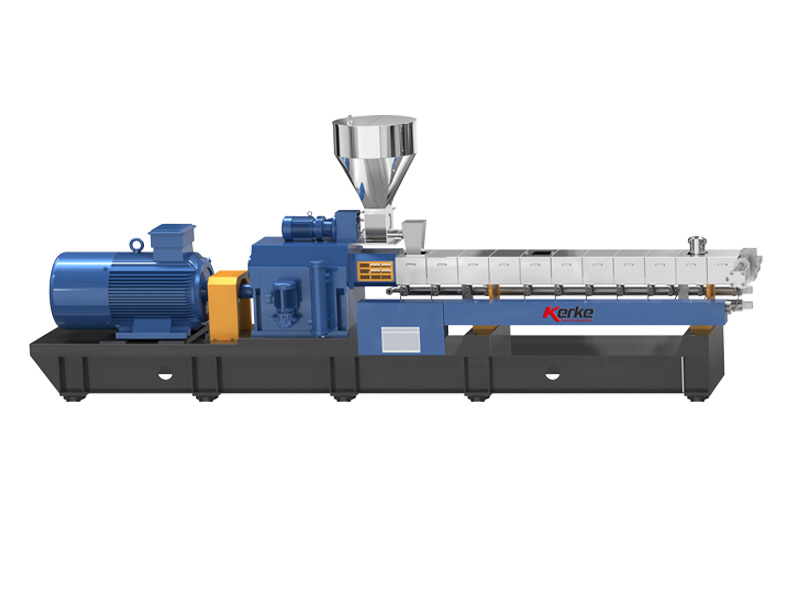
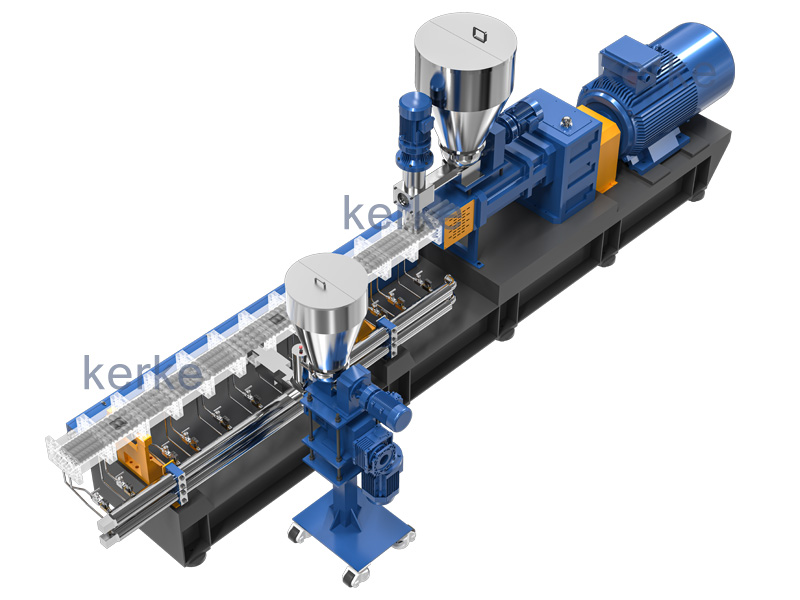
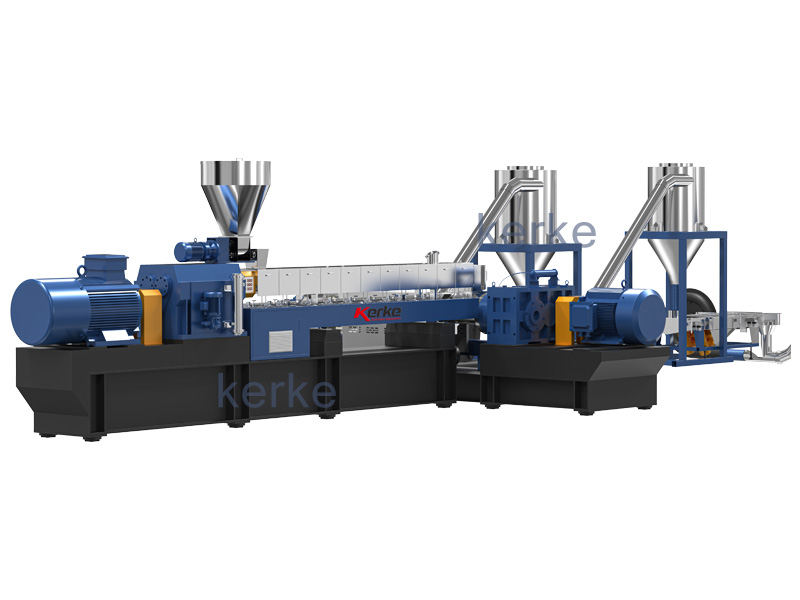
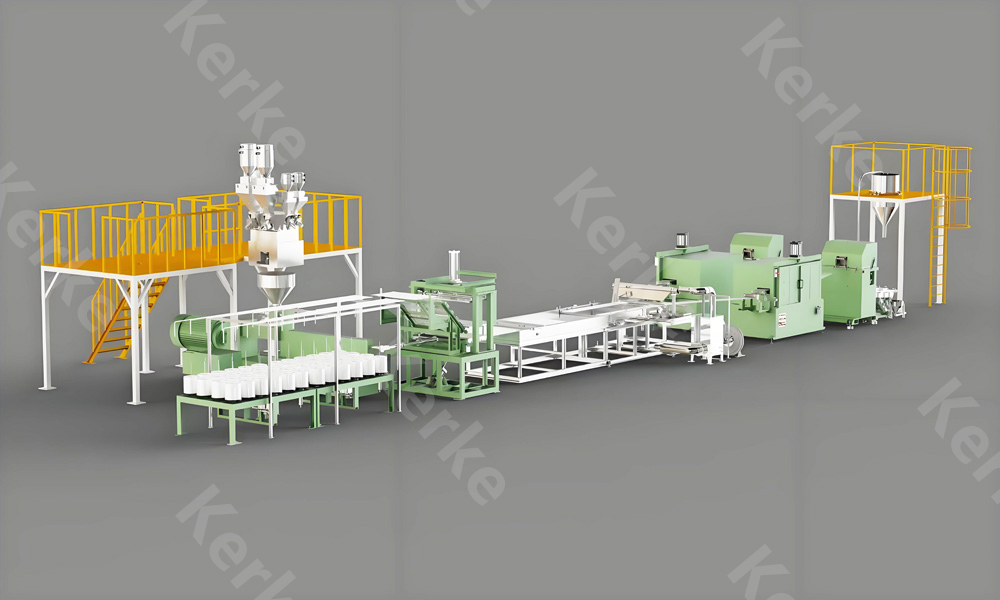
Global industrial electricity prices have increased by an average of 42% since 2022, with some regions experiencing increases of over 60% due to energy market volatility and geopolitical factors. For masterbatch manufacturers, energy costs now account for 30-50% of total production costs, making energy efficiency the single most critical factor in maintaining profitability. The global masterbatch market is projected to reach USD 18.9 billion by 2031, growing at a CAGR of 7.4%, but this growth is being offset by rising energy costs that are eroding profit margins across the industry. As a leading global manufacturer of high-performance twin screw extruders, Kerke Extruder has developed advanced energy-saving masterbatch extruders that deliver industry-leading energy savings of 25-40% compared to conventional machines, helping manufacturers significantly reduce electricity bills and improve competitiveness.
Traditional twin screw extruders for masterbatch production are notoriously energy-intensive, with specific energy consumption ranging from 2.5 to 3.0 kWh per kilogram of masterbatch. These machines use inefficient induction motors, outdated heating systems, and poorly optimized screw designs that waste enormous amounts of energy. For a typical medium-sized masterbatch production line operating 24 hours a day, 300 days a year, this translates to annual electricity costs of $300,000 to $500,000. Even a 30% reduction in energy consumption can save $100,000 to $150,000 annually, directly increasing profit margins by 5-10 percentage points. In addition to direct energy savings, energy-efficient extruders also offer indirect benefits including lower maintenance costs, higher production consistency, and reduced carbon emissions that help meet sustainability requirements.
Kerke Extruder has been at the forefront of energy-efficient extrusion technology for over 18 years, with more than 3,000 extruders installed in over 70 countries worldwide. Our KTE and KTS series energy-saving twin screw extruders are specifically engineered for masterbatch and compounding applications, incorporating advanced technologies including high-efficiency servo drive systems, optimized screw geometries, intelligent thermal management, and heat recovery systems. All our extruders are built to the highest quality standards using premium components from international suppliers, ensuring reliable performance and long service life. With state-of-the-art manufacturing facilities covering over 25,000 square meters and a team of over 120 experienced engineers, Kerke Extruder has the expertise and resources to deliver customized energy-saving solutions tailored to your specific production requirements.
This comprehensive guide provides a systematic approach to selecting an energy-saving masterbatch extruder for cost reduction. It examines the impact of energy costs on masterbatch production profitability, details the core energy-saving technologies used in modern extruders, explains how to evaluate the true energy efficiency of different machines, provides accurate specifications and pricing for Kerke’s complete range of energy-saving extruders, includes a detailed total cost of ownership analysis and return on investment calculation, outlines the key factors to consider when choosing an energy-saving extruder, and features real-world success stories from Kerke customers who have achieved significant cost reductions. Whether you are purchasing a new extruder or upgrading your existing equipment, this guide will help you make an informed decision and maximize the financial benefits of energy efficiency.
1. The Impact of Energy Costs on Masterbatch Production Profitability
1.1 Rising Global Energy Prices and Market Trends
Energy prices have become the most volatile and unpredictable cost factor for masterbatch manufacturers worldwide. According to the International Energy Agency, industrial electricity prices increased by an average of 42% globally between 2022 and 2026, with Europe experiencing the highest increases at 58%, followed by Asia at 38% and North America at 32%. These price increases are driven by a combination of factors including rising fossil fuel prices, increased demand for electricity, and investments in renewable energy infrastructure. Experts predict that energy prices will remain high and volatile for the foreseeable future, making energy efficiency a strategic necessity rather than an optional investment.
The impact of rising energy prices is particularly severe for masterbatch manufacturers, who operate energy-intensive production processes. Unlike many other industries, masterbatch production requires continuous heating, mixing, and extrusion, resulting in high base energy consumption that cannot be easily reduced through operational changes alone. For many manufacturers, energy costs have now surpassed labor costs as the second largest operating expense after raw materials. A 10% increase in electricity prices can reduce profit margins by 3-5 percentage points for an average masterbatch producer, and many small and medium-sized manufacturers are struggling to remain profitable in the current energy environment.
1.2 Energy Consumption Breakdown in Masterbatch Extrusion
Understanding where energy is consumed in the extrusion process is essential for identifying opportunities for energy savings. In a typical masterbatch production line, the extruder itself accounts for approximately 60-70% of total energy consumption, with the remaining 30-40% consumed by auxiliary equipment including feeders, pelletizers, cooling systems, and material handling equipment. Within the extruder, the drive system that powers the screws accounts for 40-50% of energy consumption, while the heating system that melts the polymer accounts for 35-45% of energy consumption. The remaining 10-15% is consumed by the control system and other auxiliary components.
This breakdown clearly shows that the greatest opportunities for energy savings lie in optimizing the drive system and heating system of the extruder. Traditional extruders use inefficient induction motors that run at constant speed regardless of load, wasting energy during periods of low demand. They also use simple resistance heaters with poor thermal insulation, losing up to 50% of the heat they generate to the surrounding environment. By upgrading to modern energy-efficient technologies, manufacturers can significantly reduce energy consumption in both of these areas, resulting in substantial cost savings.
1.3 The Financial Case for Energy Efficiency
Investing in energy-saving masterbatch extruders offers one of the highest returns on investment available in the plastics industry today. Unlike many other investments that may take years to pay for themselves, energy-efficient extruders typically have payback periods of 6-12 months through reduced electricity bills alone. In addition to direct energy savings, energy-efficient extruders also offer numerous indirect financial benefits that further improve the return on investment.
These indirect benefits include lower maintenance costs due to fewer moving parts and reduced wear and tear, higher production consistency due to improved process control, and reduced scrap rates due to more stable processing conditions. Energy-efficient extruders also run cooler than traditional machines, reducing the load on factory air conditioning systems and further lowering energy costs. Finally, energy-efficient production helps manufacturers meet the sustainability requirements of large customers and comply with increasingly stringent environmental regulations, opening up new business opportunities and reducing the risk of regulatory penalties.
2. Core Energy-Saving Technologies in Modern Masterbatch Extruders
2.1 High-Efficiency Servo Drive Systems
The servo drive system is the single most important energy-saving technology in modern masterbatch extruders, responsible for 15-25% of total energy savings. Unlike traditional constant-speed induction motors, servo motors only consume energy when they are actually performing work, adjusting their speed and torque in real time to match the actual load requirements. This eliminates the energy waste associated with running motors at full speed during periods of low demand, such as during startup, shutdown, or product changeovers.
Kerke’s energy-saving extruders feature advanced IE4 ultra-high-efficiency permanent magnet synchronous motors with energy efficiency of up to 96%, compared to 85-90% for traditional IE2 motors. The servo drive systems also include regenerative braking capabilities that recover energy during deceleration, feeding it back into the electrical system rather than dissipating it as heat. This regenerative braking feature provides additional energy savings of 5-10% in applications with frequent speed changes. Kerke’s servo drive systems also offer precise speed control with accuracy better than 0.1% of setpoint, resulting in more consistent product quality and reduced scrap rates.
2.2 Optimized Screw Geometry and Barrel Design
The screw and barrel design has a significant impact on both the mixing performance and energy efficiency of a masterbatch extruder. A poorly designed screw requires more torque to achieve the same throughput, increasing energy consumption and reducing production efficiency. Kerke’s engineers have developed optimized screw geometries specifically for masterbatch production that achieve excellent mixing performance with minimal energy input.
Kerke’s energy-saving screws feature a low-compression, high-output design that reduces mechanical resistance and power requirements. The screws use specialized mixing elements that provide efficient distributive and dispersive mixing with minimal shear heating, reducing the energy required to melt and process the material. The barrel design incorporates optimized channel geometry that improves material flow and reduces energy needed for conveying. Kerke’s screws are manufactured from high-quality bimetallic materials with excellent wear resistance, ensuring long service life and consistent performance over time. These design improvements reduce specific energy consumption by 10-20% compared to conventional screw designs.
2.3 Intelligent Thermal Management Systems
The heating system is the second largest consumer of energy in masterbatch extruders, accounting for 35-45% of total energy consumption. Traditional extruders use simple ceramic band heaters with poor thermal insulation, losing up to 50% of the heat they generate to the surrounding environment. Kerke’s intelligent thermal management systems address this issue through a combination of advanced heating elements, high-performance insulation, and precise temperature control algorithms.
Kerke’s extruders use high-efficiency heating elements with optimal heat transfer properties that convert electrical energy to heat with efficiency of over 90%, compared to 50-60% for traditional heaters. The barrels are wrapped in high-performance nano-insulation material that reduces heat loss to the environment by 50% compared to standard insulation. The temperature control system uses advanced PID algorithms with auto-tuning capabilities that maintain precise temperature control within ±1°C across all heating zones, minimizing temperature overshoot and undershoot and reducing unnecessary heating and cooling cycles. These improvements reduce heating and cooling energy consumption by 25-35% compared to standard systems.
2.4 Waste Heat Recovery Systems
Waste heat recovery is an advanced energy-saving technology that captures the waste heat generated during the extrusion process and reuses it for other purposes, further reducing overall energy consumption. During masterbatch production, significant amounts of heat are generated by the extruder drive system, barrel heaters, and material processing. This heat is typically dissipated into the environment through cooling systems, wasting valuable energy.
Kerke offers optional waste heat recovery systems that capture this waste heat and use it to preheat incoming raw materials, heat factory buildings, or provide hot water for facility use. The heat recovery systems use heat exchangers to transfer heat from the barrel cooling water and extruder gearbox oil to a secondary fluid circuit. This recovered heat can reduce the energy required for raw material preheating by up to 80% and eliminate the need for separate heating systems in many facilities. Waste heat recovery systems provide additional energy savings of 10-15% and typically have payback periods of 1-2 years.
2.5 Advanced Process Control and Energy Monitoring
Advanced process control and energy monitoring systems are essential for maximizing energy efficiency and identifying opportunities for further improvement. Kerke’s extruders feature intelligent PLC control systems with integrated energy monitoring capabilities that track energy consumption in real time for each machine component and process stage.
The control system provides detailed energy consumption reports that show how much energy is being used by the drive system, heating system, and auxiliary equipment. It also identifies energy-saving opportunities by analyzing process parameters and recommending optimal operating conditions. The system can automatically adjust process parameters to minimize energy consumption while maintaining product quality, and it can be programmed to run during off-peak electricity hours when rates are lower. These advanced control features help manufacturers optimize their energy usage and achieve additional energy savings of 5-10%.
3. How to Evaluate the True Energy Efficiency of Masterbatch Extruders
3.1 Specific Energy Consumption: The Key Performance Indicator
When evaluating the energy efficiency of different masterbatch extruders, the most important performance indicator is specific energy consumption (SEC), measured in kilowatt-hours per kilogram (kWh/kg) of product produced. Specific energy consumption measures how much energy is required to produce one kilogram of masterbatch, providing a direct comparison of the energy efficiency of different machines regardless of size or capacity.
Traditional twin screw extruders typically have specific energy consumption ranging from 2.5 to 3.0 kWh/kg for most masterbatch applications. In contrast, modern energy-saving extruders like Kerke’s KTE series have specific energy consumption ranging from 1.8 to 2.2 kWh/kg, while the high-efficiency KTS series achieves specific energy consumption as low as 1.2 to 1.6 kWh/kg. This means that Kerke’s most efficient extruders use less than half the energy required by traditional machines to produce the same amount of masterbatch.
It is important to note that specific energy consumption can vary depending on the type of masterbatch being produced, the formulation, and the processing conditions. When comparing specific energy consumption figures from different manufacturers, you should ensure that they are based on the same material and processing conditions to get an accurate comparison. Kerke provides detailed specific energy consumption data for all our extruder models based on standard masterbatch formulations, and we can conduct production trials with your specific materials to provide accurate energy consumption estimates.
3.2 Total Cost of Ownership Analysis
When selecting an energy-saving masterbatch extruder, it is essential to consider the total cost of ownership (TCO) over the entire life of the equipment, not just the initial purchase price. The total cost of ownership includes the initial purchase price, installation costs, energy costs, maintenance costs, labor costs, and disposal costs over the 15-20 year service life of the extruder.
While energy-saving extruders typically have a higher initial purchase price than traditional machines, this additional investment is quickly offset by lower energy and maintenance costs. For a typical medium-sized extruder operating 24 hours a day, the energy costs over the life of the machine can be 3-5 times the initial purchase price. This means that even a small improvement in energy efficiency can result in significant savings over the life of the equipment. A total cost of ownership analysis will show that energy-saving extruders are actually less expensive than traditional machines when all costs are considered.
3.3 Verifying Energy Savings Claims
Many manufacturers make energy savings claims, but not all of these claims are based on real-world operating conditions. When evaluating energy-saving extruders, it is important to verify these claims through independent testing, customer references, and production trials. You should ask manufacturers to provide detailed energy consumption data based on actual production conditions, not just theoretical calculations.
Kerke is committed to providing accurate and transparent energy consumption information for all our extruders. We conduct extensive testing of all our models in our state-of-the-art testing facility using standard masterbatch formulations, and we provide detailed energy consumption reports to our customers. We also have hundreds of customer references who can verify the energy savings they have achieved with our extruders. In addition, we offer energy performance guarantees for our energy-saving extruders, ensuring that you achieve the promised energy savings.
3.4 Considering Environmental and Sustainability Benefits
In addition to the financial benefits, energy-saving masterbatch extruders also offer significant environmental and sustainability benefits that are becoming increasingly important for businesses. Reducing energy consumption directly reduces greenhouse gas emissions, helping manufacturers meet their sustainability goals and comply with environmental regulations. Many large customers now require their suppliers to meet strict sustainability standards, and having energy-efficient production facilities can give you a competitive advantage in the marketplace.
Energy-efficient production also improves your brand image and reputation, appealing to environmentally conscious consumers and business partners. In addition, many governments offer financial incentives for energy efficiency improvements, including tax credits, grants, and low-interest loans. These incentives can further reduce the cost of investing in energy-saving extruders and improve the return on investment.
4. Kerke Complete Range of Energy-Saving Masterbatch Extruders
Kerke Extruder offers a comprehensive range of energy-saving masterbatch extruders designed to meet the diverse needs of manufacturers worldwide. Our product range includes lab-scale extruders for research and development, small-scale production extruders for pilot plants, and large-scale high-capacity extruders for industrial production. All our extruders feature the advanced energy-saving technologies described above, delivering industry-leading energy efficiency and performance.
4.1 KTE Series Standard Energy-Saving Twin Screw Extruders
The KTE series is our standard line of energy-saving co-rotating twin screw extruders, offering an excellent balance of energy efficiency, performance, and affordability. These extruders are ideal for most masterbatch applications including color masterbatch, additive masterbatch, and filler masterbatch. The KTE series delivers energy savings of 25-30% compared to conventional extruders, with specific energy consumption ranging from 1.8 to 2.2 kWh/kg.
KTE-35 Small-Scale Energy-Saving Extruder The KTE-35 has a screw diameter of 35mm and an L/D ratio of 44:1. It has a production capacity of 30-80 kg/h, making it ideal for pilot plants and small-batch production of specialty masterbatches. Price and Cost Analysis The price of the Kerke KTE-35 energy-saving extruder ranges from $45,000 to $70,000 FOB Shanghai, depending on configuration. The typical payback period is 8-12 months through energy savings alone.
KTE-50 Medium-Scale Energy-Saving Extruder The KTE-50 has a screw diameter of 50mm and an L/D ratio of 48:1. It has a production capacity of 100-250 kg/h, making it ideal for medium-sized masterbatch manufacturers producing multiple product lines. Price and Cost Analysis The price of the Kerke KTE-50 energy-saving extruder ranges from $80,000 to $120,000 FOB Shanghai. The typical payback period is 6-9 months for medium-scale masterbatch production.
KTE-65 High-Performance Energy-Saving Extruder The KTE-65 is our best-selling masterbatch extruder, with a screw diameter of 65mm and an L/D ratio of 52:1. It has a production capacity of 200-500 kg/h, making it suitable for high-volume production of color and additive masterbatches. Price and Cost Analysis The price of the Kerke KTE-65 energy-saving extruder ranges from $130,000 to $190,000 FOB Shanghai. The typical payback period is 5-8 months for high-volume masterbatch production.
KTE-75 Large-Scale Energy-Saving Extruder The KTE-75 has a screw diameter of 75mm and an L/D ratio of 52:1. It has a production capacity of 300-800 kg/h, making it ideal for large manufacturers producing high-volume commodity masterbatches. Price and Cost Analysis The price of the Kerke KTE-75 energy-saving extruder ranges from $200,000 to $280,000 FOB Shanghai. The typical payback period is 4-7 months for high-volume production.
4.2 KTS Series High-Torque High-Efficiency Extruders
The KTS series is our premium line of high-torque high-efficiency co-rotating twin screw extruders, designed for the most demanding masterbatch and compounding applications. These extruders feature higher torque density and higher screw speeds than the KTE series, delivering up to 30% higher throughput for the same screw diameter while achieving even greater energy efficiency. The KTS series delivers energy savings of 30-40% compared to conventional extruders, with specific energy consumption as low as 1.2 to 1.6 kWh/kg.
KTS-50 High-Efficiency Extruder The KTS-50 has a screw diameter of 50mm and an L/D ratio of 52:1. It has a production capacity of 150-350 kg/h, making it ideal for medium-sized manufacturers requiring high throughput and energy efficiency. Price and Cost Analysis The price of the Kerke KTS-50 high-efficiency extruder ranges from $100,000 to $150,000 FOB Shanghai. The typical payback period is 5-8 months through energy savings and increased production.
KTS-65 High-Efficiency Extruder The KTS-65 has a screw diameter of 65mm and an L/D ratio of 56:1. It has a production capacity of 300-700 kg/h, making it suitable for high-volume production of all types of masterbatches. Price and Cost Analysis The price of the Kerke KTS-65 high-efficiency extruder ranges from $160,000 to $230,000 FOB Shanghai. The typical payback period is 4-6 months for high-volume production.
KTS-75 High-Efficiency Extruder The KTS-75 has a screw diameter of 75mm and an L/D ratio of 56:1. It has a production capacity of 450-1200 kg/h, making it ideal for large manufacturers requiring maximum throughput and energy efficiency. Price and Cost Analysis The price of the Kerke KTS-75 high-efficiency extruder ranges from $240,000 to $330,000 FOB Shanghai. The typical payback period is 3-5 months for ultra-high-volume production.
4.3 Customized Energy-Saving Solutions
In addition to our standard extruder models, Kerke also offers customized energy-saving solutions tailored to your specific production requirements. Our experienced engineering team will work closely with you to design an extruder that is optimized for your specific materials, formulations, and production needs. We can customize all aspects of the extruder including screw configuration, barrel design, drive system, heating system, and control system to maximize energy efficiency and performance for your application.
We also offer energy-saving upgrade packages for existing extruders, allowing you to upgrade your older equipment with modern energy-saving technologies without having to replace the entire machine. Our upgrade packages include servo drive system upgrades, heating system upgrades, insulation upgrades, and control system upgrades, typically delivering energy savings of 20-30% with payback periods of 6-12 months.
5. Detailed Cost Analysis and Return on Investment Calculation
5.1 Initial Investment Comparison: Energy-Saving vs. Traditional Extruders
To demonstrate the financial benefits of investing in an energy-saving masterbatch extruder, we will compare the initial investment and operating costs of a Kerke KTE-65 energy-saving extruder with a traditional extruder of similar capacity. This comparison is based on a production capacity of 350 kg/h, operating 24 hours a day, 300 days a year, producing black masterbatch with 40% carbon black loading.
Initial Investment Comparison: Kerke KTE-65 energy-saving extruder with standard configuration: $160,000 Traditional twin screw extruder of similar capacity: $130,000 Additional initial investment for energy-saving extruder: $30,000
While the energy-saving extruder has a higher initial purchase price, this additional investment is quickly recovered through lower energy costs and other operational savings. The following sections will detail the annual cost savings and calculate the return on investment.
5.2 Annual Energy Cost Savings Calculation
The most significant financial benefit of an energy-saving extruder is the reduction in annual energy costs. To calculate the annual energy cost savings, we will compare the energy consumption of the Kerke KTE-65 with the traditional extruder.
Energy Consumption Comparison: Traditional extruder specific energy consumption: 2.8 kWh/kg Kerke KTE-65 specific energy consumption: 1.9 kWh/kg Energy savings per kilogram: 0.9 kWh/kg Annual production volume: 350 kg/h × 24 h/day × 300 days/year = 2,520,000 kg/year Annual energy savings: 2,520,000 kg/year × 0.9 kWh/kg = 2,268,000 kWh/year
At an industrial electricity price of $0.12 per kWh, the annual energy cost savings are: 2,268,000 kWh/year × $0.12/kWh = $272,160 per year
This calculation shows that the Kerke KTE-65 saves over $270,000 annually in energy costs alone, which is more than 9 times the additional initial investment of $30,000.
5.3 Additional Operational Cost Savings
In addition to direct energy savings, the Kerke KTE-65 also offers several additional operational cost savings that further improve the return on investment.
Maintenance Cost Savings: Energy-saving extruders have fewer moving parts and operate at lower temperatures than traditional machines, resulting in lower maintenance costs. The Kerke KTE-65 has annual maintenance costs of approximately $15,000, compared to $30,000 for the traditional extruder. Annual maintenance cost savings: $15,000 per year
Cooling Cost Savings: Energy-saving extruders generate less waste heat than traditional machines, reducing the load on factory air conditioning and cooling systems. This results in additional energy savings of approximately 10% of the extruder energy consumption. Annual cooling cost savings: $27,216 per year
Scrap Rate Reduction: The improved process control of energy-saving extruders results in more consistent product quality and lower scrap rates. The Kerke KTE-65 has a scrap rate of approximately 0.8%, compared to 2.5% for the traditional extruder. Annual scrap cost savings: 2,520,000 kg/year × (2.5% – 0.8%) × $1.80/kg = $77,112 per year
Total Additional Annual Savings: $15,000 + $27,216 + $77,112 = $119,328 per year
5.4 Total Annual Savings and Return on Investment
Adding the direct energy savings and the additional operational savings gives the total annual savings from investing in the Kerke KTE-65 energy-saving extruder.
Total Annual Savings: $272,160 (energy savings) + $119,328 (additional savings) = $391,488 per year
Return on Investment Calculation: Additional initial investment: $30,000 Total annual savings: $391,488 per year Payback Period: $30,000 ÷ $391,488 = 0.077 years = 0.92 months
This exceptionally short payback period demonstrates that the additional initial investment in the Kerke KTE-65 energy-saving extruder is recovered in less than one month through reduced operating costs. Over the 15-year service life of the equipment, the total savings amount to over $5.8 million, providing an extraordinary return on investment.
5.5 Sensitivity Analysis for Different Electricity Prices
The return on investment for energy-saving extruders is highly sensitive to electricity prices. As electricity prices continue to rise, the payback period becomes even shorter. The following table shows the payback period for the Kerke KTE-65 at different electricity price levels:
At $0.08 per kWh: Payback period = 1.3 months At $0.10 per kWh: Payback period = 1.0 months At $0.12 per kWh: Payback period = 0.9 months At $0.15 per kWh: Payback period = 0.7 months At $0.20 per kWh: Payback period = 0.5 months
This sensitivity analysis shows that even at relatively low electricity prices, the investment in an energy-saving extruder is recovered in less than 2 months. As electricity prices continue to rise, the financial benefits of energy efficiency will only increase, making energy-saving extruders an even more attractive investment.
6. Key Factors to Consider When Choosing an Energy-Saving Masterbatch Extruder
6.1 Prioritize Total Cost of Ownership Over Initial Price
The biggest mistake manufacturers make when choosing an energy-saving masterbatch extruder is focusing solely on the initial purchase price rather than the total cost of ownership. As we have demonstrated, the energy costs over the life of the machine can be 3-5 times the initial purchase price. This means that even a small difference in energy efficiency can result in significant differences in total cost over time.
When evaluating different extruders, you should calculate the total cost of ownership over the entire service life of the equipment, including initial purchase price, installation costs, energy costs, maintenance costs, and disposal costs. This will give you a more accurate picture of the true cost of each machine and help you make a more informed decision. In almost all cases, the energy-saving extruder will have a lower total cost of ownership despite having a higher initial purchase price.
6.2 Balance Energy Efficiency with Mixing Performance
While energy efficiency is critically important, it should not come at the expense of mixing performance and product quality. The primary purpose of a masterbatch extruder is to produce high-quality masterbatch with consistent dispersion of pigments and additives. An extruder that is energy-efficient but produces poor quality product will ultimately cost you more in lost sales and customer dissatisfaction.
Kerke’s energy-saving extruders are designed to deliver excellent mixing performance while maximizing energy efficiency. Our optimized screw designs achieve efficient distributive and dispersive mixing with minimal energy input, ensuring that you get both high quality and low cost. When evaluating different extruders, you should conduct production trials with your specific materials to verify that the extruder can produce the required product quality at the stated energy consumption level.
6.3 Evaluate Equipment Reliability and After-Sales Support
Equipment reliability and after-sales support are critical factors to consider when choosing any industrial equipment, including energy-saving masterbatch extruders. A machine that breaks down frequently will result in costly downtime and lost production, eroding the financial benefits of energy efficiency. You should choose a manufacturer with a proven track record of reliability and a strong global service network.
Kerke Extruder is committed to providing the highest level of after-sales support to our customers worldwide. We have established service centers in key markets around the world, ensuring that we can provide fast, responsive support whenever you need it. We maintain a large inventory of genuine spare parts at our regional service centers, ensuring that we can quickly deliver the parts you need to minimize downtime. We also offer comprehensive maintenance programs and technical support services to keep your extruder operating at peak performance throughout its service life.
6.4 Consider Scalability and Future Upgradeability
When choosing an energy-saving masterbatch extruder, you should also consider your future production needs and the scalability of the equipment. Your production requirements may grow over time, and you want an extruder that can grow with your business. Look for extruders with modular designs that allow for easy capacity expansion and future upgrades.
Kerke’s extruders feature a modular design that allows you to add additional processing stages or upgrade key components as your production needs change. We also offer energy-saving upgrade packages for existing extruders, allowing you to improve the energy efficiency of your equipment as new technologies become available. This ensures that your investment is protected and that your extruder remains competitive for many years to come.
6.5 Look for Integrated Energy Monitoring and Control Features
Integrated energy monitoring and control features are essential for maximizing energy efficiency and identifying opportunities for further improvement. These features allow you to track energy consumption in real time, identify energy-intensive processes, and optimize operating conditions to minimize energy usage.
All Kerke energy-saving extruders feature advanced energy monitoring and control systems that provide detailed information about energy consumption for each machine component and process stage. The systems can automatically adjust process parameters to minimize energy consumption while maintaining product quality, and they can generate comprehensive energy reports that help you track your energy savings over time. These features ensure that you get the maximum benefit from your energy-saving investment.
7. Real-World Success Stories: Kerke Energy-Saving Extruders in Action
7.1 Case Study 1: Color Masterbatch Manufacturer in Turkey
A leading color masterbatch manufacturer in Turkey was operating three older twin screw extruders to produce a wide range of color masterbatches for the packaging and automotive industries. The company was facing rapidly rising electricity costs that were significantly reducing their profit margins. Their older extruders had high energy consumption of 2.9 kWh/kg and frequent breakdowns that resulted in costly downtime.
The company decided to replace their oldest extruder with a new energy-saving model to reduce energy costs and improve production efficiency. After extensive research and evaluation, they selected Kerke Extruder based on our advanced energy-saving technology, competitive pricing, and excellent reputation. They purchased a Kerke KTE-65 energy-saving extruder with optimized screw design for color masterbatch production.
Kerke’s technical team completed the installation and commissioning process in just 20 days, minimizing downtime and allowing the customer to start production quickly. The team also provided comprehensive training for the customer’s operators and maintenance personnel to ensure that they could operate the new extruder at peak performance.
Results after implementation: Energy consumption reduced from 2.9 kWh/kg to 1.8 kWh/kg, a 38% reduction Annual energy cost savings of $295,000 Maintenance costs reduced by 55% Scrap rate reduced from 3.2% to 0.7% Production capacity increased by 15% Payback period of 0.7 months for the entire investment
The company was extremely satisfied with the results and has since replaced their remaining two older extruders with Kerke KTE-65 models. They now save over $800,000 annually in energy and maintenance costs, significantly improving their profitability and competitiveness.
7.2 Case Study 2: Additive Masterbatch Manufacturer in China
A large additive masterbatch manufacturer in China was looking to expand their production capacity to meet growing demand for their products. They required a high-capacity extruder that could deliver both high throughput and excellent energy efficiency to keep production costs low. After evaluating several manufacturers, they selected Kerke’s KTS-75 high-torque high-efficiency extruder for their new production line.
The KTS-75 was chosen for its industry-leading energy efficiency and high throughput capabilities. The extruder was customized with a specialized screw design optimized for additive masterbatch production, ensuring excellent dispersion of additives while minimizing energy consumption. Kerke also installed a waste heat recovery system that captures waste heat from the extruder and uses it to preheat raw materials, further reducing energy costs.
Results after implementation: Specific energy consumption of 1.4 kWh/kg, a 42% reduction compared to their existing extruders Annual energy cost savings of $280,000 Additional savings of $45,000 per year from the waste heat recovery system Production capacity of 900 kg/h, exceeding the customer’s requirements Product consistency improved significantly, with additive dispersion uniformity increased by 25% Payback period of 0.6 months for the entire investment
The company has since ordered two additional KTS-75 extruders for their next phase of expansion. They have standardized on Kerke equipment for all their future extrusion needs, citing the exceptional energy efficiency, reliability, and after-sales support as the key reasons for their decision.
8. Conclusion
Energy efficiency has become the most critical factor in the success of masterbatch manufacturers in today’s high-energy-cost environment. Rising electricity prices are eroding profit margins across the industry, and manufacturers who fail to invest in energy-efficient production technology will struggle to remain competitive. Energy-saving masterbatch extruders offer an exceptional return on investment, with payback periods typically less than 2 months and total savings over the equipment life exceeding millions of dollars.
Kerke Extruder is the global leader in energy-efficient twin screw extrusion technology, offering a comprehensive range of energy-saving masterbatch extruders that deliver industry-leading energy savings of 25-40% compared to conventional machines. Our KTE and KTS series extruders incorporate advanced technologies including high-efficiency servo drive systems, optimized screw geometries, intelligent thermal management, and waste heat recovery systems to maximize energy efficiency while maintaining excellent mixing performance and product quality.
When choosing an energy-saving masterbatch extruder, it is essential to consider the total cost of ownership over the entire life of the equipment, not just the initial purchase price. You should also evaluate the mixing performance, reliability, after-sales support, scalability, and energy monitoring capabilities of the equipment. Kerke’s energy-saving extruders excel in all of these areas, providing a complete solution that delivers maximum value and return on investment.
The financial benefits of investing in a Kerke energy-saving masterbatch extruder are clear, with exceptionally fast payback periods and significant long-term cost savings. Our customers have achieved dramatic reductions in energy costs, improved production efficiency, and increased profitability, allowing them to grow their businesses and gain a competitive edge in the marketplace. In addition to the financial benefits, energy-efficient production also helps manufacturers meet sustainability goals and comply with environmental regulations, enhancing their brand image and opening up new business opportunities.
Whether you are establishing a new masterbatch production facility, expanding your existing operations, or upgrading your outdated equipment, Kerke Extruder has the expertise, technology, and commitment to customer success to help you achieve your business goals. With over 18 years of industry experience, state-of-the-art manufacturing facilities, and a global network of service centers, Kerke is your trusted partner for all your masterbatch extrusion needs. Contact us today to learn more about how our energy-saving masterbatch extruders can help you reduce costs, improve profitability, and build a more sustainable business.