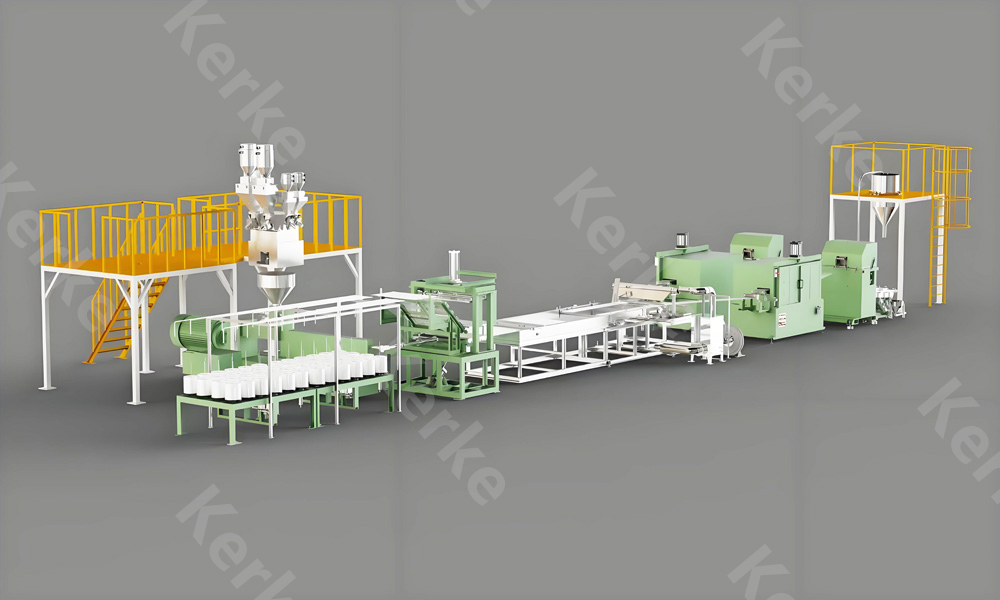
The global transparent masterbatch market is experiencing robust growth, driven by surging demand from high-end food packaging, cosmetic containers, medical devices, optical films, and automotive interior components. Unlike conventional color masterbatch or filler masterbatch, transparent masterbatch imposes extremely strict requirements on optical clarity, gel-free performance, color consistency, and thermal stability. Even tiny agglomerates, undispersed pigments, or minor resin degradation can cause visible fish eyes, haze, or yellowing in final plastic products, directly leading to customer rejection and economic losses. For masterbatch manufacturers, investing in a high-performance twin screw extruder is the core foundation for producing premium transparent masterbatch and gaining competitive advantages in the high-end market.
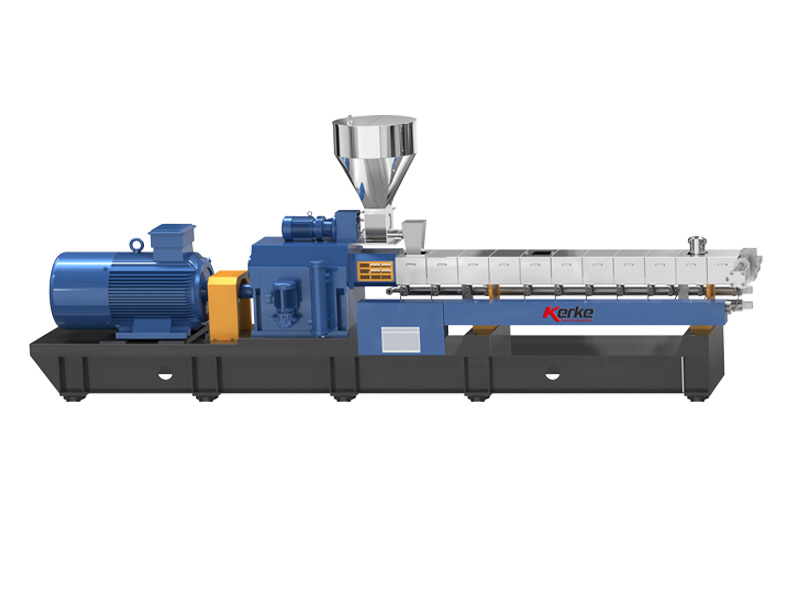
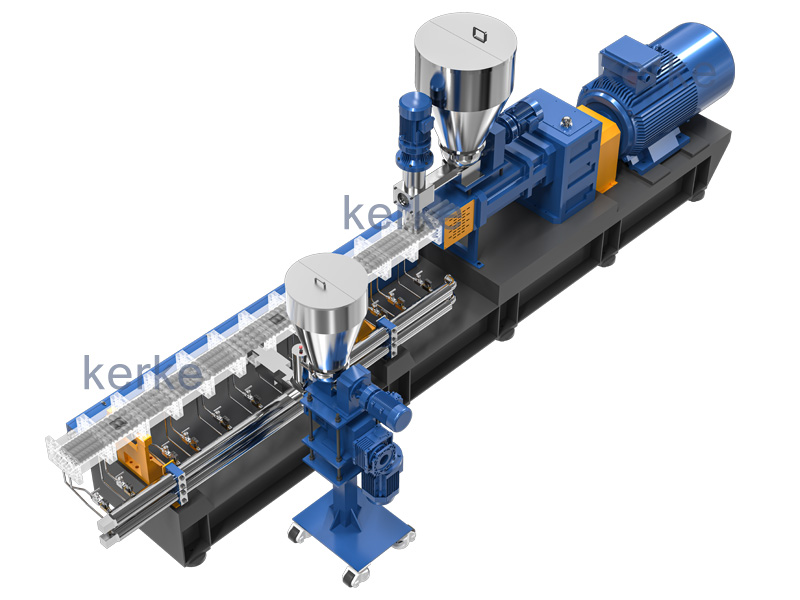
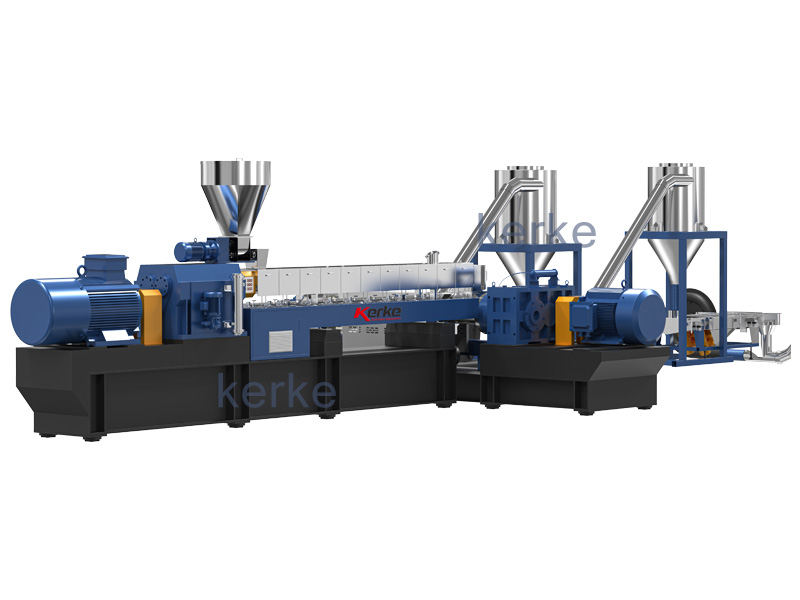
As a professional manufacturer specializing in twin screw extrusion technology with decades of R&D and production experience, Kerke has developed the KTE series co-rotating parallel twin screw extruders specifically optimized for transparent masterbatch production. Ranging from laboratory R&D models to large-scale industrial production lines, Kerke provides targeted solutions for different production scales and formulation requirements, helping global customers achieve high-efficiency, high-quality, and low-cost production of transparent masterbatch. This guide will systematically explain the core quality requirements of transparent masterbatch production, analyze the key technical indicators for selecting extruders, introduce Kerke’s targeted equipment solutions with detailed cost-benefit analysis, summarize common selection mistakes, and provide practical purchasing suggestions, covering all information that buyers need to know.
1. Core Quality Requirements for Transparent Masterbatch Production
Transparent masterbatch is a high value-added masterbatch product, usually composed of carrier resin, transparent pigments/dyes, nucleating agents, lubricants, and other functional additives. Its production process has much stricter requirements on equipment and process control than ordinary masterbatch. Before selecting an extruder, it is necessary to first clarify the core quality objectives of transparent masterbatch production.
1.1 High Optical Clarity and Gel-Free Performance
The most core indicator of transparent masterbatch is optical clarity, which requires that the masterbatch has good compatibility with the base resin after dilution, and will not reduce the light transmittance of the product or produce haze. The biggest enemy of transparency is gel particles (also known as fish eyes or crystal points), which are usually caused by undispersed pigment agglomerates, locally degraded resin, or impurity mixed in the production process. Even gel particles with a diameter of only 10μm will form obvious visual defects on thin films or transparent injection parts, making products unqualified for high-end applications. Therefore, the extrusion system must have sufficient dispersive mixing capacity to completely break all agglomerates, while avoiding excessive shear that causes resin degradation and produces new gel impurities.
1.2 Excellent Color Uniformity and Batch Stability
Transparent masterbatch is mostly used for appearance parts, and color consistency is a rigid requirement. Even tiny color difference between batches will cause customer complaints and returns. To ensure color stability, it is necessary to achieve uniform distribution of pigments and additives on the micro level, and ensure that the formulation ratio of each batch is highly consistent. This puts forward high requirements for the feeding accuracy of the extrusion system, the stability of the extrusion process, and the distributive mixing performance of the screw. High-quality transparent masterbatch production usually requires that the color difference ΔE between batches is controlled below 1.0, and high-end products even require ΔE < 0.5, which cannot be achieved by ordinary single screw extruders or low-end twin screw extruders.
1.3 Precise Control of Thermal Degradation of Carrier Resins
Common carrier resins for transparent masterbatch include PP, PE, PET, PC, PMMA, etc. Most of these resins are sensitive to high temperature. If the material stays in the extruder for too long or the local temperature is too high, it will cause thermal degradation of the resin, resulting in yellowing, black spots, and decline of mechanical properties. For transparent products, slight yellowing will be very obvious visually, directly reducing the product grade. Therefore, the extruder must have precise temperature control capability to ensure uniform melt temperature without local overheating. At the same time, the screw design should minimize material residence time and avoid dead corners where materials stay for a long time, so as to reduce the risk of thermal degradation.
1.4 Uniform Dispersion of Functional Additives
Transparent masterbatch usually contains various functional additives, such as nucleating agents to improve transparency, antioxidants to improve thermal stability, light stabilizers for weather resistance, antistatic agents, and anti-fog agents. The addition amount of these additives is usually very low, but they have a great impact on product performance. If the dispersion is uneven, it will cause fluctuations in product performance, and even produce local defects. For example, uneven dispersion of nucleating agents will lead to different crystal sizes, resulting in differences in transparency and mechanical properties of different parts of the product. Therefore, the extrusion system needs to have excellent distributive mixing performance to ensure that trace additives can be uniformly dispersed in the entire resin matrix.
1.5 Compliance with Food Contact and Safety Standards
A large proportion of transparent masterbatch is used in food packaging, medical devices and other fields that require strict safety and hygiene. This requires that the production equipment must meet relevant food contact material standards, such as EU 10/2011 and US FDA regulations. The materials in contact with materials in the extruder, such as screw, barrel, die head, etc., must not precipitate harmful substances, and the equipment design should avoid dead corners that are easy to accumulate materials and cause mildew or deterioration. In addition, the production process should avoid introducing impurities to ensure the purity and safety of the masterbatch products.
2. Key Factors to Evaluate When Selecting a Twin Screw Extruder
Among all plastic processing equipment, co-rotating twin screw extruders are the first choice for transparent masterbatch production due to their excellent mixing performance, flexible process adjustment, and stable production capacity. However, the performance of twin screw extruders from different manufacturers varies greatly. When selecting equipment, it is necessary to focus on the following core technical indicators, combined with their own formulation characteristics and production needs for comprehensive evaluation.
2.1 Screw Configuration: Balancing Dispersion Efficiency and Gentle Shear
The screw is the core component that determines the mixing effect, and its configuration directly affects the dispersion quality and product transparency of transparent masterbatch. For transparent masterbatch production, the screw design needs to balance two contradictory requirements: on the one hand, it needs sufficient shear force to break pigment and additive agglomerates to achieve nano-level dispersion; on the other hand, it cannot have too strong shear, otherwise excessive shear heat will cause thermal degradation of the resin, leading to yellowing and black spots.
High-quality twin screw extruders for transparent masterbatch usually adopt a modular screw design, which can freely combine different types of elements according to formulation characteristics. The length-diameter ratio (L/D) is usually between 40:1 and 48:1, which provides sufficient length for material plasticization, mixing and devolatilization. The kneading block elements are mainly 45° staggered angle, with appropriate amount of 30° distributive mixing elements, which can achieve uniform dispersion without generating excessive local shear heat. At the same time, the screw should have good self-cleaning performance to avoid material retention and degradation in the gaps. Kerke’s specially optimized screw profile for transparent masterbatch can improve dispersion uniformity by more than 30% compared with ordinary screws, while reducing shear heat generation by about 20%, effectively avoiding product yellowing problems.
2.2 High-Precision Temperature Control System
Temperature is the most critical process parameter affecting the quality of transparent masterbatch. Slight temperature fluctuations will cause changes in resin melt viscosity and pigment dispersion state, and even cause thermal degradation. Therefore, the temperature control accuracy of the extruder is a key indicator that cannot be ignored.
Professional transparent masterbatch extruders usually adopt multi-zone independent PID temperature control system, with each barrel section independently heated and cooled, and the temperature control accuracy can reach ±0.5°C or even higher. The heating system adopts high-efficiency ceramic heating rings or cast aluminum heaters, which have uniform heating and fast temperature response. The cooling system adopts forced water cooling or air cooling, which can quickly reduce the temperature when it exceeds the set value, avoiding overheating degradation of materials. In addition, the melt temperature and melt pressure at the die head should be monitored in real time to grasp the state of the material in time. Kerke KTE series extruders are equipped with imported high-precision temperature control modules, with temperature sampling frequency up to 10 times per second, which can stably control the melt temperature fluctuation within ±1°C, ensuring consistent product quality between different batches.
2.3 Efficient Devolatilization and Degassing System
Moisture and low-molecular volatile substances in raw materials are important causes of bubbles, pores and silver streaks in transparent masterbatch, which seriously damage optical clarity. If the volatile gas cannot be discharged in time, it will remain in the melt and form bubbles after granulation and cooling, which will directly lead to product scrapping. Therefore, an efficient devolatilization system is an essential configuration for transparent masterbatch extruders.
High-performance twin screw extruders are usually equipped with at least two-stage exhaust ports: one natural exhaust port and one vacuum exhaust port. For formulations with high moisture or volatile content, 2-3 stages of vacuum exhaust are required. The vacuum degree should reach -0.095MPa or higher to ensure that moisture and volatiles can be fully removed. The screw design of the exhaust section is also very particular. Usually, large-lead conveying elements are used to reduce the material filling degree in the exhaust section, increase the surface area of the melt exposed to vacuum, and improve devolatilization efficiency. At the same time, the exhaust port structure should be reasonably designed to avoid material overflow and blockage of the exhaust pipeline. Kerke’s optimized exhaust system design can increase devolatilization efficiency by more than 40% compared with ordinary structures, completely solve the bubble problem of transparent masterbatch, and ensure crystal-clear product appearance.
2.4 Wear-Resistant and High-Purity Barrel & Screw Materials
Transparent masterbatch has extremely high requirements for product purity. Any tiny impurity will form visible defects on transparent products. If the screw and barrel are poorly wear-resistant, metal debris will be mixed into the material during long-term operation, forming black spot impurities, which will seriously affect product quality. At the same time, worn screw and barrel will lead to increased gap, decreased plasticizing capacity and unstable extrusion pressure, which will affect product consistency.
Therefore, high-quality transparent masterbatch extruders must use wear-resistant and corrosion-resistant high-quality materials for the screw and barrel. The barrel usually adopts bimetallic lining, and the inner layer is made of tungsten-cobalt alloy with high hardness (HRC 58-62), which has excellent wear resistance and service life 3-5 times that of ordinary nitrided steel. The screw surface is treated by nitriding or spray welding alloy, with high surface finish, which is not easy to hang materials and cause degradation. For food-grade transparent masterbatch production, it is also necessary to ensure that the material meets food contact safety standards and does not precipitate harmful substances. All Kerke KTE series extruders can be equipped with premium bimetallic screw and barrel according to customer needs, which can significantly extend equipment service life and reduce impurity risks.
2.5 High-Accuracy Gravimetric Feeding System
The accuracy of raw material ratio directly determines the color stability and performance consistency of transparent masterbatch. Since the addition amount of pigments and functional additives in transparent masterbatch is usually very low, sometimes only a few thousandths, slight fluctuations in feeding amount will cause obvious changes in product color and performance.
Volumetric feeders commonly used in low-end equipment have large errors and are easily affected by material bulk density and particle size, with feeding accuracy usually only ±2% or even worse, which cannot meet the requirements of transparent masterbatch production. Professional transparent masterbatch production lines must use gravimetric feeding systems, which measure the actual weight of materials in real time and automatically adjust the screw speed to ensure accurate feeding ratio, with accuracy up to ±0.2% or higher. For multi-component formulations, multiple gravimetric feeders can be configured for main resin, pigment, additive, etc., to achieve precise control of the entire formula. Kerke cooperates with international well-known feeding system brands to provide high-precision multi-component feeding solutions, ensuring stable formula ratio and greatly reducing batch color difference.
2.6 Intelligent Process Control and Data Management
Modern transparent masterbatch production has higher and higher requirements for quality traceability and production management. The intelligent level of the control system directly affects production efficiency and quality stability.
High-performance twin screw extruders are usually equipped with industrial-grade PLC control systems and large-size touch screen human-machine interfaces, which can intuitively display all process parameters such as temperature, pressure, screw speed, torque, and feeding speed. The system can store hundreds of sets of production formulas. When switching products, you only need to call the corresponding formula with one key, without resetting parameters one by one, which greatly improves product switching efficiency and reduces operation errors. The system also has complete data recording and export functions, which can save production process data in real time and generate quality reports, facilitating product quality traceability and production data analysis. Advanced systems also support remote diagnosis functions. Engineers can remotely check the equipment status through the network, quickly troubleshoot and solve problems, and reduce downtime losses. Kerke’s intelligent control system fully meets the needs of modern production management and can be connected with the customer’s MES system to realize digital production management.
2.7 Matched Pelletizing System Options
The pelletizing method not only affects the appearance and size of masterbatch particles, but also affects the subsequent processing performance and transparency of the product. Common pelletizing methods for twin screw extruders include strand pelletizing, air-cooled die-face pelletizing, and underwater pelletizing.
Strand pelletizing is the most traditional and low-cost method, suitable for most general-purpose masterbatches, but it is prone to particle burrs and irregular shapes, and the melt is easy to oxidize when contacting air, which slightly affects transparency. Air-cooled die-face pelletizing has higher production efficiency and good particle appearance, but it is not suitable for materials with low melting point and easy adhesion. Underwater pelletizing is the most recommended pelletizing method for high-end transparent masterbatch. The melt is cut into particles in water and cooled rapidly, with smooth and rounded particle surface, uniform size, no dust and burrs, and the product has good fluidity in subsequent processing, uniform plasticization, and better transparency of finished products. Although the initial investment of underwater pelletizing system is higher, it can significantly improve product grade and selling price, and the cost can be recovered quickly. Kerke can provide various pelletizing system solutions, and professional engineers will recommend the most suitable pelletizing method according to the customer’s material characteristics and product requirements.
3. Kerke Twin Screw Extruder Solutions for Transparent Masterbatch
Combined with years of technical accumulation in the masterbatch industry and in-depth understanding of transparent masterbatch production technology, Kerke has launched a full range of KTE series co-rotating twin screw extruder solutions for different scenarios such as laboratory R&D, medium and small batch production, and large-scale industrial manufacturing. All models are optimized for the process characteristics of transparent masterbatch, which can help customers achieve high-quality, high-efficiency and low-cost production.
3.1 KTE-20 Laboratory Twin Screw Extruder – R&D and Small-Batch Trial Production
The KTE-20 is a compact laboratory twin screw extruder specially designed for formulation research and development, new product testing and small-batch customized production. It is very suitable for R&D departments of masterbatch enterprises, university laboratories and research institutes. Although the equipment is small in size, it has all the core functions of industrial-grade twin screw extruders, which can truly simulate the production state of large machines, and the experimental data has good amplification reference value.
Technical Specifications: Screw diameter is 20mm, standard length-diameter ratio is 40:1, maximum screw speed is 600rpm, production capacity ranges from 5kg/h to 20kg/h. It is equipped with 8 independent heating zones, high-precision PID temperature control with accuracy of ±0.5°C. Standard configuration includes volumetric feeder and strand pelletizing system, and gravimetric feeder and underwater pelletizing can be optionally configured. It has two-stage exhaust function, which can meet the degassing requirements of most transparent formulations. The control system adopts PLC + touch screen, supporting formula storage and data export functions. The whole machine covers a small area and can be placed on a standard laboratory bench.
Price and Cost Analysis: The FOB Nanjing price of Kerke KTE-20 standard configuration ranges from $18,000 to $28,000, and the specific price varies according to optional configurations such as feeding method, pelletizing method and vacuum system. In terms of operating costs, the total installed power of the equipment is about 7.5kW, and the actual operating power is about 5kW. Calculated by 2000 hours of operation per year and industrial electricity price of $0.1/kWh, the annual electricity cost is only about $1,000. The equipment only needs 1 operator, and the annual labor cost is low. The annual maintenance cost including wearing parts replacement is about $800. For R&D scenarios, using KTE-20 for formula testing only consumes a few kilograms of raw materials per experiment, which saves more than 90% of raw material costs compared with using production-scale equipment for testing. Calculated by 100 formula tests per year, only the raw material cost can save more than $20,000. In addition, independent R&D can greatly shorten the new product launch cycle and seize market opportunities in advance. The investment can usually be recovered within 1-2 years.
3.2 KTE-36B Medium-Scale Compounding Extruder – Versatile Production
The KTE-36B is a medium-sized twin screw extruder with both R&D and small-batch production capabilities, suitable for small and medium-sized masterbatch manufacturers and enterprises with multiple product varieties and small single-batch output. This model balances performance, output and investment cost, and is the most cost-effective choice for producing high-end transparent masterbatch with multiple varieties and small batches.
Technical Specifications: Screw diameter is 35.6mm, standard length-diameter ratio is 40:1, and can be customized to 44:1. It is equipped with high-torque hardened gear reducer, with torque grade up to 10N·m/cm³, which can stably process high-fill and high-viscosity formulations. Production capacity ranges from 20kg/h to 100kg/h. It is equipped with main feeder + side feeder as standard, which can add fillers and additives separately. Two-stage vacuum exhaust system ensures sufficient devolatilization. Various pelletizing methods are optional. The control system has complete functions, supporting formula storage, fault alarm and remote diagnosis.
Price and Cost Analysis: The FOB Nanjing price of Kerke KTE-36B standard configuration ranges from $25,000 to $35,000. If configured with high-precision gravimetric feeding system and underwater pelletizing system, the price is about $45,000 to $55,000. In terms of operating costs, the average operating power is about 18kW, and the annual electricity cost is about $10,800 calculated by 6000 hours of operation per year. Each production line is equipped with 2 operators per shift, and the annual labor cost is about $30,000 for two-shift production. The annual maintenance cost is about $2,500. In terms of revenue, taking the production of ordinary transparent PP masterbatch as an example, with an annual output of 300 tons, the net profit per ton is about $300, and the annual net profit is $90,000. If producing high value-added special transparent masterbatch, the profit per ton can reach $800 or more, and the annual profit is more considerable. The static investment payback period is usually 4-8 months.
3.3 KTE-65B High-Capacity Masterbatch Extruder – Large-Scale Industrial Production
The KTE-65B is Kerke’s flagship model for large-scale industrial production, specially optimized for mass production of various masterbatch products including transparent masterbatch. This model has the advantages of high output, stable performance, low energy consumption per unit product and high degree of automation, and is the first choice for large and medium-sized masterbatch manufacturers to expand production capacity and upgrade product grade.
Technical Specifications: Screw diameter is 65mm, standard length-diameter ratio is 44:1, and optional 48:1 for special formulations. It is equipped with high-torque integral gearbox with torque grade up to 12N·m/cm³, which can run continuously for 24 hours under heavy load for a long time. Production capacity ranges from 300kg/h to 800kg/h. It supports multi-point feeding and multi-stage vacuum exhaust, which can meet the production needs of various complex transparent formulations. It can be matched with automatic feeding system, underwater pelletizing system, automatic screening and packaging system to realize fully automatic production with less manual intervention.
Price and Cost Analysis: The FOB Nanjing price of Kerke KTE-65B standard configuration ranges from $85,000 to $120,000. The high-end configuration with gravimetric multi-feeding system, underwater pelletizing line and automatic packaging system costs about $150,000 to $180,000. In terms of operating costs, the total installed power of the equipment is about 90kW, and the actual average operating power is about 60kW. Calculated by 6000 hours of annual operation and $0.1/kWh electricity price, the annual electricity cost is about $36,000. For three-shift production, 6 operators are needed, with an annual labor cost of about $90,000. The annual maintenance cost including wearing parts replacement and regular maintenance is about $8,000. In terms of raw material loss, due to the good self-cleaning performance of Kerke’s screw and low defective rate, the comprehensive loss rate is about 1.5%, while the loss rate of ordinary low-end equipment is usually 8% or even higher. Calculated by annual output of 3000 tons and raw material cost of $1200/ton, Kerke equipment can save about $234,000 in raw material costs alone every year. In terms of revenue, the annual output of 3000 tons of medium-grade transparent masterbatch can achieve a net profit of $350 per ton, with an annual net profit of about $1,050,000. Even after deducting various operating costs, the annual net profit can reach more than $900,000, and the static investment payback period is only 2-3 months. Even calculated by the most conservative data, the investment can be recovered within half a year, which has a very high return on investment.
4. Comprehensive Cost-Benefit Analysis and ROI Calculation
When purchasing extrusion equipment, many buyers only pay attention to the initial purchase price and ignore the total cost of ownership during the entire equipment life cycle, resulting in seemingly cheap purchases but actually higher long-term costs. This section will take KTE-65B as an example to conduct a comprehensive cost-benefit analysis, helping buyers establish a correct investment concept.
4.1 Initial Investment Breakdown (Taking KTE-65B as Example)
A complete transparent masterbatch production line includes not only the main extruder, but also various auxiliary equipment and supporting services. The complete initial investment mainly includes the following parts:
1. Main extruder host: including gearbox, screw barrel, heating and cooling system, frame and control cabinet, which is the core part of the investment, accounting for about 55% of the total investment, about $82,500 for standard configuration.
2. Feeding system: including main raw material feeder, additive feeder, side feeder, etc. High-precision gravimetric feeding system is recommended for transparent masterbatch production, costing about $22,000.
3. Pelletizing system: including die head, pelletizer, cooling device, screening device, etc. Taking the recommended underwater pelletizing system as an example, it costs about $35,000.
4. Auxiliary equipment: including vacuum pump, water chiller, air compressor, automatic feeding and storage system, etc., costing about $15,000.
5. Installation, commissioning and training services: Kerke provides professional on-site installation and commissioning and systematic operator training, costing about $5,500.
6. Initial spare parts package: including commonly used wearing parts such as filter screens, seals, heating rings and cutting blades, to ensure daily maintenance needs, costing about $5,000.
Calculated according to the high-end configuration of the whole line, the total initial investment is about $165,000. If the strand pelletizing scheme with lower cost is adopted, the total investment can be reduced to about $120,000.
4.2 Annual Operating Cost Calculation
Annual operating cost refers to all expenses incurred in the normal production process of the equipment, mainly including electricity, labor, maintenance, raw material loss and plant rent.
1. Electricity cost: The average operating power of the whole production line is about 75kW. Calculated by 6000 hours of operation per year and industrial electricity price of $0.1/kWh, the annual electricity cost is $45,000.
2. Labor cost: For three-shift continuous production, each shift is equipped with 2 operators, totaling 6 people. Calculated by an average annual salary of $15,000 per person, the annual labor cost is $90,000.
3. Maintenance cost: including regular replacement of wearing parts, equipment maintenance and repair costs. Kerke equipment has stable performance and low failure rate, and the annual maintenance cost is about $8,000.
4. Raw material loss: including material loss during startup and shutdown, waste products produced in the production process, and material loss during product switching. Due to the high product qualification rate and good screw self-cleaning performance of Kerke equipment, the comprehensive loss rate is about 1.5%. Calculated by annual output of 3000 tons and raw material cost of $1200/ton, the annual loss cost is $54,000. In contrast, low-end extruders usually have a loss rate of 8% or even higher due to high defective rate and more cleaning materials, and the annual loss cost is as high as $288,000, which is $234,000 more than Kerke equipment every year. This hidden cost is often ignored by buyers when purchasing.
5. Plant rent: The production line covers an area of about 150 square meters. Calculated by an annual rent of $70 per square meter, the annual plant cost is about $10,500.
The total annual operating cost is about $207,500. It should be noted that raw material cost is not included here, because raw material cost is directly included in the product cost and deducted when calculating gross profit.
4.3 Revenue and Profit Projection
The selling price and profit margin of transparent masterbatch vary greatly according to different product grades and application fields. Ordinary transparent filler masterbatch has relatively low profit, while high-end food-grade transparent masterbatch, functional transparent masterbatch and engineering plastic transparent masterbatch have much higher profit margins.
Calculated by medium-grade transparent PP masterbatch, the ex-factory price is about $1550 per ton, and the raw material cost is about $1200 per ton, with a gross profit of $350 per ton. For a KTE-65B production line with an annual output of 3000 tons, the annual gross profit is $1,050,000. After deducting the annual operating cost of $207,500, the annual net profit is about $842,500.
If producing high-end food-grade transparent masterbatch with stable quality, the selling price can reach $1900 per ton, with a gross profit of $700 per ton. The annual gross profit is $2,100,000, and the net profit is even more considerable. Even calculated conservatively, the profit level is very attractive.
4.4 Payback Period and Long-Term Value
According to the above data, for the KTE-65B high-end configuration production line with an initial investment of $165,000, the static investment payback period is only about 2.3 months. Even calculated according to the most conservative medium and low-grade product profit, the investment can be recovered within 5-6 months. Such a return on investment is very high in the entire manufacturing industry.
From the perspective of long-term value, the normal service life of Kerke twin screw extruders can reach 10-15 years or even longer under normal maintenance. After recovering the investment, the equipment will continue to create stable profits for enterprises for a long time. In addition, high-quality equipment can help enterprises enter the high-end market, establish brand image, improve customer stickiness, and bring more intangible value. These long-term values cannot be measured by simple investment payback period.
4.5 Hidden Costs of Low-End Extruders to Avoid
Many buyers choose low-end cheap twin screw extruders in order to save initial investment, but they actually fall into the trap of “cheap but unusable”. Low-end equipment usually cuts corners in materials, processing accuracy, configuration and other aspects, bringing many hidden costs:
1. High raw material loss cost: as mentioned earlier, low-end equipment has high defective rate and large material loss during product switching, and the extra raw material cost every year far exceeds the price difference of the equipment itself.
2. Frequent failures and downtime losses: low-end equipment has poor stability and high failure rate. Each shutdown and maintenance will not only incur maintenance costs, but also cause production suspension losses and even delay delivery and breach of contract losses.
3. Low product price and thin profit: products produced by low-end equipment have poor quality and can only be sold in the low-end market with fierce competition and thin profit. It is difficult to enter the high-end market and obtain high profits, and enterprises are always in the low-end price competition.
4. Short service life and frequent replacement: low-end equipment has serious wear and tear, and its performance will decline significantly after 2-3 years of use, requiring replacement or major overhaul, which actually increases the long-term investment cost.
Therefore, when selecting equipment, we must consider the total cost of ownership and return on investment from a long-term perspective, rather than only looking at the initial purchase price. Choosing a cost-effective high-quality equipment like Kerke KTE series can bring richer returns to enterprises in the long run.
5. Common Selection Mistakes and Practical Avoidance Tips
Combined with Kerke’s years of industry experience and feedback from a large number of customers, this section summarizes the most common mistakes when enterprises choose transparent masterbatch extruders and corresponding avoidance suggestions, helping buyers take fewer detours and select the most suitable equipment.
5.1 Overemphasizing High Shear While Ignoring Thermal Degradation Risks
Many buyers have a misunderstanding: they believe that the stronger the shear force of the extruder, the better the dispersion effect, so they blindly pursue high screw speed and strong shear screw configuration. In fact, for transparent masterbatch production, dispersion uniformity is important, but controlling thermal degradation is more critical. Excessive shear will generate a lot of shear heat, leading to local overheating of the melt, causing resin degradation, yellowing and even black spots, which will seriously damage product transparency. Especially for heat-sensitive resins such as PP and PET, excessive shear is more likely to cause performance degradation.
Suggestion: When selecting equipment, do not blindly pursue high torque and high speed. Instead, choose the appropriate screw configuration and process parameters according to the specific formulation system. Kerke’s professional engineers will design the optimal screw combination scheme according to the customer’s material characteristics and quality requirements, balance dispersion effect and shear heat generation, and achieve the best product quality.
5.2 Choosing Low-Cost Equipment with Poor Wear Resistance
As mentioned earlier, the wear resistance of screw and barrel directly affects the long-term use effect of equipment and product quality. Some low-end equipment uses ordinary nitrided steel screw and barrel, which has low hardness and poor wear resistance. After 1-2 years of use, the screw will be seriously worn, the gap will become larger, the plasticizing capacity will decline, and the product quality will become unstable. At the same time, the worn metal debris will be mixed into the product, forming black spot impurities, which is even more fatal for transparent masterbatch.
Suggestion: When purchasing equipment, be sure to confirm the material and surface treatment process of the screw and barrel, and give priority to bimetallic screw and barrel configuration. Although the initial investment is 10%-20% higher, the service life is 3-5 times longer, and the product quality is more stable. In the long run, it is more cost-effective. All Kerke equipment can be upgraded with bimetallic configuration, and customers can choose according to their own needs.
5.3 Neglecting Devolatilization Performance Leading to Appearance Defects
Many buyers pay more attention to the screw and host performance when selecting equipment, but often ignore the devolatilization exhaust system. For transparent masterbatch, poor devolatilization effect will directly lead to bubbles and silver streaks in the product, which is a very serious quality defect. Some low-end equipment is only equipped with one simple exhaust port, which has poor degassing effect and is easy to overflow materials, which can not meet the production requirements of high-quality transparent masterbatch at all.
Suggestion: When selecting equipment, be sure to choose a configuration with at least two-stage exhaust, and confirm the vacuum degree that the vacuum system can achieve. For formulations with high moisture and volatile content, three-stage exhaust is recommended. At the same time, pay attention to the screw design of the exhaust section to ensure that the material has a large enough surface area update in the exhaust section to improve devolatilization efficiency. Kerke’s optimized exhaust section design can effectively avoid material overflow while ensuring devolatilization effect.
5.4 Underestimating the Impact of Feeding Accuracy on Color Consistency
Color stability is one of the core quality indicators of transparent masterbatch, and feeding accuracy is the primary factor determining color stability. Many small manufacturers use cheap volumetric feeders to save costs. The error of this feeding method is very large, and it is easily affected by material particle size, bulk density and material level changes, resulting in large fluctuations in formula ratio and obvious color difference between different batches.
Suggestion: For transparent masterbatch production, it is strongly recommended to configure a high-precision gravimetric feeding system. Although the initial investment is higher, it can greatly improve the color stability of products, reduce the defective rate caused by color difference, and improve customer satisfaction. For multi-component formulations, each component should be fed by independent gravimetric feeders to ensure accurate proportioning. Kerke can provide integrated feeding solutions with reliable quality and stable performance.
5.5 Ignoring After-Sales Service and Technical Support Capabilities
Transparent masterbatch production has high process requirements, and many enterprises, especially new entrants, will encounter various process problems after purchasing equipment. If the supplier only sells equipment and does not provide technical support, the customer may need a long time to explore and debug, and even fail to produce qualified products for a long time, resulting in great losses. In addition, the timeliness of after-sales maintenance is also very important. If the equipment breaks down and cannot be repaired in time, it will cause long-term shutdown losses.
Suggestion: When selecting suppliers, we should not only look at the quality and price of equipment, but also investigate the supplier’s technical strength and after-sales service system. It is better to choose suppliers with rich industry experience and mature process technology, which can not only provide equipment, but also provide corresponding process formulas and technical guidance to help customers put into production quickly. Kerke has a professional technical service team with rich experience in transparent masterbatch production technology. While providing equipment, it can also provide customers with formula suggestions, process parameter optimization, operator training and other services to help customers quickly produce qualified high-quality products. At the same time, Kerke has established a fast after-sales response mechanism to provide global customers with timely and efficient technical support and spare parts supply services.
6. Real Customer Success Case
A well-known masterbatch manufacturer in Southeast Asia, which mainly produces PP and PE color masterbatch and filler masterbatch, has been facing the bottleneck of low product grade and thin profit. With the continuous growth of local food packaging industry demand, the enterprise saw the market opportunity of high-end transparent masterbatch, and decided to add a transparent masterbatch production line to expand into the high-end market.
At the beginning, the enterprise once considered a low-cost domestic twin screw extruder, but after on-site investigation and trial production comparison, it was found that the products produced by low-end equipment had many crystal points, large color difference and high defective rate, which could not meet the requirements of high-end customers. Finally, after comprehensive comparison, the enterprise chose two sets of Kerke KTE-65B twin screw extruders, equipped with gravimetric feeding system and underwater pelletizing system.
After the equipment was put into operation, the effect was very significant: 1. Product quality was greatly improved: the transparency of transparent masterbatch reached the industry-leading level, the number of crystal points per kilogram was reduced by more than 95% compared with original products, and the color difference ΔE between batches was stably controlled below 0.8, fully meeting the quality requirements of food-grade packaging. 2. Production efficiency was improved: the single-machine output reached 600kg/h, which was 30% higher than expected. The product qualification rate reached 98.5%, and the raw material loss was greatly reduced. 3. Product value-added was increased: successfully entered the supply chain of many large food packaging enterprises, the product selling price increased by 35% compared with original ordinary masterbatch, and the profit per ton more than doubled. 4. Investment recovery was fast: according to the actual operation data of the enterprise, the investment cost of the two production lines was fully recovered in less than 4 months, and the economic benefit was very significant.
Satisfied with the cooperation, the enterprise purchased another set of larger Kerke KTE-75 twin screw extruder half a year later to further expand the production capacity of transparent masterbatch and consolidate its market position. This case fully proves that choosing high-quality professional extrusion equipment can bring huge return on investment and core competitive advantage to enterprises.