Table of Contents
- Introduction
- What Is PP Toughening Masterbatch?
- How PP Toughening Masterbatch Works: The Science of Impact Resistance
- Key Components: Elastomers, Compatibilizers, and Carriers
- The Manufacturing Process of PP Toughening Masterbatch
- Equipment Requirements: Twin-Screw Extrusion Technology
- Quality Control and Testing Standards
- Applications of PP Toughening Masterbatch
- Kerke’s Twin-Screw Extruder Solutions for Masterbatch Production
- Frequently Asked Questions
- Conclusion
Introduction
Polypropylene (PP) is one of the most widely used thermoplastics in the world, prized for its low density, excellent chemical resistance, high fatigue endurance, and cost-effectiveness. Yet despite these advantages, standard polypropylene has a critical limitation: it is inherently brittle, especially at low temperatures. This brittleness manifests as poor impact resistance, notch sensitivity, and a tendency to fracture under sudden loading. For manufacturers producing automotive parts, appliance housings, packaging materials, and consumer goods, this property gap can mean the difference between a reliable product and a costly failure.
Enter PP toughening masterbatch — a specialized additive concentrate engineered to transform brittle polypropylene into a tough, impact-resistant material suitable for demanding applications. By incorporating carefully selected elastomers, compatibilizers, and carrier resins, these masterbatches enable processors to achieve dramatic improvements in impact strength without sacrificing the processing ease and cost advantages that make polypropylene so attractive in the first place. The global masterbatch market continues to grow steadily, and toughening formulations represent one of the most technically demanding and commercially valuable segments within that market.
This comprehensive guide, updated for 2026, examines every dimension of PP toughening masterbatch — from the underlying polymer science to formulation design, manufacturing processes, equipment selection, quality control, and real-world applications. Special attention is given to the role of twin-screw compounding extruders, the workhorses of modern masterbatch production. Throughout this guide, we reference the equipment and expertise of Kerke (Nanjing Kerke Extrusion Equipment Co., Ltd.), a Wanplas factory with over 12 years of experience manufacturing high-performance twin-screw extrusion systems. As a top-5 supplier of twin-screw extruders in China, Kerke brings deep practical knowledge to the challenges of toughening masterbatch production, and its KTE series extruders are deployed across 70+ countries worldwide.
Whether you are a compounder evaluating formulation strategies, a production engineer specifying equipment, or a procurement manager seeking to understand quality benchmarks, this guide provides the technical depth and practical insights needed to make informed decisions about PP toughening masterbatch in 2026 and beyond.
What Is PP Toughening Masterbatch?
PP toughening masterbatch is a concentrated additive compound designed to improve the impact resistance, ductility, and low-temperature toughness of polypropylene resins. Rather than selling pre-compounded toughened PP, masterbatch suppliers offer a concentrated formulation that processors can let-down into virgin PP at ratios typically ranging from 5% to 30%, depending on the target property levels and the specific elastomer content of the masterbatch. This approach gives manufacturers flexibility: they can adjust loading levels to fine-tune impact performance, and they can use a single masterbatch across multiple PP grades or product lines.
A typical PP toughening masterbatch contains three primary ingredient categories. First, the toughening agent — usually an elastomer such as ethylene-propylene rubber (EPR), ethylene-propylene-diene monomer (EPDM), styrene-ethylene-butylene-styrene (SEBS), or a polyolefin elastomer (POE) — constitutes the functional heart of the formulation, typically comprising 30% to 60% of the masterbatch by weight. Second, a compatibilizer such as maleic anhydride grafted polypropylene (PP-g-MAH) improves the interfacial adhesion between the non-polar PP matrix and the elastomer phase, ensuring effective stress transfer and uniform dispersion. Third, a carrier resin — typically a polypropylene homopolymer or copolymer — serves as the matrix that carries the functional ingredients and ensures compatibility with the let-down resin during final processing.
The concept of toughening polypropylene is not new. Rubber modification of polyolefins has been practiced commercially since the 1970s, originally driven by the automotive industry’s need for bumper and interior trim materials that could withstand impact without shattering. Over the decades, the technology has matured significantly. Modern PP toughening masterbatches leverage advances in metallocene catalyst chemistry to produce elastomers with precisely controlled molecular architecture, enabling formulators to achieve impact performance that once required much higher rubber loadings. The result is better balance between toughness and stiffness — a trade-off that has historically limited the usefulness of rubber-toughened PP.
It is important to distinguish PP toughening masterbatch from other types of masterbatch. Color masterbatch, filler masterbatch, and additive masterbatch (such as UV stabilizers or antioxidants) serve different functions and are formulated differently. While a toughening masterbatch may incorporate secondary additives — such as antioxidants to protect the elastomer during high-temperature processing — its primary purpose is mechanical property modification, not coloration or simple additive delivery. This distinction matters because it dictates the selection of raw materials, the design of the compounding process, and the performance criteria used to evaluate the finished product.
How PP Toughening Masterbatch Works: The Science of Impact Resistance
To understand how PP toughening masterbatch functions, it is necessary to examine the mechanism by which polypropylene fails and how elastomeric additives alter that failure behavior. Polypropylene is a semi-crystalline polymer. Its crystalline regions provide stiffness and heat resistance, but they also contribute to brittleness, particularly below the glass transition temperature of the amorphous phase (approximately 0°C to −10°C for isotactic PP). When a stress concentration — such as a notch, crack, or impact point — exceeds a critical level, the material fails through rapid crack propagation with minimal plastic deformation.
Toughening masterbatch works by introducing a dispersed elastomeric phase into the PP matrix that interrupts crack propagation and absorbs impact energy. When the blended material is subjected to impact stress, the rubber particles act as stress concentrators that trigger localized yielding of the surrounding PP matrix. This yielding takes two principal forms: crazing and cavitation. In crazing, the rubber particles initiate the formation of microscopic fibrillar structures in the matrix that absorb energy through plastic deformation. In cavitation, the rubber particles themselves deform or void internally, relieving triaxial stress constraints in the surrounding matrix and allowing it to undergo shear yielding rather than brittle fracture.
Several factors govern the effectiveness of this mechanism. Particle size is critical: elastomer domains must fall within an optimal range, typically 0.1 to 1.0 micrometers for PP systems, to maximize energy absorption. Too large, and the particles act as defects that initiate cracks; too small, and they cannot effectively trigger the yielding mechanisms. Particle size distribution also matters — a controlled distribution can outperform a monodisperse system by providing multiple energy dissipation pathways. Interfacial adhesion, facilitated by compatibilizers, ensures that stress is efficiently transferred from the matrix to the elastomer phase. Without adequate adhesion, the interface debonds prematurely, and the toughening mechanism fails to activate.
The crystallinity of the PP matrix itself plays a role. Nucleating agents, sometimes included in toughening formulations, can refine the spherulitic structure of PP, reducing spherulite size and improving the balance between stiffness and impact resistance. The rubber modification also slightly reduces overall crystallinity, which tends to improve ductility at the expense of some stiffness. Skilled formulators manage this trade-off by selecting elastomer grades with appropriate modulus and by optimizing loading levels to meet specific application requirements.
Temperature dependence is another crucial consideration. The elastomers used in PP toughening have glass transition temperatures well below room temperature — for example, EPR has a Tg of approximately −50°C — which means they remain rubbery and energy-absorbing at temperatures where neat PP becomes brittle. This is why toughened PP compounds maintain useful impact resistance at low temperatures, a property essential for automotive exterior parts, cold-chain packaging, and outdoor equipment used in winter climates.
Key Components: Elastomers, Compatibilizers, and Carriers
The performance of a PP toughening masterbatch is determined largely by the selection and balance of its three core component categories. Each ingredient contributes distinct properties and cost characteristics, and formulators must optimize the combination to meet specific performance targets and price points.
Elastomers (Toughening Agents)
The elastomer is the functional ingredient responsible for impact energy absorption. Several elastomer families are commonly used in PP toughening, each with distinct advantages:
- Ethylene-Propylene Rubber (EPR): A random copolymer of ethylene and propylene, EPR offers excellent compatibility with PP due to its similar chemical structure. It provides good low-temperature impact resistance and is widely used in automotive and appliance applications. EPR is available in both amorphous and semi-crystalline grades.
- Ethylene-Propylene-Diene Monomer (EPDM): Similar to EPR but with a diene termonomer that introduces unsaturation for potential crosslinking. EPDM offers superior heat aging resistance and is preferred for applications requiring long-term durability at elevated temperatures.
- Styrene-Ethylene-Butylene-Styrene (SEBS): A hydrogenated styrenic block copolymer that provides excellent toughness, clarity, and UV stability. SEBS is often used when optical properties or weathering resistance are important, though it tends to be more expensive than EPR or EPDM.
- Polyolefin Elastomer (POE): Produced using metallocene catalysts, POE offers narrow molecular weight distribution and controlled comonomer placement, resulting in excellent toughening efficiency at relatively low loading levels. POE has become increasingly popular in high-performance PP compounds.
Compatibilizers
Compatibilizers are the molecular bridges that bond the elastomer phase to the PP matrix. The most widely used compatibilizer in PP toughening systems is maleic anhydride grafted polypropylene (PP-g-MAH). The grafted maleic anhydride groups react with or interact favorably with the elastomer phase, while the PP backbone remains compatible with the matrix. This dual affinity reduces interfacial tension during compounding, promotes finer dispersion of elastomer domains, and strengthens the interface in the final compound.
Typical compatibilizer loading in a toughening masterbatch ranges from 2% to 8% by weight. Insufficient compatibilizer leads to coarse elastomer dispersion and poor interfacial adhesion, undermining the toughening mechanism. Excessive compatibilizer, while not necessarily harmful to impact performance, increases cost and may cause unwanted viscosity changes or processing difficulties.
Carrier Resins
The carrier resin serves as the continuous phase of the masterbatch and must be compatible with both the let-down PP resin and the functional ingredients. A PP homopolymer or copolymer is the natural choice, offering seamless compatibility with the end-use PP matrix. The carrier’s melt flow index should be selected to match or slightly exceed that of the let-down resin to ensure uniform dispersion during final processing. Some formulations use a low-MFI carrier to protect heat-sensitive elastomers during compounding, while others use high-MFI carriers to ensure easy let-down in injection molding or extrusion applications.
The following table compares the principal elastomer types used in PP toughening masterbatch formulations across key performance and cost dimensions:
| Elastomer Type | Impact Efficiency | Low-Temp Toughness | Clarity | Weather Resistance | Relative Cost |
|---|---|---|---|---|---|
| EPR | High | High | Low | Medium | Medium |
| EPDM | High | High | Low | High | Medium |
| SEBS | Very High | Very High | High | High | Premium |
| POE (metallocene) | Very High | Very High | Medium | Medium | High |
| SBS (styrenic) | Medium | Medium | Medium | Low | Low |
As the table illustrates, no single elastomer is optimal for all applications. SEBS and metallocene POE offer the highest toughening efficiency and low-temperature performance, but at a premium cost. EPR and EPDM provide an excellent balance of performance and economy for the majority of automotive and industrial applications. SBS, the least expensive option, is suitable for less demanding applications where weathering resistance is not critical.
The Manufacturing Process of PP Toughening Masterbatch
The production of high-quality PP toughening masterbatch is a multi-stage process that demands precise control over formulation, compounding conditions, and quality assurance. Each stage influences the final properties of the masterbatch, and deviations at any step can result in inconsistent impact performance, poor dispersion, or thermal degradation of the elastomer.
Stage 1: Raw Material Preparation
The process begins with the careful selection and preparation of raw materials. PP carrier resin is typically supplied in pellet form, while elastomers may be supplied as pellets, bales, or powder depending on the grade and supplier. Compatibilizers, antioxidants, and other additives are weighed precisely according to the formulation recipe. Moisture control is important: some ingredients, particularly hygroscopic additives, may require pre-drying to prevent hydrolytic degradation during compounding. Batch records documenting lot numbers, weights, and moisture levels are maintained for traceability.
Stage 2: Pre-Mixing and Feeding
The weighed ingredients are either pre-mixed in a high-intensity mixer or fed separately into the extruder using gravimetric or volumetric feeding systems. Pre-mixing ensures a homogeneous blend before compounding, but it can be less flexible when formulations change frequently. Separate feeding of individual components offers greater formulation flexibility and is the preferred approach in modern masterbatch plants. In PP toughening production, a loss-in-weight feeder is commonly used for the PP carrier, while a volumetric metering system may be used for the elastomer. Liquid additives such as antioxidants are introduced via a liquid feeder at a downstream barrel section to prevent premature volatilization.
Stage 3: Compounding in the Twin-Screw Extruder
This is the heart of the manufacturing process. The pre-mixed or separately fed ingredients enter the feed section of a co-rotating twin-screw extruder, where they are melted, mixed, and homogenized. The extruder barrel is divided into temperature-controlled zones, each maintained at a setpoint optimized for the specific formulation. For PP toughening, typical barrel temperatures range from 180°C to 220°C, with the exact profile depending on the elastomer type, melt viscosity, and throughput rate.
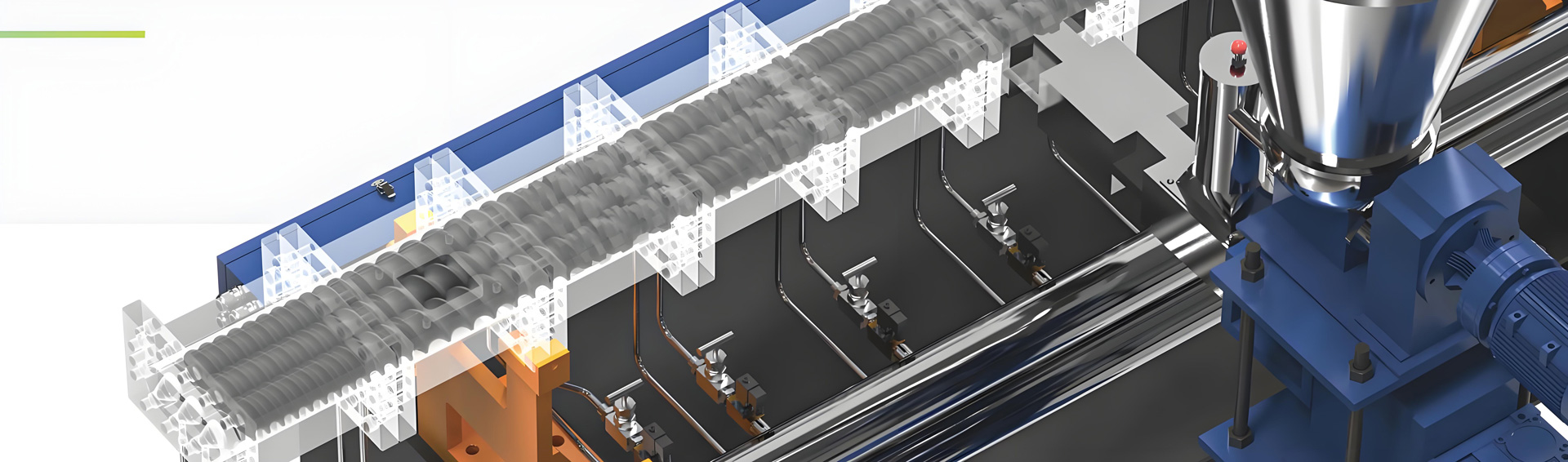
The screw configuration is designed to provide a sequence of melting, distributive mixing, dispersive mixing, and devolatilization functions. Kneading blocks — the key mixing elements — apply high shear to break up elastomer agglomerates and disperse them uniformly within the PP melt. The co-rotating, self-wiping screw design ensures that material is continuously renewed at the barrel wall, preventing stagnation and thermal degradation. This is particularly important for elastomers such as SEBS and POE, which are sensitive to oxidation at elevated temperatures.
Stage 4: Devolatilization and Vacuum Venting
During compounding, moisture, air entrained in the feed materials, and volatile byproducts of thermal processing must be removed from the melt. A vacuum venting port, typically positioned in the mid-to-downstream section of the barrel, extracts these volatiles under reduced pressure. Effective devolatilization is essential for producing a masterbatch with low void content and consistent pellet quality. Poor venting can lead to foamed pellets, surface defects, and inconsistent melt flow properties.
Stage 5: Pelletizing
The homogenized melt exits the extruder through a die and is pelletized using either a strand pelletizing system or an underwater pelletizing system. Strand pelletizing, in which the melt is drawn into strands, cooled in a water bath, and cut into pellets, is simple and economical but may produce irregular pellet sizes. Underwater pelletizing, in which the melt is cut at the die face in a water-filled chamber, produces more uniform pellets with better surface quality and is preferred for high-value toughening masterbatches. The choice of pelletizing system affects not only pellet appearance but also the residual moisture content and flow characteristics of the finished masterbatch.
Stage 6: Quality Control and Packaging
The finished pellets are tested for impact performance, melt flow index, dispersion quality, and compositional consistency before being packaged. Samples are typically retained for batch traceability. Packaging options include moisture-resistant lined bags, supersacks, or silo loading for bulk delivery. Proper packaging protects the masterbatch from moisture pickup and contamination during storage and transport, preserving its performance until it is let-down into the final PP compound.
Equipment Requirements: Twin-Screw Extrusion Technology
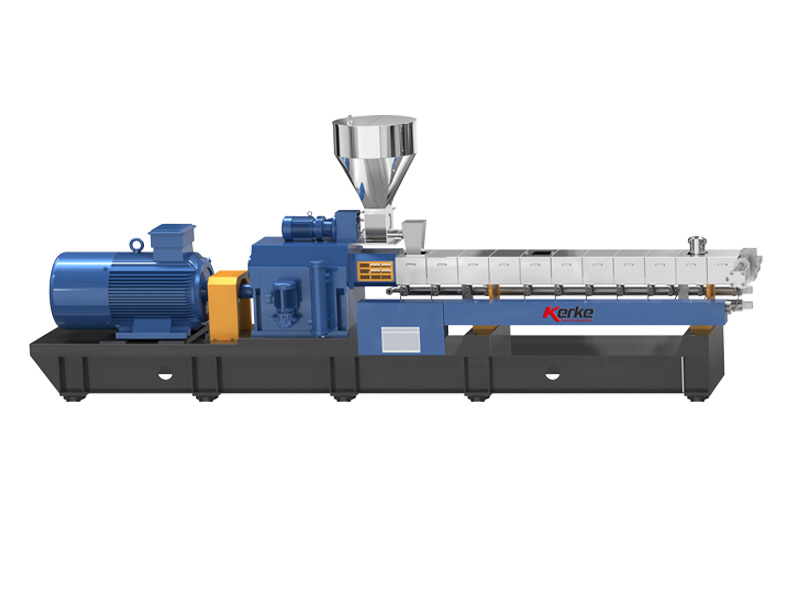
The compounding extruder is the single most important piece of equipment in PP toughening masterbatch production, and co-rotating twin-screw extruders are universally recognized as the optimal choice for this application. Their superiority over single-screw extruders and batch mixers stems from several fundamental design advantages that directly address the technical challenges of toughening compound formulation.
Why Twin-Screw Extruders?
Co-rotating twin-screw extruders provide several critical advantages for PP toughening masterbatch production. First, the intermeshing screw design creates a self-wiping action that continuously cleans the screw surfaces, preventing material stagnation and degradation — a vital feature when processing heat-sensitive elastomers. Second, the high shear and elongational flow fields generated by kneading elements provide both distributive mixing (uniform spatial distribution of components) and dispersive mixing (breakdown of agglomerates to the sub-micron level), which is essential for achieving the fine elastomer domain sizes required for effective toughening. Third, the modular barrel and screw design allows engineers to customize the processing length, mixing intensity, and venting configuration for each formulation. Fourth, the relatively short residence time (typically 30 to 120 seconds) minimizes thermal exposure, protecting elastomers from oxidative degradation.
Screw Design Considerations
The screw configuration is the engineering core of the twin-screw extruder. Kerke’s extruders feature computer-aided designed screw assemblies with kneading co-type elements that provide self-cleaning performance and excellent interchangeability. For PP toughening applications, a typical screw configuration includes conveying elements in the feed section to ensure positive material intake, followed by melting zones with kneading blocks arranged in a forward-to-reverse sequence to build pressure and promote melting. The mixing section, positioned in the mid-barrel, contains wide-disc kneading blocks and special mixing elements designed to disperse the elastomer phase to the target particle size. A final conveying zone leads to the die, with vacuum venting positioned upstream of the melt seal to ensure effective devolatilization.
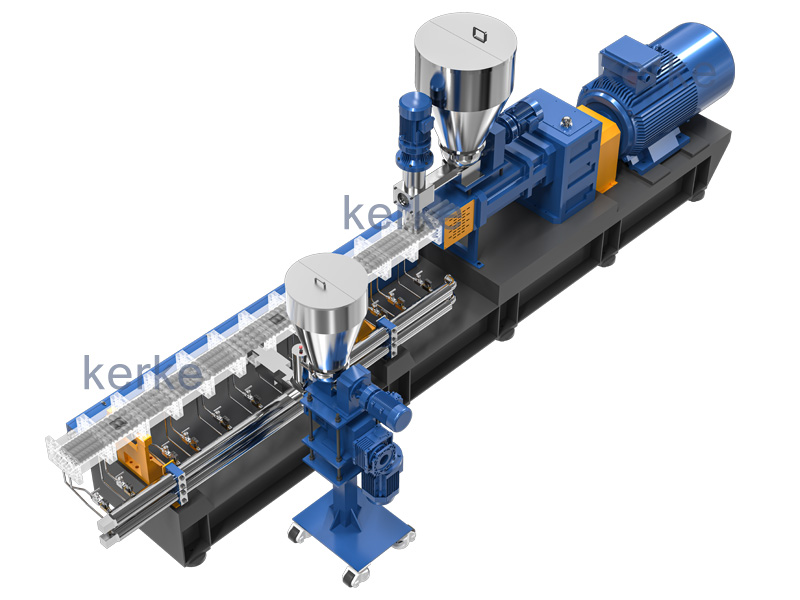
Feeding System Integration
The performance of the extruder depends critically on the accuracy and reliability of its feeding systems. Kerke offers a comprehensive range of feeding solutions tailored to masterbatch production:
- Volumetric Metering System: A cost-effective solution for free-flowing pelletized materials, providing consistent volumetric feed rates.
- Loss-In-Weight Feeder: A gravimetric system that continuously adjusts feed rate based on real-time weight measurement, ensuring precise formulation control even when bulk density varies. This is the preferred system for the PP carrier and critical additives.
- Side Feeder: Used for introducing fillers or additional elastomers at a downstream barrel position, allowing staged addition and preventing over-shearing of sensitive ingredients.
- Crammer Feeder: Designed for low-bulk-density materials such as rubber crumb or fluffy powders, the crammer feeder uses a tapered screw to compact and force material into the extruder feed throat.
- Liquid Feeder: A precision dosing pump system for introducing liquid additives such as antioxidants, lubricants, or peroxides at specific barrel locations.
Barrel Temperature Control and Processing Windows
Precise barrel temperature control is essential for PP toughening compounding. Each barrel zone is independently controlled using electrical heaters and water- or air-cooling systems. The processing window — the range of temperatures and screw speeds within which the formulation can be compounded without degradation — must be carefully determined for each formulation. For example, SEBS-based formulations may require lower barrel temperatures (180–200°C) to prevent oxidative crosslinking, while EPR-based formulations can tolerate higher temperatures (200–220°C) for improved dispersion. Modern extruders such as the Kerke KTE series are equipped with advanced PLC control systems that maintain barrel temperatures within tight tolerances, typically ±2°C, ensuring batch-to-batch consistency.
Quality Control and Testing Standards
Quality control is an integral part of PP toughening masterbatch production, not an afterthought. The performance of the masterbatch — and ultimately of the toughened PP compound — depends on consistent composition, uniform dispersion, and predictable rheological behavior. A comprehensive quality control program addresses raw material testing, in-process monitoring, and finished product evaluation.
Raw Material Testing
Before compounding, incoming raw materials should be tested for compliance with specifications. PP carrier resin is evaluated for melt flow index, density, and thermal stability. Elastomers are checked for Mooney viscosity, molecular weight distribution, and gel content. Compatibilizers are verified for grafting level (degree of maleic anhydride functionalization) and melt flow characteristics. These incoming tests establish a baseline for formulation consistency and help identify supplier variations before they affect production.
In-Process Monitoring
During compounding, key process parameters are continuously monitored and logged. These include barrel zone temperatures, screw speed, motor load (torque), melt temperature, melt pressure at the die, vacuum level at the venting port, and feeder output rates. Statistical process control (SPC) techniques are applied to detect trends or deviations that could indicate a process drift. Modern extrusion control systems, like those integrated into Kerke KTE series extruders, provide real-time data visualization and alarm functionality, allowing operators to intervene before an out-of-specification batch is produced.
Finished Product Testing
The finished masterbatch undergoes a battery of tests to verify performance and consistency. The following data table summarizes the key quality control tests, typical specification ranges, and relevant test standards for PP toughening masterbatch:
| Test Parameter | Typical Range | Test Method / Standard | Purpose |
|---|---|---|---|
| Notched Izod Impact (let-down compound, 23°C) | 15–60 kJ/m² | ASTM D256 / ISO 180 | Primary impact performance indicator |
| Notched Izod Impact (let-down compound, −20°C) | 8–35 kJ/m² | ASTM D256 / ISO 180 | Low-temperature toughness assessment |
| Tensile Strength at Yield | 20–32 MPa | ASTM D638 / ISO 527 | Stiffness retention verification |
| Tensile Elongation at Break | 100–500% | ASTM D638 / ISO 527 | Ductility measurement |
| Flexural Modulus | 800–1600 MPa | ASTM D790 / ISO 178 | Stiffness characterization |
| Melt Flow Index (masterbatch) | 3–40 g/10 min (230°C, 2.16 kg) | ASTM D1238 / ISO 1133 | Processability and let-down compatibility |
| Elastomer Domain Size (dispersion) | 0.1–1.0 µm | SEM / optical microscopy | Dispersion quality verification |
| Moisture Content | <0.05% | Karl Fischer titration | Storage stability and processing quality |
| DSC Crystallinity | 40–55% | ASTM D3418 / ISO 11357 | Thermal and crystalline property verification |
Dispersion Analysis
Among all the tests listed, dispersion analysis deserves special emphasis. The size and distribution of elastomer domains within the PP matrix are the single most important microstructural factors determining impact performance. Scanning electron microscopy (SEM) of cryo-fractured surfaces, often combined with image analysis software, allows quality engineers to quantify domain size distribution and identify any agglomerates or poorly dispersed regions. A well-compounded toughening masterbatch should show a narrow distribution of sub-micron domains with no evidence of coalescence or phase separation. This level of dispersion is achievable only with properly configured twin-screw extruders operating within optimized processing windows.
Certification and Standards Compliance
Masterbatch producers serving global markets must comply with a range of industry standards and certifications. Equipment manufactured by Kerke is designed and built to meet CE (European Conformity) safety and electromagnetic compatibility requirements and ISO 9001 quality management standards. For automotive applications, toughened PP compounds are often subject to OEM-specific specifications such as those from Volkswagen, Toyota, or General Motors, which may include additional requirements for long-term heat aging, VOC emissions, and paint adhesion. Masterbatch producers should maintain documented quality management systems and provide certificates of analysis (CoA) with each shipment to support customer qualification processes.
Applications of PP Toughening Masterbatch
PP toughening masterbatch finds application across a broad spectrum of industries, wherever polypropylene is used in applications that demand impact resistance, ductility, or low-temperature performance. The versatility of the masterbatch approach — allowing processors to tailor impact levels by adjusting let-down ratios — makes it particularly attractive for manufacturers producing multiple product lines from a common PP base resin.
Automotive Industry
The automotive sector is the largest consumer of toughened PP compounds. Applications include bumpers, front-end modules, interior trim panels, door pillars, instrument panel substrates, battery housings, and underbody shields. These components must withstand impact from road debris, low-temperature exposure in cold climates, and the mechanical stresses of vehicle assembly and service. Toughened PP offers an excellent balance of impact resistance, stiffness, weight savings, and cost compared to alternative materials such as ABS or polycarbonate blends. Modern automotive specifications often require notched Izod impact values above 40 kJ/m² at −30°C, achievable only with carefully formulated toughening systems based on high-efficiency elastomers such as metallocene POE or SEBS.
Appliances and Consumer Goods
Washing machine tubs, refrigerator liners, vacuum cleaner housings, and small appliance enclosures are frequently produced from toughened PP. These applications require impact resistance to survive drops, knocks, and vibration during use, as well as good appearance and dimensional stability. Toughening masterbatch allows appliance manufacturers to use a single PP grade across multiple product platforms, adjusting impact performance through let-down ratio changes. The chemical resistance of PP is also valuable in appliances that contact detergents, food acids, or other household chemicals.
Packaging
Rigid packaging applications, including thin-wall containers, caps and closures, and transport crates, benefit from toughened PP’s combination of impact resistance and drop performance. Cold-chain packaging for frozen foods requires materials that maintain toughness at sub-zero temperatures — a challenge that toughening masterbatch addresses effectively. For caps and closures, the masterbatch must also preserve the material’s torque retention and stress crack resistance, requiring careful formulation to balance impact performance with long-term mechanical integrity.
Construction and Infrastructure
PP pipe fittings, conduit, and construction profiles use toughened grades to resist impact during installation and service. In particular, corrugated drainage pipe and electrical conduit must survive impact from handling, backfilling, and ground movement. Toughening masterbatch provides the necessary ductility while maintaining the chemical resistance and long-term hydrostatic strength that PP pipe systems are known for.
Electrical and Electronic Enclosures
While flame-retardant grades dominate many electrical enclosure applications, non-flame-retardant toughened PP is used in low-voltage enclosures, junction boxes, and consumer electronic housings where impact resistance and cost are the primary drivers. In these applications, the masterbatch may also incorporate UV stabilizers or colorants, combining multiple functions in a single additive package.
Industrial and Material Handling
Material handling containers, pallets, bins, and returnable transport packaging are frequently produced from toughened PP. These products experience repeated impact during loading, transport, and storage, and must survive thousands of handling cycles without cracking. The masterbatch approach allows container manufacturers to optimize impact performance for different product sizes and wall thicknesses without stocking multiple pre-compounded resin grades.
Kerke’s Twin-Screw Extruder Solutions for Masterbatch Production
As a specialized manufacturer within the Wanplas group, Kerke (Nanjing Kerke Extrusion Equipment Co., Ltd.) brings over 12 years of focused expertise to the design and manufacture of twin-screw compounding extruders. Recognized as a top-5 supplier of twin-screw extruders in China, Kerke operates a 19,997+ square meter factory staffed by a team of 100+ professionals, with more than 2,000 machines running in 70+ countries worldwide. This depth of experience translates directly into equipment that meets the demanding requirements of PP toughening masterbatch production.
The KTE Series: Parallel Co-Rotating Twin-Screw Extruders
The flagship of Kerke’s product line is the KTE series of parallel co-rotating twin-screw extruders, available in models ranging from the laboratory-scale KTE-16B to the high-throughput KTE-135D. This breadth of model sizes allows masterbatch producers to select a machine precisely matched to their production volume, from R&D-scale formulation development to full-scale commercial manufacturing. The KTE series features computer-aided screw design with kneading co-type elements that provide self-cleaning performance, good interchangeability, and the intensive mixing action essential for dispersing elastomers within the PP matrix.
For PP toughening masterbatch production, the mid-range KTE models — typically KTE-50 through KTE-92 — are the most commonly deployed, offering throughput capacities well suited to typical masterbatch plant operations. The larger KTE-110 and KTE-135D models serve high-volume producers requiring maximum output, while the KTE-16B and KTE-35 models are ideal for formulation development and pilot-scale production. This scalability within a single product family allows producers to transfer formulations from lab to production with minimal revalidation, since the screw geometry and mixing characteristics are consistent across the range.
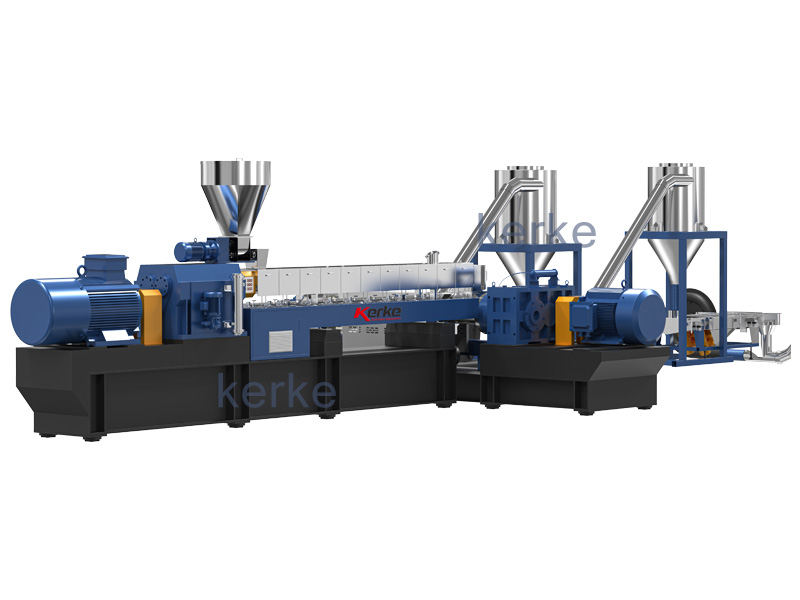
Beyond Twin-Screw: Complete System Solutions
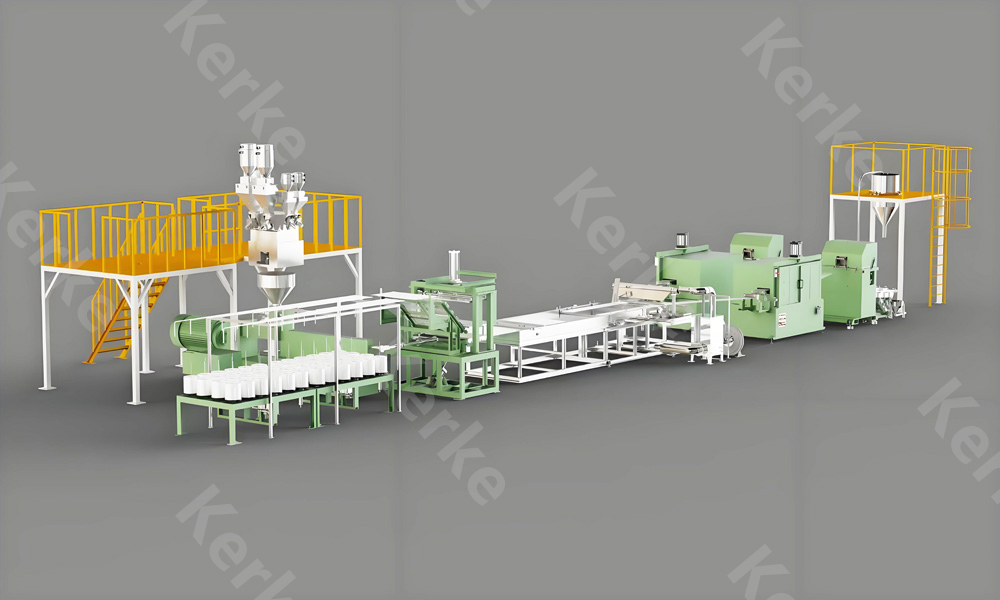
Kerke’s capabilities extend well beyond the extruder itself. The company offers a complete ecosystem of equipment for masterbatch production, including:
- Triple (3-Screw) Extruders: For formulations requiring even higher mixing intensity or distributive mixing performance, Kerke’s triple-screw extruders provide additional mixing pathways and improved throughput characteristics.
- Double-Stage Extrusion Systems: Combining a twin-screw extruder with a single-screw extruder in a tandem arrangement, these systems are ideal for formulations requiring both intensive compounding and gentle final pumping, such as those containing highly shear-sensitive elastomers.
- Single Screw Extruders (SE Series): Available in throughput ranges from 30 to 800 kg/h, these extruders serve as cost-effective solutions for simpler compounding tasks or as the second stage in tandem systems.
- Cutting and Pelletizing Systems: Kerke offers both strand and underwater pelletizing systems, allowing producers to select the optimal pelletizing method for their masterbatch products.
- Sheet Extrusion Lines: For producers who also manufacture sheet products from toughened PP compounds, Kerke provides complete sheet extrusion lines.
- Auxiliary Equipment: Including the full range of feeding systems described earlier — volumetric metering, loss-in-weight, side feeder, crammer feeder, and liquid feeder — as well as cooling systems, pellet classifiers, and material handling equipment.
Laboratory Extruders for Formulation Development
Formulation development is a critical activity for masterbatch producers, and Kerke’s laboratory twin-screw extruders provide the platform for systematic formulation optimization. These compact machines replicate the mixing and processing characteristics of production-scale KTE extruders, allowing formulators to evaluate elastomer types, compatibilizer levels, and processing conditions on a small scale before committing to production trials. The ability to run small batches — sometimes as little as 1 to 5 kg — minimizes raw material costs during development and accelerates the iteration cycle for new formulations.
Application Industries Served
Kerke’s equipment serves a broad range of application industries beyond masterbatch production, including plastic compounding for engineering plastics, biodegradable materials, cable compounds, PVC, TPE, and wood-plastic composites (WPC). The company’s extruders are also deployed in R-PET flake recycling, pet food processing, and HMMA/TVP food processing applications. This breadth of application experience gives Kerke’s engineering team deep insight into the processing characteristics of diverse polymer systems, informing the continuous improvement of extruder designs for masterbatch applications. All Kerke equipment is manufactured in compliance with CE and ISO standards, ensuring global acceptance and reliable operation in diverse regulatory environments.
Global Support and Service
With machines operating in 70+ countries and a dedicated team of 100+ professionals, Kerke provides comprehensive after-sales support, including installation supervision, operator training, screw design consultation, and spare parts supply. This support is critical for masterbatch producers, who rely on consistent equipment performance to maintain product quality and meet delivery commitments. As part of the Wanplas family, Kerke benefits from the group’s collective resources and shared technical expertise, ensuring that customers receive both the focused specialization of a twin-screw extruder manufacturer and the stability of a larger corporate organization.
Frequently Asked Questions
What is the typical let-down ratio for PP toughening masterbatch?
Let-down ratios vary depending on the elastomer concentration in the masterbatch and the target impact performance of the final compound. Typical let-down ratios range from 5% to 30%. A masterbatch containing 50% elastomer loaded at 20% yields a final compound with approximately 10% elastomer content, which is sufficient for many automotive and appliance applications. Processors should conduct their own testing to determine the optimal ratio for their specific PP resin and application requirements.
Can PP toughening masterbatch be used with recycled PP?
Yes. In fact, toughening masterbatch is frequently used to restore impact performance to recycled PP, which may have degraded during reprocessing. Recycled PP often exhibits reduced molecular weight and increased brittleness compared to virgin material. Adding toughening masterbatch at 10% to 25% can recover or even exceed the impact performance of the original virgin resin, making it a valuable tool for producers committed to using recycled content in their products.
Does toughening masterbatch affect the color or transparency of PP?
Most elastomers used in toughening masterbatch — particularly EPR, EPDM, and POE — introduce some degree of haze or opacity due to refractive index mismatch with the PP matrix. SEBS-based formulations can achieve better clarity. If high clarity is required, formulators should select elastomers and compatibilizers that minimize refractive index differences and should optimize particle size to reduce light scattering. Color masterbatch can be added separately if colored compounds are desired.
How does the choice of extruder affect masterbatch quality?
The extruder has a profound effect on masterbatch quality, particularly on elastomer dispersion — the most critical microstructural factor in toughening performance. Co-rotating twin-screw extruders provide the intensive dispersive mixing needed to achieve sub-micron domain sizes, the self-wiping action needed to prevent thermal degradation, and the flexible screw configuration needed to optimize processing for each formulation. Single-screw extruders, while less expensive, typically cannot achieve comparable dispersion quality and are generally not recommended for high-performance toughening masterbatch production.
What is the shelf life of PP toughening masterbatch?
When properly packaged and stored in a cool, dry environment away from direct sunlight, PP toughening masterbatch typically has a shelf life of 12 to 24 months. The primary degradation mechanism is oxidative aging of the elastomer phase, which is accelerated by heat and UV exposure. Antioxidants included in the formulation provide protection during storage, but prolonged exposure to adverse conditions will eventually reduce impact performance. Producers should include a manufacturing date on packaging and recommend first-in, first-out inventory practices.
Are there environmental or regulatory concerns with PP toughening masterbatch?
PP toughening masterbatch is generally regarded as safe for most applications. The elastomers and compatibilizers used are well-characterized materials with established regulatory compliance profiles. For food-contact applications, all components must comply with relevant regulations such as FDA 21 CFR (United States) or EU Regulation 10/2011. For automotive applications, VOC emissions must meet OEM interior air quality standards. Producers should verify compliance with all applicable regulations for their specific end-use applications and maintain documentation to support customer compliance requirements.
Conclusion
PP toughening masterbatch represents a sophisticated intersection of polymer science, formulation engineering, and compounding technology. By understanding the mechanisms of rubber toughening, the role of each formulation component, and the critical importance of extruder design and process control, producers can manufacture masterbatches that deliver consistent, high-impact performance across a wide range of applications. The continued growth of automotive lightweighting, the expansion of recycled PP usage, and the increasing demand for durable consumer products ensure that PP toughening masterbatch will remain a vital and growing segment of the plastics industry in 2026 and beyond.
Success in this field demands more than just good formulation chemistry — it requires manufacturing equipment capable of producing the fine, uniform elastomer dispersion that underpins all impact performance. This is where the choice of compounding extruder becomes decisive. Co-rotating twin-screw extruders, with their superior mixing intensity, self-wiping design, and flexible configuration, are the proven standard for toughening masterbatch production. Within this equipment category, the Kerke KTE series — backed by 12+ years of engineering experience, 2,000+ machines in the field, and the resources of the Wanplas group — offers masterbatch producers a compelling combination of technical capability, production scalability, and global support.
As the plastics industry continues to evolve, with growing emphasis on sustainability, material efficiency, and performance optimization, the role of advanced compounding technology becomes ever more central. Whether you are establishing a new masterbatch production line, upgrading existing equipment, or developing new toughening formulations, partnering with an experienced extruder manufacturer is one of the most important decisions you will make.
Ready to discuss your PP toughening masterbatch production requirements? The engineering team at Kerke — a Wanplas factory — is available to consult on extruder selection, screw design, feeding system configuration, and complete plant layout. With over 2,000 machines operating in 70+ countries and a commitment to technical excellence, Kerke and the Wanplas group stand ready to support your masterbatch production goals. Contact Kerke today to learn how the KTE series twin-screw extruders can elevate your PP toughening masterbatch quality and production efficiency.
For authoritative reference on polypropylene material properties and polymer toughening science, additional information is available from the ASTM International standards repository and the International Organization for Standardization (ISO).