Cecelia _86 13142836239 Cecelia@wanplas.com
An in-depth overview of biodegradable polymer granules — material categories, pelletizing equipment configuration, and end-use applications across industries.
As global regulations on single-use plastics tighten and consumer demand for sustainable materials surges, biodegradable pellets have become the cornerstone of the green plastics transition. This guide breaks down everything procurement teams, product engineers, and sustainability managers need to know — from material chemistry to equipment configuration.
TABLE OF CONTENTS
1. Introduction: What Are Biodegradable Pellets?
2. Types of Biodegradable Pellets
3. Pelletizing Machine Configuration
4. Industrial Applications
5. Conclusion
1. Introduction: What Are Biodegradable Pellets?
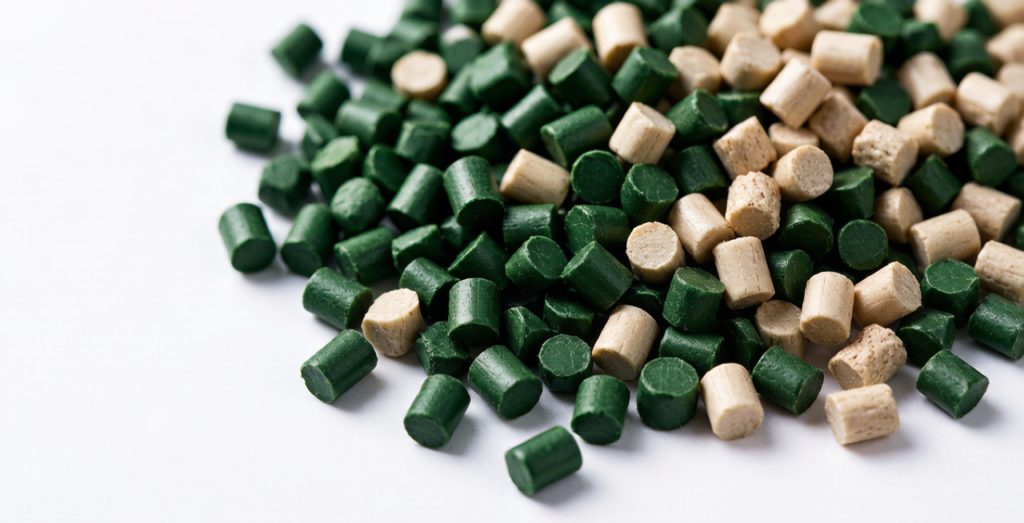
Biodegradable pellets are solid, uniformly sized granules of polymer resin — typically 2–5 mm in diameter — that can be processed on conventional plastic machinery (injection molding, film blowing, extrusion, spinning) and that, after their useful life, can be broken down by microorganisms into water, carbon dioxide, and biomass under specific environmental conditions.
Unlike traditional petroleum plastics that persist for centuries, biodegradable pellets are engineered to undergo microbial assimilation within a defined timeframe. The most common end-of-life pathway is industrial composting, where controlled heat, moisture, and oxygen accelerate decomposition within 90–180 days. Certain grades also degrade in soil and marine environments, broadening their applicability beyond compost facilities.
It is important to distinguish between three terms often used interchangeably:
- Biobased: Derived from renewable biomass (corn, sugarcane, cellulose) — not necessarily biodegradable.
- Biodegradable: Capable of microbial decomposition — not necessarily biobased.
- Compostable: A subset of biodegradable; meets specific disintegration and ecotoxicity standards (e.g., EN 13432, ASTM D6400) within a set period under composting conditions.
2. Types of Biodegradable Pellets
Biodegradable pellets fall into two broad families: bio-based polyesters (derived from renewable feedstocks) and petrochemical-based biodegradable polyesters (fossil-derived but microbially degradable). In commercial practice, these materials are frequently blended to balance cost, processability, and performance. The three most widely used biodegradable pellet types are introduced below.
2.1 PLA (Polylactic Acid)
PLA is the most widely produced biodegradable plastic, fermented from plant sugars (corn, sugarcane, sugar beet). It offers excellent clarity, good rigidity, and natural UV resistance, making it the default choice for rigid packaging, 3D printing filament, and fiber applications. Pure PLA requires industrial composting (≥58 °C) to degrade efficiently. Commercial PLA pellets are often toughened with impact modifiers or plasticizers to improve brittleness.
2.2 PBAT (Polybutylene Adipate Terephthalate)
PBAT is a flexible, fossil-derived biodegradable polyester prized for its high elongation and toughness. It is rarely used alone; instead, it serves as the primary flexibilizer and toughening agent blended with brittle PLA to produce compostable film resins (e.g., the well-known PBAT/PLA blends used in shopping bags and mulch films). PBAT gives blends the tear resistance and elongation needed for thin-film applications.
2.3 PBS / PBSA (Polybutylene Succinate / Succinate-Adipate)
PBS offers good heat resistance (HDT up to ~90 °C), decent toughness, and reliable biodegradability in soil and marine environments. PBSA, with adipate co-monomers, is softer and faster degrading. PBS pellets are favored for agricultural mulch films, food packaging, and durable compostable goods where higher thermal performance or soil-facing biodegradation is required.
Quick Comparison of Common Biodegradable Pellets
| Material | Feedstock | Key Properties | Biodegradability | Typical Use |
| PLA | Corn, sugarcane | Rigid, clear, good printability; brittle | Industrial compost | Rigid packaging, cups, 3D printing |
| PBAT | Petrochemical | Flexible, high elongation, tough | Industrial compost | Flexibilizer in film blends |
| PBS / PBSA | Bio + petro | Heat resistant, good toughness | Soil & compost | Mulch film, food packaging |
3. Pelletizing Machine Configuration
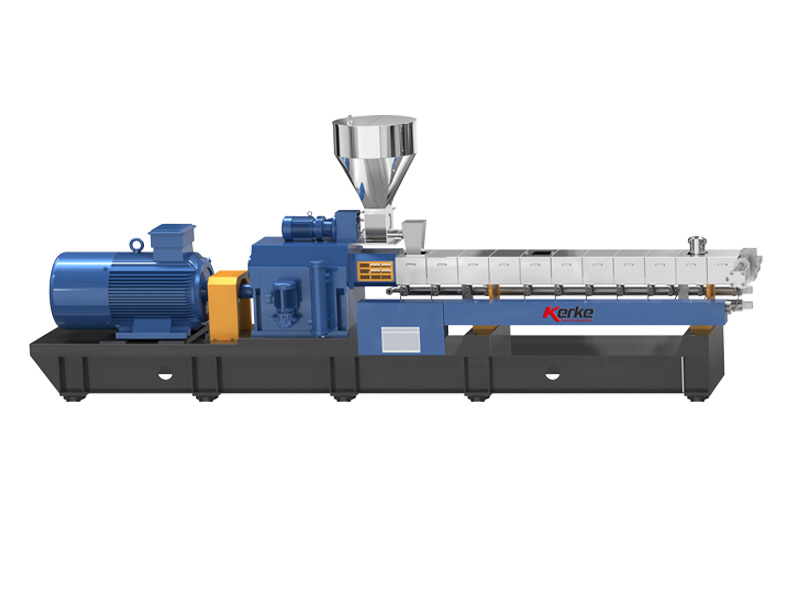
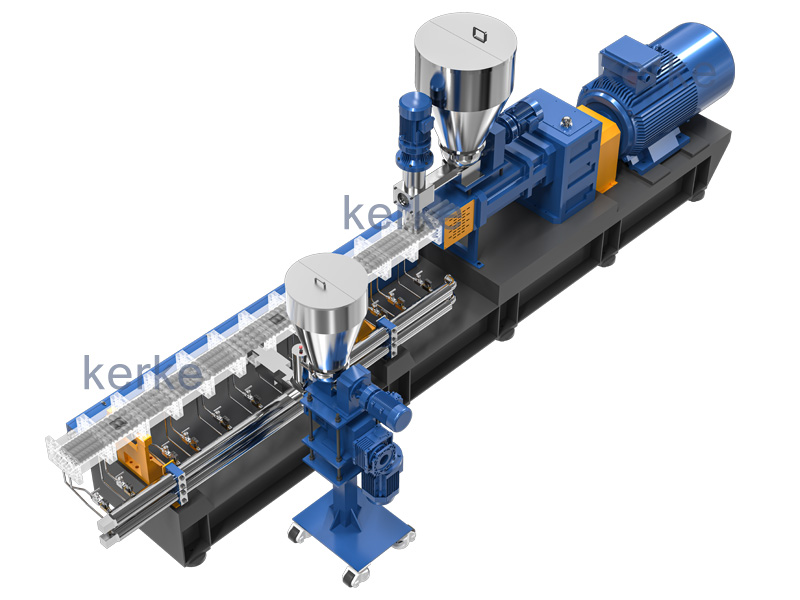
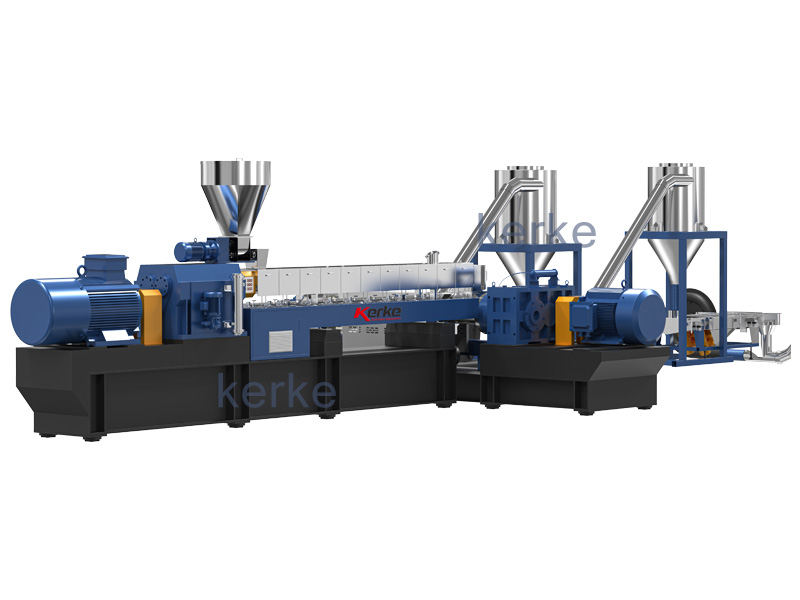
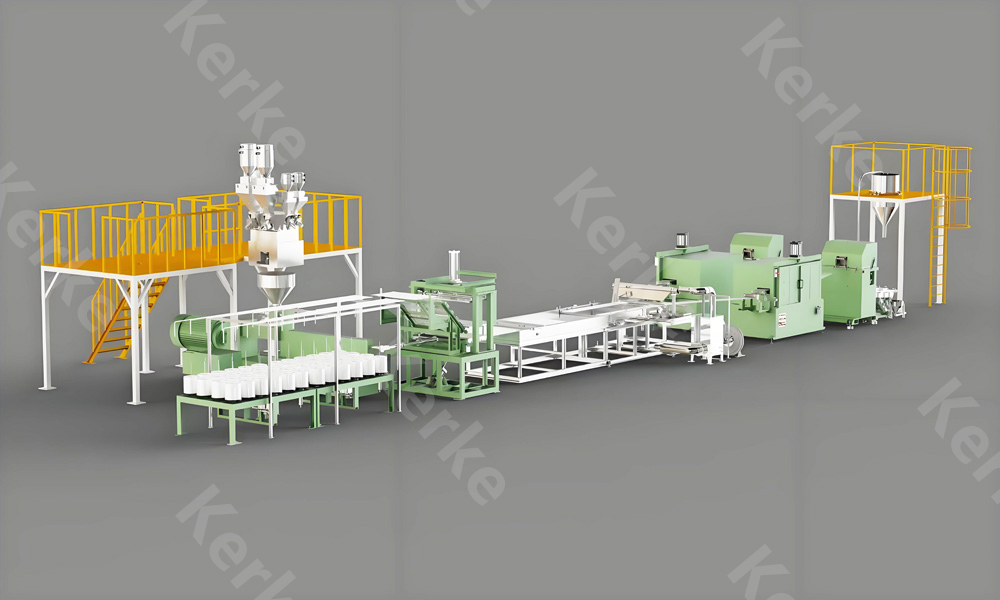
The production of biodegradable pellets — from raw powder or flake to finished resin granules — is carried out on a compounding and pelletizing line. Because biodegradable resins are thermally sensitive and hygroscopic, the equipment configuration must provide precise temperature control, gentle shear, and effective devolatilization. We recommend a twin-screw extruder paired with air cooling strand cutting system. A standard line consists of the following modules:
1. Raw Material Dosing System
Gravimetric loss-in-weight feeders deliver base resin, modifiers, fillers (e.g., CaCO3, talc), nucleating agents, and color masterbatch at controlled ratios. Accurate dosing is critical for batch-to-batch consistency.
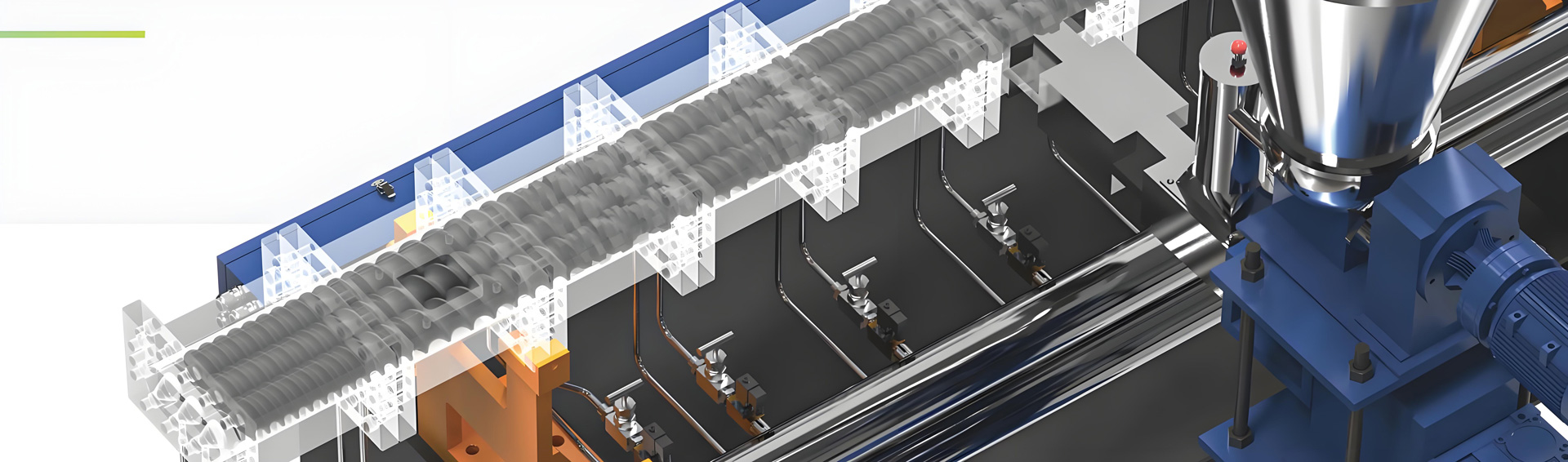
2. Co-Rotating Twin-Screw Extruder
The core compounding unit. Intermeshing co-rotating screws (L/D ratio 40–48:1) provide intensive mixing, melting, and reactive blending at controlled residence time. Modular barrel sections allow customization for biodegradable formulations.
3. Vacuum Devolatilization
One or two vacuum ports on the barrel remove moisture and low-molecular-weight volatiles — essential for biodegradable polymers that are moisture-sensitive and prone to hydrolytic degradation during processing.
4. Screen Changer / Melt Filter
A dual-piston or rotary screen changer filters out contaminants and unmelted gels, protecting the die and ensuring pellet quality. Filtration fineness typically ranges from 60 to 120 mesh.
5. Air Cooling Strand Cutting
The clean melt is extruded through a multi-hole die into continuous strands, solidified by forced-air cooling (no water contact), then drawn into a strand cutter that produces uniform cylindrical pellets — ideal for moisture-sensitive biodegradable resins.
6. Screening & Packaging
A vibratory screener removes oversized pellets and fines; acceptable pellets are pneumatically conveyed to storage silos and packaged in moisture-barrier bags. No downstream drying step is needed, since air cooling introduces no moisture.
3.1 Air-Cooling Strand Cutting — The Recommended Method
For biodegradable resins, which are thermally sensitive and moisture-sensitive, we recommend the twin-screw extruder paired with air cooling strand cutting system. In this configuration:
- Principle: The clean melt is extruded through a multi-hole die into continuous strands. The strands pass through an air-cooling channel (forced-air / fan cooling, no water contact) where they solidify, then are drawn into a strand pelletizer that cuts them into uniform cylindrical pellets.
- Output: Uniform cylindrical pellets (typically 2.5–3.5 mm diameter) with clean cut faces and good flowability.
- Key advantage: Zero water contact during pelletizing eliminates moisture uptake — critical for PLA, PBAT, and PBS, which are hygroscopic and prone to hydrolysis when exposed to water at elevated temperature. This removes the need for a downstream centrifugal or hot-air drying step, simplifying the line and reducing energy use.
- Best for: PLA, PBAT, PBS, and their blends — the standard, reliable choice for biodegradable pellet production.
Note: Because PLA, PBAT, and PBS are hygroscopic, any water-contact pelletizing method (underwater, water-ring, or water-bath strand) introduces moisture that can trigger hydrolysis and degrade the polymer during subsequent processing. Air cooling strand cutting avoids this risk entirely and is therefore the strongly recommended configuration for biodegradable resin production.
3.2 Key Machine Configuration Parameters
| Parameter | Typical Range / Spec | Why It Matters for Biodegradable Resins |
| Extruder type | Co-rotating intermeshing twin-screw | High mixing efficiency with controlled, gentle shear; prevents thermal degradation |
| Screw diameter | 52 – 135 mm | Determines throughput capacity (150–1,500 kg/h) |
| L/D ratio | 40:1 – 48:1 | Long barrel allows staged zones: feeding, melting, venting, devolatilizing, vacuum, metering |
| Barrel temperature | 140 – 210 C | Must stay below each resin’s degradation threshold (PLA ~210 C, PBAT ~180 C) |
| Vacuum pressure | <= -0.08 MPa | Critical for removing moisture and preventing hydrolysis |
| Melt filter mesh | 60 – 120 mesh | Removes gels and contaminants; higher mesh for optical-grade resin |
4. Industrial Applications
Biodegradable pellets are processed on conventional plastic machinery — film blowing, injection molding, sheet extrusion, thermoforming, blow molding, and fiber spinning — with the formulation matched to the application’s performance and disposal requirements. Common end uses include:
- Packaging films & bags: compostable shopping bags, garbage bags, and food packaging films. PBAT/PLA blends dominate this segment, processed by blown-film extrusion.
- Food service ware: single-use cups, plates, cutlery, and takeout containers. PLA provides rigidity and food-contact compliance via injection molding and thermoforming.
- Agricultural films: mulch films, seedling trays, and plant pots. PBS and PBSA excel here due to soil biodegradability and degradation rates matched to crop cycles.
- 3D printing filament: PLA filament is the most popular desktop 3D printing material worldwide, valued for low warping, ease of printing, and bio-based origin.
- Bottles & containers: compostable water bottles, cosmetic, and detergent containers made from PLA or PBS via stretch blow molding.
- Textiles & nonwovens: PLA fibers for apparel, home textiles, and hygiene nonwovens (diapers, wipes), melt-spun on conventional polyester fiber lines.
5. Conclusion
Biodegradable pellets represent a mature, rapidly scaling category of sustainable resins that bridge the gap between conventional plastic performance and the circular economy. Understanding the distinctions among PLA, PBAT, and PBS — and matching them to the right pelletizing configuration and end application — is the foundation of delivering consistent, certified, and market-ready biodegradable products.
For manufacturers, the key takeaways are:
- Adopt the twin-screw air cooling strand pelletizing line as the recommended configuration for biodegradable resins, eliminating moisture uptake during pelletizing.
- Prioritize vacuum devolatilization and pre-drying to protect molecular weight and process stability.
- Match material grade to application — rigid PLA for packaging and 3D printing, flexible PBAT blends for film, PBS for soil-facing agricultural use.
- Verify biodegradation certifications (EN 13432, ASTM D6400, ISO 14855) appropriate to the product’s intended disposal pathway.
© Technical Resource — Biodegradable Pellet Solutions. For product inquiries, material datasheets, or custom formulation, please contact our technical team.