Introduction to Masterbatch for Injection Molding
Masterbatch for injection molding represents one of the most critical components in modern plastic manufacturing processes. This concentrated mixture of pigments and additives enables manufacturers to achieve consistent color quality while maintaining excellent flowability properties essential for mass production operations. The masterbatch production process requires sophisticated twin screw extruder technology to ensure optimal dispersion and homogeneity of colorants throughout the polymer matrix. Understanding the relationship between masterbatch quality and injection molding performance helps manufacturers optimize their production efficiency and product quality.
The injection molding industry relies heavily on high-quality masterbatch to achieve uniform color distribution across thousands or millions of identical parts. Color masterbatch produced using advanced compounding extruder systems delivers superior dispersion characteristics that eliminate streaking, spotting, and color variation issues commonly encountered in injection molding applications. Manufacturers seeking to improve their injection molding processes must understand how masterbatch formulation and production techniques directly impact final product appearance and performance.
Masterbatch extruder technology has evolved significantly over the past decades, with modern twin screw extruder systems offering unprecedented control over dispersion quality, throughput rates, and energy efficiency. These advancements enable masterbatch producers to create highly concentrated color formulations that provide excellent flowability during injection molding while delivering consistent color results across extended production runs. The selection of appropriate extrusion equipment plays a crucial role in determining masterbatch quality and production economics.
Understanding Masterbatch Fundamentals for Injection Molding Applications
What is Masterbatch and How Does It Work
Masterbatch functions as a concentrated carrier of pigments, additives, or fillers designed for dilution during the injection molding process. Typically containing between 20% and 50% pigment loading, masterbatch provides a cost-effective and clean method for introducing color and functional additives into plastic products. The carrier resin in masterbatch must be compatible with the base polymer used in injection molding to ensure proper dispersion and avoid processing issues.
The science behind masterbatch performance involves understanding pigment dispersion, particle size distribution, and carrier resin compatibility. High-quality masterbatch produced in twin screw extruder systems features pigment particles uniformly distributed throughout the carrier resin at sizes typically below one micron. This fine dispersion ensures that during injection molding, the masterbatch melts and disperses rapidly, providing uniform coloration without agglomerates that could cause processing problems or surface defects.
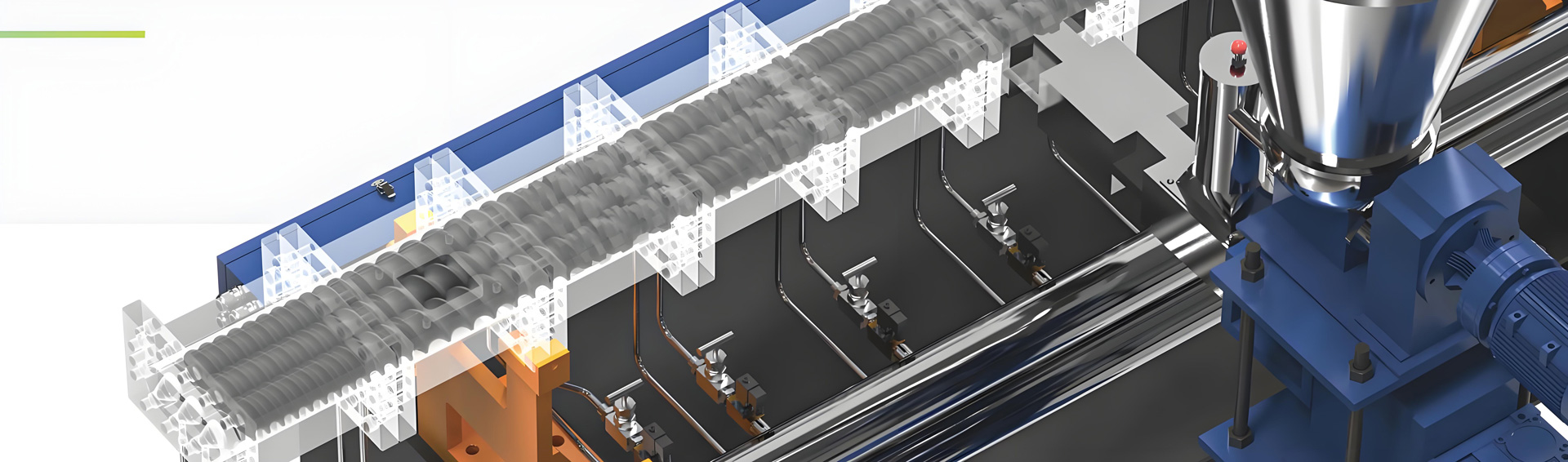
Compounding extruder technology enables masterbatch manufacturers to achieve the intense mixing and dispersion required for injection molding applications. The twin screw extruder design provides both distributive and dispersive mixing elements that break down pigment agglomerates while ensuring even distribution throughout the polymer matrix. This sophisticated mixing action produces masterbatch that delivers consistent color results even at low addition rates, typically between 1% and 5% of the total polymer weight.
Critical Factors for Injection Molding Success
Several critical factors determine masterbatch performance in injection molding applications, including color uniformity, flowability, thermal stability, and compatibility with the base polymer. Color uniformity requires excellent pigment dispersion achieved through proper twin screw extruder configuration and processing parameters. Flowability depends on masterbatch pellet size, shape, and carrier resin properties, all of which influence how well the masterbatch feeds and mixes during injection molding.
Thermal stability represents another crucial consideration for injection molding masterbatch, as these materials must withstand processing temperatures ranging from 180°C to 300°C depending on the polymer type. Masterbatch produced using advanced compounding extruder systems incorporates thermal stabilizers that protect pigments and additives from degradation during injection molding cycles. This thermal protection ensures color consistency throughout the molding process and across multiple production lots.
Compatibility between the masterbatch carrier resin and the injection molding base polymer directly impacts dispersion quality and final product properties. Incompatible carrier resins can cause delamination, poor surface finish, and reduced mechanical properties. Masterbatch extruder manufacturers like Kerke understand these compatibility requirements and can configure their equipment to produce masterbatch with optimized carrier resin properties for specific injection molding applications.
Color Uniformity in Injection Molding Masterbatch
Achieving Consistent Color Distribution
Color uniformity stands as one of the most critical quality parameters for injection molded products, directly impacting product appearance, brand consistency, and customer satisfaction. Achieving uniform color distribution requires masterbatch produced using precision twin screw extruder technology that delivers complete pigment dispersion and homogeneity. The masterbatch extruder configuration, including screw design, barrel temperature profile, and throughput rate, significantly influences the dispersion quality achieved.
Injection molding operations processing thousands of parts per day cannot tolerate color variation between shots or within individual parts. High-quality masterbatch eliminates these concerns by providing pigment particles so thoroughly dispersed that color variation becomes virtually impossible under normal processing conditions. The compounding extruder process creates this dispersion through multiple mixing zones and kneading elements that apply both shear and elongational flow to break down pigment agglomerates.
Color uniformity challenges in injection molding often stem from inadequate masterbatch quality rather than injection molding machine settings. Masterbatch containing poorly dispersed pigments will produce inconsistent results regardless of injection molding parameter optimization. Investing in quality masterbatch produced using advanced twin screw extruder systems provides the foundation for achieving color consistency across mass production runs.
Testing and Quality Control for Color Consistency
Quality control procedures for color uniformity involve both instrumental measurement and visual inspection methods. Spectrophotometer measurements provide objective color data expressed as L*a*b* values, allowing precise specification of color targets and tolerance limits. Masterbatch producers use these measurements to ensure each production lot meets color specifications before shipment to injection molding facilities.
Injection molders should implement incoming inspection procedures to verify masterbatch color quality before production. Simple plate-out tests using a twin screw extruder or laboratory extruder can reveal dispersion quality issues that might cause problems during injection molding. Visual inspection under standardized lighting conditions helps identify color variations that might not be apparent in spectrophotometer measurements.
Statistical process control methods help injection molders monitor color consistency throughout production runs. Regular sampling and measurement enable early detection of color drift that might indicate masterbatch quality issues or injection molding process changes. Establishing control limits based on customer requirements and product specifications ensures consistent quality across mass production operations.
Flowability Properties for Injection Molding Applications
Understanding Masterbatch Flow Characteristics
Flowability refers to how well masterbatch pellets move through feeding systems and disperse within molten polymer during injection molding. Excellent flowability ensures consistent masterbatch delivery to the injection molding machine and rapid, uniform dispersion throughout the polymer melt. Masterbatch produced using properly configured twin screw extruder systems exhibits optimal flowability characteristics that support high-speed injection molding operations.
The flowability of masterbatch depends on several factors including pellet size and shape, carrier resin molecular weight, and surface treatment of pigments. Spherical or cylindrical pellets approximately 2-4mm in diameter typically provide the best feeding characteristics for injection molding hopper systems. Masterbatch extruder output configuration, including die design and pelletizing method, directly influences these pellet characteristics.
Poor flowability can cause inconsistent masterbatch feeding, leading to color variation between shots and potential processing problems. Masterbatch that bridges or hangs up in hopper systems requires operator intervention and can cause production delays. Compounding extruder manufacturers optimize their equipment to produce masterbatch with consistent pellet size and shape, ensuring reliable feeding in automated injection molding operations.
Optimizing Flowability Through Processing Parameters
Masterbatch extruder operating parameters significantly influence the flowability characteristics of the final product. Screw speed, barrel temperature profile, and throughput rate all affect carrier resin molecular weight, which in turn influences melt viscosity during injection molding. Proper parameter selection ensures masterbatch that flows readily while maintaining sufficient melt strength for processing.
Twin screw extruder screw configuration plays a crucial role in determining masterbatch flowability. The combination of conveying elements, kneading blocks, and mixing sections must be optimized for the specific polymer and pigment system being processed. Too much shear can degrade the carrier resin, reducing molecular weight and potentially affecting mechanical properties of the final injection molded product.
Masterbatch producers using advanced compounding extruder systems can fine-tune their processing conditions to achieve optimal flowability for specific injection molding applications. Working with equipment manufacturers like Kerke provides access to process development support and screw design expertise that helps optimize masterbatch properties for customer requirements.
Technical Specifications for Injection Molding Masterbatch Production
Equipment Requirements and Parameters
Producing high-quality masterbatch for injection molding requires twin screw extruder systems with specific capabilities and specifications. The masterbatch extruder must provide sufficient mixing intensity to achieve complete pigment dispersion while maintaining controlled shear to prevent polymer degradation. Typical masterbatch production lines operate at screw speeds between 300 and 800 rpm, with higher speeds providing greater dispersion intensity but requiring careful temperature control.
Barrel temperature profiles for masterbatch production typically range from 160°C to 240°C depending on the carrier resin type. The temperature must be high enough to fully melt the polymer but not so high as to degrade pigments or additives. Compounding extruder systems with multiple independently controlled barrel zones enable precise temperature management throughout the extrusion process.
Throughput rates for masterbatch production vary widely based on extruder size and product requirements. Small laboratory-scale twin screw extruder systems like the Kerke KTE-16 process 5-20 kg/hour, suitable for product development and small batch production. Production-scale equipment such as the KTE-65 processes 200-450 kg/hour, while large systems like the KTE-95 achieve throughputs of 1000-2000 kg/hour for high-volume manufacturing.
Quality Specifications and Standards
Masterbatch quality specifications for injection molding applications typically include color strength, dispersion quality, pigment loading, carrier resin properties, and pellet characteristics. Color strength measurements indicate the tinting power of the masterbatch and help determine the appropriate addition rate for achieving target color in the final product. Dispersion quality assessments reveal whether pigment agglomerates are present that could cause processing or appearance problems.
Industry standards for masterbatch quality vary by application and customer requirements. Automotive applications typically demand the highest quality levels, with strict requirements for color consistency, weatherability, and mechanical property retention. Consumer products may have more relaxed requirements but still demand consistent color and reliable processing characteristics. Twin screw extruder manufacturers understand these varied requirements and can configure equipment to meet specific quality targets.
Documentation and traceability requirements for masterbatch production continue to increase as quality management systems evolve. Masterbatch extruder systems with integrated data collection capabilities help producers maintain detailed records of processing conditions, material lots, and quality test results. This documentation supports quality certifications and helps resolve any issues that arise during customer injection molding operations.
Production Process and Workflow for Injection Molding Masterbatch
Raw Material Preparation and Handling
The masterbatch production process begins with careful raw material preparation and handling. Pigments, carrier resins, and additives must be properly stored to prevent contamination and moisture absorption. Many pigments are hygroscopic and require drying before processing to prevent void formation and degradation during compounding extruder processing. Proper material handling practices ensure consistent masterbatch quality and prevent production problems.
Pre-mixing of raw materials before feeding to the twin screw extruder helps ensure uniform composition throughout the production run. High-speed mixers blend pigments, carrier resin pellets, and additives to create a homogeneous feed material. This pre-mixing step reduces the burden on the compounding extruder mixing system and improves product consistency. Some masterbatch producers use gravimetric feeders to introduce individual components directly to the extruder, enabling precise formulation control.
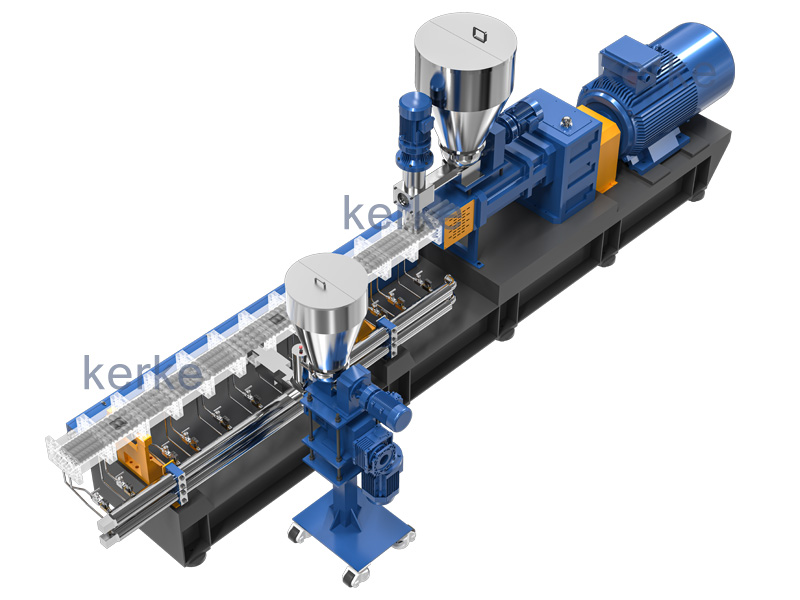
Feeding systems for masterbatch production must handle materials with widely different bulk densities and flow characteristics. Pigments often have very low bulk density and can be difficult to feed consistently. Twin screw extruder feeding systems designed for masterbatch applications incorporate features like twin-screw side feeders and force feeders that ensure consistent material delivery regardless of bulk density variations.
Extrusion Process and Parameter Control
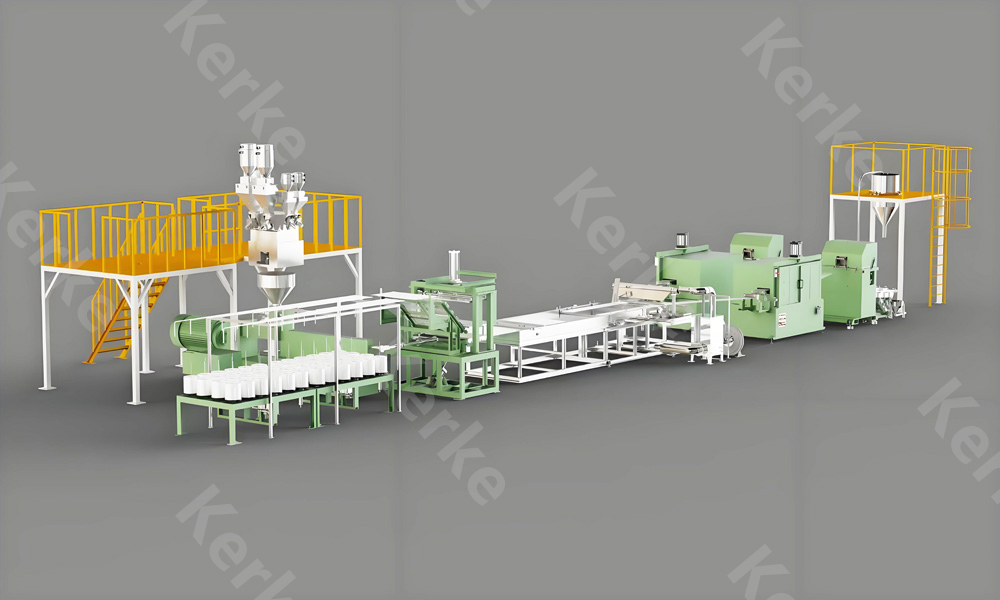
The twin screw extruder processing stage represents the heart of masterbatch production, where raw materials are melted, mixed, and transformed into homogeneous masterbatch pellets. Screw configuration design determines the mixing intensity and residence time distribution within the extruder. Masterbatch formulations typically require both dispersive mixing elements to break down pigment agglomerates and distributive mixing elements to ensure uniform dispersion throughout the melt.
Temperature control throughout the compounding extruder barrel length proves critical for achieving optimal masterbatch quality. The barrel temperature profile must melt the carrier resin completely while protecting heat-sensitive pigments and additives from degradation. Modern twin screw extruder systems feature multiple independently controlled heating and cooling zones that enable precise temperature management throughout the processing length.
Process monitoring and control systems help maintain consistent masterbatch quality throughout production runs. Parameters including melt pressure, melt temperature, screw speed, and motor load provide real-time indication of process stability. Statistical process control methods help identify trends that might indicate developing problems before they affect product quality. Masterbatch extruder systems from manufacturers like Kerke incorporate advanced control capabilities that support consistent, high-quality production.
Common Challenges and Solutions in Injection Molding Masterbatch
Color Variation and Dispersion Issues
Color variation represents one of the most common challenges in injection molding masterbatch applications, often stemming from inadequate pigment dispersion during the masterbatch production process. When pigments are not completely broken down and distributed throughout the carrier resin, injection molding processes cannot achieve uniform color regardless of parameter optimization. Twin screw extruder systems with inadequate mixing capability produce masterbatch containing pigment agglomerates that cause streaking, spotting, and color variation.
Solving color variation problems requires addressing the root cause in the masterbatch production process. Upgrading to a compounding extruder with enhanced mixing capability often resolves dispersion issues that plague injection molding operations. The twin screw extruder screw configuration must be optimized for the specific pigment and polymer system being processed, with sufficient kneading elements to break down agglomerates without degrading the carrier resin.
Process parameter optimization also plays a role in achieving complete pigment dispersion. Higher screw speeds generally improve dispersion but increase melt temperature and may degrade heat-sensitive materials. Masterbatch extruder operating conditions must balance dispersion requirements against thermal and shear sensitivity of the formulation. Working with equipment manufacturers like Kerke provides access to process development expertise that helps optimize production conditions.
Flowability and Feeding Problems
Flowability problems in masterbatch can cause inconsistent feeding and color variation in injection molding operations. Masterbatch pellets that bridge in hoppers or feed inconsistently create dosing variations that result in color differences between shots. These problems often originate from masterbatch extruder output configuration, including die design and pelletizing method, that produces pellets with inconsistent size or shape.
Improving masterbatch flowability requires attention to both formulation and processing factors. Carrier resin selection influences pellet properties and melt flow behavior during injection molding. Processing conditions in the twin screw extruder affect polymer molecular weight and pellet surface characteristics. Optimizing these factors produces masterbatch that feeds reliably and disperses rapidly during injection molding.
Pellet surface treatments and coatings can improve flowability for masterbatch that exhibits feeding problems. These treatments reduce inter-particle friction and prevent bridging in hopper systems. However, surface treatments add cost and may introduce compatibility issues with some injection molding applications. Compounding extruder systems properly configured for masterbatch production typically produce pellets with adequate flowability without requiring surface treatment.
Best Practices for Injection Molding Masterbatch Applications
Optimizing Addition Rates and Processing Conditions
Determining the optimal masterbatch addition rate requires balancing color development, processing characteristics, and cost considerations. Typical addition rates for injection molding masterbatch range from 1% to 5%, depending on pigment concentration, color strength requirements, and base polymer transparency. Higher addition rates ensure complete color development but increase material costs and may affect polymer properties.
Injection molding processing conditions significantly influence masterbatch performance and final product appearance. Melt temperature must be high enough to ensure complete masterbatch melting and dispersion but not so high as to degrade the polymer or pigments. Back pressure settings affect mixing intensity in the injection molding barrel, with higher back pressure improving masterbatch dispersion. Screw speed and holding pressure also influence how well masterbatch distributes throughout the molded part.
Best practices for injection molding with masterbatch include maintaining consistent processing conditions throughout production runs. Temperature variations, screw speed changes, and injection pressure fluctuations can all affect color uniformity. Implementing statistical process control methods helps identify and correct process variations before they affect product quality. Training operators on the importance of process consistency supports quality production with masterbatch coloring.
Storage and Handling Guidelines
Proper storage and handling of masterbatch help maintain quality and ensure consistent performance during injection molding. Masterbatch should be stored in cool, dry conditions away from direct sunlight and heat sources. Temperature-controlled storage areas prevent moisture absorption and pigment degradation that can affect color quality. Sealed containers protect masterbatch from contamination and maintain consistent pellet characteristics.
Handling procedures should minimize the risk of contamination and cross-color mixing. Dedicated containers and handling equipment for each color prevent cross-contamination that could cause color variation. Clean, dry conveying systems prevent moisture introduction and foreign material contamination. Establishing clear handling procedures and training personnel on proper practices supports consistent masterbatch quality.
First-in, first-out inventory management ensures that masterbatch is used within its recommended shelf life. While most masterbatch remains stable for extended periods when properly stored, using older material before newer stock prevents quality degradation. Documenting lot numbers and production dates enables traceability and helps identify the source of any quality issues that arise during injection molding operations.
Equipment Selection for Masterbatch Production
Choosing the Right Twin Screw Extruder
Selecting the appropriate twin screw extruder for masterbatch production requires careful consideration of production volume requirements, material characteristics, and quality standards. The extruder size and configuration must match the intended application, with sufficient mixing capability to achieve required dispersion quality. Masterbatch extruder selection also involves evaluating factors such as energy efficiency, maintenance requirements, and total cost of ownership.
Production volume requirements determine the appropriate extruder size. Small-scale masterbatch production for product development or specialty applications can be accomplished with compact twin screw extruder systems like the Kerke KTE-36B, which processes 20-100 kg/hour. This laboratory-scale equipment provides the mixing capability needed for quality masterbatch production at a lower capital investment than production-scale systems.
High-volume masterbatch manufacturing requires larger compounding extruder systems. The Kerke KTE-65B processes 200-450 kg/hour, suitable for medium-scale production serving regional injection molding markets. For large-scale masterbatch production serving global markets, the KTE-95D achieves throughputs of 1000-2000 kg/hour. These production-scale systems offer the highest throughput rates while maintaining the mixing quality required for premium masterbatch products.
Kerke Equipment Recommendations
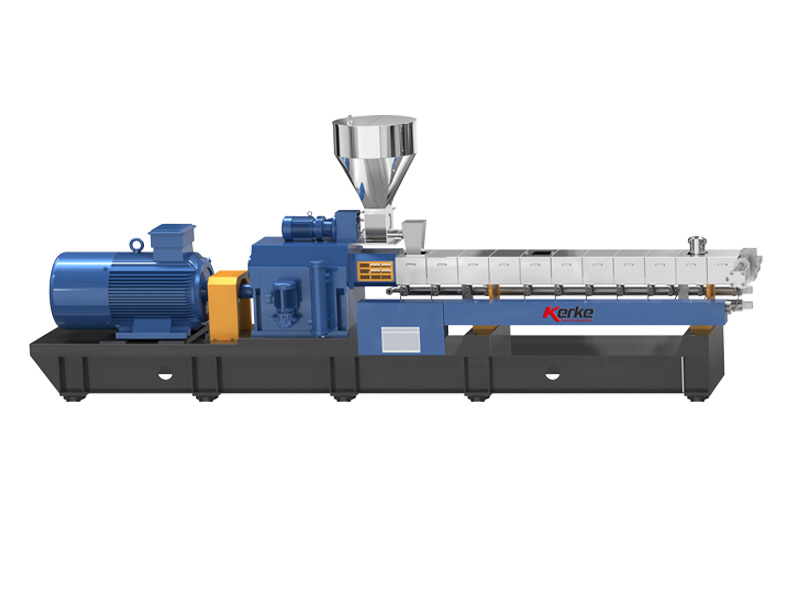
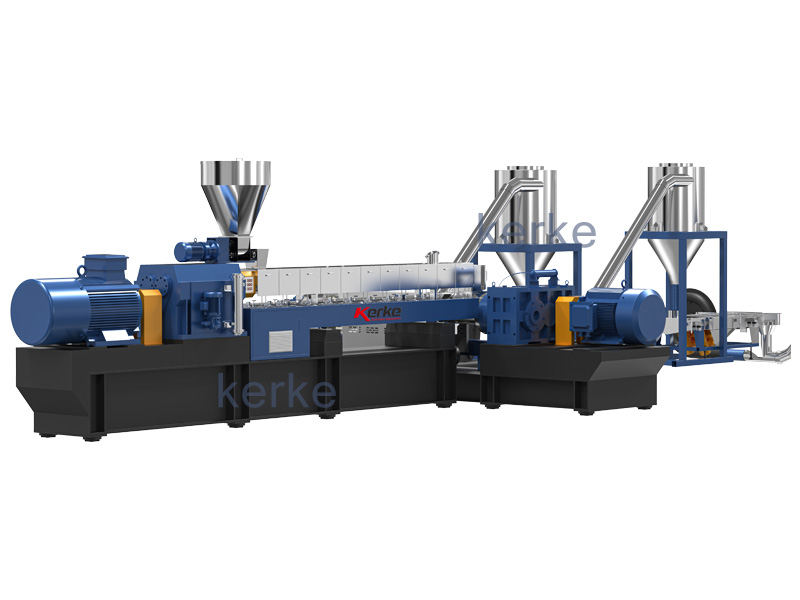
Kerke, a brand under Wanplas Group with over 13 years of twin screw extruder manufacturing experience, offers comprehensive equipment solutions for masterbatch production. The KTE series of co-rotating parallel twin screw extruders provides the mixing intensity, throughput capacity, and reliability required for quality masterbatch manufacturing. Kerke’s modular screw design enables optimization for specific masterbatch formulations and production requirements.
The KTE-36B, with a 35.6mm screw diameter and 500-600 rpm speed capability, suits small-scale masterbatch production and product development applications. Priced between $25,000 and $35,000, this compact twin screw extruder offers an affordable entry point for masterbatch production or a reliable production machine for specialty formulations. The 18.5-22KW motor provides ample power for masterbatch compounding applications.
For medium-scale masterbatch production, the Kerke KTE-65B represents an excellent choice. With a 62.4mm screw diameter and 500-600 rpm capability, this masterbatch extruder processes 200-450 kg/hour. The 90-110KW motor delivers the torque needed for high pigment loading formulations. Priced between $50,000 and $80,000, the KTE-65B offers outstanding value for production volumes typical of regional masterbatch suppliers.
Large-scale masterbatch operations requiring maximum throughput should consider the Kerke KTE-95D. This powerful compounding extruder features a 93mm screw diameter and can operate at speeds up to 800 rpm. The 315-500KW motor drives production rates of 1000-2000 kg/hour, enabling efficient high-volume manufacturing. At $120,000-$200,000, the KTE-95D provides the capacity and capability needed for global masterbatch production.
Cost Analysis and Price Estimation
Equipment Investment and Operating Costs
Investment in masterbatch production equipment requires careful analysis of capital costs, operating expenses, and return on investment potential. Twin screw extruder prices vary significantly based on size, configuration, and capabilities. Small laboratory systems like the Kerke KTE-16 cost approximately $15,000-$25,000, while production-scale equipment like the KTE-95D represents investments of $120,000-$200,000 or more.
Operating costs for masterbatch production include raw materials, energy, labor, and maintenance expenses. Raw material costs typically represent 60-80% of total production costs, depending on pigment prices and loading levels. Energy costs vary based on extruder size and operating conditions, with production rates of 100-300 kWh per ton of masterbatch typical for twin screw extruder operations. Labor requirements depend on automation level and production volume.
Maintenance costs for quality masterbatch extruder equipment like Kerke systems are relatively modest when proper preventive maintenance practices are followed. Annual maintenance costs typically range from 2-5% of equipment value, including spare parts, lubricants, and service labor. Kerke provides $500 in free spare parts annually and covers damaged parts replacement during the warranty period, reducing maintenance costs during early years of ownership.
Masterbatch Production Economics
The economics of masterbatch production depend on production volume, raw material costs, and market pricing for finished masterbatch. Production-scale twin screw extruder systems achieve lower per-unit production costs through higher throughput rates and better energy efficiency. Manufacturing masterbatch at rates of 500-1000 kg/hour using efficient compounding extruder technology can reduce production costs by 20-40% compared to small-scale production.
Capital investment recovery periods for masterbatch production equipment depend on production volume and gross margin on finished products. A $50,000-$80,000 investment in a Kerke KTE-65B system can be recovered in 2-3 years with consistent production at 70-80% capacity utilization. Higher production volumes and better capacity utilization accelerate investment recovery.
Market analysis should accompany equipment investment decisions to ensure adequate demand for planned production capacity. Masterbatch demand continues to grow globally, driven by expanding injection molding production and increasing color and additive requirements. Regional market conditions, competitive landscape, and customer relationships all influence the business case for masterbatch production equipment investment.
Quality Standards and Testing Methods
Industry Standards for Masterbatch Quality
Masterbatch quality standards address color accuracy, dispersion quality, additive effectiveness, and physical properties of the finished product. Color specifications typically define target color values and acceptable tolerance ranges using CIELAB color space measurements. Dispersion quality standards ensure that pigment particles are adequately reduced in size and uniformly distributed throughout the carrier resin.
Testing methods for masterbatch quality include color strength measurements, dispersion assessment, thermal analysis, and processing trials. Color strength testing determines the tinting power of masterbatch samples compared to standards. Dispersion assessment may involve microscope examination, filter pressure testing, or plate-out evaluation. Twin screw extruder trials provide direct evaluation of masterbatch processing behavior and final product quality.
Quality management systems like ISO 9001 provide frameworks for ensuring consistent masterbatch quality. Documentation requirements include material traceability, process parameter records, and quality test results. Masterbatch extruder systems with integrated data collection capabilities support quality management requirements by automatically recording process conditions throughout production runs.
Testing Equipment and Procedures
Quality testing for masterbatch requires specialized equipment including spectrophotometers, microscopes, thermal analyzers, and processing equipment. Color measurement using spectrophotometers provides objective, quantitative assessment of masterbatch color properties. Microscope examination reveals pigment dispersion quality and identifies agglomerates that could cause processing problems. Thermal analysis determines melting behavior and thermal stability.
Processing trials using laboratory twin screw extruder or injection molding equipment provide the most direct assessment of masterbatch performance. These trials evaluate dispersion behavior, color development, and processing characteristics under conditions representative of customer applications. Kerke offers factory visits where customers can conduct trials on production-scale compounding extruder equipment to evaluate masterbatch formulations.
Documentation of testing procedures and results supports quality management and customer communication. Test reports should clearly identify samples, test methods, results, and conformance to specifications. Statistical analysis of test results helps identify trends and variations that might indicate developing quality issues. Establishing comprehensive testing programs ensures consistent masterbatch quality that meets injection molding customer requirements.
Industry Applications for Injection Molding Masterbatch
Consumer Products and Packaging
Consumer products represent a major application segment for injection molding masterbatch, requiring consistent color quality across high-volume production runs. Products ranging from household items to personal care packaging depend on masterbatch for achieving brand-specific colors that differentiate products in competitive markets. The twin screw extruder technology used to produce masterbatch for consumer applications must deliver excellent color consistency at competitive cost.
Packaging applications for injection molded products demand masterbatch that meets food contact regulations while providing attractive appearance and processing reliability. Color masterbatch for packaging must achieve uniform color development at low addition rates to minimize impact on material costs and polymer properties. Compounding extruder systems optimized for masterbatch production help manufacturers meet these demanding requirements efficiently.
Sustainability considerations increasingly influence masterbatch selection for consumer products and packaging. Masterbatch producers using advanced twin screw extruder technology can incorporate recycled content, bio-based materials, and additives that enhance recyclability. These capabilities help injection molders meet sustainability goals while maintaining product quality and appearance requirements.
Automotive and Industrial Applications
Automotive applications represent one of the most demanding segments for injection molding masterbatch, requiring exceptional color consistency, weatherability, and mechanical property retention. Interior automotive components must maintain appearance throughout vehicle service life under varying temperature and light exposure conditions. Masterbatch for automotive applications typically incorporates UV stabilizers and other additives that protect color and polymer properties.
Industrial applications for injection molded products require masterbatch that provides consistent color while maintaining or enhancing polymer properties. Functional masterbatch can incorporate additives that improve flame retardancy, chemical resistance, or mechanical properties. Twin screw extruder systems with versatile screw configurations enable production of both color and functional masterbatch for industrial applications.
Quality requirements for automotive and industrial applications often exceed those for consumer products, requiring more rigorous quality control and documentation. Masterbatch extruder production for these applications demands consistent processing conditions and comprehensive quality testing. Kerke’s production-scale twin screw extruder systems provide the reliability and process control needed for automotive and industrial masterbatch manufacturing.
Why Choose Kerke for Masterbatch Production Equipment
Technical Advantages and Capabilities
Kerke offers significant technical advantages for masterbatch production through over 13 years of twin screw extruder manufacturing experience. The KTE series of co-rotating parallel twin screw extruders features high torque, high speed, and high throughput capabilities that enable efficient masterbatch manufacturing. Modular screw design allows optimization for specific masterbatch formulations, while segmented barrel construction provides flexibility for process configuration.
Self-manufacture of core components including screws, shafts, barrels, and gearboxes ensures quality control and availability of spare parts for Kerke equipment. This vertical integration enables Kerke to provide competitive pricing while maintaining quality standards. The compounding extruder systems from Kerke incorporate precision machining and quality materials that deliver reliable performance over extended service life.
Kerke provides comprehensive solutions for masterbatch production, from equipment supply through process development support. The company’s technical team can assist with formulation development, process optimization, and troubleshooting to help customers achieve quality masterbatch production. This support capability proves particularly valuable for companies entering masterbatch manufacturing or developing new product lines.
Service and Support Benefits
Kerke distinguishes itself through comprehensive service and support programs that reduce ownership costs and maximize equipment value. Annual provision of $500 in free spare parts helps control maintenance costs. Warranty coverage includes free replacement of damaged parts, providing protection against unexpected repair expenses. These programs demonstrate Kerke’s confidence in equipment quality and commitment to customer satisfaction.
Factory visit programs enable customers to evaluate equipment capabilities and conduct production trials before purchase. These visits provide opportunity to see compounding extruder systems in operation, discuss technical requirements with Kerke engineers, and evaluate how equipment will meet production needs. The open invitation for factory visits reflects Kerke’s transparency and commitment to customer partnership.
Complete solution provision from formulation to finished product helps customers establish successful masterbatch production operations. Kerke’s experience across diverse applications provides valuable insights for equipment selection, process development, and quality optimization. This comprehensive support capability makes Kerke an ideal partner for companies seeking to enter or expand masterbatch manufacturing operations.
Maintenance and Troubleshooting
Preventive Maintenance Requirements
Preventive maintenance programs for masterbatch extruder equipment help ensure consistent production and prevent unexpected downtime. Regular inspection and maintenance of screws, barrels, and drive components identify wear before it affects product quality or causes equipment failure. Twin screw extruder maintenance requirements include regular lubrication, seal inspection, and calibration of temperature and pressure sensors.
Screw and barrel inspection should occur at regular intervals based on operating hours and material characteristics. Abrasive pigments and fillers accelerate wear on these components, potentially requiring replacement after 10,000-20,000 operating hours depending on material types and processing conditions. Kerke’s modular screw design enables replacement of worn sections rather than complete screw assembly, reducing maintenance costs.
Documentation of maintenance activities and equipment condition supports proactive maintenance planning. Recording operating hours, maintenance activities, and component replacements helps predict future maintenance needs and schedule interventions during planned production breaks. This systematic approach to maintenance maximizes equipment availability and service life while minimizing unexpected production interruptions.
Common Problems and Solutions
Processing problems in masterbatch production often manifest as quality issues or equipment malfunctions. Poor dispersion quality typically indicates insufficient mixing intensity, requiring evaluation of screw configuration and processing parameters. Overheating problems may result from excessive shear, insufficient cooling capacity, or process instability. Troubleshooting these issues requires systematic evaluation of potential causes.
Equipment problems including unusual noise, vibration, or temperature fluctuations may indicate developing mechanical issues. Prompt investigation and correction of these symptoms prevents more serious damage and production interruption. Kerke provides technical support for troubleshooting equipment problems, helping customers quickly identify causes and implement solutions.
Quality problems including color variation, contamination, or inconsistent processing behavior require root cause analysis. Changes in raw material properties, process conditions, or equipment condition may contribute to quality issues. Statistical process control methods help identify when problems develop and support systematic investigation of causes. Working with experienced equipment suppliers like Kerke provides access to troubleshooting expertise and support resources.
Future Trends in Masterbatch for Injection Molding
Technology Developments and Innovations
The masterbatch industry continues to evolve with advances in pigment technology, additive chemistry, and processing equipment. New pigment developments enable more vibrant colors, special effects, and improved performance characteristics that expand application possibilities. Twin screw extruder technology advances provide better mixing efficiency, higher throughput rates, and improved energy efficiency that support competitive masterbatch production.
Sustainability considerations drive development of bio-based masterbatch carriers, recycled content incorporation, and additive systems that enhance polymer recyclability. These developments respond to increasing regulatory requirements and consumer expectations for environmental responsibility. Compounding extruder systems must accommodate these new materials while maintaining processing efficiency and product quality.
Digital technology integration into masterbatch production enables improved process control, quality monitoring, and production optimization. Twin screw extruder systems with advanced sensors, data collection capabilities, and process modeling tools help manufacturers achieve consistent quality while optimizing efficiency. These technologies support the trend toward Industry 4.0 manufacturing operations.
Market Evolution and Opportunities
The masterbatch market continues to grow globally, driven by expanding plastics production and increasing demand for colored and functionalized polymers. Injection molding represents a major application segment, with growth in automotive, packaging, and consumer products driving masterbatch demand. Twin screw extruder capacity for masterbatch production must expand to meet this growing demand.
Regional market development creates opportunities for new masterbatch production facilities closer to injection molding customers. Local production reduces logistics costs and lead times while providing better customer service and technical support. Kerke’s range of compounding extruder equipment from laboratory to production scale supports regional masterbatch producers in serving local markets efficiently.
Specialization and differentiation represent strategic opportunities for masterbatch producers. Developing expertise in specific application segments, color ranges, or functional masterbatch types enables producers to command premium pricing and build strong customer relationships. Investment in quality twin screw extruder equipment and technical capabilities supports this differentiation strategy.
Frequently Asked Questions
What is the typical addition rate for masterbatch in injection molding?
Typical addition rates for masterbatch in injection molding range from 1% to 5% depending on pigment concentration, color strength requirements, and base polymer characteristics. Higher pigment loading masterbatch can achieve target colors at lower addition rates. Twin screw extruder technology enables production of highly concentrated masterbatch that provides excellent color development at economical addition rates.
How does carrier resin selection affect masterbatch performance?
Carrier resin selection significantly impacts masterbatch compatibility, dispersion behavior, and processing characteristics. The carrier must be compatible with the injection molding base polymer to ensure complete mixing and avoid property degradation. Masterbatch extruder manufacturers like Kerke can provide guidance on carrier resin selection for specific applications.
What causes color variation in injection molding with masterbatch?
Color variation can result from poor masterbatch dispersion, inconsistent feeding, injection molding process variations, or masterbatch quality issues. High-quality masterbatch produced using advanced twin screw extruder technology with proper pigment dispersion typically eliminates masterbatch-related color variation. Process control in injection molding helps maintain consistent results.
How should masterbatch be stored?
Masterbatch should be stored in cool, dry conditions away from direct sunlight and heat sources. Temperature-controlled storage prevents moisture absorption and pigment degradation. Sealed containers protect against contamination. Proper storage maintains masterbatch quality throughout its recommended shelf life.
What twin screw extruder size is needed for masterbatch production?
Extruder size selection depends on required production volume, formulation complexity, and quality requirements. Small systems like the Kerke KTE-36B processing 20-100 kg/hour suit specialty production and development. Production systems like the KTE-65B and KTE-95D meet medium to high-volume manufacturing requirements. Compounding extruder selection should consider both current needs and future growth potential.
Conclusion
Masterbatch for injection molding represents a sophisticated technology requiring careful attention to formulation, production equipment, and processing parameters. Achieving optimal color uniformity, flowability, and mass production efficiency demands high-quality masterbatch produced using advanced twin screw extruder technology. Understanding the relationships between masterbatch quality, processing conditions, and injection molding performance enables manufacturers to optimize their operations and deliver consistent quality products.
Investment in quality masterbatch production equipment like Kerke KTE series twin screw extruders provides the foundation for competitive masterbatch manufacturing. The combination of technical capability, reliability, and comprehensive support services positions manufacturers for success in the growing masterbatch market. Proper equipment selection, process optimization, and quality management practices enable masterbatch producers to meet the demanding requirements of injection molding applications across diverse industry segments.
The future of masterbatch for injection molding continues to evolve with advances in materials, equipment, and digital technologies. Staying current with these developments while maintaining focus on quality and customer service ensures long-term success in masterbatch production. Kerke’s commitment to technology advancement and customer partnership makes the company an ideal supplier for masterbatch production equipment, supporting manufacturers in achieving their production and quality objectives.