Introduction
Sodium sulfate filler masterbatch represents an innovative and cost-effective solution for polymer modification, offering unique advantages for high-filling applications in the plastics industry. As manufacturers increasingly seek ways to reduce material costs while maintaining product performance, sodium sulfate (Na₂SO₄) has emerged as a valuable filler material for various polymer applications. This comprehensive guide explores the properties, applications, production processes, and market trends of sodium sulfate filler masterbatch, with specific focus on production using advanced twin screw extruders from Kerke Extrusion Equipment.
Sodium sulfate is an inorganic salt that offers several advantages as a filler material, including low cost, low density, and compatibility with various polymer systems. Sodium sulfate filler masterbatch consists of high-concentration sodium sulfate particles uniformly dispersed in a carrier resin matrix, enabling easy incorporation of this filler into plastic products. The resulting materials exhibit cost savings, improved dimensional stability, and enhanced processing characteristics, making them suitable for numerous industrial applications.
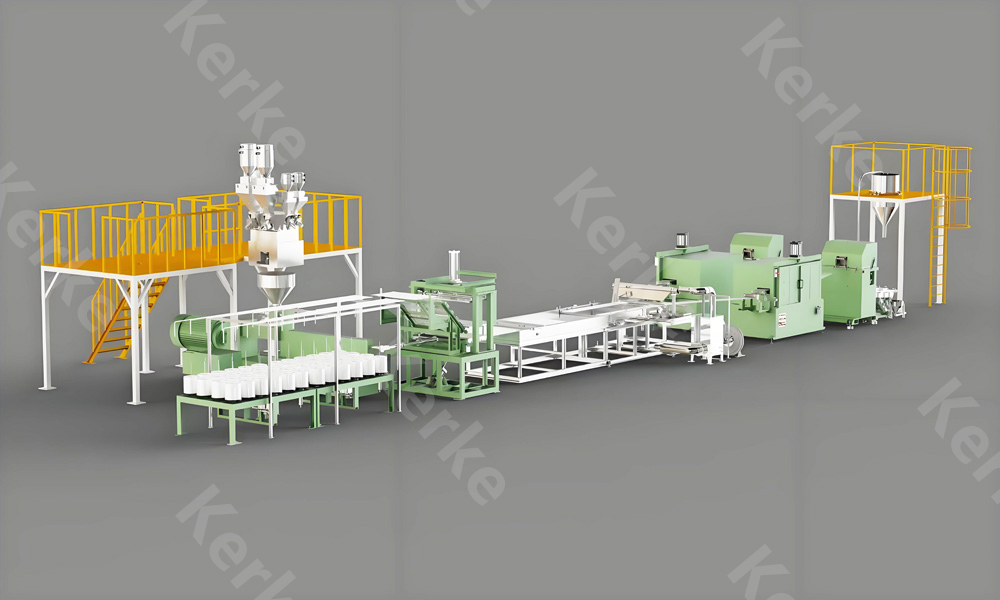
The production of sodium sulfate filler masterbatch requires specialized processing equipment capable of handling high filler loadings while maintaining excellent dispersion quality. Kerke Extrusion Equipment offers state-of-the-art twin screw extruders specifically designed for high-filling masterbatch production, ensuring consistent product quality and optimal performance in end-use applications.
Properties and Characteristics of Sodium Sulfate Filler Masterbatch
Understanding the fundamental properties of sodium sulfate filler masterbatch is essential for selecting appropriate formulations for specific applications. The unique characteristics of sodium sulfate particles and their interaction with polymer matrices provide numerous benefits.
Physical Properties
Sodium sulfate filler masterbatch exhibits distinctive physical properties that contribute to its effectiveness as a high-filling compound:
Low density: Sodium sulfate has a relatively low density of approximately 2.7 g/cm³ compared to many other inorganic fillers such as calcium carbonate (2.7-2.9 g/cm³) and talc (2.7-2.8 g/cm³). This low density helps reduce the overall weight of filled polymers, making sodium sulfate an attractive option for weight-sensitive applications where cost reduction is also desired.
Particle size and morphology: Sodium sulfate particles are typically available in sizes ranging from 1 to 50 micrometers, with optimized grades for masterbatch production falling in the 5-20 micrometer range. The particles generally have crystalline morphology that can be engineered for optimal dispersion and distribution within polymer matrices.
Thermal stability: Sodium sulfate exhibits good thermal stability at typical polymer processing temperatures, maintaining its structural integrity up to approximately 600°C before decomposition. This stability allows sodium sulfate filler masterbatch to be processed using standard thermoplastic processing equipment without degradation or decomposition of the filler material.
Chemical Properties
The chemical characteristics of sodium sulfate influence its compatibility with polymer systems and behavior in various environments:
Water solubility: Unlike most other inorganic fillers, sodium sulfate is moderately soluble in water, with solubility of approximately 19.5 g/100 mL at 20°C. This property must be carefully considered for applications where water exposure is expected, as water exposure could lead to gradual filler dissolution and property changes over time.
Chemical inertness: Sodium sulfate is chemically inert in most environments and does not react with common polymer resins or processing additives. This chemical inertness ensures long-term stability of the composite material and prevents undesirable reactions that could degrade product performance.
Thermal decomposition behavior: When heated above its decomposition temperature, sodium sulfate decomposes to form sodium oxide and sulfur oxides. This decomposition is generally not a concern during standard polymer processing, as processing temperatures remain well below the decomposition threshold.
Mechanical Properties
The mechanical effects of sodium sulfate filler masterbatch on polymer matrices must be carefully considered for application suitability:
Stiffness enhancement: Sodium sulfate particles provide moderate stiffness improvement to polymer matrices, with increases in flexural modulus typically ranging from 20% to 80% depending on filler loading and particle size. This stiffness enhancement is valuable for applications requiring dimensional stability but may reduce flexibility of the material.
Impact resistance considerations: High filler loadings of sodium sulfate may reduce impact resistance in certain polymer systems. The extent of impact resistance reduction depends on particle size, loading level, and compatibility with the polymer matrix. For applications requiring impact resistance, formulation optimization with impact modifiers may be necessary.
Dimensional stability: Sodium sulfate filler can improve dimensional stability of polymers by reducing shrinkage during cooling and minimizing creep under load. This property is particularly valuable for injection-molded parts requiring tight tolerances and consistent dimensions.
Processing Properties
The processing behavior of sodium sulfate filler masterbatch significantly affects production efficiency and product quality:
Flow characteristics: Sodium sulfate particles generally do not significantly alter melt flow properties of polymer matrices, maintaining good processability even at high filler loadings. This characteristic allows manufacturers to increase filler content without substantial changes to processing parameters or equipment.
Wear characteristics: Sodium sulfate has relatively low abrasiveness compared to other inorganic fillers, resulting in reduced wear on processing equipment such as screws, barrels, and dies. This property extends equipment lifespan and reduces maintenance costs compared to more abrasive fillers.
Moisture sensitivity: Due to its water solubility, sodium sulfate filler masterbatch requires careful control of moisture content during processing and storage. Excessive moisture exposure can lead to filler dissolution, processing issues, and potential property changes in the final product. Proper drying procedures are essential for consistent processing.
Applications and Industrial Uses
Sodium sulfate filler masterbatch finds applications across numerous industries, particularly where cost reduction and dimensional stability are primary requirements. The following sections explore key application areas and specific uses within each industry.
Packaging Industry
The packaging industry represents one of the largest application areas for sodium sulfate filler masterbatch, particularly in cost-sensitive segments:
Films and sheets: Sodium sulfate filler masterbatch can be used in polyethylene and polypropylene films and sheets to reduce material costs while maintaining adequate mechanical properties. The filler can improve stiffness and dimensional stability of thin films, making them more suitable for packaging applications requiring flatness and dimensional consistency.
Non-food containers: Sodium sulfate-filled polymers are suitable for non-food packaging containers such as shopping bags, laundry bags, and storage bins where cost reduction is a primary consideration and food contact approval is not required. The dimensional stability provided by the filler helps containers maintain shape during handling and storage.
Rigid packaging components: In injection-molded rigid packaging components such as caps, closures, and boxes, sodium sulfate filler provides cost savings while maintaining adequate stiffness and dimensional stability for packaging applications.
Construction Materials
Sodium sulfate filler masterbatch offers benefits for various construction material applications, particularly where cost-effectiveness is important:
PVC profiles and pipes: Sodium sulfate can be used in PVC window profiles, pipes, and fittings to reduce material costs while maintaining required mechanical properties and dimensional stability. The low wear characteristics of sodium sulfate reduce equipment wear during production compared to more abrasive fillers.
Thermoplastic roofing materials: In thermoplastic roofing membranes and sheets, sodium sulfate filler provides cost reduction while maintaining required mechanical properties for roofing applications. The dimensional stability contributed by the filler helps maintain flatness and dimensional consistency of roofing materials.
Polymer-based building components: Sodium sulfate-filled polymers can be used in various construction components such as cable trays, junction boxes, and utility enclosures where cost reduction is important and dimensional stability is required.
Disposable Products
The disposable products industry represents a significant application area for sodium sulfate filler masterbatch due to its cost-effectiveness:
Disposable cutlery and tableware: Sodium sulfate-filled polymers can be used in disposable knives, forks, spoons, and plates where cost reduction is critical and product performance requirements are moderate. The stiffness provided by the filler helps products maintain shape during use.
Disposable medical packaging: Sodium sulfate filler masterbatch can be used in disposable medical packaging components such as trays, containers, and packaging films where cost reduction is important and product must meet dimensional requirements but not necessarily food contact specifications.
Disposable consumer goods: Various disposable consumer goods such as razors, disposable cameras, and single-use containers can benefit from sodium sulfate filler for cost reduction while maintaining adequate performance for their intended use.
Industrial Components
Sodium sulfate filler masterbatch finds applications in various industrial components where cost and dimensional stability are important considerations:
Spools and reels: For wire and cable spools, thread spools, and other winding applications, sodium sulfate-filled polymers provide cost savings while maintaining required dimensional stability and load-bearing capacity for the intended application.
Industrial containers and crates: Sodium sulfate filler can be used in plastic containers and crates for industrial storage and transport applications, where cost reduction and dimensional stability for stacking and storage are important requirements.
Non-critical structural components: In non-critical structural applications where weight reduction and cost savings are desired, sodium sulfate-filled polymers can provide adequate performance at lower cost compared to unfilled polymers or more expensive filler systems.
Production Process and Equipment
The production of high-quality sodium sulfate filler masterbatch requires careful attention to moisture control, particle dispersion, and processing parameters. This section details the production process and highlights the role of advanced twin screw extruders from Kerke Extrusion Equipment.
Raw Material Selection and Preparation
Quality production begins with careful selection and preparation of raw materials, including sodium sulfate powder, carrier resins, and additives:
Sodium sulfate selection: The choice of sodium sulfate grade significantly affects masterbatch properties and processing. Key factors include particle size distribution, particle shape, purity level, and moisture content. Optimized grades for masterbatch production typically have particle sizes of 5-20 micrometers with narrow distribution and moisture content below 0.1%.
Carrier resin selection: Polyethylene (PE) and polypropylene (PP) are the most common carrier resins for sodium sulfate masterbatch due to their compatibility, low cost, and widespread use in applications suitable for sodium sulfate-filled materials. The specific resin grade should be selected based on target application requirements.
Compatibilizer and additive selection: While sodium sulfate generally shows good compatibility with polyolefins, compatibilizers such as maleic anhydride grafted polymers may be used to improve interfacial adhesion and enhance mechanical properties, particularly at high filler loadings. Antioxidants and thermal stabilizers may be added to prevent degradation during processing.
Moisture Control and Drying
Moisture control represents a critical aspect of sodium sulfate filler masterbatch production due to sodium sulfate’s water solubility:
Resin drying: Carrier resins must be thoroughly dried before processing to remove absorbed moisture that could cause hydrolysis or processing defects. Polyethylene and polypropylene typically require drying at 80-100°C for 2-4 hours to achieve moisture content below 0.05%.
Sodium sulfate drying: Sodium sulfate powder must be dried before processing to remove surface moisture and prevent caking. Drying temperatures of 100-120°C for 2-3 hours typically achieve moisture content below 0.1%, suitable for masterbatch production.
Environmental control: Processing environment humidity should be controlled to prevent moisture absorption by dried materials during handling and feeding. Dehumidified processing areas or enclosed feeding systems help maintain low moisture levels throughout production.
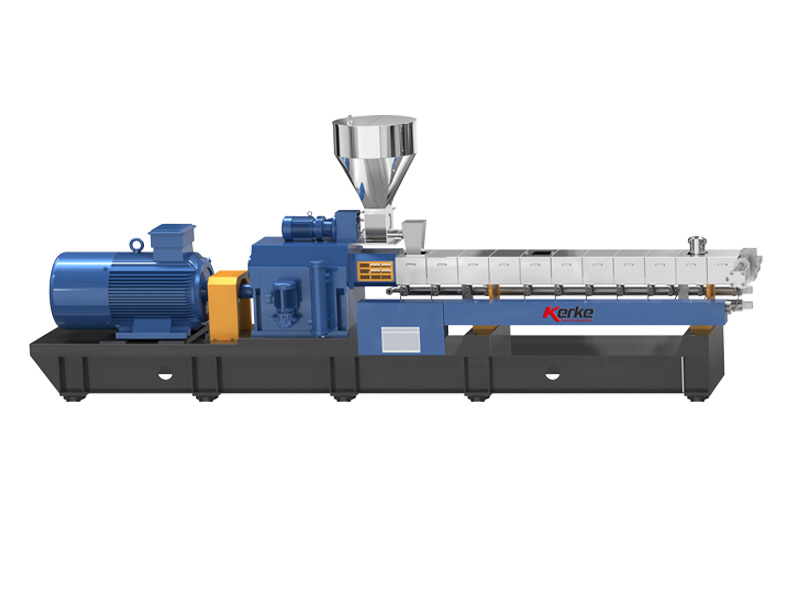
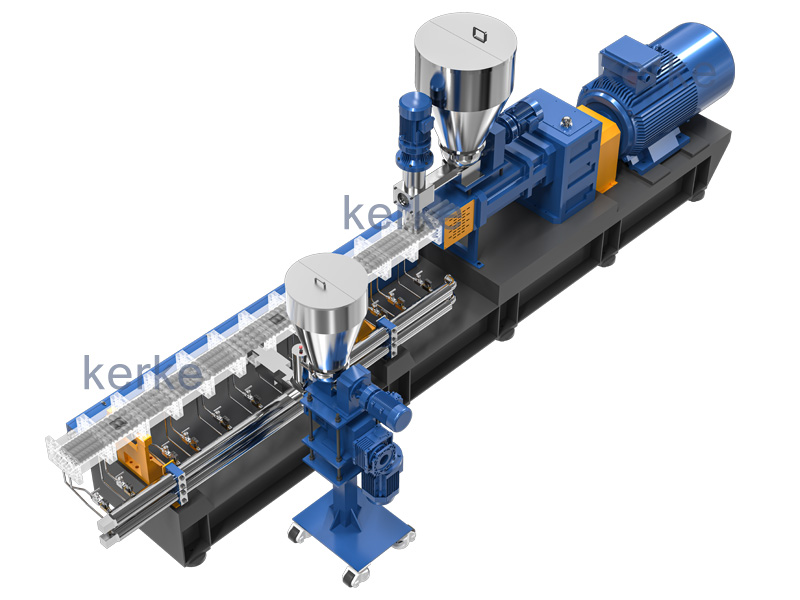
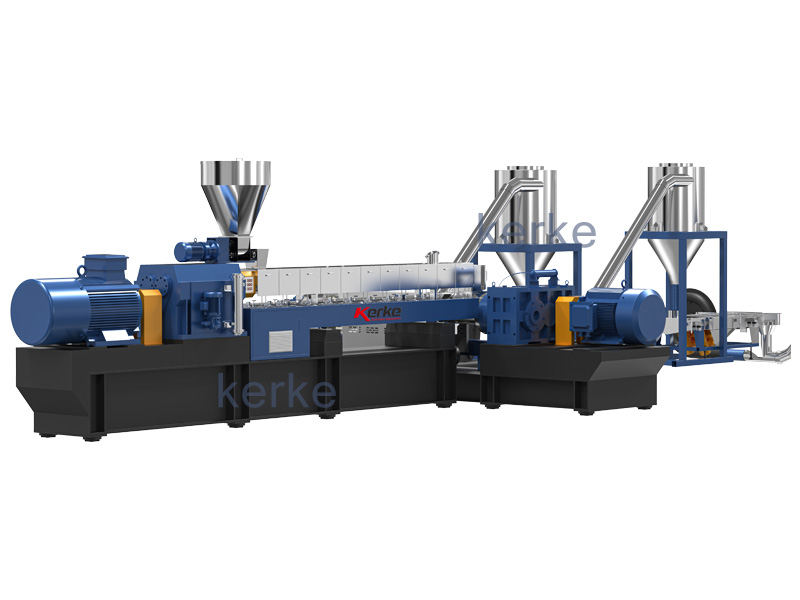
Kerke Twin Screw Extruder Processing
Kerke Extrusion Equipment offers specialized twin screw extruders designed for efficient sodium sulfate filler masterbatch production:
High capacity for high loadings: Kerke KTE Series extruders with screw diameters of 65mm, 75mm, and 95mm are particularly suitable for high-filling masterbatch production. The KTE-65 model provides 300-500 kg/h capacity for sodium sulfate masterbatch, the KTE-75 offers 500-800 kg/h, and the KTE-95 achieves 800-1200 kg/h.
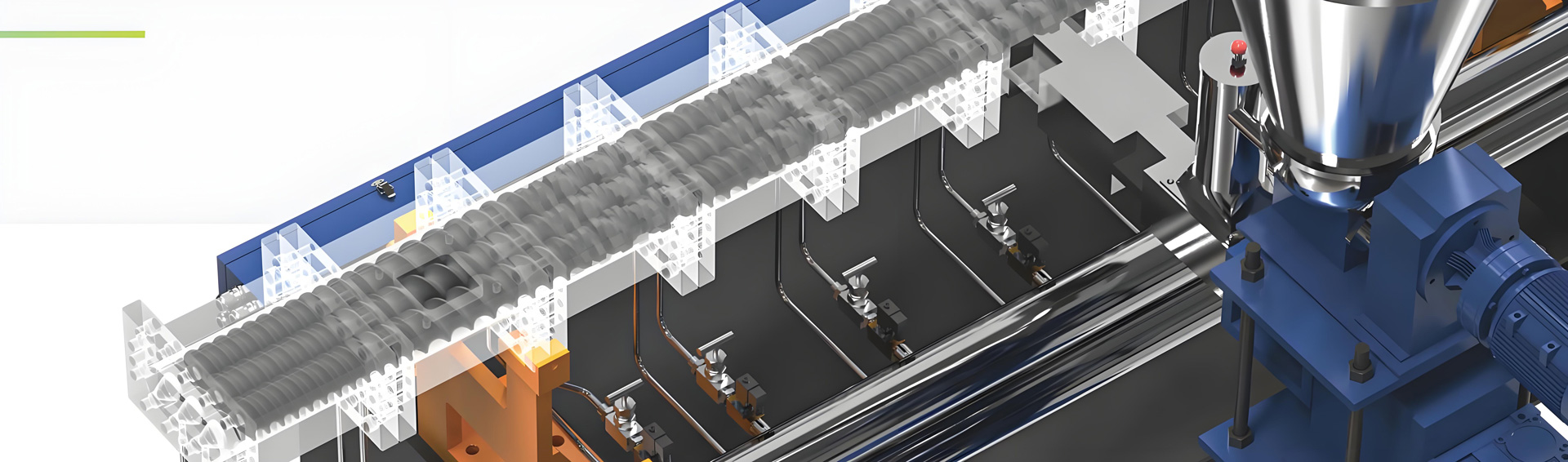
Advanced mixing systems: The intermeshing screw design with specialized mixing elements ensures uniform dispersion of sodium sulfate particles throughout the polymer matrix. The screw configuration can be optimized for specific particle sizes and loading levels, achieving excellent distribution without excessive shear that could degrade the polymer.
Precision temperature control: Multi-zone temperature control with accurate sensors maintains optimal processing temperatures for sodium sulfate masterbatch production. Typical processing temperatures for polyethylene-based sodium sulfate masterbatch range from 180-210°C, while polypropylene-based formulations typically require 200-230°C.
Formulation Development
Formulation optimization for sodium sulfate filler masterbatch involves balancing cost reduction with performance requirements:
Filler loading optimization: Sodium sulfate concentration typically ranges from 30% to 70% in masterbatch formulations, depending on target application properties and cost objectives. Higher filler loadings provide greater cost savings but may reduce mechanical properties and processability. Most commercial formulations contain 40-60% sodium sulfate.
Particle size selection: Smaller particle sizes generally provide better mechanical properties due to increased surface area and better stress transfer, but may increase viscosity and processing difficulty. Larger particles provide easier processing but may reduce mechanical properties. Optimal particle size depends on specific application requirements.
Additive balance: The formulation must balance cost objectives with performance requirements. Additives such as impact modifiers, compatibilizers, and stabilizers may be included to achieve required properties while maintaining cost advantage over alternative materials.
Equipment Cost and Investment Analysis
Investment in appropriate processing equipment for sodium sulfate filler masterbatch production represents a significant capital expenditure but offers attractive returns through reduced material costs and production efficiency.
Kerke Extruder Investment Costs
Kerke Extrusion Equipment offers a range of twin screw extruders suitable for sodium sulfate filler masterbatch production with varying investment levels:
KTE-65 model: The 65mm screw diameter extruder provides production capacity of 300-500 kg/h for sodium sulfate masterbatch, with investment cost of $280,000-$420,000. This mid-range model includes standard features such as 40:1 L/D ratio, multi-zone temperature control, and advanced screw configuration for excellent filler dispersion.
KTE-75 model: The 75mm screw diameter extruder achieves 500-800 kg/h production capacity, with investment cost of $400,000-$580,000. This higher-capacity model includes enhanced features such as automatic lubrication system, advanced process control, and optimized screw design for high-filling formulations.
KTE-95 model: The 95mm screw diameter extruder provides 800-1200 kg/h production capacity, with investment cost of $680,000-$920,000. This large-scale extruder includes all advanced features and is designed for high-volume production with minimal operator intervention.
Complete Production Line Investment
A complete sodium sulfate filler masterbatch production line requires various auxiliary equipment in addition to the main extruder:
Drying systems: Dehumidifying dryers for both carrier resin and sodium sulfate drying cost $30,000-$90,000 depending on capacity and drying requirements. Proper drying is critical for sodium sulfate masterbatch production due to the filler’s moisture sensitivity.
Feeding systems: Precision gravimetric feeding systems including main feeder and side feeders cost $45,000-$130,000 depending on number of feeders and sophistication level. Accurate feeding is critical for maintaining consistent sodium sulfate loading throughout production.
Pelletizing and cooling systems: Water ring pelletizers or strand pelletizers cost $38,000-$90,000 depending on production capacity and automation level. Cooling systems including water baths and temperature control add $15,000-$35,000.
Complete line investment: A complete production line including extruder, drying, feeding, pelletizing, and auxiliary systems typically costs $550,000-$1,400,000 depending on production capacity and automation level.
Operating Cost Analysis
Understanding operating costs is essential for economic planning and profitability analysis:
Raw material costs: Raw materials account for 70-85% of total production costs. Sodium sulfate represents the lowest cost component, typically priced at $80-$150 per metric ton, making up 5-10% of raw material costs. Carrier resins and additives comprise the remaining raw material expenses.
Energy costs: Energy consumption during extrusion and drying represents 10-18% of total production costs. Sodium sulfate-filled polymers typically require 15-25% less energy compared to more abrasive fillers due to lower wear and reduced processing difficulties.
Labor costs: Labor costs typically account for 8-14% of total production costs, varying with production volume, automation level, and local labor rates. Higher automation reduces labor requirements but increases initial investment.
Market Pricing and Cost Savings
Sodium sulfate filler masterbatch offers significant cost advantages compared to many alternative filler systems:
Formulation pricing: Standard sodium sulfate masterbatch with 40-50% filler loading typically ranges from $0.90 to $1.40 per kilogram in bulk quantities. Higher filler loadings (60-70%) command prices of $1.00-$1.60 per kilogram. These prices are generally 20-35% lower than equivalent calcium carbonate or talc masterbatch formulations.
Cost savings for end-users: Manufacturers switching to sodium sulfate-filled polymers can achieve raw material cost savings of 30-50% compared to unfilled polymers and 15-25% savings compared to other common filler systems. This significant cost advantage makes sodium sulfate filler masterbatch particularly attractive for cost-sensitive applications.
Economic analysis: The economic advantages of sodium sulfate filler masterbatch make it an excellent choice for applications where cost reduction is a primary objective and moderate performance requirements can be met with filled polymers. Return on investment for production lines can be achieved within 18-30 months depending on market conditions and production volume.
Market Trends and Future Outlook
The sodium sulfate filler masterbatch market is evolving as manufacturers increasingly seek cost-effective filler solutions. Understanding market trends is essential for strategic planning.
Current Market Size and Growth
The global sodium sulfate filler masterbatch market is experiencing moderate growth, with current market size estimated at approximately 2.8 million metric tons (MT) in 2025. The market is projected to grow at a compound annual growth rate (CAGR) of 4.2% from 2025 to 2030, reaching approximately 3.5 million MT by 2030.
Asia-Pacific represents the largest regional market, accounting for 60-65% of global consumption, driven by strong demand for cost-effective materials in China, India, and Southeast Asia. North America and Europe each represent approximately 15-20% of global market share, with steady growth driven by packaging and disposable product applications.
Market Drivers
Several key factors are driving demand for sodium sulfate filler masterbatch:
Cost reduction pressure: Increasing raw material costs and competitive market pressure drive demand for cost-effective filler solutions. Sodium sulfate filler masterbatch offers significant cost advantages compared to alternative materials, making it increasingly attractive for cost-conscious manufacturers.
Disposable products growth: Growth in disposable products, single-use packaging, and low-cost consumer goods creates demand for cost-effective materials. Sodium sulfate filler masterbatch provides adequate performance for many disposable applications while maintaining cost advantage.
Sustainability considerations: While sodium sulfate filler masterbatch is not inherently sustainable, the reduced material usage achieved through filler incorporation can contribute to material efficiency and resource conservation in certain applications.
Market Challenges
Several challenges affect the sodium sulfate filler masterbatch market:
Moisture sensitivity concerns: The water solubility of sodium sulfate creates challenges for applications with water exposure, limiting use in certain markets. Developing moisture-resistant formulations or applications with limited water exposure represents an ongoing challenge.
Performance limitations: Sodium sulfate filler provides moderate mechanical property improvements compared to other fillers, limiting use in high-performance applications. Combining sodium sulfate with other fillers or additives to improve performance represents an area of ongoing development.
Competition from alternative fillers: Sodium sulfate competes with numerous other filler materials including calcium carbonate, talc, and various mineral fillers. Each filler system offers advantages and disadvantages, requiring careful selection for specific applications.
Future Development Opportunities
Several areas present opportunities for future sodium sulfate filler masterbatch development:
Surface modification: Developing surface treatments that improve sodium sulfate compatibility with polymer matrices could enhance performance and expand application possibilities. Such modifications could improve mechanical properties and moisture resistance of filled materials.
Hybrid filler systems: Combining sodium sulfate with other fillers such as calcium carbonate, talc, or nanofillers could create synergistic effects, optimizing property combinations while maintaining cost advantages. Hybrid systems may overcome limitations of single-filler approaches.
Specialty applications: Developing specialized sodium sulfate filler formulations for specific applications could create market niches and differentiate products in competitive markets. Such applications might include controlled-release properties, flame retardancy, or other functional characteristics.
Moisture Management and Processing Considerations
Effective moisture management represents a critical aspect of sodium sulfate filler masterbatch production and processing due to sodium sulfate’s water solubility.
Drying Requirements
Proper drying of both sodium sulfate and carrier resins is essential for consistent processing and product quality:
Sodium sulfate drying: Sodium sulfate must be thoroughly dried before processing to remove surface moisture and prevent caking. Recommended drying conditions are 100-120°C for 2-3 hours, achieving moisture content below 0.1%. Insufficient drying can cause processing difficulties, filler dissolution, and property variations in the final product.
Resin drying: Carrier resins require drying to remove absorbed moisture that could cause hydrolysis or processing defects. Polyethylene and polypropylene should be dried at 80-100°C for 2-4 hours to achieve moisture content below 0.05%. Proper resin drying prevents processing defects and ensures consistent product quality.
Environmental humidity: Processing environment humidity should be controlled to below 50% relative humidity to prevent moisture absorption by dried materials during handling and feeding. Dehumidified processing areas or enclosed feeding systems help maintain appropriate moisture levels.
Processing Parameter Optimization
Optimizing processing parameters is essential for consistent sodium sulfate filler masterbatch production:
Temperature profile: Temperature profiles must be optimized for specific formulations and equipment configurations. For polyethylene-based sodium sulfate masterbatch, typical temperatures range from 180-210°C. Polypropylene-based formulations typically require 200-230°C. Temperature should be sufficient to achieve good melt flow without causing thermal degradation.
Screw speed optimization: Screw speed affects dispersion quality, residence time, and energy consumption. Typical screw speeds range from 200-400 RPM depending on extruder size and formulation. Higher speeds improve dispersion but may increase residence time and energy consumption. Optimization depends on specific equipment and formulation requirements.
Feeding rate control: Feeding rates must be precisely controlled to maintain consistent filler loading. Gravimetric feeding systems with accuracy within ±0.5% are recommended. Feed rate should be optimized to achieve target throughput while maintaining adequate mixing and dispersion.
Storage and Handling
Proper storage and handling practices are essential for maintaining sodium sulfate filler masterbatch quality:
Dry storage: Masterbatch should be stored in dry environments with humidity below 60% relative humidity to prevent moisture absorption. Moisture-resistant packaging such as multi-layer bags with moisture barriers provides additional protection.
First-in, first-out (FIFO) inventory management: FIFO inventory management ensures older product is used first, preventing prolonged storage that could lead to moisture absorption or property changes. Proper inventory tracking and rotation practices help maintain product quality.
Handling precautions: Masterbatch should be handled carefully to prevent damage to packaging that could expose product to moisture. Damaged bags should be used promptly or properly discarded to prevent moisture absorption affecting remaining product.
Quality Control and Testing
Implementing comprehensive quality control procedures ensures consistent product quality and customer satisfaction for sodium sulfate filler masterbatch.
Filler Content Analysis
Accurate determination of sodium sulfate content is critical for product quality control:
Gravimetric analysis: Gravimetric analysis by ashing provides accurate determination of inorganic filler content. Samples are weighed, ashed at appropriate temperature to remove organic components, and reweighed to determine filler content. This method provides accuracy within ±0.5% of actual filler content.
Chemical analysis: Chemical analysis techniques such as ion chromatography or titration can provide accurate determination of sodium sulfate content. These methods are particularly useful when other inorganic fillers may be present in the formulation.
Spectroscopic analysis: Spectroscopic techniques such as X-ray fluorescence (XRF) can provide rapid analysis of sodium sulfate content and detect other inorganic components. These methods offer fast analysis with good accuracy for quality control purposes.
Mechanical Property Testing
Mechanical property testing verifies that masterbatch meets performance requirements for target applications:
Tensile testing: Tensile strength and elongation at break measurements assess the mechanical strength and flexibility of materials containing sodium sulfate masterbatch. Testing according to ASTM D638 or ISO 527 standards provides consistent results for comparison with specifications.
Flexural testing: Flexural modulus measurement evaluates stiffness enhancement provided by sodium sulfate filler. Testing according to ASTM D790 or ISO 178 standards determines whether stiffness requirements for target applications are met.
Impact testing: Impact resistance testing assesses toughness and resistance to breakage under sudden loading. Notched Izod or Charpy impact tests according to ASTM D256 or ISO 180 standards determine suitability for applications requiring impact resistance.
Moisture Content Testing
Moisture content testing is particularly important for sodium sulfate filler masterbatch due to sodium sulfate’s water solubility:
Karl Fischer titration: Karl Fischer titration provides accurate determination of moisture content in masterbatch samples. This method is sensitive to small moisture variations and provides results accurate to ±0.01% moisture content.
Loss on drying: Loss on drying measurement by weighing samples before and after drying at 105°C for 2 hours provides determination of moisture content. While less sensitive than Karl Fischer titration, this method provides adequate accuracy for quality control purposes.
Moisture analyzers: Halogen moisture analyzers provide rapid moisture content determination suitable for production control. These instruments typically provide results within 5-10 minutes and are useful for frequent quality checks during production.
FAQ
What is the typical sodium sulfate loading range in masterbatch formulations?
Sodium sulfate filler masterbatch typically contains 30% to 70% sodium sulfate by weight, with most commercial formulations ranging between 40% and 60% loading. The specific loading depends on cost objectives, application performance requirements, and processing considerations. Higher loadings provide greater cost savings but may reduce mechanical properties and processability.
How does sodium sulfate filler compare to calcium carbonate filler?
Sodium sulfate filler offers several advantages compared to calcium carbonate including lower cost, lower abrasiveness reducing equipment wear, and lower density reducing overall weight of filled materials. However, sodium sulfate has moisture sensitivity due to water solubility, while calcium carbonate is moisture-resistant. Calcium carbonate generally provides better mechanical property enhancement. Selection depends on specific application requirements and cost considerations.
Can sodium sulfate filler masterbatch be used in food contact applications?
Sodium sulfate filler masterbatch is generally not recommended for direct food contact applications due to regulatory considerations and potential leaching concerns. However, it can be used in secondary food packaging where the filled polymer does not directly contact food. For direct food contact applications, alternative fillers such as calcium carbonate that have established food contact approvals should be used.
What are the main challenges in processing sodium sulfate filler masterbatch?
The main challenges in processing sodium sulfate filler masterbatch include moisture control due to sodium sulfate’s water solubility, potential filler dissolution if moisture exposure occurs, and moderate mechanical property enhancement compared to other fillers. Proper drying of both filler and resin, environmental humidity control, and formulation optimization with appropriate additives can address these challenges.
How does sodium sulfate filler affect recyclability of polymers?
Sodium sulfate filler does not significantly affect recyclability compared to other inorganic fillers. The main consideration for recycling sodium sulfate-filled polymers is potential moisture sensitivity, as sodium sulfate may gradually dissolve if recycled materials are exposed to water during recycling processes. Dry processing and proper storage can mitigate this concern. Within closed-loop recycling systems, sodium sulfate-filled polymers can be effectively recycled.
Conclusion
Sodium sulfate filler masterbatch represents a cost-effective solution for polymer modification, offering significant advantages for applications where cost reduction is a primary objective. The unique properties of sodium sulfate, including low cost, low abrasiveness, and good processability, make it an attractive filler for numerous applications across packaging, construction, disposable products, and industrial components.
Kerke Extrusion Equipment provides advanced twin screw extruders specifically designed for efficient sodium sulfate filler masterbatch production, enabling manufacturers to achieve consistent product quality and optimal performance. The company’s KTE Series extruders offer the capacity, precision, and reliability required for high-filling masterbatch production.
As manufacturers continue seeking cost-effective materials solutions, sodium sulfate filler masterbatch will maintain its position as a valuable option for applications where cost reduction is critical and performance requirements can be met with filled polymers. Understanding its properties, production processes, and economic aspects is essential for businesses seeking to leverage this cost-effective material in their products and operations.