Introduction
Kaolin clay (Al₂Si₂O₅(OH)₄) filler masterbatch has established itself as a versatile and valuable functional additive in the plastics industry, offering exceptional performance characteristics for applications requiring heat resistance, electrical insulation, and dimensional stability. As manufacturers increasingly demand materials that can withstand demanding operating conditions while maintaining cost-effectiveness, kaolin clay has emerged as a critical filler material for numerous industrial applications. This comprehensive guide explores the properties, applications, production processes, and industrial uses of kaolin clay filler masterbatch, with particular focus on production using advanced twin screw extruders from Kerke Extrusion Equipment.
Kaolin clay distinguishes itself among inorganic fillers through its unique combination of excellent thermal stability, outstanding electrical insulation properties, and beneficial rheological effects on polymer processing. Kaolin clay filler masterbatch consists of high-concentration kaolin particles uniformly dispersed in a carrier resin matrix, enabling precise control over filler incorporation while maintaining processing efficiency and end-use performance. The resulting materials exhibit enhanced heat resistance, superior electrical insulation, improved dimensional stability, and enhanced processing characteristics.
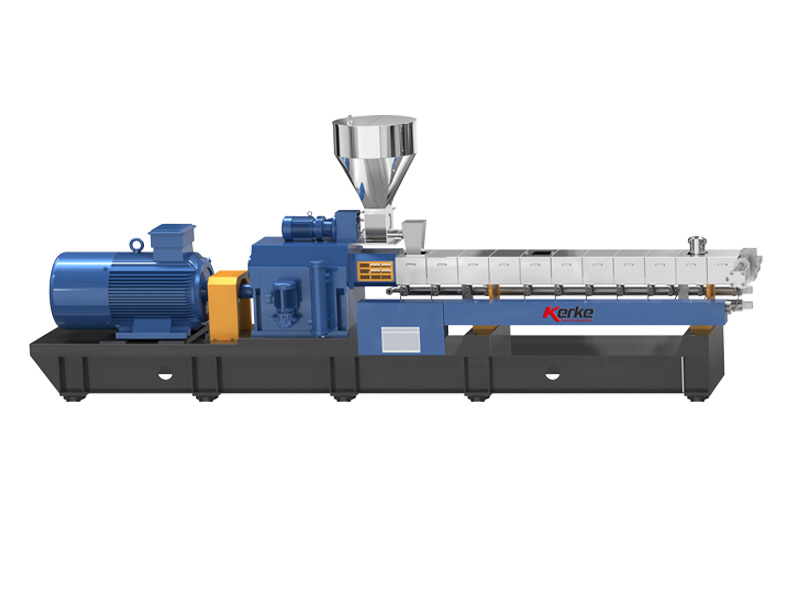
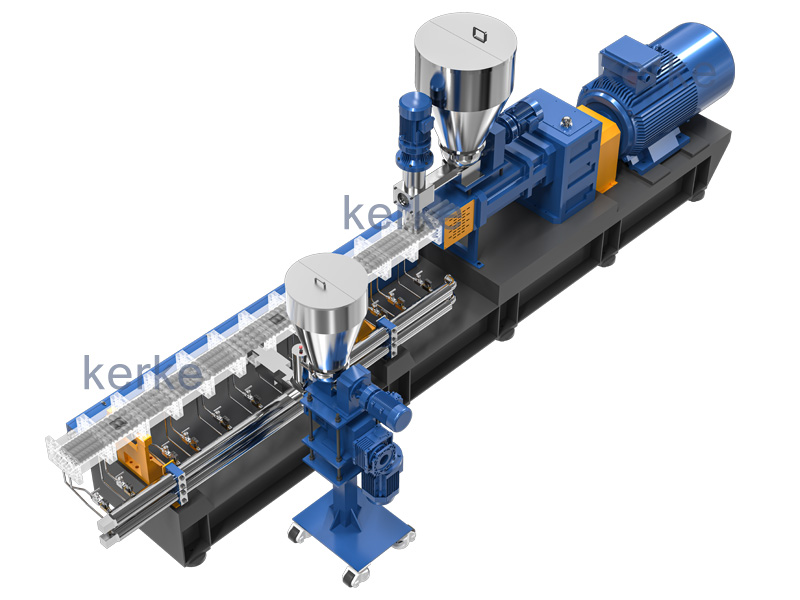
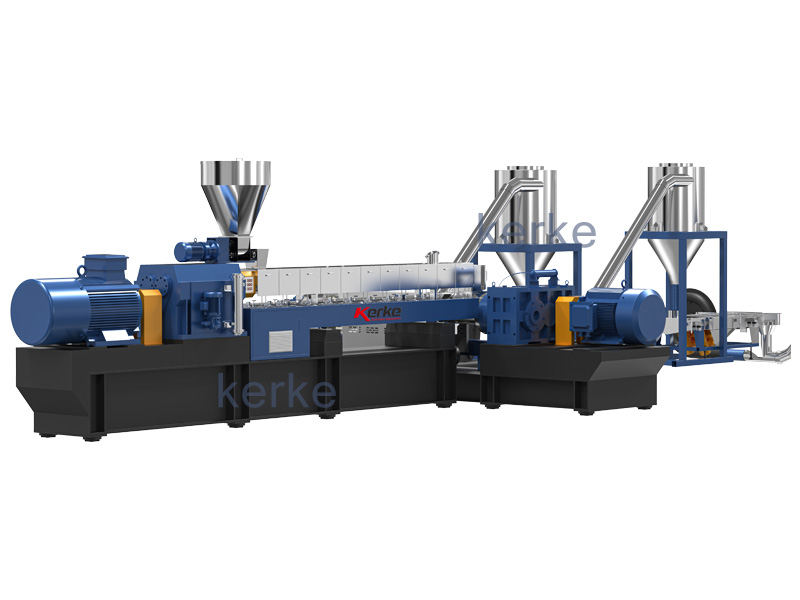
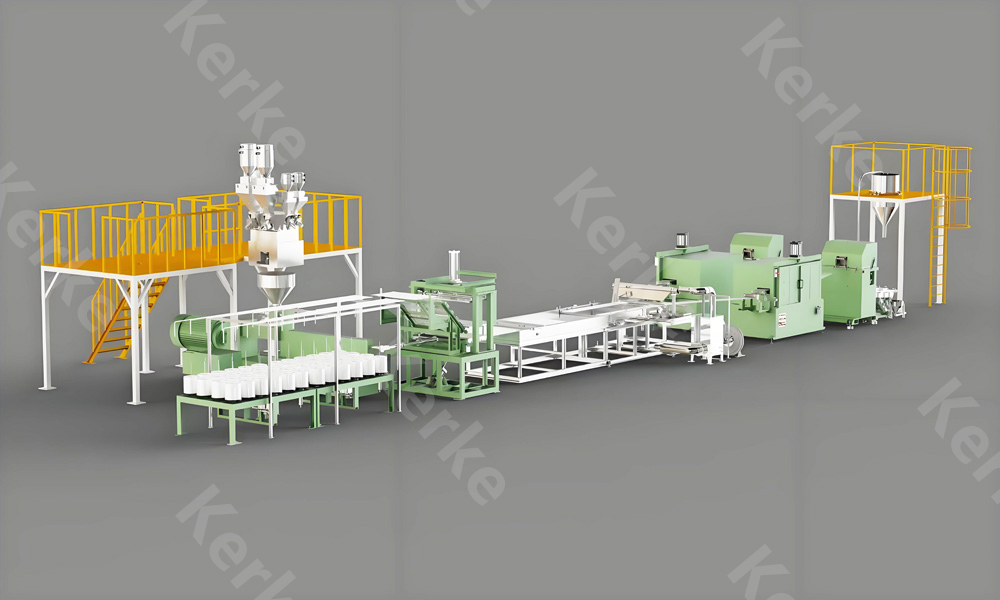
The production of kaolin clay filler masterbatch requires specialized processing equipment capable of achieving uniform particle dispersion while preserving the beneficial platelet structure of kaolin clay. Kerke Extrusion Equipment provides state-of-the-art twin screw extruders specifically designed for kaolin clay masterbatch production, ensuring consistent quality and optimal performance in demanding industrial applications ranging from electrical components to automotive under-hood parts.
Properties and Characteristics of Kaolin Clay Filler Masterbatch
Understanding the fundamental properties of kaolin clay filler masterbatch is essential for selecting appropriate formulations for specific applications requiring heat resistance, electrical insulation, and dimensional stability.
Physical Properties
Kaolin clay filler masterbatch exhibits distinctive physical properties that contribute to its performance in demanding applications:
Platelet morphology: Kaolin clay particles have a characteristic platelet structure with typical thickness of 0.05 to 0.2 micrometers and lateral dimensions of 0.5 to 10 micrometers. This platelet morphology provides barrier properties, reinforcement effects, and influences the rheological behavior of filled polymers. The high aspect ratio platelets create tortuous paths that enhance barrier properties against gases and liquids.
Particle size and surface area: Kaolin clay is available in various particle sizes, with median particle diameters typically ranging from 1 to 10 micrometers depending on processing and intended application. The specific surface area varies from 10 to 30 square meters per gram, influencing interaction with polymer matrices and affecting mechanical and electrical properties.
Density characteristics: Kaolin clay has a density of approximately 2.6 g/cm³, similar to many other mineral fillers. This moderate density provides some weight reduction compared to heavier fillers like barium sulfate, while still offering substantial filler loading capabilities for cost reduction and property enhancement.
Thermal Properties
Thermal characteristics of kaolin clay filler masterbatch make it particularly valuable for high-temperature applications:
Thermal stability: Kaolin clay exhibits excellent thermal stability, maintaining its structural integrity at temperatures exceeding 1000°C before decomposition. This exceptional thermal stability allows kaolin clay filler masterbatch to be processed and used at typical thermoplastic processing temperatures (180-280°C) without degradation of the filler component.
Heat resistance enhancement: Kaolin clay significantly improves the heat resistance of polymer matrices, increasing the heat deflection temperature (HDT) by 15-35°C depending on loading level and polymer type. This improvement is particularly valuable for automotive under-hood components, electrical connectors, and applications exposed to elevated temperatures during operation.
Thermal conductivity: Kaolin clay moderately increases thermal conductivity in polymer systems, improving heat dissipation characteristics. This property is beneficial for applications requiring thermal management, such as electronic housings, heat sink components, and electrical equipment enclosures where efficient heat removal is critical for performance and reliability.
Electrical Properties
The electrical insulation properties of kaolin clay filler masterbatch make it ideal for electrical and electronic applications:
Dielectric strength: Kaolin clay provides excellent dielectric strength, typically exceeding 20-30 kV/mm when properly incorporated into polymer matrices. This high dielectric strength makes kaolin clay-filled polymers suitable for high-voltage insulation applications, electrical connector housings, and insulating components where electrical isolation is critical.
Dielectric constant: The dielectric constant of kaolin clay ranges from 1.5 to 2.5 depending on particle size and moisture content. This moderate dielectric constant contributes to good electrical insulation characteristics while maintaining favorable impedance characteristics for many electronic applications.
Volume resistivity: Kaolin clay exhibits high volume resistivity, typically exceeding 10¹³ ohm-cm, making it an excellent electrical insulator. This property ensures that kaolin clay-filled polymers maintain their insulating properties even under high-voltage conditions and in demanding electrical environments.
Chemical and Weather Resistance
Kaolin clay provides excellent chemical resistance and weatherability for outdoor and harsh environment applications:
Chemical inertness: Kaolin clay is chemically inert and resistant to most acids, bases, and solvents encountered in industrial applications. This chemical stability ensures long-term performance without degradation or property changes, even in harsh chemical environments. The resistance to chemical attack makes kaolin clay suitable for chemical processing equipment components and outdoor applications exposed to various chemicals.
Weather resistance: Kaolin clay-filled polymers exhibit excellent weatherability, maintaining properties under prolonged UV exposure and temperature cycling. The inherent stability of kaolin clay, combined with appropriate UV stabilizers, enables use in outdoor applications such as electrical enclosures, outdoor lighting components, and construction materials exposed to environmental conditions.
Moisture resistance: While kaolin clay can absorb moisture, proper surface treatment and formulation development minimize moisture-related issues. Surface-treated kaolin clays with hydrophobic coatings provide improved moisture resistance, making them suitable for applications where humidity exposure is expected.
Applications and Industrial Uses
Kaolin clay filler masterbatch finds extensive applications across numerous industries, particularly where heat resistance, electrical insulation, and dimensional stability are primary requirements.
Electrical and Electronics Industry
The electrical and electronics industry represents one of the largest application areas for kaolin clay filler masterbatch:
Electrical insulation components: Kaolin clay-filled polymers are extensively used in electrical insulation applications including connector housings, insulating sleeves, cable jacketing, and transformer components. The excellent dielectric strength and thermal stability make kaolin clay ideal for applications requiring electrical isolation and heat resistance.
Electronic device housings: For electronic device enclosures requiring both thermal management and electrical insulation, kaolin clay filler provides optimal performance. Applications include power supply housings, inverter enclosures, motor controller cases, and electronic control unit housings where heat dissipation and electrical isolation are critical.
Printed circuit board (PCB) components: Kaolin clay-filled polymers are used in PCB insulating layers, component housings, and protective coatings. The combination of electrical insulation and thermal conductivity enables reliable operation of electronic components while managing heat generated during operation.
Automotive Industry
The automotive industry utilizes kaolin clay filler masterbatch in numerous under-hood and electrical applications:
Under-hood electrical components: Kaolin clay-filled polymers are used in automotive electrical connectors, sensor housings, wire harness connectors, and electronic control unit enclosures under the hood. The heat resistance and electrical insulation properties ensure reliable performance in the high-temperature environment of engine compartments.
Engine compartment components: Various engine compartment components including ignition system parts, sensor housings, and electrical distribution boxes utilize kaolin clay filler for heat resistance and electrical insulation. The material’s thermal stability and weatherability ensure long-term performance despite temperature cycling and environmental exposure.
Electrical system components: Automotive electrical system components including fuse boxes, relay housings, and wiring protection components benefit from kaolin clay filler’s electrical insulation and thermal management properties. The material helps maintain electrical isolation while managing heat generated by electrical systems.
Industrial Equipment and Machinery
Industrial equipment manufacturers value kaolin clay filler masterbatch for heat and electrical performance:
Industrial motor components: Electric motor components including housing enclosures, insulation barriers, and terminal covers utilize kaolin clay-filled polymers for electrical insulation and thermal management. The material helps maintain motor efficiency by managing heat generated during operation while ensuring proper electrical isolation.
Control panel components: Industrial control panel enclosures, button housings, and display covers use kaolin clay filler for electrical insulation and dimensional stability. The heat resistance enables use in environments where control panels may be exposed to elevated temperatures from nearby equipment.
Switchgear and distribution equipment: Electrical switchgear components, distribution box housings, and circuit breaker enclosures utilize kaolin clay-filled polymers for electrical insulation and fire resistance. The material’s thermal stability helps maintain electrical insulation properties even under fault conditions.
Construction and Building Materials
Kaolin clay filler masterbatch offers benefits for construction applications requiring thermal and electrical properties:
Electrical conduit and fittings: Kaolin clay-filled polymers are used in electrical conduits, conduit fittings, and junction boxes where electrical insulation is required. The material’s fire resistance and weatherability ensure long-term performance in building environments.
Cable management systems: Cable trays, cable ladders, and cable management components utilize kaolin clay filler for electrical insulation and fire resistance. The material helps prevent electrical faults while providing structural support for cable routing systems.
Fire-resistant components: Building components requiring fire resistance use kaolin clay-filled polymers due to the material’s inherent fire-resistant characteristics. Applications include fire-rated enclosures, penetration seals, and fire barrier components where electrical insulation and fire resistance are required.
Production Process and Equipment
The production of high-quality kaolin clay filler masterbatch requires specialized processing equipment capable of achieving uniform particle dispersion while preserving the beneficial platelet structure of kaolin clay.
Raw Material Selection and Preparation
Quality production begins with careful selection and preparation of raw materials, including kaolin clay, carrier resins, and surface treatment agents:
Kaolin clay grade selection: The choice of kaolin clay grade significantly affects masterbatch properties and performance. For electrical insulation applications, high-purity grades with low moisture content and appropriate particle size distribution are essential. Surface-treated grades with hydrophobic coatings provide improved moisture resistance and better compatibility with polymer matrices.
Carrier resin selection: The carrier resin must be compatible with target applications and provide appropriate processing characteristics. Polypropylene (PP) is commonly used for automotive and electrical applications due to its balance of properties and processing characteristics. Polyethylene (PE) grades are used for applications requiring better flexibility, particularly in cable jacketing and flexible components.
Surface treatment and compatibilizers: Advanced surface treatment technologies using silanes, titanates, or specialized coupling agents improve kaolin clay dispersion and interfacial adhesion. Compatibilizers such as maleic anhydride grafted polymers enhance compatibility and improve mechanical properties, particularly at high filler loadings.
Kerke Twin Screw Extruder Technology
Kerke Extrusion Equipment offers specialized twin screw extruders designed specifically for kaolin clay filler masterbatch production:
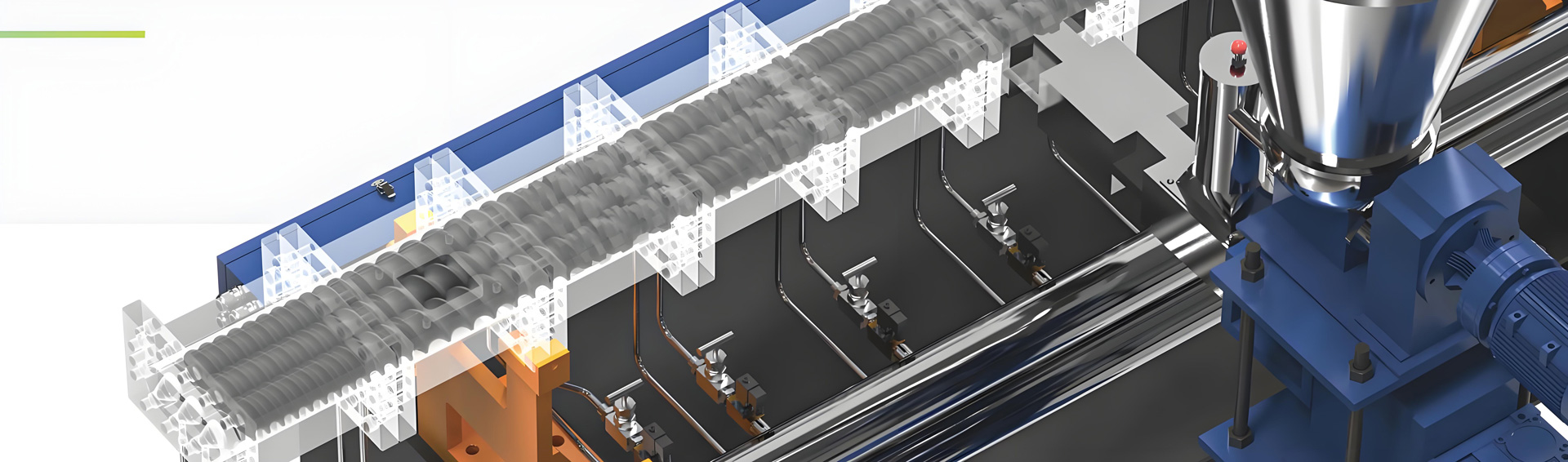
Advanced mixing technology: Kerke KTE Series extruders feature advanced mixing element configurations optimized for uniform dispersion of kaolin clay platelets while preserving their beneficial structure. The screw design incorporates distributive and dispersive mixing elements arranged to achieve complete deagglomeration and uniform platelet distribution throughout the polymer matrix.
Temperature precision: Multi-zone temperature control with accuracy within ±1°C ensures precise thermal management throughout the extruder. This precision is critical for maintaining consistent melt viscosity, which directly affects dispersion quality and the preservation of kaolin clay platelet structure.
Vacuum degassing systems: Advanced vacuum degassing removes volatile components and moisture from the melt, particularly important for kaolin clay processing where moisture content can affect electrical insulation properties. Vacuum levels of 20-30 mbar ensure complete removal of volatiles.
Processing Parameter Optimization
Optimizing processing parameters is essential for achieving consistent quality and performance:
Temperature profile: Temperature profiles must be optimized for specific formulations and equipment configurations. For polypropylene-based kaolin clay masterbatch, typical processing temperatures range from 190-220°C. Polyethylene-based formulations typically require 180-210°C. Temperature must be sufficient to achieve good melt flow without causing thermal degradation that could affect electrical insulation properties.
Screw speed optimization: Screw speed affects dispersion quality, residence time, and energy consumption. Typical screw speeds range from 250-450 RPM depending on extruder size and formulation. Higher speeds improve dispersion but may reduce residence time and potentially affect platelet orientation. Optimization depends on specific equipment and formulation requirements.
Feeding rate control: Feeding rates must be precisely controlled to maintain consistent filler loading. Gravimetric feeding systems with accuracy within ±0.5% are recommended. Feed rate should be optimized to achieve target throughput while maintaining adequate mixing and dispersion.
Quality Control and Testing
Comprehensive quality control ensures consistent product quality and performance for demanding applications:
Electrical property testing: Dielectric strength testing according to ASTM D149 or IEC 60243 standards verifies that masterbatch meets electrical insulation requirements. Volume resistivity and dielectric constant measurements ensure compliance with application specifications.
Thermal property evaluation: Heat deflection temperature (HDT) testing according to ASTM D648 or ISO 75 standards verifies thermal resistance improvement. Thermal conductivity measurements assess heat management capabilities for thermal applications.
Particle dispersion analysis: Microscopic examination and laser diffraction analysis verify that kaolin clay particles are properly dispersed and distributed throughout the polymer matrix. Proper dispersion is critical for maintaining electrical insulation and thermal properties.
Equipment Cost and Investment Analysis
Investment in appropriate processing equipment for kaolin clay filler masterbatch production represents significant capital expenditure but offers excellent returns through premium product positioning and market differentiation.
Kerke Extruder Investment
Kerke Extrusion Equipment offers a range of twin screw extruders suitable for kaolin clay filler masterbatch production:
KTE-65E model: The 65mm screw diameter extruder with electrical insulation optimization provides production capacity of 250-400 kg/h for kaolin clay masterbatch, with investment cost of $320,000-$480,000. This specialized model includes premium features such as high-precision temperature control, advanced mixing configuration for platelet dispersion, and vacuum degassing system for moisture removal.
KTE-75E model: The 75mm screw diameter extruder achieves 400-650 kg/h production capacity, with investment cost of $480,000-$720,000. This higher-capacity model includes all advanced features of the KTE-65E plus enhanced automation and process control for large-scale electrical insulation masterbatch production.
KTE-95E model: The 95mm screw diameter extruder provides 650-1000 kg/h production capacity, with investment cost of $750,000-$1,080,000. This premium large-scale extruder incorporates state-of-the-art technology for the highest quality kaolin clay masterbatch production, including advanced process control, automated quality monitoring, and electrical property assurance systems.
Complete Production Line Investment
A complete kaolin clay filler masterbatch production line requires specialized auxiliary equipment:
Drying systems: Dehumidifying dryers for both carrier resin and kaolin clay drying cost $35,000-$95,000 depending on capacity and drying requirements. Proper drying is critical for kaolin clay masterbatch production due to the impact of moisture content on electrical insulation properties.
Feeding systems: Precision gravimetric feeding systems with moisture protection cost $50,000-$140,000. Accurate feeding is critical for maintaining consistent kaolin clay loading and preserving electrical insulation characteristics throughout production.
Quality control equipment: Electrical testing equipment including dielectric strength testers, insulation resistance meters, and thermal analysis equipment cost $30,000-$75,000. Specialized testing equipment is essential for verifying electrical insulation and thermal properties required for demanding applications.
Complete line investment: A complete production line including extruder, drying, feeding, quality control equipment, and auxiliary systems typically costs $650,000-$1,600,000 depending on production capacity and level of automation and quality control integration.
Operating Cost Analysis
Understanding operating costs is essential for economic planning and profitability analysis:
Raw material costs: Raw materials account for 60-75% of total production costs. Kaolin clay represents the primary cost component, priced at $180-$350 per metric ton for electrical insulation grades. Surface-treated and high-purity grades command premium prices at the upper end of this range.
Energy costs: Energy consumption during extrusion and drying represents 12-20% of total production costs. Kaolin clay processing typically requires 20-30% more energy than unfilled polymers due to the energy required for platelet dispersion and moisture removal.
Labor and overhead costs: Labor costs typically account for 10-16% of total production costs, varying with production volume, automation level, and quality control requirements. Electrical insulation applications often require more extensive quality control, increasing labor requirements but justifying higher product prices.
Market Pricing and Profitability
Kaolin clay filler masterbatch commands premium pricing due to specialized performance characteristics:
Electrical insulation grade pricing: Standard kaolin clay masterbatch with 40-50% filler loading typically ranges from $2.20 to $3.80 per kilogram. High-purity electrical insulation grades command prices of $3.50-$6.00 per kilogram due to premium raw material costs and specialized processing requirements.
Specialized application pricing: Automotive under-hood grades and industrial equipment grades command prices of $3.80-$6.50 per kilogram due to additional quality requirements, specialized testing, and performance specifications. These formulations target specialized markets with higher profit margins.
Profit margin analysis: Gross profit margins for kaolin clay masterbatch production typically range from 30-50%, with net profit margins of 10-22% after accounting for all operating expenses. The premium pricing of kaolin clay masterbatch provides significantly higher margins compared to standard fillers.
Heat Resistance Applications
The heat resistance provided by kaolin clay filler masterbatch makes it ideal for applications requiring performance at elevated temperatures.
Automotive Under-Hood Applications
Automotive under-hood components represent significant applications for heat-resistant kaolin clay-filled polymers:
Engine control unit enclosures: Electronic control unit (ECU) housings under the hood utilize kaolin clay-filled polymers for heat resistance and electrical insulation. The material’s ability to maintain properties at temperatures exceeding 120°C ensures reliable operation of critical electronic systems.
Sensor housings: Various sensor housings including temperature sensors, pressure sensors, and position sensors use kaolin clay filler for heat resistance. The thermal stability enables accurate sensor operation by maintaining housing integrity and insulation properties despite engine heat.
Ignition system components: Ignition coil housings, spark plug wire boots, and other ignition system components utilize kaolin clay-filled polymers for heat resistance and electrical insulation. The material can withstand the high temperatures generated during ignition system operation while maintaining electrical isolation.
Industrial Equipment Heat Management
Industrial equipment applications require materials with excellent heat resistance and thermal management:
Motor and drive system components: Electric motor housings, inverter enclosures, and drive system components use kaolin clay-filled polymers for heat resistance and thermal management. The material’s thermal conductivity helps dissipate heat generated during motor operation while maintaining electrical insulation.
Power supply and distribution equipment: Power supply housings, transformer enclosures, and power distribution boxes utilize kaolin clay filler for heat resistance and electrical insulation. The material maintains properties under the heat generated during power conversion and distribution.
Heat-generating equipment enclosures: Equipment enclosures for industrial heaters, welding equipment, and other heat-generating machinery use kaolin clay-filled polymers for thermal resistance and protection. The material withstands elevated operating temperatures while providing electrical insulation for safety.
Electrical Insulation Applications
Electrical insulation represents one of the primary advantages of kaolin clay filler masterbatch, enabling numerous applications requiring electrical isolation.
High-Voltage Insulation Components
High-voltage applications benefit from kaolin clay’s exceptional dielectric strength:
High-voltage connector housings: Electrical connector housings for high-voltage applications use kaolin clay-filled polymers for electrical insulation. The material’s dielectric strength exceeds 25 kV/mm, providing reliable electrical isolation for high-voltage applications in industrial and utility equipment.
Transformer components: Transformer bushings, insulating barriers, and component housings utilize kaolin clay-filled polymers for electrical insulation and heat resistance. The material maintains insulation properties under the electrical and thermal stress experienced during transformer operation.
Switchgear insulation: High-voltage switchgear components including barrier insulation, operating mechanisms, and housing insulation use kaolin clay filler for reliable electrical isolation. The material’s dielectric strength ensures safe operation of high-voltage electrical equipment.
Electronic Device Insulation
Electronic devices require reliable electrical insulation for safe and reliable operation:
Power electronics housings: Inverter housings, converter enclosures, and power electronic casings use kaolin clay-filled polymers for electrical insulation and thermal management. The combination of dielectric strength and thermal conductivity enables reliable operation of power electronics.
Circuit board insulation: PCB insulating layers, component housings, and protective coatings utilize kaolin clay filler for electrical insulation and thermal management. The material helps prevent electrical faults while managing heat generated by electronic components.
Sensor and interface insulation: Sensor housings, interface connector housings, and signal isolation components use kaolin clay-filled polymers for electrical insulation. The material maintains signal integrity by preventing electrical interference and ensuring proper isolation.
Moisture Management and Processing Considerations
Moisture management represents a critical aspect of kaolin clay filler masterbatch production and processing due to moisture’s impact on electrical properties.
Drying Requirements
Proper drying of both kaolin clay and carrier resins is essential for consistent processing and electrical properties:
Kaolin clay drying: Kaolin clay must be thoroughly dried before processing to remove absorbed moisture that could affect electrical insulation properties. Recommended drying conditions are 110-130°C for 3-4 hours, achieving moisture content below 0.1%. Insufficient drying can cause reduced dielectric strength and insulation resistance in the final product.
Resin drying: Carrier resins require drying to remove absorbed moisture that could cause hydrolysis or processing defects. Polyethylene and polypropylene should be dried at 80-100°C for 2-4 hours to achieve moisture content below 0.05%. Proper resin drying prevents processing defects and ensures consistent electrical properties.
Environmental humidity: Processing environment humidity should be controlled to below 50% relative humidity to prevent moisture absorption by dried materials during handling and feeding. Dehumidified processing areas or enclosed feeding systems help maintain appropriate moisture levels.
Storage and Handling
Proper storage and handling practices are essential for maintaining kaolin clay filler masterbatch quality and electrical properties:
Moisture-proof storage: Masterbatch should be stored in dry environments with humidity below 60% relative humidity to prevent moisture absorption that could affect electrical insulation properties. Moisture-resistant packaging such as multi-layer bags with moisture barriers provides additional protection.
Temperature control: Storage temperature should be maintained between 15-25°C to prevent temperature cycling that could cause moisture condensation or material degradation. Temperature-controlled storage areas help maintain consistent electrical properties.
Inventory management: First-in, first-out (FIFO) inventory management ensures older product is used first, preventing prolonged storage that could lead to moisture absorption or property changes. Proper inventory tracking and rotation practices help maintain electrical insulation properties.
Quality Assurance and Testing
Comprehensive quality assurance programs ensure consistent electrical insulation and thermal properties of kaolin clay filler masterbatch.
Electrical Property Testing
Electrical property testing is critical for applications requiring electrical insulation:
Dielectric strength measurement: Dielectric strength testing according to ASTM D149 or IEC 60243 standards verifies that masterbatch provides adequate electrical insulation. Typical dielectric strength values for kaolin clay-filled polymers range from 25-35 kV/mm, depending on formulation and processing quality.
Volume resistivity testing: Volume resistivity measurements according to ASTM D257 or IEC 60093 standards assess the material’s ability to resist electrical current flow. Kaolin clay-filled polymers typically exhibit volume resistivity exceeding 10¹³ ohm-cm when properly processed and dried.
Surface resistivity testing: Surface resistivity measurements evaluate the material’s surface electrical insulation characteristics. This test is particularly important for applications where surface conductivity could affect performance or safety.
Thermal Property Evaluation
Thermal property testing ensures that heat resistance requirements are met:
Heat deflection temperature (HDT) testing: HDT testing according to ASTM D648 or ISO 75 standards verifies the temperature at which the material maintains structural integrity under load. Kaolin clay-filled polymers typically show HDT increases of 15-35°C compared to unfilled polymers.
Thermal conductivity measurement: Thermal conductivity testing assesses the material’s ability to conduct heat, important for thermal management applications. Kaolin clay-filled polymers typically exhibit thermal conductivity improvements of 20-40% compared to unfilled polymers.
Thermal aging resistance: Thermal aging tests evaluate material property retention after prolonged exposure to elevated temperatures. This test is particularly important for automotive and industrial applications where components are exposed to sustained heat during operation.
Maintenance and Troubleshooting
Proper maintenance of processing equipment and effective troubleshooting are essential for consistent kaolin clay filler masterbatch production with electrical insulation requirements.
Equipment Maintenance
Specialized maintenance practices ensure consistent performance and electrical properties:
Moisture control system maintenance: Dehumidifying dryers and moisture control systems require regular maintenance to ensure effective moisture removal. Regular inspection and maintenance prevent moisture contamination that could affect electrical insulation properties.
Temperature sensor calibration: Precise temperature control is essential for consistent processing and electrical properties. Regular calibration of temperature sensors ensures accuracy within ±1°C, preventing temperature variations that could affect dispersion and electrical characteristics.
Vacuum system maintenance: Vacuum degassing systems require regular maintenance to ensure effective volatile and moisture removal. Proper vacuum system function is critical for maintaining electrical insulation properties in the final product.
Common Processing Issues
Understanding and resolving common processing issues improves production efficiency and product quality:
Electrical property degradation: Reduced dielectric strength or insulation resistance can result from moisture contamination, improper drying, or processing conditions causing polymer degradation. Solutions include improving drying procedures, maintaining environmental humidity control, and optimizing processing temperature profile.
Moisture-related defects: Processing defects such as bubbling, surface defects, or property variations can result from moisture in the materials or processing environment. Solutions include improving drying procedures, maintaining proper environmental conditions, and ensuring proper material storage.
Property variations between batches: Inconsistent electrical properties between production batches may result from formulation variations, processing condition changes, or raw material quality variations. Implementing strict quality control procedures, maintaining consistent processing conditions, and verifying raw material quality minimizes property variations.
FAQ
What is the typical filler loading range for kaolin clay masterbatch?
Kaolin clay filler masterbatch typically contains 30% to 60% kaolin clay by weight, with most commercial formulations ranging between 40% and 50% loading. The specific loading depends on application requirements for heat resistance, electrical insulation, and cost objectives. Higher loadings provide greater heat resistance and electrical insulation benefits but may reduce processability and mechanical properties. For electrical insulation applications, loadings of 40-50% are typical to balance properties and processability.
How does kaolin clay compare to talc for electrical insulation applications?
Kaolin clay provides superior electrical insulation properties compared to talc, with higher dielectric strength and volume resistivity. While talc provides better stiffness enhancement and lower cost, kaolin clay is preferred for applications requiring optimal electrical insulation and thermal resistance. Kaolin clay also offers better thermal stability and weatherability compared to talc, making it more suitable for outdoor and high-temperature applications. The choice depends on specific application requirements and the relative importance of electrical insulation versus other properties.
Can kaolin clay filler masterbatch be used in food contact applications?
Kaolin clay filler masterbatch can be formulated for food contact applications using food-grade kaolin clay and carrier resins that comply with relevant regulations such as FDA 21 CFR and EU 10/2011. However, kaolin clay is not commonly used in direct food contact applications due to potential regulatory considerations and the availability of alternative fillers with established food contact approvals. Applications include food packaging containers where the kaolin clay-containing material does not directly contact food, such as outer packaging or secondary containers.
What makes kaolin clay suitable for high-temperature applications?
Kaolin clay’s suitability for high-temperature applications results from its exceptional thermal stability, heat deflection temperature improvement, and thermal conductivity enhancement. The material maintains its structural integrity at temperatures exceeding 1000°C, far exceeding typical thermoplastic processing requirements. When incorporated into polymers, kaolin clay increases the heat deflection temperature by 15-35°C, enabling components to maintain structural integrity at elevated operating temperatures. Additionally, the thermal conductivity improvement helps dissipate heat, preventing local hotspots that could affect performance or reliability.
How does moisture content affect electrical properties of kaolin clay-filled polymers?
Moisture content significantly affects electrical properties of kaolin clay-filled polymers. Moisture acts as a conductive path, reducing dielectric strength and volume resistivity. Even small amounts of moisture (0.1-0.5%) can cause significant reduction in electrical insulation properties. Proper drying of both kaolin clay and carrier resins, along with control of environmental humidity during processing and storage, is essential for maintaining optimal electrical insulation characteristics. Surface-treated kaolin clays with hydrophobic coatings provide improved moisture resistance, reducing the impact of environmental humidity on electrical properties.
Conclusion
Kaolin clay filler masterbatch represents a versatile and valuable functional additive offering exceptional performance for applications requiring heat resistance, electrical insulation, and dimensional stability. The distinctive characteristics of kaolin clay, including its excellent thermal stability, outstanding dielectric strength, and beneficial platelet morphology, make it an irreplaceable material for electrical and electronic components, automotive under-hood applications, and numerous other industrial applications requiring reliable performance under demanding conditions.
Kerke Extrusion Equipment provides state-of-the-art twin screw extruders specifically designed for kaolin clay filler masterbatch production, enabling manufacturers to achieve the exceptional quality required for demanding applications. The company’s commitment to advanced processing technology, moisture control, and quality assurance ensures that customers receive equipment capable of producing the highest quality kaolin clay masterbatch with consistent electrical insulation and thermal properties.
As industries continue demanding materials that can withstand increasingly harsh operating conditions while maintaining cost-effectiveness, kaolin clay filler masterbatch will maintain its position as a critical material for applications requiring heat resistance, electrical insulation, and reliable long-term performance. Understanding its properties, production processes, and unique advantages is essential for businesses seeking to leverage this valuable filler in their products and achieve market differentiation through superior performance in demanding applications.