Understanding Transparent Masterbatch for Polypropylene and Polyethylene Applications
Transparent masterbatch for polypropylene (PP) and polyethylene (PE) represents a specialized category of colorants designed to maintain or enhance transparency while providing subtle coloration or functional properties. Unlike conventional color masterbatch that uses pigments to create opaque colors, transparent masterbatch employs transparent colorants, dyes, or specially formulated additives that maintain light transmission while achieving desired visual effects. The unique properties of transparent masterbatch make it essential for applications where product visibility, aesthetic appeal, or special optical effects are required, particularly in the packaging industry where product visibility and consumer appeal are critical marketing considerations.
The fundamental challenge in transparent masterbatch formulation lies in maintaining optical clarity while achieving the desired color or functional effect. Transparency requires that the refractive index of all components in the masterbatch closely match that of the base polymer. Any significant mismatch causes light scattering, reducing clarity and creating hazy or cloudy appearance. Advanced transparent masterbatch formulations utilize carefully selected colorants and additives with refractive indices optimized for PP and PE. Kerke Twin Screw Extruder systems are specifically engineered to achieve homogeneous distribution of transparent components without introducing defects that could compromise optical clarity. The production cost of transparent masterbatch ranges from $4,000 to $12,000 per ton depending on color complexity and additive package, with specialty optical effect formulations reaching $15,000 to $30,000 per ton. The investment in quality equipment for transparent masterbatch production typically ranges from $25,000 to $55,000 for specialized mixing elements and polishing components designed to maintain optical purity.
Carrier resin selection for transparent masterbatch is particularly critical compared to conventional color masterbatch. The carrier must not only be compatible with the base polymer but also have matching refractive index and excellent optical clarity. For PP transparent masterbatch, homopolymer polypropylene with controlled nucleation serves as the ideal carrier. For PE transparent masterbatch, low-density polyethylene with controlled molecular weight distribution provides optimal clarity and compatibility. Even minor variations in carrier resin properties can significantly affect final product transparency. Kerke Masterbatch Extruder models, particularly the KSE-90 and KSE-110 series, provide the precise temperature control and gentle mixing required to preserve optical properties while achieving uniform component distribution. The cost of optical-grade carrier resins typically adds $2,000 to $4,500 per ton to masterbatch production costs, with specialty clarified grades adding $4,500 to $8,000 per ton.
The manufacturing process for transparent masterbatch requires careful attention to contamination control, thermal degradation prevention, and mixing optimization. Unlike conventional masterbatch where some color variation or minor defects may be acceptable, transparent masterbatch leaves no margin for error. Any contamination, degradation, or dispersion defect becomes immediately visible in the final transparent product. Clean processing equipment, controlled environments, and optimized processing parameters are essential. Kerke Compounding Extruder technology can produce transparent masterbatch with exceptional clarity while maintaining consistent quality. The market price for standard transparent masterbatch ranges from $5,500 to $13,500 per ton, while specialty formulations with advanced optical effects command $16,000 to $35,000 per ton. Premium transparent masterbatch products can achieve transparency values equivalent to 90-98% of neat polymer properties.
Clarity Enhancement Technology
Clarity represents the most critical performance parameter for transparent masterbatch, with applications requiring varying degrees of transparency from lightly tinted to completely clear. Achieving superior clarity requires comprehensive optimization of multiple factors including refractive index matching, haze control, crystallization management, and defect prevention. Modern clarity enhancement technology combines advanced materials science with precise processing control to achieve optical clarity approaching that of neat polymers even with additive concentrations up to 10-15%. Understanding and implementing clarity enhancement technologies enables manufacturers to produce transparent masterbatch that meets the demanding requirements of premium packaging applications.
Refractive index matching represents the fundamental principle behind maintaining transparency in polymer compounds. Light passes undisturbed through materials with matching refractive indices, while mismatches cause refraction, reflection, and scattering that reduce clarity. The refractive index of PP typically ranges from 1.49-1.51, while PE ranges from 1.51-1.54. Transparent masterbatch components must be selected and formulated to match these values within 0.005-0.010 units for optimal clarity. Advanced colorant technologies including specific organic pigments, soluble dyes, and transparent oxides are engineered with precise refractive indices. Kerke Extruder formulation specialists can recommend colorant systems optimized for refractive index matching. The cost of refractive-index-matched colorants typically adds $800 to $2,500 per ton to production costs compared to standard pigments.
Haze control is essential for achieving optimal visual clarity. Haze results from light scattering caused by crystallinity, phase separation, or internal defects. The target haze values for transparent masterbatch applications typically range from less than 2% for premium clarity to 5-10% for tinted applications. Advanced haze control technologies include nucleating agents that control crystalline structure, compatibilizers that prevent phase separation, and processing aids that reduce defects. Kerke Twin Screw Extruder systems incorporate precise temperature control and gentle mixing elements that minimize haze development. The cost of haze control additives typically ranges from $300 to $1,200 per ton depending on formulation requirements.
Crystallization management significantly impacts clarity, particularly for polypropylene applications. PP is semi-crystalline, and uncontrolled crystallization creates spherulitic structures that scatter light and reduce clarity. Nucleating agents can control crystallization to produce smaller, more uniform crystalline structures that maintain transparency while providing mechanical strength. Advanced nucleating technology can reduce spherulite size from 50-100 microns to 5-15 microns, dramatically improving clarity. Kerke Masterbatch Extruder formulations incorporate optimized nucleating agent packages specifically developed for PP transparent applications. The cost of crystallization control additives typically adds $500 to $1,800 per ton to production costs.
Defect prevention through contamination control and processing optimization is essential for maintaining transparency. Even microscopic contaminants, processing degradation, or minor dispersion defects become visible in transparent applications. Clean processing equipment, filtered material handling, and optimized processing parameters prevent defect introduction. Kerke Compounding Extruder systems incorporate design features that minimize contamination and degradation, including polished barrel surfaces, gentle screw profiles, and comprehensive filtration options. The investment in contamination control systems typically ranges from $15,000 to $40,000 for a complete installation.
Transparency measurement and quality control ensure consistent performance. Key measurements include total transmittance (typically 85-95% for transparent masterbatch applications), haze (typically less than 5% for premium clarity), and clarity (typically greater than 90%). Spectrophotometers and haze meters provide accurate optical measurements. Kerke Extruder quality systems include comprehensive optical measurement capabilities. The cost of optical measurement equipment ranges from $12,000 to $35,000 for film and sheet measurement systems.
Polymer Compatibility Considerations
Polymer compatibility represents a critical success factor for transparent masterbatch, with incompatibility causing haze, phase separation, delamination, and compromised mechanical properties. Unlike conventional masterbatch where minor incompatibility may be acceptable for many applications, transparent masterbatch requires near-perfect compatibility to maintain optical clarity. Understanding compatibility mechanisms and selecting appropriate components enables formulation of transparent masterbatch that performs reliably across various PP and PE applications while maintaining consistent optical properties.
Chemical compatibility between masterbatch components and base polymer ensures that molecular interactions promote miscibility rather than phase separation. PP and PE are both polyolefins with similar chemical structures, but they have different molecular characteristics that affect compatibility. Transparent masterbatch for PP requires components with polarity matching polypropylene characteristics. For PE applications, components must be compatible with the specific PE type (LDPE, LLDPE, HDPE). Advanced compatibility technologies include grafted polymers that act as compatibilizers, surface-modified colorants, and molecular-engineered additives. Kerke Twin Screw Extruder systems can process a wide range of polymer types while maintaining compatibility. The cost of compatibility-enhancing additives typically ranges from $400 to $1,500 per ton.
Molecular weight and molecular weight distribution of masterbatch components significantly impact compatibility and optical clarity. Components with molecular weights too different from the base polymer may phase separate due to entropy-driven demixing. Optimal molecular weight matching ensures thermodynamic compatibility. However, very low molecular weight components may migrate to the surface causing bloom or blocking. Kerke Masterbatch Extruder formulations optimize molecular weight distribution to balance compatibility with stability. The cost of molecular-weight-optimized components typically adds $300 to $1,000 per ton to production costs.
Thermal compatibility during processing is essential to prevent degradation that would compromise transparency. Transparent masterbatch must withstand processing temperatures without decomposition, yellowing, or molecular changes that affect optical properties. PP processes typically at 180-230°C, while PE processes at 160-200°C for LDPE and 200-250°C for HDPE. Masterbatch components must be stable across these temperature ranges. Advanced thermal stabilizers protect both the masterbatch and the base polymer during processing. Kerke Compounding Extruder technology can produce masterbatch formulations with enhanced thermal stability. The cost of thermal stabilization additives typically ranges from $200 to $800 per ton.
Application-specific compatibility considerations include food contact regulations, medical device requirements, and recyclability constraints. Food packaging applications require compliance with FDA 21 CFR, EU 10/2011, or regional regulations. Medical applications require biocompatibility and sterilization resistance. Recycling applications require compatibility with mechanical and chemical recycling processes. Kerke Extruder can provide formulation guidance for specific regulatory environments. The cost of regulatory compliance certification typically ranges from $10,000 to $30,000 per formulation and market.
Compatibility testing validates masterbatch performance with specific base resins and processing conditions. Testing includes optical measurements, mechanical property evaluation, and accelerated aging studies. Compatibility should be verified for each base polymer type and processing condition used. Kerke Extruder application laboratories provide comprehensive compatibility testing services. The cost of compatibility testing typically ranges from $1,200 to $3,500 per resin/masterbatch combination.
Packaging Applications and Market Requirements
Transparent masterbatch finds extensive applications in the packaging industry, where product visibility, consumer appeal, and branding considerations drive demand. The packaging market for transparent masterbatch encompasses food packaging, beverage packaging, personal care products, household products, and industrial applications. Each packaging application presents unique requirements regarding clarity, color requirements, regulatory compliance, and performance characteristics. Understanding these diverse application requirements enables manufacturers to develop transparent masterbatch products that meet specific market needs and create competitive advantages.
Food packaging represents the largest application segment for transparent masterbatch, with requirements for product visibility, shelf appeal, and regulatory compliance. Food packaging applications require transparent masterbatch with excellent clarity, no migration of colorants or additives, and compliance with food contact regulations. Typical addition rates range from 1-8% depending on desired tint and functional requirements. Premium transparent masterbatch for food packaging achieves haze values below 3% and maintains clarity greater than 90%. Kerke Twin Screw Extruder systems produce food-grade transparent masterbatch meeting FDA, EU, and global food contact regulations. The market price for food-grade transparent masterbatch ranges from $6,000 to $15,000 per ton, with premium low-haze formulations commanding $12,000 to $25,000 per ton.
Beverage packaging applications including bottles, caps, and films utilize transparent masterbatch for brand differentiation and product visibility. These applications require excellent clarity and color consistency, with premium applications requiring haze below 2%. Beverage packaging often requires resistance to pasteurization or hot-fill conditions, necessitating thermal stability additives. Typical addition rates range from 0.5-5% depending on color intensity requirements. Kerke Masterbatch Extruder technology can produce transparent masterbatch with enhanced thermal stability for hot-fill applications. The cost of thermal-stabilized transparent masterbatch typically adds $500 to $1,500 per ton to production costs.
Personal care and cosmetic packaging applications demand premium clarity and sophisticated tinted effects for brand differentiation. These applications often require subtle coloration with excellent light transmission, UV protection for sensitive products, and resistance to formulation components. Premium personal care packaging may require haze values below 1.5% and clarity above 95%. Addition rates typically range from 2-10% depending on desired color depth. Kerke Compounding Extruder systems can produce transparent masterbatch with advanced color effects and UV protection. The market price for premium personal care grade transparent masterbatch ranges from $10,000 to $28,000 per ton.
Household and consumer product packaging applications utilize transparent masterbatch for product visibility and shelf appeal. These applications include cleaning products, household chemicals, and general consumer goods. Requirements vary from high clarity for premium products to moderate clarity for value products. Typical addition rates range from 1-6% depending on application requirements. Kerke Extruder provides transparent masterbatch formulations optimized for various household product packaging needs. The market price for household product packaging transparent masterbatch ranges from $5,500 to $14,000 per ton.
Industrial packaging applications including films, bags, and wraps utilize transparent masterbatch for product identification and functional requirements. These applications may require UV protection, antistatic properties, or barrier enhancement in addition to clarity. Industrial packaging applications can tolerate slightly higher haze values, typically 5-15%, depending on product requirements. Addition rates range from 2-12% depending on functional requirements. Kerke Twin Screw Extruder systems can produce transparent masterbatch with various functional additives. The market price for industrial packaging transparent masterbatch ranges from $4,500 to $12,000 per ton.
Specialty packaging applications include high-clarity films for premium food products, shrink films with controlled shrinkage, and biodegradable packaging films. These applications require specialized transparent masterbatch formulations tailored to specific substrate requirements. Biodegradable packaging applications require masterbatch compatible with PLA, PHA, or other biodegradable polymers. Kerke Masterbatch Extruder technology can produce transparent masterbatch for various specialty packaging applications. The cost of specialty formulations typically ranges from $12,000 to $30,000 per ton, with market prices reaching $18,000 to $45,000 per ton.
Color Options and Visual Effects
Transparent masterbatch offers a wide range of color options and visual effects beyond simple clear formulations. From subtle tints to sophisticated special effects, transparent masterbatch enables product differentiation and brand enhancement through optical appeal. Modern color technologies provide virtually unlimited color possibilities while maintaining clarity and transparency. Understanding available color options and effect technologies enables manufacturers to develop transparent masterbatch products that capture market attention and create consumer preference.
Subtle tints represent the most common application of transparent masterbatch, providing gentle coloration while maintaining high transparency. Tinted transparent masterbatch enables brand color coordination, product differentiation, and enhanced shelf appeal. Common tint colors include blue, green, amber, and pink, with virtually any color achievable through advanced colorant technology. Tint intensity can be precisely controlled through masterbatch addition rate and colorant concentration. Kerke Twin Screw Extruder systems can produce tinted transparent masterbatch with precise color control and consistent performance. The market price for tinted transparent masterbatch ranges from $5,500 to $14,000 per ton depending on color complexity.
Pearlescent and metallic effects create sophisticated visual appeal through special effect pigments that interact with light to produce shimmer, sparkle, or iridescence. Pearlescent pigments consist of mica coated with metal oxides, creating layered structures that reflect and refract light to produce color-shifting effects. Metallic pigments use aluminum flakes to create sparkle and shine. Special effect transparent masterbatch must carefully balance effect intensity with clarity maintenance. Kerke Masterbatch Extruder technology can incorporate special effect pigments while maintaining optical clarity. The market price for pearlescent and metallic effect transparent masterbatch ranges from $12,000 to $35,000 per ton.
Fluorescent and glow-in-the-dark effects enable products to stand out through bright, intense colors or phosphorescent properties. Fluorescent colorants absorb UV light and re-emit visible light, creating exceptionally bright, vibrant colors. Phosphorescent pigments store light energy and slowly release it, creating glow-in-the-dark effects. These special effects require careful formulation to maintain sufficient transparency while achieving desired effect intensity. Kerke Compounding Extruder systems can produce transparent masterbatch with fluorescent and phosphorescent effects. The market price for special effect transparent masterbatch ranges from $15,000 to $40,000 per ton.
Thermochromic and photochromic effects create color-changing properties responsive to temperature or light exposure. Thermochromic pigments change color at specific temperature thresholds, while photochromic pigments respond to UV light exposure. These advanced effects enable interactive product features and functionality beyond mere coloration. Formulation challenges include achieving sufficient effect intensity while maintaining transparency and effect stability. Kerke Extruder application specialists can recommend appropriate thermochromic and photochromic systems for transparent applications. The market price for color-changing transparent masterbatch ranges from $20,000 to $50,000 per ton.
UV-blocking transparent masterbatch provides product protection while maintaining clarity. UV absorbers and blockers prevent UV light transmission, protecting light-sensitive contents. This functionality is critical for food products, beverages, and other UV-sensitive materials. Advanced UV-blocking technology can block 95-99% of UV radiation while maintaining visible light transmission above 85%. Kerke Twin Screw Extruder systems produce transparent masterbatch with optimized UV protection for various applications. The cost of UV-blocking additives typically adds $800 to $2,500 per ton to production costs.
Custom color development services enable brands to create unique transparent color solutions tailored to specific requirements. Color development involves spectral analysis, color matching, and performance optimization for specific applications. Kerke Extruder provides comprehensive color development services for transparent masterbatch applications. The cost of custom color development typically ranges from $3,000 to $10,000 per color depending on complexity and performance requirements.
Processing Guidelines and Best Practices
Proper processing of transparent masterbatch is essential for achieving optimal optical clarity and preventing defects that compromise transparency. Processing guidelines cover addition methods, temperature control, contamination prevention, and equipment considerations. Following established processing best practices ensures consistent optical performance, minimizes defects, and maximizes the value of transparent masterbatch investment. The demanding optical requirements of transparent applications leave little margin for processing errors or parameter variations.
Masterbatch addition methods significantly impact color uniformity and optical performance in transparent applications. Gravimetric dosing provides the highest accuracy, typically achieving plus or minus 0.5% dosing accuracy essential for consistent tint and clarity. Volumetric dosing offers lower cost but reduced accuracy, typically plus or minus 2-3%. For transparent applications where small addition rate variations cause perceptible differences, gravimetric dosing is strongly recommended. Kerke Twin Screw Extruder systems can integrate with various dosing systems. The cost of gravimetric dosing systems for transparent applications typically ranges from $15,000 to $40,000 per station.
Pre-mixing transparent masterbatch with base resin before processing can improve distribution uniformity, particularly for low addition rates. Tumble blending for 10-20 minutes ensures masterbatch distribution throughout the resin before entering processing equipment. Pre-mixing becomes increasingly important as addition rates decrease below 2%. However, pre-mixing adds handling steps and potential contamination risks that must be carefully managed. Kerke Masterbatch Extruder formulations achieve excellent distribution without pre-mixing, though pre-mixing can enhance uniformity for demanding applications. The cost of pre-mixing equipment typically ranges from $10,000 to $25,000 for tumble blenders suitable for transparent resin applications.
Temperature control is critical for transparent masterbatch processing to prevent thermal degradation that would cause yellowing or hazing. Processing temperatures should be optimized to achieve adequate melt flow while staying below degradation temperatures for both masterbatch and base polymer. PP typically processes at 180-230°C, while PE processes at 160-200°C for LDPE and 200-250°C for HDPE. Temperature fluctuations greater than plus or minus 5°C can cause perceptible changes in optical properties. Kerke Compounding Extruder systems provide precise temperature control with multiple heating zones and advanced PID controllers. The investment in precision temperature control typically ranges from $20,000 to $55,000 for complete systems.
Contamination prevention is essential for maintaining optical clarity in transparent applications. Even microscopic contaminants from previous colored material runs, degraded polymer, or external sources become visible in transparent products. Comprehensive cleaning protocols, dedicated processing equipment, filtered material handling, and clean processing environments prevent contamination. Kerke Twin Screw Extruder systems incorporate design features that minimize contamination risk, including polished surfaces, easy-clean configurations, and filtration options. The investment in contamination control measures typically ranges from $25,000 to $70,000 for complete systems.
Screw design and processing parameters influence both dispersion quality and optical clarity. Excessive shear can cause thermal degradation, while insufficient shear may result in poor component distribution. Optimal screw speed and profile depend on equipment design, polymer type, and masterbatch characteristics. Kerke Extruder application engineers provide screw configuration and processing parameter recommendations for transparent masterbatch applications. The cost of screw configuration optimization typically ranges from $15,000 to $40,000 for specialized designs.
Dwell time optimization ensures adequate mixing without excessive thermal exposure. Transparent masterbatch requires sufficient mixing for component distribution but minimal thermal exposure to prevent degradation. Screw configuration, barrel temperature profile, and throughput rate collectively determine dwell time. Kerke Masterbatch Extruder systems can be configured to achieve optimal dwell time for specific applications. The cost of dwell time optimization studies typically ranges from $2,000 to $5,000 per application.
Quality Control and Testing
Comprehensive quality control systems are essential for producing consistent, high-quality transparent masterbatch that meets demanding optical requirements. Quality control encompasses raw material testing, in-process monitoring, finished product evaluation, and application performance validation. Each quality control point contributes to overall product consistency and customer satisfaction. The optical sensitivity of transparent applications requires particularly rigorous quality control standards compared to conventional masterbatch products.
Raw material quality control ensures consistent incoming material quality for colorants, carrier resins, and additives. Colorant testing includes refractive index measurement, color measurement, purity assessment, and thermal stability evaluation. Carrier resin testing includes clarity measurement, molecular weight analysis, and thermal property verification. Kerke Extruder quality control systems include comprehensive raw material testing capabilities. The cost of raw material testing typically ranges from $400 to $1,000 per material batch.
In-process quality monitoring tracks critical parameters during masterbatch production to ensure consistent optical quality. Key monitoring points include melt temperature, pressure, torque, screw speed, and visual inspection of melt clarity. Modern process control systems can integrate optical monitoring for real-time clarity assessment. Kerke Twin Screw Extruder systems feature advanced process control with capabilities for monitoring parameters affecting optical quality. The cost of in-process optical monitoring systems typically ranges from $25,000 to $60,000 for complete installations.
Finished product testing evaluates masterbatch characteristics including optical clarity, color accuracy, haze, and compatibility. Clarity measurement uses spectrophotometers or haze meters with appropriate measurement geometry. Haze measurement quantifies light scattering that reduces transparency. Color measurement ensures consistent tint between batches. Kerke Masterbatch Extruder quality laboratories include comprehensive optical testing capabilities. The cost of optical testing equipment ranges from $15,000 to $45,000 for complete systems.
Batch-to-batch consistency verification ensures that different production batches produce equivalent optical performance. Statistical analysis of clarity, haze, and color measurements establishes control limits for optical consistency. Tolerance testing validates that production batches remain within acceptable optical limits. Kerke Compounding Extruder systems produce transparent masterbatch with excellent batch-to-batch consistency, typically maintaining haze variations below 0.5% absolute. The cost of consistency verification testing typically ranges from $300 to $700 per batch.
Application testing validates transparent masterbatch performance in actual production and end-use conditions. This testing includes film or sheet extrusion trials, optical measurement on produced articles, mechanical property testing, and performance evaluation under use conditions. Application testing ensures that masterbatch meets specific customer requirements and performs reliably in the intended application. Kerke Extruder application laboratories provide comprehensive testing services for transparent masterbatch applications. The cost of application testing typically ranges from $2,000 to $6,000 per application and formulation.
Stability testing evaluates long-term performance including color stability, haze development, and compatibility stability. Accelerated aging studies simulate extended service conditions to predict long-term performance. Kerke Twin Screw Extruder systems can produce transparent masterbatch formulations with enhanced stability for demanding applications. The cost of stability testing typically ranges from $1,500 to $4,500 per formulation.
Cost Analysis and Market Pricing
Understanding the cost structure of transparent masterbatch production enables manufacturers to optimize their operations and make informed investment decisions. Cost analysis encompasses raw material costs, processing costs, equipment investment, and quality control expenses. This comprehensive view helps manufacturers evaluate production economics and develop competitive pricing strategies while maintaining profitability in the premium transparent masterbatch market segment.
Colorant costs represent a significant cost component for transparent masterbatch, typically accounting for 40-60% of raw material costs. Transparent colorants including soluble dyes, transparent pigments, and special effect pigments range from $15,000 to $80,000 per ton depending on color complexity and optical properties. Standard tint colorants typically cost $15,000 to $35,000 per ton. Special effect pigments for pearlescent, metallic, or fluorescent effects can cost $50,000 to $150,000 per ton. For typical transparent masterbatch formulations with 5-15% colorant loading, the colorant component costs approximately $750 to $12,000 per ton. Kerke Extruder can provide sourcing recommendations for colorants offering optimal balance of cost and performance.
Carrier resin costs for transparent masterbatch require optical-grade materials with superior clarity. Optical-grade polypropylene typically costs $1,800 to $3,200 per ton, while optical-grade polyethylene ranges from $2,000 to $3,500 per ton. Special clarified or nucleated resins for maximum clarity cost $3,500 to $6,000 per ton. The high carrier resin purity required for transparent applications adds approximately 20-40% to resin costs compared to standard grades. Kerke Masterbatch Extruder formulations utilize premium carrier resins optimized for clarity and compatibility. Total carrier resin costs typically represent 20-30% of raw material costs.
Additives including nucleating agents, clarifying agents, compatibilizers, and stabilizers add significant costs to transparent masterbatch. Nucleating agents cost $3,000 to $8,000 per ton. Compatibilizers range from $4,000 to $12,000 per ton. Thermal stabilizers cost $2,500 to $7,000 per ton. UV stabilizers for transparent applications range from $5,000 to $15,000 per ton. Total additive costs typically range from $500 to $2,000 per ton depending on formulation complexity. Kerke Compounding Extruder technology enables optimization of additive packages for cost-effective transparency enhancement.
Processing costs for transparent masterbatch are higher than conventional masterbatch due to additional quality requirements, contamination control measures, and lower throughput rates. Energy costs typically range from $100 to $180 per ton due to precise temperature control requirements. Labor costs average $60 to $140 per ton due to additional quality control. Equipment depreciation based on specialized transparent masterbatch equipment represents $350 to $650 per ton. Maintenance costs average $60 to $120 per ton. Total processing costs typically range from $570 to $1,090 per ton. Kerke Twin Screw Extruder systems minimize processing costs through efficient design optimized for transparent masterbatch production.
Equipment investment for transparent masterbatch production requires specialized features for clarity preservation and contamination control. Small capacity lines (300-700 kg/hr) typically cost $350,000 to $500,000. Medium capacity lines (700-1,500 kg/hr) cost $500,000 to $800,000. High capacity lines (1,500-3,500 kg/hr) require investment of $800,000 to $1,400,000. Kerke Extruder offers specialized transparent masterbatch production lines with features optimized for clarity preservation. The payback period for transparent masterbatch production equipment typically ranges from 2.5 to 4 years based on market demand and profit margins.
Quality control costs for transparent masterbatch are significantly higher than conventional masterbatch due to the optical measurement requirements. Testing equipment investment ranges from $25,000 to $60,000 for complete optical testing laboratories. Laboratory operating costs including consumables and maintenance average $50,000 to $120,000 annually. Quality control personnel costs range from $100,000 to $180,000 annually depending on laboratory size and testing requirements. Total quality control costs typically range from $200,000 to $400,000 annually for a medium-sized operation.
Total production costs for standard transparent masterbatch typically range from $5,770 to $13,290 per ton, with specialty effect formulations reaching $15,770 to $26,490 per ton. Profit margins in the transparent masterbatch market typically range from 18-35% depending on formulation complexity and market positioning. Market prices for standard transparent masterbatch range from $7,000 to $18,000 per ton, while specialty high-effect formulations command $19,000 to $38,000 per ton. Kerke Extruder equipment enables production of premium transparent masterbatch that can command superior pricing in the market.
Kerke Equipment Recommendations
Kerke Extruder offers specialized equipment specifically designed for transparent masterbatch production, addressing the unique requirements of optical clarity preservation, contamination control, and precise processing. The KSE series twin screw extruders provide superior control, gentle mixing, and excellent product consistency essential for transparent masterbatch production. Selecting the appropriate equipment depends on production requirements, product complexity, and quality standards.
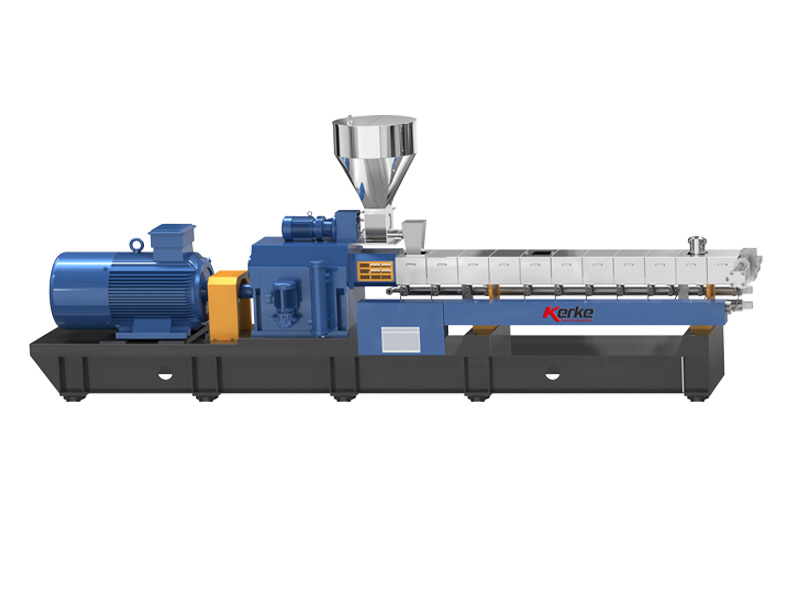
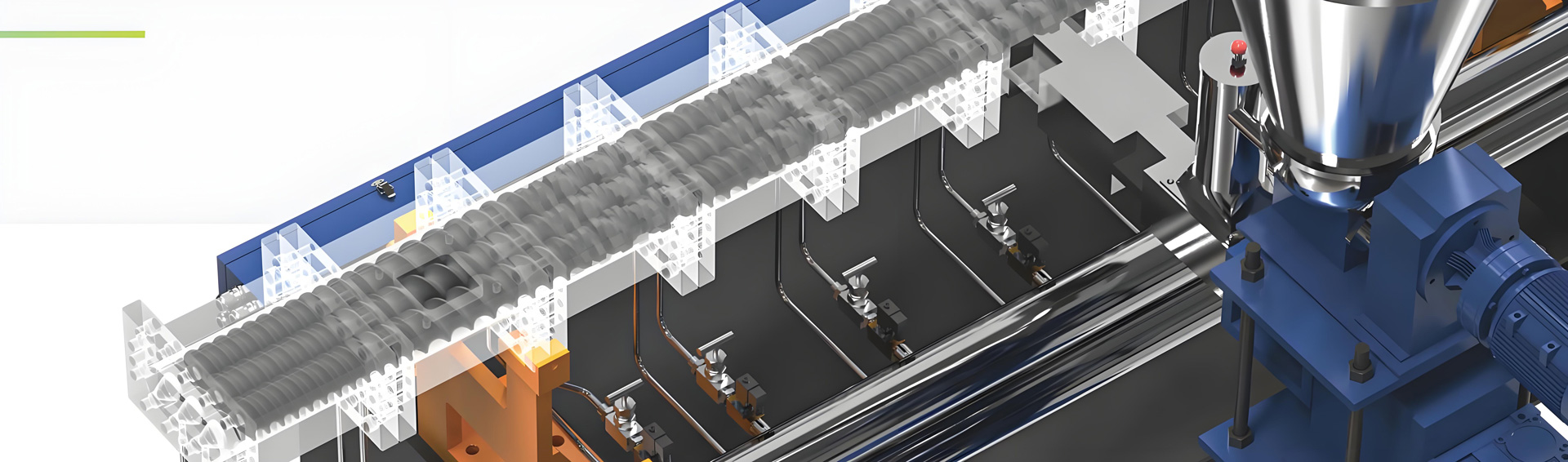
The KSE-90 Twin Screw Extruder represents an excellent choice for transparent masterbatch production. With 90mm screw diameter and L/D ratio of 44:1, this model provides throughput capacity of 600-1,500 kg/hr for transparent masterbatch applications. The gentle screw configuration optimized for clarity preservation ensures homogeneous component distribution without introducing shear-induced defects. The KSE-90 features 12 heating zones for precise temperature control critical for optical quality, polished barrel surfaces to minimize contamination, and integrated filtration options. The base price for the KSE-90 transparent masterbatch system is approximately $450,000 to $650,000 depending on configuration and contamination control features.
The KSE-110 Twin Screw Extruder offers increased capacity and enhanced performance for larger transparent masterbatch production requirements. With 110mm screw diameter and L/D ratio of 48:1, this model achieves throughput of 1,200-3,000 kg/hr for transparent masterbatch. The KSE-110 features 14 heating zones, advanced gentle mixing elements, comprehensive contamination control features, and integrated optical monitoring capabilities. This model is ideal for manufacturers producing premium transparent masterbatch for demanding packaging applications. The KSE-110 system typically costs $650,000 to $1,000,000 depending on automation level and quality control integration.
The KSE-75 Twin Screw Extruder provides an efficient solution for smaller capacity transparent masterbatch production or product development. With 75mm screw diameter and L/D ratio of 40:1, this model delivers throughput of 300-700 kg/hr. The KSE-75 features 10 heating zones and modular screw design optimized for gentle mixing and clarity preservation. This model is suitable for specialty transparent masterbatch production or as a development line for new formulations. The base price for the KSE-75 transparent masterbatch system is approximately $320,000 to $450,000 depending on configuration.
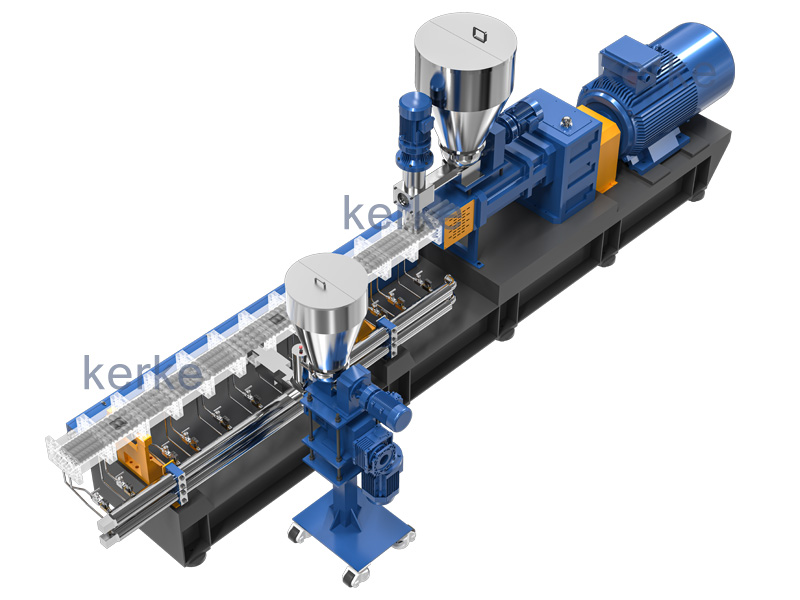
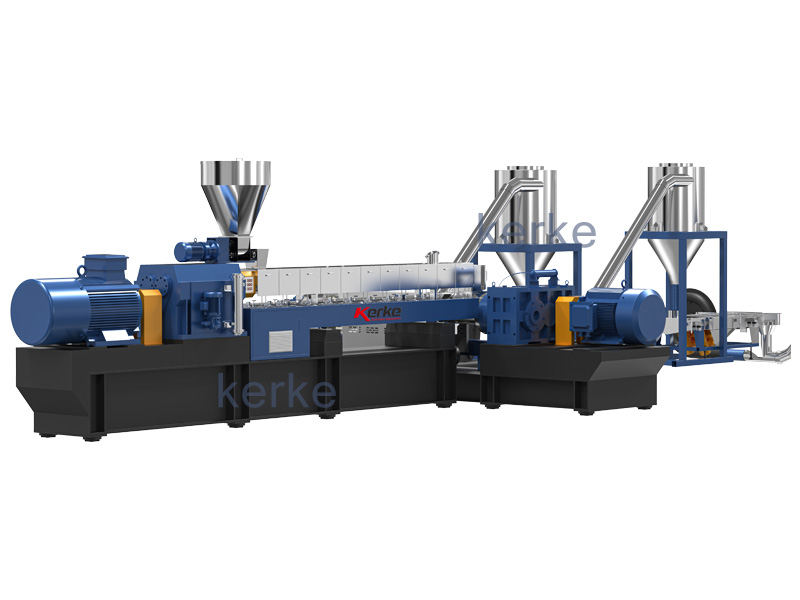
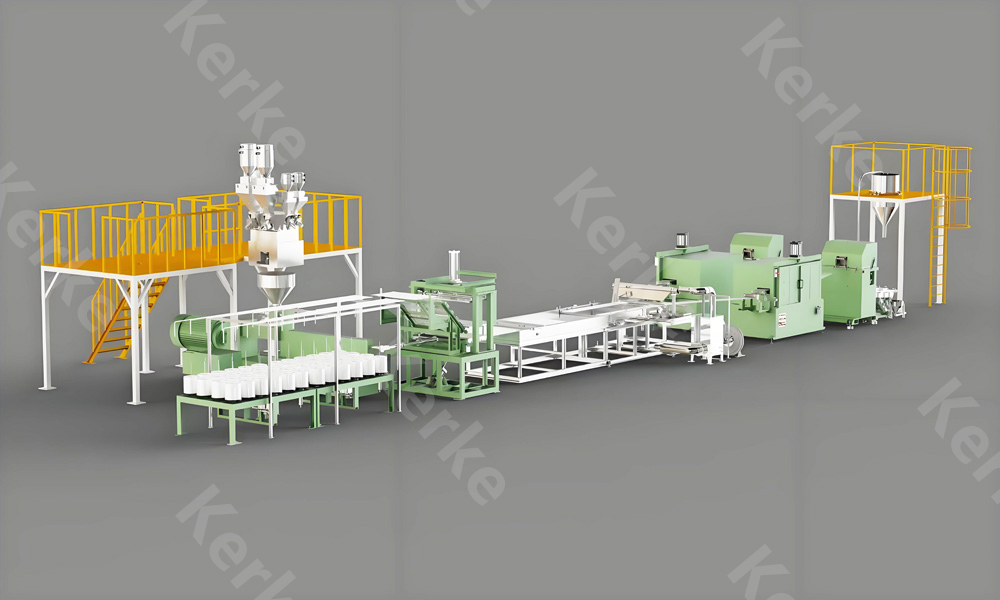
Kerke Transparent Masterbatch Compounding Systems include complete turnkey solutions for transparent masterbatch production. These systems integrate twin screw extruder with gentle mixing screw configuration, contamination control features, filtration systems, material handling equipment, cooling system, pelletizer, and comprehensive quality control equipment into a cohesive production line. The systems are designed for maximum clarity preservation, product consistency, and uptime. Turnkey system costs range from $450,000 for small capacity systems to $1,300,000 for high capacity, fully automated lines. Kerke Compounding Extruder technology ensures superior product quality and production efficiency for transparent masterbatch applications.
Kerke Extruder also offers specialized components and accessories for transparent masterbatch production. These include high-precision gravimetric feeding systems, filtration systems, gentle mixing screw elements, water ring pelletizing systems for uniform pellet quality, and advanced optical measurement equipment. Gravimetric feeding systems cost $18,000 to $40,000. Filtration systems range from $8,000 to $25,000. Specialized screw elements cost $15,000 to $35,000. Optical measurement systems range from $15,000 to $45,000. Kerke Twin Screw Extruder systems integrate seamlessly with these components for complete production solutions tailored to transparent masterbatch requirements.
Future Trends and Market Opportunities
The transparent masterbatch market continues to evolve with advancing technology, changing consumer preferences, and emerging application requirements. Understanding current trends and future outlook helps manufacturers identify growth opportunities and make strategic investment decisions. The global transparent masterbatch market is projected to grow at 6-8% annually through 2030, driven by increasing demand for premium packaging and growing consumer interest in product visibility and brand differentiation.
Technology trends emphasize advanced color effects, digital color management, and enhanced processing control. Next-generation color technologies provide unprecedented control over optical properties, enabling designers to create previously impossible visual effects. Digital color management systems enable precise color communication and reproduction across global supply chains. Kerke Masterbatch Extruder systems incorporate the latest color and processing technologies. The investment in advanced color and processing technology typically ranges from $40,000 to $120,000 for complete systems.
Product development trends include smart transparent masterbatch with responsive properties, sustainable formulations, and functional additives integrated with clarity. Smart colorants change properties based on environmental conditions, enabling interactive packaging features. Sustainable transparent masterbatch addresses environmental concerns through recyclable formulations and bio-based components. Functional transparent masterbatch provides properties such as antimicrobial activity, oxygen scavenging, or moisture barrier while maintaining clarity. Kerke Compounding Extruder technology supports formulation innovation through flexible processing capabilities. The development cost for innovative transparent masterbatch formulations typically ranges from $30,000 to $80,000 per product family.
Market growth is particularly strong in Asia Pacific, driven by expanding consumer markets and increasing premium packaging demand. China, India, and Southeast Asia represent high-growth regions for transparent masterbatch. North America and Europe show moderate growth rates of 4-6% annually, with emphasis on sustainable and recyclable solutions. Kerke Extruder has established presence in key growth markets, providing local support and service for transparent masterbatch production equipment.
Sustainability trends drive demand for recyclable transparent masterbatch formulations that maintain clarity through multiple recycling cycles. This includes masterbatch compatible with both mechanical and chemical recycling technologies. Bio-based carrier resins and naturally derived colorants are gaining market acceptance. Monomaterial packaging solutions drive demand for transparent masterbatch compatible with specific polymer types. Kerke Twin Screw Extruder systems can process both conventional and sustainable carrier resins, enabling manufacturers to adapt to changing market preferences. The cost premium for sustainable formulations typically ranges from 20-35% over conventional products.
Future market opportunities include transparent masterbatch for biodegradable polymers, smart films with transparency-changing properties, and active packaging with integrated functionality while maintaining clarity. Investment in R&D and equipment flexibility enables manufacturers to capture emerging market segments. Kerke Extruder modular design allows rapid adaptation to new formulations and product innovations as market requirements evolve. The investment in R&D capabilities typically ranges from $150,000 to $400,000 annually for competitive transparent masterbatch manufacturers.
Conclusion
Transparent masterbatch for PP and PE represents a sophisticated product category enabling manufacturers to achieve exceptional optical clarity while providing coloration or functional effects. Success in transparent masterbatch production requires understanding of optical principles, compatibility science, advanced processing technology, and comprehensive quality control. Investment in specialized equipment from Kerke Extruder enables manufacturers to produce consistent, high-quality transparent masterbatch that meets the demanding requirements of premium packaging applications.
The comprehensive approach to transparent masterbatch production, from colorant selection through quality control to market delivery, ensures product excellence and customer satisfaction. Kerke Twin Screw Extruder technology provides the foundation for achieving superior clarity, product consistency, and operational efficiency. Manufacturers investing in Kerke Extruder equipment benefit from competitive advantages in product quality, production capability, and market responsiveness.
The future of transparent masterbatch production continues to evolve with advancing color technology, changing market demands, and emerging applications. Companies maintaining technological leadership through equipment investment and product innovation will capture growth opportunities in this dynamic market. Kerke Extruder remains committed to advancing transparent masterbatch production technology, supporting manufacturers in achieving excellence in this premium product segment.