Introduction
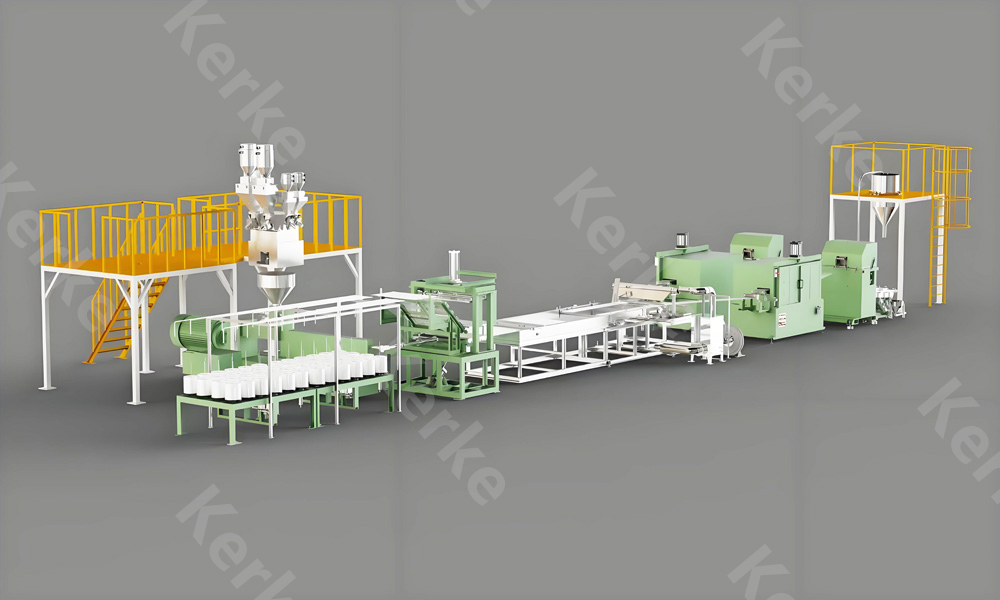
Compounding extruders play a crucial role in enhancing the performance of plastic alloys through advanced mixing technology and precise processing control. Plastic alloys, created by combining different polymers or adding functional additives, offer superior mechanical properties, thermal stability, and processing characteristics compared to individual polymers. The twin screw compounding extruder serves as the heart of alloy production, enabling homogeneous dispersion of components while maintaining material integrity. This comprehensive guide explores how compounding extruders enhance plastic alloy performance through advanced mixing mechanisms, thermal management, and shear optimization.
The evolution of compounding extruder technology has revolutionized plastic alloy manufacturing, enabling manufacturers to achieve previously impossible property combinations. Modern twin screw extruders, such as the KTE Series from Kerke Extrusion Equipment, incorporate modular screw designs, advanced control systems, and precise thermal management that optimize alloy development. Understanding the relationship between extruder design parameters and resulting alloy properties enables manufacturers to produce consistent, high-performance materials for demanding applications across automotive, aerospace, electronics, and consumer goods industries.
Performance enhancement in plastic alloys through compounding involves multiple interconnected processes including melt blending, compatibilization, dispersion, and morphology control. Each of these processes depends critically on extruder configuration and operating parameters. The sophisticated mixing mechanisms in twin screw extruders enable precise control over these processes, allowing manufacturers to tailor alloy properties for specific applications while maintaining production efficiency and cost-effectiveness.
Understanding Plastic Alloys
Plastic alloys represent engineered materials created by combining two or more polymers to achieve superior properties unavailable in individual components. These materials, also known as polymer blends or polymer alloys, leverage the advantages of constituent polymers while mitigating their individual limitations. Common alloy types include PC/ABS, PC/PBT, ABS/PBT, PPO/PA, and various polyolefin blends. Each combination targets specific property requirements such as impact strength, heat resistance, chemical resistance, or processability.
The development of plastic alloys requires careful consideration of component compatibility, processing characteristics, and desired end-use properties. Component polymers must have compatible processing temperature ranges and should be capable of forming a stable morphology during processing. Without proper compatibilization, incompatible polymers will phase separate, resulting in poor mechanical properties and inconsistent performance. This is where advanced compounding extruders become essential, providing the shear and mixing energy needed to create stable, homogeneous alloys.
The performance enhancement in plastic alloys stems from several mechanisms including synergistic effects, morphology control, and additive incorporation. Synergistic effects occur when combined polymers exhibit properties superior to either component alone. Morphology control through extruder configuration determines the phase structure, which directly impacts mechanical properties, thermal behavior, and chemical resistance. Additive incorporation through precise feeding and mixing enables the addition of functional components that further enhance performance characteristics.
Twin Screw Extruder Technology for Alloy Production
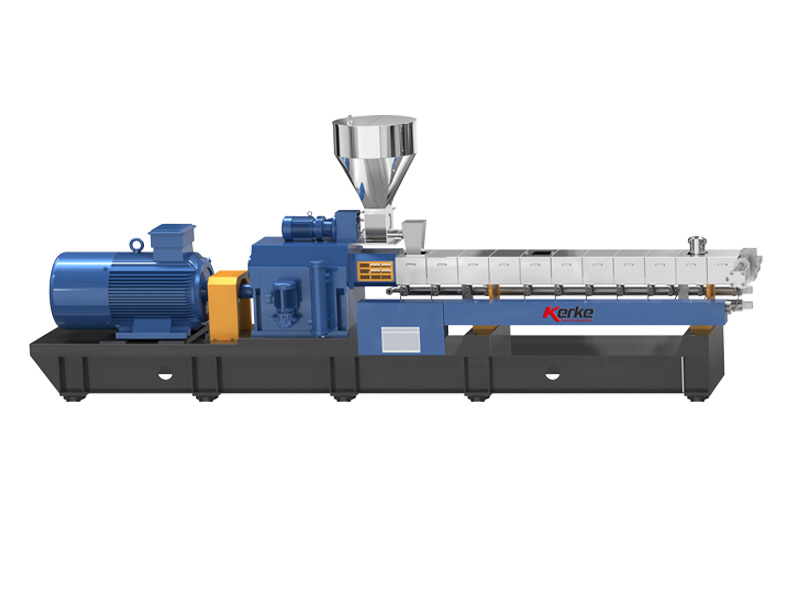
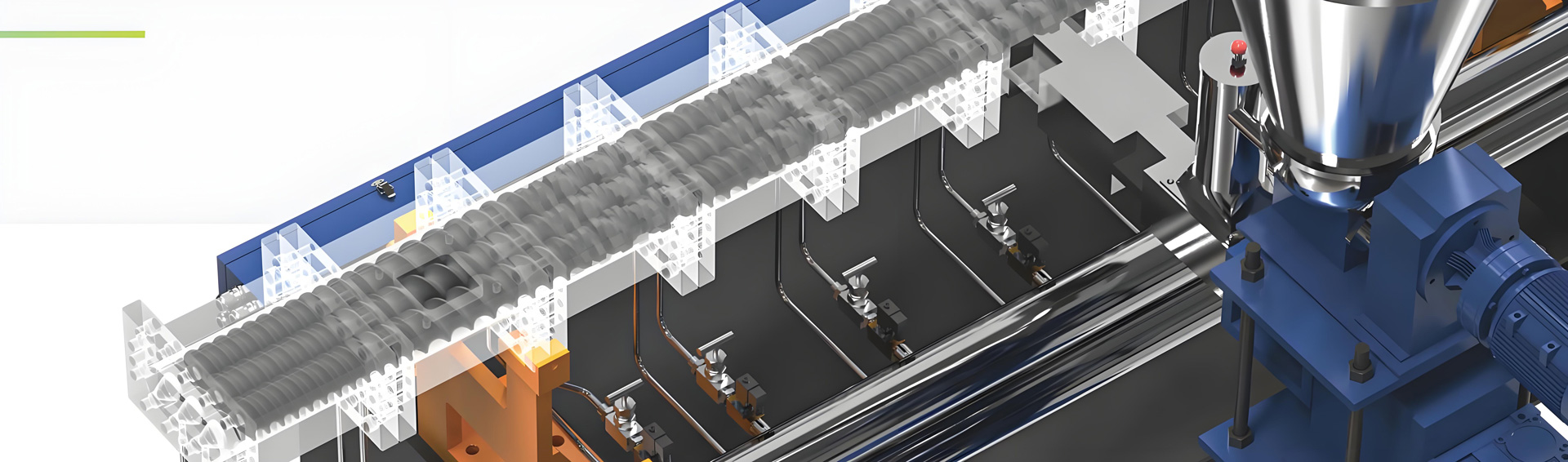
Twin screw compounding extruders represent the optimal technology for plastic alloy production due to their superior mixing capabilities compared to single screw extruders. The co-rotating twin screw design provides intensive distributive and dispersive mixing necessary for homogeneous alloy formation. Kerke’s KTE Series twin screw extruders feature modular screw elements that can be arranged to optimize mixing for specific alloy types and processing requirements.
The modular design of KTE Series extruders allows screw configuration optimization based on alloy composition and processing objectives. For highly incompatible polymers requiring extensive mixing, screw configurations incorporate kneading blocks with stagger angles that maximize distributive mixing. For shear-sensitive alloys or those containing heat-sensitive components, configurations can be arranged to minimize shear while maintaining adequate dispersion. This flexibility enables manufacturers to optimize processing for their specific alloy systems rather than adapting their alloys to extruder limitations.
Advanced twin screw extruders like those from Kerke incorporate computer-aided screw assemblies with excellent self-cleaning properties and good interchangeability. The self-cleaning characteristic prevents material hang-up and degradation during alloy production, crucial for maintaining material integrity. Interchangeability allows rapid screw reconfiguration when changing between different alloy types, supporting flexible manufacturing operations and reducing changeover times between production runs.
Enhancing Mechanical Properties
Compounding extruders significantly enhance the mechanical properties of plastic alloys through precise control over mixing intensity, residence time, and thermal history. Impact strength, tensile strength, flexural modulus, and elongation at break can all be optimized through appropriate extruder configuration and operating parameters. The twin screw extruder’s ability to control these parameters enables manufacturers to achieve target mechanical properties consistently.
Impact strength enhancement in plastic alloys depends on proper morphology development and rubber particle dispersion. For impact-modified alloys such as rubber-toughened polymers, the twin screw extruder creates controlled dispersion of rubber domains in the polymer matrix. The size, distribution, and interface characteristics of these rubber particles determine impact performance. Advanced screw configurations enable control over rubber domain size while compatibilizers, added through precise feeding systems, ensure good interfacial adhesion between phases.
Tensile strength and modulus enhancement in plastic alloys require good phase dispersion and stress transfer between polymer components. Twin screw extruders achieve this through intensive dispersive mixing that breaks up large phase domains and creates fine, uniform morphology. The co-rotating twin screw design provides both distributive mixing for uniform component distribution and dispersive mixing for domain size reduction, both essential for optimal mechanical properties. Processing parameters including screw speed, throughput, and temperature profile are optimized based on specific alloy requirements.
Shear Rate Optimization
Shear rate optimization through extruder configuration and operating parameters significantly influences mechanical property development in plastic alloys. Higher shear rates generally improve dispersion but may cause degradation of shear-sensitive components. Twin screw extruders enable shear rate control through screw speed adjustment, kneading block selection, and barrel temperature profiling. This optimization balances dispersion requirements against degradation risks, maximizing mechanical performance while maintaining material integrity.
Kerke’s KTE Series extruders offer screw speed ranges up to 800 rpm in D Series models, providing flexibility for shear rate optimization. The variable speed capability enables manufacturers to adjust shear rates based on alloy composition and desired properties. For alloys containing shear-sensitive components, lower screw speeds combined with modified screw configurations maintain adequate mixing while reducing degradation. For alloys requiring intensive dispersion, higher screw speeds combined with aggressive kneading block configurations provide necessary shear energy.
Thermal Management for Mechanical Properties
Thermal management in twin screw extruders significantly influences mechanical property development in plastic alloys. Temperature profiles along the extruder barrel affect melt viscosity, component miscibility, and degradation potential. Advanced temperature control systems in modern extruders like Kerke’s KTE Series enable precise thermal profile optimization for specific alloy requirements.
For semi-crystalline polymer alloys, thermal management influences crystallinity development which directly impacts mechanical properties. Controlled cooling rates and temperature gradients along the extruder determine crystal size and distribution. Twin screw extruders with advanced thermal management can optimize these parameters, enabling control over crystalline morphology and resulting mechanical performance. Amorphous polymer alloys benefit from thermal management that controls component compatibility and prevents thermal degradation that would reduce mechanical properties.
Thermal Property Enhancement
Compounding extruders enhance thermal properties of plastic alloys through controlled thermal history, additive incorporation, and morphology development. Heat deflection temperature, glass transition temperature, thermal conductivity, and flame retardancy can all be improved through appropriate compounding strategies. The twin screw extruder’s thermal management capabilities enable optimization of these properties while maintaining production efficiency.
Heat deflection temperature enhancement in plastic alloys often involves incorporation of reinforcing fillers or heat-stable polymer components. Twin screw extruders enable uniform dispersion of these additives throughout the alloy matrix, ensuring consistent thermal performance. For fiber-reinforced alloys, proper fiber length and distribution through extruder configuration directly impacts thermal and mechanical properties. Advanced mixing elements in KTE Series extruders achieve uniform filler dispersion while maintaining fiber length for optimal reinforcement.
Glass transition temperature manipulation in plastic alloys requires careful control of component miscibility and morphology. Some alloy combinations exhibit single Tg indicating complete miscibility, while others show multiple Tg values reflecting phase separation. Twin screw extruders can control this morphology through mixing intensity and compatibilization, enabling tailoring of thermal behavior for specific applications. Temperature profile optimization along the extruder influences component compatibility and morphology development, affecting thermal transition temperatures.
Additive Dispersion for Thermal Performance
Thermal performance additives including flame retardants, thermal stabilizers, and conductive fillers require precise dispersion in plastic alloys to function effectively. Twin screw extruders excel at dispersing these additives uniformly while maintaining their functionality. The modular screw design of Kerke extruders enables configuration optimization for different additive types and loading levels.
Flame retardant additives for plastic alloys typically require high loading levels and uniform dispersion to achieve effective fire performance. Twin screw extruders with side feeding capabilities can introduce these additives after initial melting of polymer components, reducing thermal exposure and preserving additive effectiveness. The intensive mixing action ensures uniform dispersion throughout the alloy matrix, preventing flame retardant-rich or deficient zones that would compromise fire performance.
Thermal conductivity enhancement through addition of conductive fillers like carbon fibers or metal particles requires special attention to filler orientation and distribution. Twin screw extruders can control filler orientation through screw configuration and processing parameters, optimizing thermal conductivity in desired directions. The mixing intensity ensures uniform filler distribution while preserving filler aspect ratio critical for conductivity enhancement.
Morphology Control and Development
Morphology represents one of the most critical factors determining plastic alloy performance, and twin screw extruders provide precise control over morphology development through mixing intensity, thermal management, and compatibilization. Phase size, distribution, and interfacial characteristics directly impact mechanical properties, thermal behavior, and chemical resistance. Advanced extruder technology enables control over these morphological features for optimized alloy performance.
The morphology of immiscible polymer alloys typically consists of dispersed phase domains in a continuous matrix. The size, distribution, and interface quality of these domains determine alloy properties. Twin screw extruders like Kerke’s KTE Series can control domain size through mixing intensity and residence time. Smaller domains generally improve mechanical properties but require higher mixing energy. The extruder configuration must balance domain size requirements against production efficiency and energy consumption.
Co-continuous morphologies, where both polymer phases form continuous networks, offer superior properties for certain applications but require precise control over processing conditions. Twin screw extruders can achieve co-continuous morphologies through optimized phase volume ratios, viscosity matching, and processing conditions. Advanced control systems enable maintenance of these delicate morphologies throughout production, ensuring consistent alloy properties.
Compatibilization Enhancement
Compatibilization represents a key mechanism for enhancing plastic alloy performance, and twin screw extruders optimize this process through precise feeding and mixing. Compatibilizers, typically block or graft copolymers, reduce interfacial tension between immiscible polymer phases, improving adhesion and preventing phase separation. The effectiveness of compatibilizers depends heavily on their distribution and activation during processing.
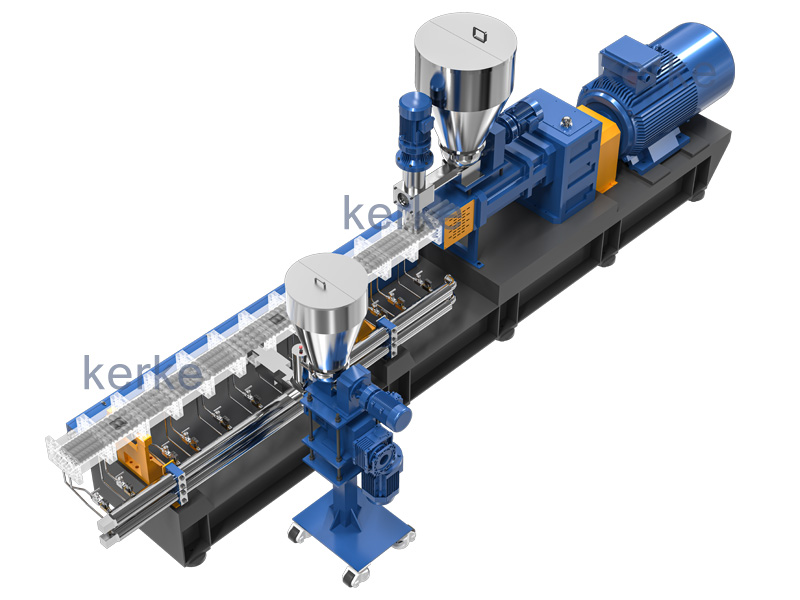
Kerke’s twin screw extruders incorporate multiple feeding systems that enable optimal compatibilizer introduction. For some alloy systems, compatibilizers are introduced early in the process to maximize interaction time with polymer components. For others, side feeding after initial melting reduces thermal degradation of compatibilizer molecules. The intensive mixing action ensures uniform compatibilizer distribution throughout the alloy, maximizing effectiveness while minimizing additive content required.
Reactive compatibilization, where compatibilizer molecules form during processing through in-situ reactions, requires precise control over residence time, temperature profile, and mixing intensity. Twin screw extruders with advanced control systems optimize these parameters to maximize reactive compatibilizer formation while preventing side reactions. The modular screw configuration can be arranged to provide adequate residence time for reaction while maintaining throughput requirements.
Processing Parameters and Morphology
Processing parameters including screw speed, throughput, temperature profile, and venting strategy all influence morphology development in plastic alloys. Twin screw extruders provide precise control over these parameters, enabling morphology optimization for specific application requirements. Understanding the relationship between processing conditions and resulting morphology enables manufacturers to produce alloys with tailored properties.
Screw speed affects mixing intensity and shear history, which directly influence domain size and distribution in immiscible alloys. Higher screw speeds generally reduce domain size but may cause orientation effects that impact anisotropic properties. The KTE Series extruders offer variable speed operation enabling optimization of this parameter for specific alloy systems and property requirements.
Throughput influences residence time and shear history, affecting both morphology development and production efficiency. Lower throughputs provide longer residence times enabling more complete morphology development but reduce production rates. Twin screw extruders with optimized screw configurations can achieve desired morphologies at higher throughputs, maintaining both property requirements and production efficiency. The balance between throughput, morphology, and energy consumption represents a key optimization challenge in alloy production.
Cost Analysis and Economic Benefits
Investing in advanced compounding extruder technology provides significant economic benefits through enhanced alloy performance, improved production efficiency, and reduced material costs. While the initial investment in modern twin screw extruders such as Kerke’s KTE Series represents a significant expense, the return on investment through improved quality, reduced waste, and increased production capacity justifies the expenditure for most alloy producers.
KTE Series twin screw extruders range in price from approximately $15,000 for smaller laboratory models like KTE-20 to over $300,000 for large production models like KTE-135D. The specific cost depends on extruder capacity, configuration, automation level, and optional features. For example, a KTE-75B model with 71mm screw diameter and production capacity of 300-800 kg/h typically costs between $120,000-$180,000 depending on configuration and automation level.
Operational costs for compounding extruders include energy consumption, maintenance, and labor. Modern twin screw extruders from Kerke achieve energy efficiency through optimized gear design, thermal management, and variable speed drives. Energy consumption typically ranges from 0.8-1.5 kWh per kg of processed alloy depending on material type and processing requirements. Maintenance costs generally run 2-4% of equipment cost annually, including regular preventive maintenance and component replacement.
Quality Improvement Value
Enhanced alloy performance through advanced compounding provides significant value through improved product quality and reduced customer complaints. Consistent mechanical properties, thermal performance, and appearance reduce customer returns and warranty claims. The value of quality improvement varies by application but typically ranges from 5-15% of annual production value, representing substantial savings for large-scale producers.
Reduced scrap and rework rates through consistent compounding represent another significant economic benefit. Advanced twin screw extruders with precise process control minimize batch-to-batch variations, reducing material waste and reprocessing needs. Typical scrap reduction when upgrading from basic to advanced compounding equipment ranges from 2-5% of production, representing both material and energy savings.
Production Efficiency Gains
Modern compounding extruders achieve higher production rates through advanced mixing technology and optimized screw designs. Higher throughput reduces per-unit costs, improving competitiveness in the market. KTE Series extruders offer production capacities ranging from 2 kg/h for laboratory models to over 3000 kg/h for large production models, enabling manufacturers to select equipment that matches their production scale and growth plans.
Faster changeover times between different alloy grades reduce downtime and increase effective production capacity. Quick-change screw designs and automated control systems in Kerke extruders enable rapid product changes, supporting flexible manufacturing operations. Changeover time reduction from 2-3 hours to 30-45 minutes represents significant production capacity increase for multi-product facilities.
Material Cost Reduction
Advanced compounding technology enables material cost reduction through several mechanisms. Enhanced performance allows substitution of lower-cost materials for premium materials in some applications. For example, properly compounded alloy grades may achieve comparable performance to premium polymers at 20-40% lower material cost. The compounding technology that enables this substitution more than pays for itself through material cost savings.
Recycled material incorporation in plastic alloys represents another cost reduction opportunity. Twin screw extruders with venting systems and advanced mixing capabilities can incorporate recycled materials at high levels while maintaining performance. Using recycled materials typically reduces material costs by 15-30% compared to virgin materials. The advanced compounding technology that enables this incorporation provides both economic and environmental benefits.
Kerke Extruder Solutions for Plastic Alloys
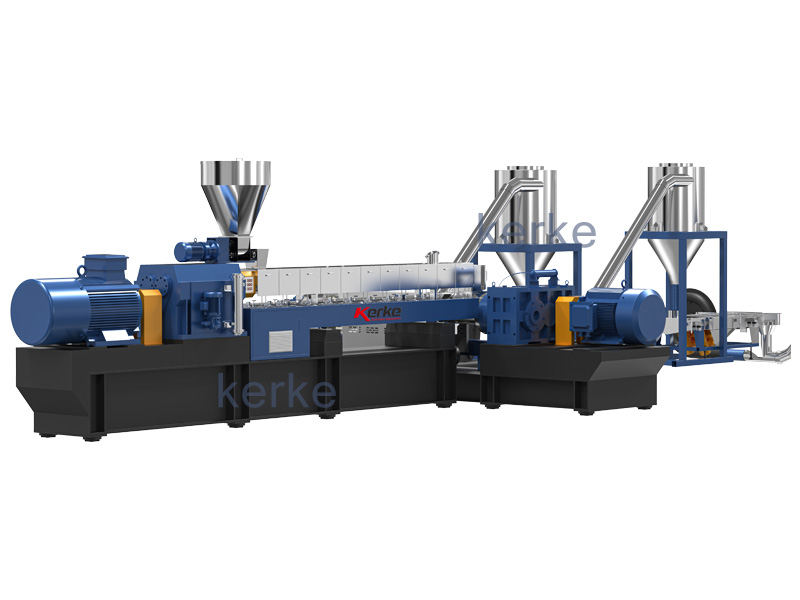
Kerke Extrusion Equipment offers a comprehensive range of twin screw extruder solutions specifically designed for plastic alloy production. The KTE Series includes models from laboratory scale KTE-20 to large-scale production KTE-135D, providing solutions for every production scale. Each model incorporates advanced features specifically beneficial for alloy production including modular screw design, precise thermal management, and variable speed operation.
The KTE Series design philosophy emphasizes flexibility and performance enhancement through advanced technology. Screw diameters range from 15.6mm in KTE-16 to 135mm in KTE-135D, with corresponding production capacities from 1-5 kg/h to 1500-3000 kg/h. This broad range enables manufacturers to select equipment that optimally matches their current production requirements while providing capacity for future growth. The modular design allows screw configuration optimization for different alloy types without equipment replacement.
Kerke’s manufacturing facility in Nanjing incorporates advanced CNC machining capabilities, ensuring precise component manufacturing that optimizes extruder performance. The company’s 12+ years of experience in twin screw extruder manufacturing provides deep understanding of alloy production requirements, resulting in equipment specifically designed for challenging alloy applications. The comprehensive service and support infrastructure ensures customers achieve maximum benefit from their equipment investment.
KTE Series Features for Alloy Enhancement
The KTE Series incorporates several features specifically beneficial for plastic alloy production. Modular screw elements enable configuration optimization for different alloy types and processing objectives. Co-rotating twin screw design provides both distributive and dispersive mixing necessary for homogeneous alloy formation. High torque capacity enables processing of high-viscosity materials and filled alloys that would overwhelm conventional extruders.
Advanced thermal management systems maintain precise temperature control essential for component compatibility and morphology control. Multiple feeding systems enable optimized additive introduction, whether through main hopper feeding or side feeding after initial melting. Venting systems remove volatiles and moisture that would otherwise compromise alloy quality. These integrated features make KTE Series extruders particularly effective for demanding alloy applications.
Custom Configuration Services
Kerke offers custom configuration services to optimize extruder performance for specific alloy applications. Based on customer requirements for material properties, production capacity, and operational considerations, Kerke’s engineering team develops customized screw configurations, feeding arrangements, and control strategies. This service ensures customers achieve maximum alloy performance enhancement from their equipment investment.
Configuration optimization considers multiple factors including polymer compatibility, additive requirements, desired morphology, and production constraints. Through pilot testing and process simulation, Kerke develops configurations that achieve target properties while maintaining production efficiency and energy effectiveness. The customized approach provides competitive advantage by enabling production of specialty alloys that differentiate customers in their markets.
Application Examples and Case Studies
Real-world applications demonstrate how compounding extruders enhance plastic alloy performance across various industries. Automotive applications require alloys with specific combinations of impact strength, heat resistance, and dimensional stability. Twin screw extruders enable production of alloys meeting these demanding requirements through precise control over morphology and additive distribution.
PC/ABS alloys for automotive interior components require balanced properties including good impact strength at low temperatures, dimensional stability at elevated temperatures, and surface aesthetics. Twin screw extruders optimize these properties through morphology control that creates fine ABS domain dispersion in PC matrix, thermal management that prevents PC degradation, and additive distribution that ensures consistent appearance. The resulting alloys enable weight reduction while maintaining performance, supporting automotive fuel efficiency goals.
Electronics Applications
Plastic alloys for electronics applications require special properties including flame retardancy, dimensional stability, and electrical performance. Twin screw extruders enable production of alloys meeting these requirements through precise control over additive dispersion and morphology. For example, halogen-free flame retardant PC/ABS alloys for electronic enclosures require uniform dispersion of flame retardant additives while maintaining mechanical properties.
Kerke’s extruders with side feeding capabilities enable optimal flame retardant introduction, minimizing thermal exposure while ensuring uniform dispersion. The intensive mixing action prevents additive-rich zones that would compromise flame performance. Thermal management prevents PC degradation that would reduce flame retardant effectiveness. The resulting alloys meet stringent UL94 flame ratings while maintaining processability and mechanical performance required for electronics applications.
Consumer Goods Applications
Consumer goods applications require plastic alloys that balance performance, aesthetics, and cost-effectiveness. Twin screw extruders enable production of alloys optimizing these competing requirements through morphology control and additive incorporation. For example, polyolefin alloys for consumer packaging require good clarity, stiffness, and impact strength at competitive cost points.
Advanced compounding technology enables incorporation of clarity-enhancing additives while maintaining mechanical properties. The precise mixing action prevents additive agglomeration that would cause visual defects. Morphology control optimizes the relationship between stiffness and impact strength, enabling performance optimization for specific applications. The resulting alloys meet consumer expectations for appearance and performance while maintaining competitive material costs.
Conclusion
Compounding extruders represent essential technology for enhancing plastic alloy performance through advanced mixing, thermal management, and precise process control. The twin screw extruder’s ability to control morphology, additive distribution, and component compatibility enables production of alloys with tailored properties for demanding applications across multiple industries. Modern extruder technology like Kerke’s KTE Series provides the capabilities needed to achieve consistent, high-performance alloys while maintaining production efficiency and cost-effectiveness.
Performance enhancement in plastic alloys through compounding involves multiple interconnected processes that require coordinated control. From mechanical property optimization through morphology control to thermal property enhancement through additive incorporation, each aspect of alloy performance depends critically on extruder capabilities and operation. Understanding these relationships enables manufacturers to maximize the benefits of compounding technology and produce alloys that compete successfully in demanding markets.
Investing in advanced compounding extruder technology provides substantial returns through quality improvement, production efficiency gains, and material cost reduction. The economic benefits justify the equipment investment for most alloy producers, particularly those targeting high-value applications or specialty markets. Kerke Extrusion Equipment’s comprehensive range of twin screw extruders and customization services provides solutions for every scale and application, enabling manufacturers to achieve maximum alloy performance enhancement.
As plastic materials continue to evolve and applications become more demanding, compounding extruder technology will play increasingly important roles in enabling material innovation. The continued development of advanced screw designs, control systems, and processing technologies will further expand the capabilities of plastic alloys, opening new application opportunities and performance levels. Manufacturers investing in advanced compounding technology today position themselves for future success in an increasingly competitive and innovation-driven market.