Introduction to Defect Reduction in Compounding Operations
Product defects represent a significant cost and quality challenge in plastic compounding operations. Defects cause material waste, customer returns, production downtime, increased costs, and reputational damage. In competitive global markets, defect rates directly affect profitability, customer satisfaction, and market position. Advanced compounding extruders with optimized design and sophisticated control systems provide comprehensive solutions for defect reduction, enabling producers to achieve consistent quality and minimize waste.
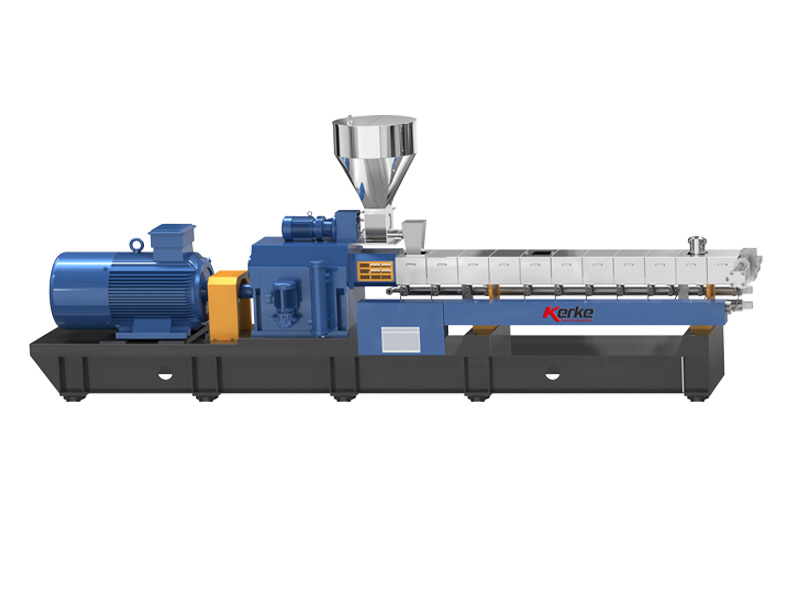
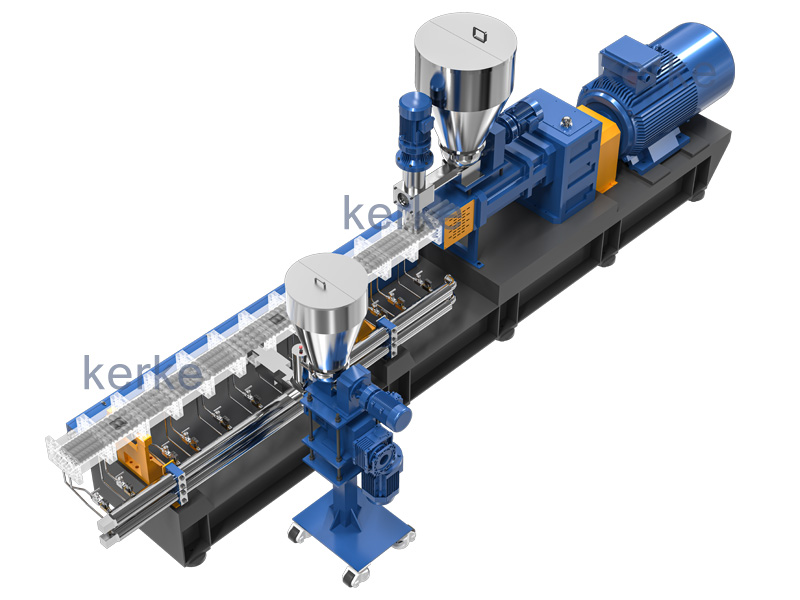
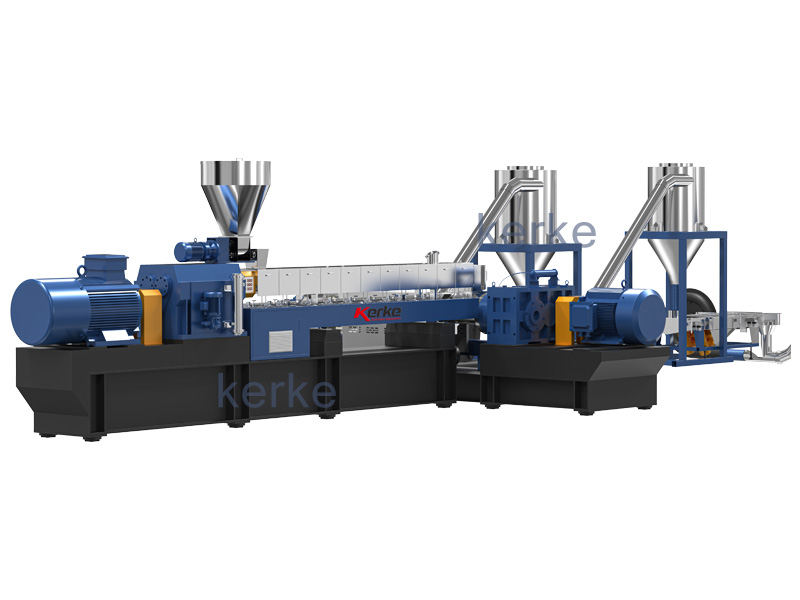
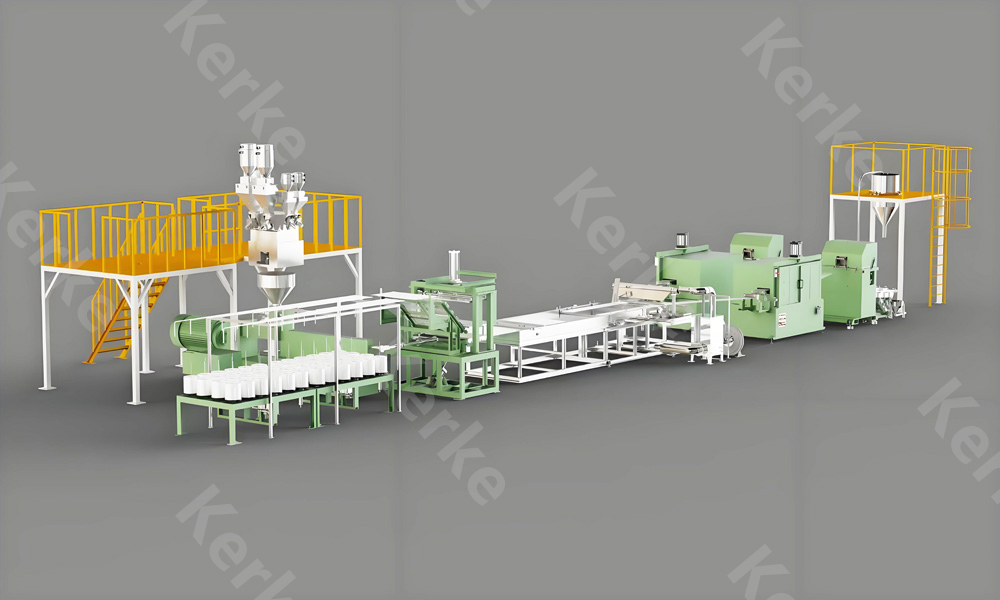
Kerke compounding extruders, with over 12 years of manufacturing experience and installations in more than 70 countries worldwide, incorporate advanced technologies specifically designed to minimize defects and ensure product quality. The KTE series twin screw extruders, ranging from laboratory-scale KTE-20B to industrial production KTE-135D, deliver exceptional mixing performance, precise process control, and reliability that consistently reduces defect rates across diverse applications including masterbatch production, filled compounds, modified polymers, and recycled material processing.
Defect reduction in compounding operations requires comprehensive understanding of defect causes, systematic prevention strategies, and robust process control. Common defect types include dispersion-related defects from inadequate pigment or filler mixing, thermal degradation defects from excessive temperature or residence time, contamination defects from foreign material introduction, formulation defects from inaccurate material dosing, and process variation defects from unstable operating conditions. Advanced compounding extruders address each defect category through design optimization, control system sophistication, and process integration.
Dispersion-Related Defect Reduction
Dispersion-related defects result from inadequate distribution and dispersion of pigments, fillers, or additives throughout the polymer matrix. These defects manifest as color streaks, speckles, inconsistent appearance, property variations, and performance deficiencies. Effective dispersion requires appropriate shear forces, sufficient mixing time, and optimized mixing element configuration to break agglomerates and distribute components uniformly.
Pigment Dispersion Optimization
Pigment dispersion quality directly affects color uniformity, appearance consistency, and color strength in masterbatch and colored compounds. Inadequate pigment dispersion causes visible speckles, color streaks, uneven coloration, and color strength variations that result in customer rejections and waste. Advanced twin screw extruders with optimized screw configuration provide dispersive mixing capabilities that break pigment agglomerates to achieve uniform distribution.
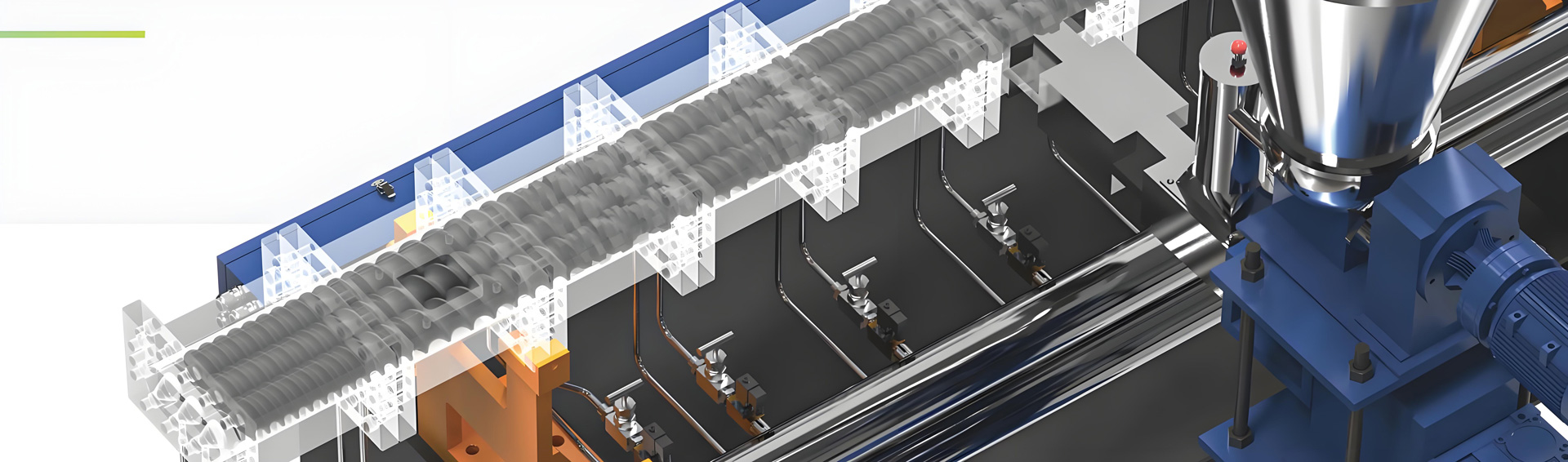
Kerke KTE series extruders feature modular screw configuration with specialized kneading blocks and mixing elements designed for intensive dispersive mixing. The intermeshing co-rotating twin screws create complex shear and elongational flow patterns that efficiently break pigment agglomerates while distributing pigment particles throughout the polymer matrix. For color masterbatch production, Kerke extruders typically achieve dispersion quality meeting automotive industry standards with particle sizes below 20 microns and absence of visible speckles. This level of dispersion reduces color-related defects by 80-95% compared to less capable mixing systems, significantly improving product quality and customer satisfaction.
Filler Deagglomeration and Distribution
Filled compounds including calcium carbonate, talc, and glass fiber reinforced materials require effective filler deagglomeration and uniform distribution to achieve consistent properties. Inadequate filler dispersion causes property variations, surface defects, processing difficulties, and performance failures. Proper dispersion requires sufficient shear to break filler agglomerates combined with mixing elements that distribute filler particles uniformly throughout the compound.
Kerke twin screw extruders excel at filler dispersion through optimized screw configuration that provides appropriate shear intensity for filler deagglomeration without excessive shear that could damage sensitive fibers. For mineral-filled masterbatch production, typical filler loading levels reach 70-80% with uniform dispersion and absence of agglomerates above 50 microns. This capability reduces filler-related defects including property variations, surface roughness, and processing inconsistencies by 70-90% compared to conventional mixing equipment. The excellent filler distribution enables consistent mechanical properties and processing performance across production batches.
Additive Distribution Uniformity
Additive distribution uniformity is critical for functional compounds where additives provide specific performance characteristics. Inadequate additive distribution causes property variations, localized performance deficiencies, and inconsistent product performance. Additives must be thoroughly distributed throughout the polymer matrix to ensure consistent performance in all parts of the final product.
Kerke compounding extruders provide excellent additive distribution through optimized mixing section design that combines dispersive and distributive mixing elements. The modular screw configuration allows customization for specific additive types and required distribution characteristics. For additive masterbatch production, Kerke extruders achieve additive concentration variation within plus/minus 2% across samples, ensuring consistent additive performance in final applications. This uniformity reduces additive-related defects by 75-90% compared to systems with less effective mixing capability, improving product consistency and customer satisfaction.
Resin Blend Homogeneity
Resin blend homogeneity is essential for polymer blends and modified compounds where multiple polymers are combined to achieve desired properties. Inadequate blending causes phase separation, property variations, inconsistent appearance, and performance failures. Proper blending requires sufficient mixing energy and appropriate mixing element design to achieve molecular-level mixing between different polymers.
Kerke twin screw extruders provide excellent blending capability for polymer blends through intensive mixing action and appropriate residence time. The intermeshing screw design creates repeated stretching and folding of material, promoting intimate contact and blending between different polymer phases. For polymer blend compounds, Kerke extruders achieve blend uniformity meeting automotive and appliance industry standards, reducing blend-related defects by 80-95% compared to less capable blending equipment. The excellent blend homogeneity enables consistent performance and appearance across production batches and customer applications.
Thermal Degradation Defect Reduction
Thermal degradation defects result from excessive thermal exposure during processing, causing polymer chain scission, color changes, property loss, and odor development. Thermal degradation is particularly problematic for heat-sensitive materials including certain pigments, additives, and polymers. Advanced compounding extruders with precise temperature control, optimized thermal design, and appropriate screw configuration minimize thermal stress and prevent degradation-related defects.
Precise Temperature Control
Precise temperature control throughout the extruder prevents thermal degradation by maintaining materials within safe temperature ranges. Excessive temperatures cause thermal degradation, while inadequate temperatures can cause incomplete melting and poor mixing. Precise control maintains materials at optimal processing temperatures, preventing degradation while ensuring proper melt quality for effective mixing.
Kerke compounding extruders feature advanced temperature control systems with multiple independently controlled barrel zones. The KTE-65B, for example, typically includes 8-10 temperature control zones with PID control providing temperature accuracy within plus/minus 1°C under steady-state operating conditions. Each zone features appropriately sized heaters and cooling capacity to maintain setpoint temperatures across varying operating conditions and material formulations. This precise control prevents temperature excursions that could cause thermal degradation, reducing degradation-related defects by 70-90% compared to less precise control systems.
Optimized Thermal Profile
Optimized thermal profile design ensures appropriate temperature progression through the extruder, providing sufficient thermal energy for melting and mixing while avoiding excessive thermal stress. Thermal profile optimization considers material thermal characteristics, shear heating effects, and residence time to balance thermal input and removal. Proper thermal profile design minimizes thermal degradation while ensuring adequate melt viscosity for effective mixing.
Kerke extruder design incorporates optimized thermal profile management based on extensive application experience. For typical polyolefin compounding applications, thermal profiles start with lower temperatures in feed zones to prevent premature melting and bridging, increase through melting zones to provide adequate thermal energy for melting, and maintain controlled temperatures in mixing zones to provide appropriate melt viscosity for mixing. This optimized profile typically reduces thermal degradation by 60-80% compared to non-optimized profiles, significantly improving product quality and reducing defects.
Residence Time Control
Residence time control minimizes thermal exposure by limiting the time materials spend at elevated temperatures. Excessive residence time increases thermal stress and degradation risk, particularly for heat-sensitive materials. Appropriate residence time provides sufficient mixing and quality development while minimizing thermal degradation. Screw design, throughput rate, and operating conditions all affect residence time.
Kerke compounding extruders are designed with optimized L/D ratios and screw configurations that provide appropriate residence time for quality development without excessive thermal exposure. Typical residence times range from 1-3 minutes depending on material and application, providing sufficient mixing time while minimizing degradation risk. Throughput optimization further controls residence time, with higher throughput reducing residence time and thermal exposure. Proper residence time control typically reduces thermal degradation defects by 50-70% compared to systems with longer, uncontrolled residence times.
Ambient Temperature Protection
Ambient temperature protection prevents thermal degradation caused by heat gain from the operating environment. High ambient temperatures can increase barrel temperatures beyond setpoints, particularly in cooling-limited zones, causing uncontrolled temperature increases and thermal degradation. Insulation and cooling capacity management protect against ambient temperature effects.
Kerke extruders feature barrel insulation that reduces heat loss while protecting against ambient temperature effects. Insulation maintains consistent barrel temperatures regardless of ambient conditions, preventing unexpected temperature increases that could cause degradation. Adequate cooling capacity in all zones ensures temperature control even under high ambient conditions. This thermal protection typically reduces ambient-related degradation defects by 80-95%, ensuring consistent product quality regardless of seasonal or environmental temperature variations.
Contamination Defect Reduction
Contamination defects result from introduction of foreign materials into the compound, causing speckles, discoloration, property variations, and performance failures. Contamination sources include material handling equipment, previous production residues, environmental particles, and equipment wear or degradation. Advanced compounding extruders with clean design, effective cleaning capabilities, and protective features minimize contamination risk and ensure product purity.
Equipment Clean Design
Clean equipment design minimizes contamination risk by eliminating areas where material can accumulate and degrade during operation. Material accumulation zones become contamination sources as degraded material dislodges and enters product stream. Smooth surfaces, appropriate clearances, and optimized geometry prevent material accumulation and enable effective cleaning.
Kerke compounding extruders feature clean design principles with polished screw and barrel surfaces, minimal dead zones, and geometry optimized for self-cleaning. The intermeshing twin screw design provides excellent self-cleaning action, preventing material accumulation between screws. Smooth barrel surfaces and appropriate clearances prevent material sticking and accumulation. This clean design typically reduces contamination-related defects by 70-90% compared to equipment with material accumulation zones, significantly improving product quality and reducing cleaning requirements.
Effective Purging Capabilities
Effective purging capabilities remove previous production residues before starting new materials, preventing contamination from product changes. Inadequate purging allows previous material to contaminate new production, causing defects and customer rejections. Effective purging requires appropriate purge material, purge procedures, and equipment design that facilitates material removal.
Kerke extruder design facilitates effective purging through screw configuration and operating procedures optimized for material change. The self-cleaning twin screw design combined with appropriate purge materials typically achieves complete material removal within 30-50 kg of purge material for most color-to-color changes. Rapid purging reduces material waste and changeover time while preventing cross-contamination. Effective purging capabilities typically reduce contamination defects from product changes by 90-95% compared to less effective purging methods, significantly improving product quality during production changes.
Material Filtration
Material filtration removes contaminants from feed materials before they enter the extruder, preventing contamination-related defects in final products. Filtration captures foreign particles, agglomerates, and degraded material that could cause defects in finished products. Appropriate filter type, screen size, and change procedures ensure effective contaminant removal without excessive pressure buildup.
Kerke compounding extruder systems integrate automatic screen changers and filtration systems tailored to application requirements. Screen packs with appropriate mesh sizes remove contaminants while maintaining acceptable pressure drop. Automatic screen changers enable continuous operation with scheduled screen changes without production interruption. For applications requiring high purity, fine mesh screens down to 75 microns remove even small contaminants. Effective material filtration typically reduces contamination-related defects by 80-95%, significantly improving product quality and customer satisfaction.
Environmental Protection
Environmental protection prevents contamination from dust, airborne particles, and other external contaminants. Open material handling systems allow dust and particles to enter product stream, causing contamination-related defects. Enclosed systems, appropriate ventilation, and clean operating environments minimize contamination risk from external sources.
Kerke extruder systems can be configured with enclosed material handling, dust collection systems, and appropriate environmental protection measures. Pneumatic conveying systems with filtration capture dust and prevent particle contamination. Enclosed feed hoppers and transfer systems prevent external contamination. Proper facility design with filtered air systems provides clean operating environment. Environmental protection measures typically reduce external contamination defects by 85-95%, ensuring product purity and quality.
Formulation Defect Reduction
Formulation defects result from inaccurate material dosing, incorrect material specifications, or formulation errors, causing property variations, performance failures, and customer rejections. Accurate material dosing, material quality control, and formulation verification prevent formulation-related defects. Advanced feeding systems and process control enable precise formulation management.
Precision Material Dosing
Precision material dosing ensures accurate formulation by delivering each component at precisely the correct rate. Dosing accuracy directly affects final product composition and properties. Inaccurate dosing causes formulation errors, property variations, and performance deficiencies. Gravimetric and loss-in-weight feeding systems provide the accuracy required for precise formulation control.
Kerke compounding extruder systems integrate multiple precision feeding systems for accurate component dosing. Gravimetric feeders provide dosing accuracy within plus/minus 0.5% for most materials, while loss-in-weight feeders achieve accuracy within plus/minus 0.1-0.25% for critical components. Multiple feeders handle different material types including base resins, pigments, fillers, and additives. Integrated feeder control coordinates dosing with extruder throughput to maintain consistent formulation across varying operating conditions. Precision dosing typically reduces formulation-related defects by 80-95% compared to less accurate dosing methods, significantly improving product consistency.
Material Quality Verification
Material quality verification ensures that incoming materials meet specifications before use in production. Material variations cause formulation errors and product defects, even when dosing is accurate. Material quality testing including particle size analysis, moisture content measurement, and property verification prevents defects from out-of-specification materials.
Kerke recommends implementing material quality verification systems for critical applications. Moisture analyzers ensure hygroscopic materials meet moisture specifications before use. Particle size analysis verifies filler and pigment characteristics. Melt flow index testing confirms polymer properties. Material verification typically prevents 60-80% of material-related defects by identifying out-of-specification materials before production, avoiding costly waste and customer rejections.
Formulation Verification and Control
Formulation verification and control systems monitor actual formulation during production to detect and correct deviations before defects occur. Online or at-line analysis of composition, properties, or performance characteristics provides real-time formulation feedback, enabling rapid correction of dosing errors or material variations.
Kerke extruder systems can be integrated with formulation verification systems including online spectroscopic analysis for composition monitoring, melt property sensors for viscosity monitoring, and periodic sampling for laboratory analysis. These systems provide real-time formulation feedback, enabling automatic or manual correction before significant off-specification material is produced. Formulation verification typically reduces formulation-related defects by 70-90% compared to uncontrolled systems, significantly improving product quality and reducing waste.
Traceability and Recall Management
Traceability and recall management systems track materials from receipt through final product shipment, enabling identification and isolation of defective batches when quality issues occur. Comprehensive traceability prevents defective products from reaching customers while limiting recall scope when issues are detected. Batch tracking, material lot tracking, and production records enable effective traceability.
Kerke extruder control systems provide batch tracking and traceability capabilities that record material lots, production parameters, and quality data for each production batch. When quality issues are identified, traceability enables rapid identification of affected batches, minimizing recall scope and customer impact. Effective traceability typically reduces customer exposure to defects by 80-95% while limiting recall costs and protecting reputation.
Process Variation Defect Reduction
Process variation defects result from unstable operating conditions causing inconsistent product quality. Process variations in temperature, pressure, throughput, or mixing intensity cause quality variations that lead to defects and customer rejections. Advanced control systems, robust equipment design, and process optimization minimize process variations and ensure consistent quality.
Advanced Process Control
Advanced process control systems maintain stable operating conditions by automatically adjusting process parameters to compensate for variations. Temperature, pressure, throughput, and mixing intensity are controlled to maintain setpoints despite material variations, environmental changes, or disturbances. Advanced control including PID loops, model predictive control, and adaptive algorithms provide precise process control.
Kerke compounding extruders feature advanced control systems based on Siemens PLC with touch screen interfaces. Multiple PID control loops maintain temperature in each barrel zone within tight tolerances. Pressure control maintains consistent die pressure. Throughput control maintains consistent production rate. Advanced control algorithms automatically compensate for variations, maintaining stable conditions despite disturbances. Advanced process control typically reduces process variation defects by 60-80% compared to manual or less sophisticated control, significantly improving product consistency.
Robust Equipment Design
Robust equipment design minimizes process variations by maintaining consistent performance despite varying conditions. Equipment with adequate capacity, appropriate design margins, and quality components provides stable operation without sensitivity to normal variations. Over-designed equipment provides consistent performance across the operating range without variation.
Kerke compounding extruders feature robust design with adequate motor capacity, appropriately sized heaters and cooling systems, and quality components including Siemens electrical components and W6Mo5Cr4V2 screw steel. Design margins ensure stable performance across the specified operating range without variation due to capacity limitations. Robust design typically reduces variation-related defects by 50-70% compared to equipment with marginal design margins, ensuring consistent quality and reliable operation.
Process Monitoring and Early Warning
Process monitoring and early warning systems detect process variations before they cause defects, enabling corrective action before off-specification material accumulates. Real-time monitoring of key process parameters including temperature, pressure, torque, and throughput provides early indication of developing problems. Statistical process control identifies trends requiring attention before defects occur.
Kerke control systems provide comprehensive process monitoring with real-time display of all critical parameters. Alarms notify operators of parameter deviations from acceptable ranges. Statistical process control capability tracks parameter trends and identifies developing issues. Early warning typically enables prevention of 70-90% of potential defects by catching problems before significant off-specification material is produced, significantly reducing waste and customer rejections.
Operator Training and Standardization
Operator training and standardized procedures ensure consistent operation regardless of personnel changes or shifts. Well-trained operators following standardized procedures minimize variations from manual decisions, adjustments, or interventions. Clear procedures, comprehensive training, and performance monitoring ensure consistent operation across all shifts and operators.
Kerke provides comprehensive operator training and standardized operating procedures with equipment delivery. Training covers equipment operation, parameter adjustment, troubleshooting, and quality monitoring. Standardized procedures document optimal operating conditions and response protocols for various situations. Regular training updates and procedure reviews maintain consistency. Operator training and standardization typically reduces variation-related defects by 40-60% compared to untrained operators with inconsistent procedures, ensuring consistent quality regardless of personnel changes.
Economic Impact of Defect Reduction
Defect reduction delivers significant economic benefits through reduced material waste, lower reprocessing costs, decreased customer returns, improved customer satisfaction, and enhanced reputation. Investment in advanced compounding extruders and process optimization delivers rapid payback through these economic benefits.
Material Waste Reduction
Material waste reduction directly reduces raw material costs and waste disposal costs. Defect reduction from 5% to 1% represents 80% waste reduction, significantly reducing material costs. For a production line processing 1000 kg per hour, defect reduction from 5% to 1% saves 40 kg per hour or 240,000 kg per year, representing substantial material cost savings.
For typical polyolefin compounds costing USD 1.00-1.50 per kg, waste reduction from 5% to 1% saves USD 240,000-360,000 annually for 1000 kg per hour production. This savings alone can justify equipment investment while providing ongoing benefits throughout equipment service life. Kerke extruders typically reduce defect rates to below 1% for most applications, delivering significant material cost savings.
Reprocessing Cost Reduction
Reprocessing cost reduction occurs when fewer defects require reprocessing to recover value. Reprocessing consumes additional energy, labor, and equipment time while increasing wear and reducing effective capacity. Defect reduction decreases reprocessing requirements, reducing associated costs and increasing effective capacity.
Reprocessing typically costs USD 0.10-0.20 per kg including energy, labor, and capacity costs. Reducing reprocessing from 4% to 0.5% saves USD 0.35-0.70 per kg in reprocessing costs. For 1000 kg per hour production, this saves USD 350-700 per hour or USD 2,100,000-4,200,000 annually based on 6000 operating hours. Kerke extruders with reduced defect rates minimize reprocessing requirements, delivering substantial cost savings and increased capacity.
Customer Return Reduction
Customer return reduction saves direct costs including shipping, processing, and replacement while protecting reputation and customer relationships. Returns typically cost 2-3 times product value when all costs including investigation, replacement, and relationship management are included. Defect reduction prevents returns, protecting revenue and reputation.
For production selling at USD 1.50 per kg with 2% return rate, annual returns at 1000 kg per hour equal 120,000 kg worth USD 180,000. Total return cost including replacement and management typically reaches USD 360,000-540,000 annually. Reducing return rate from 2% to 0.3% saves USD 306,000-459,000 annually while protecting customer relationships and reputation. Kerke extruders with quality performance typically reduce customer returns below 0.5%, delivering substantial savings.
Investment and Return Analysis
Kerke compounding extruder investments typically range from USD 18,000-20,500 for laboratory KTE-20B systems to USD 50,000-70,000 for mid-range KTE-65B production systems to USD 100,000-130,000 for large-scale KTE-95B systems. Complete production lines including auxiliary equipment typically represent 1.5-2.5 times base extruder cost.
For a KTE-65B-based production line with total investment of USD 100,000-150,000, annual savings from material waste reduction (USD 240,000-360,000), reprocessing cost reduction (USD 2,100,000-4,200,000), and customer return reduction (USD 306,000-459,000) total USD 2,646,000-5,019,000. This investment delivers payback periods of 1-3 months with exceptional return on investment. Even conservative estimates achieving 30% of projected savings deliver payback under one year, making investment in defect reduction highly attractive.
Conclusion: Competitive Advantage through Quality Excellence
Defect reduction through advanced compounding extruder technology provides strategic competitive advantages in the global compounding market. Kerke twin screw extruders, with over 12 years of manufacturing experience and proven performance in over 70 countries, deliver comprehensive solutions for defect reduction and quality excellence.
Investment in defect reduction delivers rapid payback and long-term competitive advantage through reduced costs, improved quality, enhanced customer satisfaction, and strengthened reputation. As global markets become increasingly competitive, producers with superior quality and low defect rates will capture growing market share through quality leadership and customer preference.
Kerke provides complete support for defect reduction including equipment design, process engineering, control system optimization, and technical support. With Kerke compounding extruders and quality-focused approach, producers can achieve exceptional defect reduction and quality performance, creating sustainable competitive advantage in dynamic global markets.