Introduction to Laboratory and Pilot Scale Extrusion
Choosing the appropriate twin screw extruder for laboratory and pilot production represents a critical decision affecting research efficiency, product development timeline, scale-up success, and overall project economics. Laboratory and pilot extruders provide essential capabilities for material development, process optimization, formulation testing, and scale-up studies before committing to full production equipment investment. The selection process requires careful consideration of application requirements, scale-up considerations, technical specifications, and economic factors.
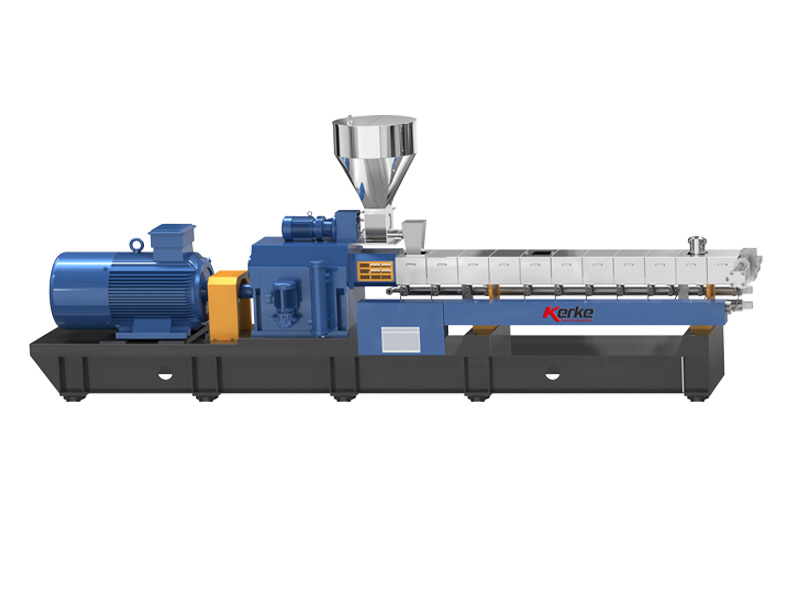
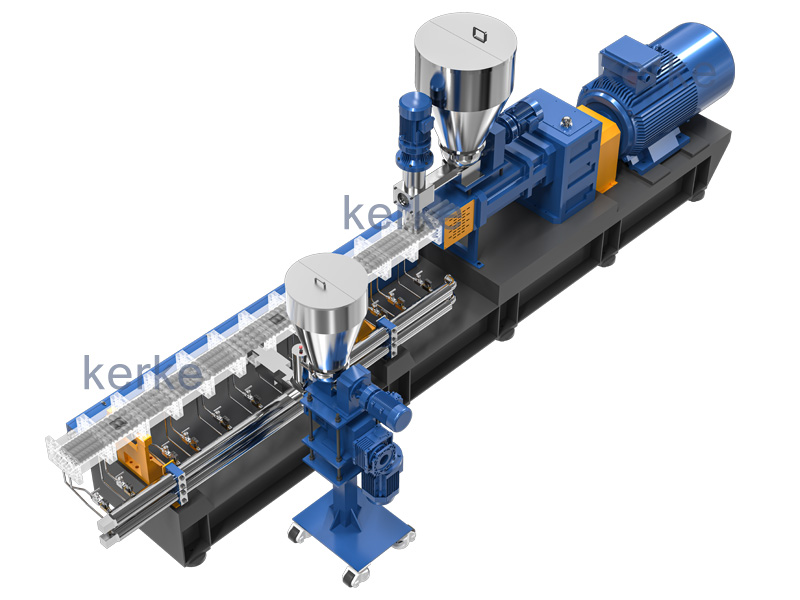
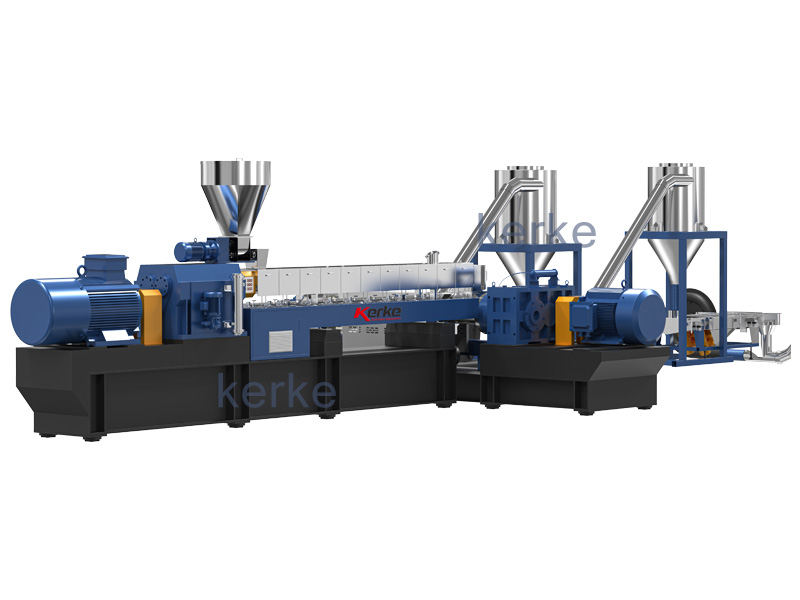
Kerke laboratory and pilot scale extruders, built on over 12 years of manufacturing experience with installations in more than 70 countries, deliver comprehensive solutions for research and development applications. The KTE laboratory series includes models ranging from KTE-16B for small-scale feasibility studies to KTE-36B for pilot production and process development. These extruders incorporate advanced features typically found in production equipment while optimized for small-scale operation, providing accurate scale-up data and reliable performance for research applications.
Laboratory extruder applications include polymer synthesis evaluation, masterbatch formulation development, filler loading studies, additive effectiveness testing, recycled material processing optimization, and process parameter development. Pilot scale applications include process validation, limited production runs, customer sample production, scale-up parameter development, and equipment feasibility studies. Appropriate extruder selection for these applications enables efficient research and development while providing reliable scale-up information for production equipment design and operation.
Application Requirements Analysis
Understanding application requirements provides the foundation for appropriate extruder selection. Laboratory and pilot extruders serve diverse applications with different technical requirements. Careful analysis of intended applications ensures selected equipment meets research and development needs while providing appropriate scale-up capability.
Throughput Range Requirements
Throughput range requirements depend on intended applications and scale of operations. Laboratory feasibility studies may require only small quantities for testing, while pilot production may require sufficient output for customer samples or small-scale production runs. Appropriate throughput range balances material availability, testing requirements, and operational efficiency without excessive size or cost.
Kerke laboratory extruder models cover a range of throughput capacities suitable for various applications. KTE-16B, with 16mm screw diameter, provides 0.5-5 kg/h throughput ideal for initial feasibility studies with limited material availability. KTE-20B, with 20mm screw diameter, provides 3-15 kg/h throughput suitable for formulation development and material optimization. KTE-26B, with 26mm screw diameter, provides 10-50 kg/h throughput for extended testing and pilot production. KTE-36B, with 35.6mm screw diameter, provides 20-100 kg/h throughput for pilot production and process validation. Selecting appropriate throughput range based on application requirements ensures efficient operation without excessive equipment size or cost.
Material Compatibility
Material compatibility considerations include polymer types, melt viscosity ranges, temperature requirements, and special processing characteristics. Laboratory extruders may need to handle diverse materials including polyolefins, engineering plastics, biodegradable polymers, filled compounds, and recycled materials. Equipment must accommodate required temperature ranges, pressure capabilities, and screw configuration flexibility for intended materials.
Kerke laboratory extruders feature robust construction suitable for diverse materials including polyolefins, styrenics, polyesters, nylons, and engineering plastics. Temperature capability typically reaches 300-350°C for standard models with higher temperature options available for high-temperature polymers. Screw element and barrel materials provide corrosion resistance for filled and recycled materials. Modular screw configuration enables optimization for specific material types, from low-viscosity polymers to highly filled compounds. Material compatibility verification ensures selected equipment handles all intended research and development materials.
Mixing Requirements
Mixing requirements vary significantly based on application, from simple polymer blending to intensive dispersion of pigments, fillers, or additives. Laboratory extruders must provide appropriate mixing capability for specific research applications. Some applications require intensive dispersive mixing, while others require gentle distributive mixing or specific mixing profiles.
Kerke laboratory extruders feature modular screw configuration enabling customization for specific mixing requirements. Various mixing element types including kneading blocks, mixing elements, and special dispersion elements allow optimization for different applications. For color masterbatch development, intensive dispersive mixing elements break pigment agglomerates. For polymer blending, distributive mixing elements ensure uniform mixing. For filled compounds, specialized configurations achieve filler deagglomeration and distribution. Mixing flexibility enables investigation of various formulation approaches and optimization of mixing parameters.
Process Development Needs
Process development needs influence extruder requirements for flexibility, control capability, and data acquisition. Research applications often require extensive parameter variation to optimize processing conditions. Equipment must provide flexible operation, precise control, and comprehensive data collection to support systematic process development and optimization.
Kerke laboratory extruders feature advanced control systems with programmable temperature profiles, variable screw speed control, and multiple feeding options. Data acquisition capabilities record process parameters including temperatures, pressures, torque, and throughput. Precise control enables systematic parameter variation for optimization. Comprehensive data collection provides detailed information for process understanding and scale-up. Control flexibility supports investigation of various processing approaches and identification of optimal conditions.
Technical Specifications and Performance
Technical specifications and performance capabilities determine whether equipment meets research and development requirements. Key specifications include screw geometry, drive system, temperature control, feeding capabilities, and instrumentation. Understanding these specifications enables appropriate equipment selection for specific research applications.
Screw Geometry and Configuration
Screw geometry and configuration affect mixing performance, residence time, shear intensity, and scale-up correlation. Appropriate screw design for laboratory applications provides research relevance while maintaining scale-up predictability. Screw diameter, L/D ratio, element types, and configuration flexibility are important considerations.
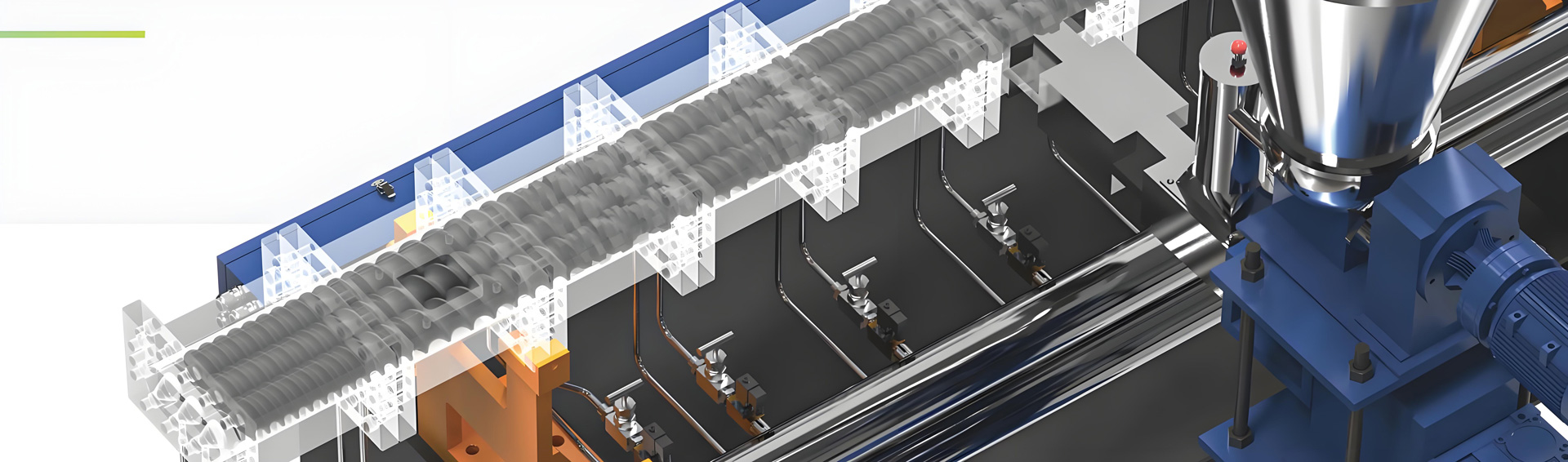
Kerke laboratory extruders feature co-rotating intermeshing twin screw design with modular screw elements for configuration flexibility. Screw diameters range from 16mm (KTE-16B) to 35.6mm (KTE-36B) with L/D ratios typically 40:1 for laboratory applications providing adequate residence time and mixing capability. Modular screw elements including conveying elements, kneading blocks, mixing elements, and specialized elements enable configuration optimization for specific applications. Screw configuration changes enable investigation of various mixing approaches and identification of optimal configurations for specific materials or products.
Drive System Performance
Drive system performance including motor power, torque capability, speed range, and control precision affects processing capability and operational flexibility. Laboratory applications require adequate torque for processing high-viscosity materials or highly filled compounds while providing precise speed control for parameter optimization.
Kerke laboratory extruders feature robust drive systems with appropriate power and torque for intended applications. KTE-16B typically includes 2.2-3.0 kW motor providing sufficient torque for small-scale processing. KTE-20B includes 5.5-7.5 kW motor for expanded capability. KTE-36B includes 15-22 kW motor for pilot production applications. Variable frequency drives provide precise speed control typically from 100-1000 rpm depending on model. Drive systems provide adequate torque reserve for processing challenging materials while enabling precise parameter control for research applications.
Temperature Control Capability
Temperature control capability including number of control zones, heating capacity, cooling capacity, and control precision affects processing capability and product quality. Research applications often require precise temperature control and flexibility to investigate various temperature profiles.
Kerke laboratory extruders feature multiple independently controlled temperature zones for precise thermal management. KTE-16B typically includes 4-6 temperature zones, KTE-20B includes 6-8 zones, and KTE-36B includes 8-10 zones. Each zone features PID control with appropriate heater capacity and cooling capability. Temperature control precision typically reaches plus/minus 1°C under steady-state conditions. Multiple zones enable investigation of various thermal profiles for process optimization while maintaining precise control for reproducible results.
Feeding System Options
Feeding system options affect formulation capability, accuracy, and flexibility. Research applications often require multiple feeding points for additives, fillers, or side feeding capabilities. Feeding accuracy affects formulation precision and experimental reproducibility.
Kerke laboratory extruders offer multiple feeding options including main hopper feeding, side feeding ports, and liquid injection capabilities. Volumetric and gravimetric feeder integration provides accurate dosing for formulation studies. Multiple side feeding ports enable downstream addition of heat-sensitive additives or sequential feeding strategies. Liquid injection systems enable addition of liquid additives or reactive components. Feeding system flexibility enables investigation of various formulation approaches and processing strategies.
Instrumentation and Data Acquisition
Instrumentation and data acquisition capabilities provide critical information for process understanding and scale-up. Research applications require comprehensive monitoring and data collection to support systematic investigation and optimization. Key instrumentation includes temperature sensors, pressure transducers, torque measurement, and throughput monitoring.
Kerke laboratory extruders feature comprehensive instrumentation including temperature monitoring for each control zone, melt pressure sensors, motor torque monitoring, and throughput measurement. Data acquisition systems record process parameters at appropriate intervals for detailed analysis. Touch screen control displays provide real-time monitoring and parameter adjustment. Comprehensive instrumentation enables systematic process investigation, identification of optimal conditions, and collection of scale-up data for production equipment design.
Scale-Up Considerations
Scale-up considerations affect the value of laboratory and pilot testing for production equipment design. Appropriate scale-up correlation between laboratory and production equipment ensures research results translate reliably to production scale. Geometric similarity, processing similarity, and performance correlation are important scale-up considerations.
Geometric Similarity
Geometric similarity between laboratory and production equipment improves scale-up correlation. Similar screw geometry including screw diameter ratio, L/D ratio, channel depth ratio, and element design ensures similar mixing and flow characteristics at different scales. Geometric similarity enables prediction of production performance from laboratory data.
Kerke laboratory and production extruders maintain geometric similarity within product lines. KTE laboratory series extruders use similar screw element designs, mixing principles, and barrel configurations to larger production models including KTE-65B, KTE-75D, and KTE-95B. This similarity enables direct scale-up correlation, allowing prediction of production conditions from laboratory testing results. Screw configuration optimization performed on laboratory equipment translates directly to larger production machines, reducing scale-up risk and development time.
Processing Similarity
Processing similarity ensures similar shear conditions, residence time distribution, and thermal profiles across scales. Similar specific mechanical energy input, shear rate, and residence time at laboratory and production scale enables reliable scale-up. Processing parameters measured at laboratory scale provide basis for production equipment design and operation.
Kerke extruder design maintains processing similarity across scales through appropriate screw speed scaling, L/D ratio consistency, and thermal design similarity. Laboratory testing provides specific mechanical energy input data, residence time measurements, and temperature profiles that can be directly scaled to production equipment. Processing similarity enables accurate prediction of production conditions including required torque, power consumption, and processing parameters based on laboratory testing results.
Scale-Up Methods
Scale-up methods including constant specific mechanical energy, constant shear rate, constant tip speed, or constant residence time provide different approaches for translating laboratory results to production scale. Understanding appropriate scale-up methods for specific applications improves scale-up accuracy and reduces development risk.
Kerke provides scale-up support based on extensive experience across applications. For shear-sensitive applications, constant shear rate scaling may be appropriate. For thermal-sensitive applications, constant residence time scaling may be preferred. For general applications, constant specific mechanical energy often provides good correlation. Kerke technical support assists in selecting appropriate scale-up methods and calculating production equipment requirements based on laboratory testing results, reducing scale-up uncertainty and development time.
Pilot Production Capability
Pilot production capability enables limited production runs for customer samples, market testing, or initial production before full-scale equipment investment. Pilot scale equipment provides bridge between laboratory development and full production, enabling validation of production processes and product performance at intermediate scale.
Kerke KTE-36B with 20-100 kg/h capability provides pilot production capacity for customer sample generation, initial market testing, or limited production before production equipment commitment. Pilot production capability reduces risk by validating products and processes at relevant scale before major investment. Successful pilot production builds confidence for production equipment investment and provides production data for final production equipment design and optimization.
Operational Flexibility and Ease of Use
Operational flexibility and ease of use affect research efficiency and productivity. Laboratory extruders must be easy to operate, clean, and reconfigure to support frequent material and configuration changes. User-friendly design, rapid changeover capability, and accessible maintenance contribute to efficient research operation.
User Interface and Control
User interface and control systems affect ease of operation, parameter adjustment, and data collection. Intuitive interfaces, clear displays, and straightforward parameter adjustment enable efficient operation and reduce operator training requirements. Advanced control capabilities enable systematic process investigation and optimization.
Kerke laboratory extruders feature Siemens PLC control with touch screen interfaces providing intuitive operation. Temperature setpoint adjustment, screw speed control, feeder rate adjustment, and parameter monitoring are accessible through clearly organized screens. Recipe storage enables rapid recall of optimized parameters for different materials or products. Data logging and export capabilities support detailed analysis and record keeping. User-friendly design enables efficient operation with minimal training while providing advanced capabilities for process development.
Rapid Configuration Change
Rapid configuration change capability enables efficient investigation of various screw configurations, processing conditions, and formulations. Quick screw element removal and replacement, accessible barrel sections, and tool-less disassembly reduce changeover time and increase research productivity.
Kerke laboratory extruders feature modular screw design enabling rapid configuration changes. Screw elements slide onto splined shafts and are secured with locking rings, enabling element removal and replacement without special tools. Barrel sections feature quick-access design facilitating screw removal and cleaning. Typical screw configuration changes require 15-30 minutes depending on complexity, enabling efficient investigation of various configurations. Rapid changeover capability supports systematic investigation of design parameters and identification of optimal configurations.
Cleaning and Maintenance
Cleaning and maintenance requirements affect operational efficiency and downtime between material changes. Easy-to-clean design, accessible components, and corrosion-resistant materials reduce cleaning time and extend equipment life. Regular maintenance accessibility ensures consistent performance and reliability.
Kerke laboratory extruders feature easy-to-clean design with polished barrel and screw surfaces preventing material sticking. Barrel sections open for screw access and cleaning. Screw elements remove for thorough cleaning. Chrome plating on screw elements reduces adhesion and facilitates cleaning. Routine maintenance including drive system lubrication and control system calibration is accessible and straightforward. Cleaning and maintenance design reduces downtime between material changes, enabling efficient research operation.
Space and Utility Requirements
Space and utility requirements affect installation feasibility and operating cost. Laboratory extruders must fit available space while requiring reasonable utility consumption for operation. Compact design, efficient power consumption, and minimal utility requirements reduce installation complexity and operating cost.
Kerke laboratory extruders feature compact design suitable for laboratory environments. KTE-16B requires approximately 2.5m length and 1.5m width, KTE-20B requires approximately 3m length and 1.5m width, and KTE-36B requires approximately 4m length and 2m width. Power consumption ranges from 3 kW for KTE-16B to 22 kW for KTE-36B. Cooling water requirements vary from 0.5-2 cubic meters per hour depending on model and operating conditions. Compact size and reasonable utility requirements facilitate installation in typical laboratory facilities.
Economic Considerations
Economic considerations including investment cost, operating cost, and value generation affect equipment selection decisions. Laboratory extruder investment must balance capability requirements with budget constraints while providing sufficient value through research acceleration, risk reduction, and improved scale-up accuracy.
Equipment Investment Cost
Equipment investment cost varies based on size, capability, and configuration. Balancing capability requirements with budget constraints requires understanding cost versus performance trade-offs. Appropriate equipment selection provides required capability without excessive cost.
Kerke laboratory extruder pricing reflects capability and value. KTE-16B with 16mm diameter and 0.5-5 kg/h throughput costs approximately USD 18,000-20,500. KTE-20B with 20mm diameter and 3-15 kg/h throughput costs approximately USD 22,000-26,500. KTE-26B with 26mm diameter and 10-50 kg/h throughput costs approximately USD 32,000-38,000. KTE-36B with 35.6mm diameter and 20-100 kg/h throughput costs approximately USD 45,000-55,000. Additional features including gravimetric feeders, additional instrumentation, or special materials add to base cost. Appropriate model selection based on application requirements ensures cost-effective investment.
Operating Cost Considerations
Operating cost considerations include energy consumption, labor requirements, material usage, and maintenance. Efficient operation minimizes ongoing costs while maintaining research productivity. Energy-efficient design, automated operation, and reliable components reduce operating costs over equipment life.
Kerke laboratory extruders feature energy-efficient design with appropriate motor sizing and optimized thermal management reducing energy consumption. Automated control reduces operator requirements for continuous operation. Reliable components and robust construction minimize maintenance requirements and downtime. For KTE-20B operating at 10 kg/h, typical energy consumption of 5-7 kW costs approximately USD 0.50-0.70 per hour based on USD 0.10 per kWh electricity. Maintenance costs typically represent 3-5% of equipment cost annually. Efficient operation keeps ongoing costs manageable relative to research value generated.
Value Generation
Value generation from laboratory extruder investment includes accelerated product development, improved scale-up accuracy, reduced production equipment risk, and enhanced research capability. Value justification compares research benefits to investment cost, demonstrating return on investment.
For typical product development projects, laboratory extruder capability can reduce development time by 30-50% compared to external testing or limited scale research. Improved scale-up accuracy reduces production equipment development risk and prevents costly production equipment modifications. Laboratory testing typically costs USD 50-200 per kg including material, labor, and overhead, compared to production testing costs of USD 200-500 per kg or more. For development projects requiring 5000-10,000 kg of testing, laboratory extruder investment can save USD 500,000-3,000,000 in testing costs while improving development quality. Value generation typically exceeds investment cost by 5-10 times or more over typical equipment service life of 10-15 years.
Leasing and Financing Options
Leasing and financing options affect cash flow and budget management. For organizations with budget constraints or preferring to preserve capital, leasing options provide equipment access with flexible payment terms. Financing options spread investment cost over time while enabling immediate access to equipment capability.
Kerke offers flexible payment options including equipment leasing and financing programs. Leasing programs typically require 20-30% down payment with monthly payments over 2-5 years, preserving capital while providing immediate equipment access. Financing programs offer competitive interest rates with flexible payment terms. Payment options enable equipment acquisition within budget constraints while generating research value and return on investment. Flexible payment terms support cash flow management while enabling access to laboratory extruder capabilities.
Support and Service
Support and service capabilities affect long-term equipment value and reliability. Technical support for installation, training, process development, and troubleshooting ensures equipment performs optimally throughout service life. Spare parts availability and service responsiveness minimize downtime and ensure continuous operation.
Installation and Commissioning
Installation and commissioning support ensures proper equipment setup and initial operation. Professional installation, calibration, and startup support reduce installation time, prevent operational issues, and ensure equipment performs to specifications from initial operation.
Kerke provides comprehensive installation and commissioning support including equipment setup assistance, utility connection verification, calibration of instrumentation, initial training, and process validation. Installation engineers ensure proper foundation preparation, equipment leveling, utility connection, and control system configuration. Initial training covers equipment operation, parameter adjustment, routine maintenance, and troubleshooting. Installation and commissioning typically requires 3-5 days depending on equipment complexity and site preparation. Professional installation ensures optimal performance from initial operation and reduces learning curve for operators.
Training and Knowledge Transfer
Training and knowledge transfer ensure operators and researchers can effectively utilize equipment capabilities. Comprehensive training covers equipment operation, maintenance, safety, and process development methodology. Ongoing support enables knowledge expansion as research applications evolve.
Kerke provides comprehensive training programs including initial training at equipment installation, advanced process development training, and refresher training as needed. Training covers equipment operation principles, control system use, maintenance procedures, safety requirements, and process development methodology. Training materials including operation manuals, maintenance guides, and process development guidelines support ongoing learning. Knowledge transfer ensures researchers maximize equipment value and develop internal expertise for continued research excellence.
Technical Support and Process Development Assistance
Technical support and process development assistance provide expertise for challenging applications or optimization projects. Access to application engineers, process specialists, and technical resources enhances research capability and problem-solving capacity when complex issues arise.
Kerke provides ongoing technical support including application assistance, troubleshooting support, and process development consulting. Application engineers with experience across diverse materials and applications provide guidance for specific challenges. Process development specialists assist with optimization, scale-up, and equipment configuration recommendations. Remote support via phone, email, or video conferencing provides rapid response to issues. Technical support ensures researchers have access to expertise needed for successful project completion and equipment optimization.
Spare Parts and Service Availability
Spare parts and service availability ensures equipment can be maintained and repaired promptly to minimize downtime. Comprehensive spare parts inventory, rapid shipping capability, and responsive service prevent extended downtime and ensure continuous research operation.
Kerke maintains comprehensive spare parts inventory for laboratory extruder components including screw elements, barrel sections, drive system components, control system parts, and wear items. Standard spare parts ship within 24-48 hours to minimize downtime. Field service technicians provide on-site support for major repairs or upgrades. Spare parts kits and recommended spares lists enable proactive parts inventory management. Responsive parts and service support ensures maximum equipment availability and minimal research disruption from maintenance or repair requirements.
Selection Decision Framework
Systematic selection decision framework ensures appropriate equipment choice based on comprehensive evaluation of requirements, options, and trade-offs. Structured decision-making process considers technical requirements, economic factors, operational considerations, and strategic fit to optimize selection decision.
Requirements Definition
Requirements definition establishes clear criteria for equipment selection based on research needs, application requirements, and constraints. Comprehensive requirements definition ensures selected equipment meets all critical needs while providing appropriate capability for future applications.
Requirements definition should include throughput requirements for current and anticipated applications, material types and processing characteristics, mixing capability requirements, control and instrumentation needs, space and utility constraints, budget limitations, and timeline requirements. Kerke application engineers assist in requirements definition based on project discussion and application understanding. Clear requirements specification provides objective basis for equipment evaluation and selection.
Option Evaluation
Option evaluation systematically compares available equipment options against defined requirements. Technical evaluation, economic analysis, and operational assessment identify options best matching requirements while providing appropriate value and return on investment.
Option evaluation should compare throughput capability, material compatibility, mixing performance, control features, ease of use, service support, investment cost, operating cost, and delivery timeline. Weighted scoring based on requirement importance provides objective comparison. Kerke provides detailed specification and performance data for model comparison. Pilot testing or equipment demonstrations may validate performance claims. Systematic evaluation ensures objective selection based on comprehensive information.
Investment Justification
Investment justification demonstrates value and return on investment for equipment acquisition. Economic analysis including cost savings, accelerated development, risk reduction, and revenue enhancement provides quantified justification for investment decision.
Investment justification should quantify development time reduction, testing cost savings, scale-up risk reduction, and revenue enhancement from accelerated time to market. For laboratory extruder investment of USD 25,000-50,000, quantified benefits including USD 500,000-3,000,000 in testing cost savings, 3-6 months development acceleration, and reduced production equipment risk provide compelling justification. Formal investment analysis documents expected returns for management approval and decision confidence.
Implementation Planning
Implementation planning ensures successful equipment deployment and integration into research operations. Planning includes site preparation, utility installation, personnel training, project scheduling, and initial research project definition. Effective implementation planning maximizes equipment value from initial operation.
Implementation planning should include site requirements including space, utilities, and environmental conditions, installation timeline and resource requirements, personnel training schedule, initial research projects, and integration with existing research capabilities. Kerke assists with implementation planning through site surveys, requirement specification, and project coordination. Detailed implementation planning ensures smooth deployment and rapid realization of equipment value.
Conclusion: Strategic Research Investment
Choosing appropriate twin screw extruder for laboratory and pilot production represents strategic research investment affecting development capability, scale-up success, and competitive advantage. Kerke laboratory extruders, built on over 12 years of manufacturing experience with proven performance in over 70 countries, deliver comprehensive solutions for research and development applications.
Appropriate extruder selection based on systematic evaluation of requirements, options, and economic factors ensures research investment delivers maximum value. Kerke KTE laboratory series provides range of options from KTE-16B for feasibility studies to KTE-36B for pilot production, enabling appropriate selection for specific research needs. Geometric and processing similarity to production equipment enables reliable scale-up, reducing development risk and accelerating commercialization.
Investment in laboratory extruder capability delivers compelling return through accelerated development, reduced testing costs, improved scale-up accuracy, and enhanced research capability. With Kerke laboratory extruders and comprehensive support, research organizations can achieve development excellence and competitive advantage through efficient, effective research and development operations.