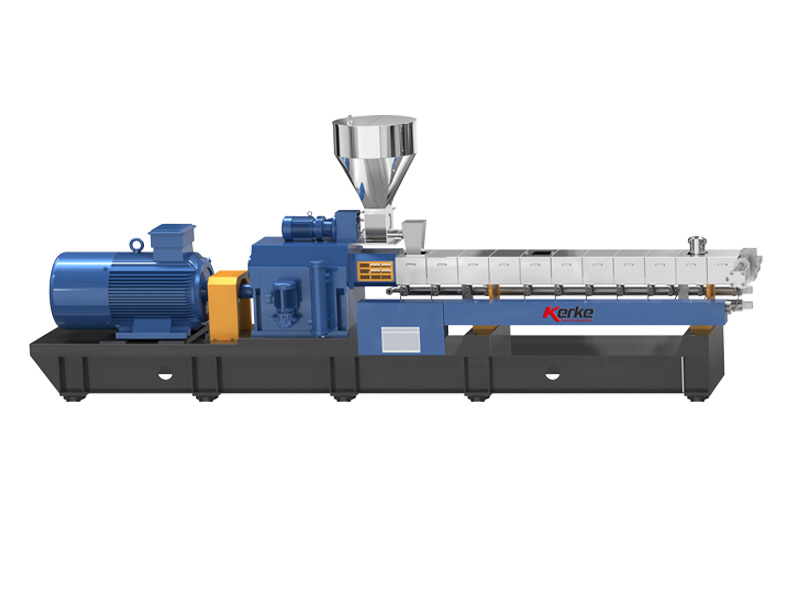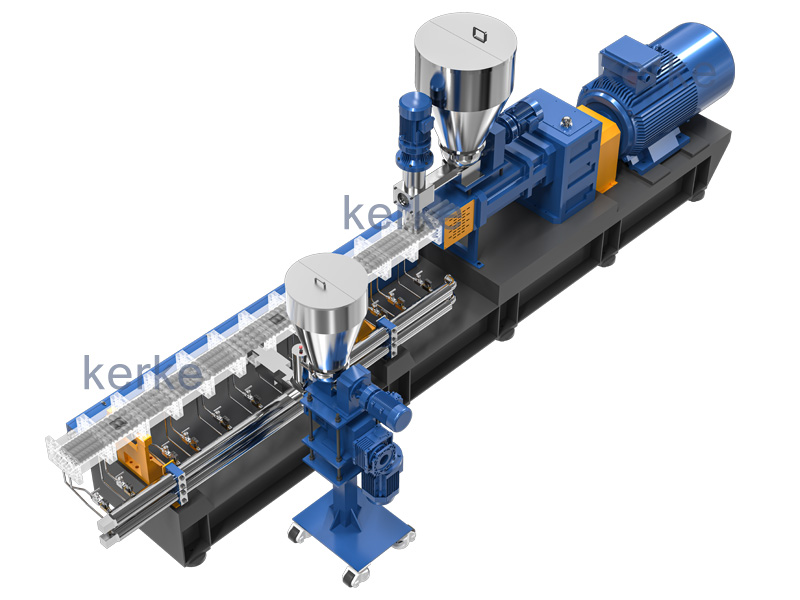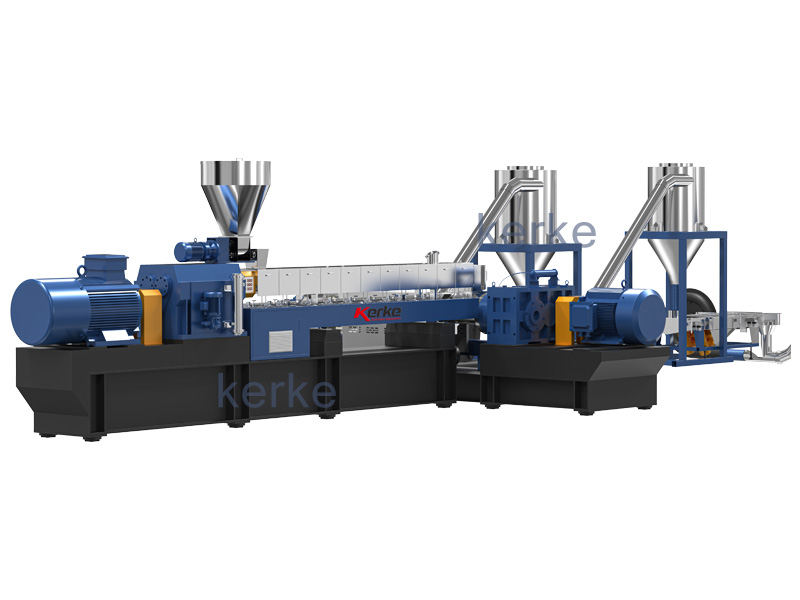
The global push for a circular economy has made plastic recycling a top priority for manufacturers and governments alike. The Compounding Extruder plays a pivotal role in this ecosystem by converting waste plastics—such as post-consumer bottles, industrial scrap, and agricultural films—into high-value compound pellets. Unlike simple pelletizing, compounding allows for the addition of compatibilizers, fillers, and stabilizers to restore or even enhance the properties of recycled plastic. This article explores how twin-screw compounding technology drives sustainability, the technical challenges involved, and the economic benefits of investing in such systems, with a focus on Kerke Extruder’s advanced recycling solutions.
Chapter 1: The Role of Compounding in the Circular Economy
From Waste to Value: The Compounding Process
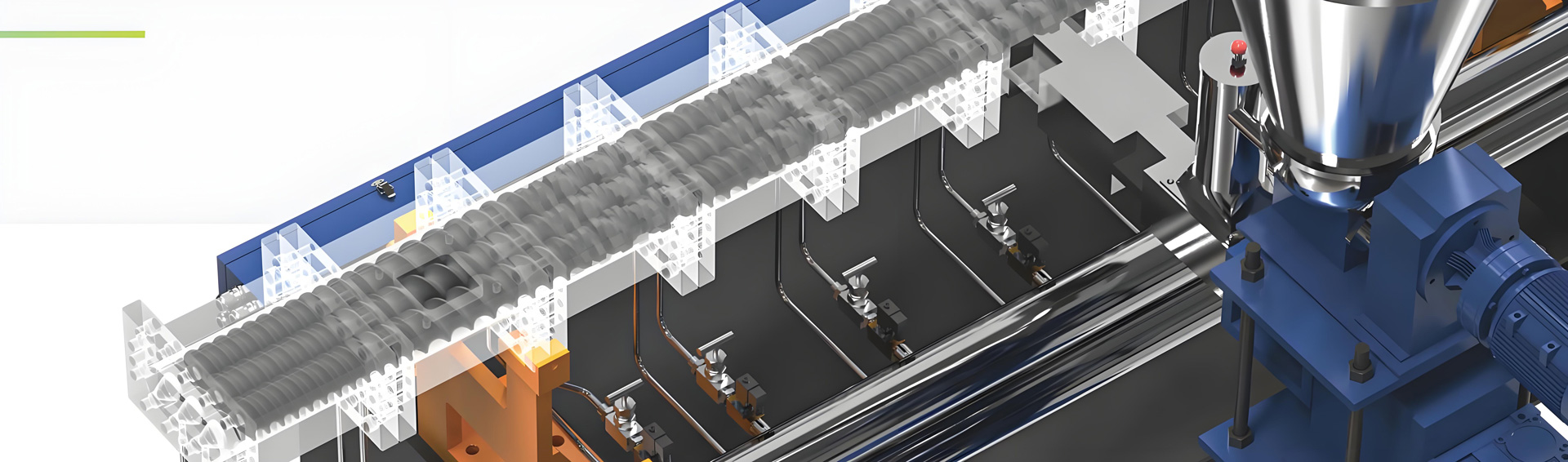
Recycling is not just about collecting plastic; it is about reintroducing it into the value chain. A Compounding Extruder is essential because recycled plastics are inherently inconsistent. They often come as mixed streams with varying melt flow indices (MFI), contamination, and moisture content. A co-rotating Twin Screw Extruder excels in this environment due to its excellent distributive and dispersive mixing capabilities. The intense shear forces break down agglomerates and homogenize the melt, while the modular screw design allows for the injection of additives—like stabilizers or chain extenders—at precise locations to restore the polymer’s molecular weight and mechanical properties.
Compounding transforms low-value waste into engineered materials. For example, recycled polypropylene (rPP) often has degraded mechanical properties. By compounding it with 20% glass fiber and a chain extender, the resulting pellet can match the performance of virgin polypropylene, making it suitable for automotive parts. This upcycling process is only possible with the precise control offered by a modern Compounding Extruder.
Chapter 2: Processing Challenging Recycled Feedstock
Handling Contamination and Mixed Streams
Recycled plastics are notoriously difficult to process. They may contain dirt, labels, moisture, or even incompatible polymers. For instance, recycling mixed polyolefins (PP and PE) requires a compatibilizer like maleic anhydride grafted polypropylene to improve phase adhesion. Without proper compounding, the resulting blend would have poor mechanical strength. The Compounding Extruder handles this by creating high-intensity mixing zones where the compatibilizer is effectively dispersed to create a stable alloy.
Additionally, for materials like PVC or PET, which release corrosive gases or require high temperatures, the extruder must be built with specialized corrosion-resistant materials. The presence of labels, adhesives, and food residues in post-consumer waste creates odors and volatiles that must be removed. A simple single-screw extruder cannot generate the shear needed to disperse compatibilizers or the vacuum needed to remove these volatiles, leading to smelly, weak pellets.
The Challenge of Moisture and Hydrolysis
Moisture is the enemy of recycling, especially for PET and Nylon. Wet flakes can cause hydrolysis during extrusion, breaking polymer chains and reducing intrinsic viscosity (IV). This results in brittle pellets that are unsuitable for bottle-to-bottle recycling. A Compounding Extruder must be equipped with a robust pre-drying system and a high-efficiency vacuum venting system. The vacuum port must be strategically placed where the material is fully molten to allow trapped steam to escape efficiently. Kerke Extruder’s recycling lines often feature a crystallizer/dryer unit upstream to ensure moisture content is below 50 ppm before the material enters the extruder.
Chapter 3: Kerke Extruder Solutions for Recycling Applications
Heavy-Duty Recycling Extruder Design
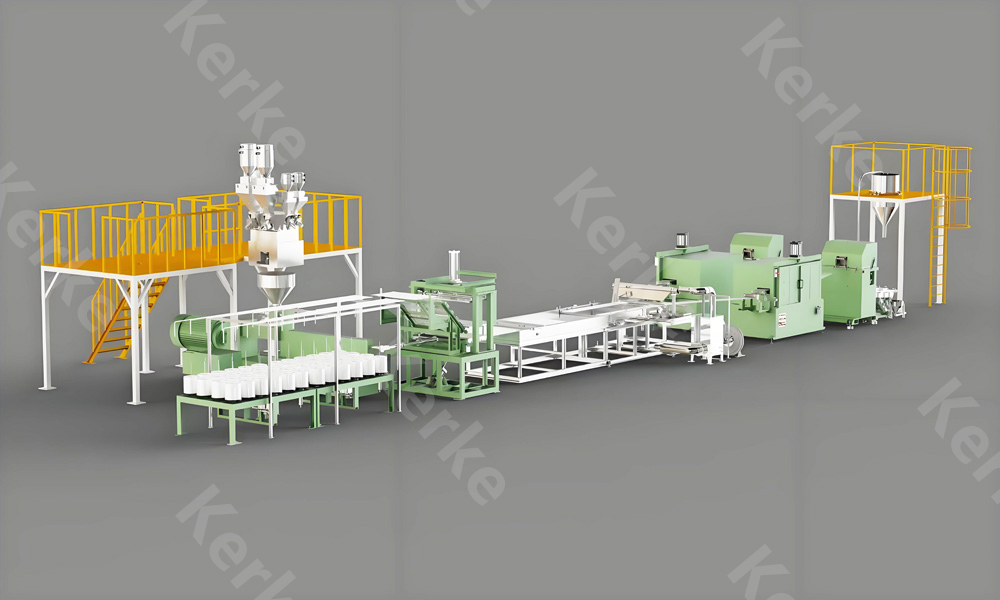
Kerke Extruder specializes in heavy-duty recycling lines designed to handle high-contamination feedstock. Our Compounding Extruders are equipped with dual-stage or even triple-stage degassing systems. The first stage removes moisture and light volatiles near the feed zone, while the second stage, often combined with a back-flush melt filter, removes heavy volatiles, odors, and remaining moisture. For heavily printed films or bottles with labels, Kerke integrates pre-washing and friction washing systems upstream of the extruder to reduce abrasive wear.
The screw elements in a Kerke recycling extruder are made of wear-resistant tool steel (like HIP steel or bimetallic liners) to handle the abrasive nature of mineral fillers (e.g., calcium carbonate in filled bags) or glass fibers often found in waste streams. The screw design features high-conveying capacity to handle low-bulk-density flakes and aggressive kneading blocks to disperse additives. Specialized venting elements prevent polymer from escaping through the vacuum port, ensuring maximum yield.
Degassing and Odor Control Systems
Odor control is critical for recycled plastics used in food-contact or indoor applications. Kerke utilizes high-efficiency vacuum pumps capable of achieving -0.095 MPa. This deep vacuum pulls out volatile organic compounds (VOCs) that cause odors. Additionally, we offer thermal deodorizing units where a side stream of melt is heated to high temperatures to crack down complex odor molecules before being filtered and reintroduced to the main stream. This technology allows recycled plastics to meet stringent odor standards (e.g., VDA 270 or ISO 12219).
Filtration and Pelletizing
To ensure purity, a continuous melt filter is non-negotiable. Kerke’s hydraulic screen changers use fine mesh screens (up to 120 mesh) to capture dirt, gels, and unmelted contaminants. For high-quality recycling, a die-face water ring pelletizer is used to cool the pellets immediately, preventing re-agglomeration and ensuring a uniform size. The water is cooled and recirculated in a closed-loop system to minimize water consumption, aligning with sustainability goals.
Chapter 4: Economic and Environmental Impact Analysis
Capital Costs of a Recycling Line
The cost of setting up a recycling compounding line is significant but justified by the low cost of feedstock. A complete recycling line including shredder, washing tank, friction washer, dewatering unit, and a high-torque Compounding Extruder can range from $150,000 to $400,000 depending on capacity (500 kg/h to 2000 kg/h). While this is a substantial investment, it is a fraction of the cost of building a virgin polymer plant.
Operational Costs and Savings
Operational costs include electricity, labor, and additives. However, the cost of producing recycled pellets is typically 30% to 50% lower than virgin polymer pellets. For example, if virgin PP costs $1,200/ton, recycled compounded PP can be produced at a cost of around $600-$800/ton including energy and labor. This margin allows recyclers to be competitive while diverting tons of plastic from landfills. Furthermore, energy-efficient designs in modern extruders reduce specific energy consumption (SEC) to less than 0.25 kWh/kg, significantly lowering the carbon footprint of the recycling process.
Return on Investment (ROI) Calculation
Consider a medium-sized recycling plant processing 1,000 kg/h of waste plastic, running 24 hours a day for 300 days a year (7,200 tons/year). If the cost of waste plastic is $300/ton and the cost of processing (energy, labor, additives) is $300/ton, the total production cost is $600/ton. If the selling price of the recycled compound is $900/ton, the gross profit is $300/ton. Annual gross profit is $2,160,000. With an initial investment of $300,000 for the Kerke extrusion line, the payback period is approximately 1.7 years. This rapid ROI makes recycling extrusion a highly attractive business model.
Environmental Benefits
Beyond economics, the environmental impact is profound. Recycling one ton of plastic saves approximately 2 tons of CO2 emissions compared to virgin production. It also reduces reliance on fossil fuels. By using a Compounding Extruder to upcycle waste, manufacturers can claim “recycled content” in their products, which is increasingly mandated by regulations (e.g., EU Plastics Tax) and demanded by consumers. Kerke Extruder’s machines are designed to maximize yield (up to 98%), minimizing waste generation within the recycling process itself.
Chapter 5: Advanced Recycling Technologies
Chemical Recycling Support
While mechanical recycling is the standard, chemical recycling (depolymerization) is emerging. Compounding Extruders play a role here by mixing the output of chemical recycling (monomers or oils) with additives and stabilizers before repolymerization or direct use. Kerke is developing specialized screws and barrels resistant to the corrosive chemicals used in these processes, positioning our machinery at the forefront of next-generation recycling technologies.
AI and Sorting Integration
Modern recycling lines are integrating AI-driven optical sorters upstream of the extruder. These sorters remove specific polymers (e.g., PET from PVC) and contaminants (e.g., black plastics). The Compounding Extruder must be flexible to handle the varying feedstock quality resulting from different sorting efficiencies. Kerke’s control systems can adjust screw speed and temperature automatically based on feedback from online sensors monitoring melt viscosity and color, ensuring consistent output quality despite feedstock variations.
Chapter 6: Material-Specific Recycling Challenges
rPET (Recycled Polyethylene Terephthalate)
rPET is widely used for bottles. The main challenge is maintaining Intrinsic Viscosity (IV). High IV is needed for blow molding. The Compounding Extruder must operate at low temperatures to prevent thermal degradation. Solid-state polycondensation (SSP) is often used downstream, but the extruder’s role is to filter out contaminants and mix in stabilizers. Kerke offers screws with low-compression ratios to minimize shear heat, preserving IV.
rHDPE and rLDPE (Recycled Polyolefins)
These materials are easier to process but suffer from odor and gels. High-efficiency degassing is key. For film recycling, the feed system often includes a compactor to densify the fluffy film, improving feeding efficiency. The extruder must have high torque to handle the uneven feed rate from the compactor. Kerke’s gearboxes are rated for high torque (up to 12 Nm/cm³) to handle these surges without stalling.
rPVC (Recycled Polyvinyl Chloride)
rPVC is challenging due to HCl release. The extruder must be made of corrosion-resistant alloys (like Hastelloy or high-chrome steel). The screw design must minimize stagnant areas where HCl can accumulate. A specialized stabilizer injection system is required to neutralize acids immediately. Kerke provides PVC-specific extruders with gas-injection ports for neutralizing agents directly into the melt.
Chapter 7: Future Trends and Kerke’s Commitment
Digitalization in Recycling
The future of recycling is digital. Kerke Extruder is integrating IoT sensors that track the “digital passport” of the plastic, recording its origin, processing history, and material properties. This traceability is crucial for certified recycled content in automotive and food packaging. Our machines can generate data logs that prove the percentage of recycled content in each batch, aiding customer compliance with regulations.
Energy Efficiency in Recycling Lines
To further reduce the carbon footprint, Kerke is implementing heat recovery systems on recycling extruders. The heat from the motor and barrel cooling water is captured to pre-heat the wash water or facility hot water. Additionally, variable frequency drives (VFD) on all motors ensure that energy is only used as needed, reducing idle power consumption. These features lower the operational cost of recycling, making it more competitive with virgin plastic.
Conclusion
The Compounding Extruder is the cornerstone of sustainable plastic recycling. It transforms waste into a valuable resource, enabling a circular economy and reducing environmental impact. Kerke Extruder provides robust, efficient, and technologically advanced recycling solutions that handle the toughest feedstocks while maximizing yield and quality. With the rising cost of virgin plastics and increasing regulatory pressure to use recycled content, investing in a high-quality Compounding Extruder is not just an environmental choice but a sound business strategy. For more information on how Kerke can support your recycling goals, visit www.kerkeextruder.com.