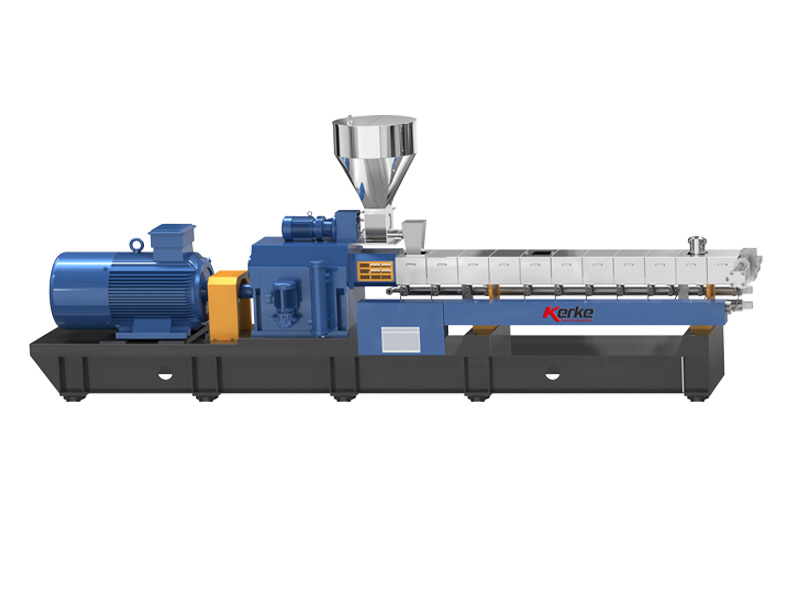
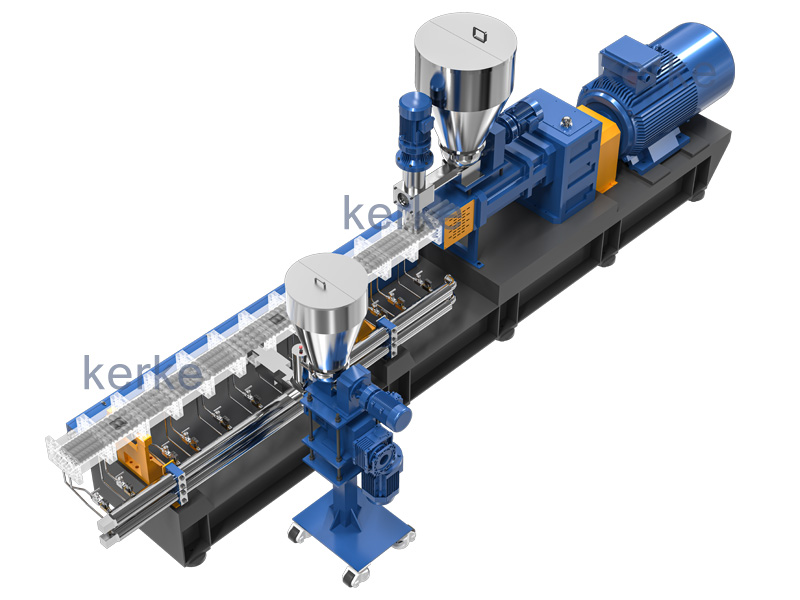
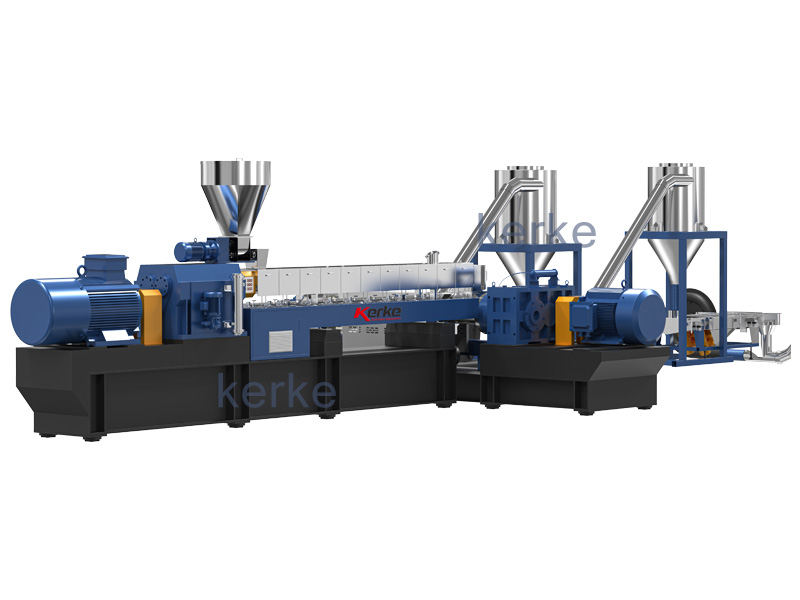
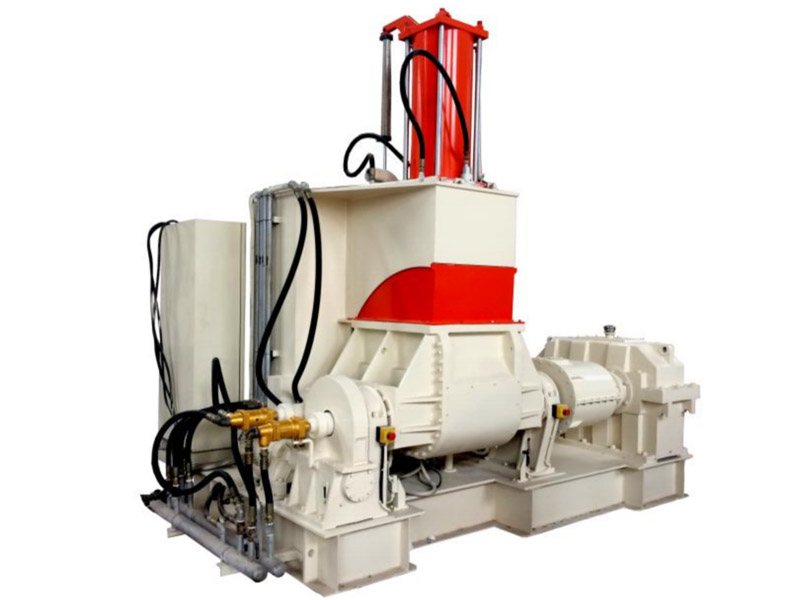
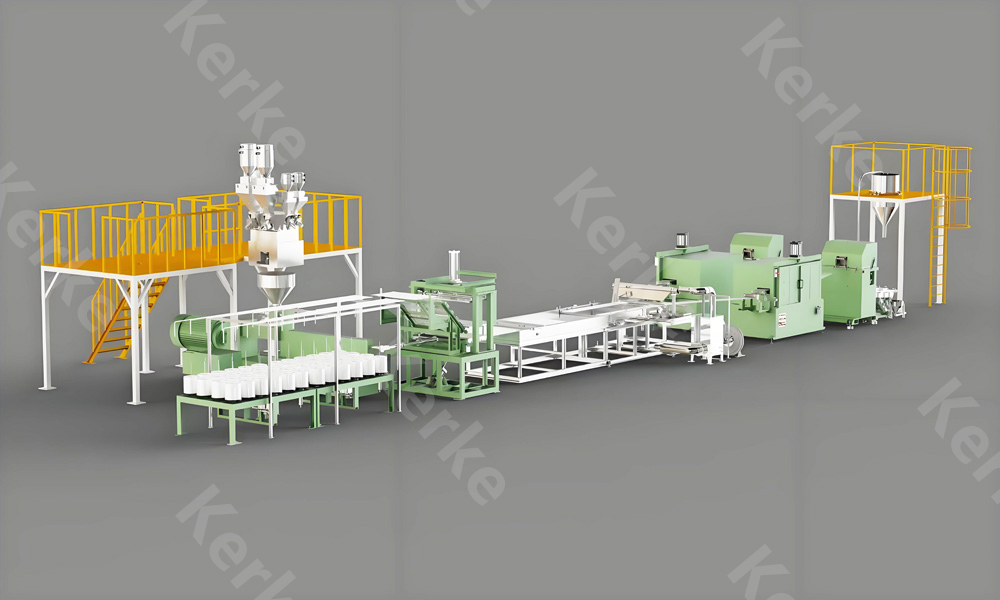
In urban manufacturing hubs or retrofitting existing facilities, floor space is at a premium. Traditional Twin Screw Extruders are long machines, often exceeding 10 meters in total length including the feeder and downstream equipment. Choosing a compact design without sacrificing performance is a common challenge for engineers and plant managers. This guide explores the engineering trade-offs, design features, and economic considerations of compact extruders, highlighting how Kerke Extruder’s innovative designs deliver industrial-grade performance in a reduced footprint.
Chapter 1: The Challenge of Space Constraints
Understanding Floor Space Utilization
Floor space in a manufacturing plant is a fixed cost. Every square meter occupied by machinery is a square meter not available for raw material storage, finished goods, or future expansion. In multi-story buildings, weight and space limitations are even stricter. A standard twin-screw compounding line might require a footprint of 15m x 3m. For a startup or a lab, this is often unfeasible. The goal of a compact extruder is to reduce this footprint by 30% to 50% while maintaining 80% to 90% of the throughput and mixing capability of a full-size machine.
The Trade-off: Size vs. Performance
Reducing the size of an extruder involves trade-offs. The primary trade-off is residence time. A shorter barrel means the material spends less time inside the machine. For heat-sensitive materials or complex reactions (like high-filling masterbatch), this can be a limitation. However, for color compounding or simple blending, a compact extruder is sufficient. The key is to look for high RPM capability. A compact extruder running at 600-800 RPM can match the output of a larger machine running at 400 RPM, provided the torque is sufficient. This chapter analyzes these trade-offs in detail to help you make an informed decision.
Chapter 2: Design Features of Compact Extruders
Optimized L/D Ratios
The Length-to-Diameter (L/D) ratio is the primary determinant of an extruder’s performance. Standard compounding requires an L/D of 40:1 to 52:1. A compact version for simple masterbatch might function efficiently at 32:1 or 36:1 using high-torque gearboxes. Kerke offers compact series where the L/D is optimized for specific applications. For example, a 35mm diameter machine with a 36:1 L/D has a barrel length of only 1.26 meters, compared to 1.75 meters for a 40:1 machine. This saves nearly half a meter of floor space per machine.
Integrated Drive and Gearbox Design
Traditional extruders have a separate motor and gearbox connected by a coupling, requiring additional space and alignment maintenance. Compact extruders often feature an integrated drive where the motor is directly connected to the gearbox, or even a gearless direct drive system. Kerke’s compact units use high-power density motors and right-angle gearboxes that fit snugly against the barrel, reducing the overall length of the drive assembly by up to 40%. This integration also reduces energy losses in the coupling, improving efficiency.
Vertical and L-Shaped Configurations
For extremely tight spaces, vertical or L-shaped layouts are available. In a vertical configuration, the extruder stands upright, and the pelletizer is mounted directly on top or at the side. This reduces the floor footprint to just the machine’s base area (e.g., 1m x 1m). However, vertical machines require more headroom and can be harder to maintain. L-shaped configurations use bevel gears to redirect the output 90 degrees, allowing the downstream equipment to run parallel to the extruder rather than in a straight line. Kerke can customize these configurations for specific factory layouts, though they come at a higher engineering cost.
Chapter 3: Performance Optimization in Compact Designs
High-Speed, High-Torque Capabilities
To compensate for the shorter residence time, compact extruders must run faster. This requires a robust drive system. Kerke compact extruders utilize high-strength alloy steel screws that maintain mixing efficiency even at higher speeds. The torque rating is critical. A compact machine should have the same torque density (Nm/cm³) as a standard machine. For instance, if a standard 65mm extruder has a torque of 10 Nm/cm³, the compact version should match this to ensure it can handle high-viscosity compounds. If the torque is reduced, the machine will struggle with filled polymers, leading to poor mixing and higher melt temperatures.
Modular Screw Design for Efficiency
Even in a compact machine, the screw must be modular. Using distributive and dispersive mixing elements strategically placed allows for intense mixing in a short distance. Kerke uses CFD simulations to place kneading blocks where they are most effective, often in the middle of the barrel where pressure and shear are highest. This “intensive mixing zone” approach ensures that even a short barrel can achieve the same dispersion quality as a longer one. For masterbatch applications, a 32:1 L/D with optimized mixing sections can achieve a color difference (Delta E) of less than 0.5, which is industry standard.
Downstream Integration
A significant portion of the total line length is taken up by downstream equipment (cooling conveyor, pelletizer, silo). Compact lines integrate these systems. Kerke offers water-ring pelletizers that mount directly on the die face. The pellets are cooled and dried in a single integrated unit that sits beside the extruder, eliminating the need for a 5-meter cooling conveyor. This “all-in-one” design reduces the total line length from 12 meters to just 4 meters. The trade-off is that water-ring pelletizers use more water and are limited to certain polymer shapes, but for most compounding pellets, they are ideal.
Chapter 4: Cost Analysis and ROI
Capital Expenditure Comparison
Compact Twin Screw Extruders are generally 20% to 30% cheaper than their full-size counterparts due to reduced material usage and smaller ancillary equipment. A standard compact unit (e.g., 35mm diameter, 36:1 L/D) might be priced between $50,000 and $70,000, whereas a full-size 65mm machine could exceed $120,000. However, the price per kg/hour of capacity is often higher for compact machines because you are paying a premium for the engineering required to fit high torque into a small package. It is a “small but mighty” premium.
Operational Cost Savings
The savings extend beyond the purchase price. Smaller machines require less heating power (fewer barrel zones) and less cooling water, reducing utility bills. For example, a compact 35mm extruder might consume 30 kW of power, while a 65mm unit consumes 75 kW. Over a year of 24/7 operation, this difference in electricity can amount to $20,000 to $30,000 in savings. Additionally, smaller machines require less expensive screw and barrel replacements when they eventually wear out.
Space Rental Savings
In urban areas, industrial real estate can cost $10 to $20 per square foot per year. Saving 20 square meters (approx. 215 sq ft) of floor space saves $2,150 to $4,300 annually in rent. While this seems small compared to machine costs, in high-cost cities like Shanghai or New York, this is a significant factor. Furthermore, using a compact machine might allow a company to operate in a smaller, cheaper facility, or avoid the cost of moving to a new facility altogether.
ROI for Startups and Labs
For a startup masterbatch company with limited capital, investing in a compact Kerke extruder allows for a faster break-even point. If the production capacity matches the market demand (e.g., 500-800 kg/h), the lower initial investment means less debt service. The payback period can be as short as 18 months. Additionally, the compact size allows for flexible placement—it can even be placed on a mezzanine floor if structurally sound, further optimizing space usage.
Chapter 5: Application-Specific Selection Guide
Laboratory and R&D
For R&D labs, the priority is flexibility and precision, not just size. Kerke offers lab-scale compact extruders (16mm to 20mm) with precise torque and speed control, allowing researchers to simulate production processes on a small scale. These units often include transparent barrels for visual observation of the melt. The cost ranges from $15,000 to $30,000. They are essential for developing new formulations before scaling up.
Small-Scale Masterbatch Production
For producing 500 to 1,000 tons per year of masterbatch, a compact extruder (e.g., 35mm or 50mm) is ideal. It can handle high pigment loading and provides excellent dispersion. The key feature to look for is a gravimetric feeding system that fits on top of the compact hopper. Kerke offers side feeders for liquid additives that save vertical space. The total system cost, including feeders and pelletizer, is typically under $100,000.
Reactive Compounding
If the process involves reactive compounding (e.g., grafting maleic anhydride onto polypropylene), residence time is critical. While compact machines have shorter residence times, high-speed operation can compensate. However, for very slow reactions, a compact machine might not be suitable unless it has a specialized screw with low-speed, high-torque sections. Kerke engineers can simulate the reaction kinetics to determine if a compact design will achieve the required degree of grafting. In some cases, a longer L/D (e.g., 40:1 compact) is recommended, which slightly increases the size but ensures process viability.
Chapter 6: Installation and Maintenance in Tight Spaces
Accessibility for Maintenance
A common mistake with compact designs is ignoring maintenance access. If the machine is squeezed into a corner, it may be impossible to remove the motor or barrel for cleaning. Kerke compact extruders are designed with hinged motor mounts and quick-release barrel clamps. This allows the barrel to be swung open like a door, providing full access to the screws even if the machine is flush against a wall. This feature adds about 5% to the cost but saves immense time and labor during maintenance.
Cooling and Ventilation
Compact spaces have less air volume, so heat buildup from the extruder can be a problem. The drive system and barrel generate significant heat. In a small room, additional ventilation or air conditioning is required to keep the electronics and hydraulic systems cool. Kerke offers water-cooled motor jackets for compact units to reduce radiant heat. When calculating the space required, add at least 1 meter of clearance around the machine for airflow and maintenance access.
Chapter 7: Kerke Compact Extruder Series Overview
The KTE-C Series
Kerke’s KTE-C (Compact) series is specifically engineered for space-constrained environments. Available in diameters from 25mm to 50mm, these machines feature a shortened L/D of 32:1 to 36:1 without sacrificing torque. The gearbox is integrated directly with the drive motor, reducing the length by 300mm. Standard features include a vacuum venting system, water-cooled barrels, and a PLC control panel that can be wall-mounted to save floor space. The price starts at $45,000 for a 25mm unit and goes up to $90,000 for a 50mm unit with full gravimetric feeding integration.
Customization Options
Kerke offers modular options for the compact series. You can add a side-stuffer for glass fibers, a liquid injection port for additives, or a direct-cut pelletizing system. The direct-cut system cuts the strands immediately after the die, eliminating the need for a water bath and conveyor. This is the most space-efficient pelletizing method, reducing the line length by another 2 meters. The cost of adding a direct-cut system is approximately $15,000 to $20,000.
Case Study: Urban Masterbatch Plant
A customer in a high-density industrial park had a room width of only 3 meters. They needed to produce 600 kg/h of white masterbatch. A standard 65mm extruder would have been too long (4m barrel alone). Kerke provided a 50mm compact extruder with a 36:1 L/D and a direct-cut pelletizer. The total line length was 3.5 meters, fitting perfectly into the space. The machine ran at 600 RPM, achieving the required output. The total investment was $95,000, compared to $160,000 for a standard line, saving the customer 40% in capital costs while meeting all production targets.
Conclusion
Choosing a compact Twin Screw Extruder requires careful analysis of the trade-offs between size, throughput, and mixing intensity. By prioritizing high torque density, integrated designs, and optimized downstream equipment, it is possible to achieve industrial-grade performance in a small footprint. Kerke Extruder’s compact series provides a robust solution for startups, labs, and space-constrained facilities, ensuring that limited workshop space does not limit production capacity or product quality. For a consultation on configuring your compact extrusion line, visit www.kerkeextruder.com.