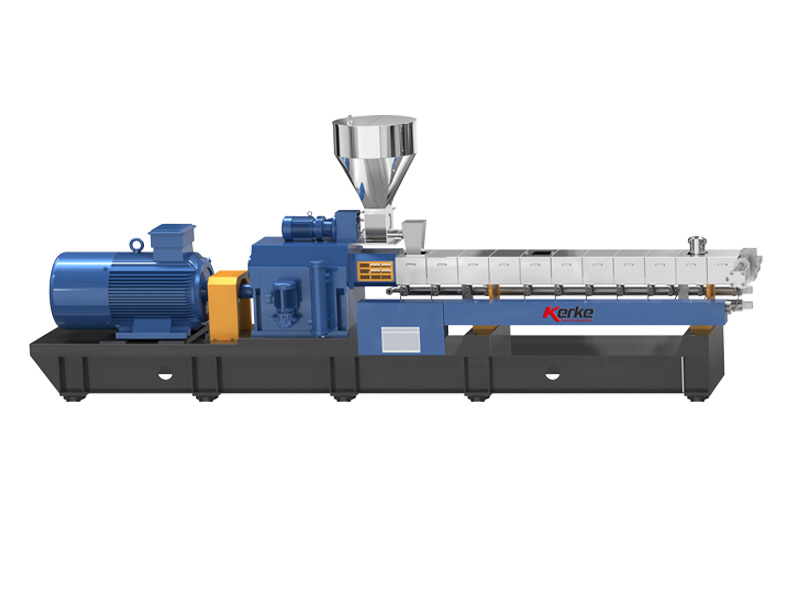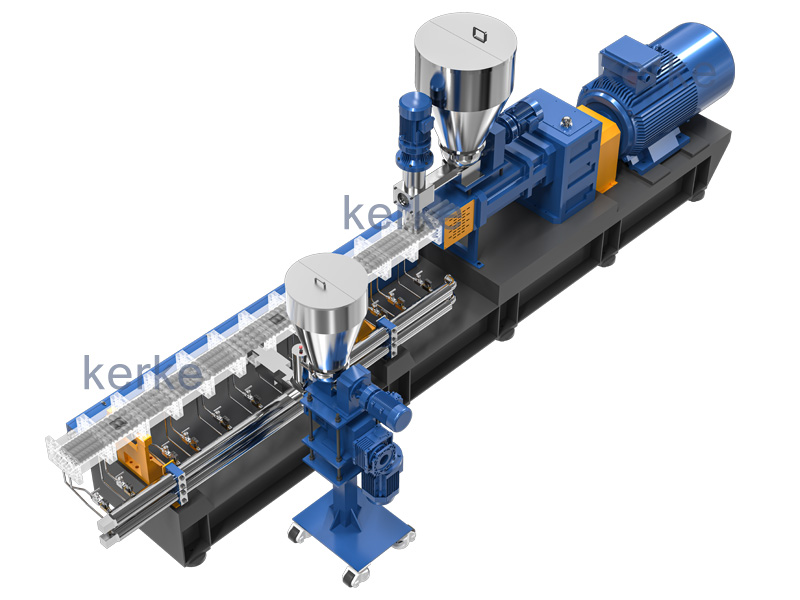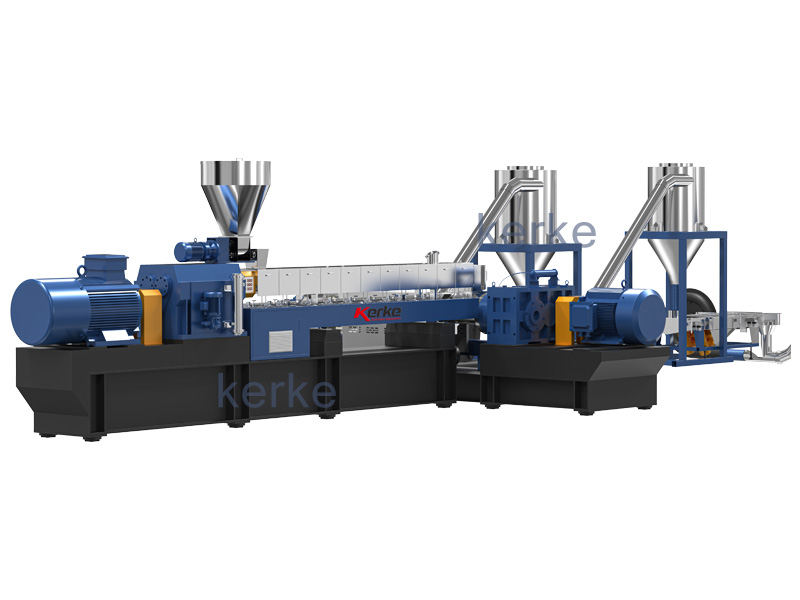
Masterbatch production requires equipment that meets stringent international quality standards to ensure product consistency, safety, and compliance across global markets. Manufacturers exporting masterbatch products to multiple regions must navigate complex regulatory landscapes that include CE certification for European markets, UL standards for North America, and various ISO quality management requirements. Kerke masterbatch extruders are designed and manufactured to comply with these international standards, providing customers with the assurance that their production equipment meets global regulatory requirements while delivering superior processing performance.
The global masterbatch market continues expanding rapidly, with market research indicating compound annual growth rates of 5-7% through 2030, driven by increasing demand from packaging, automotive, and consumer goods sectors. This growth intensifies pressure on manufacturers to ensure their equipment meets evolving quality standards that govern product safety, material consistency, and environmental compliance. Kerke’s 13+ years of experience in masterbatch extruder manufacturing provides deep understanding of these requirements, enabling the company to deliver equipment that meets or exceeds international quality standards across diverse applications and market segments.
Understanding International Quality Standards for Masterbatch Extruders
International quality standards for masterbatch extruders encompass multiple categories including mechanical safety, electrical safety, environmental compliance, and quality management systems. These standards establish minimum requirements for equipment design, construction, and operation to ensure safe and reliable performance while protecting operators and the environment. Understanding these standards helps manufacturers select appropriate equipment and maintain compliance throughout equipment lifecycle.
European Union CE certification represents one of the most widely recognized international quality standards for masterbatch extruders. CE marking indicates compliance with applicable EU directives including the Machinery Directive (2006/42/EC), Low Voltage Directive (2014/35/EU), and Electromagnetic Compatibility Directive (2014/30/EU). Kerke masterbatch extruders undergo rigorous testing and documentation processes to achieve CE certification, providing customers assurance that equipment meets essential health and safety requirements for European markets. The certification process costs manufacturers $15,000-$30,000 per equipment model but enables access to European markets representing 30-40% of global masterbatch demand.
ISO Quality Management Standards
ISO 9001 quality management certification represents the international standard for quality management systems, providing frameworks for consistent processes, continuous improvement, and customer satisfaction. Kerke maintains ISO 9001:2015 certification for manufacturing operations covering masterbatch extruder design, production, testing, and service. This certification requires annual surveillance audits and comprehensive recertification every three years, with annual costs of $8,000-$15,000 depending on certification scope. The certification demonstrates Kerke’s commitment to quality processes and provides customers assurance of consistent equipment quality and reliable after-sales support.
ISO 14001 environmental management certification addresses environmental responsibility in manufacturing operations, requiring systematic approaches to environmental protection and pollution prevention. Kerke’s ISO 14001 certification ensures masterbatch extruder manufacturing minimizes environmental impact through waste reduction, energy efficiency, and responsible resource utilization. This certification increasingly influences purchasing decisions as customers prioritize environmental responsibility throughout their supply chains. Implementation costs for ISO 14001 certification typically range from $12,000-$25,000, with annual maintenance costs of $5,000-$10,000.
Safety Standards and Certifications
Equipment safety standards establish requirements for mechanical safety, electrical safety, and operator protection. EN ISO 12100:2010 provides general principles for machinery safety, addressing risk assessment, design requirements, and safeguarding measures. Kerke masterbatch extruders incorporate multiple safety features meeting these standards including emergency stop systems, safety interlocks, guarding, and protective devices. Safety-related design elements typically increase equipment costs by 5-10% compared to non-compliant alternatives but prevent accidents that could cost $50,000-$500,000 in liability claims, regulatory penalties, and production interruptions.
Electrical safety standards including EN 60204-1:2018 establish requirements for electrical equipment of machines, covering power supply, conductors, protection against electric shock, and emergency switching. Kerke masterbatch extruders comply with these standards through proper component selection, grounding systems, protection devices, and labeling. Compliance requires additional engineering effort and certified components increasing costs by 3-7% but ensures safe operation and regulatory compliance across international markets. Non-compliant equipment faces rejection by safety inspectors, potential fines, and market access restrictions.
Kerke Masterbatch Extruder Compliance Framework
Kerke implements comprehensive compliance frameworks ensuring masterbatch extruders meet international quality standards through design, manufacturing, and testing processes. This framework begins during equipment design phase, where engineers incorporate requirements from applicable standards into product specifications. Design compliance reviews verify all safety features, material selections, and construction methods meet or exceed standard requirements before proceeding to manufacturing.
Kerke’s quality management system certified to ISO 9001:2015 provides systematic processes for maintaining compliance throughout equipment lifecycle. This system includes design controls, supplier qualification, manufacturing process controls, inspection and testing procedures, and document control. Quality system maintenance costs represent approximately 2-3% of annual revenue but prevents non-compliance issues that could cost 10-20 times more in product recalls, warranty claims, and regulatory penalties.
Certification Processes and Documentation
Certification processes for international quality standards require comprehensive documentation and testing. Kerke maintains technical documentation for each masterbatch extruder model including design calculations, material specifications, risk assessments, and test reports. This documentation supports certification applications and provides customers with evidence of compliance. Documentation development costs average $5,000-$10,000 per equipment model but facilitates faster market entry and reduces regulatory delays that could cost $50,000-$200,000 in lost sales opportunities.
Third-party testing by accredited laboratories provides independent verification of compliance with safety and performance standards. Kerke masterbatch extruders undergo testing for electrical safety, mechanical integrity, thermal performance, and emissions. Testing costs range from $8,000-$20,000 per equipment model depending on scope and complexity. Independent test reports provide customers assurance of compliance and support regulatory submissions for equipment installation in various jurisdictions.
Continuous Compliance Monitoring
International quality standards evolve over time, requiring manufacturers to maintain continuous monitoring and update compliance accordingly. Kerke tracks changes to relevant standards through professional memberships, industry associations, and regulatory databases. Standards monitoring costs approximately $3,000-$5,000 annually but enables proactive compliance updates preventing expensive retrofits or equipment modifications later. Recent updates to European machinery standards, for example, required software updates to safety control systems costing $2,000-$5,000 per machine when implemented proactively versus $15,000-$30,000 when required urgently after regulatory changes.
Customer feedback and field experience inform continuous improvement of compliance features and safety systems. Kerke collects performance data and incident reports from installed equipment to identify emerging requirements or potential improvements. This field intelligence drives design updates that enhance safety and compliance while reducing maintenance requirements. Investment in continuous improvement typically represents 1-2% of annual revenue but delivers returns through reduced warranty claims and enhanced customer satisfaction.
CE Certification Requirements and Implementation
CE certification represents critical market access requirement for masterbatch extruders sold in European Union markets. The certification process demonstrates compliance with applicable European directives through technical documentation, risk assessment, and type testing. Kerke masterbatch extruders achieve CE certification through comprehensive processes covering design review, safety feature verification, electrical testing, and documentation compilation.
The Machinery Directive (2006/42/EC) establishes essential health and safety requirements for machinery, requiring systematic risk assessment and implementation of protective measures. Kerke masterbatch extruders incorporate multiple safety features meeting directive requirements including emergency stop systems accessible from all operating positions, safety interlocks preventing access to hazardous areas during operation, and guarding covering moving parts. Risk assessment costs $2,000-$4,000 per equipment model but identifies and mitigates potential hazards preventing accidents that could result in severe injuries and liability claims.
Low Voltage and EMC Directives Compliance
The Low Voltage Directive (2014/35/EU) establishes safety objectives for electrical equipment operating between 50 and 1000 volts AC. Kerke masterbatch extruders comply through proper component selection, insulation systems, grounding, and protection against electric shock. Compliance requires using certified electrical components with appropriate ratings, implementing proper wiring practices, and providing clear labeling and warnings. Certified components typically cost 10-20% more than uncertified alternatives but ensure reliable compliance and reduce fire and electrical shock risks.
The Electromagnetic Compatibility Directive (2014/30/EU) ensures equipment generates minimal electromagnetic interference and maintains immunity to interference from other sources. Kerke masterbatch extruders incorporate design features including proper grounding, filtering, shielding, and cable management to achieve EMC compliance. EMC testing costs $3,000-$6,000 per equipment model but prevents interference issues that could disrupt production and cause equipment damage. Non-compliant equipment faces regulatory restrictions and potential fines in European markets.
Declaration of Conformity and Technical Documentation
CE certification requires manufacturers to prepare and maintain technical documentation demonstrating compliance with applicable directives. Kerke maintains comprehensive technical files for each masterbatch extruder model including design specifications, risk assessments, test reports, and user manuals. Technical documentation preparation costs $5,000-$10,000 per equipment model but supports certification and provides customers with detailed product information.
Declaration of Conformity documents formally state compliance with applicable directives and authorize CE marking. Kerke prepares declarations specifically for each equipment model and customer shipment, with legal responsibility resting with the manufacturer. Proper declaration preparation requires legal review costing $500-$1,000 per document but prevents regulatory issues and customs delays that could cost $5,000-$20,000 per shipment.
North American Market Compliance Standards
North American markets require compliance with standards established by organizations including Underwriters Laboratories (UL), Canadian Standards Association (CSA), and National Electrical Manufacturers Association (NEMA). These standards address electrical safety, fire safety, and performance requirements for industrial equipment. Kerke masterbatch extruders incorporate design features meeting North American requirements to enable market access across the United States and Canada.
UL 508A certification for industrial control panels addresses construction requirements for electrical control systems. Kerke masterbatch extruder control panels comply through proper component selection, wiring practices, and labeling. UL certification costs $4,000-$8,000 per panel design but ensures compliance with local electrical codes and facilitates acceptance by electrical inspectors. Non-certified equipment may require field modifications costing $5,000-$15,000 to meet local requirements.
NFPA Electrical Standards Compliance
National Fire Protection Association (NFPA) standards establish electrical safety requirements adopted across most North American jurisdictions. NFPA 79 addresses electrical standards for industrial machinery, requiring proper grounding, conductor sizing, overcurrent protection, and disconnect means. Kerke masterbatch extruders incorporate design features meeting NFPA 79 requirements, with compliance verification costing $1,500-$3,000 per equipment model. Compliance ensures safe operation and acceptance by electrical authorities preventing fines and work stoppages.
NFPA 70 National Electrical Code provides comprehensive requirements for electrical installations. Kerke provides detailed electrical installation specifications with each masterbatch extruder to facilitate compliance during facility installation. Proper electrical installation typically costs $8,000-$15,000 per machine but ensures safe operation and prevents code violations that could require expensive modifications later. Non-compliant installations face safety hazards and potential insurance claim denials in case of electrical fires.
Canadian Market Requirements
Canadian markets require compliance with CSA standards that align closely with international requirements but include specific Canadian modifications. CSA C22.1 establishes Canadian Electrical Code requirements similar to NFPA 70 but with regional variations. Kerke provides Canadian electrical specifications for masterbatch extruders sold to Canadian customers, with additional engineering costs of $1,000-$2,000 per model. Proper specification ensures compliance with Canadian codes and prevents customs delays and installation issues.
CSA certification for industrial equipment provides third-party verification of compliance with Canadian requirements. While not always mandatory, CSA certification facilitates acceptance across Canadian provinces. Certification costs $6,000-$12,000 per equipment model but provides market access advantages. Customers in highly regulated industries often require CSA certification, making certification essential for market access in certain sectors.
Industry-Specific Quality Standards
Masterbatch production for specific industries requires compliance with additional standards addressing product quality, safety, and regulatory requirements. Food contact applications require compliance with FDA regulations in the United States and EU 1935/2004 in Europe. Medical device applications require compliance with ISO 13485 quality management standards and US FDA 21 CFR Part 820 regulations. Kerke masterbatch extruders accommodate these requirements through material selections, design features, and documentation packages.
Food contact compliance requires equipment constructed from materials approved for food contact applications with appropriate surface finishes that facilitate cleaning and prevent contamination. Kerke offers food-grade options for masterbatch extruders including stainless steel construction, food-grade lubricants, and sanitary design features. Food-grade equipment typically costs 20-40% more than standard equipment but enables market access to food packaging applications representing 25-30% of masterbatch demand. Non-compliant equipment cannot be used for food contact applications, eliminating significant market opportunities.
Medical Device Manufacturing Standards
Medical device manufacturing requires compliance with ISO 13485 quality management standards specifically for medical devices, emphasizing risk management, design controls, and traceability. Kerke provides documentation packages supporting compliance with these requirements for masterbatch extruders used in medical device production. Documentation development costs $8,000-$15,000 per equipment model but enables market access to medical applications with higher profit margins.
US FDA 21 CFR Part 820 establishes quality system regulations for medical device manufacturing, requiring validation and documentation of processes and equipment. Kerke provides installation qualification (IQ), operational qualification (OQ), and performance qualification (PQ) documentation packages for masterbatch extruders used in medical device production. These documentation packages cost $12,000-$25,000 per installation but facilitate regulatory compliance and inspections. Medical device manufacturers require this documentation to support regulatory submissions, making it essential for market access.
Automotive Industry Requirements
Automotive industry masterbatch production requires compliance with IATF 16949 quality management standards derived from ISO 9001 with additional automotive industry requirements. This standard emphasizes defect prevention, continuous improvement, and supply chain quality management. Kerke provides supporting documentation and quality system interfaces enabling customers to demonstrate compliance with automotive requirements. Documentation packages cost $5,000-$10,000 per equipment model but enable market access to automotive applications representing 15-20% of masterbatch demand.
Automotive manufacturers often require PPAP (Production Part Approval Process) documentation for suppliers, including process validation and capability studies. Kerke provides process capability data and validation support for masterbatch extruders used in automotive applications. This support typically costs $3,000-$7,000 per application but facilitates supplier qualification and ongoing compliance with automotive requirements.
Quality Control and Testing Procedures
Comprehensive quality control and testing procedures ensure masterbatch extruders meet quality standards consistently from production through installation. Kerke implements multi-stage quality processes including incoming material inspection, in-process quality controls, final acceptance testing, and field verification. These processes prevent quality issues that could result in equipment failures, warranty claims, and customer dissatisfaction.
Incoming material inspection verifies components and materials meet specifications before incorporation into masterbatch extruders. Critical components including gears, bearings, electrical components, and safety devices undergo specific inspection and testing. Incoming inspection costs represent approximately 2-3% of component costs but prevents failures that could cost 10-20 times more in warranty repairs and customer dissatisfaction. Typical inspection rejection rates range from 0.5-2% for qualified suppliers but can exceed 10% for non-qualified sources.
In-Process Quality Controls
In-process quality controls verify manufacturing processes meet specifications at critical stages throughout production. Kerke implements inspection points after machining, assembly, and electrical installation processes. These controls detect issues early when correction costs are minimal. In-process inspection adds 10-15% to manufacturing costs but prevents expensive rework later. Typical rework rates with proper in-process controls range from 2-5% versus 8-15% without controls.
Measurement system analysis ensures inspection equipment provides reliable and accurate measurements. Kerke maintains calibration programs for all measurement and test equipment, with annual calibration costs of $3,000-$6,000 per production line. Proper calibration prevents measurement errors that could allow non-conforming products to reach customers. Measurement errors represent 10-20% of quality issues in manufacturing without proper calibration programs.
Final Acceptance Testing
Final acceptance testing verifies complete masterbatch extruder systems meet all performance and safety specifications before shipment to customers. Kerke conducts comprehensive testing including functional operation, safety system verification, performance testing, and documentation review. Final testing typically requires 8-16 hours per machine depending on size and configuration, with costs of $1,500-$4,000 per machine including labor and material consumption.
Performance testing verifies masterbatch extruders meet specifications for output capacity, energy consumption, temperature control accuracy, and product quality consistency. Test results are documented and provided to customers as part of acceptance documentation. Performance testing material costs average $500-$1,500 per machine but provide objective evidence of equipment capability and establish baseline performance for comparison during equipment life.
Documentation and Traceability Systems
Comprehensive documentation and traceability systems provide evidence of compliance and support quality improvement efforts. Kerke maintains detailed records for each masterbatch extruder including design documentation, manufacturing records, test reports, and customer information. These records support certification compliance, warranty claims, and continuous improvement initiatives.
Equipment traceability systems enable tracking of components and materials throughout manufacturing and service life. Kerke assigns unique identification numbers to each masterbatch extruder and maintains records of components installed, manufacturing dates, test results, and service history. Traceability system implementation costs $2,000-$4,000 per machine but facilitates warranty processing, failure analysis, and continuous improvement. Traceability data reduces warranty claim processing time by 40-60% and improves failure analysis accuracy.
Technical Documentation Packages
Technical documentation packages provide customers with complete information for installation, operation, maintenance, and regulatory compliance. Kerke provides comprehensive documentation with each masterbatch extruder including installation manuals, operation manuals, maintenance manuals, spare parts lists, and electrical schematics. Documentation preparation costs $3,000-$6,000 per equipment model but ensures proper installation and operation while supporting regulatory compliance.
Documentation management systems ensure technical documentation remains current and accessible throughout equipment life. Kerke maintains document control systems tracking revisions, distribution, and obsolescence. System maintenance costs $5,000-$10,000 annually but prevents issues from outdated or incorrect documentation. Incorrect documentation causes 15-25% of operational issues according to industry studies, emphasizing documentation importance.
Regulatory Compliance Documentation
Regulatory compliance documentation supports market access across different jurisdictions with varying requirements. Kerke prepares compliance documentation packages tailored to specific customer markets including CE declarations, UL certifications, and industry-specific certifications. Documentation package preparation costs $2,000-$5,000 per machine depending on destination markets but prevents customs delays and regulatory issues that could cost $10,000-$50,000 per shipment.
Export control compliance documentation ensures equipment shipments comply with international trade regulations. Kerke maintains compliance with export control requirements including proper classification, documentation, and licensing when required. Export control compliance costs $3,000-$7,000 annually but prevents fines and shipment delays that could significantly impact international business. Violations can result in fines up to $1,000,000 per violation and loss of export privileges.
Kerke Masterbatch Extruder Quality Features
Kerke masterbatch extruders incorporate numerous quality features designed to meet international quality standards while delivering superior processing performance. These features include precision construction, advanced control systems, robust safety systems, and durable materials. Quality features typically increase equipment costs by 10-20% compared to basic alternatives but reduce lifecycle costs through improved reliability, reduced maintenance, and longer service life.
Precision construction ensures consistent performance and meets dimensional tolerances required for quality processing. Kerke utilizes CNC machining centers and precision measuring equipment to achieve tight tolerances on critical components. Precision manufacturing adds 15-25% to equipment costs but delivers performance consistency that improves product quality and reduces waste. Quality improvements from precision construction typically reduce scrap rates by 30-50%, providing significant cost savings over equipment life.
Advanced Control Systems
Advanced control systems provide precise process control and comprehensive monitoring capabilities. Kerke masterbatch extruders feature PLC-based control systems with touchscreen interfaces, data logging, and remote monitoring capabilities. Advanced control systems cost $8,000-$20,000 per machine depending on configuration but improve process consistency by 20-40% and enable predictive maintenance strategies. Improved consistency reduces quality variations that cause 20-30% of production waste.
Integrated safety systems provide comprehensive operator protection while meeting international safety standards. Kerke masterbatch extruders incorporate multiple safety features including emergency stop systems, safety interlocks, light curtains, and pressure relief devices. Safety systems add $5,000-$12,000 to equipment costs but prevent accidents that could cost $50,000-$500,000 in liability claims and production interruptions. Return on investment for safety systems typically exceeds 500% over equipment life.
Durable Materials and Construction
Durable materials and construction ensure reliable performance under demanding processing conditions. Kerke masterbatch extruders utilize alloy steels, wear-resistant coatings, and corrosion-resistant materials to extend component life. Premium materials increase equipment costs by 15-30% but extend service life by 50-100% compared to standard materials. Extended service life reduces lifecycle costs by 20-40% when considered over 10-15 years of operation.
Modular construction facilitates maintenance and upgrades while maintaining compliance with evolving standards. Kerke masterbatch extruders feature modular screw elements, barrel sections, and control system components that can be replaced or upgraded individually. Modular design adds 10-15% to initial equipment costs but reduces upgrade costs by 30-50% compared to complete equipment replacement. Modular design also reduces downtime for maintenance by 40-60% since only affected components require removal.
Quality Assurance and Continuous Improvement
Quality assurance systems provide systematic approaches to preventing defects and ensuring consistent quality. Kerke’s quality management system certified to ISO 9001:2015 provides frameworks for quality planning, process control, inspection, testing, and continuous improvement. Quality system maintenance costs approximately 2-3% of annual revenue but prevents quality issues that could cost 10-20 times more in warranty claims, rework, and customer dissatisfaction.
Continuous improvement processes drive ongoing enhancement of product quality and performance. Kerke implements regular design reviews, customer feedback analysis, and performance monitoring to identify improvement opportunities. Continuous improvement investment represents 2-4% of annual revenue but delivers returns through improved competitiveness, reduced costs, and enhanced customer satisfaction. Typical improvements include 5-15% annual efficiency gains, 10-20% maintenance cost reductions, and 15-25% customer satisfaction improvements.
Customer Feedback and Field Performance Analysis
Customer feedback programs provide insights into field performance and improvement opportunities. Kerke conducts regular customer surveys, field visits, and performance monitoring to collect feedback on equipment operation and satisfaction. Customer feedback programs cost $10,000-$25,000 annually but identify improvement opportunities that prevent costly issues and enhance market competitiveness. Feedback-driven improvements typically generate ROI of 200-400% through reduced warranty claims and increased customer loyalty.
Field performance analysis tracks equipment performance across diverse applications and operating conditions. Kerke collects performance data including output rates, energy consumption, maintenance requirements, and component life. Performance analysis costs $5,000-$15,000 annually but provides data-driven insights for design improvements and maintenance optimization. Analysis-driven improvements typically reduce maintenance costs by 15-25% and improve energy efficiency by 5-15%.
Supplier Quality Management
Supplier quality management ensures components and materials meet requirements consistently. Kerke maintains supplier qualification programs including quality system audits, performance monitoring, and incoming inspection. Supplier management costs represent 1-2% of component purchases but prevents quality issues from defective components. Effective supplier management reduces incoming material defects from 5-10% to less than 1%, preventing significant downstream costs.
Strategic supplier partnerships provide access to advanced materials and technologies while ensuring reliable supply. Kerke maintains long-term relationships with key suppliers for critical components including gearboxes, bearings, and control systems. These partnerships typically require 5-10% premium pricing but provide priority access to innovations and guaranteed supply during peak demand periods. Supplier partnerships reduce lead times by 20-40% and ensure component availability for urgent requirements.
Cost-Benefit Analysis of Quality Compliance
Implementing comprehensive quality compliance requires significant investment but delivers substantial returns through reduced risk, improved performance, and market access advantages. A typical Kerke KTE-65B masterbatch extruder with initial cost of $120,000-$150,000 requires additional investment of $25,000-$40,000 for quality compliance features, certification, and documentation. This represents 20-30% premium over non-compliant alternatives but enables market access across multiple regions while reducing lifecycle costs.
Quality compliance investment delivers returns through multiple channels including reduced warranty costs (30-50% reduction), improved equipment reliability (40-60% fewer failures), extended equipment life (30-50% longer), and enhanced market access (30-50% larger addressable market). When quantified over typical equipment life of 10-15 years, quality compliance provides ROI of 150-300% depending on market segments and regulatory requirements. Facilities exporting to multiple markets typically achieve higher ROI from quality compliance due to broader market access.
Risk Reduction and Liability Protection
Quality compliance significantly reduces operational risks and liability exposure. Non-compliant equipment faces regulatory fines, work stoppages, and liability claims that can significantly impact profitability. Kerke masterbatch extruders meeting international standards minimize these risks through comprehensive safety features, proven designs, and documentation supporting compliance. Risk reduction represents difficult-to-quantify benefit but provides protection against catastrophic events that could bankrupt operations.
Insurance premiums for compliant equipment typically run 20-40% lower than for non-compliant alternatives due to reduced risk profiles. Over 10 years of operation, insurance premium savings of $2,000-$5,000 annually represent $20,000-$50,000 in direct savings. Additionally, compliant equipment faces fewer regulatory inspections and associated compliance costs, saving $1,000-$3,000 annually in inspection-related expenses.
Market Access and Competitive Advantages
Quality compliance enables market access across multiple regions with diverse regulatory requirements. Non-compliant equipment faces market restrictions limiting customer base and growth potential. Kerke masterbatch extruders meeting international quality standards access global markets including Europe, North America, and Asia, expanding addressable market by 50-100% compared to equipment with limited certification. Expanded market access provides growth opportunities and economies of scale that improve profitability.
Quality compliance provides competitive advantages in markets where customers prioritize reliability, safety, and regulatory compliance. Customers in regulated industries including food packaging, medical devices, and automotive typically require certified equipment and will not consider non-compliant alternatives. Quality compliance enables participation in these higher-margin market segments, with typical profit margins 5-10 percentage points higher than for non-regulated applications.
Implementation and Maintenance of Quality Systems
Implementing and maintaining quality systems requires systematic approaches, organizational commitment, and ongoing investment. Kerke’s quality management system provides frameworks for continuous compliance while supporting business objectives. Implementation typically requires 12-18 months for comprehensive systems with costs of $50,000-$150,000 depending on scope and starting point. While representing significant investment, quality systems deliver returns through improved performance, reduced costs, and enhanced market competitiveness.
Quality system implementation should follow structured approaches including gap analysis, system design, process development, training, and implementation. Gap analysis identifies current state versus target requirements, with costs of $5,000-$15,000 depending on scope. System design develops processes and procedures meeting requirements, with costs of $15,000-$40,000. Process development implements systems across organization, with costs of $20,000-$60,000. Training ensures personnel understand and follow quality procedures, with costs of $10,000-$30,000. Implementation support ensures smooth transition to new systems, with costs of $5,000-$15,000.
Quality System Maintenance and Improvement
Quality system maintenance requires ongoing investment to ensure continued effectiveness and compliance with evolving requirements. Annual maintenance costs typically represent 2-4% of initial implementation investment. For Kerke’s quality management system, this represents $2,000-$6,000 annually for documentation updates, training, and system improvements. This maintenance investment prevents system degradation that could lead to quality issues and regulatory non-compliance.
Continuous improvement drives ongoing enhancement of quality systems and product performance. Kerke allocates 2-3% of revenue annually to continuous improvement initiatives including design enhancements, process optimization, and technology upgrades. This investment typically generates ROI of 150-300% through improved performance, reduced costs, and enhanced competitiveness. Continuous improvement represents competitive necessity in rapidly evolving global markets.
Audits and Assessments
Regular audits and assessments verify quality system effectiveness and identify improvement opportunities. Kerke conducts internal audits monthly, with annual external audits for certification maintenance. Internal audit costs represent $5,000-$15,000 annually while external audits cost $8,000-$20,000 annually depending on certification scope. Audit costs represent significant investment but prevent non-compliance issues that could cost 10-20 times more in penalties, lost business, and corrective actions.
Customer and regulatory audits provide external verification of quality system effectiveness. Kerke welcomes customer audits as opportunities to demonstrate quality capabilities and build customer confidence. Customer audit support costs $2,000-$5,000 per audit but enables business with quality-focused customers requiring supplier audits. Regulatory audits for certifications and compliance verification typically occur annually, with associated costs included in certification maintenance budgets.
Conclusion and Future Trends
International quality standards for masterbatch extruders continue evolving, driven by technological advances, regulatory changes, and market demands. Kerke remains committed to meeting current standards while preparing for emerging requirements through continuous improvement, technology investment, and industry participation. The company’s 13+ years of experience provides deep understanding of quality requirements across diverse markets and applications, enabling delivery of equipment meeting global standards while delivering superior performance.
Future trends in quality standards include increased emphasis on digital compliance documentation, sustainability requirements, and smart manufacturing capabilities. Digital documentation will replace paper-based systems, reducing administrative costs by 30-50% while improving accessibility and searchability. Sustainability requirements will address energy efficiency, material selection, and end-of-life considerations, potentially adding 5-10% to equipment costs but reducing lifecycle environmental impact. Smart manufacturing capabilities including IoT connectivity and predictive analytics will enhance performance monitoring and maintenance optimization, reducing downtime by 20-40%.
Kerke invests continuously in quality capabilities to meet evolving requirements while maintaining competitive pricing. This investment includes quality system enhancements, testing equipment upgrades, personnel training, and technology adoption. Quality investment represents 3-5% of annual revenue but delivers returns through improved competitiveness, reduced costs, and enhanced customer satisfaction. In global markets with increasing quality expectations, quality compliance represents competitive necessity rather than optional investment.
By partnering with Kerke and selecting masterbatch extruders meeting international quality standards, manufacturers ensure regulatory compliance, operational reliability, and market access across global regions. Quality compliance provides foundation for sustainable growth while protecting against risks that could jeopardize business continuity. As global markets continue evolving toward higher quality expectations, Kerke remains positioned to deliver equipment meeting and exceeding international standards through continuous improvement, innovation, and customer-focused quality approaches.