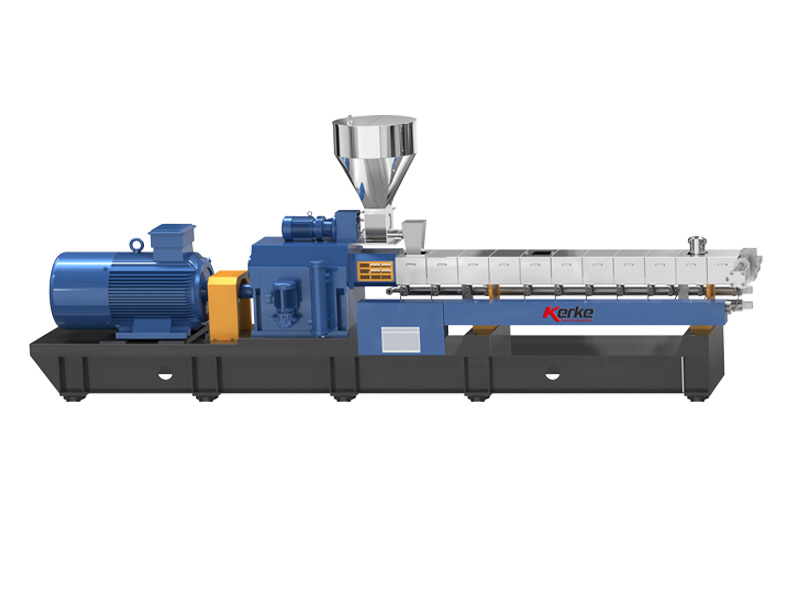
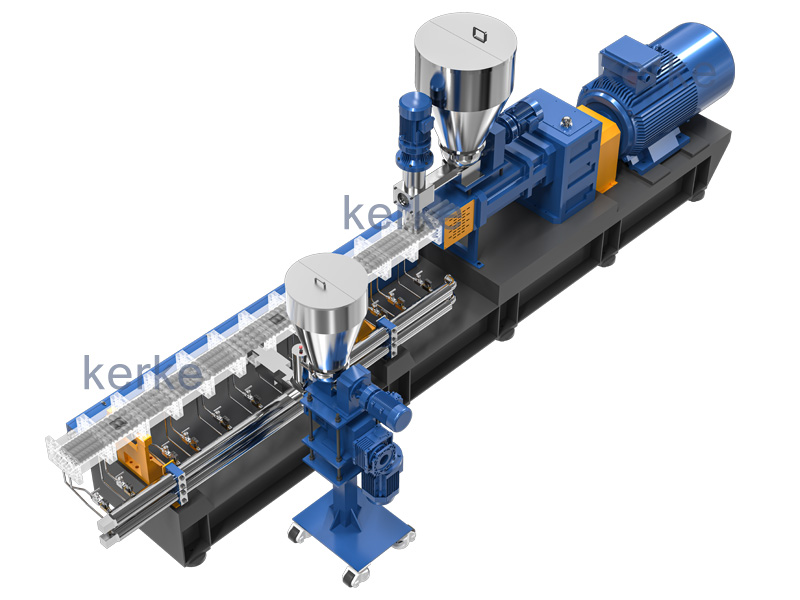
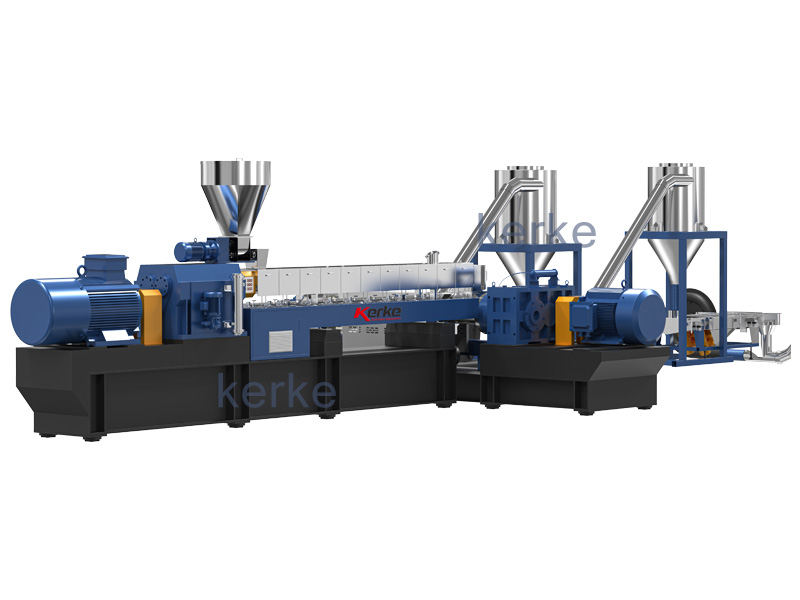
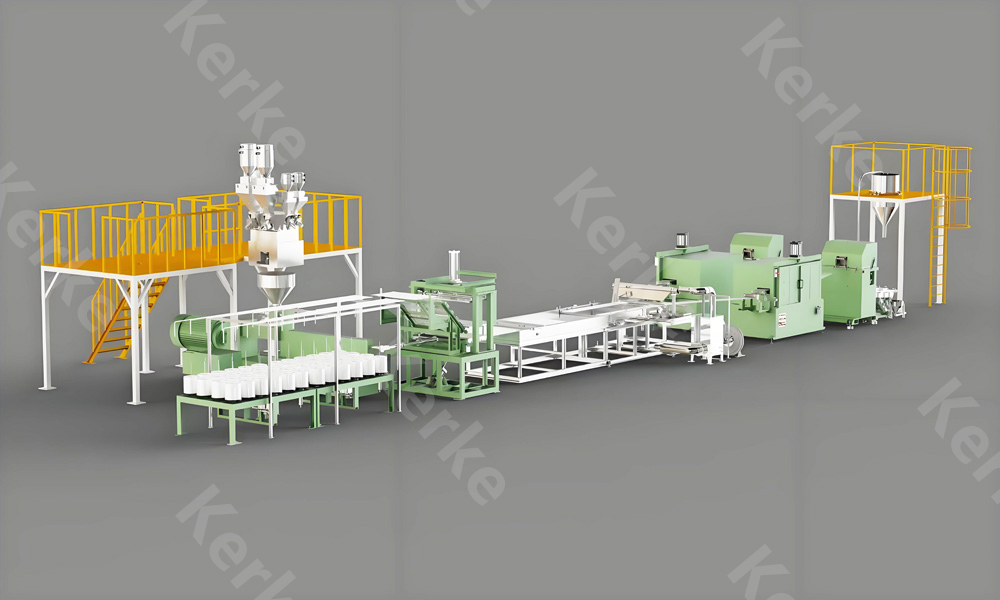
Production downtime represents one of the most significant costs in plastic manufacturing operations, directly impacting profitability, delivery schedules, and competitive position. Masterbatch extruders play a critical role in ensuring continuous production by providing consistent, high-quality color concentrates and functional additives that enable smooth downstream processing. Understanding how masterbatch extruders contribute to reducing production downtime requires examining equipment reliability, process stability, maintenance requirements, and operational efficiency. This comprehensive guide explores the various ways masterbatch extruders minimize production interruptions, with specific focus on Kerke twin screw extruder technology and best practices for maximizing uptime.
The Economic Impact of Production Downtime
Before examining how masterbatch extruders reduce downtime, understanding the economic impact of production interruptions helps prioritize investments in reliability and operational efficiency. Downtime costs extend far beyond simple lost production time, encompassing multiple cost categories that accumulate rapidly during unplanned stoppages.
Direct production losses represent the most obvious cost component, calculated as the value of production that would have occurred during downtime. For a typical compounding operation producing 500 kg/h of masterbatch valued at US$2/kg, one hour of downtime represents US$1,000 in lost production value. When operating 8,000 hours annually, even a 5% downtime rate (400 hours) results in US$400,000 of annual lost production value. This substantial cost provides strong economic justification for investments in reliability and uptime improvement.
Restart costs and scrap generation compound direct production losses. Restarting compounding extruders often requires material waste during stabilization, potential quality issues until stable conditions are reestablished, and labor costs for restart procedures. For many compounding operations, restart losses total 10-20% of normal production rate for the first 1-2 hours after restart. A 2-hour restart period with 500 kg/h capacity and US$2/kg product value represents US$1,000-2,000 of additional losses beyond the downtime itself.
Labor costs during downtime represent often-overlooked expenses. Operators and maintenance personnel remain on payroll during equipment downtime, incurring costs without productive output. For a typical 3-shift operation with 2 operators per shift earning US$30/hour, downtime costs accumulate at US$144/hour in labor costs alone. For extended downtime events, these labor costs become substantial, particularly when premium time or emergency labor is required.
Opportunity costs from delayed customer shipments and potential lost business add to downtime impact. In competitive markets, repeated delivery issues can damage customer relationships and lead to lost business. The lifetime value of customer relationships often far exceeds immediate production losses, making reliability a critical competitive factor. Masterbatch extruders that provide consistent, reliable operation help manufacturers maintain delivery commitments and customer satisfaction.
Kerke Masterbatch Extruder Reliability Features
Equipment reliability represents the foundation for minimizing production downtime. Kerke twin screw extruders incorporate numerous design features and engineering practices that enhance reliability and minimize unplanned stoppages. Understanding these reliability features helps manufacturers select equipment that provides maximum uptime and operational continuity.
High-Quality Component Selection
Component quality represents a fundamental factor in extruder reliability, and Kerke spares no expense in selecting premium components from reputable manufacturers. High-quality components provide longer service life, reduced failure rates, and predictable performance characteristics that contribute to overall equipment reliability.
Drive system components including motors, gearboxes, and bearings come from established brands known for reliability and performance. Kerke utilizes motors from manufacturers such as Siemens or ABB, providing proven reliability in demanding industrial applications. These motors feature Class F insulation, IP55 protection ratings, and power factor correction that contribute to long service life and minimal maintenance requirements. Gearboxes from specialized transmission manufacturers feature precision-ground gears, heavy-duty bearings, and forced lubrication systems that provide reliability under high-torque conditions typical in compounding applications.
Electrical components including temperature controllers, drives, and PLC systems are sourced from leading suppliers to ensure consistent performance. Kerke employs temperature controllers from Omron or RKC, AC drives from ABB or Siemens, and PLC systems from Siemens or equivalent brands. These components provide proven reliability in plastics processing environments and support functions that enhance process stability and reduce unplanned stoppages.
Heating elements and thermal management components use high-quality materials and construction to minimize failure rates. Kerke barrel heaters utilize cast aluminum or bronze heating elements with ceramic heating cores that provide uniform heat transfer and extended service life. Heating elements are designed with conservative watt densities and over-temperature protection to prevent burnout even under demanding operating conditions.
Rigorous Manufacturing and Quality Control
Manufacturing precision and quality control processes significantly impact equipment reliability. Kerke maintains rigorous manufacturing standards and comprehensive quality control procedures that ensure each extruder meets exacting specifications and performance criteria.
Precision machining of critical components ensures proper alignment and fit, reducing wear and extending service life. Kerke employs CNC machining centers with positioning accuracy within 0.005mm to produce screws, barrels, and other precision components. Screw elements are machined to tolerances of 0.02mm for critical dimensions, ensuring consistent performance and minimized wear between mating components. This precision reduces mechanical stress and vibration during operation, contributing to long-term reliability.
Assembly quality control procedures verify proper installation of all components and correct alignment of mechanical systems. Kerke implements assembly checklists and torque specifications for all critical fasteners to ensure proper assembly. Alignment procedures verify that screws are concentric and parallel to barrel bores, that drive shafts are properly aligned, and that all rotating components run true. Proper assembly reduces mechanical stress and wear, minimizing failure points and extending component life.
Testing procedures validate equipment performance before shipment, identifying potential issues before equipment reaches customer facilities. Kerke performs extended run-in testing of complete extruders, typically operating for 8-24 hours under simulated load conditions. This testing verifies mechanical operation, temperature control performance, drive system function, and control system operation. Issues identified during testing are resolved before shipment, preventing problems that could cause downtime after installation.
Robust Mechanical Design
Mechanical design philosophy significantly impacts equipment reliability, and Kerke incorporates conservative design margins and robust construction practices throughout their extruder product line. Conservative design approaches provide safety margins that accommodate normal operating variations and extend component service life.
Structural design of frames and support systems provides rigid support for precision components while accommodating thermal expansion and mechanical loads. Kerke extruders feature heavy-duty steel frames with extensive cross-bracing that minimize deflection under load. Rigid mounting for barrels, drive systems, and auxiliaries maintains precise alignment even during thermal cycling and high-torque operation. This rigidity reduces mechanical stress on precision components and contributes to consistent operation.
Drive system design incorporates conservative torque ratings and service factors to ensure reliable operation under demanding conditions. Kerke gearboxes are specified with service factors of 1.5-2.0 based on application requirements, providing substantial margin for normal operating variations. Motor sizing provides adequate horsepower for processing requirements without operating at excessive loads that could accelerate wear or cause overheating. Conservative design margins accommodate variations in material properties, ambient conditions, and processing requirements without requiring derating or causing failures.
Wear protection strategies address the inevitable wear that occurs during compounding operations, extending service life and reducing replacement frequency. Kerke barrels feature bi-metallic construction with Cr26MoV alloy liners that provide 2-3 times the wear life of standard bimetallic barrels. Screw elements utilize W6Mo5Cr4V2 high-speed tool steel with surface treatments that resist wear and galling. These wear protection strategies reduce the frequency of screw and barrel replacement, minimizing planned downtime for component changes.
Preventive Maintenance Strategies for Maximum Uptime
Effective preventive maintenance represents one of the most impactful strategies for reducing unplanned downtime. Rather than waiting for failures to occur, preventive maintenance addresses potential issues before they cause stoppages, maximizing equipment availability and minimizing production interruptions.
Preventive Maintenance Program Development
Developing comprehensive preventive maintenance programs requires understanding equipment-specific requirements, operating conditions, and failure modes. Kerke provides detailed maintenance recommendations based on extensive field experience and failure analysis, helping customers develop maintenance programs optimized for their specific applications and operating conditions.
Maintenance interval recommendations vary by component type and operating conditions but provide starting points for program development. For Kerke extruders, typical maintenance intervals include: Gearbox oil changes: 2000-4000 operating hours Screw and barrel inspection: 3000-6000 operating hours Bearing lubrication: 1000-2000 operating hours Heating element inspection: 1000-2000 operating hours Control system calibration: 6000-12000 operating hours These intervals should be adjusted based on operating conditions, failure history, and criticality of each component.
Maintenance procedure documentation ensures consistency and thoroughness of maintenance activities. Kerke provides detailed maintenance procedures covering all major components and systems. These procedures include step-by-step instructions, safety requirements, tools and equipment needed, and acceptance criteria for maintenance completion. Standardized procedures ensure that maintenance is performed correctly regardless of which technician performs the work, reducing human error and missed maintenance items.
Maintenance record-keeping enables tracking of maintenance history and identification of trends or recurring issues. Kerke recommends maintaining detailed maintenance logs including dates, work performed, observations, and parts replaced. These records help identify patterns that may indicate underlying issues requiring attention. For example, frequent screw element wear may indicate abrasive materials requiring different materials or processing adjustments. Maintenance records also support warranty claims and resale value assessment.
Key Maintenance Activities
Certain maintenance activities are particularly critical for preventing unplanned downtime and should receive particular attention in preventive maintenance programs. These critical maintenance activities address components and systems where failures are most likely to cause production stoppages.
Lubrication maintenance represents one of the most critical activities, as inadequate lubrication is a leading cause of bearing and gearbox failures. Kerke extruders utilize multiple lubrication points including the main gearbox, thrust bearings, and various bearings in drive systems. Gearbox lubrication requires periodic oil changes with specified oil types and quantities. Kerke recommends gearbox oil changes every 2000-4000 hours depending on operating conditions and oil analysis results. Regular oil sampling and analysis can identify contamination, wear particles, or oil degradation that may indicate emerging issues requiring attention before failures occur.
Screw and barrel maintenance addresses wear and damage that can degrade product quality and cause processing issues. Regular inspection of screw elements and barrel liners identifies wear patterns, galling, or damage that may affect processing or indicate problems requiring correction. Kerke recommends screw and barrel inspection every 3000-6000 hours depending on material abrasiveness and operating conditions. When wear approaches critical limits, scheduled replacement during planned downtime prevents failures during production runs.
Electrical system maintenance prevents electrical failures that cause unexpected stoppages. Terminal connections, cable integrity, and component condition should be inspected regularly. Kerke recommends annual electrical system inspections including torque testing of terminal connections, continuity testing of cables, and verification of proper grounding. Cleaning electrical cabinets and control panels prevents dust accumulation that can cause overheating or component failures. Thermal imaging of electrical components can identify hot spots indicating poor connections or overloaded components requiring correction.
Temperature control system maintenance ensures consistent thermal performance and prevents heater failures. Kerke recommends periodic inspection of heater elements, thermocouples, and temperature controllers. Heater resistance measurements should be compared to specifications to identify degraded elements. Thermocouple calibration verification ensures accurate temperature measurement and control. Temperature controller calibration checks verify proper control accuracy and response. Regular maintenance of temperature control systems prevents drift that can affect product quality or cause processing issues requiring shutdown for correction.
Condition Monitoring and Predictive Maintenance
Condition monitoring and predictive maintenance technologies enable identification of emerging issues before they cause failures, further reducing unplanned downtime. These technologies complement preventive maintenance by providing early warning of developing problems, enabling planned corrective actions during appropriate downtime.
Vibration monitoring identifies mechanical issues including bearing wear, misalignment, imbalance, and gear mesh problems. Vibration analysis detects changes in vibration signatures that indicate developing problems. Kerke can provide vibration monitoring systems that continuously monitor critical bearings and drive components. Trend analysis of vibration data identifies developing issues well before catastrophic failures occur. For example, increasing vibration in a gearbox may indicate bearing wear that requires replacement, allowing scheduling of maintenance during planned downtime rather than experiencing unexpected failure during production.
Oil analysis provides insight into gearbox and lubrication system condition, identifying wear particles, contamination, or oil degradation. Regular oil sampling and analysis detects increasing wear metal concentrations that indicate component wear, contamination that suggests seal failure or ingress, or oil degradation that requires oil change. Kerke recommends oil sampling every 1000-2000 operating hours with analysis for wear metals, contaminants, and oil condition. Trend analysis of oil analysis results identifies issues before failures occur. For example, increasing iron content in gearbox oil may indicate gear wear requiring investigation before failure occurs.
Thermal monitoring using infrared cameras or temperature sensors identifies abnormal temperature patterns that may indicate developing issues. Hot spots on bearings, electrical components, or barrel sections can indicate lubrication problems, electrical connection issues, or heater problems requiring attention. Kerke recommends periodic thermal imaging scans of critical components during routine maintenance. Thermal monitoring provides non-invasive assessment of equipment condition and can identify issues not detectable through other methods.
Motor current monitoring and electrical analysis identify electrical issues including motor problems, load imbalances, and drive system issues. Kerke control systems provide motor current monitoring as standard features, displaying motor load during operation. Sudden changes in current draw or current imbalances between phases may indicate developing electrical or mechanical issues. Regular analysis of motor current trends helps identify issues before failures occur. For example, gradually increasing motor current at constant load may indicate bearing wear or increasing mechanical resistance.
Operational Practices for Continuous Production
Beyond equipment reliability and maintenance, operational practices significantly impact production downtime. Even the most reliable equipment experiences downtime if operational practices cause interruptions. Implementing best practices for operational procedures, material handling, and process control minimizes downtime and maximizes productivity.
Standardized Operating Procedures
Standardized operating procedures (SOPs) ensure consistent, reliable operation regardless of operator experience or shift variations. Well-developed SOPs provide clear guidance for all operational activities, reducing variability that can cause processing issues or unplanned stoppages.
Startup procedures should detail step-by-step instructions for bringing extruders online safely and efficiently. Kerke recommends detailed startup procedures including pre-startup inspections, heating sequences, screw rotation initiation, material feed initiation, and parameter ramping to operating conditions. Proper startup procedures prevent thermal shock, material degradation, or equipment damage that can cause downtime. Standardized procedures ensure that all operators follow proven startup sequences that maximize reliability and minimize startup time.
Shutdown procedures specify safe and efficient sequences for stopping production and preparing equipment for restart or maintenance. Kerke provides shutdown procedures for different scenarios including normal end-of-shift shutdowns, planned maintenance shutdowns, and emergency shutdowns. Proper shutdown procedures prevent material degradation, facilitate subsequent restarts, and protect equipment from damage. Standardized procedures ensure that shutdowns are performed consistently, reducing restart issues that can cause extended downtime.
Operating parameter management establishes acceptable ranges for key process parameters and specifies actions when parameters deviate from normal ranges. Kerke control systems provide parameter monitoring and alarms, but procedures should specify operator responses to different alarm conditions. For example, gradual increases in motor current may require gradual speed reductions, while sudden increases may require immediate shutdown and investigation. Clear procedures for parameter management help operators respond appropriately to changing conditions, preventing minor issues from escalating into major problems requiring extended downtime for resolution.
Material Handling and Preparation
Material handling and preparation practices significantly impact processing stability and downtime. Improper material handling causes feeding issues, processing problems, and quality variations that may require production stoppages for correction. Implementing proper material management practices prevents many common causes of unplanned downtime.
Material quality control prevents contaminated or out-of-specification materials from causing processing issues. Kerke recommends incoming material inspection including visual inspection for contamination, moisture content verification for hygroscopic materials, and viscosity testing when required. Materials failing inspection should be rejected or reprocessed before use, preventing processing issues that can cause downtime. Maintaining material quality specifications and inspection procedures prevents materials-related downtime.
Material storage practices preserve material quality and prevent contamination that causes processing issues. Proper storage includes protecting materials from moisture, dust, and contamination, implementing first-in-first-out inventory management, and maintaining appropriate storage conditions. Kerke recommends specific storage conditions for different materials including humidity control for hygroscopic materials, temperature control for temperature-sensitive materials, and protection from UV light for light-sensitive materials. Proper material storage prevents material degradation that can cause processing issues or quality problems requiring downtime for resolution.
Material preparation including drying, blending, and pre-weighing ensures consistent material supply to the extruder. Kerke provides recommendations for material preparation based on specific material characteristics. For hygroscopic materials like polyamide, proper drying before processing prevents moisture-related defects and processing issues. For masterbatch production requiring premixing of pigments, additives, and carriers, consistent blending procedures prevent composition variations that can cause processing issues. Proper material preparation prevents material-related downtime and ensures consistent processing.
Process Monitoring and Adjustment
Effective process monitoring and adjustment enables early identification of developing issues and appropriate corrective actions before problems cause downtime. Rather than reacting to failures after they occur, proactive monitoring allows intervention before issues escalate into production stoppages.
Key parameter monitoring provides insight into process condition and early warning of developing problems. Kerke control systems display critical parameters including screw speed, motor current, zone temperatures, melt pressure, and energy consumption. Understanding normal parameter ranges for different materials and products enables operators to identify deviations that may indicate emerging issues. For example, gradually increasing melt pressure may indicate screen blockage or material property changes, allowing investigation and correction before blockage causes unplanned shutdown.
Parameter trending analysis identifies gradual changes that may indicate developing issues. Kerke control systems provide data logging capabilities that enable parameter trending analysis. Reviewing trends of motor current, melt pressure, or energy consumption can reveal gradual changes that may indicate wear, contamination, or other developing issues. For example, gradually increasing motor current over several weeks may indicate increasing mechanical resistance from bearing wear, allowing planned maintenance before failure causes downtime.
Statistical process control (SPC) techniques enable systematic monitoring of process variability and identification of issues before they cause problems. Kerke extruders provide the data necessary for SPC implementation, and Kerke can assist customers in implementing SPC programs. SPC control charts for key quality parameters and process variables identify trends, shifts, or out-of-control conditions that indicate process issues requiring attention. Proactive response to SPC signals prevents quality problems and processing issues that can cause downtime.
Spare Parts Management and Rapid Response
Even with excellent reliability and maintenance practices, occasional component failures are inevitable. Effective spare parts management and rapid response capabilities minimize the downtime impact when failures do occur. Quick access to critical spare parts and knowledgeable technical support enables rapid resolution of failures, reducing production losses.
Critical Spare Parts Inventory
Maintaining appropriate inventory of critical spare parts ensures that needed components are available when failures occur, preventing extended downtime while waiting for parts delivery. Identifying and stocking critical spare parts represents one of the most cost-effective downtime reduction strategies.
Critical parts identification should consider failure probability, lead time for replacement, and production impact of failure. Kerke provides recommendations for critical spare parts inventory based on component reliability, delivery lead times, and application criticality. Typical critical spare parts include screw elements, heater elements, thermocouples, fuses, control system components, and specific bearings or seals with long lead times. Kerke can analyze customer applications and recommend customized spare parts inventories optimized for specific operating conditions and risk tolerance.
Inventory quantity recommendations consider usage rates, lead times, and cost considerations. For high-wear items with predictable wear patterns like certain screw elements or heater elements, maintaining quantities based on expected replacement intervals ensures availability when needed. For lower-probability failure items with long lead times like specialized gearbox components, maintaining small quantities ensures availability if failures occur. Kerke provides inventory recommendations balancing inventory costs with downtime risk reduction.
Inventory management practices maintain spare parts condition and track inventory usage. Kerke recommends proper storage conditions for different spare parts including climate-controlled storage for electronic components, rust-preventive packaging for metallic parts, and protection from contamination for precision components. Inventory management systems track parts usage, identify consumption trends, and trigger replenishment orders before stockouts occur. Effective inventory management ensures that spare parts are available when needed while minimizing inventory carrying costs.
Rapid Technical Support
When failures occur, rapid access to technical support and expertise accelerates problem diagnosis and resolution, minimizing downtime. Kerke provides comprehensive technical support services designed to minimize downtime through rapid response and expert assistance.
Remote technical support enables rapid diagnosis and guidance without waiting for technician travel. Kerke technical support engineers are available via phone, email, or video conferencing to provide immediate assistance. Many issues can be diagnosed and resolved through remote support, particularly when operators can provide detailed information about symptoms, parameter readings, and operational history. Kerke maintains detailed documentation of customer equipment configurations, enabling remote support engineers to access specific information about customer systems to provide targeted assistance.
On-site technical support provides hands-on assistance for complex issues requiring physical inspection or specialized expertise. Kerke maintains service engineers in multiple geographic regions to minimize travel time for on-site support. When on-site support is required, Kerke dispatches engineers with appropriate experience and expertise for the specific issue. The availability of experienced service engineers who understand Kerke equipment and compounding applications accelerates problem resolution and minimizes downtime.
Training and knowledge transfer empowers customer personnel to resolve common issues independently, reducing reliance on external support and accelerating resolution of routine problems. Kerke provides comprehensive training programs covering operation, maintenance, and troubleshooting. Well-trained customer personnel can resolve many common issues without external support, reducing downtime and support costs. Kerke training programs develop customer capability for independent troubleshooting and maintenance, accelerating resolution of issues that do occur.
Kerke After-Sales Service and Support
Kerke provides comprehensive after-sales service and support designed to maximize equipment uptime and minimize production downtime. These services extend beyond basic warranty support to provide ongoing technical assistance, maintenance support, and continuous improvement opportunities.
Comprehensive Warranty Coverage
Kerke provides comprehensive warranty coverage that protects against component failures and manufacturing defects that could cause downtime. Warranty coverage provides peace of mind and ensures rapid resolution of covered issues without customer expense.
Standard warranty terms typically cover components and workmanship for specified periods after commissioning. Kerke standard warranty covers major components including gearbox, motor, and drive systems for 12 months, and other components for 6-12 months depending on component type. Warranty coverage includes free replacement of failed components and labor for replacement when performed by Kerke or authorized service personnel. Clear warranty terms and prompt response to warranty claims minimize downtime caused by covered failures.
Extended warranty options provide additional coverage beyond standard warranty terms for customers desiring longer protection. Kerke offers extended warranty options for critical components including drive systems, control systems, and barrel/heater systems. Extended warranties provide predictable maintenance costs and rapid response for covered failures. Extended warranty terms typically include additional benefits such as priority service response, annual inspections, and discounted spare parts.
Warranty claim processes should be clearly understood and documented before claims occur. Kerke provides warranty documentation specifying claim procedures, required documentation, and response time commitments. Understanding warranty processes before issues occur ensures rapid claim filing and response when failures happen. Kerke typically responds to warranty claims within 48 hours and provides replacement parts or technician dispatch within 7 days for major component failures.
Technical Support and Troubleshooting Assistance
Kerke technical support provides ongoing assistance throughout equipment lifetime, helping customers resolve issues, optimize performance, and develop capabilities. This support extends well beyond basic warranty coverage to provide continuous improvement and problem-solving assistance.
Troubleshooting assistance provides expert guidance for resolving operational issues or equipment problems. Kerke technical support engineers have extensive experience with compounding applications and Kerke equipment, enabling rapid diagnosis of issues and guidance for resolution. Many issues can be resolved through remote assistance without technician travel. Kerke maintains detailed service histories for customer equipment, enabling support engineers to access specific information about equipment configuration, operating history, and previous issues to provide targeted assistance.
Performance optimization assistance helps customers maximize throughput, efficiency, and quality while minimizing downtime. Kerke engineers can analyze process data, recommend parameter adjustments, and suggest configuration changes to improve performance. This optimization assistance helps customers achieve maximum productivity from their equipment while maintaining process stability and product quality. Optimization recommendations may include screw configuration changes, temperature profile adjustments, or process control modifications.
Application development support helps customers develop new formulations or adapt existing processes for new materials. Kerke provides technical expertise in compounding applications and can assist with formulation development, process parameter optimization, and troubleshooting of new applications. This support helps customers implement new products or materials efficiently, minimizing trial and error and reducing downtime associated with new product introduction.
Preventive Maintenance Programs
Kerke offers structured preventive maintenance programs that help customers implement comprehensive maintenance practices tailored to their specific applications and operating conditions. These programs provide scheduled maintenance services, inspections, and support designed to prevent failures and maximize uptime.
Scheduled maintenance visits provide professional maintenance services performed by Kerke technicians at regular intervals. These visits typically include comprehensive inspections, lubrication and fluid changes, calibration of control systems, and performance testing. Scheduled maintenance ensures that maintenance is performed consistently and correctly, reducing the risk of failures caused by missed or improperly performed maintenance. Kerke maintenance programs typically offer discounts on regular maintenance visits compared to unscheduled service calls.
Comprehensive inspections evaluate equipment condition and identify emerging issues before they cause failures. Kerke technicians perform detailed inspections during scheduled maintenance visits, checking components for wear, alignment, and condition. Inspections may include non-destructive testing such as vibration analysis, thermal imaging, and oil analysis. Comprehensive inspections identify maintenance needs or potential issues, allowing planned corrective actions during appropriate downtime rather than experiencing unexpected failures.
Performance verification during maintenance visits ensures that equipment meets specification requirements and provides expected performance. Kerke technicians perform performance tests including throughput verification, temperature control accuracy testing, and energy consumption measurement. Performance verification identifies degradation or changes that may indicate developing issues requiring attention. Regular performance monitoring ensures that equipment continues to meet production requirements and quality standards.
Financial Analysis of Downtime Reduction Investments
Investing in masterbatch extruder reliability, maintenance, and support represents significant financial commitment. Understanding the return on investment for downtime reduction initiatives helps justify expenditures and prioritize investments that provide the greatest returns.
Cost-Benefit Analysis of Preventive Maintenance
Preventive maintenance costs represent a recurring expense, but the benefits in reduced downtime and extended equipment life typically provide substantial return on investment. Analyzing preventive maintenance costs versus downtime reduction benefits provides justification for comprehensive maintenance programs.
Preventive maintenance costs include labor, parts, and materials for scheduled maintenance activities. For a typical medium-sized Kerke extruder (KTE-65D), annual preventive maintenance costs typically range from US$15,000-25,000 depending on maintenance comprehensiveness and labor costs. These costs include regular lubrication, scheduled component replacement, inspections, and periodic overhauls.
Downtime reduction benefits from preventive maintenance include avoided production losses and reduced repair costs. Preventive maintenance typically reduces unplanned downtime by 50-70% compared to reactive maintenance approaches. For an operation with 5% downtime (400 hours annually) valued at US$1,000 per hour, reducing downtime to 2% (160 hours) saves 240 hours annually, worth US$240,000 in avoided production losses. This benefit far exceeds the annual preventive maintenance investment, providing excellent return on investment.
Extended equipment life from proper maintenance provides additional financial benefits beyond immediate downtime reduction. Well-maintained equipment often lasts 50-100% longer than poorly maintained equipment, deferring capital replacement costs. For a US$200,000 extruder with 10-year expected life under good maintenance versus 5-7 years under poor maintenance, maintenance investment extends asset life by 3-5 years, providing substantial financial benefit.
ROI of Condition Monitoring Technologies
Investment in condition monitoring technologies requires upfront capital expenditure but provides returns through reduced downtime, targeted maintenance, and extended equipment life. Analyzing these returns justifies condition monitoring investments and helps select technologies with highest return potential.
Capital costs for condition monitoring systems vary by technology and scope. Basic condition monitoring including vibration monitoring and oil analysis may cost US$10,000-20,000 for installation on a medium-sized extruder. More comprehensive systems including thermal monitoring, motor current analysis, and data acquisition may cost US$30,000-50,000. These costs represent significant investment but typically provide returns within 2-3 years through downtime reduction and maintenance optimization.
Downtime reduction benefits from condition monitoring come from early identification of emerging issues enabling planned corrective action rather than experiencing failures during production. Condition monitoring typically reduces unplanned downtime by 20-40% beyond what is achieved through preventive maintenance alone. For an operation with 5% downtime (400 hours) worth US$1,000 per hour, a 30% reduction saves 120 hours worth US$120,000 annually. This benefit alone provides 3-5 year payback for condition monitoring investment.
Maintenance optimization benefits from condition monitoring include performing maintenance based on actual component condition rather than arbitrary intervals. This optimization reduces unnecessary maintenance while preventing failures. Optimized maintenance typically reduces maintenance costs by 15-25% while further reducing downtime. For US$20,000 annual maintenance costs, optimization saves US$3,000-5,000 annually, adding to condition monitoring ROI.
Value of Spare Parts Inventory
Maintaining critical spare parts inventory ties up capital in inventory but provides substantial value through reduced downtime when failures occur. Analyzing the cost-benefit of spare parts inventory justifies appropriate inventory levels and helps optimize inventory investment.
Inventory carrying costs include capital costs, storage costs, and potential obsolescence. For spare parts inventory valued at US$30,000, annual carrying costs including capital at 8% and storage at 2% total approximately US$3,000 annually. These costs represent ongoing expense for maintaining inventory availability.
Downtime reduction value from spare parts inventory comes from avoiding extended downtime waiting for parts delivery. Critical parts with long lead times (4-8 weeks) that are kept in stock prevent 200-500 hours of potential downtime when failures occur. At US$1,000 per hour production value, avoided downtime worth US$200,000-500,000 more than justifies US$30,000 inventory investment. The high value of avoiding extended downtime makes spare parts inventory one of the most cost-effective downtime reduction investments.
Risk reduction from spare parts inventory provides additional value beyond direct downtime avoidance. Having critical parts available reduces operational risk and provides confidence for continuous production schedules. This risk reduction has value in customer commitments, production planning, and operational flexibility that, while difficult to quantify precisely, represents significant operational benefit.
Conclusion
Masterbatch extruders play a critical role in reducing production downtime through equipment reliability, preventive maintenance, operational best practices, and comprehensive support services. Kerke twin screw extruders, with their robust design features, high-quality components, and engineered reliability, provide the foundation for continuous production. Implementing comprehensive preventive maintenance programs, condition monitoring technologies, and effective spare parts management further reduces unplanned downtime and maximizes equipment availability.
The economic impact of downtime provides compelling justification for investments in reliability and maintenance. Production losses, restart costs, labor expenses, and opportunity costs accumulate rapidly during unplanned stoppages. Investments in preventive maintenance typically provide 500-1000% return through reduced downtime and extended equipment life. Condition monitoring technologies pay for themselves within 2-3 years through further downtime reduction and maintenance optimization. Spare parts inventory represents one of the most cost-effective downtime reduction strategies, providing enormous value relative to inventory costs.
Kerke’s comprehensive after-sales support including warranty coverage, technical assistance, and structured maintenance programs provides ongoing support for maximizing uptime throughout equipment lifetime. By combining reliable equipment, proactive maintenance, operational best practices, and comprehensive support, manufacturers can minimize production downtime and maximize productivity. In competitive markets where reliability and consistent delivery provide competitive advantage, investing in masterbatch extruder reliability and maintenance represents strategic investment with substantial returns.