1. Overview of Kaolin Clay Filler Masterbatch
1.1 Basic Definition and Core Composition
Kaolin clay filler masterbatch is a cost-effective and high-performance inorganic functional filler material widely used in the modern plastic processing industry. It is professionally compounded with high-purity kaolin clay powder as the core functional filler, matched with polyolefin carrier resin, coupling agents, dispersants, lubricants, and anti-aging auxiliary additives. Through precise melt compounding and extrusion granulation processing by professional Compounding Extruder equipment, ultrafine kaolin particles are uniformly wrapped and dispersed in the resin matrix, forming stable granular masterbatch products that are convenient for downstream plastic modification and injection molding production.
Different from traditional calcium carbonate and talc filler masterbatches, kaolin clay masterbatch adopts natural hydrous aluminum silicate mineral raw materials, featuring ultra-stable chemical inertness, excellent insulation performance, outstanding weather resistance, and uniform ultrafine particle size distribution. The finished masterbatch can effectively improve the physical and chemical properties of plastic products while reducing production costs, making it one of the most versatile universal filler masterbatches in the plastic manufacturing field.
1.2 Key Physical and Chemical Advantages of Kaolin Clay Fillers
Kaolin clay raw materials used for masterbatch production are divided into two mainstream types: water-washed kaolin and calcined kaolin. Water-washed kaolin features high whiteness, fine particle size, and good dispersion, suitable for general plastic filling modification. Calcined kaolin undergoes high-temperature calcination treatment to remove crystal water and impurities, with higher purity, better insulation, stronger wear resistance, and excellent dimensional stability, meeting the production requirements of high-end engineering plastic products.
Kaolin clay has unique structural advantages in plastic filling applications. Its layered sheet structure can significantly improve the tensile strength, bending rigidity, and impact resistance of plastic products. The stable chemical properties enable it to resist acid and alkali corrosion, ultraviolet aging, and high-temperature deformation, effectively extending the service life of plastic products. In addition, kaolin clay has low oil absorption and good compatibility with PP, PE, PVC, ABS, and other mainstream resins, avoiding product quality defects caused by poor filler dispersion.
1.3 Industrial Value and Market Positioning
With the continuous upgrading of plastic lightweight modification and cost reduction demands, kaolin clay filler masterbatch has gradually become a mainstream alternative to traditional high-cost functional fillers. It can replace part of pure resin raw materials and expensive modified additives, reducing the comprehensive production cost of plastic enterprises by 10% to 25% on the premise of ensuring product quality. At the same time, it solves the industry pain points of insufficient rigidity, poor weather resistance, and low insulation performance of ordinary plastic products.
The production quality of kaolin clay filler masterbatch directly depends on the compounding and dispersion accuracy of extrusion equipment. Professional Twin Screw Extruder and Masterbatch Extruder equipment can realize high-filling and uniform dispersion of kaolin powder, maximize the functional advantages of kaolin fillers, and help downstream enterprises obtain higher product competitiveness and economic benefits.
2. Technical Requirements for Kaolin Clay Filler Masterbatch Production
2.1 Filler Pretreatment and Modification Standards
Ultrafine kaolin clay powder is prone to agglomeration due to its large specific surface area, which will lead to uneven dispersion, surface pitting, and reduced mechanical properties of finished products if directly used for extrusion processing. Therefore, strict surface modification pretreatment is an essential process before masterbatch production. The modification process uses silane coupling agents and titanate coupling agents to perform surface activation treatment on kaolin particles, improving the bonding force between inorganic fillers and organic resin matrices, and enhancing the compatibility and dispersion of kaolin powder in molten plastics.
Different application scenarios require targeted modification formulas. For plastic products requiring high insulation performance, special insulating modifiers are added to optimize the dielectric properties of kaolin masterbatch. For outdoor weather-resistant plastic products, anti-ultraviolet and anti-aging modifiers are matched to enhance the weather resistance of the masterbatch. Only standardized pretreatment and modification processes can lay a foundation for high-quality masterbatch production by high-precision Compounding Extruder equipment.
2.2 Core Processing Difficulties in Extrusion Granulation
The production of high-quality kaolin clay filler masterbatch faces multiple technical difficulties in extrusion processing. First, ultrafine kaolin powder has light specific gravity and is easy to float, resulting in unstable feeding and uneven material ratio, which affects the consistency of masterbatch performance. Second, high-filling kaolin materials have high wear resistance, which easily causes wear to screw and barrel components of ordinary extrusion equipment, reducing equipment precision and service life.
Third, uneven shear and mixing during extrusion will lead to kaolin particle agglomeration and poor plasticization, resulting in unstable mechanical properties of downstream products. In addition, kaolin materials have high moisture absorption, and untreated moisture will produce bubbles and pores in the masterbatch, seriously affecting the compactness and surface quality of finished products. Ordinary single-screw extrusion equipment cannot solve these technical problems, and only professional Twin Screw Extruder equipment with strong dispersion, stable feeding, and efficient exhaust functions can meet production standards.
2.3 Quality Evaluation Standards for Finished Masterbatch
Qualified kaolin clay filler masterbatch has strict industry quality standards in terms of appearance, performance, and stability. The finished particles are uniform in size, smooth in surface, pure in color, free of fine powder, pores, and black spots. The filler dispersion uniformity reaches the industrial high standard without particle agglomeration. The filling ratio is stable, and the melt index is consistent in batches, ensuring stable processing performance during downstream injection molding and extrusion production.
In terms of functional performance, qualified kaolin masterbatch can significantly improve the rigidity, dimensional stability, insulation, and weather resistance of plastic products, without reducing the original toughness and processability of the base resin. All performance indicators need to pass professional mechanical testing, weather resistance testing, and insulation testing to meet the supporting production needs of industrial-grade plastic products.
3. Kerke Professional Extrusion Equipment for Kaolin Clay Masterbatch Production
3.1 Brand Strength and Equipment Positioning
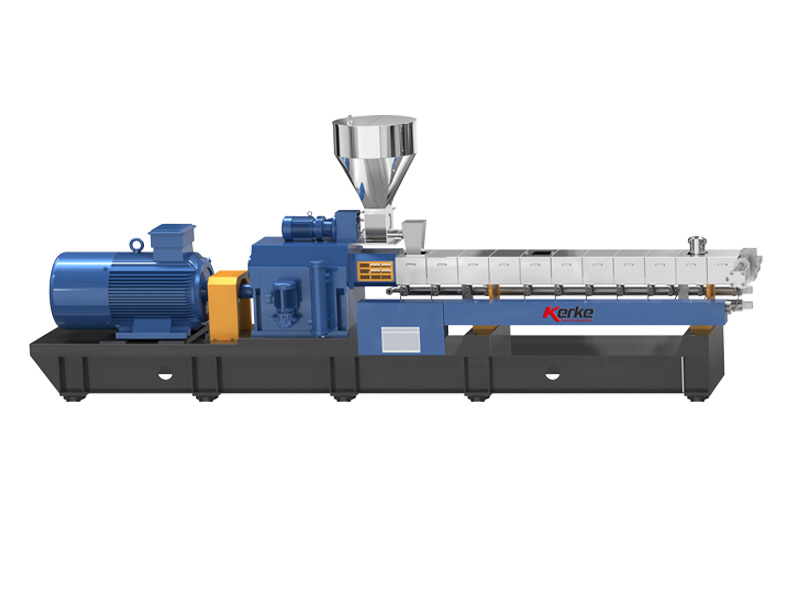
Kerke is a professional global supplier of plastic compounding and masterbatch granulation equipment, focusing on the research and development and manufacturing of Twin Screw Extruder, Masterbatch Extruder, and Compounding Extruder series products. For the production characteristics of high-filling kaolin clay filler masterbatch, Kerke has developed targeted optimized extrusion production lines, which are specially adapted to the processing difficulties of ultrafine powder feeding, easy agglomeration, and high equipment wear.
Kerke extrusion equipment solves the common problems of unstable masterbatch quality, low filling rate, poor dispersion, and short equipment service life in traditional kaolin masterbatch production through independent research and development of screw structure, optimized feeding system, and intelligent temperature control technology. It has become the preferred core equipment for medium and high-end kaolin clay filler masterbatch manufacturing enterprises.
3.2 Performance Advantages of Kerke Twin Screw Extruder
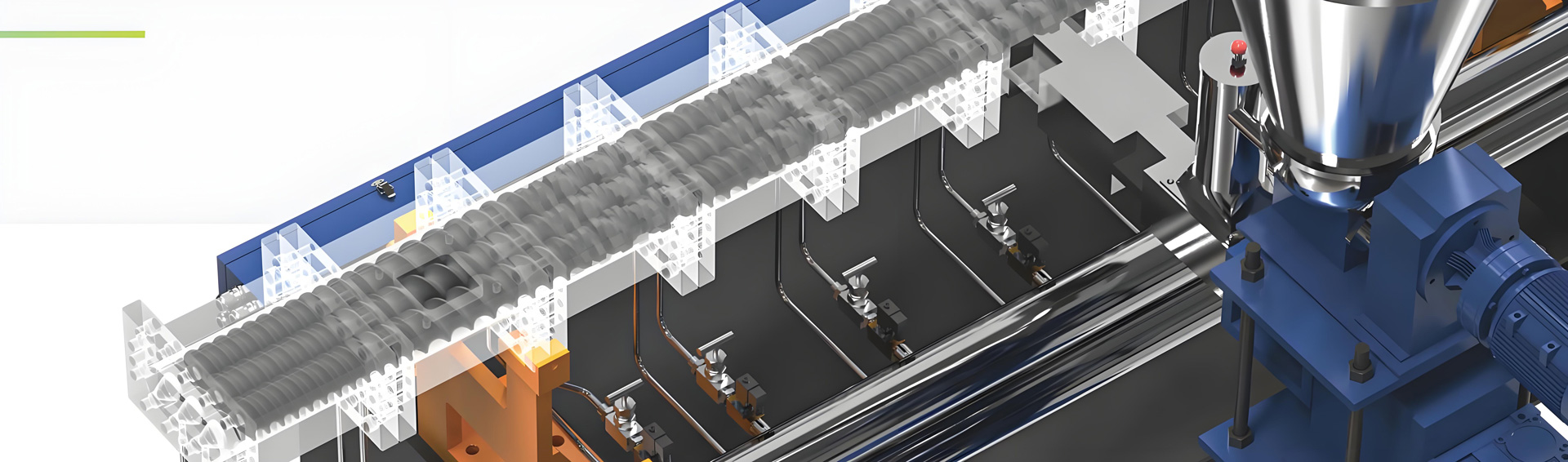
Kerke Twin Screw Extruder adopts co-rotating parallel twin-screw design with optimized multi-stage shear and mixing screw element combination. Aiming at the agglomeration problem of ultrafine kaolin powder, the equipment is equipped with strong shear dispersion units, which can fully break up powder agglomerates and realize uniform dispersion of kaolin fillers in the resin matrix. The segmented gradual plasticization process avoids excessive shear damage to the resin while ensuring full dispersion, balancing the filling amount and mechanical properties of the masterbatch.
The equipment barrel and screw are made of high-wear-resistant alloy materials through integral quenching treatment, which effectively resists the wear of high-hardness kaolin powder, maintaining long-term equipment operation precision and reducing the frequency of vulnerable parts replacement. The multi-stage independent temperature control system achieves precise temperature control with an accuracy of ±1℃, accurately matching the optimal plasticization temperature of kaolin modified materials, avoiding material yellowing, decomposition, and poor plasticization, and ensuring batch stability of masterbatch quality.
3.3 Professional Configuration of Kerke Masterbatch Extruder
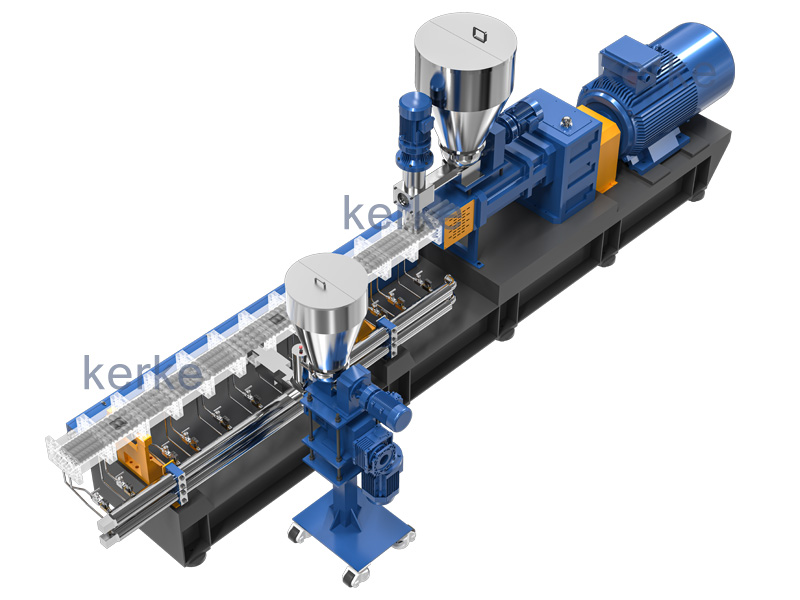
Kerke special Masterbatch Extruder for kaolin clay filler masterbatch is equipped with a customized forced quantitative feeding system, which perfectly solves the problems of floating, bridging, and unstable feeding of ultrafine kaolin powder. The stable and uniform feeding ensures consistent material ratio in each production cycle, laying a foundation for batch consistency of masterbatch performance.
The equipment is equipped with a high-efficiency vacuum exhaust system, which can completely remove moisture, volatile substances, and residual air in kaolin materials, eliminating bubble and pore defects inside the masterbatch and improving the compactness and surface quality of finished products. The high-precision mirror-polished die head ensures smooth discharge without dead corners, avoiding material carbonization and residue, and making the masterbatch particles smooth and uniform.
3.4 Targeted Optimization of Kerke Compounding Extruder
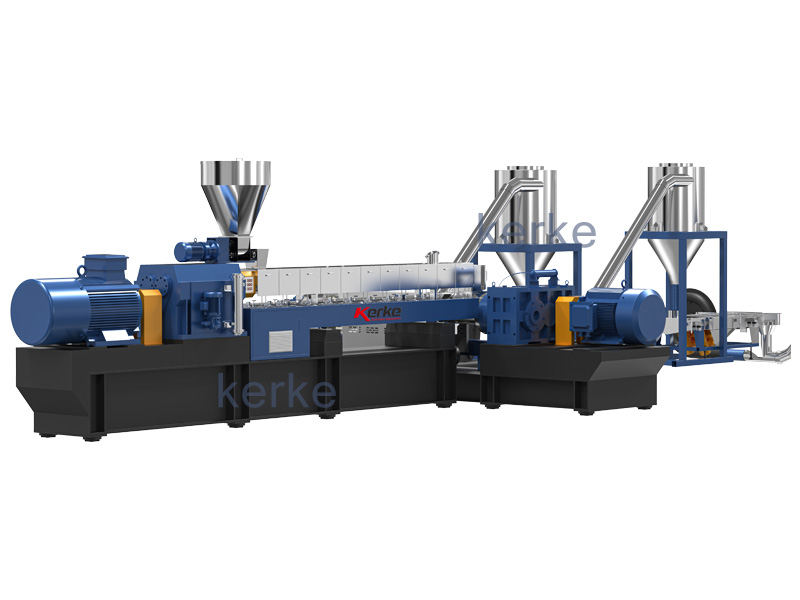
For high-filling kaolin masterbatch production with a filling ratio of 60% to 80%, Kerke Compounding Extruder carries out targeted compounding process optimization. The optimized screw combination strengthens pre-dispersion and intermediate mixing processes, realizing stable high-filling production while ensuring full dispersion of fillers. The intelligent parameter adaptive system can automatically adjust screw speed, feeding amount, and processing temperature according to different kaolin formula ratios, realizing flexible switching of multiple product specifications.
The servo energy-saving drive system reduces idle energy consumption by more than 30% compared with traditional hydraulic equipment. While improving production efficiency, it effectively reduces the long-term power consumption cost of enterprises, with significant energy-saving and emission-reduction effects, meeting the energy-saving production needs of modern plastic processing factories.
4. Complete Production Process of Kaolin Clay Filler Masterbatch
4.1 Raw Material Screening and Formula Design
The production of kaolin clay filler masterbatch starts with strict raw material screening. According to downstream product application requirements, select matched water-washed or calcined kaolin powder with a particle size range of 2000 to 6000 mesh, high whiteness, and low impurity content. Select high-compatibility carrier resins such as PP and PE, and configure high-efficiency coupling agents, dispersants, lubricants, and anti-aging additives in scientific proportions.
For general-purpose low-cost filling masterbatch, the kaolin filling ratio is controlled at 60% to 70%, focusing on cost reduction and basic filling modification. For high-end weather-resistant and insulating masterbatch, high-purity calcined kaolin is adopted, with a filling ratio of 70% to 80%, and the formula is optimized to improve product insulation, wear resistance, and dimensional stability. Scientific formula design is the premise to ensure the functional advantages of kaolin masterbatch.
4.2 Raw Material Modification and High-Speed Mixing
The screened kaolin powder first undergoes surface activation modification treatment. The modifier is uniformly sprayed on the surface of kaolin particles through high-speed stirring equipment, and fully reacted at a constant temperature to realize surface organic modification of inorganic powder, improving the bonding force between kaolin and resin. After modification, the kaolin powder is mixed with carrier resin and various auxiliary agents in stages through a high-speed mixing unit.
The segmented mixing process first mixes modified kaolin powder with dispersants and lubricants to ensure uniform auxiliary agent distribution, then adds carrier resin for full fusion mixing. This process effectively avoids powder agglomeration and uneven additive distribution, reduces the processing pressure of the Twin Screw Extruder, and ensures the uniformity of subsequent extrusion compounding materials.
4.3 Twin Screw Extrusion Compounding and Granulation
The uniformly mixed materials are stably and quantitatively fed into the Kerke Twin Screw Extruder through an automatic feeding system. Under the action of multi-stage segmented temperature control, the materials are gradually heated and plasticized to form a uniform molten mixed system. Through the high-strength shear, stretching, and mixing action of the twin-screw meshing structure, the agglomerated kaolin particles are completely dispersed, and the inorganic fillers and organic resin are fully compounded and fused.
The vacuum exhaust device continuously removes moisture and volatile impurities in the molten material to ensure the compactness of the material. After full compounding and plasticization, the uniform molten material is extruded into smooth material strips through the high-precision die head of the Masterbatch Extruder. After cooling and shaping through the circulating water cooling system, the material strips are evenly cut into cylindrical masterbatch particles by high-speed granulation equipment, realizing continuous and automated production.
4.4 Post-Processing and Finished Product Quality Inspection
The initially granulated kaolin masterbatch needs to go through cooling, screening, and de-dusting processes to remove fine powder, uneven particles, and residual impurities generated during granulation, ensuring uniform particle size and clean surface of finished products. Then comprehensive quality inspection is carried out, including particle appearance inspection, dispersion performance test, melt index detection, mechanical performance test, and insulation performance test.
Qualified finished products have uniform particles, stable melt index, excellent dispersion, and no agglomeration after melting. After being added to plastic products, they can stably improve the rigidity, weather resistance, and insulation of the products. All qualified masterbatches are sealed and packaged to prevent moisture absorption and dust pollution, ensuring stable performance during storage and transportation.
5. 2026 Complete Project Cost and Equipment Price Analysis
5.1 Kerke Core Extrusion Equipment Price Quotation
The FOB price of Kerke standard small and medium-sized Twin Screw Extruder suitable for kaolin clay filler masterbatch production is $31,500-$37,200. This standard model is suitable for small and medium-sized enterprises with a daily output of 3 to 6 tons, with stable compounding performance, precise temperature control, and high cost performance, fully meeting the conventional production needs of general-purpose kaolin masterbatch.
The upgraded high-precision Masterbatch Extruder model optimized for high-dispersion kaolin masterbatch is priced at $38,000-$44,500. This model is equipped with upgraded wear-resistant screw elements, intelligent quantitative feeding system, and high-efficiency vacuum exhaust device, with stronger powder dispersion ability and more stable product batch consistency, suitable for high-end functional kaolin masterbatch production.
The large-scale high-output Compounding Extruder for mass production is priced at $45,200-$51,800, supporting a daily output of 9 to 13 tons, with higher automation level and production efficiency, suitable for large-scale professional masterbatch manufacturing factories.
5.2 Auxiliary Equipment and Production Line Configuration Cost
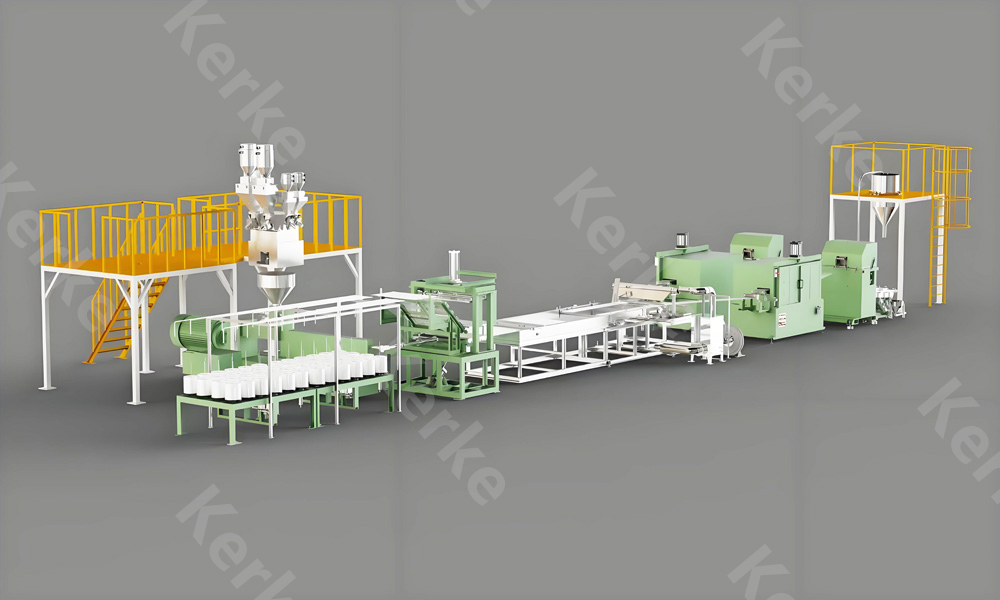
A complete kaolin clay filler masterbatch production line needs supporting auxiliary equipment including high-speed mixing machine, powder modification unit, automatic feeding system, drying dehumidifier, circulating cooling water system, granulation unit, screening and de-dusting equipment, and finished product detection device. The total procurement cost of the full set of auxiliary equipment is $7,800-$10,900. The specific price is adjusted according to the equipment automation degree and processing capacity to meet the production scale needs of different enterprises.
5.3 Plant Transformation, Installation and Commissioning Cost
The kaolin masterbatch production line occupies a standardized industrial plant area. The cost of equipment foundation pouring, power distribution pipeline layout, and dust-proof workshop transformation is $3,500-$4,800. Kerke provides professional overseas on-site installation, commissioning, and technical docking services, with a one-time technical service fee of $2,500-$3,200. Professional parameter debugging can quickly make the equipment reach the optimal production state, ensuring that the produced kaolin masterbatch meets high-quality standards and avoiding product quality losses caused by parameter errors.
5.4 Daily Operation and Annual Maintenance Cost
Kerke energy-saving extrusion equipment has low daily operating energy consumption. The comprehensive daily electricity and water cost of the full production line is $75-$120 according to different production outputs. The highly automated production mode only requires 1 to 2 operators to complete the whole line operation and product collection work, greatly saving long-term labor costs for enterprises.
The annual routine maintenance cost of Twin Screw Extruder and supporting equipment includes screw cleaning, wear-resistant parts replacement, temperature calibration, and equipment lubrication, with a total annual cost of $850-$1,400. The equipment has a service life of more than 12 years, with low failure rate and stable long-term operation, and the comprehensive operating cost is far lower than that of traditional extrusion equipment.
5.5 Project Investment Return Analysis
Kaolin clay filler masterbatch has a wide downstream application market and stable market demand, with good cost-saving advantages and profit margins. The total investment of a complete Kerke kaolin masterbatch production line is about $42,800-$68,500 according to different configurations. The investment return cycle of conventional general-purpose masterbatch production projects is 9 to 11 months. For high-end insulating and weather-resistant kaolin masterbatch projects with high added value, the return cycle can be shortened to 7 to 9 months.
The project has low investment risk, strong market anti-risk ability, and stable long-term economic benefits, which is very suitable for new investment and production line upgrading of plastic filler masterbatch enterprises.
6. Main Application Scenarios of Kaolin Clay Filler Masterbatch
6.1 Plastic Packaging and Thin Film Products
Kaolin clay filler masterbatch is widely used in PE agricultural films, packaging films, and plastic bags. It can significantly improve the anti-aging performance and ultraviolet resistance of thin film products, prolong the service life of agricultural films, and improve the stiffness and flatness of packaging films. At the same time, it reduces the production cost of film products without affecting the printing and processing performance of the films, making it an ideal cost-effective filling material for the packaging industry.
6.2 Household Appliance and Electronic Plastic Parts
Household appliance shells, electronic product structural parts, and insulating accessories have high requirements for material insulation, dimensional stability, and surface flatness. Kaolin masterbatch produced by Kerke Compounding Extruder has excellent insulation performance and low shrinkage, which can effectively avoid deformation and shrinkage of plastic parts, improve product assembly accuracy, and enhance the electrical insulation safety of electronic and electrical products.
6.3 Automotive Modified Plastic Parts
In the field of automotive lightweight manufacturing, kaolin clay filler masterbatch is used for the modification of automotive interior parts, exterior decorative parts, and engine peripheral plastic parts. It can improve the rigidity, wear resistance, and heat resistance of modified plastics, reduce the weight of automotive plastic parts, and ensure the dimensional stability and long-term weather resistance of automotive parts, meeting the strict quality standards of automotive plastic materials.
6.4 Building and Architectural Plastic Profiles
Plastic profiles, decorative plates, and waterproof coiled materials for architectural decoration require good weather resistance and dimensional stability. Kaolin masterbatch can enhance the anti-aging, anti-ultraviolet, and thermal stability of building plastic products, avoid fading, deformation, and cracking of profiles after long-term outdoor use, and improve the durability and decoration effect of building plastic materials.
6.5 Industrial Engineering Plastic Modification
In the modification of PVC, ABS, PP, and other engineering plastics, kaolin clay filler masterbatch is used to improve the mechanical strength, wear resistance, and chemical corrosion resistance of materials. It can effectively enhance the comprehensive performance of engineering plastics, expand the application range of plastic materials, and reduce the raw material cost of engineering plastic modification.
7. Equipment Operation, Maintenance and Common Problem Solutions
7.1 Standard Daily Operation Specifications
Before starting the Kerke Twin Screw Extruder and Masterbatch Extruder daily, operators need to comprehensively inspect the equipment power system, feeding system, temperature control system, and cooling system to ensure all components are in normal working condition. Carry out staged preheating according to the kaolin masterbatch processing formula, and start trial extrusion after the temperature is stable and reaches the standard.
After trial production and sampling inspection confirm that the masterbatch dispersion and appearance quality are qualified, formal batch production can be carried out. During production, real-time monitor extrusion temperature, screw speed, feeding volume, and granulation status, and adjust parameters timely according to material changes to ensure stable product quality. After daily production, clean the residual materials in the screw, barrel, and die head to prevent material carbonization from affecting subsequent production quality.
7.2 Regular Equipment Maintenance and Calibration
Carry out weekly maintenance on the Compounding Extruder equipment, including lubricating transmission components, cleaning cooling system filter elements, and checking pipeline tightness. Conduct monthly professional calibration of temperature control accuracy, screw operation precision, and feeding uniformity to maintain long-term processing stability of the equipment. Regularly polish the die head to keep the discharge channel smooth and ensure consistent batch product quality.
Regularly check the wear degree of screw and barrel vulnerable parts for long-term processing of high-wear kaolin materials, and replace worn parts in time to avoid equipment wear affecting masterbatch dispersion and dimensional stability.
7.3 Common Production Defects and Optimization Solutions
Common quality problems in kaolin masterbatch production include poor filler dispersion, rough particle surface, unstable melt index, and easy moisture absorption. Poor dispersion is mainly caused by insufficient shear or incomplete raw material modification, which can be solved by optimizing the screw shear combination and improving the powder modification process. Rough particle surface is caused by die head residue or unstable temperature, which can be improved by cleaning the die head and calibrating temperature parameters.
Unstable melt index is caused by uneven feeding and inconsistent material ratio, which can be solved by calibrating the quantitative feeding system. Easy moisture absorption of finished products can be avoided by strengthening raw material drying treatment and adopting sealed packaging. Kerke professional technical team provides long-term technical support to help enterprises solve various production difficulties.
8. Industry Development Trend and Market Prospect
8.1 Development Trend of Kaolin Filler Masterbatch Industry
With the rapid development of plastic lightweight modification and cost reduction upgrading in various industries, high-performance and low-cost inorganic filler masterbatches have become the mainstream development direction of the industry. Kaolin clay filler masterbatch, with its excellent insulation, weather resistance, and cost advantages, will gradually replace part of traditional filler products, and the market demand will continue to grow steadily. The market has put forward higher requirements for masterbatch dispersion uniformity, functional stability, and environmental protection performance, which promotes the continuous upgrading of extrusion compounding equipment.
8.2 Future Upgrading Direction of Extrusion Processing Equipment
Future Twin Screw Extruder, Masterbatch Extruder, and Compounding Extruder equipment will develop towards higher intelligence, higher dispersion precision, lower energy consumption, and stronger adaptability. Intelligent formula adaptive adjustment, automatic fault diagnosis, and unmanned continuous production will become the standard configuration of high-end masterbatch production equipment. Kerke will continue to focus on the technical research and development of filler masterbatch professional extrusion equipment, continuously optimize equipment dispersion performance and energy-saving efficiency, and provide more efficient and reliable production solutions for global kaolin masterbatch manufacturing enterprises.
9. Conclusion
Kaolin clay filler masterbatch is a versatile and high-value inorganic modified filler material, widely used in packaging, home appliances, automobiles, building materials, and engineering plastic modification fields. The core of producing high-quality kaolin masterbatch lies in professional compounding and extrusion granulation technology, and high-performance Twin Screw Extruder, Masterbatch Extruder, and Compounding Extruder equipment are the key guarantees to realize high-dispersion, high-filling, and high-stability masterbatch production.
Kerke professional extrusion equipment solves the technical pain points of easy agglomeration, unstable feeding, and poor dispersion in traditional kaolin masterbatch production through targeted structural optimization and process upgrading. The complete production line has reasonable investment cost, stable production efficiency, and excellent economic benefits. Enterprises can rely on Kerke high-precision extrusion equipment to produce high-quality kaolin clay filler masterbatch, seize the broad market of modified plastic fillers, and obtain stable long-term market competitiveness and investment returns.