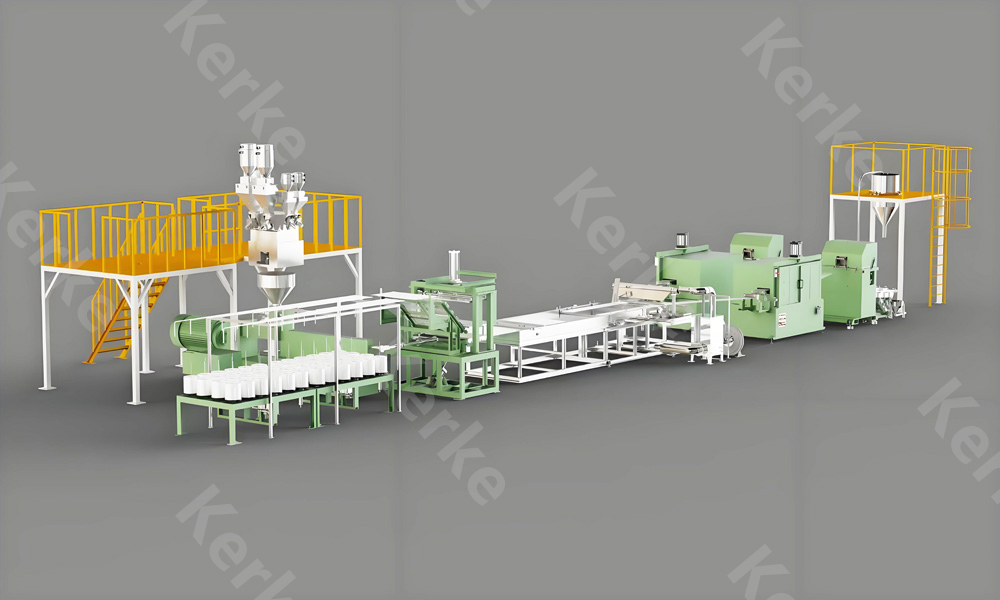
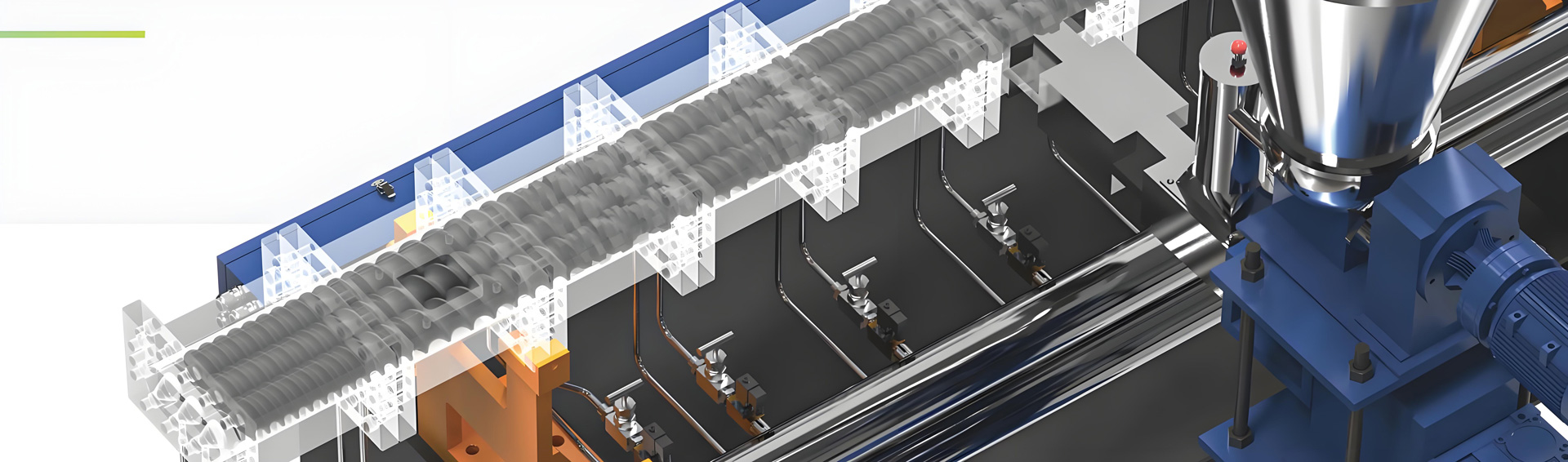
Masterbatch for 3D printing filaments is a deceptively difficult product. A colour concentrate that performs flawlessly in a 30-micrometre blown film or a 3-millimetre injection moulded wall can destroy a filament line, because filament is extruded through a die of roughly 1 to 3 millimetres, wound to a diameter tolerance frequently specified at plus or minus 0.02 millimetres, and then pushed through a printer nozzle whose bore is commonly 0.4 millimetres. Every agglomerate, every incompatible carrier domain, every trace of moisture and every pigment that shifts crystallisation kinetics shows up as diameter ripple, layer delamination or a blocked hot end. This guide sets out the compatibility framework that filament producers and masterbatch compounders need: carrier resin matching, pigment and additive selection, dispersion targets, twin-screw compounding process design, moisture control, colour metrology and regulatory positioning. Kerke, a Wanplas factory that has focused on parallel co-rotating twin-screw compounding for more than twelve years, is referenced throughout as a supplier of the equipment used to manufacture these concentrates.
What Masterbatch for 3D Printing Filaments Really Is
A masterbatch for 3D printing filaments is a concentrated, free-flowing pellet in which pigments, stabilisers, impact modifiers, nucleating agents or functional fillers are pre-dispersed in a carrier resin that is chemically and rheologically matched to the filament polymer, so it can be metered at a low let-down ratio into the filament extruder without disturbing melt homogeneity or dimensional control. The industry uses concentrates rather than direct powder dosing for three reasons: powders bridge and segregate in small hoppers, fine pigment dust is a workplace hazard, and single-screw filament extruders have almost no dispersive mixing capability of their own.
Filament producers generally purchase or produce three broad categories. Colour concentrates carry organic and inorganic pigments at loadings between roughly 15 and 50 percent by weight, with carbon black concentrates sometimes running higher. Additive concentrates carry heat stabilisers, chain extenders, hydrolysis stabilisers, nucleators, slip and process aids, usually at 5 to 30 percent active content. Functional or composite concentrates carry carbon fibre, glass fibre, wood flour, metal powder, ceramic, thermally conductive or electrically conductive fillers, and here loadings can reach 60 percent or more, with the concentrate sometimes being the majority component of the finished filament.
Typical let-down ratios in filament production sit between 1 and 4 percent for colour, 0.5 and 3 percent for additives, and 10 to 60 percent for composite systems. The lower the let-down, the higher the required dispersion quality, because a 1 percent addition means every pigment agglomerate that survives compounding is diluted only one hundred fold and still occupies the same physical dimension when it reaches the nozzle. This is why filament grades are compounded on high-shear twin-screw equipment and often melt filtered, whereas commodity film masterbatch can tolerate simpler processing.
The defining constraint of filament masterbatch is geometric, not chemical: the largest surviving particle must be small relative to a 0.4 millimetre nozzle bore, and every process decision from screw configuration to melt filtration flows from that single requirement.
Why Filament Is the Most Demanding Masterbatch Application
Filament extrusion combines the tightest dimensional tolerance in commodity extrusion with a downstream process, fused filament fabrication, that has no tolerance for particulates. Understanding the specific failure modes clarifies why masterbatch specification cannot be borrowed from other markets.
Diameter and Ovality Control
Standard 1.75 millimetre filament is typically sold with a tolerance of plus or minus 0.02 to 0.05 millimetres and an ovality limit of around 0.02 millimetres. Diameter is controlled by the balance between die output, haul-off speed and the melt strength of the polymer in the free-hanging zone between die and water bath. Any masterbatch that changes melt viscosity, melt elasticity or die swell shifts that balance. An immiscible carrier phase is worse than a viscosity shift, because it produces intermittent slip and periodic diameter oscillation that laser gauges register as a repeating wave rather than random noise.
Nozzle Reliability
A 0.4 millimetre nozzle has a cross-sectional area of roughly 0.126 square millimetres. Agglomerates above about 50 micrometres begin to interact with the flow field, and clusters above 100 micrometres can bridge and cause partial or full blockage, particularly in nozzles with an internal step or a worn PTFE liner. Hardened nozzles for abrasive filaments are typically 0.6 millimetres or larger precisely to increase tolerance, but colour and additive concentrates are expected to run in the standard 0.4 millimetre bore.
Interlayer Weld Strength
Fused filament parts are anisotropic; strength in the Z axis is governed by polymer chain diffusion across the layer interface during the brief window when both layers are above the glass transition or melting point. Pigments and fillers that concentrate at the interface, lubricants that migrate to the surface, and nucleating agents that accelerate crystallisation all shorten the diffusion window. Practical experience across the industry is that Z-strength losses of 10 to 25 percent are common when a poorly designed colour concentrate is used at excessive loading, and that keeping total pigment content in the finished filament below roughly 2 percent limits the penalty.
Thermal Residence and Degradation
Masterbatch pellets experience two heat histories: once during compounding and once during filament extrusion. For thermally sensitive polymers such as PLA, PVA, TPU and PHA, the cumulative thermal load determines molecular weight retention. A compounder that runs PLA masterbatch at 200 degrees Celsius with a long residence time hands the filament producer a resin that has already lost part of its molecular weight budget, and the resulting filament is brittle at the spool bend.
Carrier Resin Compatibility: The Core Decision
Carrier resin selection is the single most consequential decision in filament masterbatch design, because a mismatched carrier cannot be corrected by dispersion quality, pigment choice or process tuning. The rule that governs the choice is straightforward: the carrier must be either identical to the base polymer, a known miscible partner, or a compatibilised system with an interfacial agent, and its melt flow rate should sit within a defined window relative to the base resin.
Melt flow matching matters because the concentrate must break down and distribute within the short mixing length of a single-screw filament extruder. Industry practice is to select a carrier with a melt flow rate roughly 1.5 to 3 times higher than the base resin. A carrier that is too stiff will not disperse and appears as streaks; a carrier that is far too fluid dilutes melt strength locally and destabilises the drawing zone.
| Filament Polymer | Recommended Carrier | Acceptable Alternative | Must Avoid | Key Compatibility Note |
|---|---|---|---|---|
| PLA | PLA (same optical purity family) | PBAT-compatibilised PLA, PBS | PE, PP, ABS, PS | Carrier D-lactide content should match to avoid crystallisation mismatch and haze |
| PETG | PETG or amorphous copolyester | Low-crystallinity PET copolymer | PE, PP, PLA, POM | Crystallising PET carrier creates haze and stress whitening in a clear PETG filament |
| ABS | ABS or SAN | Styrene-acrylic copolymer | PE, PP, PA, PLA | SAN is miscible with the ABS matrix phase and preserves impact balance |
| ASA | ASA or SAN | Acrylic copolymer | PE, PP, PLA | Avoid butadiene-rich carriers that reduce the weathering benefit of ASA |
| PA6 / PA12 / PA6-CF | Matching polyamide grade | Low-melt copolyamide (PA6/66) | PE, PP, PLA, PETG | Carrier must be dried to the same low moisture level as the base to prevent hydrolysis |
| PC and PC/ABS | Polycarbonate | PC/ABS alloy carrier | PA, PLA, PETG, acidic additives | Any acidic or hydrolytic residue triggers chain scission and yellowing above 280 degrees Celsius |
| TPU | Matching TPU hardness family | Polyester or polyether TPU of same class | PP, PLA, rigid PS | Polyester and polyether TPU should not be cross-mixed; hardness gap changes Shore value |
| PP filament | PP homopolymer or random copolymer | Maleated PP for filled systems | PA, PC, PETG | Maleated PP is essential when glass or natural fibre is present |
| PEI, PEEK, PPSU | Same high performance polymer | High-temperature amorphous carrier | All commodity carriers | Compounding must occur above 340 degrees Celsius with fully purged, corrosion-resistant hardware |
| PVA / BVOH support | Matching PVA copolymer | Water-soluble polyester | Any hydrophobic carrier | Even small hydrophobic contamination leaves insoluble residue in the support dissolution bath |
Universal Carriers: When They Work and When They Do Not
Suppliers frequently market universal carriers based on low-molecular-weight polyester waxes, EVA copolymers or specialty acrylics, claiming compatibility across polyolefins, styrenics and polyesters. In filament applications, universal carriers are acceptable only in narrow situations: very low let-down of a highly loaded black concentrate, additive concentrates where the active is a liquid absorbed on a carrier, or short-run custom colours where the economics do not support a dedicated carrier. For any filament sold on transparency, mechanical performance, food contact or long-term dimensional stability, a matched carrier is the correct engineering answer. The reason is that universal carriers are by definition partially incompatible with everything; they survive because their domain size stays below the resolution of the human eye in thick-wall parts, which is not the situation in a 1.75 millimetre strand drawn under tension.
Compatibilisation Strategies
When a mismatched pair is unavoidable, for example a mineral-filled concentrate in a polyester filament, compatibilisers restore interfacial adhesion. Common systems include maleic-anhydride-grafted polyolefins for polyolefin-to-polar-polymer bridging, epoxy-functional styrene-acrylic oligomers used as chain extenders in recycled PET and PLA systems, glycidyl-methacrylate-grafted copolymers for polyester-to-polyolefin blends, and reactive elastomers such as ethylene-methyl-acrylate-glycidyl-methacrylate terpolymers. Compatibiliser loading typically sits between 1 and 5 percent of the concentrate weight. These are reactive systems, so residence time and screw configuration must be designed to complete the reaction inside the extruder rather than in the customer’s filament line.
Pigment and Colourant Selection for Filament Grades
Pigment selection for filament masterbatch is governed by four constraints that must be satisfied simultaneously: thermal stability at the highest processing temperature the filament will ever see, absence of unintended nucleation, particle size distribution compatible with a 0.4 millimetre nozzle, and where relevant, food contact or toy safety compliance.
Heat Stability Mapping
Every pigment carries a heat stability rating, usually expressed as the temperature it withstands for a defined dwell in polyolefin. That rating is a starting point, not a guarantee, because filament may be printed at temperatures above the compounding temperature and may sit in a hot end during a pause. A practical rule is to select pigments rated at least 20 to 30 degrees Celsius above the maximum expected print temperature.
| Pigment Class | Typical Heat Stability | Suitable Filaments | Nucleation Risk in PLA | Relative Cost Level |
|---|---|---|---|---|
| Carbon black (furnace, high colour) | Above 300 degrees Celsius | All, including PEEK and PEI | Moderate | Low |
| Titanium dioxide (rutile, coated) | Above 300 degrees Celsius | All | High | Low |
| Copper phthalocyanine blue and green | 280 to 300 degrees Celsius | PLA, PETG, ABS, PA, PC | High | Medium |
| Diarylide and azo yellows | 200 to 240 degrees Celsius | PLA, PETG only | Low | Low |
| Benzimidazolone yellow and orange | 260 to 290 degrees Celsius | PLA, PETG, ABS, PA | Moderate | Medium |
| Quinacridone magenta and violet | 280 to 300 degrees Celsius | PETG, ABS, PA, PC | High | High |
| Perylene red | Above 300 degrees Celsius | PA, PC, PEI | Moderate | High |
| Complex inorganic colour pigments | Above 320 degrees Celsius | PEEK, PEI, PPSU, PA | Moderate | Very High |
| Ultramarine blue | Around 280 degrees Celsius | PLA, PETG, ABS | Moderate | Low |
| Effect pigments (mica, aluminium) | Varies with substrate | PLA, PETG, ABS at 0.6 mm nozzle | Low | High |
The Nucleation Problem in PLA
PLA is a slow-crystallising polymer, and its behaviour in a filament is intentionally tuned. Neat amorphous PLA filament prints with good layer adhesion and low warp. Add an effective nucleating pigment such as coated titanium dioxide, phthalocyanine blue or talc, and the crystallisation half time can fall dramatically. The consequences are practical and immediate: increased shrinkage during cooling, greater warp on large flat parts, higher stiffness with lower elongation, and in extreme cases a filament that crystallises inside the water bath and becomes brittle on the spool. Compounders who supply PLA colour concentrates should measure crystallisation half time on the finished let-down, not just on the concentrate, and should have alternative pigment routes available for customers who complain about warp in a specific colour.
Particle Size and Filtration Targets
Primary pigment particles typically range from 0.05 to 1 micrometre, but as supplied they exist as aggregates and agglomerates that can exceed 100 micrometres. Compounding must break agglomerates down and disperse them. The standard laboratory measure is the filtration pressure value test, in which a known mass of let-down compound is pushed through a fine screen and the pressure rise per gram of pigment is recorded. Lower values indicate better dispersion. For filament grades, compounders should target filtration pressure values well below the limits accepted for film, and should verify with a pressed film or a printed test object examined at magnification.
Functional Masterbatches Beyond Colour
Functional concentrates now represent the fastest-growing segment of the filament market, because they let a filament producer offer a differentiated product line without holding dozens of fully compounded resins in stock. Each functional family carries its own compatibility rules.
Carbon Fibre and Glass Fibre Concentrates
Chopped carbon fibre and milled glass are usually supplied as 30 to 60 percent concentrates in PA, PETG or PP carriers. The critical variable is residual fibre length after compounding. Fibre must be introduced through a side feeder downstream of the melting zone, never through the main hopper, and the screw configuration after the side feeder should use conveying and low-intensity distributive elements only. Retained fibre length after correct compounding is commonly in the range of 150 to 350 micrometres; aggressive kneading blocks can reduce that below 100 micrometres, at which point the reinforcement contribution largely disappears while the abrasive damage to nozzles remains. Filaments with carbon or glass content require hardened steel or ruby nozzles at 0.6 millimetres or larger.
Wood, Cork and Natural Fibre Concentrates
Wood-filled filaments typically use 10 to 40 percent wood flour in a PLA carrier. Wood flour has a decomposition onset near 200 degrees Celsius and a high moisture uptake, so compounding must run with an aggressive vacuum vent and a barrel profile that avoids hot spots. Particle size is normally screened to below 100 micrometres for a 0.4 millimetre nozzle, or below 200 micrometres if the filament is sold specifically for a 0.6 millimetre or larger nozzle. Coupling with maleated polyester or silane treatment improves interfacial adhesion and reduces the strength penalty.
Metal-Filled and High-Density Concentrates
Bronze, copper, iron and tungsten-filled filaments use concentrates at very high loading, sometimes above 70 percent by weight, giving specific gravity in the finished filament between 2 and 4. Feeding these powders requires loss-in-weight feeders with agitation and a crammer or twin-screw side feeder to overcome poor bulk flow. Wear protection on screws and barrels is mandatory; bimetallic barrel liners and powder-metallurgy screw elements are the practical standard.
Conductive and ESD Concentrates
Electrical conductivity is delivered with conductive carbon black, carbon nanotubes or graphite. The percolation threshold, the loading at which a continuous conductive network forms, is highly sensitive to dispersion state and to the shear history. Over-dispersion breaks the network and raises resistivity; under-dispersion gives inconsistent readings along the filament. Carbon nanotube concentrates reach percolation at loadings an order of magnitude lower than conductive carbon black, but require careful distributive mixing with limited high-shear input.
Flame Retardant, Antimicrobial and Special Effect Concentrates
Halogen-free flame retardant concentrates for filament typically use phosphorus-based systems, since metal hydroxides require loadings above 50 percent that destroy filament flexibility. Antimicrobial concentrates use silver-ion glass or zinc systems at low loading. Glow-in-the-dark concentrates use strontium aluminate phosphor, which is highly abrasive with typical particle sizes of 20 to 60 micrometres and mandates a larger nozzle. Thermochromic and photochromic systems are microencapsulated and thermally fragile, with process temperatures usually capped near 220 degrees Celsius.
Dispersion Quality and the Nozzle Clogging Problem
Dispersion in compounding has two distinct mechanisms that must both be satisfied, and confusing them is the most common cause of a masterbatch that looks acceptable in a plaque but fails in a filament. Dispersive mixing breaks agglomerates apart by applying stress that exceeds the cohesive strength of the cluster; distributive mixing moves the resulting fragments uniformly through the melt volume without necessarily reducing their size.
Dispersive mixing is generated by narrow, high-shear gaps: kneading blocks with neutral or reverse offset, blister rings and tooth mixing elements. Distributive mixing comes from repeated stream splitting and reorientation: forward kneading blocks with wide discs, turbine elements, slotted mixing elements and gear mixers. A filament masterbatch screw needs a strong dispersive section early, immediately after complete melting, followed by a distributive section that homogenises without further heat generation.
| Dispersion Metric | Test Method | Film / Injection Target | Filament Target | Failure Symptom if Missed |
|---|---|---|---|---|
| Filtration pressure value | Screen pack pressure rise per gram of pigment | Moderate values accepted | Lowest practical value, verified per lot | Nozzle blockage, pressure spikes on the printer |
| Maximum agglomerate size | Pressed film microscopy at 100x | Below 100 micrometres | Below 20 to 30 micrometres | Partial clogs, under-extrusion, visible specks |
| Colour strength deviation | Spectrophotometry versus master standard | Delta E at or below 1.5 | Delta E at or below 0.8 | Visible colour shift between spools |
| Melt filter mesh on compounding line | Screen changer configuration | 40 to 80 mesh | 100 to 200 mesh | Contaminant carry-through into the filament |
| Residual moisture in concentrate | Karl Fischer or loss on drying | Below 0.1 percent | Below 0.02 percent for hygroscopic carriers | Bubbles, diameter variation, molecular weight loss |
| Volatile content | Devolatilisation efficiency check | Standard vacuum vent | Deep vacuum, often two vent positions | Surface porosity, spool-side voids |
The Melt Filtration Decision
Melt filtration on the compounding line is the last defence against clogging. A 150 mesh screen has an opening around 100 micrometres; a 200 mesh screen is around 75 micrometres. Filtration removes gels, char, foreign contamination and the largest surviving agglomerates. The trade-off is pressure. High filler concentrates and fibre-reinforced concentrates cannot be filtered at fine mesh because the filler itself is removed or the pressure becomes unmanageable, so those grades rely entirely on raw material screening and clean handling. For colour and additive concentrates in the 15 to 50 percent range, filtration is strongly recommended, and a continuous or backflush screen changer prevents pressure-driven output drift over a long run.
Twin-Screw Compounding Process Design
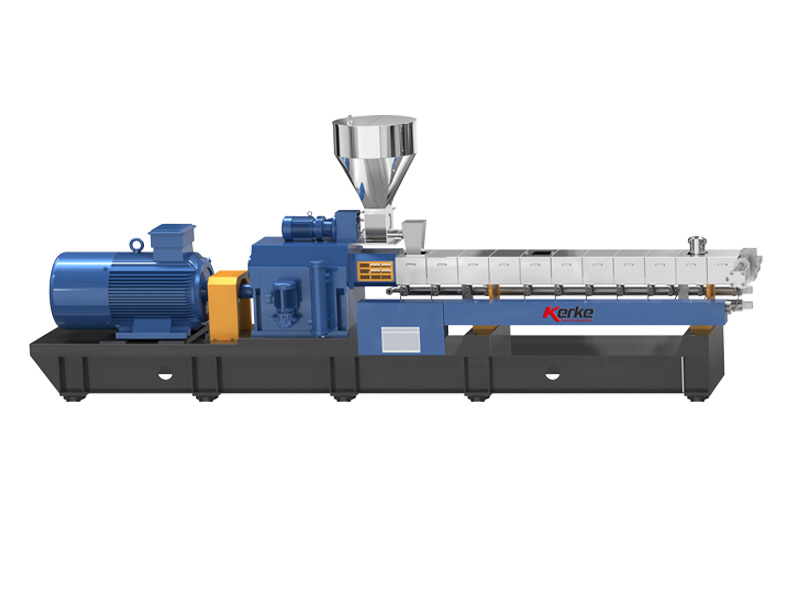
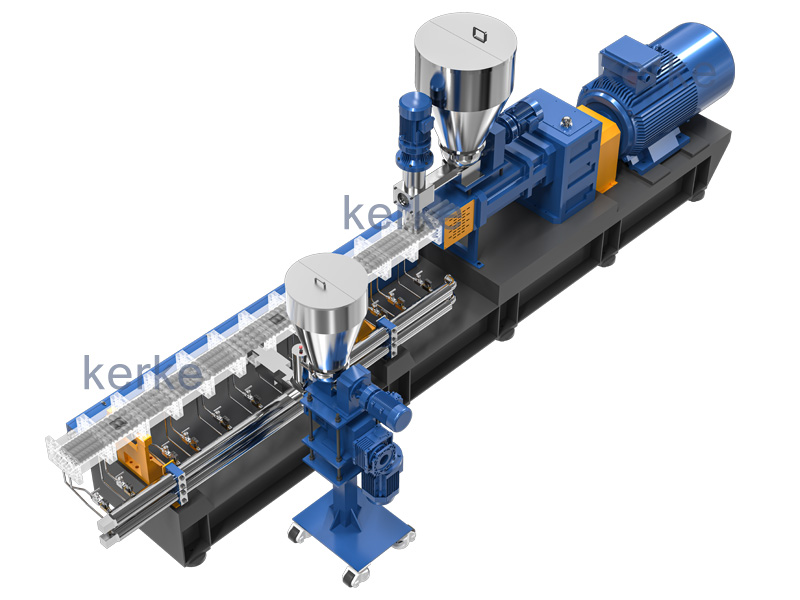
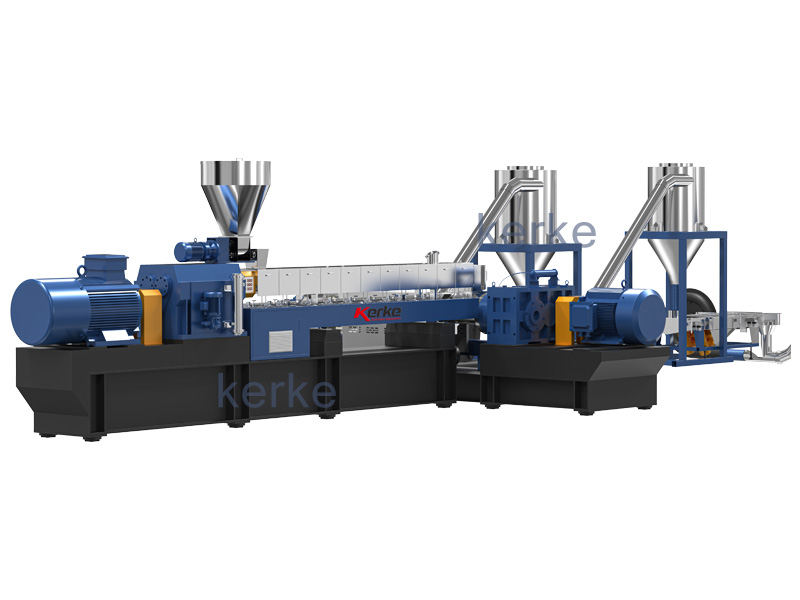
The co-rotating parallel twin-screw extruder is the standard platform for filament masterbatch because it decouples conveying from mixing, allows fillers and fibres to be introduced downstream of melting, provides efficient vacuum devolatilisation and delivers narrow residence time distribution. Kerke’s KTE series covers this duty from laboratory formulation trials through full production, with models spanning the KTE-16B laboratory unit to the KTE-135D production machine, and with screw assemblies designed under computer-aided modelling for self-cleaning kneading geometry and interchangeable element sets.
Screw Configuration Logic
A filament colour masterbatch screw is normally built in six functional zones. The layout below is a representative starting point for a machine with a length-to-diameter ratio of 40 to 48, which is the practical range for concentrates that need both strong dispersion and effective venting.
| Zone | Position (L/D) | Element Type | Function | Design Caution |
|---|---|---|---|---|
| Solids conveying | 0 to 6 | Deep-flighted forward conveying, large pitch | Accept feed, avoid feed limitation | Keep barrel 1 cooled to prevent early melting and bridging |
| Melting | 6 to 14 | Forward kneading blocks, 45 and 60 degree offset | Complete melting before pigment shear | Incomplete melting means pigment is ground, not dispersed |
| Dispersive mixing | 14 to 24 | Neutral and reverse kneading blocks, blister ring | Break pigment agglomerates | Monitor melt temperature; excessive shear degrades PLA and TPU |
| Side feed and dilution | 24 to 30 | Conveying with twin-screw side feeder | Introduce fillers, fibre or heat-sensitive actives | Never feed fibre through the main hopper |
| Distributive mixing and venting | 30 to 40 | Turbine and slotted elements, vacuum vent | Homogenise, remove moisture and volatiles | Provide vent stuffer if the melt tends to rise into the port |
| Pressure build | 40 to 48 | Short pitch forward conveying | Generate die and filter pressure | Keep this zone short to limit residence time and shear heating |
Temperature Windows by Filament Polymer
Barrel profiles for filament masterbatch should be set to reach the target melt temperature with minimum shear contribution, then held flat. Overheating shows up as yellowing, molecular weight loss and, in polyesters, acetaldehyde generation.
| Carrier Polymer | Compounding Melt Temperature | Pre-Drying Condition | Screw Speed Guidance | Vacuum Requirement |
|---|---|---|---|---|
| PLA | 170 to 195 degrees Celsius | 4 hours at 55 to 65 degrees Celsius, dehumidified | Moderate, 250 to 400 rpm | Essential, deep vacuum |
| PETG | 210 to 240 degrees Celsius | 4 to 6 hours at 65 degrees Celsius | Moderate, 250 to 450 rpm | Essential |
| ABS / SAN | 200 to 230 degrees Celsius | 2 to 4 hours at 80 degrees Celsius | High, 350 to 600 rpm | Recommended |
| PA6 / PA12 | 230 to 265 degrees Celsius | 6 to 8 hours at 80 to 90 degrees Celsius | Moderate to high | Essential, two vents preferred |
| Polycarbonate | 260 to 290 degrees Celsius | 4 hours at 120 degrees Celsius | Moderate, avoid shear peaks | Essential |
| TPU | 175 to 205 degrees Celsius | 2 to 3 hours at 80 degrees Celsius | Low to moderate, 150 to 300 rpm | Essential |
| PP | 190 to 220 degrees Celsius | Not normally required | High, 400 to 700 rpm | Optional |
| PEEK / PEI | 350 to 400 degrees Celsius | 3 to 5 hours at 150 degrees Celsius | Low to moderate | Essential, high-temperature seals |
Feeding Architecture
Accurate feeding is the foundation of colour consistency. Volumetric feeding is acceptable for a single free-flowing pellet stream, but any multi-component filament concentrate should use loss-in-weight gravimetric feeders on every stream, with the extruder running in a synchronised throughput mode. Kerke supplies volumetric metering, loss-in-weight feeders, twin-screw side feeders, crammer feeders for very low bulk density powders and liquid injection systems, which covers the full feeding requirement of a filament masterbatch line. Carbon black at high loading, fumed silica and light mineral powders generally need a crammer or a vented side feeder because their bulk density is too low for gravity feeding into a starve-fed twin screw.
Pelletizing, Drying and Moisture Management
Pellet geometry matters more in filament masterbatch than in most other applications, because the filament producer’s single-screw extruder relies on consistent bulk density and free flow at low addition rates. An irregular, tailed or dusty pellet segregates in the blender and produces colour variation along the spool.
Choosing a Pelletizing Route
| Pelletizing Method | Best Suited To | Pellet Character | Moisture Pickup Risk | Relative Investment |
|---|---|---|---|---|
| Water-cooled strand pelletizing | Standard colour and additive concentrates with good melt strength | Cylindrical, uniform, low dust | Moderate, requires dewatering and drying | Low |
| Air-cooled strand pelletizing | Hygroscopic carriers such as PLA, PA and PC | Cylindrical, slightly less uniform | Very low | Low to Medium |
| Water ring die face cutting | High-filler concentrates, low melt strength materials | Lens shaped, compact | Moderate | Medium |
| Air-cooled die face hot cutting | Moisture-sensitive and low-viscosity systems | Spherical to lens shaped | Very low | Medium |
| Eccentric water mist hot cutting | TPU, tacky and elastomeric concentrates | Rounded, low agglomeration | Low | Medium to High |
| Underwater granulation | High output, spherical pellets, premium colour concentrates | Highly uniform sphere, excellent flow | Managed by integrated centrifugal dryer | High |
Kerke’s cutting system portfolio covers all six of these routes, which allows a filament masterbatch producer to match pellet form to carrier chemistry rather than forcing every product through a single strand line. For a plant that will produce both PLA and TPU concentrates, an air-cooled strand line plus an eccentric water mist hot-cut station is a practical combination.
Moisture Control Discipline
Hydrolysis is the silent killer of polyester and polyamide filament. PLA, PETG, PA and PC all cleave in the melt in the presence of water, and the damage is permanent. A masterbatch with 0.15 percent residual moisture dosed at 3 percent adds only a small amount of water to the total blend, but that water enters at the point of maximum temperature and does its damage immediately. Best practice is a desiccant dehumidifying dryer with a dew point at or below minus 40 degrees Celsius, verified residual moisture measurement per lot, immediate packing into aluminium-foil-laminated moisture barrier bags with desiccant sachets, and a stated shelf life with a re-drying instruction printed on the label.
Colour Consistency and Batch-to-Batch Control
Colour consistency is a systems problem, not a formulation problem. A filament brand that sells the same colour across years of production must control raw materials, process, measurement and documentation with equal rigour.
Measurement Framework
Colour is measured with a spectrophotometer under a defined illuminant and observer, typically D65 with a 10-degree observer, and expressed in the CIELAB coordinate system. The difference between a sample and the master standard is reported as delta E. For general plastics a delta E at or below 1.5 is often acceptable; for filament sold under a branded colour name, a target at or below 0.8 is appropriate, because customers compare spools purchased months apart side by side on the same printed object.
The measurement must be made on a standardised specimen. Measuring the concentrate pellet itself is meaningless. The correct approach is to let down the concentrate at the nominal ratio into the actual base resin, produce an injection-moulded plaque or a compression-moulded disc under fixed conditions, and measure that. Some producers additionally print a standard test object because print temperature and layer geometry alter perceived colour.
Sources of Variation and Their Controls
| Variation Source | Typical Impact | Control Measure | Verification |
|---|---|---|---|
| Pigment lot strength drift | Delta E shift of 0.5 to 2.0 | Incoming pigment strength test against retained standard | Let-down plaque per pigment lot |
| Feeder calibration drift | Colour strength shift, streaking | Loss-in-weight feeders with scheduled calibration | Gravimetric check weighing per shift |
| Screw configuration change | Dispersion change, strength shift | Locked configuration recorded per product code | Photograph and element list in the batch record |
| Melt temperature drift | Thermal shift in sensitive pigments | Melt thermocouple logging, alarm limits | Trend chart per batch |
| Carrier resin lot change | Gloss and undertone shift | Approved supplier list, melt flow rate check | Melt flow test on incoming carrier |
| Cross-contamination at changeover | Off-shade, visible specks | Purge compound sequence, light-to-dark scheduling | Purge plaque inspection before release |
| Regrind or rework addition | Unpredictable undertone | Rework only into the same product code, capped percentage | Rework log with batch traceability |
Self-Cleaning and Changeover
The intermeshing, self-wiping geometry of a co-rotating twin screw is a major advantage for a masterbatch plant running many colours. Kerke’s screw assemblies use a kneading co-type profile designed for effective self-cleaning, which reduces the purge material and downtime needed between a dark and a light colour. In practice, a well-designed self-wiping screw with a smooth-bore transition and no dead zones can cut changeover time substantially compared with a single-screw or a poorly configured twin-screw layout. Plants should still maintain a documented changeover sequence: mechanical purge with a compatible resin, chemical purge compound where allowed, screen change and a release plaque.
Let-Down Practice on the Filament Extrusion Line
Even a perfect concentrate will fail if it is dosed badly. Filament extrusion lines are typically single-screw machines with a length-to-diameter ratio between 25 and 33, a barrier or mixing screw, and modest mixing capability. The concentrate must therefore be designed to disperse under low shear, and the line must be set up to support that.
Dosing Method
Volumetric side-arm dosers are common but drift with pellet bulk density; gravimetric dosers are the better choice for a producer selling on colour consistency. The doser should discharge into the throat where it is immediately picked up by the screw, not into a blender several metres upstream where segregation can occur. Where a producer runs frequent short colour changes, a gravimetric doser with a quick-release hopper avoids cross-contamination.
Screw and Mixing Section
A filament screw benefits from a distributive mixing section, such as a pineapple or Maddock-type element, positioned in the metering zone. This is not a substitute for compounding quality; its purpose is to smooth out the streaks that arise from any residual pellet-to-pellet variation. A static mixer between the screw tip and the die further improves thermal and colour homogeneity, at the cost of additional residence time, which must be weighed carefully for PLA and TPU.
Diameter Control Interaction
Masterbatch changes melt rheology, so a colour change generally requires a small adjustment to haul-off speed and to the melt pump setpoint if one is fitted. Highly filled concentrates increase melt viscosity and reduce die swell, so the die may need to be re-selected for a composite filament rather than simply re-tuned. Laser diameter gauges with closed-loop control on the haul-off compensate for slow drift but cannot correct high-frequency oscillation caused by an incompatible carrier; if the gauge trace shows a regular periodic wave that scales with screw speed, the cause is almost always melt inhomogeneity, not mechanical.
Recommended Let-Down Ranges
| Concentrate Type | Active Loading in Concentrate | Typical Let-Down | Active in Finished Filament | Main Risk if Overdosed |
|---|---|---|---|---|
| Standard colour | 20 to 40 percent | 2 to 4 percent | 0.5 to 1.6 percent | Reduced layer adhesion, increased warp |
| High-concentration black | 40 to 50 percent | 1 to 2 percent | 0.4 to 1.0 percent | Nucleation in PLA, brittle filament |
| White (titanium dioxide) | 50 to 70 percent | 3 to 6 percent | 1.5 to 4.2 percent | Strong nucleation, abrasive nozzle wear |
| Additive (stabiliser, chain extender) | 10 to 25 percent | 1 to 3 percent | 0.1 to 0.75 percent | Plate-out, gel formation, over-branching |
| Carbon fibre composite | 30 to 60 percent | 25 to 50 percent | 10 to 25 percent | Extreme nozzle wear, brittle filament |
| Wood or natural fibre | 30 to 50 percent | 20 to 60 percent | 10 to 30 percent | Clogging, thermal decomposition odour |
| Conductive carbon | 15 to 30 percent | 20 to 50 percent | 4 to 12 percent | Loss of ductility, resistivity scatter |
| Glow phosphor | 30 to 50 percent | 8 to 20 percent | 3 to 10 percent | Severe abrasion, requires larger nozzle |
Regulatory Compliance and Certification
Compliance requirements for filament masterbatch depend on the end use, and the market has become considerably more demanding as desktop printing has entered schools, homes and food-adjacent applications. The compounder is responsible for establishing which framework applies and for holding the documentation that supports it.
Food Contact
Filaments marketed for kitchen accessories, food moulds or cookie cutters raise a food contact question. In the European Union, plastic materials intended to contact food fall under EU 10/2011, which operates through a positive list of authorised substances plus specific migration limits. In the United States, the relevant framework is the FDA food contact regulation system, including the food additive regulations in Title 21 of the Code of Federal Regulations and the food contact notification route. A compounder supplying a concentrate for this use must confirm that every pigment, carrier and additive is listed, and must be able to supply a declaration of compliance stating the conditions of use.
An important caveat that responsible suppliers state explicitly: a compliant masterbatch does not make a printed part food safe. Layer lines create crevices that harbour bacteria, and the printing process itself introduces potential contamination from the nozzle and the drive gear. The masterbatch declaration covers the material, not the finished object.
Substance Restrictions
RoHS restricts lead, mercury, cadmium, hexavalent chromium, polybrominated biphenyls, polybrominated diphenyl ethers and four phthalates in electrical and electronic equipment, and many filament buyers now request RoHS declarations regardless of application because it is a convenient proxy for heavy-metal-free formulation. REACH governs substances placed on the European market, with obligations around registration, the candidate list of substances of very high concern and authorisation. Because pigments are the most likely source of a restricted heavy metal, a filament masterbatch producer should hold current statements from every pigment supplier and should re-verify when the candidate list is updated.
Toy Safety and Other Frameworks
Filaments sold for children’s use may need to satisfy toy safety requirements covering element migration, and buyers frequently request a specific migration test report. Flame-retardant filaments for enclosure parts may be tested to the UL 94 vertical burn classification. Medical-adjacent applications invoke biocompatibility standards, though most filament suppliers explicitly exclude implantable and long-term contact uses. Quality system certification to ISO 9001 is the baseline expectation for a masterbatch supplier, and food-contact producers commonly add a food safety management system certification.
| Framework | Scope | Applies to Filament When | Evidence Required from Compounder |
|---|---|---|---|
| EU 10/2011 | Plastics in food contact, positive list and migration limits | Filament sold for food-contact articles in the European market | Declaration of compliance, migration modelling or testing |
| FDA food contact regulations | Food additive and food contact substance clearance | Filament sold for food-contact articles in the United States | Statement of clearance for each component and use condition |
| RoHS | Restricted hazardous substances in electrical equipment | Filament used in enclosures, fixtures or electronic assemblies | Supplier declarations plus periodic analytical verification |
| REACH | Substance registration and restriction in the European Union | Any filament or concentrate placed on the European market | Safety data sheets, candidate list screening statement |
| UL 94 | Flammability classification of plastic materials | Flame-retardant filament grades | Test report at the stated specimen thickness |
| ISO 9001 | Quality management system | Baseline for all industrial supply | Valid certificate and audit readiness |
Equipment Selection and Line Configuration
Choosing the compounding line is where a filament masterbatch business is either enabled or permanently constrained, because screw diameter sets the output ceiling, length-to-diameter ratio sets the process flexibility, and the feeding and pelletizing choices determine which product families can be made at all.
Sizing the Extruder
Output scales roughly with the cube of screw diameter for a given specific energy input and torque class, though the practical figure depends heavily on formulation. A laboratory machine exists to prove formulas and generate customer samples, not to make money; a production machine should be sized against the realistic annual demand for the top three colours plus a share of custom work.
| Kerke KTE Class | Typical Role | Indicative Output Band | Best-Fit Products | Relative Investment |
|---|---|---|---|---|
| KTE-16B / KTE-20 laboratory class | Formula development, colour matching, customer samples | From around 30 kg per hour downward, small-batch capable | Trials, pigment screening, scale-up data generation | Low |
| KTE-26 to KTE-36 class | Pilot and small-series production | Tens of kilograms per hour | Custom colours, specialty functional concentrates | Medium |
| KTE-52 to KTE-65 class | Core production for a filament masterbatch plant | Hundreds of kilograms per hour | Standard colour, white, black, additive concentrates | High |
| KTE-75 to KTE-95 class | High-volume standard products | Approaching and exceeding one tonne per hour | High-volume black and white, filler concentrates | Very High |
| KTE-135D class | Large-scale compounding | Multi-tonne per hour | Commodity filler and compound production | Premium |
| KTE-SE double-stage system | Heat-sensitive and high-filler systems | Matched to first-stage capacity | Materials that cannot be processed on a single stage | High to Very High |
| KTE-T triple-screw extruder | Specialty dispersion duties | Application dependent | Difficult dispersions and special material systems | High |
Configuration Recommendations for a Filament Masterbatch Plant
- Length-to-diameter ratio of 40 to 48 as the standard, giving room for a dispersive section, a side feed position and a vacuum vent without crowding.
- Loss-in-weight gravimetric feeders on all streams, with a crammer feeder for low bulk density carbon black and fumed silica.
- A twin-screw side feeder for fibre, wood flour and heat-sensitive actives.
- Vacuum venting with a vent stuffer, and a second vent position for polyamide and polycarbonate work.
- A backflush or continuous screen changer at 100 to 200 mesh for colour and additive grades, with a bypass for filled grades.
- Melt pump for stable die pressure where pellet geometry consistency is critical.
- Air-cooled strand or hot-face cutting for hygroscopic carriers; water strand for standard polyolefin and styrenic work.
- Bimetallic barrel liners and wear-resistant screw elements wherever titanium dioxide, glass, carbon or phosphor is processed.
- Desiccant dryer with dew point monitoring and a moisture barrier packing station immediately downstream.
- A dedicated laboratory extruder for colour matching so that production capacity is never consumed by trials.
Kerke operates a factory of nearly 20,000 square metres with more than 2,000 machines running in over 70 countries and a team of more than 100 people, and positions itself as a top-tier Chinese supplier of twin-screw compounding equipment under the Wanplas brand. Buyers evaluating suppliers should compare not only screw geometry and torque class but also the availability of the full feeding and pelletizing ecosystem from a single source, because integration problems between an extruder from one supplier and a pelletizer from another are a common cause of commissioning delay. Alternative suppliers in this market include established European builders such as Coperion and Leistritz, and other Asian manufacturers, and a serious buyer should benchmark specific mechanical energy, torque density and screw element availability across at least three candidates.
Defect Troubleshooting Reference
Most filament quality complaints trace back to a small number of root causes in the masterbatch or its handling. The table below maps observed symptoms to probable causes and corrective action, ordered by how frequently each appears in practice.
| Symptom | Most Probable Cause | Secondary Cause | Corrective Action |
|---|---|---|---|
| Repeated nozzle clogging in one colour only | Pigment agglomerates above 50 micrometres | Char from a previous dark colour changeover | Add or tighten melt filtration; extend dispersive zone; review purge procedure |
| Periodic diameter wave synchronised with screw speed | Immiscible carrier producing melt inhomogeneity | Melt temperature too low for full carrier melting | Switch to a matched carrier; verify carrier melt flow rate window |
| Bubbles and voids in the filament strand | Moisture in the masterbatch or base resin | Inadequate vacuum venting during compounding | Re-dry both streams; verify dryer dew point; add or deepen vent |
| Colour shift between production lots | Pigment lot strength drift | Feeder calibration drift | Incoming pigment strength testing; scheduled feeder calibration |
| Brittle filament that snaps on the spool | Thermal or hydrolytic degradation of the carrier | Excessive nucleation causing high crystallinity | Lower melt temperature; shorten residence time; change pigment route |
| Poor layer adhesion in printed parts | Excessive pigment or lubricant loading | Nucleating pigment shortening the diffusion window | Reduce let-down; remove slip additives; select non-nucleating pigment |
| Visible streaks along the filament | Insufficient distributive mixing in the concentrate | Carrier melt flow far below base resin | Add turbine or slotted elements; adjust carrier grade |
| Warping increase after a colour change | Nucleating pigment such as titanium dioxide or phthalocyanine | Higher crystallinity from slower cooling | Reformulate with lower-nucleation pigments; adjust water bath profile |
| Rapid nozzle wear | Abrasive filler such as glass, carbon, phosphor or titanium dioxide | Oversized filler particles | Specify hardened nozzle; screen filler particle size; state nozzle requirement on the label |
| Odour or fuming during printing | Additive volatilisation or filler decomposition | Residual solvent or moisture | Raise devolatilisation efficiency; change additive; cap print temperature on the data sheet |
| Resistivity scatter in conductive filament | Over-dispersion breaking the percolation network | Inconsistent filler feeding | Reduce dispersive shear; switch to gravimetric side feeding |
| Haze in a nominally transparent filament | Crystallising or incompatible carrier | Refractive index mismatch with an additive | Use an amorphous matched carrier; select refractive-index-matched additives |
Frequently Asked Questions
What is a masterbatch for 3D printing filaments?
It is a concentrated pellet in which pigments, additives or functional fillers are pre-dispersed in a carrier resin matched to the filament polymer. It is dosed at roughly 1 to 4 percent for colour, or far higher for composite systems, and it allows a filament producer to change colour or function without holding a separate fully compounded resin for every variant.
Can a standard polyolefin colour masterbatch be used in PLA filament?
No. Polyethylene and polypropylene carriers are immiscible with PLA and form discrete domains in the melt. Those domains cause periodic diameter oscillation, reduced interlayer weld strength and a higher clogging rate. PLA filament requires a PLA or PLA-compatible carrier with a melt flow rate roughly 1.5 to 3 times that of the base resin.
What dispersion quality is required for a 0.4 millimetre nozzle?
The practical target is that no surviving agglomerate exceeds roughly 20 to 30 micrometres, which is under 10 percent of the nozzle bore. Verification uses a filtration pressure value test, pressed film microscopy at 100 times magnification, and a melt filter of 100 to 200 mesh on the compounding line for colour and additive grades.
Why does coloured filament sometimes print weaker than natural filament?
Three mechanisms combine. Excess pigment concentrates at the layer interface and interrupts chain diffusion. Lubricants and slip additives migrate to the surface and act as a release layer. Nucleating pigments accelerate crystallisation and shorten the time the interface stays above the mobility threshold. Keeping total pigment below roughly 2 percent, avoiding lubricant-heavy formulas and selecting low-nucleation pigments limits the loss.
Which pigments should be avoided in high-temperature filaments?
Diarylide and many azo organic pigments begin to decompose above roughly 240 to 260 degrees Celsius, so they should not be used in polycarbonate, polyamide, PEI or PEEK. High-temperature grades rely on copper phthalocyanine, perylene, high-performance quinacridone, carbon black and complex inorganic colour pigments, the last of which remain stable above 320 degrees Celsius.
How should colour consistency be specified in a purchase contract?
Specify a delta E tolerance against a physical retained master standard, define the measurement geometry and illuminant, define the let-down ratio and base resin used to make the measurement specimen, and require a retained plaque plus a certificate of analysis for every lot. For branded filament colours a delta E at or below 0.8 is a reasonable and achievable requirement.
Does moisture in the masterbatch really matter at a 3 percent let-down?
Yes, because the water enters the melt at the point of maximum temperature and shear, where hydrolysis is fastest and irreversible. Hygroscopic carriers such as PLA, PETG, polyamide and polycarbonate should be dried to a low residual moisture level, verified per lot, and packed in aluminium-foil moisture barrier bags with desiccant and a stated re-drying instruction.
Should a filament producer buy masterbatch or compound in house?
Buying is appropriate for a producer with a small colour range and modest volume. Compounding in house becomes attractive when the colour range is wide, when custom colours are a competitive differentiator, when functional composites are part of the product line, or when supply-chain control over carrier and pigment sourcing matters. A laboratory twin-screw extruder for formulation development plus a production machine is the usual entry configuration.
What length-to-diameter ratio should a filament masterbatch extruder have?
Forty to forty-eight is the practical standard. Shorter machines struggle to combine a strong dispersive section, a side feed position and effective vacuum venting. Much longer machines increase residence time, which is undesirable for PLA, TPU and other heat-sensitive carriers. Modular barrel and screw design matters more than raw length because it lets one machine serve several product families.
Can recycled resin be used as a carrier in filament masterbatch?
It can, with controls. Recycled PET and PLA carriers usually need a chain extender to restore intrinsic viscosity and melt strength, thorough melt filtration to remove contamination, and tight incoming specification on colour and moisture. Recycled carriers are best suited to dark and black concentrates where the inherent colour variability of the recyclate is masked.
Conclusion
Masterbatch for 3D printing filaments succeeds or fails on compatibility, and compatibility is a chain with no weak links permitted. The carrier resin must match the filament polymer chemically and rheologically, because no amount of process tuning repairs an immiscible pair. The pigment must be stable above the highest temperature the filament will ever see, and in PLA it must be evaluated for its nucleating effect on warp and brittleness. Dispersion must be pushed to a level where the largest surviving particle is trivially small relative to a 0.4 millimetre nozzle, which means a genuine dispersive section on the screw, disciplined raw material screening and, for most grades, melt filtration at 100 to 200 mesh. Moisture must be treated as a permanent hazard rather than a nuisance, with dried product, verified measurement and barrier packaging. Colour must be governed by a documented system covering pigment lot testing, feeder calibration, locked screw configurations and spectrophotometric release against a retained standard.
On the equipment side, the co-rotating parallel twin-screw extruder remains the only sensible platform, and the configuration details determine which product families a plant can serve. A length-to-diameter ratio of 40 to 48, loss-in-weight feeding on every stream, a twin-screw side feeder for fibre and heat-sensitive actives, deep vacuum venting, wear-protected barrels and screws, and a pelletizing route chosen to match carrier hygroscopicity together define a line that can produce colour, additive and composite concentrates for filament without compromise. Kerke, a Wanplas factory with more than twelve years of focus on compounding extrusion, supplies this equipment set as an integrated package spanning KTE series twin-screw extruders, laboratory machines for formula development, triple-screw and double-stage systems for difficult materials, the full range of feeding devices and six pelletizing configurations, backed by the Wanplas brand commitments on spare parts, transport, capacity and quality.
For a filament producer building a masterbatch capability in 2026, the recommended path is to start with a laboratory extruder to build a validated formulation library and a colour standards archive, define carrier families rather than universal carriers, invest in gravimetric feeding and moisture control before investing in raw output capacity, and only then scale into a production machine sized against real demand. Teams evaluating a compounding line should request a trial on their own carrier and pigment set, review the screw configuration proposal element by element, and confirm the availability of spare screw elements and barrel liners before signing. Kerke welcomes factory visits and pre-shipment testing under the Wanplas open factory policy, and can support formulation trials on laboratory equipment before a production line is specified.