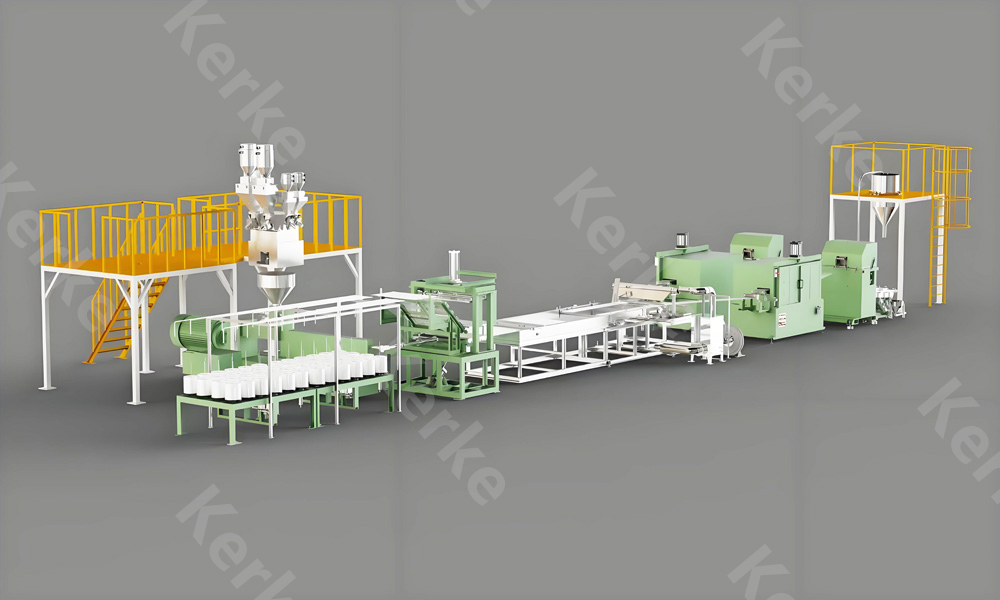
Barrier masterbatch for packaging films sits at the intersection of polymer science, food safety and high-efficiency compounding. As global brands push toward longer shelf life, thinner films and less material per pack, the demand for concentrated barrier systems that can be dosed into commodity polyolefin lines has grown sharply. This guide explains what a barrier masterbatch is, the technologies that deliver oxygen, moisture, aroma, light and grease resistance, how the formulation is built, and why a co-rotating parallel twin-screw extruder is the right production platform. It also covers food-contact compliance and a practical selection framework, with Kerke, a Wanplas factory, referenced as a supplier of the compounding equipment used to manufacture these masterbatches at scale.
Understanding Barrier Masterbatch for Packaging Films
A barrier masterbatch is a concentrated dispersion of active barrier agents, pigments, fillers and processing aids carried in a compatible polymer resin, designed to be let down into a packaging film at a few percent to roughly twenty percent to control the transmission of gases, water vapour, aroma, light, grease or microorganisms. The masterbatch format exists because most barrier actives are powders, platelets or sensitive chemicals that cannot be fed cleanly and uniformly into a film line on their own. Pre-dispersing them on a twin-screw extruder turns an awkward raw material into a free-flowing pellet that a film converter can meter with a simple gravimetric feeder.
The barrier function is described by transmission rates. Oxygen transmission rate, or OTR, measures how much oxygen crosses a given film area in a day at a fixed pressure difference, usually reported in cubic centimetres per square metre per day per atmosphere. Water vapour transmission rate, or WVTR, does the same for moisture, normally in grams per square metre per day. Aroma and grease barrier are assessed separately, and light barrier is expressed as opacity or ultraviolet blocking. A good barrier masterbatch reduces one or more of these values by an order of magnitude or more relative to the neat film, without harming clarity, sealability or mechanical strength.
Barrier masterbatches are distinct from colour masterbatches and filler masterbatches, although a single product can combine functions. A typical packaging film today may carry a white opacity masterbatch, a slip and anti-block package, an anti-fog system and a barrier concentrate in the same layer, each supplied as a separate pellet to keep formulation flexible. The compounding challenge is that barrier actives such as organophilic nanoclay or oxygen-scavenging salts are easy to under-disperse, and under-dispersion means lost performance plus visible gel or streaks in the finished film.
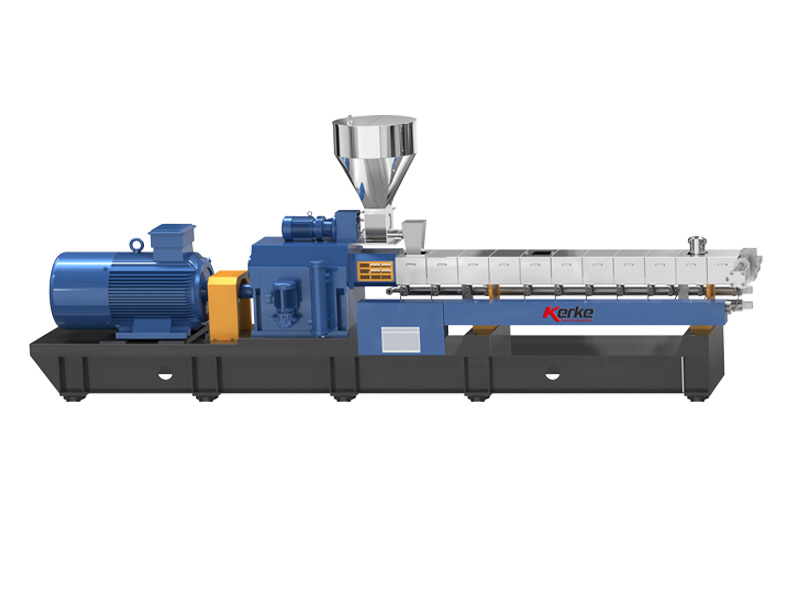
From a processing standpoint, barrier masterbatch production rewards high shear, excellent self-cleaning and tight residence-time control. That is why the industry standard is the co-rotating parallel twin-screw extruder rather than a single-screw machine. Kerke, a Wanplas factory specialising in compounding extruders, builds the KTE series of co-rotating parallel twin-screw extruders for exactly this class of work, with models from the KTE-16B laboratory unit up to the high-output KTE-135D.
Why Barrier Properties Matter in Modern Packaging
Packaging protects product, and in food and pharmaceutical applications the barrier is the difference between a safe product and a spoiled one. Oxygen drives oxidative rancidity in fats, colour loss in meats, vitamin degradation and mould growth. Moisture drives clumping in powders, staling in bakery and corrosion in sensitive goods. Aroma loss reduces the sensory appeal of coffee, snacks and detergents, while aroma pickup contaminates neighbouring products in multipacks. Light, especially the blue and ultraviolet band, accelerates photochemical spoilage in dairy, beer and pharmaceuticals.
The economic argument is equally strong. A moderate improvement in barrier lets a converter downgauge the film, replacing a thick mono-material with a thinner structure that still meets shelf-life targets. Downgauging cuts resin consumption, transport weight and end-of-life volume, all of which matter under tightening packaging regulations in the European Union, North America and parts of Asia. Brand owners also use barrier films to move from rigid containers to flexible pouches, which reduces material intensity and freight cost dramatically.
Sustainability pressures have reshaped barrier design. Traditional high-barrier structures used aluminium foil or metallised layers that blocked recycling. Recyclable monomaterial polyethylene and polypropylene films now require the barrier to come from a compatible polymer masterbatch rather than a non-recyclable layer. This is where EVOH, polyamide and nanoclay concentrates formulated for polyolefin compatibility earn their place, letting a brand claim recyclability while still hitting shelf life. The Wanplas group, with its network of specialised factories, sees this shift reflected in orders across both its Kerke compounding line and its YuanSu film extrusion lines.
Measuring barrier performance early avoids costly line trials. Converters and masterbatch makers qualify a film with instruments that clamp a flat sample and record oxygen or water vapour crossing it over time, then express the result as a transmission rate normalised to thickness. Because the rate scales with thickness, comparisons only make sense at a fixed gauge, and a downgauged high-barrier film should be judged against the pack it replaces rather than against a thicker standard film. Accelerated aging, where finished packs are stored with internal oxygen or moisture sensors, bridges the gap between a laboratory number and a real shelf-life claim. A disciplined qualification loop, formula, compound, film, measure and repeat, is what turns a promising barrier masterbatch into a validated commercial product, and it is the step where the consistency of the twin-screw compounding shows up most clearly. Where the film must also print or laminate, the barrier layer is tested for adhesion and for any antioxidant or anti-fog migration that could interfere with ink or adhesive, because a barrier that destroys the seal is no barrier at all.
Barrier performance is never free. Every active agent adds cost, can affect haze or seal strength, and may require re-qualification of the film for food contact. The art of masterbatch design is matching the smallest effective dose of the right agent to the actual supply chain, rather than over-engineering a film that is expensive and hard to run. The comparison tables later in this guide make those trade-offs explicit.
Core Barrier Technologies and Active Systems
Barrier masterbatches draw on a toolkit of polymers and actives. The choice depends on which permeant must be blocked, the host film resin, the converting process and the regulatory path. The following subsections cover the mainstream options a formulator will weigh in 2026.
Ethylene Vinyl Alcohol (EVOH)
EVOH is the benchmark oxygen barrier polymer. In dry conditions its oxygen transmission rate can be below one cubic centimetre per square metre per day per atmosphere, orders of magnitude better than polyolefins. The catch is moisture sensitivity: water plasticises EVOH and raises its oxygen transmission rate several-fold, so EVOH is always buried in a dry core layer of a multilayer film, protected by polyolefin or polyamide skins and often a tie layer. As a masterbatch, EVOH is supplied at high loading in a carrier such as polyethylene, polypropylene or a polyamide, and is dosed into the barrier layer where it forms a discontinuous but highly effective oxygen-blocking phase. EVOH masterbatches are common in meat, cheese, sauce and retort pouches.
Polyamide (PA, including PA6 and MXD6)
Polyamide brings a combination of oxygen and aroma barrier with far better moisture resistance than EVOH, plus higher toughness and puncture resistance. PA6 is the workhorse; MXD6 is a meta-xylylene diamine polyamide with superior gas barrier and lower moisture pickup, often used where EVOH cannot survive the humidity. PA masterbatches are let into PE, PP or PET films for processed meat, cheese and bag-in-box structures. The dispersion of polyamide into a polyolefin matrix is morphology-sensitive, so compounding shear and cooling rate must be controlled to avoid coarse domains that hurt clarity.
Organophilic Nanoclay (OMMT)
Organically modified montmorillonite, an organophilic nanoclay, is a platelet a few nanometres thick and hundreds of nanometres across. At loadings of roughly two to five weight percent it forces permeating molecules to follow a tortuous path around the platelets, lowering oxygen and moisture transmission by tens of percent while also raising modulus and sometimes flame performance. The masterbatch must exfoliate the clay stacks into individual platelets during compounding; poor exfoliation wastes the additive. A coupling agent such as a silane, titanate or aluminate is normally used to improve clay-polymer compatibility, and the concentrate is then dosed at low levels to avoid haze. Nanoclay is a cost-effective complement to EVOH rather than a full replacement where ultra-low oxygen transmission is mandatory.
Oxygen Scavengers and Absorbers
Whereas EVOH and clay are passive barriers, oxygen scavengers are active: they chemically consume residual or ingressing oxygen inside the pack. Iron-based systems are the most established, reacting with oxygen in the presence of moisture to form iron oxide; ascorbic acid, catechol and enzyme-based systems are used where iron is undesirable. A scavenger masterbatch is dosed into the sealant or barrier layer and the active only switches on once the pack is closed and conditioned. These systems extend the life of oxygen-sensitive foods well beyond what a passive barrier alone achieves, but they require careful handling because the active can react during extrusion if moisture or heat is not controlled.
Anti-Fog and Antibacterial Systems
Anti-fog agents, typically ethoxylated sorbitan esters or similar surfactants, migrate to the film surface and lower surface tension so condensation forms a uniform clear layer instead of droplets that obscure the product and drip. Antibacterial masterbatches incorporate silver ions, zinc oxide or other approved actives to suppress microbial growth on the film surface, valuable for fresh produce, meat trays and medical films. Both are frequently combined with barrier concentrates, and both demand tight control of additive migration to stay within food-contact limits. Desiccant actives such as calcium oxide or silica can be added for dry-food packs that must stay bone dry, and light-blocking actives such as titanium dioxide or carbon black provide an ultraviolet and visible-light barrier.
Formulation Architecture of a Barrier Masterbatch
A barrier masterbatch is engineered in layers, each with a job. Getting the architecture right is as important as choosing the active. The components below appear in nearly every commercial grade, in proportions tuned to the target film.
Carrier Resin
The carrier is the continuous phase of the masterbatch pellet and must be compatible with the host film so it dissolves cleanly during extrusion. Polyethylene and polypropylene carriers serve PE and PP films; polyamide carriers suit PA films; a PET-compatible carrier is used for PET. A mismatched carrier creates haze, weak spots or poor dispersion. The carrier also sets the processing temperature window of the compound.
Active Loading Rate
Barrier actives are dosed at a loading that balances performance against cost and processability. EVOH and PA concentrates commonly carry twenty to eighty percent active; nanoclay and oxygen-scavenger systems run much lower, often two to fifteen percent, because a little goes a long way and high loadings hurt dispersion or film properties. The masterbatch let-down rate is then chosen so the final film contains the effective active concentration.
Dispersant and Processing Aid
Polyethylene wax, ethyl bis stearamide and metallic stearates act as dispersants and lubricants, lowering melt viscosity and helping the active spread into fine domains. Too much lubricant hurts adhesion and seal strength, so the level is tuned against mechanical testing. A small amount of a processing aid can also suppress die buildup during film extrusion.
Coupling Agent
For nanoclay and other inorganic actives, a silane, titanate or aluminate coupling agent chemically bridges the polar filler surface to the non-polar polymer, improving exfoliation, barrier and mechanical properties. The choice depends on the filler and the carrier; mismatched coupling chemistry is a common cause of failed barrier development trials.
Stabilisation
Barrier films are often sterilised, retorted or exposed to heat during conversion, so a heat and shear stabiliser package protects both the carrier and the active from degradation during compounding and later processing. This is especially important for EVOH, which can yellow and lose barrier if over-heated.
Twin-Screw Extrusion Process for Barrier Masterbatch
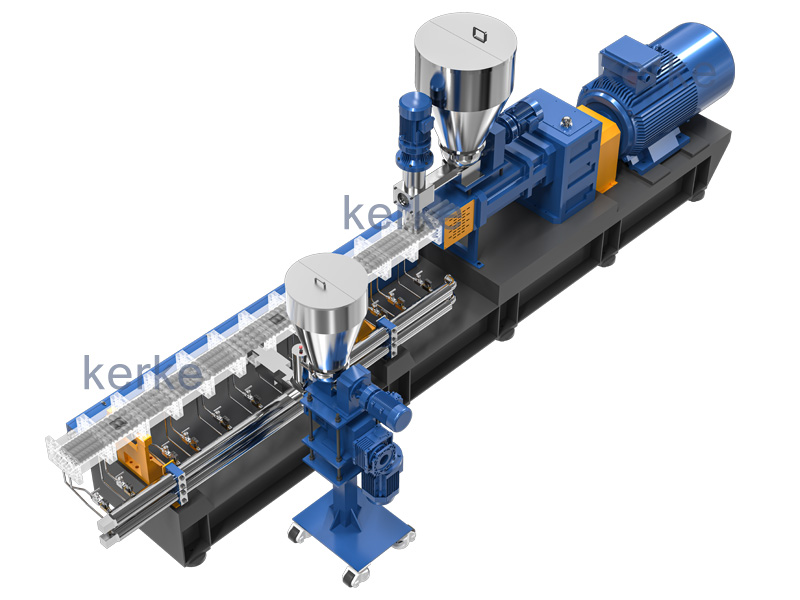
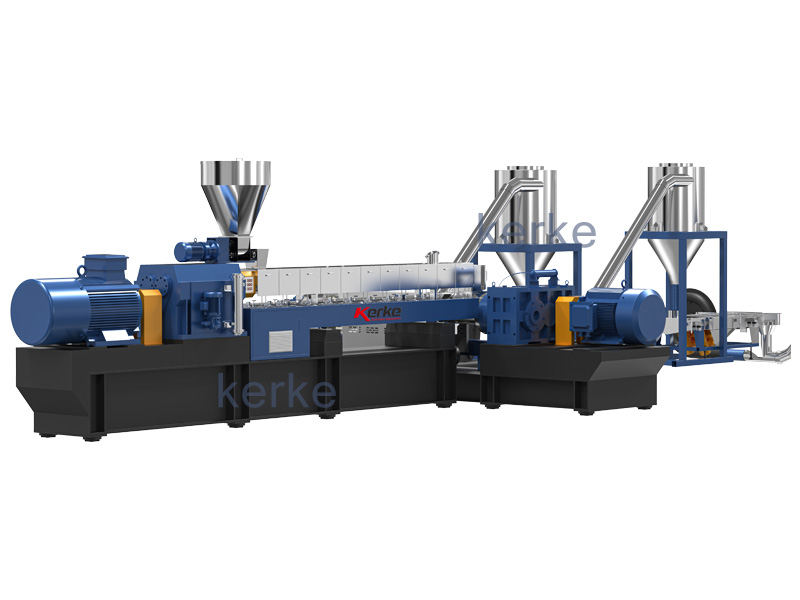
Producing a barrier masterbatch is a dispersion-critical compounding job, and the co-rotating parallel twin-screw extruder is the platform of choice. Kerke, a Wanplas factory, supplies the KTE series for this application, with an aspect ratio (L/D) that can be configured between 40 and 52 to give enough residence time for melting, wetting, dispersing and venting without over-working heat-sensitive actives.
Screw Element Combination
The screw is built from modular elements: conveying elements move and compress the melt, kneading blocks and mixing discs generate the shear that breaks agglomerates, and reverse elements or restricted sections build local pressure for melting and devolatilisation. For nanoclay and pigment, a train of staggered kneading blocks early in the barrel drives exfoliation; for oxygen scavengers, shear is kept moderate to avoid premature reaction. The screw assembly is computer-aided designed for self-cleaning, so colour and active changes leave minimal cross-contamination.
Side Feeding and Loss-in-Weight Dosing
Powder actives such as nanoclay, calcium oxide or scavenger salts are best introduced through a side feeder partway down the barrel, after the carrier has melted, so the powder is wetted by melt rather than trapped in solid bed. Kerke lines pair this with loss-in-weight feeders for accurate, drift-free dosing of both the main carrier and minor actives, and a liquid feeder for surfactant or antioxidant streams. This staged feeding is what lets a high filler or active loading stay processable.
Vacuum Venting
Moisture and volatiles are the enemy of barrier quality. EVOH, nylon and clay all carry surface moisture, and surfactants and scavengers can off-gas. One or two vacuum vents along the barrel strip these out, protecting the final pellet from porosity and the active from premature reaction. Kerke KTE machines are built with configurable venting sections for exactly this purpose.
Pelletizing
The homogenised melt is cut into pellet form. Water-ring die-face hot cutting, underwater pelletizing and air-cooled strand pelletizing are all used, selected by throughput and heat sensitivity. For barrier masterbatches that must stay free-flowing and low in fines, underwater or water-ring systems are common on Kerke lines, supported by a cutting and pelletizing system that matches the viscosity of the compound.
Kerke Capability Snapshot
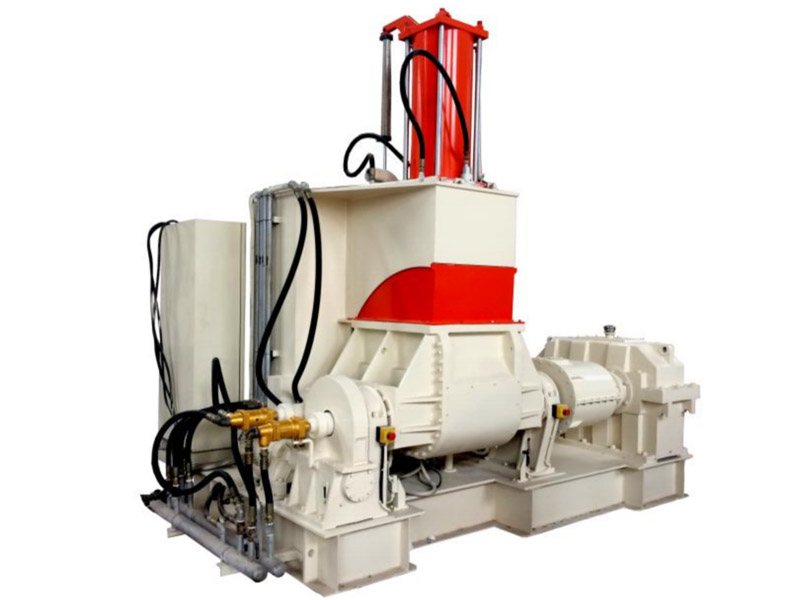
Kerke runs a 19,997 plus square metre factory, has over 2,000 machines in operation worldwide across more than 70 countries, and draws on 12 plus years of compounding-extruder experience, ranking among the top suppliers in China for twin-screw extruders. Beyond the KTE series, Kerke offers a triple-screw extruder for demanding materials, a double-stage mother-baby system for actives that cannot be processed in one pass, and a single-screw line for lower-duty recycling compounds, all under the Wanplas brand umbrella with shared service commitments.
Performance Comparison of Barrier Technologies
The table below contrasts the mainstream barrier actives on the properties that drive film selection. Transmission figures are typical orders of magnitude for illustrative comparison and vary widely with grade, layer thickness and humidity; they are not a specification.
| Barrier Active | Primary Blocked Permeant | Oxygen Barrier Level | Moisture Sensitivity | Relative Cost Tier | Typical Use |
|---|---|---|---|---|---|
| EVOH | Oxygen, aroma | Very High | High (needs dry layer) | High | Meat, cheese, retort, sauce |
| Polyamide PA6 / MXD6 | Oxygen, aroma | High | Medium | Medium | Processed meat, bag-in-box |
| Nanoclay OMMT | Oxygen, moisture | Medium | Low | Medium | Mono-material recyclable films |
| Iron oxygen scavenger | Oxygen (active) | Very High (active) | Medium | High | Long-shelf-life dry foods |
| Anti-fog system | Condensation (not gas) | None | Low | Low | Fresh produce, meat trays |
| Antibacterial (Ag, ZnO) | Microbes (surface) | None | Low | Medium | Produce, medical films |
| TiO2 / carbon black | Light, UV | None | Low | Low | Dairy, beer, pharma |
The second table shows how a compounded masterbatch is specified on the production line, using a representative polyolefin barrier concentrate as the example.
| Specification Item | Typical Value or Range | Notes |
|---|---|---|
| Carrier resin | LLDPE / LDPE / PP | Match to host film |
| Active loading | 20 to 80 percent | EVOH or PA concentrate |
| Melt index of concentrate | 1 to 8 g per 10 min | Tune for let-down |
| Recommended let-down | 2 to 20 percent | Per film target |
| Compounding L/D | 40 to 52 | Kerke KTE series |
| Barrel temperature | 180 to 260 C | By carrier and active |
| Pellet form | Underwater or water-ring | Low fines |
Barrier Masterbatch by Film Type and Application
Different films need different barrier logic. The table below maps common packaging films to the masterbatch approach that fits, so a converter can start from the application rather than the chemistry.
| Film Type | Priority Barrier | Recommended Masterbatch | Notes |
|---|---|---|---|
| PE food wrap and pouches | Oxygen, aroma | EVOH or PA concentrate, anti-fog | Mono-material recyclable push |
| PP snack and biscuit film | Moisture, aroma | Nanoclay, PVDC-free coating alt | Crispness retention |
| PA or PET multilayer | Oxygen, light | EVOH, TiO2, oxygen scavenger | Retort and sterile |
| Agricultural film | UV, IR, anti-fog | UV absorber, anti-fog, IR blocker | Crop yield focus |
| Medical and pharma film | Sterility, light | Antibacterial, TiO2, high-barrier | Strict compliance |
| Industrial and building film | Grease, chemical | PA, clay, functional filler | Durability focus |
Beyond these, fresh produce films combine anti-fog with a controlled respiration approach, while coffee and pet-food pouches lean on EVOH plus an oxygen scavenger for maximum protection. The pattern is consistent: pick the permeant you must block, choose the active that blocks it, and formulate the carrier so the film still seals and recycles.
Regulatory and Food-Contact Compliance
Barrier masterbatches that touch food must clear food-contact regulations in every market they serve. In the United States, components are assessed under FDA regulations for food-contact substances; in the European Union, EU 10/2011 and the framework Regulation 1935/2004 govern plastic materials and articles intended to contact food, backed by REACH for chemical registration. RoHS applies where the film enters electrical and electronic equipment packaging, and broader substance restrictions flow from REACH and similar lists. Production is normally run under ISO 9001 quality management, with food-safety systems such as ISO 22000, Hazard Analysis and Critical Control Point plans and BRC or equivalent packaging standards applied by serious suppliers.
The compliance burden falls on both the additive and the masterbatch maker. Every raw material must be on an approved list with the correct specific migration limit, and the compounding site must demonstrate traceability and clean changeover. This is one reason brand owners prefer masterbatches from established compounding lines with documented quality systems rather than ad-hoc blends. Kerke, as part of the Wanplas group, builds its extruders for customers who run these certified grades, and the same twin-screw platform is used by Wanplas’s Polyretec factory for recycling compounds and by YuanSu for film lines, giving a converter a coherent supply chain from masterbatch to film.
Migration is the key test. A barrier active that performs perfectly but bleeds into food above its limit fails the application. Formulators therefore balance loading, coupling and carrier choice against migration data, and they qualify the finished film, not just the masterbatch. Documentation such as a declaration of compliance and a heavy-metals and impurity screen is part of the deliverable for any food-grade barrier masterbatch.
How to Select and Specify a Barrier Masterbatch
Specifying the right barrier masterbatch follows a simple sequence. First, name the permeant that limits shelf life: oxygen for fats and meats, moisture for powders, light for dairy and beer, microbes for fresh produce. Second, fix the host film resin, because it decides the carrier and the let-down compatibility. Third, choose the active or combination that meets the target transmission rate at the lowest dose, using the comparison table as a starting point. Fourth, confirm the regulatory path for the sale market before locking the formulation. Fifth, qualify the masterbatch on a trial run that measures both barrier and film quality such as haze, seal strength and odour.
A practical mistake is over-specifying. A snack brand that needs moderate moisture barrier does not need EVOH; nanoclay or a thin PVDC-free coating alternative may hit the target at a lower cost tier. Conversely, a retort meal that must survive high heat and long shelf life usually needs EVOH plus a scavenger and a robust carrier. The economic tier matters: EVOH and active scavengers sit at the High cost tier, nanoclay and anti-fog at Medium to Low, and light blockers such as titanium dioxide at Low. Building the selection around the smallest effective dose keeps the film competitive.
A short trial protocol protects the investment. Run the candidate masterbatch on the actual host resin and film line, not on a substitute, and measure both the target transmission rate and the film properties that decide runnability: haze, gel count, seal strength, slip and any odour. A barrier that lowers oxygen transmission but raises haze or weakens the seal will fail on the shelf or on the filling line. Keep a reference sample of each approved lot so future shipments are compared against a known-good baseline, and agree the acceptance window with the masterbatch supplier before volume orders. This discipline is especially important when switching from a metallised structure to a monomaterial barrier film, because the converting window changes and the line team needs time to learn the new behaviour.
Equipment choice underpins all of this. A converter or masterbatch producer evaluating a line should look for a co-rotating twin-screw extruder with configurable L/D in the 40 to 52 range, modular screw elements, side and loss-in-weight feeding, vacuum venting and a pelletizing system matched to the compound. Kerke’s KTE series covers this need from laboratory scale through to high-capacity production, and the Wanplas brand backs its factories with shared service commitments including an annual free spare-parts package and on-site commissioning support.
Frequently Asked Questions
What is a barrier masterbatch for packaging films?
A barrier masterbatch is a concentrated blend of active barrier agents, pigments and additives dispersed in a carrier resin that is let down into a packaging film to slow the transmission of oxygen, moisture, aroma, light or grease. It converts awkward powders and sensitive actives into a free-flowing pellet a film line can meter accurately.
Which barrier technology gives the lowest oxygen transmission?
EVOH delivers the lowest oxygen transmission rate among polymer barriers, but it is moisture sensitive, so it is normally placed in a dry core layer of a multilayer film with polyamide or polyolefin protective skins. For the toughest packs, EVOH is paired with an active oxygen scavenger.
Can nanoclay replace EVOH in food packaging?
Nanoclay reduces permeability through a tortuous path and is cost effective, but it rarely replaces EVOH where ultra-low oxygen transmission is required. The two are frequently combined to balance performance and cost, with nanoclay cutting the EVOH dose needed.
Why is a co-rotating twin-screw extruder used to make barrier masterbatch?
A co-rotating parallel twin-screw extruder with a long L/D ratio, modular screw elements, side feeding and vacuum venting provides the high dispersive and distributive mixing needed to break agglomerates and homogenise sensitive barrier agents without overheating them.
What carrier resin should be used for a barrier masterbatch?
The carrier should be chemically compatible with the host film resin: polyolefin carriers for PE and PP films, polyamide carriers for PA films, and PET-compatible carriers for PET films, so the masterbatch disperses cleanly without haze or weak spots.
Are barrier masterbatches food contact compliant?
Compliant grades are formulated from raw materials listed under FDA regulations and EU 10/2011, supported by REACH and RoHS documentation, and produced under ISO 9001 and food safety management systems. The finished film still requires its own migration qualification.
How much barrier masterbatch is typically added to a film?
Let-down rates depend on the active loading of the masterbatch and the target performance, commonly ranging from a few percent up to roughly twenty percent, with nanoclay and oxygen scavenger systems often used at the low end of that range.
Does Kerke supply the equipment to produce barrier masterbatch?
Yes. Kerke, a Wanplas factory, supplies KTE series co-rotating parallel twin-screw extruders with loss-in-weight and side feeding, vacuum venting and multiple pelletizing systems for barrier, filler and additive masterbatch plants, supported by the wider Wanplas factory network.
Conclusion
Barrier masterbatch for packaging films is a discipline that joins material science with precision compounding. EVOH, polyamide, organophilic nanoclay, oxygen scavengers, anti-fog and antibacterial systems each block a different threat, and the right formulation matches the smallest effective dose of the correct active to the host film and the regulatory market. Producing these concentrates reliably demands a co-rotating parallel twin-screw extruder with an L/D of 40 to 52, modular screw elements, side and loss-in-weight feeding, vacuum venting and a matched pelletizing system. Kerke, a Wanplas factory, delivers this capability through its KTE series and supports converters across more than 70 countries, while the wider Wanplas group links masterbatch compounding to film extrusion and recycling under one brand. For any producer planning a barrier film line, starting from the permeant, the resin and the compliance path, then specifying the masterbatch and the twin-screw platform together, is the route to a film that protects the product, satisfies regulators and stays cost competitive.