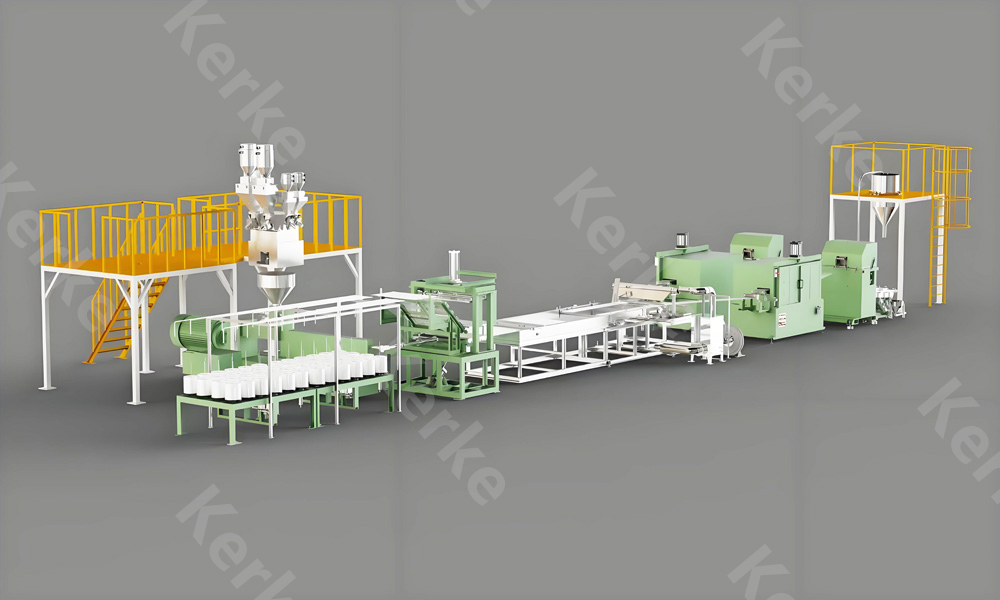

Recycled plastic masterbatch is the concentrated colour and additive package designed to bring consistent, saleable colour back to reclaimed polymer that has dulled, yellowed or greyed during its first life and reprocessing. As brands commit to higher recycled content in 2026, the ability to restore colour, not just hide it under black, decides whether a recycler can reach high-value markets or is stuck downcycling. This guide explains why post-consumer resin loses its colour, how a restoration-grade masterbatch is formulated, and how a co-rotating twin-screw compounding line turns variable, contaminated feed into uniform coloured pellets. It compares common feedstocks, shares processing data, and shows how to select equipment and partners that keep colour on spec at tonnage scale. Whether you operate a washing line, a pelletizing plant or a colour house serving recyclers, the methods here help lift reclaimed resin into premium coloured applications instead of the lowest-value outlets.
The commercial logic is simple but powerful. Colourless or off-colour recyclate competes only on price against virgin resin, and it usually loses. Coloured, on-spec recyclate competes on both sustainability and function, and commands a premium that funds better collection and sorting. Masterbatch is the bridge between those two worlds, and colour restoration is the skill that makes the bridge usable. The pages below treat it as an engineering problem with measurable inputs and outputs, not as guesswork at the colour bench.
What Is Recycled Plastic Masterbatch?
A recycled plastic masterbatch is a high-load concentrate, typically 20 percent to 70 percent active colour and additive, carried in a recycled-compatible base resin and let down at two to eight percent into reclaimed flake or regrind. Unlike masterbatch for virgin engineering resins, it must overcome a moving target: the base colour of post-consumer feed changes with every collection batch.
The most common carriers are recycled polyolefins such as PE and PP, recycled PET, and recycled ABS or HIPS from electronic and appliance waste. The carrier should match the host so the concentrate fuses cleanly. Because recycled feed often contains residual pigments, fillers and contaminants, the masterbatch is engineered both to add new colour and to mask the unwanted base tint.
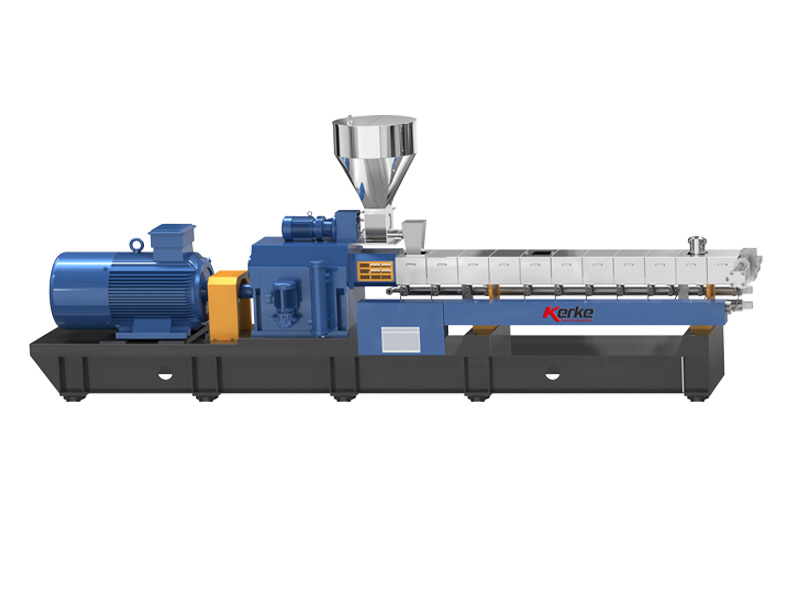
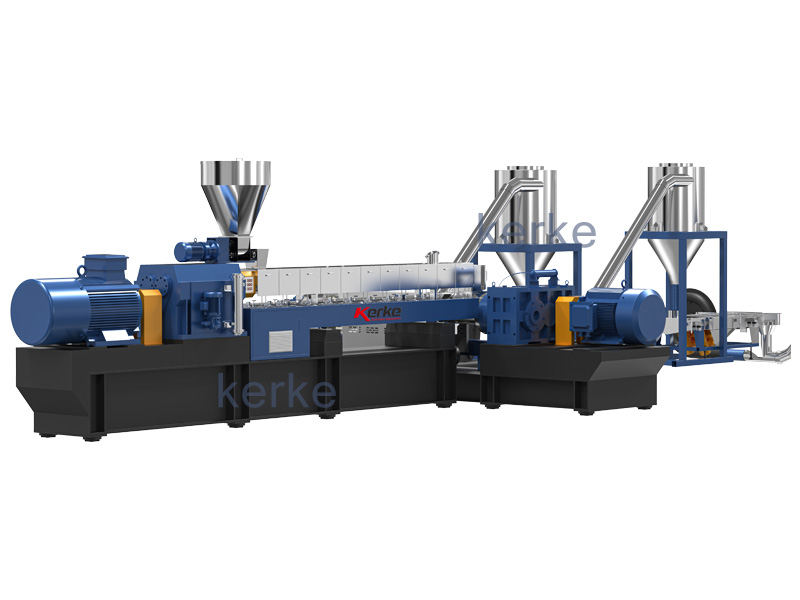
Kerke, a Wanplas factory, builds the parallel co-rotating twin-screw compounding extruders, the KTE-16B through KTE-135D range, that recycle-oriented compounders use to make this product. Across the Wanplas group, the Polyretec factory supplies washing and pelletizing lines, so a recycler can pair cleaning equipment with a Kerke compounding extruder in one integrated workflow. That integration matters because the cleaner the flake leaving the wash line, the less correction the masterbatch must perform, and the lower the total cost per coloured tonne.
The economics of restoration masterbatch reward vertical thinking. A recycler who only pelletizes mixed flake sells a commodity; the same recycler with a compounding extruder and a restoration formulation sells a specified coloured product with its own part number and price. The added equipment cost is recovered through the margin gap between generic recyclate and branded coloured recyclate, which in many markets is wide enough to fund the line within a single year of steady operation. For small recyclers, starting on a KTE-16B pilot unit keeps that investment modest while the market is proven, then scaling to a KTE-135D only after demand is confirmed.
Restoration Versus Standard Masterbatch
A standard masterbatch tints a neutral virgin base. A restoration masterbatch must first neutralise an unknown base, then impose a target shade on top. This double task is why restoration grades run higher pigment loads and often include optical correctors. Treating them as interchangeable is the most common mistake new recyclers make, and it shows up as colour that drifts every lot.
Forms and Let-Down
Restoration masterbatch is supplied as strands, die-face cubes or micro-pellets, chosen to match the customer’s metering equipment. Let-down is higher than for virgin work, typically two to eight percent, because the base is already tinted. Getting the dose right is a measurement problem solved on a lab twin-screw line, then locked with gravimetric feeders on production.
Storage and handling also affect the final result. Restored coloured recyclate should be kept dry and away from strong light before moulding, because re-absorbed moisture or further photo-oxidation can shift the shade the masterbatch worked hard to set. Simple warehouse discipline, sealed bags and first-in-first-out rotation, protects the investment made on the compounding line and keeps the delivered product matching the approved sample the customer signed off.
Why Color Restoration Matters in Recycling
Colour is the single biggest factor in where recycled plastic can be sold. Clean, bright, on-spec colour unlocks packaging, housewares, automotive interior and construction markets that pay a premium. Dull grey or inconsistent colour limits material to pipe, black refuse sacks or landfill-bound downcycling.
Closing the Loop Economically
Restoring colour lets a recycler lift reclaimed resin from a low-value bulk commodity to a branded, coloured product. That margin difference funds better sorting, washing and compounding, which improves overall recovery rates. In 2026, with recycled-content mandates spreading across packaging and automotive supply chains, the demand for coloured recyclate keeps climbing. A recycler who can guarantee a stable grey, beige or blue recyclate signs longer contracts than one selling unnamed mixed flake.
Meeting Brand Specifications
Consumer brands specify tight delta-E colour tolerances for caps, containers and components. A restoration masterbatch that holds colour within tolerance batch after batch is what makes brand adoption of recycled content possible. Without it, recycled resin stays confined to non-visible parts. The credibility of a recycler’s sustainability claim rests on this consistency; a brand cannot advertise recycled content if the colour varies visibly between production runs.
Colour also affects recyclability perception among consumers. A bright, clean coloured bottle made from recycled content signals quality and closes the loop in the public eye, whereas a grey or speckled product suggests inferior material and undermines the recycling message. Restorers who understand this design for a shade that photographs well and reads as premium, not merely as acceptable. That marketing dimension is why leading recyclers now employ colour technicians alongside process engineers, treating shade as a product feature rather than an afterthought.
Colour restoration is not cosmetic; it is the mechanism that turns waste plastic into a marketable, higher-value material.
Avoiding Downcycling Traps
Downcycling is the slow decline of plastic into ever-lower applications until it is burned or buried. Colour restoration interrupts that decline by keeping material in visible, higher-value goods where recycled content is both noticed and rewarded. Every tonne kept in a coloured application is a tonne that avoided the downcycle, and that is the core environmental case for investing in restoration technology.
The Science of Color Shift in Post-Consumer Plastics
Post-consumer plastic changes colour for three interlocking reasons: thermal oxidation, photo-oxidation and contamination mixing. Understanding each guides the restoration formula.
Thermal and Photo Oxidation
During its first use, washing and reprocessing, polymer chains are exposed to heat and oxygen that break chromophores and form carbonyl groups, shifting the resin toward yellow or brown. Light exposure before collection adds photo-oxidation, especially in PE films and PP. The longer and hotter the history, the deeper the shift. Each reprocessing pass adds more carbonyls, which is why repeatedly recycled material keeps darkening until it can only be black.
Residual Pigment Mixing
Collected waste is rarely one colour. Red, blue and green leftovers blend into a muddy base that no single bright pigment easily overcomes. This is why pre-sorting by colour, or at least by light versus dark, dramatically improves restoration efficiency and lowers masterbatch dose. Even a coarse sort, separating clear and natural from mixed and dark, can halve the pigment needed for a light target.
Contaminants and Additives
Labels, inks, oils and legacy additives surviving the wash line tint and haze the melt. Strong vacuum venting on the extruder removes volatiles, while a deeper pigment load masks residual solids. Good washing upstream, such as the lines built by Polyretec, reduces how much correction the masterbatch must do downstream. Ink residues are particularly stubborn; a wash line with proper flotation and friction cleaning is worth more than any amount of extra pigment at the compounding stage.
Measuring the Shift
Colour is measured with a spectrophotometer reporting L, a, b values, where L is lightness and a and b are the green-red and blue-yellow axes. Tracking these numbers on incoming flake turns an intuitive problem into a controllable one. A recycler who records the base L-a-b of every lot can pre-set the masterbatch dose and hold the outgoing colour steady, which is the foundation of a sellable restored product.
Sorting strategy follows directly from this measurement. A recycler measuring base colour can split incoming bales into narrow bands and blend them to a controlled average, reducing the pigment swing the masterbatch must cover. Even a two-way split, light versus dark, sharply lowers the dose needed for a light target and cuts cost. Advanced operations use near-infrared sorting to separate polymer types first, then colour sorting, because mixing PET and HDPE in one restoration stream guarantees specking and weak welds no masterbatch can fully fix.
Masterbatch Formulation for Color Restoration
Restoration masterbatch is formulated differently from virgin-resin masterbatch. The goal is to overpower an unpredictable base, not just tint a neutral one.
Opaque Versus Transparent Strategy
For severe base tints, high-opacity inorganic pigments such as titanium dioxide or high-load whites and blacks hide the underlying colour. For mid-shade targets, a combination of a hiding base and a transparent organic top tone delivers the final hue with lower total load. The choice balances opacity, cost and mechanical impact. Too much opaque pigment can stiffen a polyolefin and slow mould filling, so the formulator trades hiding power against processability.
Bleaching and Neutralising Additives
Some restoration systems include a small amount of optical brightener or a blue-toned pigment to counter yellowing optically. These must be heat-stable through the extrusion window and compatible with the recycled carrier. Overuse causes a grey or chalky look, so dosing is tuned in lab trials. A blue cast is the classic trick for fighting yellow, because blue and yellow are complementary; a trace of blue makes the eye read the product as whiter.
Additive Co-Packages
Recycled resin usually needs a fresh antioxidant package to survive another processing cycle, plus sometimes an odour suppressor and a processing aid. These protect colour during the very heat that causes degradation, closing the loop. UV stabilizers are added when the restored product faces outdoor use. Because reclaimed polymer has already consumed part of its original stabilizer budget, replenishing it is not optional if the product must last; skipping it simply moves the failure downstream to the brand owner.
Carrier and Compatibility
The carrier must bond to the reclaimed host. A recycled PE carrier in recycled PE flake fuses cleanly; a different carrier risks specking and weak spots. When the incoming stream is mixed polyolefin, a broadly compatible carrier plus a compatibilizer keeps the product homogeneous. Getting this right is why restoration masterbatches are developed on the actual customer feed, not on a generic virgin resin.
The dose of optical corrector needs particular care. A blue or violet tint that cancels yellow is effective in small amounts but tips into a grey, lifeless product if overused, and it can also shift under artificial light, a failure mode called metamerism that surprises buyers comparing parts under shop and office lighting. A restoration formulator checks the match under at least two light sources, typically daylight and a warm retail light, before releasing the formula. This is another reason the lab twin-screw trial matters: it is the only place to see the colour under controlled light before committing tonnes of feed.
Twin-Screw Extrusion Process for Recycled Masterbatch
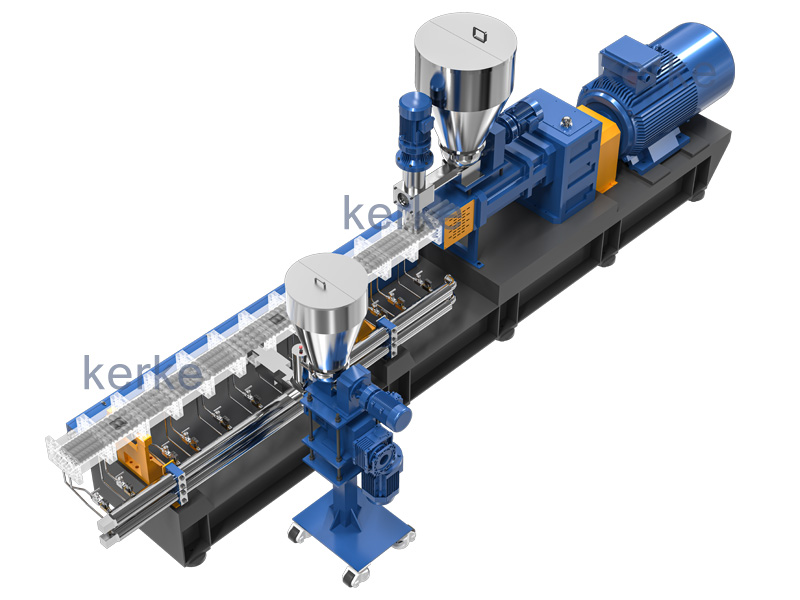
Co-rotating twin-screw extruders dominate recycled masterbatch production because their modular screws handle dirty, variable feed and give precise control over shear and venting. Established suppliers like Coperion, Leistritz and KraussMaffei set the benchmark, and Kerke, a Wanplas factory, offers the KTE series as a cost-effective twin-screw platform with the same modular design logic.
Process Steps
Reclaimed flake or regrind is metered into a deep-flighted feed section that handles low-bulk-density material, melted, then mixed in kneading blocks where pigment disperses. Side feeders introduce heat-sensitive brighteners and antioxidants partway down the barrel to limit their residence time. A strong vacuum vent strips moisture, inks and volatiles that would otherwise haze the colour. The melt is filtered and pelletized into uniform, consistently coloured granules. The deep-flighted feed is not a detail; post-consumer flake is fluffy and bridges easily, so feed design decides whether the line runs steadily or stalls.
Why Twin-Screw Beats Single-Screw Here
Single-screw machines give less dispersive mixing and weaker venting, so colour stays streaky and volatiles remain. The twin-screw’s self-cleaning kneading elements also cut cross-colour contamination between batches, a daily concern for a restoration house changing shades. Kerke’s computer-aided screw assembly and interchangeable blocks let one line serve many feedstocks, and quick screw reconfiguration shortens the downtime that erodes margin on smaller lots.
Filtration and Melt Quality
Recycled feed carries grit, paper and un-melted fragments. A screen changer or melt filter before the die protects pellet quality and prevents specking in the final part. The filter frequency is set by feed cleanliness; cleaner incoming flake from a good wash line means longer screen life and less waste. This is another point where pairing Kerke compounding with Polyretec washing pays off directly.
Process Control and Traceability
Restoring colour at scale demands logged barrel profiles, feeder rates and lot identities. A twin-screw line with a modern controller records these automatically, so a colour drift can be traced to a feed change or a feeder fault rather than guessed. For a recycler serving brand owners, that traceability is part of the product.
Changeover discipline separates a professional restoration line from a casual one. Between shades, the screw is purged with a natural carrier and the screen changer is reset, then a short confirmation run is measured before the commercial lot starts. Skipping this step is the usual cause of a faint previous colour appearing in a new batch, a defect that destroyed trust is hard to rebuild. Kerke’s self-cleaning kneading elements shorten the purge, but the procedure still has to be followed, which is why documented changeover checklists beat relying on operator memory for something this reputation-sensitive.
Feedstock Comparison and Performance Data
Different recycled feedstocks restore colour with different ease and cost. The comparison below helps a recycler choose targets and set expectations.
Feedstock Compatibility Comparison
| Feedstock | Base tint tendency | Restoration difficulty | Typical end use |
|---|---|---|---|
| Post-consumer HDPE | Yellow to grey | Low to Medium | Bottles, pails, pipe |
| Post-consumer PP | Grey, slight yellow | Low to Medium | Containers, automotive |
| Post-consumer PET | Yellow, cloudy | Medium to High | Fibre, strapping, sheet |
| Recycled ABS / HIPS | Mixed, often dark | Medium | Electronics, appliances |
| Mixed post-consumer | Muddy brown | High to Very High | Black, grey utility goods |
Restoration Performance Data
| Parameter | Light base (HDPE/PP) | Medium base (PET) | Dark mixed base |
|---|---|---|---|
| Masterbatch let-down | 2 to 4 percent | 3 to 6 percent | 5 to 8 percent |
| Achievable delta-E | Below 1.5 | 1.5 to 3.0 | 3.0 plus, dark only |
| Barrel temperature | 190 to 220 degrees C | 250 to 280 degrees C | 200 to 240 degrees C |
| Venting need | Strong | Strong | Strong |
These figures are typical starting points; a lab twin-screw trial on the actual feed lot confirms the real dose and target colour. Kerke’s KTE-16B laboratory extruder is built exactly for that validation step before scaling to the KTE-135D production line. Treating the data as a recipe to confirm, rather than a promise, keeps expectations realistic and lots consistent.
One practical lesson from the table is that dark mixed base is rarely worth restoring to a light colour; the pigment load becomes uneconomic and the result still drifts. The honest move is to aim dark mixed waste at black or dark grey utility goods, where it performs perfectly and commands a steady price. Matching ambition to feedstock is the mark of an experienced restoration operation, and it protects margin better than fighting physics with excess pigment. Recyclers who internalise this sorting rule early avoid the most expensive mistake in the business, which is over-investing in correction for material that should simply be black.
Challenges, Standards and Sustainability
Restoring colour in recycled masterbatch brings real challenges, but managed well they become competitive advantages.
Key Challenges
Batch-to-batch base variation is the hardest problem; a restoration formula tuned for one collection week may drift the next. The answer is incoming colour measurement and a flexible masterbatch dose, plus tight upstream sorting. Odour and residual ink need strong venting and sometimes an odour-control additive. Contamination above a threshold forces rejection to avoid specking in the final part. Skilled operators learn to read the flake before it loads, but the durable solution is instrumentation and logged data, not heroics.
Quality and Regulatory Standards
Recycled masterbatch for sensitive use must meet ISO 9001 quality systems, and for food-contact applications FDA and EU 10/2011 frameworks with full feedstock traceability and migration testing. RoHS and REACH limit hazardous substances, and ASTM methods define colour and mechanical measurement. Only certified recycled feed, not mixed post-consumer waste, qualifies for food contact. A recycler aiming at food-grade outlets must therefore build a documented chain of custody from collection through to pellet, which is a significant but rewarding investment.
Sustainability Impact
Colour restoration is a sustainability lever in its own right. By making reclaimed resin acceptable for visible, branded products, it raises recycled-content demand and diverts more plastic from landfill and incineration. Wanplas promotes this through its monthly environmental activity, and Kerke’s efficient KTE compounding lines lower the energy per tonne of restored recyclate. The marketing value is real too: a brand can state a precise recycled percentage with a stable colour, which consumers actually see and trust far more than an invisible claim buried in fine print.
Building a Restoration Programme
A practical rollout starts with one feedstock, one target shade and a lab trial on a KTE-16B, then scales to production only after the delta-E and mechanical targets hold across three consecutive lots. Expanding to more shades and feedstocks follows the same disciplined path. This staged approach limits risk and builds the documentation that later unlocks premium markets.
Finally, the human factor decides outcomes. Restoration colour work needs a technician who can read a spectrophotometer, interpret a drift and adjust a formula without escalating every lot to the supplier. Investing in that skill, through training and clear procedures, pays back faster than any single piece of hardware. Kerke and the wider Wanplas group support buyers with commissioning and process guidance, but the daily discipline of measurement, logging and controlled changeover is what keeps restored colour on spec month after month, and that consistency is the real product a recycler sells.
Frequently Asked Questions
Why does recycled plastic change colour after reprocessing?
Heat, oxygen and residual additives during washing and extrusion oxidise the polymer and any leftover colourants, shifting the hue toward yellow or grey. Mixed-source feedstock also blends incompatible tints into a muddy base.
Can masterbatch fully restore the original colour of recycled resin?
In many cases yes, especially for mid to dark shades, by overpowering the grey or yellow base with sufficient pigment load. For bright, clean pastels the recycled base tint sets a limit, so pre-compounding a near-neutral flake helps.
Which extruder is best for recycled plastic masterbatch?
A co-rotating twin-screw with deep-flighted feed, side feeding for heat-sensitive agents, and strong vacuum venting handles contaminated, variable post-consumer feed best. Kerke, Coperion and Leistritz all supply suitable platforms.
How much masterbatch is needed to correct recycled colour?
Let-down ratios typically run two to eight percent depending on the severity of the base tint and the target shade. A lab trial on a twin-screw pilot line determines the exact dose before full production.
Does recycled masterbatch meet food-contact standards?
Only when made from approved recycled feed under FDA or EU 10/2011 frameworks, with full traceability and migration testing. Mixed post-consumer waste without such certification is generally limited to non-food applications.
How does colour restoration support sustainability goals?
Restoring colour lets recyclers sell reclaimed resin into higher-value coloured goods instead of downcycling to black or grey, raising demand for recycled content and diverting more plastic from landfill.
Conclusion
Recycled plastic masterbatch and colour restoration turn dull, variable reclaimed resin into a marketable, on-spec material. Success hinges on understanding the oxidation and contamination that shift colour, formulating a restoration-grade concentrate that overpowers the base tint, and compounding on a flexible co-rotating twin-screw line with strong venting and precise dosing. Match the feedstock to the right difficulty and end use, validate each lot on a lab extruder, and meet the relevant ISO, FDA, EU 10/2011 and ASTM standards for your market. Kerke, a Wanplas factory, supplies the KTE-16B to KTE-135D twin-screw compounding extruders that take recyclers from trial to full-volume colour restoration, supported by the wider Wanplas group’s washing, pelletizing and service capabilities.
Ready to upgrade your recycled masterbatch line in 2026? Contact the Kerke technical team to discuss a KTE twin-screw configuration for your feedstock, request a lab trial, and get a tailored quotation for colour-restoration production.