Engineering plastic masterbatch is the concentrated blend of pigments, additives and functional fillers carried in a polymer base that gives finished polyamide, polycarbonate and acrylonitrile-butadiene-styrene parts their colour and performance. As automotive, electronics and appliance brands demand tighter colour tolerances and higher heat resistance in 2026, understanding how PA, PC and ABS masterbatches interact with one another becomes a commercial advantage rather than a laboratory detail. This guide explains compatibility from the molecular level through to the twin-screw production line, compares the three resin families side by side, and shows how to choose compounding equipment that protects both colour and mechanical properties. Whether you run a colour house, a compounding plant or an in-house masterbatch line, the principles below help you reduce scrap, avoid cross-contamination and consistently hit delta-E colour targets. Masterbatch is not simply colour added at the end; it is a designed intermediate product whose behaviour is fixed the moment the carrier, pigment and additive system are chosen. Getting that design right is what separates a line that runs clean from one that fights streaks, yellowing and brittle parts every shift.
The economic stakes are large. A single rejected colour lot can mean tonnes of off-spec compound, rework energy and missed delivery windows. Conversely, a well-engineered masterbatch lets a compounder command a higher price per kilogram and build long relationships with brand owners who cannot tolerate variation. For this reason, the most successful masterbatch operations treat compatibility as a discipline with documented procedures, not as intuition held by one operator. The following sections build that discipline step by step, starting with what engineering plastic masterbatch actually is and ending with the standards and supplier choices that keep a programme compliant and scalable.
What Is Engineering Plastic Masterbatch (PA, PC, ABS)?
An engineering plastic masterbatch is a high-load concentrate, typically containing between 20 percent and 80 percent active ingredients, that is let down at one to five percent into a natural resin during final moulding or extrusion. The carrier resin in the masterbatch should ideally match the host polymer so that the concentrate disperses completely and becomes part of the finished matrix. When the carrier and host differ, a compatibilizer is required to prevent weak interfaces, surface defects or a drop in impact strength.
Polyamide, widely known as nylon, is a semi-crystalline engineering thermoplastic valued for stiffness, wear resistance and heat stability. Polycarbonate is an amorphous, transparent resin with outstanding impact strength and dimensional stability. Acrylonitrile-butadiene-styrene is an amorphous, opaque terpolymer prized for rigidity, surface finish and cost balance. Each of these three families behaves very differently on a twin-screw extruder, and a masterbatch formulated for one is rarely optimal for another.
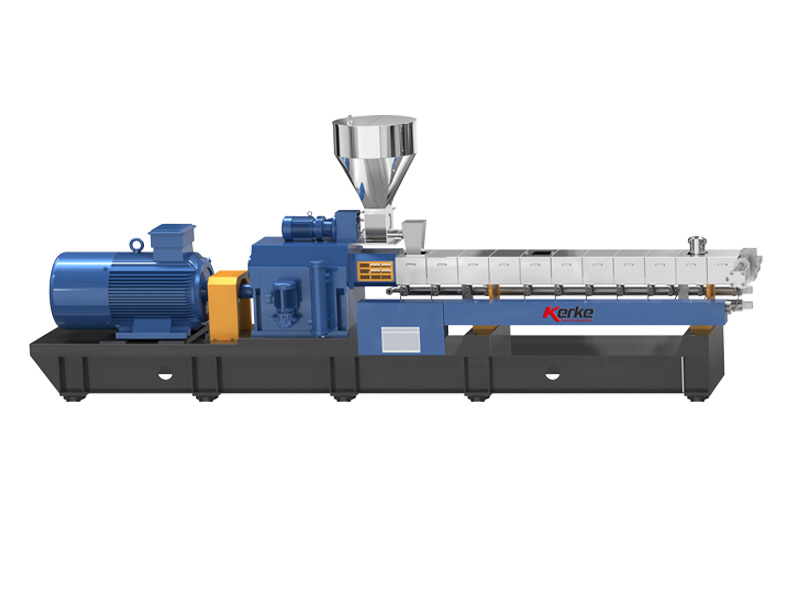
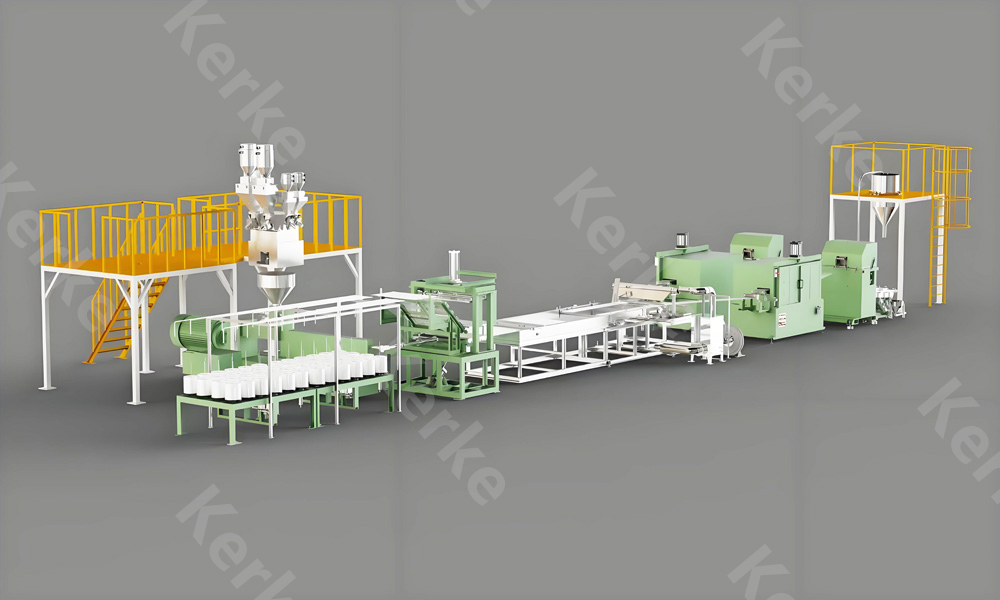
Kerke, a Wanplas factory, specializes in the parallel co-rotating twin-screw compounding extruders that produce these concentrates at lab, pilot and full production scale. Its KTE series ranges from the KTE-16B laboratory unit up to the KTE-135D high-capacity line, giving compounders a scalable platform from formulation trial to tonnage output. Across the Wanplas group of factory brands, shared screw-design know-how and quality promises support masterbatch producers worldwide. The KTE-16B is especially useful because it lets a colour chemist prove a formula in a few kilograms before committing to a full production run, which is the single most effective way to avoid expensive compatibility mistakes.
Where These Masterbatches Are Used
PA masterbatch dominates under-hood automotive components, power-tool housings and fibre applications where heat and wear matter. PC masterbatch serves electronics enclosures, lighting diffusers and transparent or tinted glazing where impact and clarity are critical. ABS masterbatch is the workhorse of appliance housings, consumer electronics and toys, where a good surface and stable colour beat extreme heat resistance. Knowing the end use tells you which resin family, and therefore which compatibility rules, apply.
Why Carrier Choice Decides Everything
The carrier is the silent partner in every masterbatch. A PA carrier in a PA host dissolves and fuses perfectly; the same PA carrier dropped into PC will not melt at the PC window without degradation risk and leaves a weak phase. Best practice is to match carrier to host, or to use a universal carrier only when validated by migration and mechanical testing. This single decision prevents a surprising share of field failures.
Globally, demand for engineering plastic masterbatch grows with electric-vehicle production, 5G device housings and lightweighting programmes, all of which need heat-stable coloured polymers. Compounders in Asia, Europe and North America increasingly localise masterbatch production to cut lead time and protect formulations, which raises demand for flexible twin-screw lines like those from Kerke and its established competitors. Trade events such as Chinaplas and the K Show remain where pigment suppliers publish updated thermal ratings, and a formulation team that tracks those releases avoids specifying a pigment that has since been reformulated. Regional differences also matter: Asian electronics brands often specify tighter delta-E than general industrial buyers, so a masterbatch house serving export markets should calibrate its measurement discipline accordingly.
Fundamentals of Resin Compatibility
Compatibility in masterbatch work means that every component, the carrier, the pigment, the additive and the host resin, remains chemically stable and physically uniform through drying, melting, mixing and cooling. Three physical factors dominate the outcome: polarity, processing temperature and moisture sensitivity.
Polarity and Molecular Affinity
PA is polar and hydrogen-bonding, which makes it friendly to polar pigments and coupling agents but hostile to non-polar systems without a compatibilizer. PC is moderately polar and amorphous, so it wets pigments differently and is sensitive to hydrolysis at high temperature. ABS sits between the two, with a polar acrylonitrile phase and a non-polar butadiene rubber phase that can be attacked by aggressive additives. A masterbatch whose carrier polarity matches the host disperses with lower shear and fewer defects.
Processing Temperature Window
Each resin melts and degrades across a different range. PA processes around 240 to 280 degrees Celsius, PC around 280 to 320 degrees Celsius, and ABS around 200 to 240 degrees Celsius. A pigment stable at ABS temperatures may decompose in PC, while a PC-grade heat-stable pigment is perfectly safe in PA. Matching pigment thermal rating to the highest-temperature resin in the blend prevents yellowing and gas formation. It also protects additives such as UV stabilizers, which can volatilize long before the resin itself shows distress.
Moisture Sensitivity
PA is hygroscopic and must be dried below 0.02 percent moisture before compounding, or it hydrolyses and loses molecular weight. PC also absorbs moisture and reacts with water at high temperature, producing bubbles and haze. ABS is less moisture sensitive but still benefits from pre-drying. Venting and side feeding on a twin-screw line manage these volatiles during production. In practice, a desiccant dryer dedicated to engineering resins, rather than a hot-air dryer, is the cheapest insurance against moisture-related rejects.
The Role of Compatibilizers
When carrier and host cannot match, a compatibilizer, typically a grafted polymer with segments that bond to both phases, restores interfacial strength. Maleic-anhydride-grafted polyolefins, for example, help bridge polar and non-polar phases. The correct compatibilizer dose is found empirically on a pilot twin-screw line, because too little leaves weakness and too much can plasticize the part and lower heat deflection temperature. Documenting the winning dose is what turns a one-off success into a repeatable product.
Compatibility is decided long before the hopper: it is designed into the carrier choice, the pigment thermal class and the drying regime.
Pigment and Additive Compatibility by Resin
Selecting the right pigment and additive package is where most colour complaints originate. The table below compares the three engineering resins across the variables that drive masterbatch compatibility.
Compatibility Comparison Table
| Property | PA (Polyamide) | PC (Polycarbonate) | ABS |
|---|---|---|---|
| Crystal structure | Semi-crystalline | Amorphous | Amorphous |
| Typical processing temp | 240 to 280 degrees C | 280 to 320 degrees C | 200 to 240 degrees C |
| Moisture sensitivity | High; must dry | Medium; dry before use | Low to medium |
| Best pigment class | Inorganic, some high-temp organics | Heat-stable inorganics and organics | Broad organic range |
| Additive caution | Acid-sensitive packages | Hydrolysis, amine migration | Butadiene phase degradation |
| Relative masterbatch cost | Medium to High | High to Premium | Low to Medium |
Pigment Choices That Work
For PA, titanium dioxide, iron oxides and chrome-based pigments survive the heat and the polar environment, while many azo organics fade. For PC, select pigments rated above 300 degrees Celsius and avoid those that catalyse yellowing; cadmium-free inorganics and selected high-performance quinacridones perform well. For ABS, the broadest organic palette is available, but avoid strong acids that can attack the rubber phase and cause brittleness. A competent masterbatch producer validates each lot with heat-ageing and light-fastness testing, ideally against the exact weathering specification the brand owner requires.
Functional Additives
UV stabilizers, antioxidants, slip agents, flame retardants and nucleating agents are common in engineering masterbatch. Each must be compatible with the host polarity and thermal window. Flame retardants raise processing heat and can interact with pigments, so they are best introduced via side feeding on a twin-screw line to limit residence time. Glass-fibre reinforcement, frequently combined with PA masterbatch, is added downstream to preserve fibre length. Antioxidants deserve special attention because engineering resins see multiple heat histories; a masterbatch that refreshes the antioxidant package extends the useful life of the compound through its next processing cycle.
Colour is verified with a spectrophotometer that reports L, a, b values, and the masterbatch lot is accepted only when its measured colour sits within the agreed delta-E band of the standard. Melt flow index and tensile testing catch cases where an additive compromised processability even though the colour looked right. A disciplined masterbatch producer keeps these test records with the lot, because a brand owner auditing a colour complaint will ask for the numbers, not the appearance. Establishing the measurement method before production, and agreeing the tolerance with the customer in writing, prevents the most common commercial dispute in this business, which is a disagreement over whether a colour is actually off.
Dispersion Versus Distribution
Two distinct quality measures matter. Dispersion is how finely pigment agglomerates are broken down; distribution is how uniformly that pigment is spread through the melt. Good twin-screw design achieves both, but a masterbatch can be perfectly dispersed yet poorly distributed if metering is uneven. Gravimetric feeders and loss-in-weight systems, standard on Kerke KTE lines, keep distribution tight enough for automotive colour matching.
Twin-Screw Compounding Process and Equipment
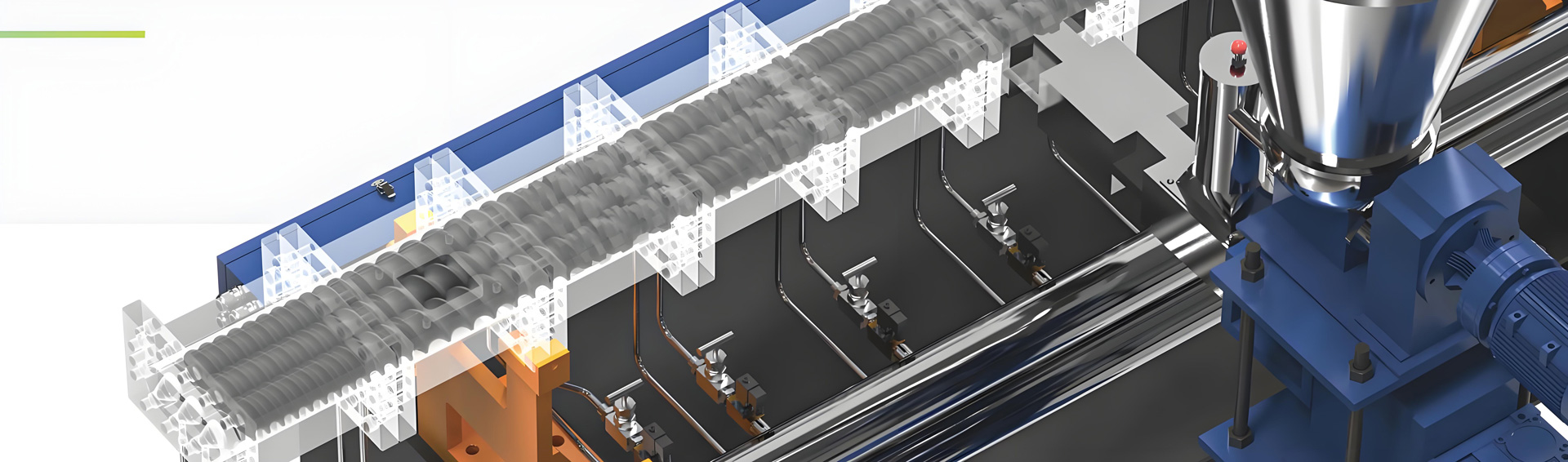
Co-rotating twin-screw extruders are the industry standard for engineering plastic masterbatch because their modular screws let compounders tune shear, mixing and residence time for each resin. Leading suppliers such as Coperion, Leistritz and KraussMaffei defined many of the design conventions, and Kerke, a Wanplas factory, builds parallel co-rotating KTE machines that follow the same modular philosophy at competitive capital cost.
How the Process Works
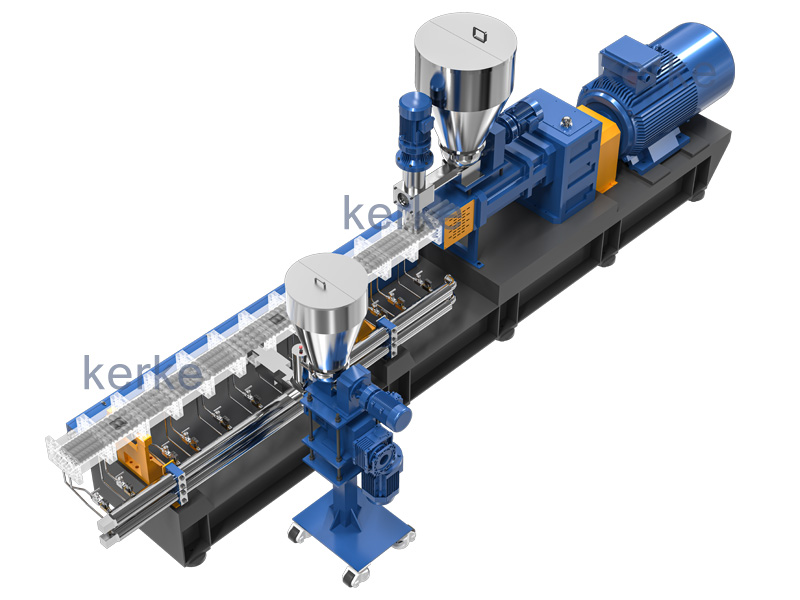
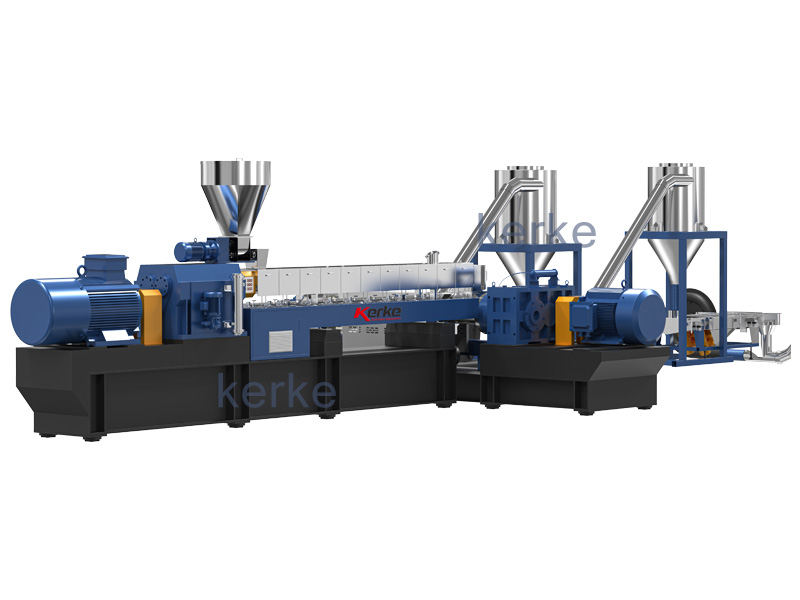
Resin and additives are metered into the first barrel section, melted in the conveying zone, then intensively mixed in a kneading-block zone where high shear breaks pigment agglomerates. Side feeders add heat-sensitive or bulky components partway down the barrel, and vacuum vents remove moisture and volatiles. The melt is then filtered, strand-cut or die-face cut into uniform pellets. Computer-aided screw assembly with self-cleaning kneading elements keeps the line running clean between colours, which is essential for a masterbatch house changing shades daily. The self-cleaning action means less manual screw pull and less cross-colour contamination, directly improving first-pass yield.
Typical Processing Parameters
| Parameter | PA masterbatch | PC masterbatch | ABS masterbatch |
|---|---|---|---|
| Barrel temperature | 250 to 275 degrees C | 290 to 310 degrees C | 210 to 230 degrees C |
| Screw speed | 300 to 500 rpm | 250 to 450 rpm | 350 to 550 rpm |
| Length-to-diameter ratio | 40 to 48 | 40 to 48 | 36 to 44 |
| Vacuum vent | Required | Required | Recommended |
| Side feeding | For fillers, FR | For FR, additives | For fillers, FR |
Kerke’s KTE-16B to KTE-135D range covers laboratory trials through to continuous tonnage, and its loss-in-weight and side-feeder systems give compounders precise control over let-down ratios. The modular barrel and screw design means the same machine can be reconfigured for PA, then PC, then ABS masterbatch by swapping kneading blocks and feed sections rather than buying three lines. Maintenance is straightforward: barrel liners and screw elements are individually replaceable, so wear in the high-shear zone is repaired without replacing the whole screw stack. For a masterbatch producer juggling many customers, this flexibility is the difference between a machine that earns its keep and one that sits idle between campaigns.
Single-Screw Limitations
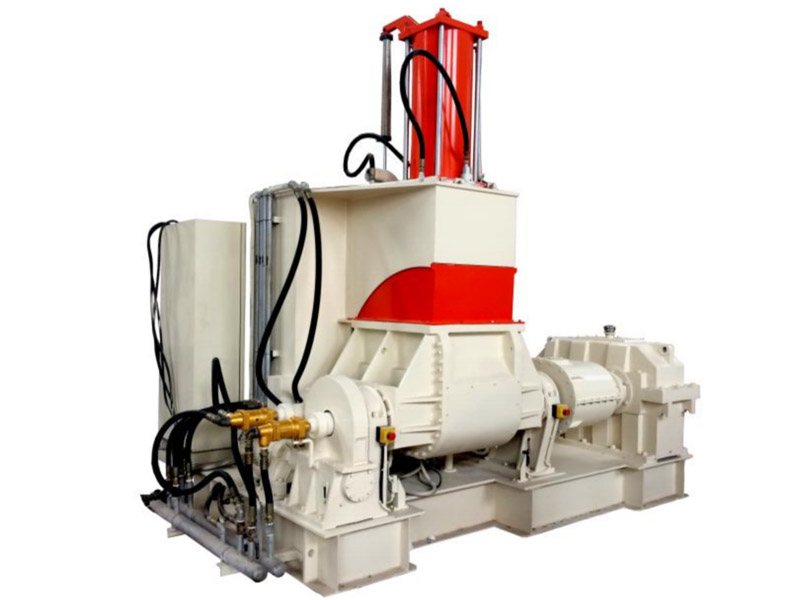
Single-screw extruders give poorer dispersive mixing and weaker devolatilization, so they are generally unsuitable for high-load engineering masterbatch where colour uniformity is judged instrumentally. They remain common for simple filler masterbatches but should not be the default for PA, PC or ABS colour work.
Energy use is another differentiator. A well-tuned co-rotating twin-screw reaches target dispersion at lower specific mechanical energy than a single-screw straining to do the same job, and the lower melt temperature protects heat-sensitive pigments. Over a year of production this energy gap, combined with fewer rejected lots, typically justifies the higher capital cost of the twin-screw platform. Kerke’s KTE machines are engineered to hold tight temperature and speed control, which is what keeps that energy advantage real on the factory floor rather than only on paper.
Common Compatibility Failures and Troubleshooting
Even with good resin choice, masterbatches fail in predictable ways. Recognising the symptom points to the compatibility root cause.
Colour Streaks and Poor Dispersion
Streaks usually mean insufficient shear or a wrong pigment thermal class. Raise kneading-block intensity, confirm the pigment is rated for the resin temperature, and verify the carrier matches the host. In PC, silver streaks signal trapped volatiles, fixed by stronger vacuum venting and shorter residence time. Streaks also appear when a previous colour is not fully cleared from the line, so a validated purge and the self-cleaning screw design of a co-rotating twin-screw reduce changeover defects.
Yellowing and Degradation
Yellowing in PC or PA points to hydrolysis from moisture or to a pigment that decomposes at processing heat. Dry resin below the moisture limit, lower barrel temperature at the die, and switch to a higher-rated pigment. In ABS, a brown tint suggests butadiene-phase oxidation from over-shearing; reduce screw speed and shorten the high-shear zone. Recording barrel profile and screw speed for each approved formula prevents operators from drifting into the danger zone during a busy shift.
Weak Mechanical Properties
A drop in impact or tensile strength after colouring often reflects an incompatible carrier or additive migration. Use a carrier matching the host, add a compatibilizer where carriers differ, and avoid acid-containing additives in PA. Testing let-down samples on a twin-screw pilot line before full runs saves tonnes of scrap. When in doubt, run a small moulded plaque and measure impact both with and without the masterbatch to isolate the effect.
Migration and Plate-Out
Some additives bloom to the surface or coat the mould, a fault called plate-out. This is usually a compatibility issue between the additive and the carrier, or an overdose. Lowering the additive level, switching carrier, or adding a retention aid resolves most cases. Mould fouling from plate-out is costly because it forces line stops, so prevention beats cleaning.
Selecting a Masterbatch Manufacturer and Extruder
Choosing partners for engineering plastic masterbatch means balancing colour science, equipment reliability and after-sales support. Evaluate suppliers on three dimensions: formulation capability, processing flexibility and service promises.
Formulation Capability
A strong masterbatch house runs its own lab twin-screw extruder for trials, holds a pigment database with thermal and light-fastness ratings, and can supply delta-E colour certificates. Ask for references in the specific resin family you use, since PA, PC and ABS each demand different expertise. The best houses also keep a sample library of approved lots so a repeat order matches the original exactly, which is what brand owners ultimately pay for.
Processing Flexibility
The compounding extruder should offer modular screws, side feeding, vacuum venting and accurate gravimetric metering. Coperion, Leistritz, KraussMaffei and Kerke all provide co-rotating twin-screw platforms; the right choice depends on throughput, budget and local service. Kerke, as part of Wanplas, pairs its KTE line with the group’s open-factory policy and shared after-sales promises, including annual free spare parts and on-site commissioning. A visit to the factory, encouraged under the Wanplas open-factory policy, lets you witness cleaning discipline and quality checks before you commit.
Service and Quality Promises
Look for ISO 9001-certified quality systems, documented cleaning procedures between colours, and a warranty that covers both parts and process guidance. Wanplas factories share a production-capacity guarantee and a quality-standard promise, which matters when you scale from pilot to full volume. A supplier that answers a process problem with a service engineer rather than a disclaimer is worth more than a small saving on equipment price.
Total Cost of Ownership
Capital price is only part of the picture. Energy per kilogram, scrap rate, changeover time and spare-part lead time decide the real cost. A twin-screw line with strong self-cleaning and fast screw reconfiguration cuts changeover loss, often paying back its premium within the first year for a busy colour house. Frame the decision around cost per good kilogram, not cost per machine.
Commissioning and training are where many equipment purchases succeed or fail. A supplier that sends engineers to install, run the first lots and train operators shortens the path to stable output. Under the Wanplas open-factory policy, buyers are also welcome to witness production and quality checks before committing, which de-risks the choice. The annual free spare-parts allowance and warranty replacement offered across Wanplas factories further protect uptime, and for a masterbatch house every hour of downtime is lost margin on coloured compound that cannot wait for a late shipment.
Regulatory and Quality Standards
Engineering plastic masterbatch for sensitive markets must satisfy several standards. For food-contact and medical parts, FDA and EU 10/2011 set specific migration limits on additives and pigments. ISO 9001 governs quality management, while ASTM methods define how colour, dispersion and mechanical properties are measured. RoHS and REACH restrict hazardous substances in electronics and general goods.
A masterbatch used in a baby bottle, a medical device or a food container needs a fully declared formulation and migration testing. For automotive interiors, OEM colour and weathering specs dominate. Confirm that your supplier can provide declarations of conformity and, where relevant, food-contact documentation. Working with a twin-screw compounding line that keeps lots segregated and traceable simplifies audits and recall prevention. Modern QC also uses spectrophotometers to lock colour numerically; a masterbatch house that reports delta-E against a stored standard gives you objective evidence the lot is on spec.
Documentation Discipline
Compliance is mostly documentation. Keep the approved formula, the processing window, the pigment certificates and the lot test report together for every shipment. When a brand owner audits you, this file is the product as much as the pellets are. Suppliers aligned with the Wanplas quality framework understand this and deliver the paper trail with the goods.
Looking ahead through 2026, expect tighter scrutiny of recycled-content claims and of chemical restrictions in electronics, which raises the value of masterbatches with clean, fully declared formulations. Investing in compatibility discipline today protects your market access tomorrow.
Testing discipline also extends to incoming resin. A masterbatch made perfectly can still fail if the natural host resin varies batch to batch, so leading compounders specify and verify the base polymer as carefully as the colour. Simple incoming checks, melt flow, moisture and a colour reference, catch problems before they reach the extruder. Pairing that incoming control with the documented formula and processing window described above closes the loop: the masterbatch is then a reproducible product rather than a lucky result, and reproducibility is exactly what brand owners pay a premium to buy.
Frequently Asked Questions
Can PA, PC and ABS masterbatches be used interchangeably?
No. Each engineering resin has a distinct melt temperature, polarity and moisture sensitivity. A masterbatch optimized for PA will usually degrade or discolour in PC, and ABS masterbatch often performs poorly in PA because of different carrier resin and processing windows.
Why must PA masterbatch be dried before compounding?
Polyamide absorbs moisture from the air and hydrolyses at high temperature, which breaks molecular chains and weakens mechanical properties. Drying to below 0.02 percent moisture before twin-screw compounding protects both colour and strength.
Which screw configuration works best for engineering plastic masterbatch?
A co-rotating twin-screw with a modular kneading block section for dispersion, side feeders for heat-sensitive pigments, and an optimized length-to-diameter ratio around 40 to 48 delivers the best homogeneity for PA, PC and ABS masterbatch.
How do I improve pigment dispersion in PC masterbatch?
Use high-shear kneading blocks, keep residence time short to avoid yellowing, add a small amount of compatibilizer, and select heat-stable pigments rated above the PC processing temperature. Vacuum venting removes volatiles that cause silver streaks.
Is flame-retardant masterbatch compatible with ABS?
Yes, brominated or phosphorus-based flame retardants are commonly carried in an ABS base, but they raise processing heat and can interact with certain pigments. Confirm thermal stability and run a small trial on a twin-screw line before full production.
What standards apply to engineering plastic masterbatch for food contact?
For food-contact applications, masterbatches must meet FDA and EU 10/2011 limits on specific migration, plus ISO 9001 quality management and ASTM test methods for colour and mechanical performance.
Conclusion
Engineering plastic masterbatch compatibility for PA, PC and ABS comes down to matching carrier, pigment thermal class and processing window for each resin family, then compounding on a flexible co-rotating twin-screw line that controls shear, venting and residence time. Treat compatibility as a design decision made before the hopper, validate on a lab or pilot extruder, and partner with suppliers who can document standards and support scale-up. Kerke, a Wanplas factory, builds the KTE-16B to KTE-135D compounding extruders that take masterbatch producers from formula trial to full tonnage, backed by the Wanplas group’s quality and service promises.
Ready to build or upgrade your engineering plastic masterbatch line? Contact the Kerke technical team to discuss screw configuration, side feeding and pilot trials on the KTE series, and request a tailored quotation for your PA, PC or ABS colour program in 2026.