Transparency is a deceptively demanding performance requirement in plastic films. Unlike opacity — which can be achieved by simply adding enough TiO₂ — transparency requires the masterbatch formulator to work with the polymer’s natural optical physics rather than against it. A transparent masterbatch must either leave the polymer’s inherent clarity undisturbed or actively enhance it, all while delivering the functional additives that the film needs for processing and end-use performance. As of 2026, the global transparent packaging film market exceeds $45 billion, driven by consumer preference for product visibility in food packaging and the growing premiumization of retail display. This guide provides a comprehensive technical reference for the formulation, twin-screw compounding, quality testing, and application of transparent masterbatches for both polypropylene (PP) and polyethylene (PE) film systems.
What Is Transparent Masterbatch and How Does It Differ from Color Masterbatch?
A transparent masterbatch is a concentrated compound — typically 10–30% active additive loading in a carrier resin — designed to be let down into PP or PE film without reducing optical clarity. Unlike color masterbatch, which intentionally absorbs or scatters specific wavelengths of light to produce a visible hue, transparent masterbatch must minimize light scattering across the entire visible spectrum (380–780 nm). This fundamental difference drives every aspect of formulation design, from additive selection and particle size control to processing conditions and quality metrics.
Transparent masterbatches serve three primary functional roles in film production. Optical enhancement — through clarifying agents and nucleators that refine the polymer’s crystalline structure to sub-wavelength dimensions — is the most technically sophisticated function, particularly in semi-crystalline PP. Processing aids such as anti-block agents (synthetic silica, talc at sub-micron particle sizes) and slip additives (erucamide, oleamide) are essential for film handling and converting but must be carefully selected to avoid haze. Functional additives including UV stabilizers, antistatic agents, and oxygen scavengers may also be incorporated into transparent masterbatch formulations, provided they meet the stringent optical compatibility requirements.
For masterbatch producers, the challenge is that every additive particle in the formulation becomes a potential light-scattering center. The formulator’s task is to ensure that each additive component has a refractive index (RI) within approximately ±0.02 of the carrier polymer, and that its particle size is either well below the wavelength of visible light (< 100 nm for Rayleigh scattering regime) or well above it so that the particle-matrix interface area is minimized. This dual constraint of RI matching and particle size control defines the technical boundaries within which transparent masterbatch formulation operates.
The Science of Transparency: Refractive Index, Crystallinity, and Light Scattering
To formulate an effective transparent masterbatch, it is essential to understand the physical mechanisms that govern light transmission through a polymer film. Three independent factors determine the overall transparency: the intrinsic absorption of the polymer and additives, the scattering caused by refractive index discontinuities, and the scattering caused by surface roughness.
Refractive Index Matching
When light encounters an interface between two materials with different refractive indices, a portion is reflected and scattered. In a filled polymer system — which is exactly what a masterbatch-dosed film represents — each additive particle creates thousands of such interfaces per square millimeter. The intensity of scattered light at each interface follows the Fresnel equations and is proportional to (n₁ − n₂)² / (n₁ + n₂)², where n₁ and n₂ are the refractive indices of the particle and matrix respectively. For PE with an RI of approximately 1.51, an additive with an RI of 1.53 creates a mismatch of just 0.02 — and the resulting scattering intensity is less than 0.004% of the incident light per interface. At this level, even a high loading of well-matched additive particles remains visually transparent. However, when the mismatch reaches 0.2 — as for TiO₂ (RI ~2.7) in PE — the scattering intensity per interface increases by a factor of over 200, producing the opacity that makes TiO₂ an effective white pigment.
Crystallinity and Spherulite Size in PP
Polypropylene presents a unique transparency challenge that polyethylene does not. PE crystallizes into lamellar structures that are inherently small and produce relatively low haze. PP, by contrast, forms large spherulites — spherical crystalline superstructures that can grow to 10–100 microns in diameter during slow cooling. When spherulite size exceeds the wavelength of visible light, the refractive index difference between the crystalline and amorphous regions within each spherulite causes significant light scattering, producing the characteristic milky-white appearance of unclarified PP.
The solution lies in nucleation technology. By introducing a high density of heterogeneous nucleation sites through clarifying agents, the number of spherulites increases dramatically while their individual size decreases proportionally. When the spherulite diameter falls below approximately 400 nm — the short-wavelength end of the visible spectrum — light passes through with minimal scattering, and the PP becomes transparent. This is the operating principle behind sorbitol-based clarifiers and the newer trisamide-based nucleating agents that have transformed PP’s applicability in transparent packaging since their commercial introduction.
Particle Size and the Scattering Regimes
| Particle Size Relative to Light | Scattering Regime | Effect on Transparency | Example in Masterbatch |
|---|---|---|---|
| d << λ (d < 100 nm) | Rayleigh scattering | Very low — intensity ∝ d⁶; negligible for d < 50 nm | Nano-silica anti-block, dissolved clarifier molecules |
| d ≈ λ (100 nm–1 μm) | Mie scattering | Maximum scattering — critical to avoid | Poorly dispersed pigment agglomerates |
| d >> λ (d > 5 μm) | Geometric scattering | Moderate — fewer particles per unit volume | Large anti-block particles (avoid in transparent films) |
| d < 40 nm + RI match | Essentially transparent | Negligible — additive becomes optically invisible | Optimally dispersed nano-additives |
This size-dependent behavior explains why nano-scale additives — such as synthetic amorphous silica with primary particle sizes of 10–40 nm — can provide anti-block functionality without compromising transparency, while conventional diatomaceous earth anti-blocks at 2–10 microns produce visible haze. The masterbatch compounding process must preserve this nano-scale dispersion state, as re-agglomeration during extrusion would shift the particle size distribution into the Mie scattering regime and destroy transparency.
PP Transparent Masterbatch: Clarifiers, Nucleating Agents, and Formulation Strategies
PP transparent masterbatch represents the most technically sophisticated category because it must actively modify the polymer’s crystallization behavior rather than merely avoiding optical disruption. The core additive technology is the clarifying agent, with three generations of sorbitol-based chemistry defining the evolution of PP transparency since the 1980s.
Generations of PP Clarifying Agents
| Generation | Chemistry | Typical Loading in Masterbatch | Haze Performance (1mm plaque) | Key Characteristics |
|---|---|---|---|---|
| 1st Gen (DBS) | Dibenzylidene sorbitol | 10–20% | 15–25% haze | Low cost; limited thermal stability; plate-out tendency |
| 2nd Gen (MDBS) | Methyl-dibenzylidene sorbitol | 10–20% | 10–18% haze | Improved clarity; moderate organoleptics |
| 3rd Gen (DMDBS) | Dimethyl-dibenzylidene sorbitol | 8–15% | 6–12% haze | Good clarity; widely used; some plate-out at high loadings |
| 4th Gen (NX 8000) | Non-sorbitol (trisamide-based, e.g., Millad NX 8000) | 5–10% | 3–8% haze | Superior clarity; excellent organoleptics; higher cost |
Milliken’s Millad NX 8000, introduced commercially in the 2010s, represents the current state-of-the-art in PP clarification. Unlike sorbitol-based clarifiers that require dissolution and re-crystallization in the PP melt — a process that is sensitive to processing temperature and cooling rate — trisamide-based clarifiers operate through a self-assembly mechanism that produces an extremely fine, three-dimensional nanofibrillar network. This network provides an exceptionally high density of nucleation sites, producing spherulites in the 50–200 nm range that are transparent to visible light. The result is haze values as low as 3–5% in 1 mm injection-molded plaques, approaching the clarity of amorphous polymers like polystyrene and polycarbonate.
Formulation Example: 10% Clarifier PP Transparent Masterbatch
| Component | Loading (%) | Function |
|---|---|---|
| PP homopolymer (MFI 25) | 82% | Carrier resin — high MFI for dispersion, compatible with film PP |
| Millad NX 8000 | 10% | Clarifying agent — 4th generation trisamide nucleator |
| Calcium stearate | 3% | Acid scavenger / processing stabilizer |
| Antioxidant (Irganox 1010 / Irgafos 168 blend) | 2% | Thermal-oxidative stabilization during compounding and film extrusion |
| Synthetic silica (12 nm) | 3% | Anti-block — nano-scale to maintain transparency |
At a 2% let-down ratio in PP cast film, this masterbatch delivers 0.2% clarifier in the finished film — sufficient to achieve sub-10% haze in 50-micron film when processed with rapid cooling. The high-MFI carrier resin (MFI 25 versus typical film PP at MFI 4–12) ensures rapid melting and uniform distribution of the clarifier at the film extruder, preventing local concentration variations that would produce visible haze bands.
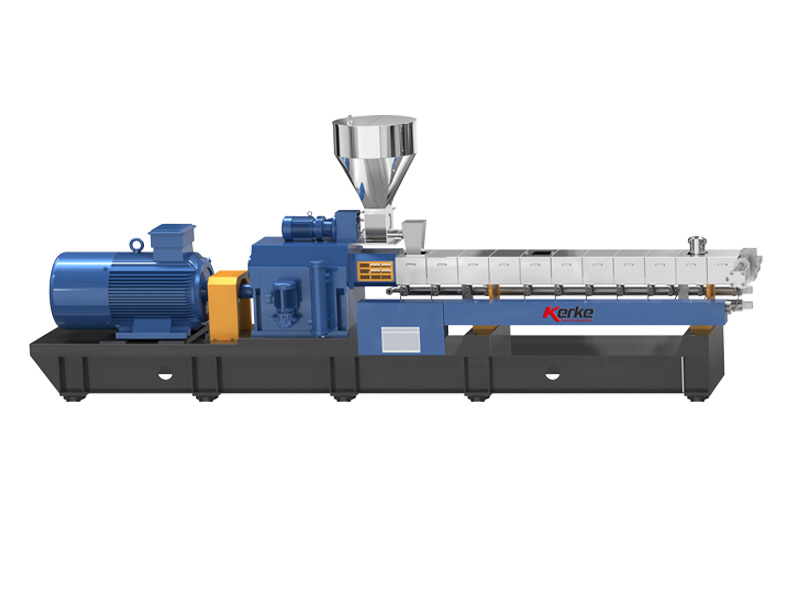
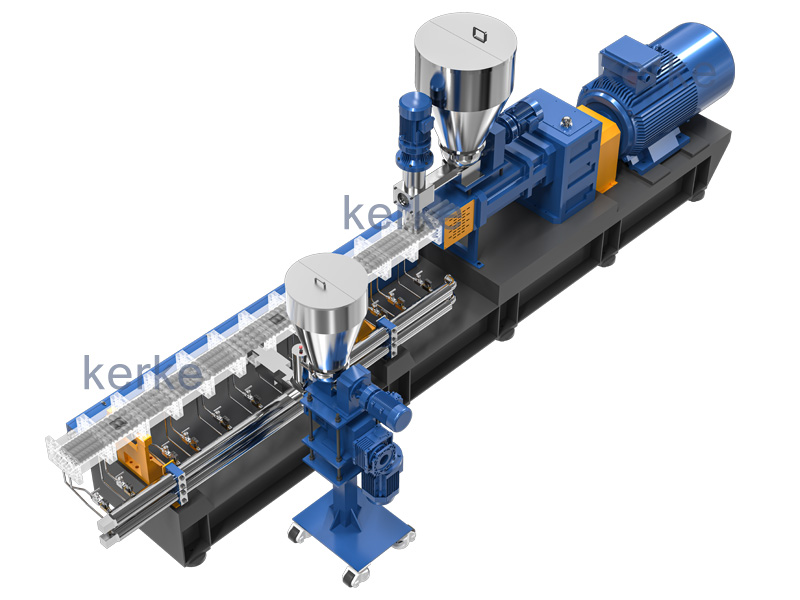
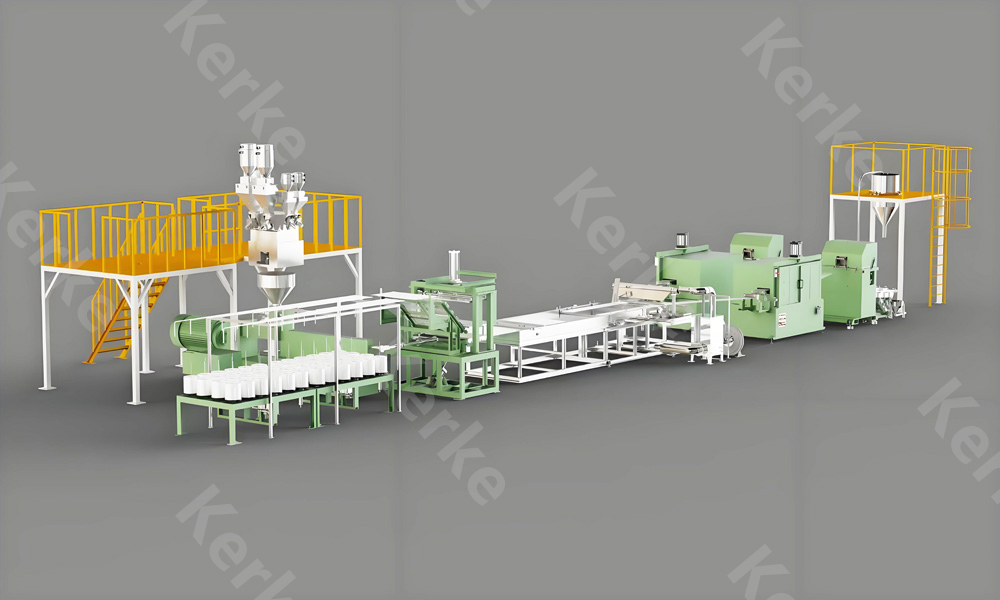
For masterbatch producers running Kerke KTE-series twin-screw extruders, the formulation above requires precise temperature control because NX 8000 must reach its melting point of approximately 245°C to dissolve completely in the PP melt, yet the PP carrier must not exceed 260°C to avoid thermal degradation. The KTE series’ segmented barrel design with independent zone temperature control, combined with computer-optimized screw configurations featuring gentle kneading blocks (30°–45° stagger), enables this narrow processing window to be maintained consistently across production runs.
PE Transparent Masterbatch: Anti-Block, Slip, and Optical Enhancement Additives
Polyethylene’s transparency challenge differs fundamentally from polypropylene’s. PE does not form large spherulites — its crystalline lamellae are inherently small — so clarifying agents are unnecessary. Instead, PE transparency is primarily limited by surface roughness (which causes haze through diffuse reflection) and by the light-scattering contribution of process-required additives such as anti-block and slip agents. The formulator’s task is therefore to deliver these functional additives in forms that minimize their optical footprint.
Anti-Block Agents for Transparent PE Masterbatch
Anti-block agents prevent film layers from sticking together on the roll — an essential function for any film that will be unwound for printing, laminating, or bag-making. Conventional anti-blocks such as diatomaceous earth (DE) and natural silica have particle sizes of 2–10 microns and refractive indices of approximately 1.46 — close to PE’s 1.51 but with particle sizes squarely in the Mie scattering regime. The result is measurable haze, typically 2–5% additional haze per 1,000 ppm of conventional anti-block.
For transparent PE films, synthetic precipitated silica with primary particle sizes of 10–50 nm and specific surface areas of 200–400 m²/g (BET) provides equivalent anti-block performance with dramatically reduced haze. At 500–1,000 ppm in the finished film, nano-silica anti-block typically adds less than 1% to haze values. The trade-off is that nano-scale materials are more difficult to disperse uniformly during masterbatch compounding — they require high shear in the twin-screw extruder’s mixing zones to break up agglomerates, and the dispersion must survive the subsequent let-down step in the film extruder. The Kerke KTE series, with its optimized kneading block configuration and available distributive mixing elements (ZME/TME), is well-suited to this demanding dispersion task. Kerke is a Wanplas factory, and the Wanplas brand’s 12+ years of compounding expertise ensures reliable dispersion of nano-scale additives at production throughputs.
Slip Additives
Slip additives — typically long-chain fatty acid amides such as erucamide (C22) and oleamide (C18) — reduce the coefficient of friction (COF) of PE film surfaces, enabling smooth movement over metal guides and formers in packaging machinery. At typical loadings of 500–1,500 ppm in the finished film, these additives bloom to the film surface over 24–72 hours after extrusion, forming a monolayer that provides the lubricating effect. Importantly, erucamide and oleamide are fully soluble in the PE melt at processing temperatures and do not form discrete particles, so they contribute zero haze to the film — a significant advantage over particulate additives.
Formulation Example: PE Transparent Masterbatch
| Component | Loading (%) | Function |
|---|---|---|
| LDPE (MFI 20) | 75% | Carrier resin |
| Synthetic nano-silica (12 nm, 300 m²/g BET) | 12% | Anti-block — nano-particle for minimal haze |
| Erucamide | 8% | Slip agent — blooms to surface after extrusion |
| Antioxidant package | 2% | Thermal stabilization |
| LDPE wax | 3% | Dispersing aid for nano-silica |
At a 3% let-down ratio, this masterbatch delivers approximately 3,600 ppm nano-silica and 2,400 ppm erucamide in the finished film — levels that provide effective anti-block (COF < 0.3) and slip performance while maintaining haze below 6% in 50-micron LDPE blown film. The LDPE wax acts as a wetting agent during compounding, coating the nano-silica particles to reduce inter-particle friction and aid dispersion in the twin-screw extruder.
Twin-Screw Compounding Process for Transparent Masterbatch
Compounding transparent masterbatch on a twin-screw extruder requires a fundamentally different approach than color masterbatch. Where color compounding prioritizes maximum shear for pigment dispersion, transparent compounding must balance adequate additive dispersion against two hazards unique to optical formulations: thermal degradation of the additives (which causes yellowing) and re-agglomeration of nano-scale particles (which causes haze). The process window is narrower, and the consequences of exceeding it are immediately visible in the finished film.
Process Parameter Comparison: Color vs. Transparent Masterbatch
| Parameter | Color Masterbatch (50% Organic Pigment) | Transparent Masterbatch (Clarifier/Anti-Block) |
|---|---|---|
| Screw speed (RPM) | 400–800 | 250–450 |
| Specific Energy Input (kWh/kg) | 0.20–0.35 | 0.12–0.20 |
| Melt temperature (°C) | 190–230 | 220–250 (PP clarifier); 170–200 (PE anti-block) |
| Kneading block stagger angle | 45°/90°/45° (high shear) | 30°/45°/30° (moderate shear) |
| Distributive mixing emphasis | Moderate | High — critical for nano-additive uniformity |
| Degassing requirement | Optional (atmospheric vent) | Essential — vacuum venting to remove volatiles that cause yellowing |
The lower screw speed and SEI for transparent masterbatch reflect the reduced energy requirement when compounding at lower additive loadings (10–30% versus 30–70% for color). More importantly, they reflect the need to avoid thermal degradation. Sorbitol-based clarifiers begin to decompose above 260°C, releasing aldehydes that produce both yellow discoloration and organoleptic issues (taste and odor) in food-contact films. Nano-silica anti-blocks, while thermally stable, can re-agglomerate under excessive shear as the protective wax or silane coating is stripped away, exposing bare silica surfaces that fuse together.
Screw Configuration for Transparent Masterbatch
The ideal screw configuration for transparent masterbatch emphasizes distributive mixing over dispersive mixing. Instead of the 90° high-shear kneading blocks used in color compounding, 30° forward-conveying kneading blocks combined with toothed mixing elements (ZME) provide sufficient dispersion of nano-additives with minimal temperature rise and shear heating. A typical configuration for a KTE-65 at L/D 44:1 would include:
- Barrel 1–2 (8D): Deep-flight conveying — solids transport and preheating
- Barrel 3 (4D): Transition elements — polymer melting initiation at moderate temperature
- Barrel 4 (4D): KB30/5/36 (×2) + KB45/5/36 (×1) — gentle dispersive mixing for nano-additive de-agglomeration
- Barrel 5 (4D): ZME turbine mixing (×3) — high distributive mixing for uniformity
- Barrel 6 (4D): Conveying + vacuum vent — devolatilization of residual moisture and low-MW volatiles
- Barrel 7–8 (8D): Conveying + pressure build — stable die flow
The Kerke KTE series’ modular screw design, with computer-aided element optimization and excellent interchangeability between screw configurations, allows rapid reconfiguration between color and transparent masterbatch production on the same extruder. This flexibility is particularly valuable for masterbatch producers serving diverse film customers who require both opaque and transparent formulations.
Quality Testing: Haze, Clarity, Gloss, and Transmission Measurement
Quality testing for transparent masterbatch is more demanding than for opaque formulations because the optical properties are the product’s entire value proposition. The standard test methods defined by ASTM D1003 (haze and luminous transmittance) and ASTM D2457 (gloss) provide the quantitative framework, but practical film evaluation often extends beyond these laboratory measurements to include visual assessment under representative lighting conditions.
Key Optical Metrics
| Metric | Standard | Definition | Typical Target (50μm Film) |
|---|---|---|---|
| Haze | ASTM D1003 | Percentage of transmitted light deviating >2.5° from incident beam | PP: 3–10%; PE: 4–8% |
| Clarity | ASTM D1003 | Percentage of transmitted light deviating <2.5° (narrow-angle) | PP: >90%; PE: >85% |
| Total Luminous Transmittance | ASTM D1003 | Ratio of transmitted to incident light (380–780 nm) | PP: >88%; PE: >89% |
| Gloss (60°) | ASTM D2457 | Specular reflectance at 60° incidence angle | PP: >100 GU; PE: >80 GU |
| Yellowness Index (YI) | ASTM E313 | Degree of yellow discoloration (numerical) | < 2.0 (lower is better) |
Practical Testing Protocol for Masterbatch Producers
A comprehensive quality control protocol for transparent masterbatch should include the following steps, executed on every production batch:
- Standard film preparation: Compound the masterbatch at the specified let-down ratio into a film of controlled thickness (typically 50 μm) using a laboratory cast film line or blown film line. The film preparation conditions (temperature profile, cooling rate, draw ratio) must be standardized and documented to ensure batch-to-batch comparability.
- Haze and transmission measurement: Using a calibrated haze meter (e.g., BYK-Gardner Haze-Gard), measure haze and total transmittance on five film samples taken at regular intervals across the web width. Report the mean and standard deviation; the standard deviation is an indicator of dispersion uniformity.
- Visual inspection: Examine film samples against a black background under standardized D65 daylight illumination for visible specks, gels, or color variations. This subjective assessment catches defects that haze meters may miss, such as isolated gel particles.
- Aging test: Store film samples at 40°C for 7 days and re-measure haze and YI. An increase in YI greater than 1.0 indicates additive degradation or interaction that will manifest as yellowing during the film’s shelf life.
- Anti-block and slip testing: Per ASTM D1894, measure static and kinetic COF to verify that the functional additives are performing as designed without compromising optics.
Applications: From Food Packaging to Optical Films
Transparent PP and PE masterbatch enables a diverse range of film applications, each with specific optical and functional requirements that the masterbatch formulator must address. Understanding these end-use requirements is essential for designing masterbatches that deliver consistent value to film converters.
Food Packaging Films
Transparent food packaging — including PP cast film for bakery product overwrap, PE stretch film for fresh produce, and multi-layer barrier films for modified atmosphere packaging (MAP) — represents the largest market for transparent masterbatch. Key requirements include haze below 8% (consumer preference for product visibility), YI below 2.0 (fresh appearance), and full compliance with food-contact regulations including EU 10/2011 and FDA 21 CFR. Clarifier migration must be below the specific migration limit (SML) of 5 mg/kg for sorbitol-based clarifiers. For PE-based stretch films, the transparent masterbatch must additionally deliver the cling properties (through the appropriate balance of slip and anti-block agents) that enable pallet-wrapping performance.
Agricultural Films
Greenhouse covers and mulch films require high total light transmission (>85%) for optimal plant growth, combined with UV stabilization for multi-season outdoor durability. Transparent masterbatch for agricultural PE films must deliver hindered amine light stabilizers (HALS) at 0.3–0.5% in the finished film without compromising initial transparency. Nano-scale HALS dispersions are preferred over conventional micronized powders to minimize haze.
Optical and Display Films
At the highest performance tier, transparent masterbatch enables optical-grade films for LCD display backlight units, where haze must be below 1% and total transmittance above 92% at thicknesses of 25–50 microns. These applications demand the highest-purity raw materials, cleanroom compounding environments, and ultrafine filtration (5–10 μm melt filtration) to eliminate all particulate contamination. While this segment represents less than 5% of transparent masterbatch volume, it drives innovation in dispersion technology that cascades down to mainstream applications.
Kerke, with its nearly 20,000-square-meter factory and over 2,000 twin-screw extruders operating across more than 70 countries, supports masterbatch producers across all these application tiers. The KTE series’ wide range — from the laboratory-scale KTE-16B for R&D and formulation development to the production-scale KTE-135D for high-volume manufacturing — enables seamless scale-up from pilot trials to full commercial production with consistent dispersion quality. As a Wanplas factory, Kerke benefits from the group’s quality commitments, including the $500 annual free parts program and the Wanplas brand’s “Warm Global Customers With China Plastic Machinery” mission.
Frequently Asked Questions
What makes a masterbatch transparent versus opaque?
Transparency in masterbatch is achieved by matching the refractive index of all additive particles to the carrier resin (within ±0.02) and ensuring that additive particle sizes are either well below 100 nm (Rayleigh regime, minimal scattering) or well above 5 μm (geometric regime, fewer interfaces). Opaque masterbatches like TiO₂ white or carbon black have large refractive index mismatches (TiO₂: 2.7 vs. PE: 1.5) that cause strong light scattering regardless of particle size. Transparent masterbatch additives — clarifiers, nano-silica, slip agents — are selected specifically to avoid this mismatch.
How do I reduce haze in PP film with masterbatch?
To reduce haze in PP film, use a sorbitol-based or trisamide-based clarifying agent masterbatch at 1–3% let-down ratio. The clarifier creates a high density of nucleation sites that refine PP spherulite size to sub-wavelength dimensions (below 400 nm), eliminating the primary source of haze in semi-crystalline PP. Processing at 230–250°C ensures complete clarifier dissolution, and rapid cooling after film extrusion (chill roll temperature 15–25°C for cast film) freezes the fine spherulite structure. With a 4th-generation clarifier like Millad NX 8000, haze values of 3–8% are achievable in 50-micron PP cast film.
What is the difference between clarifying and nucleating masterbatch?
Nucleating agents increase the number of crystallization sites in the polymer melt, producing smaller spherulites and improving mechanical properties, cycle time, and dimensional stability. Clarifying agents are a specialized subset of nucleating agents that produce spherulites smaller than the wavelength of visible light (below 400 nm), enabling high transparency. While all clarifiers are nucleating agents, not all nucleating agents deliver transparency — general-purpose nucleating agents like sodium benzoate improve stiffness but do not reduce haze. The distinction is critical for film applications where optical clarity is the primary performance requirement.
Can I use the same transparent masterbatch for both PP and PE?
Generally no, because PP and PE have fundamentally different transparency mechanisms. PP masterbatches use sorbitol or trisamide clarifiers that modify crystal morphology — these are completely ineffective in PE, which does not form large spherulites. PE masterbatches focus on nano-scale anti-block and slip additives to maintain the polymer’s inherent transparency. A universal carrier resin like EVA can serve both polymer families from a compatibility standpoint, but the active additive package must be polymer-specific. Using a PP clarifier masterbatch in PE will provide no clarity benefit and may introduce haze from the incompatible additive particles.
What haze and clarity values are achievable with transparent masterbatch in PE film?
For LDPE blown film at 50-micron thickness with an optimized transparent masterbatch delivering nano-silica anti-block (500–1,000 ppm) and erucamide slip (800–1,500 ppm), typical haze values of 5–8% and clarity above 85% are achievable. For metallocene-catalyzed LLDPE (mLLDPE) cast film, haze can be reduced to 2–5% due to mLLDPE’s inherently lower crystallinity and more uniform comonomer distribution. The limiting factors are the base resin’s own optical properties and the film cooling rate — faster cooling (chill roll for cast, high BUR for blown) generally produces lower haze by reducing crystalline lamella thickness.
Conclusion
Transparent PP and PE masterbatch represents a distinct discipline within the broader masterbatch industry — one where optical physics, additive chemistry, and compounding process engineering must be integrated with unusual precision. For PP, the defining challenge is spherulite size control through clarifying agent technology, where 4th-generation trisamide clarifiers now deliver haze values below 5% that rival amorphous polymers. For PE, the challenge is delivering functional additives — anti-block, slip, UV stabilizers — in forms that minimize their light-scattering footprint, typically through nano-scale dispersion and refractive index matching. In both cases, the twin-screw extruder is the critical equipment platform, and the process parameters — screw speed, temperature profile, SEI, and screw configuration — must be tuned specifically for transparent formulations, with greater emphasis on distributive mixing and thermal control than in conventional color compounding.
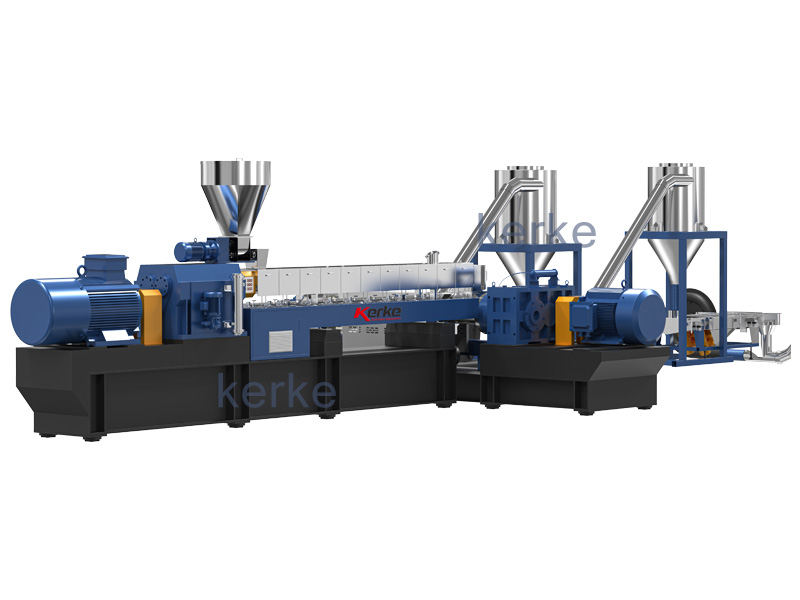
For masterbatch producers seeking to enter or expand in the transparent film segment, the Kerke KTE series of co-rotating parallel twin-screw extruders offers a purpose-built platform with the flexibility to handle both transparent and color formulations through modular screw reconfiguration. With models from the KTE-16B lab extruder to the KTE-135D high-output machine, configurable L/D ratios from 32:1 to 68:1, computer-optimized screw design, and integrated feeding and pelletizing systems — all supported by Kerke’s 12+ years of compounding expertise, a 19,997-square-meter factory, and the Wanplas brand’s commitment to quality with $500 annual free parts — Kerke provides the process capability and reliability that transparent masterbatch production demands.